Home Blog Page 7115

Congress IT cell sexual harassment case, victim says inquiry a sham, did not expect justice from Divya Spandana

The former Congress IT cell worker who has recently lodged an FIR against her former colleague has expressed her displeasure over the way the so-called inquiry by the IT cell was carried out. In an interview to mynation.com, a news website backed by Asianet News and is headed by former MailToday editor Abhijit Majumder, the victim has narrated how her repeated objections were ignored.

The victim, who had worked in the capacity of social media manager in the Congress IT cell office located at 15, Gurudwara Rakabganj Road had alleged that her colleague Chirag Patnaik had on several occasions sexually harassed her and despite her writing to the Congress President Rahul Gandhi and complaining to Congress social media head Divya Spandana, there has been no action against the accused and she was instead further harassed mentally.

In her interview to MyNation.com, the victim has narrated that on a regular basis, the accused, Chirag, has breached her breathing space, touched and stared at her. She mentioned that she had objected to such behaviour but he did not stop. The victim has also narrated that on several occasions Patnaik used to put his shoes in front of her even when she was having food.

The victim, whose identity has been hidden as per her wishes, said that while others behaved well with her, Patnaik did not. She also mentions that she had discussed Patnaik’s behaviour with Divya Spandana in a closed-door meeting. But instead of taking her complaint into cognisance and proceeding to find out further, Divya Spandana had reportedly diverted the topic and had started to compliment her over work performance. She adds that Patnaik had a great deal of control over Divya and he ran things in the office in her absence. She asserts that Divya Spandana deliberately brushed the matter under the carpet.

She said she joined the IT cell in July 2017 and her experience wasn’t good. She found Divya’s behaviour unexpectable, as she yelled and shouted at the team and humiliated her in front of the team. The victim has also stated that there was a culture of bullying and humiliating in Divya Spandana’s office. She narrates that when she had tried to point the facts of wrong working environment she was fired by Divya Spandana. However, after being fired the first time within 20 days of joining, she was hired again in 2018.

On being asked whether she has received any response from the Congress President or the AICC grievance redressal committee over her complaint, the victim denied of receiving any response. She stated that she is disappointed because she expected at least an acknowledgement from them.

Divya Spandana issued a clarification. She shared a letter which had signatures of many office workers of the social media cell where they had come out supporting Chirag.

On being asked how does she felt about two signatories from that letter that Divya posted being members of the committee that has been formed to probe her grievance, the victim expressed her amusement and said she had no idea when this committee was formed. She also added that she expected the probe to be biased from the beginning.

The victim states that she was contacted by Divya Spandana over an email that the social media office would conduct an unbiased probe and within hours Divya shared that letter declaring support for Patnaik. Interestingly two of the people who have signed the support for Patnaik are also believed to be in the committee which will probe the incident. This raises the question whether the probe will be fair. She said the least these members could have done is stay unbiased.

She claims Divya emailed her and promised her an unbiased probe just before the defence Divya put up on Twitter. She claims that Divya does not represent the party in any way, as every single principle the party claims to stand for, is violated. She calls it a fight between a person and certain people of a department, not a person versus a party.

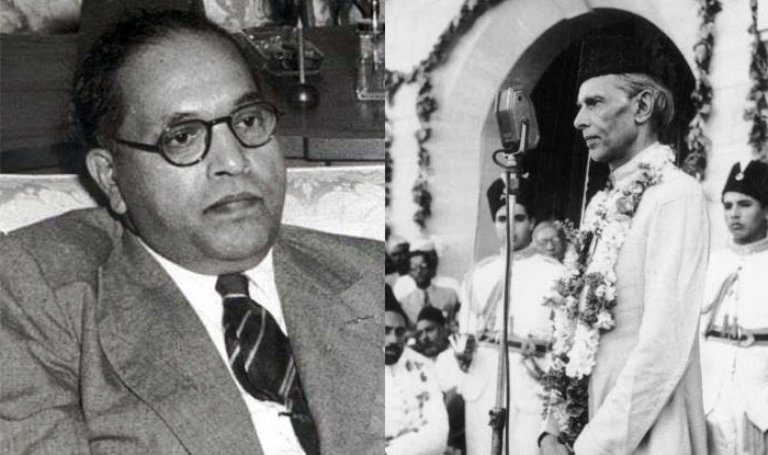
BR Ambedkar’s scathing criticism of Jinnah that nobody seems to talk about

0

When one thinks of the man who created our constitution, Jinnah is seldom considered to be relevant in that discussion. Though, Ambedkar has written extensively on Jinnah and explicitly detailed his opinion of the ‘Quaid-e-Azam’ of Pakistan.

B R Ambedkar had an underlying suspicion of Jinnah. In his book ‘Pakistan or The Partition Of India’ he analyses Jinnah’s contemporary political moves and the implications of such moves in much detail.

14 points of Jinnah and the assorted problems–

Chapter XI of Ambedkar’s book ‘Pakistan or the Partition of India’ is titled ‘communal Aggression’. Ambedkar thoroughly criticized Jinnah for tabulation of his 14 points which include but not limited to :

  1. Muslim representation in the local bodies be based on the principles of the communal award, that is, separate electorates and population strength.
  2. Discarding of the song– “Vande Mataram”.
  3. Freedom for Muslims to perform Cow slaughter.
  4. Make changes to the tricolour flag or give equal importance to the Muslim League flag.
  5. Constitutional and statutory guarantee of fixed Muslim representation in the state services through the reservation.

It must be noted that before this new list of demands was presented and accepted in R.T.C, 1932, Muslim league had already furnished their initial demands in 1929, Ambedkar thought that would be the last list of demands from the Muslims. This new list when inquired, Jinnah refused to disclose and later came to surface through Nehru and Jinnah’s correspondence. Ambedkar felt these demands are ‘extravagant’ and ‘impossible’ if not ‘irresponsible’ on the part of Mr Jinnah and the people he represented. The share clause, according to Ambedkar, has been increased to 50% of every elected body within one year, 1938-1939.

Ambedkar was of the opinion that Muslims are exploiting Hindus and using their outrageous demands to force the Hindus into the negotiation tables. He writes –

“The second thing that is noticeable among the Muslims is the spirit of exploiting the weaknesses of the Hindus. If the Hindus object to anything, the Muslim policy seems to be to insist upon it and give it up only when the Hindus show themselves ready to offer a price for it by giving the Muslims some other concessions.”

He went on to illustrate how Jinnah and the Muslims backtracked on the issue of Joint Electorate. Hindus from the start have been insisting upon Joint electorate and the Muslims for separate ones. Ambedkar calls such points as “matter of bargain” on the part of Jinnah as the resolution passed in the Calcutta Sessions of the All-India Muslim league on 30th Dec, 1927, stipulated only when the Hindus agree to the separation of Sind and to the raising of M.-W.F.P to the status of self-governing province, the Muslims will give up their demand for separate electorates. Which Ambedkar thought was a clear indication of opportunism from the Jinnah’s side as evidently, they did not consider separate electorates to be vital but still pursued them. Muslims regarded them as a good ‘quid pro quo’ for obtaining their other claims.

In a joint electorate, there is neither preference nor discrimination on the basis of religion, caste or creed but at that point in time, Jinnah demanded that since Muslims are in minorities in the most of India there be separate electorate for Muslims. Muslim electorates will only consist of Muslim voters, which will ensure democracy from becoming majoritarian. The Congress and the rest always thought the joint electorate is a great way to achieve national integration.

Jinnah and His Idea of Pakistan–

In Chapter- XIII titled ‘Must there be a Pakistan?, Ambedkar questions Jinnah’s idea of Pakistan and the fundamental logic put forth by Jinnah’s Muslim league for the creation of the nation. Ambedkar found the flaw in the argument that Muslims have suffered under the Congress rule and have lost faith altogether in the Congress leadership. He cites Jinnah’s’ unwillingness to persist for a Royal Commission inquiry into these grievances. He then calls the claims of oppression made by Jinnah and his party -“exaggeration”.

He writes –

“A perusal of these instances, as given in the reports of the Muslim League Committees, leaves upon the reader the impression that although there may be some truth in the allegations there is a great deal which is pure exaggeration.”

In the same section, Ambedkar is perplexed by the Jinnah’s ‘new-found obsession’ with Muslim Nationalism. He poignantly differentiates between the disintegration of parts of society and loosening of such elements. Jinnah’s idea that there is not enough common ground between Hindus and Muslims so much so they can never be one people is also countered by Ambedkar. He talks about focusing on the commons of Hindu –muslim dichotomy rather than focusing on the divides.

“But isn’t there enough that is common to both Hindus and Musalmans, which if developed, is capable of molding them into one people? Nobody can deny that there are many modes, manners, rites and customs which are common to both. Nobody can deny that there are rites, customs, and usages based on religion which do divide Hindus and Musalmans. The question is, which of these should be emphasized. If the emphasis is laid on things that are common, there need be no two nations in India.”

He also cites numerous examples of many European countries where two completely different groups have formed a nation despite their differences. Ambedkar cites examples of Canada and how there are two nations in Canada, one English, and one French. The idea of Jinnah, that Musalmans of India are a nation has been viciously criticized by Ambedkar by producing numerous examples like the one aforementioned.

Jinnah’s turn-around from a Barrister to a religion-centric political leader has been mentioned again and again in this book by Ambedkar. Ambedkar slammed Jinnah for not creating an areligious political party as the main opposition to the Congress where likeminded Hindus and Muslims can come together. Instead, Jinnah chose to regenerate the Muslim League, which according to Ambedkar, was dying and decaying, and of which only a few years ago Jinnah would have been glad to witness the funeral.

The issue of the Minorities in Bengal and Punjab Province–

The issue of demarking the said two provinces and the clause of self-determination only for the areas where Muslims are in majority put forth Jinnah at that point of time has also been severely criticized by Ambedkar.

In the beginning, Ambedkar thought that Muslim league was reasonable enough as it agreed to the redrawing boundaries in Punjab and Bengal. It was admitted in the Lahore resolution passed in March 1940 it read-

“The establishment of completely independent States formed by demarcating geographically contiguous units into regions which shall be so constituted, with such territorial readjustments as may be necessary, that the areas in which the Musalmans are numerically in a majority, as in the north-western and eastern zones of India, shall be grouped together to constitute independent States as Muslim free national homelands in which the constituent units shall be autonomous and sovereign.”

But, Ambedkar points out that Jinnah has changed his view about the said issue. He furnishes parts of Jinnah’s speech as evidence –

“The latest trick—I call it nothing but a trick—to puzzle and to mislead the ignorant masses purposely, and those playing the game understand it, is, why should the right of self-determination be confined to Muslims only and why not extend it to other communities? Having said that all have the right of self-determination, they say Punjab must be divided into so many bits; likewise the North-West Frontier Province and Sind. Thus there will be hundreds of Pakistans.”

Ambedkar believes that Jinnah has completely missed the point. Even in his ideas of sub-national groups, Jinnah considers only Muslims to be worthy of called sub-national groups as they constitute 14% of the population. Whereas Jinnah has shown hypocrisy when it came to the issue of Punjab and Bengal province where a significant Hindu minority lives in a compact and easily severable territory, according to his sub-nation theory. He completely disposes of his own idea when the boot is in the other shoe. Jinnah has been accused by Ambedkar, of considering Hindus in Bengal and Punjab province as mere ‘chattels’. Ambedkar thought this because according to Jinnah’s ideas expressed in a speech held on November 16th, 1942 in Jullunder the minorities in the said region has no right to self-determination thus they are ‘chattels’ who will go wherever the Muslims of these provinces choose to drive them.

Excerpt from Jinnah’s speech regarding ‘Sub-national Groups’ –

“Who is the author of this new formula that every community has the right of self-determination all over India? Either it is colossal ignorance or mischief and trick. Let me give them a reply, that the Musalmans claim the right of self-determination because they are a national group on a given territory which is their homeland and in the zones where they are in a majority. Have you known anywhere in history that national groups scattered all over have been given a State? Where are you going to get a State for them? In that case, you have got 14 percent. Muslims in the United Provinces. Why not have a State for them? Muslims in the United Provinces are not a national group; they are scattered. Therefore in constitutional language, they are characterized as a sub-national group who cannot expect anything more than what is due from any civilized Government to a minority. I hope I have made the position clear. The Muslims are not a sub-national group; it is their birthright to claim and exercise the right of self-determination.”

Jinnah The Henry IV of Pakistan–

In the conclusion of his book, Ambedkar does not only make any attempt to paint Jinnah as an opportunist. He starts off by criticizing Gandhi’s inability to see the growing influence of Jinnah over the Muslims. Ambedkar states that Jinnah never was the man for the masses. Jinnah, according to Ambedkar has always been wary of the masses he always voiced his reservations about including masses into politics. Jinnah was for a high franchise consistently.

Ambedkar also points out that Jinnah was never known to be a ‘devout’, ‘pious’, or a ‘professing’ Muslim. Though he had transformed himself into such a religious figure that no meetings in Bombay begun or ended with Allah-ho-Akbar and Long Live Qaid-e-Azam.

Ambedkar points out the similarities between Jinnah and Henry IV of France who despite being Huguenot attended Catholic Masses in a Catholic church in Paris. Henry IV believed the price of changing his Huguenot faith is very little compared to gaining the powerful support of Paris. Ambedkar summarizes the opportunist notion of Jinnah beautifully in this line –

“As Paris became worth a mass to Henry IV, so have Dongri and Null Bazaar become worth a mass to Jinnah, and for a similar reason. It is strategy; it is mobilization.”

This was the opinion of our constitutional father with regards to Jinnah and his political musings. I sincerely hope this article be as much revealing of the dichotomy between Jinnah- the politician and Jinnah- the barrister to the reader as I intend it to be.


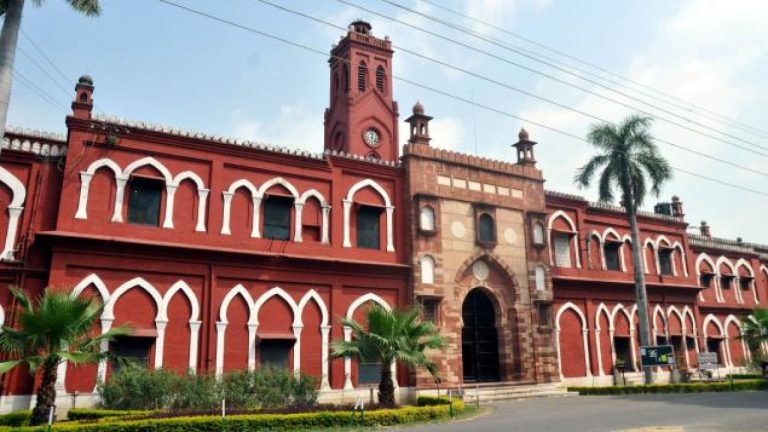
Uttar Pradesh SC/ST Commission serves ultimatum to Aligarh Muslim University

After the National Commission for Scheduled Castes (NCSC), it is the UP SC/ST Commission that has swung into action.

There are at least a hundred different things that are wrong with the fact that the Republic of India, run by a secular Constitution, allows Aligarh Muslim University to be both a public institution and a minority institution at the same time. But one of the most shocking of these is the fact that AMU is able to use its minority status to deny reservation to SC/ST students as per established quotas.

Hopefully, that is beginning to change.

Untitled.png

The Aligarh Muslim University has now received a notice from the UP SC/ST Commission demanding an explanation by August 8 this year. Mr Brij Lal, Chairman of the Commission, put it in very simple words:

“The AMU is not a minority institution. I have issued a notice to the AMU for not giving reservation to SC/STs. We have asked as to why SC/ST communities have not been given the benefits of reservation. Under what circumstances it has been done?”

A simple, straightforward question. Sadly, the answer to this question is the sum total of every single thing that is wrong with the hypocrisy that is “Indian secularism.”

As I explained in an earlier article, the fact that AMU is *not* a minority institution has been established in the High Courts and the Supreme Court. Not once, but multiple times. As far back as 1967, the Supreme Court clearly ruled that AMU could not be a minority institution.

Instead of implementing the orders of the highest court of the land, our secular government went through multiple rounds of appeals against the decision. When they got tired of going around in circles, Parliament passed an act in 1981 subverting the Constitution and giving AMU its minority status. It took another 25 years for the Allahabad High Court to strike down this act.

But the story didn’t even end there, because the government kept “appealing” this new decision. Until the Modi government decided in 2016 to withdraw this ridiculous appeal.

So, that is where things stand today. AMU is not a minority institution. The Courts have decided this beyond all reasonable doubt. As such, by denying quotas to SC/ST students, the Aligarh Muslim University is existing as an extra-Constitutional institution. Not to mention spitting in the eye of social justice.

Fortunately, the chorus for justice is growing. The recent impetus came from UP Chief Minister Yogi Adityanath demanding that AMU (and other institutions like Jamia) reserve seats for students from deprived sections. This was followed by Ram Shankar Katheria, Chairman of the National Commission for Scheduled Castes (NCSC), declaring that AMU would no longer receive Central Govt grants if it keeps ignoring the law of the land.

This change has been a long time coming. But the wheels of justice are finally in motion. Nothing less than the supremacy of the Constitution is at stake.

Omprakash Mishra gets sidelined by Rahul, not to attend today’s state leader meeting

0

Congress in 2011 played second fiddle to Trinamool Congress and later parted ways when realized that their party is being slowly but steadily getting subverted by the TMC. In 2016 the Congress forged an alliance with the left for the state assembly elections and came out with a large grin as their partners were reduced to a mere handful of seats, 26 to be precise. The Congress got 44 seats, which is a lot considering their precedence in the state polls for the last two decades.

The Congress initially managed to secure around 44 seats but after the election, many of its MLA’s left the party and joined the TMC. The situation of Congress in Bengal is dire. It is expected to get more desperate as Rahul Gandhi meets state leaders today. Reportedly, half-a-dozen of its MP’s and MLA’s are expected to join TMC today.

The math connotes if 25% of the MLA’s shift sides to TMC, The INC may lose its status as the main opposition party in Bengal. As of now twelve of the forty-four MLA’s have left the Congress for TMC.  Rahul, understanding the abysmal situation of his party in the state, decided to meet them today.

Though the Congress is suffering from mass exodus and the possibility of doom looms large on them, it seems Congress is yet to rid itself of nepotism. As per reports, the General Secretary of State Congress Committee, Omprakash Mishra will not be attending the meeting today. Mishra is responsible for stitching together the alliance with the left that revived Congress in the state despite the shortcomings. He was entrusted with putting together an alliance for the 2019 general elections similar to that of 2016.

The invitee’s list states that MLA’s, ex-MPs and ex-AICC secretaries can attend today’s meeting. Mishra holds none of the stated positions mentioned in the invite. It seems in order to maintain relevance Rahul has decided to sacrifice Mishra.

Rahul seemingly sidelined Mishra as the prevailing notion within the party changed from siding with the left to leave the Congress party. A large section of the Congress leaders believes that this siding with the left will spell the end of INC in West Bengal.

In a bid to eliminate railway crossings, Indian Railways builds subway in record 4.5 hours

The East Coast Railway’s Waltair Division created a record in infrastructure construction by building a subway below railway tracks in record 4.5 hours, The News Minute has reported.  The subway was constructed between the stations of Kottavalsa and Pendurti in Andhra Pradesh to eliminate a busy manned railway crossing named gate 484.

The construction of this subway was carried out about 45 days back and has now been thrown open to the public following the construction of access roads.

The significance of this achievement can be gauged by the fact that it takes about six to eight hours to construct a subway below two tracks, but in this case, a subway below four tracks was constructed in just 4.5 hours. The total length of the subway is estimated to be 38 metres and was constructed at a cost of Rs 2.6 crore.

Speed was necessary for the construction on the stretch of track, as it is known to be critical for the movement of coal, iron ore from Odisha and Chhattisgarh’s Talcher and NDMC respectively. Besides this, the railway lines are also used for the transportation of cargo from Visakhapatnam and Gangavaram ports.

As per the TNM report, the faster construction was achieved thanks to substantial planning and resource mobilisation. As per a railway press release quoted by the report, six excavators, 3 cranes, 4 hydra machines and 5 trippers were used. A total of 300 workers toiled to make the speedy construction possible.

A time lapsed video of the same was also created by the Indian Railways which was shared by TNM on YouTube:

As seen in the video and detailed in an IndiaToday report, the railway track was removed via cranes and excavators dug up the earth to create a path for the subway. The boxes and base plates too were shifted simultaneously.

Following this, a surface was prepared and pre-fabricated boxes and base slabs were placed. A total of 20 pre-fabricated boxes were used for the exercise which took about 4.5 hours.

The construction of the subway and a subsequent elimination of the railway crossing is expected to reduce railway accidents and also save time for crossing motorists.

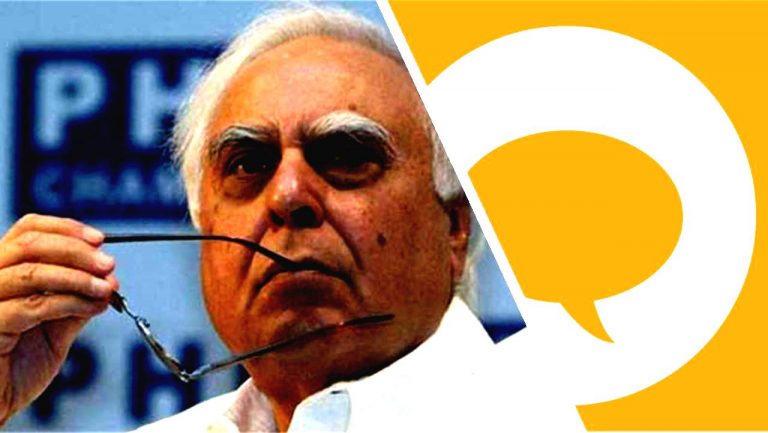
OpIndia Impact : IT Dept launches investigation into the business dealings of Kapil Sibal and his wife

In March this year, senior Congress leader and former Union Minister was in the dock after OpIndia published a report highlighting a business deal by him, where things were a little opaque. Sibal had appeared to buy a company real cheap, possibly for just one lakh rupees, while the company owned a prime property in Delhi worth 89 crores.

Although Kapil Sibal never clarified the details of the deals despite OpIndia reaching out to him as well as the previous owners of the company that was acquired by Sibals, now a report by Times of India (TOI) suggests that Sibal could indeed have bought the company – Grande Castello – for just one lakh rupees, and in the process, acquired land in New Delhi worth Rs 89 crores.

The Income Tax department, according to TOI, searched the premises of World Window Impex India, in connection with the transfer of 100% shares of its subsidiary, Grande Costello, to Kapil Sibal and his wife for just Rs. 1 Lakh.

We had reported earlier how Grande Castello, with no business in Financial Year 2013-14, commenced purchase of a piece of land which eventually cost Rs 45.21 crores. To fund, this, the company raised interest-free loans and book overdrafts.

It was unclear from public documents, as to who provided this finance, and how could a company with nil business convince a lender to offer unsecured interest-free loans running in crores of rupees.

In the Financial Year 2014-15, the company revalued its land from Rs 43.79 crores to Rs 89 crores, almost doubling the value. Oddly, in the very next year i.e. in the Financial Year 2015-16, the company changed its accounting policy and devalued the land, bringing back to its original cost. Incidentally, Kapil Sibal and his wife purchased the company in the very next year after this devaluation. As mentioned earlier, Sibal and his wife became the owner of the company by acquiring 100% of the shares, the face value of which comes to 1 lakh rupees as the paid-up capital of the company.

Further, the TOI report makes another stunning claim. It says that their sources have confirmed that Kapil Sibal extended a Rs 51.2 crore loan to Grande Costello which had absolutely no business other than the land they owned.

It is not clear when was this loan advanced and for what purposes, as Grande Castello had no business activity. The TOI report suggests that it might have been done to escape income tax liability.

TOI quotes a source saying, “The property was transferred to Sibal and his wife through a share swap in 2016-2017 for 1 Lakh Rupees and a loan of Rs. 51.2 crore”. TOI’s source also said that if the land was purchased, Income Tax and Stamp Duty would be due.

The income tax is reportedly investigating whether it is a case of avoiding tax by not accounting for the property acquisition. Section 56(2)(vii)(b)(ii) of the IT act states that where any immovable property is acquired for a consideration which is less than stamp duty, it shall be chargeable under the head “income from other sources”.

This raises some important questions:

1. Was the loan given by Kapil Sibal to Grande Castello only to avoid tax? This is something the Income Tax department is investigating and we hope to have an answer.

2. Prior to the company being acquired by Sibals, it already had a lot of liabilities running over 45 crore rupees. What purpose did extending another loan of 51.2 crore rupees serve, adding to the liabilities?

3. Was the loan by Kapil Sibal extended to Grande Castello to enable the company to repay the earlier liabilities that were mostly unsecured interest-free loans from unknown parties? It should be noted that South African journalists suspected that Grande Castello was a shell company possibly involved in money laundering.

4. Piyoosh Goyal, the businessman who owned substantial stakes in the company (World Window Impex) that owned Grande Castello, while talking to OpIndia in March, had claimed that Kapil Sibal indeed had paid 50 crores to buy the company. Was he referring to this loan of 51.2 crores (but somehow referred to the amount as being a crore less)? We tried to reach Mr Goyal again, but he didn’t answer our calls.

The questions raised by OpIndia back in March remain unanswered by Mr Kapil Sibal and Piyoosh Goyal and now some new questions have popped up. We can only hope that the ongoing investigations shed more light over what exactly happened. We will try to find out more on our end too.

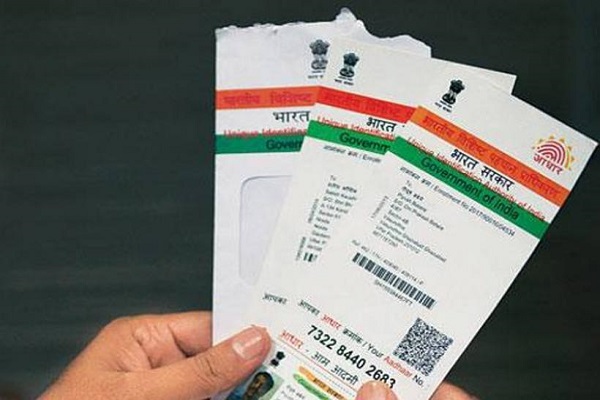
3 Rohingya Muslims arrested in Hyderabad with Aadhaar, passports and PAN cards

3 Rohingya Muslims have been arrested in Hyderabad for obtaining Aadhaar cards, passports, PAN cards, drivers’ license, voter ID and opening bank accounts claiming to be Indian nationals. According to reports, the trio, including a woman, had used fake documents and fraudulent means to obtain Indian documents of identity and nationality.

According to the report in Deccan Chronicle, the family of Rohingyas including Mohammad Yunus, 22 and his brother Mohammad Ismail and their parents Mohammad Naseem and Saleema Begum had come from Myanmar in 2013 as Rohingya refugees and worked as daily wage workers.

Mohammad Yunus reportedly approached the principal named Mohammad Khaliq at a school in Balapur and had obtained a bonafide certificate declaring that he was a student of the school and had studied up to class 10th there. Using the certificate he reportedly managed to obtained a birth certificate and eventually Aadhaar card, passport and voter ID too.

Yunus reportedly wanted to go abroad with Indian identity documents and he had managed to obtain similar documents for his family too. The police have reportedly arrested Yunus, his father Naseem and mother Saleema for obtaining Indian identity through fraudulent documents. His brother Ismail and the school principal Khaliq, along with a middle-man are reportedly absconding. The Rachakonda police have initiated a probe over the matter and trying to find out more.

According to a report in TimesNow, the family had not registered with the United Nations High Commissioner for Refugees and cases have been registered on them with relevant sections of IPC and Indian Passport Act. According to estimates, Hyderabad is home to over 4000 Rohingya refugees.

This is one of the many instants where Rohingya refugees have been held with fake or fraudulently obtained Indian identity documents. Tripura police had nabbed 24 illegal Bangladeshi immigrants with fake Aadhaars in May. In Manipur too, illegal immigrants from Myanmar were arrested with fake Aadhaars.

Minister Rajyavardhan Rathore slams NDTV for misleading image related to lynching incident

0

Union Minister for Information and Broadcasting Rajyavardhan Rathore took to Twitter to call out NDTV for using a misleading and unrelated picture for a story on child lifting hoax. The controversial media house used a violent mob’s image to depict an unrelated incident occurred at Maharashtra’s Dhule.


Rathore talked came down heavily on NDTV and gave a lesson on how propaganda looks like. He said how using an old and unrelated image for a story on child lifting hoax was unfair and as custodians of free speech, the viewers expect better from the media. He even pointed out that how such instances has led to a crisis of credibility in the Indian media.

The NDTV had used a picture of a different incident altogether to depict the horrific incident occurred in Dhule of Maharashtra.

As soon as the Union Minister called out the channel, the channel changed the image, without issuing any clarification. This time they had used the real image related to the incident. Rathore again lashed out on NDTV for not even acknowledging the error, let alone apologising for it.


After being pointed out by the Information and Broadcasting Minister, the channel apologised and issued a statement regarding the incident.


NDTV has been under the radar for alleged financial irregularities as well as being soft towards the Islamic terrorism in the country.

Is funding clampdown by Modi govt forcing missionaries to sell babies?

First of all, to my friends at Scroll and/or Wire, please feel free to use this headline when you cover this story. You *will* cover this story, won’t you?

Once upon a time, Mother Teresa had famously declared that “Abortion is the greatest threat to world peace.” When views like this are expressed by a person or an institution, the faithful generally assume that the provenance of such ideas has something to do with love and mercy and stuff like that.

But, being the sceptical pagan non-believer that I am, I knew there had to be a lowdown.

Untitled.png

As the Jharkhand Child Welfare Commission found out, the business model is quite simple. Take in unwed mothers who have no place to give birth to their children and then sell those babies to childless couples.

Now you see why abortion is not just a threat to world peace, but also bad for business.

For an organization run by godmen and women, the Church is recently having lots of problems in India staying on the right side of the law … or the right side of humanity, for that matter.

Just last month, the principal of a missionary school was booked for aiding and abetting the gangrape of five anti-trafficking activists in Khunti area of Jharkhand. This news came in around the same time we learned about four priests of the Malankara Syrian Orthodox Church in Kerala using a woman’s confession to blackmail and rape her.

I must also remark that the parade of skeletons tumbling out of the closet in the church has been accompanied by a marked lack of creativity from the ranks of artists, political cartoonists, poets, writers, feminists and sundry “Azaadi” activists in India. Incidentally, I found somewhere on the internet this collage of political drawings that were publicized when the Kathua rape case was at the peak of the news cycle.

Untitled.png

With the Church finding itself bang in the middle of accusations of blackmail, gangrape and selling babies, I guess the well-meaning people who drew these pictures don’t really know where to start. So, to these artists and cartoonists, I present this picture of a crucifix to stimulate their creativity. Let your imagination take wing. Don’t hold back now, please.

Untitled.png

I see several possibilities here. Do you?

Anyway, I digress. We all know that the Church has often had a hard time understanding how to behave with children. The Church has had to spend at least $3 billion in settlements and other costs associated with sexual abuse. We should note here that much of this was paid out in developed Western countries. How much more sexual crime lies unreported and unpunished in poorer regions of the world is anyone’s guess.

The attitude of the Church towards sexual abuse, such as asking the accused priests to pray as a “punishment” has never inspired much confidence. In any case, the Pope himself enjoys total diplomatic immunity from prosecution because he is the head of Vatican City, which is a sovereign country. Even the last Pope, who abdicated his throne, is immune from prosecution because he stays within the sovereign territory of the Vatican.

A final word. You might wonder how the Vatican got this way. How did this tiny speck of land come to be a sovereign state on its own? Here’s the man you should thank for that:

Untitled.png

That’s Benito Mussolini, the guy on the left, seen in this picture with one of his rather famous friends.

You see, at one time the Popes used to control vast amounts of land in what is modern-day Italy. In fact, Italy was just a disparate scattering of city-states back then. But when Italians wanted to form a real country, they took control of these Papal lands.

Understandably, the Pope was very very angry when all this wealth was taken away and given to the Italian people.  The angry Pope promptly excommunicated the King of Italy and forbade Catholics from voting in Italian Parliamentary Elections. Evidently, God did not offer to pay his bills.

This impasse between the Italian government and the Pope continued until Mussolini became Prime Minister of Italy. The Church wanted cash and Mussolini’s Fascist Party wanted somebody who could give them an endorsement from God himself.

A match made in heaven, if you will. In exchange for sovereignty over Vatican City, a cool $39 million in cash and another ton of money in government bonds, Mussolini became the official messenger of God.

untitled35

Now you see where Baba Ram Rahim went wrong.

Kiran Mazumdar Shaw’s argument over fuel prices hike in Karnataka has so many turns it looks like jig-‘Shaw’ puzzle

In a spectacular u-turn after threatening nation-wide protests and blaming the central government for increased fuel prices, the Congress majority Karnataka government yesterday announced a hike in petrol and diesel prices in the budget session. Chief Minister HD Kumaraswamy’s government, where Congress is the major coalition partner, announced increased taxes on petrol and diesel, leading to fuel price hike.

The fact that Congress, which created a lot of noise over increased fuel prices very recently and organised protests over it, holding BJP responsible for the fuel price is now increasing prices in the very state they just got to govern was not missed by many. OpIndia’s article over the issue calling out the hypocrisy of Congress and its President Rahul Gandhi, however, saw an unexpected response.

Kiran Mazumdar Shaw, the CEO of Biocon and one of the most prominent personalities of Bangalore responded to OpIndia’s tweet over the Karnataka government’s decision to increase fuel prices.

Kiran Mazumdar Shaw’s response

Popular Twitter user Ashutosh Muglikar responded to Kiran Shaw’s claim that Karnataka had the lowest petrol and diesel prices. He shared a chart of fuel taxes in each state and Union Territory of India as of 2nd July 2018. The chart showed Karnataka, in fact, was among the states with the highest taxes.


Kiran Shaw was not convinced apparently. She came up with another excuse, that Karnataka had the lowest fuel prices among the ‘large states’.

The gaping hole in that argument was not to be missed.


Apparently, for Ms Shaw, states like Gujrat, Bihar, Chhattisgarh, Odisha and Jharkhand are not large enough to be considered comparable to Karnataka.

As many Twitter users started pointing out the flaws in her argument and brought the main issue of Congress’ hypocrisy and opportunist politics, Kiran Shaw changed the line of her argument, again.

She now pitched the argument that for the state government to provide the promised loan waiver to farmers in the state, the increase in fuel prices was a necessary step. She supported the argument by stating the ‘affluent’ should compensate for the farm loan waiver by their booze and ‘driving around in cars’ being taxed more instead of the public bearing the burden. Although by what logic she concluded that the rising fuel prices do not affect the poor or middle class but taxes only the drunk, rich brats roaming in cars is beyond our comprehension.

When Twitter users refused to buy that argument too, Ms Shaw came up with another point. This one, however, was more of an excuse than an argument. She stated that Congress cannot take decisions as it would like to take because they are in a coalition government.

Apparently, Congress cannot take major decisions and have to compromise their stand. Does that ring some bells? Do we feel like we have read the same argument somewhere before? We have, indeed. It was none other than the Karnataka CM himself, barely a month ago. Addressing farmers of the state, the CM had stated he can take decisions only with the approval of Congress. The Karnataka CM has time and again given the exact same excuse.


Though Ms Shaw is not officially associated with the Congress, she is one of the investors for the leftist propaganda website The Wire, which is a constant glorifier of Congress and the Nehru-Gandhi dynasty. Imagine the plight of the people of Karnataka if Congress leaders begin to use that line of argument too. Who will be accountable when both Congress and the JDS keep giving the excuse of being helpless and being forced to compromise because they are in a coalition government. Is that going to be the standard line, like Delhi CM Arvind Kejriwal claiming that he cannot work in Delhi because nobody is cooperating with him? If that becomes a reality, is the slogan of ‘we are in a coalition’ going to be the Karnataka equivalent of Delhi’s ‘Modiji not letting us work’? Time will tell.