Home Blog Page 7119

Hindustan Times ‘clarifies’ after slandering a journalist who had questioned Sushma Swaraj

The Hindustan Times on Monday issued a clarification after terming a journalist as a “troll” after he questioned Sushma Swaraj and her handling of the Lucknow passport issue.

As reported by us a few days back, a Hindustan Times report had described prominent columnists like Shefali Vaidya and mainstream journalist Manak Gupta as “trolls”, following Swaraj’s decision to like their tweets which questioned her handling of the matter:

Painting mainstream Right Wingers as 'trolls', proves the left's contempt for any form of dissent
Hindustan Times list of trolls (condensed for readability)

Incidentally following this episode, we had explored the left’s modus oprendi of stifling any form of dissenting voices, by sending a message that – “if you are not on our side, you are a troll”.

Since then, the stance of Hindustan Times seems to have mellowed down and it has issued a clarification about the views it expressed about Manak Gupta:

Clarification by Hindustan Times. Image tweeted by Manak Gupta

As seen in the clarification, the paper states that its data analysis highlighted tweets liked by Sushma Swaraj which “trolled” her. The clarification then acknowledges the failure on their part to acknowledge that Swaraj had subsequently unliked some of the non-abusive tweets, including those posted by Manak Gupta. The paper also claimed that they had not editorially filtered the tweets picked for their analysis.

Besides issuing a clarification, Hindustan Times also gave space to Manak Gupta for writing a counter view.

This might not be the end of the matter for Hindustan Times, as Shefali Vaidya who has been similarly termed as a troll, took note of the clarification and demanded that a similar action be performed in her case:


As seen above, Shefali threatened Hindustan Times with legal action if the newspaper fails to publish her response and print a clarification. It remains to be seen whether the newspaper takes note of the matter and also sends a personal clarification to her and all the others whom it had “defamed” via its analysis.

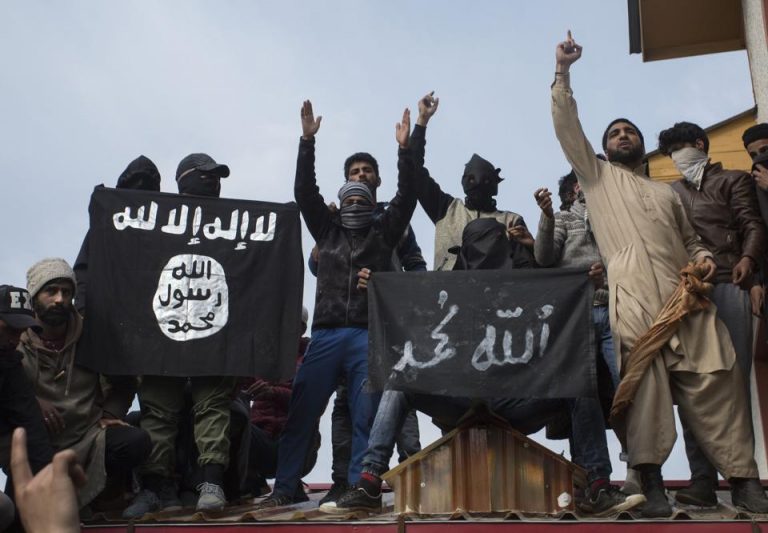
Allahabad youth offered reward by ISIS in exchange for intel on Indian intelligence agencies, lodges FIR with UP police

As reported by Times Now, an FIR was lodged by an Allahabad-based youth who alleged that he was contacted by members of terrorist organization ISIS on WhatsApp and was promised $5,000 in exchange for sensitive information about Indian intelligence agencies. The Anti-Terrorist Squad (ATS) unit of UP Police is investigating the matter.

The youth who is working in the city received Whatsapp messages from two different US-based numbers after being added to an unidentified Whatsapp group with the logo of IS as a display picture. The FIR was registered with Dhoomanganj police under the IT Act.

SP Brajesh Kumar Srivastava, said, “The ATS unit of UP Police has started its investigation into the case. The local police have been assisting the ATS squad and things would be clearer within a day or two.” He further said that the numbers which were used to send the messages to the youth are also being probed. Srivastava confirmed that the youth approached the police after he was added to the unidentified WhatsApp group.

IG (ATS) Asim Arun said that Allahabad police chief had asked for assistance in the case and the ATS was probing it and expected to get a clear picture within two to three days.

The warning signs about ISIS and its poisonous ideology gaining a foothold in this country have been out there for quite some time. Last month Gujarat ATS (Anti Terror Squad) has filed a charge sheet an Ankleshwar court which reveals the intention of an individual, arrested earlier, to assassinate Prime Minister Narendra Modi with a sniper rifle. The charge sheet clearly mentions that the intention to target Prime Minister was expressed in a conversation on a messaging app.

Ubaid Mirza, an aide of an alleged ISIS operative, a practising lawyer, and Kasim Stimberwala, a lab technician in Sardar Patel Hospital and Heart Institute both residents of Surat involved in the PM’s assassination plot, were arrested last year in October on reports of a suspected attack during the Gujarat assembly polls. Later the ATS revealed that the two were allegedly planning ‘lone wolf’ attack on Jews in Mumbai and Ahmedabad.

Insurgency issues in Kashmir are often spoken about, however, people seldom talk about the radical Islamic issues encompassing the country. Nation chooses to remain closemouthed about ISIS taking root in the country, and the silent battle India is fighting on that front.

The data on the subject is pretty clear. In 2014, 6 people were arrested by Indian security agencies for pro-ISIS sentiments and engaging in behaviour supportive of the Jihadist terror group. In 2015, that number rose to 19. Again in 2016, the numbers saw a rise and 54 people were arrested for pro-ISIS sentiments. In 2017, however, the number came down to 34. These are just numbers of those arrested, those suspected to have actually joined ISIS is much higher.

The unique circumstance in India that make it more susceptible to the ISIS threat is the fact that many political parties are quite willing to sacrifice national interests for electoral benefits. Although the Indian security forces have kept these threats relatively at the check, it’s time the country awakens to this rising hazard and the so-called guardians of the country spring out, keeping the Nations rationale before their personal benefits.

‘BJP will sweep Odisha assembly polls’ : Amit Shah’s declaration of confidence ahead of 2019

In a show of confidence, BJP president Amit Shah stated that Bharatiya Janata Party will sweep the upcoming Odisha Assembly Polls in 2019.

Shah stated the aforementioned in his one-day visit to Odisha yesterday. The BJP president held meetings with the Lok-Sabha in-charges in Bhubaneswar.

He also met and addressed Shakti Kendra in-charges and co-incharges in Bhubaneswar, where he said the energy and enthusiasm of the people are indicative of the BJP sweep in the upcoming state assembly polls in the state.


BJP as a party has always utilized and understood the importance of, social media. Thus, it is no surprise Shah met with Social Media volunteers during this short trip to Odisha.


During his visit, Shah met with Padma Vibhushan recipient sculpturist  Shri Raghunath Mahapatro. The meeting was conducted as a part of the ‘sampark for samarthan’ campaign.


The Odisha assembly has 147 seats and its scheduled to go to state assembly polls at around the same time as the general elections next year.

Akhilesh’s Samajwad : Strip govt bungalow of tiles and fixtures, party in London house for 46th birthday

Recently, former chief minister of Uttar Pradesh Akhilesh Yadav set an example of ‘samajwad’ by trashing his government accommodation before vacating it and moving to his villa. Now he raised the bar of socialism higher by ringing in his 46th birthday while enjoying summer vacations in London, where he is believed to be owning a house too.

As per reports, while Yadav celebrated his birthday in London with his family, party leaders and workers offered 46 kgs laddoo cake on his birthday.

Following Supreme Court orders, Yadav had to vacate his government accommodation. While vacating it, Yadav reportedly broke the gym he had built on public money. He even removed the plants, mirrors and marble tiles in the house before moving. Destroying public property because you are no longer entitled to it, is a little shocking. He even removed the tiles in the swimming pool. The villa he has moved into has been made by joining two villas, the market price of each is estimated to be around Rs. 3 crore.

Amusingly, before this move, Akhilesh Yadav was looking for a house on rent in Lucknow because neither he nor his father owns a house in Lucknow. Interestingly, this villa he has moved into is not the same he has mentioned in his affidavit filed in 2012, which he purchased in 2005 for Rs. 71,00,000.

Meanwhile, terming the damages a ‘serious matter’, UP Governor Ram Naik has written to the chief minister Yogi Adityanath to take action against the culprits.

When Akhilesh was confronted regarding his kind of ‘socialism’, he arrogantly gave veiled threats to the bureaucrats by saying how the government keeps coming and going, but they will be there. And that he knows who have done this (open the government accommodation for media to click pictures). He also tried to ‘show them their place’ by reminding them how they once picked cups and plates in front of him.

Meanwhile, Samajwadi Party has termed the video clips of the house which have surfaced an ‘attempt to tarnish Akhilesh’s image’ saying his popularity was constantly growing after defeating the BJP in the bypolls.

BJP CM wants anti-conversion law repealed in Arunachal Pradesh, tribal groups call it ‘Christian appeasement’

Arunachal Pradesh CM Pema Khandu had last week stated that the state government is planning to repeal the 4 decades old Anti-conversion law known as the Arunachal Pradesh Freedom of Religion Act, 1978. Speaking in an event organised by the Arunachal Pradesh Catholic Association, the CM had stated that the law could undermine secularism and is probably targeted towards Christians.

CM Khandu had added that the law would be brought for repeal in the next assembly session as it could be misused in the future by irresponsible officials.

In 1978, Arunachal Pradesh had become the 3rd state in India after Odisha and Madhya Pradesh to bring an anti-conversion law into action. As per reports, the Christian population in Arunachal Pradesh was nil in the 1951 census. But over the decades Christianity has emerged as the largest followed religion in the state. In 2001 census, Christians were the 3rd largest religious group representing 18.7% of the population. Hindus and other minority religions represented 34.6% and 30.07% respectively.

However, in the 2011 census, Christians were the largest religious group in the state representing 30.26% of the population while Hindus and others were reduced to 29.04% and 26.20% respectively.

Khandu’s announcement has drawn mixed reactions in the state. While some groups feel the BJP is practising appeasement politics to woo Christian votes, some have stated that the CM might be right.

CM Khandu’s announcement was widely welcomed by Christians in the state. According to reports, the influential Arunachal Christian forum has stated that the move has nothing to do with politics, the forum which had been critical of the state government policies in the past reportedly added that the people of Arunachal Pradesh vote by judging the candidate’s performance and not his/her religion and if they were, Kiren Rijiju being a BJP leader would not have won two consecutive terms as an MP.

However, many tribal leaders and followers of native faiths in the state have criticised the move and are calling for the anti-conversion law to stay. 2 of the leading organisations of indigenous faiths, the Indigenous Faith and Cultural Society of Arunachal Pradesh (IFCSAP) and Nyishi Indigenous Faith and Cultural Society (NIFCS) have expressed in their statements that the condemn the move and it is an act of Christian appeasement. They reportedly added that the move will harm the cultural growth of indigenous faiths and will be detrimental to them.

The Nyishi, belonging to the Tani group is reportedly the single largest ethnic community in the state. They often state that the growth of Christianity in the state had been at the expense of indigenous faiths. They have stated that abolishing the anti-conversion law will lead to further poaching and will marginalise the native faiths. Bai Taba, the general secretary of the IFCSAP has stated that the government might eventually bring the native people the into the general category from the current Scheduled Tribes status and this will strip the special privileges they had been enjoying.

CM Khandu had on June 30 stated that the decision is not political and is to maintain secularism. He, however, added that the government is open to hearing the opinions of all groups in the spirit of democracy.


It is notable here that the Christian and native faith groups have always been at loggerheads with each other in the state. In October 2017, the Arunachal Christian Forum had accused the BJP of ‘promoting the indigenous faiths specifically. CM Khandu had announced that native people are being disconnected from their roots due to globalisation and had declared that his government would set up a separate department for protection and preservation of indigenous faith and culture. The Christian Forum had then accused the CM of being partial towards the indigenous tribes.

The irony is the Arunachal Christian Forum had stated this just after the CM had reportedly announced a fund of Rs 5 crores to be handed over to the forum for ‘promoting educational institutions’ stating that the government alone cannot uplift the education sector.

While the Cristian and tribal groups seem to be busy in allegations and counter allegations, it remains to be seen whether the BJP government can deliver on its agenda of ‘Sabka Sath Sabka Vikas’ while addressing the issues of each community.

Bengal Congress in shambles? Party divided over forging an alliance with Mamata Banerjee for 2019

Cracks seem to have appeared in Bengal unit of Congress over whether to ally with Mamata Banerjee’s Trinamool Congress in the upcoming 2019 elections. A certain section of the leaders, who believe joining hands with Banerjee would give them a better chance, are keen on the tie-up while Adhir Ranjan Chowdhary, Bengal Congress president and others are against the idea as it will be ‘committing suicide’ to forge this alliance.

Recently, many senior leaders from Congress have defected and joined the TMC, claiming Congress is waning in Bengal. All India Congress Committee (AICC) secretary Mainul Hague, Congress MLA from Murshidabad joined TMC claiming atrocities committed by TMC does not let him carry out any developmental work. He also said he has had been threatened that unless he joins the ruling party, it will not be possible for him to carry out his work as well. He also claimed lack of coordination among top leaders in Bengal Congress.

Mainul Hague along with Abu Hasem Khan Chowdhury, Congress MP from Malda South and the brother of former Congress stalwart Ghani Khan Chowdhury met TMC secretary-general Partha Chatterjee recently to talk of possibilities of forming a grand alliance in the state on lines of proposed central model to take on the BJP and contain their seats in upcoming general elections. However, the move did not go down too well with Bengal Congress leadership who are not in favour of an alliance with the TMC.

Meanwhile, state Congress General Secretary Om Prakash Mishra has urged Congress and the Left parties to come together to fight the ‘murder of democracy’ by ruling TMC in state and the ‘communal agenda’ set by the BJP. Coming down heavily on the Trinamool, he said its “brutal and repressive measures” in “connivance” with police and administration against the opposition in the state was designed “to weaken Congress and Left parties and to indirectly encourage the BJP to fill the political space forcibly vacated”.

Recently, during his two-day visit to Bengal, BJP President Amit Shah had challenged West Bengal chief minister Mamata Banerjee to first handle the state before attempting to handle the ‘mahagathbanthan’.

Interpol issues Red Corner Notice against Nirav Modi in connection with the PNB scam

The Nirav Modi scam rocked the nation in February 2018. The scam that amounted to Rs. 11,000 crores worth had left the Congress red-faced when news emerged that this scam too, that they had been blaming the Modi government for, had squarely landed on their doorstep.

As per the reports, 2 of the bank staffers were involved in this fraudulent activity. Firstly they would issue the LOU’s from their branch but never made relevant entries in the Bank accounting systems. Moreover, it is alleged that Nirav Modi’s entities did not have credit facilities with PNB which entailed them access to LOU’s. So it can be said that these LOU’s were off-balance sheet items.

After this, the Complaint filed by PNB with the Central Bureau of Investigation, also alleges that the staffers sent SWIFT messages to foreign bankers and completely bypassed the Core Banking System/software. Foreign bankers trusting the SWIFT instructions and LOU’s extended credit and transactions were happening all this while. As per further reports, the total value of such transactions is well over INR 11000 crores.

Now, as reported by ANI, The International Criminal Police Organization more commonly known as Interpol has issued a red corner notice against the absconding Nirav Modi in connection with the Punjab National Bank Scam.

Image via ANI

The notice mentions that Nirav Modi is wanted by Indian Judicial Authorities on Money Laundering charges and if anyone has information on him, they should contact the General Secretariat of Interpol.

Interpol Notices are international requests for cooperation or alerts allowing police in member countries to share critical crime-related information.

According to Interpol, in the case of Red Notices, the persons concerned are wanted by national jurisdictions for prosecution or to serve a sentence based on an arrest warrant or court decision. Interpol’s role is to assist the national police forces in identifying and locating these persons with a view to their arrest and extradition or similar lawful action.

The Modi government has been in relentless pursuit of Nirav Modi. Attempts are also on by the Enforcement Directorate to seize his assets under the provisions of Fugitive Economic Offender’s Ordinance.

Nirmala Sitharaman dismisses reports of being snubbed by her British counterpart as ‘baseless’

A media report on Sunday claimed that India is ‘spitting blood’ after British Defence Secretary Gavin Williamson ‘snubbed’ his Indian counterpart, Nirmala Sitharaman, by turning down a request to hold talks in London last month. As reported by The Sunday Times, Williamson declined to meet Sitharaman in the three-day window of bilateral talks between 20th and 22nd June. However, India’s Defence Minister Nirmala Sitharaman took to Twitter and dismissed the claim as ‘baseless’.

She said a mutually convenient time is being worked out for the meeting between two heads and she looks forward to the same.

Her British counterpart, Gavin Williamson, Secretary of State for Defence, too took to Twitter and said he looks forward to the meeting.

A meeting between the heads of two countries is being worked out and is expected to take place in coming weeks.

One year report card of India’s biggest tax reform

0

Large-scale implementation of Goods and Service Tax in the past one year has been nothing short of a mean feat. The completely new tax structure based on the edifice of digital compliance and unification of market came with its initial hiccups. But, with a continuous loop of feedback, a tide of teething issues has been resolved.

It is no wonder that within one year, the system has stabilised to provide enough boost to tax returns, cause a reduction in prices as well as smoothened an otherwise cumbersome convoluted tax system that had held back the potential of the economy up until now.

The government has been proactive in taking feedback from ground level and bringing changes in real time. As per Export Promotion Council for EOUs & SEZs (EPCES), the government made 376 changes in the Goods and Services Tax (GST) in the first 10 months of its inception in July 2017.

Another example of government being hands-on with the inputs coming from the ground could be seen from withdrawal and re-introduction of e-way bills within two months on April 1, 2018. In the first 24 days of its functioning, over 2 crore e-way bills were generated for the movement of goods, highlighting its smooth execution.

GST arrived as an idea whose time had come. The path to roll out GST was laden with challenges. It required consensus among state and centre and a number of stakeholders. However, the foundation of a transformative step in the direction of national growth was placed on the strong ideals of cooperative federalism.

There were steps taken to assuage the concerns of the states, who were assured that their development needs will not be compromised or sidelined. In order to demonstrate the trust Centre had in states, the share of central taxes was increased to 42 per cent from 32 per cent, which enhanced every state’s financial autonomy. Despite, political opposition, each party went beyond political exigencies to create an atmosphere of trust and camaraderie for the long-term interest of the nation.

Despite the teething delays arising in implementing a mammoth sized change, the figures provided by the Finance Ministry indicate that the Gross GST revenue in April crossed Rs 1 lakh crore, against a monthly average of Rs 90,000 crore in the July-March period last year. Of the total revenue, central GST was Rs 18,652 crore, state GST was Rs 25,704 crore and integrated GST Rs 50,548 crore, including Rs 21,246 crore collected on imports.

As per Economic Survey 2017-18, there has been a 50 percent increase in the number of indirect taxpayers, besides a large increase in voluntary registrations.

There have been compliance issues with small businesses who may not be able to hire consultants to ease into the new system. However, regular seminars and consultations with experts would be helpful in ensuring that they adopt the system without hassle.

Other than that, under GST the small traders, manufacturers, service providers with an annual turnover below Rs, 20 Lakh have been exempted from paying GST, thus receiving huge relief. In the VAT regime, the same limit stood at Rs. 10 lakh annually. In this year’s budget, the government introduced a bonanza for small and medium-sized businesses by reducing the corporate tax to 25% from 30% for companies with a turnover of Rs 250 crore. This has further strengthened India’s small and medium industries.

The compliance has been further incentivised with invoice matching under the GST. The input tax credit of purchased goods and services has been made available only if the inward supply details filed in buyer’s GSTR-2 return match outward supply details filed in supplier’s GSTR-1 return. If the two do not match, the incentive of input tax credit would not be provided on the purchased goods and services. The digital platform has helped in not only reducing the stimulus to cheat the system but has minimised the time lag in identifying any mismatch in the purchase and sale bills. It has also been beneficial for businesses that would now be able to avoid legal disputes that arise later when purchase and sale bills fail to match.

It is not just the industry that has benefitted from the new tax regime with subsuming of almost 15 indirect taxes falling under central, state and local bodies, mitigation of cascading/double taxation and creation of a common national market, but the end user has reaped the benefits of GST with a reduction in prices. Contrary to earlier belief, GST has been far from inflationary.

Under the previous tax regime, producers had to pay taxes at every stage which was added to the final selling price. This was called cascading effect of taxes. This extra tax levied on a commodity eventually added to inflation and the rise in prices was borne by the customer. Now, GST replaces the cascading effect of taxes with input tax credit. Under the new tax regime, the tax paid for inputs is taken off taxes to be paid for the final product, or output. The benefit of input tax credit has been mandated to be passed on to the end consumer.

Further, the prices of essential commodities have been kept in the zero percent tax bracket under GST. Some of the examples are as follows:

  • Economy class air travel has become cheaper with tax rate fixed at 5 per cent against the previous 6 per cent under the GST.


  • No tax on healthcare and education under GST.


  • Prices of food grains, especially wheat and rice have come down as they are kept exempt from the GST.


  • Electricity generation gets cheaper as the GST council has brought down the previous tax on coal to 5 per cent from 11.69 per cent.


  • Household items like sugar, tea, coffee (barring instant coffee) and edible are under the lowest tax rate of 5 per cent.


  • Common use products like hair oil, soaps and toothpaste are being charged with a single national sales tax or GST of 18 per cent instead of previous 22-24 per cent tax.


  • Railways: Non- AC train travel, including in local trains and metro, has been exempt from GST, while AC train travel is charged at 5 per cent tax rate.


  • Eating out got cheaper with GST rate on restaurants slashed to 5% for all restaurants except those in the category of five-star hotels where the tax rate remains 18%.


  • Prices of packaged cement further went down from 28 per cent to 18 per cent as against 31 per cent previously on account of different indirect taxes.


  • Footwear below Rs. 500 has got much cheaper as under GST it is taxed at 5% as against 14.41% previously.


  • Basic food items like milk, paneer, curd, cereals, eggs and meat have been exempted.

The fact that the GST did not lead to inflation is again unprecedented, considering that the other countries such as Australia, Malaysia, and Singapore, where it was implemented, saw a rise in inflation.

Other than the points above the GST has been instrumental in reducing corruption as well as causing seamless economic integration. It has been the most transformative tax reform ever that has made India a single market and increased ease of doing business. The scale of the entire activity has been unprecedented world over. In one go, we have unified an economy of over $2 trillion with more than 1.25 billion people into a single market. From small to big traders, all have been brought under the ambit of GST, creating a uniform system that promotes equality and values honesty.


Sathyasri Sharmila, against all odds, becomes the first transgender lawyer in Tamil Nadu

This is yet another inspiring story of a transgender, who against all the odds became the first to enrol as a lawyer in Tamil Nadu and Puducherry Bar Council.


Sathyasri Sharmila, a thirty-six-year-old transgender from the Tamil Nadu has been given the nod with other 485 lawyers to practice law in the state.

Sharmila, who was born as Udhayakumar in Paramakudi, Ramanathapuram district, left her home at the age of 18. Sharmila wanted to pursue a career in law and joined the government college in Salem to study law in 2004 and completed it in 2007. She changed her name to Sharmila while pursuing her studies in Salem.

It took another ten years for her to enrol as a lawyer, as she said, she was lacking the confidence to enrol with the state bar council. She says that being a transgender made her to join the law and it was also her father’s dream to see her as a lawyer. Her efforts were hailed by the Tamil Nadu Transgender Welfare Association, which said that this would be a boost to the image of the community and also they will now have a representation in lawyers’ community.

She said that the road to achieve this success was faced with severe challenges. “I left home, but could not stay in the college hostel. I could not live among men because I identified myself as a woman. Neither could I live with girls because I enrolled as a man,” she said.

When faced with discrimination, she rented a house in the city and had to pursue her studies. “The moment judges called me as the first transgender lawyer in the state, I had forgotten everything. It made me excited,” said Sharmila. Justice PN Prakash of the Madras high court wished good luck to Sharmila and said that one day he wished to see her as a judge.

She received huge praises for her efforts from the Bar Council, “Article 14 of the Constitution states that all are equal and given equal opportunity. The Tamil Nadu and Puducherry Bar Council has taken the right decision. I hope that this will encourage other transgenders to go for higher education and go into various professions like law,” said S. Prabhakaran, co-chairman of the Bar Council of India (BCI) and president of the Tamil Nadu Advocates Association (TNAA).