Sunanda Pushkar, Congress politician Shashi Tharoor’s wife died under mysterious circumstances on January 17th 2014. Recently, The Delhi Police has filed their charge sheet in the Sunanda Pushkar Murder case, and Congress leader and former minister of state Shashi Tharoor had been charged with the section 498A and Section 306 in the case. Section 498A involves charges for the husband or his family members subjecting a wife to cruelty and Section 306 of the IPC covers abetment to suicide.
News has now emerged that Shashi Tharoor, fearing imminent arrest, has filed an anticipatory bail plea in Delhi’s Patiala House Court.
Sunanda Pushkar death case | Shashi Tharoor has moved an anticipatory bail plea in Delhi’s Patiala House Court, reports ANI
Congress leader Shashi Tharoor had been summoned by Delhi’s Patiala House Court and is set to appear before the court on 7th July 2018.
We had earlier reported how Sunanda Pushkar’s emails to Shashi Tharoor just before her mysterious death are being treated as a ‘dying declaration‘ by the police. She wrote in an email to Tharoor that she had no desire to live. The additional public prosecutor had argued before the Court that 9 days prior to her death, Sunanda Pushkar had written to Shashi Tharoor, “I don’t care about the tests. I have no desire to live. All I pray is death.”
In fact, MP and legal activist Subramanian Swamy had requested for a court-monitored probe by multidisciplinary special investigations team and the Delhi police had also been earlier criticised by High Court for delays in the investigations.
The Brihanmumbai Municipal Corporation (BMC) has sent a notice to actress Priyanka Chopra for alleged unauthorised constructions at her commercial properties in Oshiwara, Andheri (west). According to reports, the unauthorised constructions have been carried out at her office in the same area as well as another adjoining property which she had rented out to another businessman.
According to reports, the BMC has stated that they have received five complaints from people who visited the commercial property housing Charisma Beauty Spa along with a municipal corporator. The inspecting individuals had reportedly found unauthorised constructions/alterations in the spa, including a mezzanine floor.
BMC had also checked the premises and found the unauthorised alterations. BMC officials visited the adjourning commercial property which is used by Priyanka Chopra’s family as an office. They reportedly found unauthorised alterations at that location too. They reportedly sent two separate notices to Priyanka Chopra over the issue under the Maharashtra Regional Town Planning Act.
On inspection, it was reportedly found to be an unauthorised erection of partition walls, glass structures and cabins, amalgamation and mezzanine floors in both the premises. The BMC has reportedly asked the owners to restore the premises to the original BMC sanctioned plan of 2013. Chopra has been given a month’s time to either get the new structures demolished or obtain necessary approval for some of the new structures from BMC after payment of a penalty. The structures that cannot be sanctioned will have to be demolished.
The manager of the spa, Manik Soni has stated to Times of India that he had taken the spa premises on rent from Priyanka and her mother under a signed agreement.
Priyanka Chopra was in the middle of a controversy recently when the US TV show Quantico, where Chopra plays the lead role, aired an episode where so-called ‘Hindu nationalists’ were planning a false flag attack on New York city to blame Pakistan. Chopra and the makers of the show ABC were widely criticised in India for their wrongful and biased portrayal of Hindus and their religious symbols.
The Kerala police on Tuesday booked four Christian priests of rape. The priests belong to the Malankara Orthodox Church which is headquartered in Kottayam.
As reported by us, the matter emerged in the past week when a married women accused five priests of blackmail and sexual abuse. As per the victim’s husband, his wife was abused by the priests for a whopping 380 times. As per him, she was sexually abused by one of the priests before they got married, and even kept making advances following their wedding.
Following the allegations, an inquiry panel had been formed to look into the allegation against the accused working under the administration of the Kottayam church.
After the incident received widespread attention, it was reported that the priests had been barred from officiating all priestly duties and functions as head of parishes. Incidentally the priest named MO John who had informed about the suspension, later courted controversy by asserting that the incident does not deserve a police probe. He also cast aspersions on the victim and her husband by questioning what were they doing till the time the figure of her getting abused reached 380.
Since the initial news reports broke out, Inspector General S.Sreejith – the head of the police team probing the matter, clarified that the victim had named four instead of five accused in her complaint. As per him, the victim would now be asked to give a statement to a magistrate, following which the next course of action would be decided.
A News Minutereport has identified the four accused as Abraham Varghese, Job Mathew, Johnson Mathew and Jaise George, who it claims have also been booked for molestation. The report claims that Job Mathew had started blackmailing the victim from 2009, when she had confessed to him that she had a pre-marital relationship.
Following this, the report claims that he threatened to reveal this info to her husband, and was soon joined by other priests who started to threaten her to elicit sexual favours. The report also brought the church’s handing of the matter into question, by quoting the husband as saying that he had complained to the church months back, despite which no action was taken.
An international workers’ rights organisation has accused garment exporter Shahi Exports Ltd of beating, harassing its workers and carrying out a ‘vicious campaign’ of repression and retaliation against its workers’ exercise of fundamental labour rights.
The Worker Rights Consortium (WRC) is an independent labour rights organisation based in the USA. The organisation mainly focuses on the labour rights and working conditions of garment workers who make garments for export into the USA, chiefly under the logo of Universities. As per the organisation’s claim, it attempts to address issues of bonded labour, child labour and safe working environment. Presently hundreds of universities, colleges and schools across the US, UK and Canada are affiliates of this organisation to ensure ethical practices in garment manufacturing.
The WRC report on Shahi Exports states that the company, in its Unit 8 factory in Bangalore, had carried out harassment, termination and expulsions of several employees over their exercise of fundamental labour rights. The report states that senior management of Shahi Exports had ordered beating, gender/religion based abuse, death threats and mass termination when the expelled 15 worker-activists from the Bangalore factory.
The report goes ahead to claim that Shahi Exports Ltd not only paid its workers 0.62 dollars per hour but also actively repressed the labour union’s attempts to organise and demand higher wages. In another allegation, the report also claims that Shahi Exports also successfully lobbied the Government of Karnataka against the scheduled increase in the minimum wage level for garment factory workers.
The report goes ahead to state that Shahi Exports is India’s largest garment exporter and is owned by the Ahuja family, whose elder son Anand Ahuja recently married Bollywood actress Sonam Kapoor. Shahi Exports’ Unit 8 factory alone, reportedly has over 3000 workers. The company allegedly earns over 850 million USD in annual revenues.
The WRC, in its report, has also stated that even though they had contacted and informed about the alleged violations of the code of conduct by Shahi to its principal buyers, which includes names like Benetton, H&M, Decathlon, Tesco, GAP, Puma and Walmart, the company had refused to terminate the employees who participated in the harassment and is also not willing to recognise the labour union.
The report states that in through March-April, 2018, some workers of Shahi had joined with the Karnataka Garment Worker’s Union and were demanding better wages, working conditions and transport facilities form the company. WRC claims that Shahi had done surveillance, interrogation and attempted bribery on the workers.
The report also adds that Shahi had engaged in severe threats and intimidation (including threatening to terminate) and abuse of the workers associated with the union. Later, officials of the company had also allegedly beaten, abused and robbed the workers.
The report also states that the Shahi Exports management had also made a leading newspaper retract the published article on the violence meted out to its workers.
The WRC, in its report, has stated that they have contacted many Garment brands and universities who are the customers of Shahi and they have acknowledged the report. It adds that while Shahi has agreed to take some corrective measures as suggested by the report, it still needs to commit to the issues of taking disciplinary action on officials who participated in the harassment and recognising the worker’s union. Acting on the WRC report, Shahi has reportedly agreed to reinstate the terminated workers with due apology, provide back pay for the time lost, pay for medical expenses and has also agreed to compensate for the personal artefacts (jewellery, phone, watches) lost or damaged during the assault.
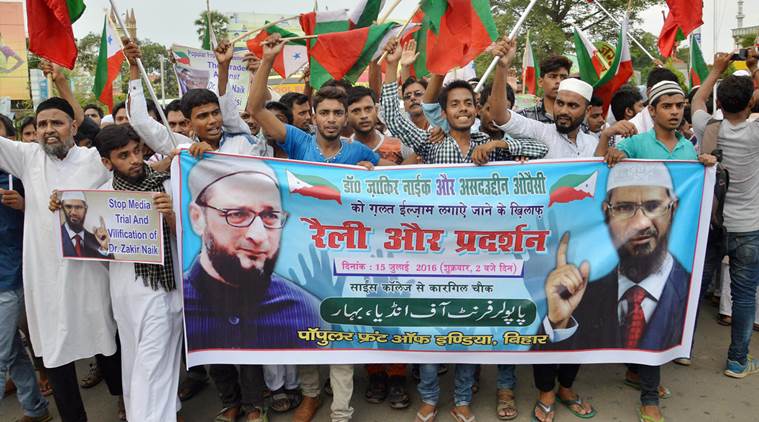
Workers believed to be belonging to the radical Islamist organisation – Popular Front of India (PFI) were arrested by the Kerala police on Monday, in connection with the murder of a Student Federation of India (SFI) leader, PTI has reported.
As per the report, the suspects stabbed the CPM’s student wing leader named Abhimanyu, inside the campus of Maharaja’s College in Ernakulam on Sunday. He was declared dead after being brought to the hospital, while two others are undergoing treatment. A 19-year-old student named Arjun is said to be in a serious condition.
As per a local report by Manorama Online, the attack took place over a dispute about wall writings, at a time when the new session of the Maharaja college has begun. The report claims that three workers of Campus front (whose parent organisation is the PFI), have been arrested by the police. The three arrested are named Bilal, Farooq and Riyas. It is being claimed that there were 15 others in the murderous mob.
As reported, activists of SFI and the Campus Front started the “routine practice” of writing on campus walls with the commencement of the new academic year. The issue began when the groups started overwriting on the graffiti made The report claimed that a “communal writing” was etched over the Campus Front’s graffiti which contributed to the dispute.
Following the murder, the SFI has called a statewide bandh on Monday, with the CPM doing the same in the slain SFI activists’ hometown.
The radical Islamist organisation PFI, which now seems to have started targeting CPM’s associates, has recorded a long and bloody history in the state of Kerala.
This includes chopping off hands of a Kerala Professor for allegedly insulting Islamic Prophet Mohammed. Besides this, it has been accused by the National Investigative Agency (NIA) of being involved in the controversial ‘love jihad’ cases in Kerala. Recently, activists of its political arm SDPI were arrested in connection with an ABVP worker’s brutal murder in Kerala’s Kannur.
In recent times, the so-called celebrity journalists have been very vocal about the fake news menace that has infiltrated the social media space. We had seen how some of them ‘appreciated’ and ‘welcomed’ the move that the government will crack down on those journalists who report fake news. While the circular issued by the then Minister of Information and Broadcasting, Smriti Irani, stands withdrawn, the so-called journalists are back to rumourmongering.
Recently, Prime Minister Modi was challenged by cricketer Virat Kohli to take up the fitness challenge. To that, Prime Minister Modi released his video, emphasising on the importance of including Yoga in daily life. As expected, people got curious about the details of the video. A very dubious sounding website, IndiaScoops has recently surfaced which published an article that Prime Minister Narendra Modi spent Rs. 35 lakh on his #HumFitToIndiaFit challenge.
Indiascoops.com claiming Rs. 35 lakh was spent on the ad.
The article was very widely circulated by the usual suspects. Among them were Congress MP Shashi Tharoor, who faces charges of abetment to suicide in his wife Sunanda Pushkar’s death.
20 crore rupees in ads for #YogaDay, 35 lambs for @PMOIndia‘s fitness video! Disgraceful. This government is all about smoke & mirrors. Hype is their substitute for hope — the hopes they have destroyed.https://t.co/vmYZINkRD2
Rs 35 lakh: Cost of PM Narendra Modi’s Yoga Videos and Photo Shoot, AYUSH Ministry spent Rs 20 crores on Ads for International Yoga Day https://t.co/49EggWGP1o
While we are not aware of the actual amount spent, if at all, on the video, we tried to see whether the news shared by such influential people on social media was even true. Especially when this is the only website which claims such news, and this is the only blog which has been shared by everyone above.
So we did a bit of digging. Interestingly, the amount Rs. 35 lakh is not received in an answer to an RTI query, but ‘sources’ in the PMO who are ‘tightlipped’ but will, of course, speak to a website which was registered 66 days prior on 27th April 2018.
IndiaScoops was created on 27 April, 2018
I’m asking the editor to poach IndiaScoops resources who have such highly placed sources in the PMO because clearly, despite debunking so many hit jobs against the government, we still don’t have such exclusive sources.
The person who created the website went for a premium account so as to mask their real identity. Very curious for a blog with about 10,000 likes on Facebook to spend so much and go to such length to hide their identity. What have they got to hide?
Moving on, we went to their Facebook page which has little over 11,000 likes. So, it is a bit curious how a blog which has little over 11,000 likes on Facebook gets a ‘scoop’ which gets picked up by all Aam Aadmi Party and Congress leaders? Especially when the original post on Facebook itself has 4 shares and 6 likes.
IndiaScoops Facebook page with little over 11,000 likes
We then went to their ‘community’ page which shows which all posts they are tagged in. You know, to see if any verified page tagged their post and helped it make viral. We saw one post from March this year where FirstPost Hindi had tagged this page in a story they had done on … wait for it … Arshi Khan, Bigg Boss contestant.
IndiaScoops Facebook page
We then went to the rating page, which showed a rating of 4.4 out of 5 stars.
IndiaScoops ‘reviews’ – full of lust
Till March this year, ‘IndiaScoops’ was an Arshi Khan fan page. So either the owners of Arshi Khan fan page became political bloggers suddenly or someone ‘bought’ their Facebook page so that they already have an existing fan base.
The first tweet linking this article appeared from a Twitter handle, @ZubairCAJ
If this is true, Narendra Modi, Mr. Modi, you’re not only not bringing anything (of course a lot shame), but… https://t.co/8oBSknHatk
Hmm. While the name Zubair sounds familiar, I’m not able to place where I’ve heard it. Hmm.
The earliest mention of this website that we could find is by a Twitter handle ‘India Scribes Tv’.
First mention of IndiaScoops on Twitter
IndiaScoops is run by one Flynn Remedios. In November 2010, a model and Kannada starlet had filed a case of molestation against one Flynn Remedios. She had also accused him of cheating her of Rs. 4 lakh. In 2008, model Sherlyn Chopra had filed a case against ‘freelance journalist’ Flynn Remedios who offered to become her public relations officer, for allegedly sending her outrageous SMSes. And recently, Remedios has described as Arshi Khan’s publicist. The same Arshi Khan whose Facebook page now became IndiaScoops.com page which has ‘exclusive sources’ in the PMO. Oh, and Arshi Khan and her publicist Flynn Remedios have been accused by one Pandit Ramesh Joshi of not returning the money she borrowed as well as of sexual harassment.
It is thus intriguing that an erstwhile Arshi Khan fan page got an exclusive scoop from sources within the Prime Minister’s office, published a report that hardly got any traction, got shared by a troll called Zubair, and then, got picked up by Congress politicians, AAP politicians, more trolls and trolls masquerading as journalists. And that ‘journalist’ with exclusive sources within the PMO turns out to be a publicist for a reality show actor and has questionable credentials.
This begs an important question: Deep inside, are these politicians and “journalists” just rumour mongering trolls?
In two earlier pieces (Part I, Part II), Modi’s transformation of India using the twin pillars – choosing the right policies and then executing them well – was examined in detail. The impact on the ground is for all to see. It is in this context that news of the plot to assassinate Modi by extremists groups has come as a shocker. Undoubtedly it is a serious issue and reports have indicated that the police, as well as the intelligence agencies, are looking into this.
The plot itself was not unexpected given that two former Indian Prime Ministers have been assassinated. But it comes as a living reminder that country’s leadership continues to face threats from forces inimical to India – both within and outside the country.
More importantly, this is symptomatic of the deeper churn in the political ecosystem ever since Modi became Prime Minister. It is worth pointing out here that many opposition parties, particularly the fringe elements, have been drumming up so much hatred and spewing venom that it may have directly or indirectly contributed to such plots. But that is for the police to determine.
Modi’s focus on “development”, besides unleashing the economy, has enabled him to wrest control of the political narrative and lay down a new set of agenda for India. Muslim appeasement has lost its sheen – particularly after the banning of “triple talaq” thus endearing himself to millions of Muslim women. Also, the absence of targeted attacks on minorities that many Cassandra prophesied has only aided the shifting of the narrative. In many ways, much of the angst of these entrenched anti-national elements can be sourced to their complete disappointment in the successes of the ruling establishment.
This shift in narrative has immense consequences. India is witnessing a slow migration from ghetto politics – a perverted brand of politics of pandering to minorities at the expense of the majority that has only fissured India for seven decades – to one dominated by performance, punctuated by key statistics and data on the economy. The ground reality is that it is sounding the death knell for many political careers and parties. A careful examination of changes occurring in the political campaigns seems to suggest the movement in that direction.
The Congress party, India’ largest opposition party in terms of organization and resources, has been forced out of office in all states save one. India’s very own grand old party with a long history is today reduced to a mere rump of their erstwhile past. The massive mandate in favour of Modi has created severe long-term damages to the party. Their banding together with all and sundry – disparate and desperate parties has only degraded India’s opposition polity into a chaotic agglutination for whom political ideology has become nothing more than a disguise. This short-sighted calculus to gain political power at any cost has been their undoing.
Their responses to the government’s “development first” agenda have been bizarre – from a mix of standard divide and rule gimmickry to engineering violent protests to create a false aura of deteriorating law and order situation. They talked about the unending oppression of Dalits, repression of Muslims, denial of equal rights to women, refusal to share river water sources between states, linguistic chauvinism, and north versus south India and so on and so forth. But all these time-tested strategies seem to have fallen flat on their faces and only succeeded in leading them further into the dark political wilderness. The people seem to have called the bluff.
Aiding the Prime Minister in building his massive support base, albeit unintended, is the almost complete lack of thought leadership in the opposition camp. Their only answer to his development programs is a dysfunctional opposition to anything and everything he does. They seem to have mistaken rabid Modi-baiting for strategy. Engineering street protests and attacks on Dalits and minorities are now misconstrued as political stagecraft. So rapid is the erosion of their support base that today Congress is not even confident of being elected in their “safest” constituencies despite all allurements to the voters.
The truth is that Modi’s massive mindshare of Indians is real. He has captivated different demographic segments by providing different programs that appeal to them. With his powerful engagement on social media, he seems to have captured the imagination of the younger segments. They see the fruits of his initiatives – from sleek railway coaches to soil data cards for farmers – and have massively backed him.
The expectations of the people on the delivery of developmental agenda are high and there is no going back. In every village people are talking excitedly about electrification or the introduction of new railway lines or the spanking new highway that snakes through their town. They have now seen and experienced for themselves how things can change fast. The most important learning for the people is that these massive public investments and welfare programs if executed well under watchful eyes can swiftly impact their economic fortunes. That is the essence of Modi’s economic transformation.
The fall out on the political ecosystem is that many political careers will be ruined and we may never again see the faces of many politicians. Fringe elements, arguably the loudest anti-Modi voices and the most virulent anti-national forces, have been corralled and their sources of funds have been shut down, thanks to demonetization. For others, the writing on the wall is clear. Perform your duties as expected or exit the political life.
The focus on governance and development may have found a long-awaited cure for anti-incumbency that ailed India for decades. This does not mean that 2019 election will be a cakewalk for the BJP or Modi himself. There is a lot of unfinished work. More importantly, he has to step up his publicity machinery to bring to the attention of every Indian in every village what has been achieved in these four years.
Good governance and data on the economy may provide fuel to debates and score brownie points on the television talk shows and may even win thunderous applause. But winning elections is another matter altogether. The 2018 elections in Karnataka shows that BJP has much work to do. But at least one thing is clear. The days of perverted appeasement politics is definitely over and seems to have had a quiet burial.
India and Pakistan on Sunday exchanged the lists of civilian prisoners and fishermen lodged in each other’s jails. The list was exchanged through diplomatic channels simultaneously at New Delhi and Islamabad.
As per the Ministry of external affairs, Pakistan has shared with India a list of 53 civilian prisoners and 418 fishermen in its custody, who are or believed to be of Indian origin. They also confirmed that India had urged Pakistan to expedite the release of nine Indian civilian prisoners and 229 Indian fishermen who have completed their sentences and whose nationality has been confirmed. The MEA also confirmed conveying to Pakistan the needs for early release and repatriation of civilian prisoners, missing Indian defence personnel and fishermen along with their boats.
The lists were exchanged under the Consular Access Agreement between Pakistan and India signed on May 21, 2008. Under the agreement, both countries are required to exchange lists of their nationals in each other’s custody twice a year, on January 1 and July 1. While Pakistan handed over a list of 471 Indian prisoners lodged in Pakistani jails, India handed over a list of 357 Pak nationals.
Though the MEA did not mention names, Indian nationals in Pakistani jails included Kulbhushan Jadhav and Hamid Nehal Ansari also.
Jadhav was arrested in March 2016 on charges of espionage and a Pakistani military court has handed him the death penalty. Following the sentencing, India approached the International Court of Justice, which restrained Pakistan from executing Jadhav in May last year. After several requests for consular access to Kulbhushan Jadhav was denied by Pakistan, it finally conceded not to consular access but letting Kulbhushan’s family meet him in Islamabad.
A day after his family met Jadhav, the MEA has come out with a strong statementcondemning Pakistan for the inhuman treatment met out to his family.
India and Pakistan consider the release of prisoners from either side as a ‘goodwill gesture’. But little has been ever spoken about the agony and adversities of these prisoners. The Indian Express had reported in 2013, that the fishermen released by Pakistan had then complained that they were ill-treated in the jails there and the allowances earned by them were pocketed by the prison staff. They also complained that they were not served proper food, were made to wash cloths of Pakistani prisoners and clean the toilets and kept devoid of any kind of medical assistance.
The 86 fishermen, who were released from a Pakistani prison in 2016, had accused the jail authorities of ill-treatment and blamed them for the death of two of their compatriots who were lodged in the same prison.
While talking about brutality on Indian prisoners in Pakistan jail, no one can miss mentioning Sarabjit Singh. Swarna Lal, an Indian inmate imprisoned in Kot Lakhpat Jail along with Sarabjit had spoken to News18 in 2013, about how Indian prisoners are treated in a very inhuman way in Pakistani jails. He said that the Indians are treated like animals and beaten up brutally. He spoke about how Sarabjit was tortured in the jail by the authorities. He also recollected how another inmate Chamel Singh who had been killed inside a Pakistani jail.
The United States wants India to cut down its oil imports from Iran which stands as its third-biggest supplier after Iraq and Saudi Arabia. President Donald Trump has followed his pre-election promise with withdrawal from the 2015 Joint Comprehensive Plan for Action (JCPOA) which had enabled China, Russia, France, Germany UK, European Union and the US itself to dilute the economic sanctions against Tehran. Now the sanctions are back in place with the deadline of November 6, 2018, and the world is in turmoil, no less India.
The Trump administration has chosen a new way to browbeat the countries which don’t fall in line. Last August, it introduced CAATSA (Countering America’s Adversaries Through Sanctions Act) to scare those away from trade relations with “hostile” countries such as Russia, North Korea and Iran. International banks and companies which defy the sanctions would bear the brunt. Less oil imports from Iran would hike up the prices and import bills, not just of India but of many around the world. It would hit both inflation and Indian rupee. Since the US dominates the re-insurance and payment gateways, bypassing them is difficult.
India’s dilemma is apparent. Before 2005, it paid $12-14 billion annually to oil bills by Iran. But signing the 2005 Indo-US Nuclear Civil Deal, gave New Delhi’s leash in US hands. India voted against Iran in the IAEA General Conference in September the very year; dithered on the Iran-Pakistan-India Pipeline and sounded the death knell of Turkmenistan-Pakistan-India (TAPI) gas pipeline project. By 2014, India had reduced the Iranian oil imports to $4 billion annually.
The US treasury methodically shut down the banking options for India who then began paying Turkey by cash which then converted it to gold bars and sent it across to Tehran. India was in no position to pay oil bills in US dollars. India did try the balancing act: while Reserve Bank of India (RBI) ceased dealing with Tehran-based Asian Clearing Union in 2010, it came to an understanding with Iran to pay half of its bill in Indian rupees in 2012.
But once the JCPOA came into being, India-Iran trade relations grew back to 2012 days. India also decided to pay out $6.5 billion it owed to Iran, held up due to sanctions. Modi government renewed the stalled Chahbahar port project. Its’ ministers made a beeline to Tehran with promises of oil and infrastructural projects. Iran obliged on its part by granting Oil and Natural Gas Commission (ONGC) the gas fields of Farzad B for exploration. The air of optimism only grew better when Iranian president Hassan Rouhani visited New Delhi this February with his oil minister Bijan Zanganeh. India pledged it would double its oil imports from Iran in 2018-2019. Iran, on its part, promised to cut down the freight by $1 per barrel. India pledged to increase import by 500,000 barrels a day.
But now comes the fresh US imposition. Even though foreign minister Sushma Swaraj has reiterated India would only abide by the mandates sanctioned by the United Nations (UN), it’s easier said than done. India and US have a booming trade of $140 billion which could take a grave hit, as well as around $31 billion of bilateral trade surplus advantage India has. Chahbahar port project, which could save millions in trade and increase Afghanistan’s tilt towards India, stands to lose steam. Besides, it just would give a bigger fillip to China to snug closer to Iran, shutting the doors on India.
India would be encouraged by the stand of UK, France, Germany who have expressed “regret and concern over Trump’s disruptive action. The Modi government meanwhile has started to flex its own muscles: in reaction to the US postponing the 2+2 dialogue, India has declined US’ offer to host Defence Minister Nirmala Sitharaman. India also seems steadfast in increasing its military deals with Russia which faces similar offensive sanctions from the United States.
The one fall-out of all this, including trade barriers, ratcheted up by both US and India, is Modi government swinging back appreciably into the China-Russia zone. India has this strategic advantage where countries are looking to wow India rather than the other way around. However, India-US relations for the moment are several notches down than they have ever been since Trump came to power.
The Lucknow City municipal corporation (LMC) is planning to build a giant statue of Lord Lakshman near the Teeli Wali Masjid in Lucknow, as reported by DNA. The move seems to have angered Muslim clerics.
The Muslim clerics have opposed the plan to build the statue near the surrounding areas of the mosque. In a shocking statement, the clerics have said that the construction of any Hindu religious structure would ‘lead to violence’.
The Imam of Teele Wali Masjid Maulana Syed Fazlul Mannan Rahmani said that he has spoken to the mayor and talks were on to settle the issue. “We will not allow any statue to be installed near the mosque,” said the Imam, suggesting the installation of the statue at the Lakshman Mela ground on the banks of river Gomti.
The city authorities had planned to build the statue as some sections believe that like Ayodhya, there are remnants of Lakshman temple under the mosque. The temple known as ‘Lakshman Teela’ was demolished around 350 years ago to build structures of Bada Imambara, Teele Wali Masjid. This is also mentioned in a book called Ankaha Lucknow, written by senior BJP leader Lalaji Tandon.
Muslims, however, claim that the mosque was built on the instructions of Mughal Emperor Aurangzeb when he visited the city in memory of famous Muslim Scholar Shaikh Peer Muhammad who ran an Islamic Study Centre at the place. His tomb is located just 20 metres east of the mosque. Aurangzeb, contrary to what modern Historians would have people believe, was no secularist. There is documented evidence of him being a bigot who destroyed many Hindu temples during his reign and indulged in barbarity regularly.
The Lucknow Nagar Nigam Executive Committee, however, has passed a resolution to install a grand statue of Lord Lakshman. The committee has decided to build the consensus and said that the final decision will be reached after involving all stakeholders.
“The statue will not be installed on the land of the mosque where namaz is held but planned at the roundabout outside the mosque. A final decision is yet to be taken in this regard. If anyone has any objections, we may reconsider the decision,” said BJP Mayor Sanyukta Bhatia.
Interestingly, Lucknow also gets its name from Lord Lakshman, the brother of the great Lord Ram. The city was his capital and was earlier known as Lakhnavati or Lakshmanpuri. An attempt to the build the temple was started during Ram Janmabhoomi movement, but could not get enough momentum to build the temple.