Home Blog Page 7133

Arun Jaitley slams ‘Jehadis, Maoists, their intellectual counterparts and Human Right Organisations that espouse separatism’

Arun Jaitley today wrote a scathing article detailing who, in this country, is actually threatening Human Rights which are enshrined in the constitution of India. In a Facebook post, he begins by saying, “The right to equality, the right to life and liberty, basic fundamental rights such as free speech etc., the right to religious freedom, the right to judicial redress amongst others, Parliamentary democracy and freedom to vote are essential aspects of those fundamental rights”.

He goes on to talk about the two ideological groups of insurgents which are active in India today. One is the Jehadis, among whom, many are trained by our “western neighbour” (Pakistan). He says “Their prime objective is to create disaffection against the Indian State. They are active in a few parts of India but predominantly in the State of Jammu and Kashmir. Some local youth have also joined them”.

Detailing the other, Maoists. Hinting at the phenomenon of Urban Naxals, Jaitley writes that the Maoists are primarily in some of the tribal districts in central India but their ideological supporters are spread out in various parts of the country.

He says that both these groups don’t believe in Democracy and “in the system that they perceive, there is no democracy, no elections, no equality, no free speech and no guarantee of life and liberty. On the contrary, most of them believe that power flows from the barrel of the gun. They indulge in large-scale violence, killing of innocents and sabotage the development activity for public welfare”.

Interestingly, Arun Jaitley also writes about the coordination between Jehadis and Maoists, the first who believe there is only space for religion, and the second, who believe there is space for none.

After various statements from the Congress party and its sympathetic media blaming the Modi government for “human rights violations” after the motivated UNHRC report, it seems that this write up by Jaitley is aimed as a response to those elements.

Arun Jaitley goes on to talk about “who is responsible for human rights violations in Kashmir”. He says that majority of Kashmir want peace and move to other parts of the country to earn their livelihood and education. From the Kashmiri Pandits to now, the Kashmiri Muslims, Pakistan’s nefarious designs have affected the Kashmiris the most.

He writes, “In fact, one of the worst victims of Pakistan’s misconceived Kashmir policy has been the residents of Kashmir valley. The region, on the strength of its natural beauty, artisans and agriculture, has the potential of being the wealthiest per capita State in the country. The terrorists have destroyed it. For the past three years the terrorists up their activities in the months of April, May and June so that the economic lifeline of the valley suffers in the tourism season. They terrorise courts; they kill editors; they kill innocent citizens and they don’t allow any alternate religion to be practised. Who is threatening the human rights of the citizens of Kashmir? It is obvious that it is the terrorists and the Jehadis who have done it. The whole country bears a large cost by putting its security personnel in the region in order to protect the innocent citizens. Many security personnel have been martyred”.

He says the Maoists too kill innocent tribals and security forces and don’t let any developmental activities take place.

He questions the Human Right Organisations. “How many times have we come across human rights organisations preparing documents and releasing reports with regard to the human rights of these helpless citizens and the patriotic security personnel who has been sent there to defend these citizens?”

Talking about the evolution of Human Rights Organisations, Jaitley writes, “The civil liberties movement was controlled by the liberals. In the early 70’s, the People’s Union for Civil Liberties (PUCL) was formed by constitutional liberals led by Shri Jai Prakash Narayan. This timed with the supersession of judges, the misuse of Preventive Detention Law and the beginning of dynastic rule. Its relevance increased during Emergency and immediately thereafter. In 1977, the Janata Government headed by Morarji Desai reversed most of the autocratic steps which the Indira Gandhi Government had taken and, thereafter, the comfort level of the liberals on civil liberties increased.”

He says that thereafter, in the 80s, the ultra-left seized the opportunity and started infiltrating into organisations like the PUCL and the PUDR. Jaitley then slams the people who give cover to Maoists and Jehadis who are trying to break India up. He writes, “Maoist started forming human rights organisations even at the State level and made the non-weaponised ideological Maoist as the face of these organisations. These activists were always in touch with the underground Maoist leaders. They acted as their communication channel. They would rationalise Maoist violence even in the media by arguing that the “root cause” of the violence needs to be addressed. The media was guilty of giving them disproportionate coverage. In the last few years, they expanded their strategy and started coordinating with the Jehadis and separatists notwithstanding their ideological dissimilarity. The only thing common between them was violence, overthrow of the constitutional order and secessionism i.e. the breakup of India. Recent evidence suggest that they are trying to rope in some misguided dalit activists into their fold. This became publically apparent after the “Tukde Tukde” agitation in the Jawaharlal Nehru University and the events which followed in Hyderabad thereafter.”

He continues to slam the Human Rights Organisations saying that they seldom shed tears for the innocent civilians and security personnel killed by these Jehadis and Maoists.

He then slams the propaganda machinery who influence the western opinion makers and organisations. He says that Congress historically would have been opposed to such propaganda but these elements have found sympathy in Rahul Gandhi’s heart.

“Firstly, their ability to coordinate with opinion makers in the western world and with the global human rights organisations has to be recognised. Secondly, even though the Congress Party historically and ideologically would have been opposed to these groups, they have earned a sympathy in Rahul Gandhi’s heart. He had no qualms about joining those who raised subversive slogans at JNU and Hyderabad. With this initial success, the others amongst the so called federal front have forgotten the dangers of these groups to India and Indian democracy. The political adventurists in parties like AAP, TMC and the like only look for a political opportunity in these groups. These human right organisations are an over-ground face of the underground. In the system that they believe in, there is no place for life, liberty, equality and free speech. In fact, there is no space for election or Parliamentary democracy”.

Ending his note by calling Human Rights Organisation Maoists sponsored, he says their only aim is to espouse separatism and violence.
“The Maoist sponsored human rights organisations only espouse the cause of separatism and violence – be it Kashmir or Chhattisgarh. They have brought a bad name to a very precious and valuable concept of human rights. Their international affiliates are no different.
Our policy has to be “Save the Human Rights of every Indian – be it a tribal or a Kashmiri” from terrorists”.

Went to Kashmir in search of jobs but were forced to become stone pelters: UP youths to police

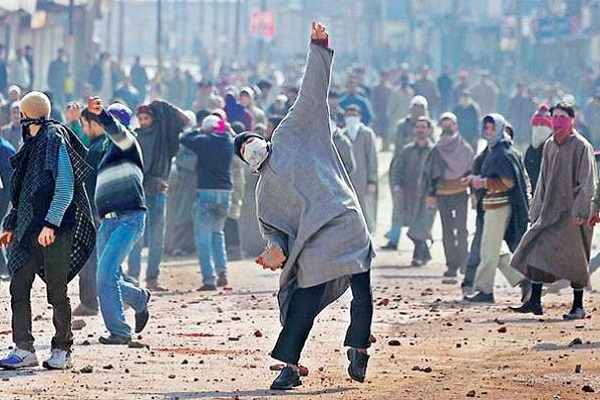
Six youths hailing from Baghpat and Saharanpur districts of Uttar Pradesh has complained to the police that they were made to pelt stones on security forces, PTI has reported.

As per a quote by UP’s Director General of Police – OP Singh, the youths who had travelled to Pulwama in Kashmir were earning about Rs 20,000 while working as tailors, but while doing so were told to participate in stone pelting. Fed up by this, the reportedly returned back home.

An India Today report has claimed that two of the said youths named Naseem and Ankit Kumar approached the Baghpat police on Tuesday. As per Naseem, they used to seek shelter in the house of locals whenever an encounter used to take place between security forces and the terrorists. Naseem further claims that during the encounter locals used to pelt stones on the security forces.

Naseem also told the police that they used to be asked by their local colleagues to also indulge in stone pelting and would be threatened after they refused. As per the other youth Anikt, they became very scared and even paid Rs 10,000 to a local to sneak them out of the region. The youths have also alleged that they continue to receive threatening calls from Kashmir.

An IANS report has claimed that three youths have been detained regarding the matter in Saharanpur and are now being questioned by the police. It quotes the police as suspecting that a contractor who promised them jobs at a stitching factory, coerced them into pelting stones. The police are hunting for the contractor.

As a result of this development, reports have claimed that a local intelligence unit has been constituted to probe the matter by questioning the youths and their families. As per the DGP – OP Singh, the matter will be probed discretely.

Water crisis management: Government fast tracks the interlinking of thirty rivers

With water constituting two third of the Earth it becomes the most important resource for mankind. Keeping this in mind the government has fast-tracked the project of interlinking 30 rivers, in an attempt to eradicate the deepening water crisis threatening the living conditions of hundreds of thousands of people across the country.

In the first phase of its initiative, under the supervision of the Union water resource minister, Nitin Gadkari, development projects worth 45000 crores to interlink four rivers has been lined up. The development work will cover two phases of Ken-Betwa, Damanganga-Pinjal and Par-Tapi-Narmada projects, the official said, adding that clearance has already been received for linking Ken-Betwa and work on it will commence soon.

The Ken-Betwa project envisages fulfilling the water needs of the Bundelkhand region, which straddles both Uttar Pradesh and Madhya Pradesh. The National Water Development Agency (NWDA) had identified 30 links (16 in the peninsular areas and 14 rivers in the Himalayan regions) for preparation of feasibility reports.

The projects will transfer 174 billion cubic meters of water through about 14900-km network of canals, aiming to ease the water crisis in western and southern India while lessening the impact of recurrent floods in eastern India. Though the pre-feasibility report for all thirty links has already been circulated amongst the concerned state government officials, the deadline for the projects is yet to be decided.

River Linking
source: Economic Times

Gadkari, while addressing a conference on ‘Water for Sustainable Development-2018-2028’ in Tajikistan, said the Indian government is committed to implementing the inter-basin transfer of water project. He said other than these interlinking projects, the government will spend about Rs 30,000 crore on water conservation across the country in around 100,000 villages. He further specified that “The Indian government plans to achieve universal and equitable access to safe and affordable drinking water for all by 2030.”

The government is all set for a holistic and overall transformation of water bodies through its proposed projects. Understanding the importance of safe and clean water, the government had in May 2015 approved Rs 20,000 crore under its ambitious ‘Namami Gange’ – integrated Ganga conservation mission – programme for five years (up to December 2020). Nitin Gadkari had claimed that the result of Ganga cleaning works would be visible on the ground by March next year as the river (water quality) would be 70 to 80% cleaner (from 2014-15 level) by that time.

The minister’s claim on results was substantiated by the water resources secretary U P Singh who asserted that water quality of the river has improved in terms of three key parameters – Biochemical Oxygen Demand (BOD), Dissolved Oxygen (DO) and Coliforms – which indicate the health of any river.

“Water quality (monitored at 80 locations) showed improvement in 2017 as compared to 2016. The DO levels have improved at 33 locations and BOD levels at 26 locations while Coliform bacteria count is reduced at 30 locations”, said Singh while referring to the water quality monitoring data of the CPCB for the 2015-17 period.

Though the mammoth task of cleaning the river Ganga is a dauntless challenge and many experts are skeptical, saying that “It is silly and unscientific to even think of reviving a river only through actions aimed at ‘Nirmalta’ (clean water), the Union water resource minister, Nitin Gadkari seems to be confident of delivering what he has committed.

Lateral Entry: Landmark step by Modi govt to equip bureaucracy for challenges and opportunities

In 2011, I was one amongst the chosen few to be selected for a very coveted, Accelerated Leadership Program, designed by McKinsey to groom future leaders for India’s biggest corporate house. Although this was the time when my corporate career was flourishing, it didn’t satiate the innate desire to contribute directly to the socio-political transformation that India was undergoing.

I had positioned myself for a comfortable and rewarding corporate career, in one of India`s largest MNC and an accelerated path leading to a CXO position. My roots of a rustic, small village were at antithesis with my current position and the ensuing career path. I wanted to do more and listened to my inner calling for a life in public service. One fine day in 2012, I took a rather unscripted plunge and resigned from the organization to be back in my native state. This is how I am writing this article as the OSD (Officer on Special Duty) to the Chief Minister of Chhattisgarh.

An advertisement published in major newspapers across the country on June 10, 2018, has given a new hope in the country while there is a lot of turmoil in the minds of many. It is very rare to see that an advertisement related to government recruitment has been shared by so many people in social media and WhatsApp followed by discussions and debates! And why not? Prime Minister Modi has initiated an innovation and decided to make a direct appointment to the post of Joint Secretary in the Central Government, which is a new beginning to improve the administrative structure of the country.

The Government of India has recently announced the scheme of Lateral Entry, which has attracted a lot of attention and debate. Now there is a direct appointment to the post of Joint Secretary in the Central Government without the examination of Civil Services! GOI is looking for those very selective, special Indians who possess the potent combination of deep domain knowledge, wide experience and a passion to serve the nation. The objective is to enable the Government to get the best from India’s talent pool to join hands with it, in helping determine the future of 125 Crore Indians – by ensuring this talent search is not constrained by any limitations of service, cadre or employment from across the public as well as private sector.

Lateral entry is a well-established principle across the world, universally acknowledged by experts to catalyze greater governance, efficiency, professionalism and specialized, cutting-edge expertise in public administration. Most advanced, sophisticated administrations have institutionalized it as a permanent part of its system – ranging from the US to Belgium, UK, Australia and New Zealand

The lack of IAS officers in the country also seems to justify the decision of lateral entry. By 2016, 23% of the posts approved by the IAS officers were vacant in the absence of appointment. The high-level officers employed in the private sector earn practical knowledge in their respective areas, which can definitely be beneficial in the government’s decision-making decisions. In today’s era, when big industries are being operated with greater efficiency and profit with the help of government and private sector, such partnership is also a demand of time in policy decisions.

In India too, a lateral entry has been consistently recommended by multiple government committees and reviews over the years, but with the onus always left on the political leadership, nothing has moved as our leaders have remained reluctant to bite the bullet on account of fear of administrative and populist backlash. Former Prime Minister Manmohan Singh too has been an old vocal advocate of lateral entry, describing even as recently as in 2016 how he had gathered a team of outside experts to drive the 1991 reforms.

Prime Minister Narendra Modi finally decided to bell the cat, ending the political dithering by categorically conveying his intent and political will to back this long-needed reform – setting in motion a process of internal consultation and deliberation which culminated in the 10th June 2018 advertisement formally announcing Lateral Entry. Early in his tenure in 2014, PM Modi asked Secretaries of various ministries to evaluate and prepare for the allowing of lateral entry. Lateral entry was a central reform identified by the Group of Secretaries on Governance in 2017. Department of Personnel and Training made public its intention to institutionalize a system of lateral entry in mid-2017.

What is even particularly interesting is that while vested interests try to whirl up opposition to this initiative, ‘Lateral entry’ ironically is not new to India even in practice, with an endless list of experts having been brought into government by almost all governments and prime ministers over the years. To cite but a few prominent examples: From previous Governments – Manmohan Singh (Economy), Mantosh Sondhi (Heavy Industry), V Krishnamurthy (Heavy Industry), P K Basu (Public Enterprise), Prof Deodhar (Electronics), K P P Nambiar (Electronics), M S Swaminathan (Agriculture), Verghese Kurien (NDDB), Vijay Kelkar (Petroleum),  Montek Singh Ahluwalia (Economy), Sam Pitroda (Technology), Nandan Nilekani (UIDAI), Raghu Raman (Natgrid), D V Kapur (Power), R V Shahi (Power) To the current Government – Param Iyer (Sanitation), Rajesh Kotecha (Ayush), Adil Zainulbhai (Quality Council), Arvind Panagariya (Niti), Kamal Kishore (NDMA), R Ramanan (AIM), Arvind Gupta (MyGov). However, all these appointments have been made by the executive on an ad-hoc, case-by-case basis from a restricted pool of a select few.

The current initiative is thus a landmark step to institutionalize lateral entry as a structured part of the administrative system – making it transparent, objective and meritocratic. Furthermore it for the first time opens up for all this privilege and opportunity to serve the nation. Thus, contrary to the partisan allegations of any ‘political interference’, this step, in fact, is a decisive ‘political intervention’ through which PM Modi has seceded the discretion historically enjoyed by his predecessors, for establishing an institutionalized system of checks and balances

Moreover, contrary to being a ‘dilution’ of the traditional UPSC medium of selection of officers, the new system is going to actually be a far more rigorous and exacting one – involving: a multi-dimensional, multi-level comprehensive screening procedure testing all aspects of domain, functional and leadership capabilities as well as aptitude, personality and psychological testing, driven by independent teams of Sectoral, Governance and HR experts. Supported by the government’s in-house recruiting expertise from across the board including, under the oversight of a high-level team comprising of Secretaries and senior government officers. Candidate’s domain knowledge, sectoral experience, functional skills and behavioural competencies will be matched to the nature and needs of the positions of responsibility.

It is an important administrative reform waiting for years, which was pending for political or administrative reasons. Prime Minister Narendra Modi has proved this with the decision that irrespective of the stalemate of any level if it is a matter of public interest then the government is capable of making a tough decision. Lateral entry is thus a landmark step in the comprehensive series of administrative reforms steadily yet decisively being undertaken by the Narendra Modi government, to equip India’s bureaucracy for the challenges as well as opportunities of the 21st century.

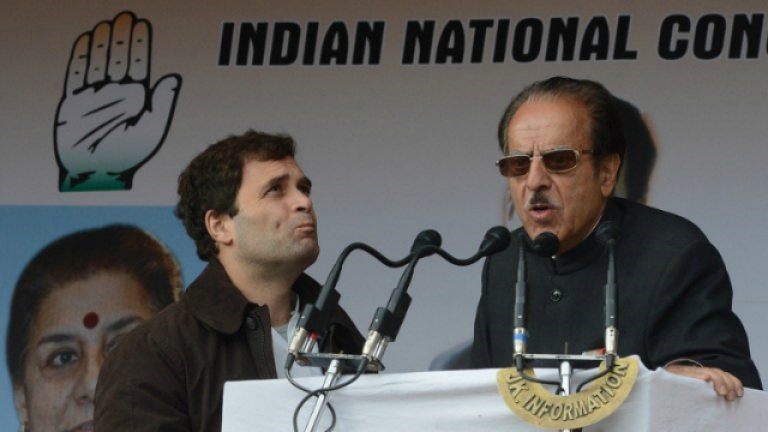
After Ghulam Nabi Azad insults Army, Congress leader Saifuddin Soz bats for ‘independence of Kashmir’

The Congress Party has been caught in controversy yet again, as the veteran Congress leader and former Union Minister Saifuddin Soz has once again sparked a major controversy by saying that former Pakistani dictator Pervez Musharraf was correct in assessing that given a choice, Kashmiris would want to be independent.


It seems that Congress party is following a pattern, which was initiated by senior Congress leader Ghulam Nabi Azad, who first insulted the security forces. This is now followed by Saifuddin Soz, who calls for independence of Kashmir from India.

Soz, whose book ‘Kashmir: Glimpses of History and the Story of Struggle’ is set to be launched next week, has said that Musharraf was correct when he had said that the first choice of Kashmiris would be independence. “Musharraf said Kashmiris don’t want to merge with Pakistan, their first choice is independence. The statement was true then and remains true now also. I say the same, but I know that it is not possible,” he told news agency ANI.

Congress veteran Saifuddin Soz also insisted in his book that the central government should first open dialogue with the Hurriyat Conference before moving to mainstream parties to find a solution to the Kashmir issue.

In his book, Soz reportedly also criticises how successive Indian governments headed by Jawaharlal Nehru and Indira Gandhi have committed ‘blunders’ which have resulted in alienating Kashmir from India. Soz in his book says, that governments since 1953 have failed to provide a concrete solution to the Kashmir issue.

Soz also blamed Nehru by saying, “Nehru had realized that India’s policy had gone wrong in Kashmir and it was the greatest blunder committed by the Government of India to have dismissed and arrested the Sheikh unconstitutionally.”

Soz talks about the “so-called Musharraf-Vajpayee-Manmohan formula” which he says, they had envisaged same borders, but free movement across the region, autonomy on both the sides and demilitarization. Soz has claimed that Musharraf had shared his view with top-ranking Pakistani officials in 2007, and had almost convinced them to accept independence for Kashmir was the only viable solution.

“He (Musharraf) had also convinced his colleagues that the resolutions of the UN on Kashmir had constituted a redundant situation as this meant a tight-jacket for Kashmiris whether they wanted to go with India or to Pakistan. Musharraf had explained that if Kashmiris were given a chance to exercise their free will, they would prefer to be independent. In fact, this assessment of Musharraf seems to be correct, even today!” he writes.

This is hardly the first time Soz has made controversial remarks and claims. Previously, he had said that terrorist Burhan Wani should have been kept alive for talks and that India not Pakistan is responsible for problems plaguing J&K.

Saifuddin Soz, recently also courted controversy, after he questioned the National Human Rights Commission as to why it did not act against Major Littul Gogoi of the 53 Rashtriya Rifles for tying a protester to his jeep.

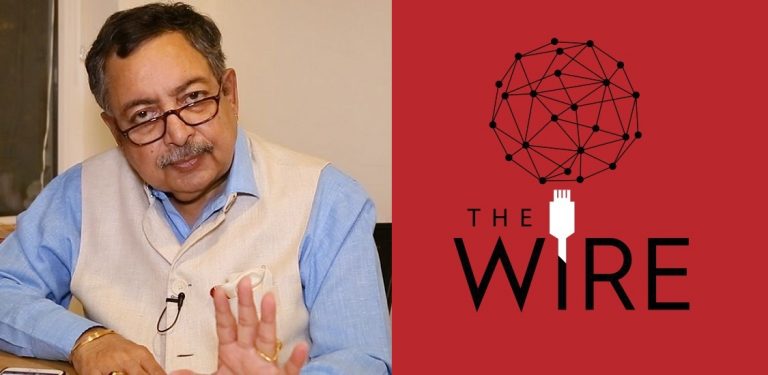
‘The Wire’s’ Vinod Dua lies yet again, this time about Kashmir, BJP-PDP alliance and Modi’s Foreign Policy

0

Factually incorrect and embodiment of hyperboles Vinod Dua, with his new video has yet again proven his shortcomings as a political commentator and journalist.

Dua in his video series with the leftist propaganda website ‘The Wire’ has been consistently churning out inutile ad-hominem against the incumbent government. While criticism is desirable, the “gloom and doom” scenario of India that has been consistent in Dua’s views are farcical at best.

Like I have mentioned in my previous article, Dua seems to be obsessed with the idea of religious identity, asserting it in the prelude of his video series. He starts off this particular video by quoting an obnoxious comment about how wherever BJP has gone, Muslim and Hindu religious divide has grown but, of course, we know better than to trust Dua and his musings.

The numbers suggest since 1967, 15 major incidents relating to communal violence took place in this country and 10 out those 15 happened under Congress or its ally’s rule, for example, the Muzzafarnagar riots, Assam riots, Bharatpur riots all happened while Dua was telling people about the hidden gems of Indian cuisine on his FOOD show, “Zaika India Ka”.

He was clearly never bothered about such incidents happening in the country, in fact, he graciously accepted the “Padma Sree’’ award from the then Congress government on the same year (2008) when the infamous Dhule Riots took place. That riot left more than 200 people injured including 113 policemen.  It was also the year when the number of communal incidents touched the highest of 943 incidents. Even the state most associated with such incidents – Uttar Pradesh saw 247 of such instances in 2013, the highest of any state in the last decade.

Vinod Dua then goes on to explain how PDP-BJP alliance was an ideological misfit and how PDP campaigned against BJP in the run-up to the 2014 Lok Sabha. Here too, he exposed his hypocrisy. Let me explain why. In my last article, I have mentioned how Dua almost had his own fanboy moment while praising Congress for creating an alliance with the JD(S), it is worth mentioning that during the run-up to the state elections in Karnataka Congress had some very detestable things to say to the JD(S). Thus, according to Dua alliance is bad only when the side you are cheering for is a loss in any other given situation it’s a strategic move.

Dua goes on to talk about the “unholy alliance” and calls it thus because of the vast ideological difference between the two parties. He talks about how the BJP wanted article 370 to be removed and the PDP wanted it to stay. While ideologically, the parties have these stated positions, Dua fails to mention the ‘Common Minimum Programme” (CMP) that the two parties had devised when they forged the alliance, knowing fully well that ideological differences exist. In the CMP, one the points read, “Article 370: The present position will be maintained on all constitutional provisions including special status”. While BJP still believes article 370 needs to be abolished, the CMP maintained that it wouldn’t be touched.

How a journalist fails to inform his listeners about the facts and go on to lie and obfuscate, is a matter of grave concern.

He also used foul language to describe BJP and its alliance with the PDP in the valley. Dua said, and very craftily attributed to “some people saying”, that PDP was carrying ‘an animal which is considered vile in Islam’ in J&K. Now, such language can only be expected from a man whose judgment and conscience is only comparable to, in his own words, ‘an animal which is considered vile in Islam’.

Dua inconclusively brings in Cease Fire Violation data and directly co-relates it with Modi meeting the now ousted prime minister once. He does not mention the counter-measures taken by India in international diplomatic forums and the suspension of talks that ensued afterwards.

The total number of fatalities reached its peak in the valley in the year 2001 with 4507 fatalities in the valley, closely followed by the year 2000 with 3288 deaths. From the year 1990 till the year 2006 fatalities have remained over 1000, in comparison, the deaths in the valley dropped significantly in 2014. The sudden rise that many point out between 2012 and 2014, skip 2013. The recent upsurge in the valley is a continuation of the trend from 2012 and the increased operations by the forces in the valley is another factor that needs to be counted in to understand the reality of the situation. According to MHA data, the number of fatalities from 2014 to 2017 has been 185, 165, 247, 333 respectively, in comparison the fatalities from the year 2004 to 2008 have been 1964, 1663, 1131, 740, 505.

If one listens to Dua, it would seem that India is just days away from breaking itself into countless pieces. In mass communication theory we are made to learn about the ‘Mean World Syndrome’ in Gerbner’s cultivation theory where the propagation of a specific kind of information in mass media creates a false narrative inside the consumer’s mind. Vinod Dua’s video series is a prime example of that.

In the latter part of the video, he talked about India’s foreign image and how it is diminishing. Here also Dua presents countless skewed points. He brought up the UK home office notification which excluded India from the list of 25 countries which would get special privilege in granting student visa but forgot to mention India’s counter to the UK’s move where the Indian government refused to sign a MoU with the UK on the issue of ‘overstayers’ citing the very strict visa norms for Indian students that Dua mentioned in the video.

Dua then moved on the UN report on Kashmir and how it points out the human rights violation in the valley to further its narrative but deliberately did not mention that India rejected the report terming it “Mischievous and Misleading”. The statement from the MEA said –

“The report violates India’s sovereignty and territorial integrity. The entire state of Jammu and Kashmir is an integral part of India. Pakistan is in the illegal and forcible occupation of a part of the Indian state through aggression. We have repeatedly called upon Pakistan to vacate the occupied territories. The incorrect description of Indian territory in the report is mischievous, misleading and unacceptable. There are no entities such as “Azad Jammu and Kashmir” and “Gilgit-Baltistan,”

The statement also talked about how the report violates the fundamental rights and freedoms guaranteed under the constitution to every Indian citizen and India is deeply concerned that individual prejudices are being allowed to undermine the credibility of the United Nations.

The situation in the Maldives was also mentioned by Dua but he refuted himself by stating the statement issued by the Maldives authorities in which they denied any accusation that the Maldives has denied visa permits to Indians. The statement also clarifies that the immigration apparatus in the Maldives does not discriminate.

Even if we don’t go by the statements, the diplomatic backlash that India replied with to the Maldives speaks a ton about the firmness of the Indian foreign policy apparatus. India ensued Maldives defeat in a UN vote between Maldives and Indonesia for a non-permanent seat at the United Nations Security Council.

Dua seems to have a problem with CIA’s world factbook terming the RSS as a Nationalist organization here he differs with the CIA but has no qualms with the CIA terming VHP and The Bajrang Dal as militant organizations. It seems he isn’t happy about even the good that the country is doing unless it comes from a non-BJP government.

Deducting from his videos, it seems even the ills inflicted by a non-BJP government becomes sacrosanct for him. Which proves that Dua is neither a nationalist nor a patriot, but only a brown sahib who owes allegiance to the grand old party.

Karnataka’s Congress MLA demands ‘Fortuner’, not small ‘Innova’ that nobody would notice

Entitlement for VVIP treatment is not new for politicians in India who are used to having their way. Karnataka Minister and Congress leader B Z Zameer Ahmed Khan felt that an Innova car, which was allotted to him, is ‘low level’ and since has travelled in big cars since childhood, he should be given a Fortuner for official use.

Khan said that since he is ‘used to a big car’, and in order to be ‘visible’ to people he demanded the Fortuner which was provided to former chief minister Siddaramaiah. Siddaramaiah had reportedly got this Fortuner after a crow sat on his previous Fortuner, though reports suggest the reason was a technical snag. Commenting on Chief Minister H D Kumaraswamy’s decision to use his personal car for official use, Khan said since Kumaraswamy is ‘popular’ people will easily recognise him in whichever car he uses. But since he is yet to reach that level, he will be ‘visible’ to people only if he is travelling in a government car. Hence he asked for a Fortuner.

While this demand was criticized by the BJP, Congress defended Khan by saying there is nothing wrong if a minister requests a particular car. Saying media highlights unimportant issues Congress MP Syed Naseer Hussain asked if a minister is uncomfortable in one car, why can’t he request another one.

Billboard in Texas urging liberals to leave the great state of Texas to be countered with another billboard

A Texas billboard that urged liberals to keep driving until they left the state will be coming down. “Liberals please continue on I-40 until you have left our GREAT STATE OF TEXAS,” the sign reads. “I was shocked that it travelled that fast,” Burkett, owner of Burkett Outdoor Advertising, which owns the billboard, told Star-Telegram. “I believe in free speech, but this country is divided enough as it is. I’ve spoken with the client, and he’s agreed that it should come down. We’ll be reimbursing him.”

Source: Kyle Mccallie, Facebook

The photo has been shared over 10,000 times on Facebook. Mccallie, who shared the photograph, stated that he was supportive of the message. He also claimed that he has received numerous critical messages since then, many of them obscene.

Mccallie stated some threatened him as well with many saying that they will show up at his house and “snap your neck”. “Lots of hate mail and death threats. But lots of ‘we love it’ also,” said Mccallie. The billboard was received well by conservatives. ‘Wonderful sign! Need them all over all the states telling them to go south!’ one man wrote.

Roman Leal created a GoFundMe account to raise money in order to counter the initial Billboard with another. His appeal said, “We need a sign that represents the true, hospitable spirit of the great state of Texas. “Texas is for Everyone — Except Bigots” will go up on the Lamar digital billboard at I40 and Coulter. It will be visible to travellers and commuters driving along the interstate in Amarillo, giving us a chance to put our best boot forward. Meeting the campaign goal will keep the billboard up for 4 weeks. Any contributions exceeding the goal will be used to pay for a longer duration.”

Congress’ Karnataka ‘man of the match’ paid unaccounted money to AICC, claims IT Department

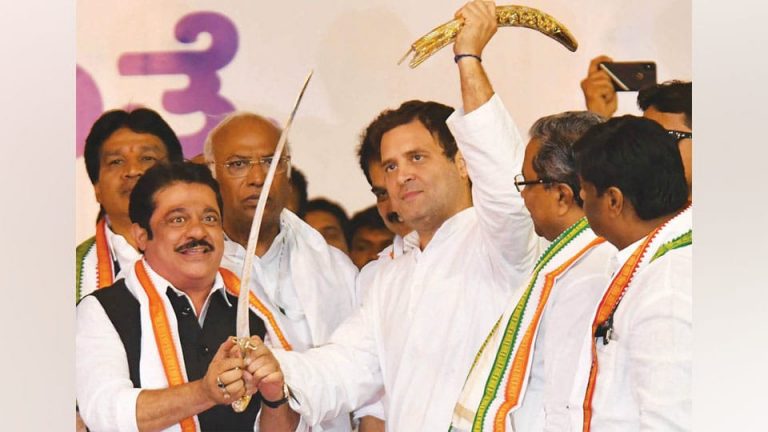
Karnataka Congress leader and MLA DK Shivakumar, who was hailed as the ‘man of the match’ for his money and manpower which played pivotal role in the JDS-Congress alliance government in Karnataka, has now found himself in legal tangles. As per reports, newly sworn-in Minister of Water Resources and Medical Education, who was upset about not being made deputy chief minister, Shivakumar, is accused of sending unaccounted money to All India Congress Committee (AICC). In a complaint filed before the Special Court for Economic Offences, the Income Tax Department has claimed that cash payment to the tune of Rs. 3 crore and Rs. 2 crore were made to AICC in January last year.

As per Times Now, cash payments were allegedly made by Shivakumar and his aide Sunil Kumar Sharma to one V Mulgund and Shivakumar set up an extensive network of people and premises across Delhi and Bengaluru to transport and utilise unaccounted cash. A fourth summons was issued to Shivakumar by a special court dealing with economic offences.

Meanwhile, Shivakumar has alleged that he is being harassed for no fault of his and said that he will fight it legally. He claims the action against him is politically motivated.

Shivakumar is also accused of creating an operating a hawala network and of buying a flat in New Delhi to store unaccounted cash. In August last year, raids were conducted across 39 locations and huge cash was recovered from his place. Summons have been issued to the five people accused, Shivakumar, two businessmen and one current and one former government employee.

Commandos of the elite National Security Guard reach Kashmir valley for anti-terror operations: Reports

As reported by NDTV, the commandos of the elite National Security Guard, a special forces unit under the Home Ministry, were found training at the Border Security Force camp at Humhaha near Srinagar. Cladded in their typical black uniform the commandoes were seen performing drills with other Armed forces.

About two dozen snipers from the NSG’s house intervention teams (HIT commandos) have been training here for the last two weeks. In some time, the Home Ministry hopes to have 100 NSG men positioned at the BSF station. “Since they specialize in anti-hijack drills, they have been placed near the airport,” a senior officer disclosed.

The Union Home Ministry, last month cleared the move because of the state security forces not being equipped enough to handle all situations and with the intention to reduce casualties in security forces particularly against the backdrop of the centre’s plans to intensify operations, after it was put on hold during the month of Ramzan. The ministry had approved the deployment of elite counter-terror force National Security Guards (NSG) in Kashmir as part of the counter-insurgency (CI) grid, adding that this would also provide an opportunity for the special force to sharpen its skills.

The NSG has also been asked to train both the Jammu and Kashmir (J&K) State Police and the CRPF in counter-terror operations in densely populated areas.

The Home Ministry officials said, in 2017, 80 security force personnel and 70 civilians lost their lives. This year, till May, 30 security personnel and 35 civilians have died.

The casualties are higher when the security forces take on terrorists. While CRPF does conduct house intervention operations, this has a high human cost particularly when the terrorists are all prepared to die. The army avoids these high-risk operations due to the human costs involved and tries to neutralize the holed up terrorists by bringing down the building itself. On the other hand, to counter such situations the NSG will use state-of-the-art weapons including “through the wall” radars, sniper rifles and the corner shot assault weapons, and demolition experts trained for such interventions, which would help reduce casualties.

NSG despite it’s on point accuracy and highly sophisticated weapons have rarely been used in anti-terrorism operations in Jammu and Kashmir and Punjab with Army Para commandos doing the job. NSG’s core efficiency so far has been in counter-terrorism, counter-hijacking operations and proximate security for the VVIPs.

However, despite the army opposing Black Cat commandos being deployed in the valley, in an attempt to upgrade, accelerate and foolproof the counter-terror operations, home secretary Rajiv Guaba, last month, issued written directions to national security agencies to the effect that Black Cat commandos will be part of the CI grid in Srinagar city as a first step and will also train the two forces within city jurisdiction. The instructions have also been communicated to both DG NSG Sudeep Laktakia and DG, Jammu and Kashmir Police.