Home Blog Page 7256

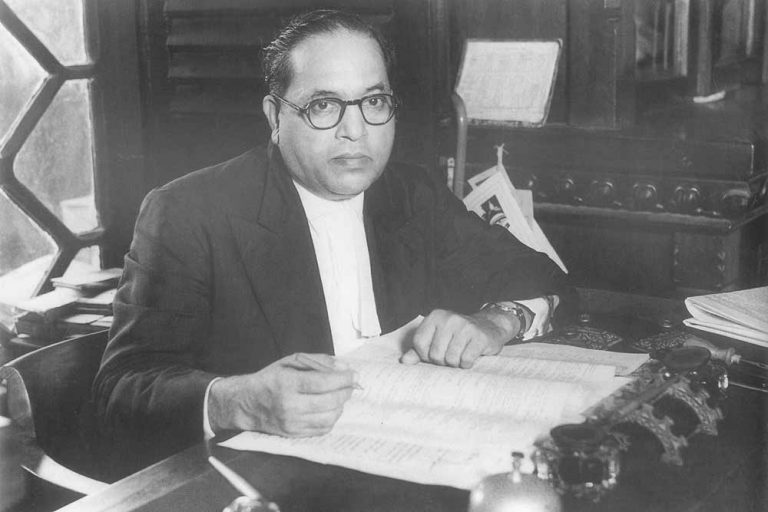
Dr Ambedkar rejected Aryan Invasion Theory with facts and logic

Every six months someone comes up with a fresh and reinforced version of an AIT (Aryan Invasion Theory) in a leading Indian or foreign publication. The desire to keep this issue alive has significant political intent behind it. Recently, Shashi Tharoor shared another new ‘research’ on AIT.


This may be a matter of surprise for the so-called Ambedkarites but this is a firm truth that Dr Ambedkar rejected and debunked AIT with facts and logic.

When it comes to AIT, there are several questions which need to be answered by those who reject it. And Dr Ambedkar answered each and every question in great detail. So let’s start:

Was Aryan a different race?

The very first assumption which those who support AIT makes is that ‘Aryan’ was a different ‘race’ which invaded India and attacked the native Indian race which was then called as ‘Dasyu’.

To answer this question, Dr Ambedkar cited both the views, the view which supports AIT and the view which oppose AIT [1], but obviously as both the views were completely contradicting, he thought it’s best to know the testimony of Rigveda. He chose Rigveda because it is the earliest Veda and its testimony will be accepted by all.

By making Rigveda as the foundation of his opinion, Dr Ambedkar made an observation that [2]:

An examination of the Vedic literature shows that there occur two words in the Rig Veda—one is Arya (अर्य) with a short ‘a’ and the other is Arya (आर्य) with a long ‘a’. The word Arya (अर्य) with a short ‘a’ is used in the Rig Veda in 88 places. In what sense is it used? The word is used in four different senses: as (1) enemy, (2) respectable person, (3) name for India, and (4) owner, Vaishya or citizen. The word (आर्य) with a long ‘a’ is used in the Rig Veda in 31 places. But in none of these is the word used in the sense of race.

So Dr Ambedkar explained that both the terms ‘अर्य’ and ‘आर्य’ are used in many different senses but none of the words is used in the sense of race. Hence, Dr Ambedkar concluded that [3] (emphasis added) :

From the foregoing discussion, the one indisputable conclusion which follows is that the terms ‘Arya’ and’ ‘Arya’ which occur in the Vedas have not been used in the racial sense at all.

Dr Ambedkar even quoted Max Muller to strength his viewpoint. It is a general believe that Max Muller supported AIT, but it is not the complete truth. He evolved his views from Time-to-Time. As Dr Ambedkar quoted Max Muller [4], where he said:

There is no Aryan race in blood; Aryan, in scientific language, is utterly inapplicable to race. It means language and nothing but language; and if we speak of Aryan race at all, we should know that it means no more than… Aryan speech.

So Dr Ambedkar not only himself clarified with facts that ‘Aryan’ is not some ‘race’ but he even quoted Max Müller who agreed that ‘Aryan’ is not a race but speech.

The Arctic home theory

For people like me who oppose AIT, the next challenge after answering on ‘race’ is The Arctic Home Theory.

To explain in-short, Arctic Home Theory says that Vedas originally belongs to Arctic region and not to India. Mr Tilak and many other scholars supported this view. But Dr Ambedkar answered this theory with ease. He said [5]:

This is, of course, a very original theory. There is only one point which seems to have been overlooked. The horse is a favourite animal of the Vedic Aryans. It was most intimately connected with their life and their religion. That the queens vied with one another to copulate with the horse in the Ashvamedha Yajna shows what place the horse had acquired in the life of the Vedic Aryans. Question is: was the horse to be found in the Arctic region? If the answer is in the negative, the Arctic home theory becomes very precarious.

Dr Ambedkar countered this “Arctic Home Theory” brilliantly. As you have read, he countered this theory by raising a very valid question. As all the students of Vedas know that horses occupy a strong position in Vedas. We find countless references to horses in Vedas. And It is known that horses were not found in Arctic region so there is no possibility that Vedas were composed in Arctic region.

If you want a detailed counter of “Arctic Home Theory” then read “Scientific Knowledge in the Vedas, pp.4-21” by Dr P.V. Vartak

Aryans Invaded India?

The motive behind peddling AIT is to prove that Aryans invaded India.

Regarding this, Dr Ambedkar said [6]:

So far as the Rig Veda is concerned, there is not a particle of evidence suggesting the invasion of India by the Aryans from outside India.

To strengthen his argument that Aryans never invaded India, Dr Ambedkar quoted Prof. D. S. Triveda [7], who noted down:

the rivers are addressed as ‘my Ganges, my Yamuna, my Saraswati’ and so on. No foreigner would ever address a river in such familiar and endearing terms unless by long association he had developed an emotion about it.

This is a noteworthy point! If Aryans had invaded India then why would they call “Ganges, Yamuna, Saraswati” as “my Ganges, my Yamuna, my Saraswati”? They way they addressed these rivers reflects that they were emotionally connected with them. And such connection is completely impossible for an invader.

Who were Dasa and Dasyu?

This is the most important section of the article.

Those who have read about AIT knows that the foundation argument of it is that Dasas or Dasyus were original residents of India to whom Aryans attacked, defeated and then conquered India. Dr Ambedkar completely debunked this narrative with pointed facts and arguments.

But firstly, let me explain little bit background to you all:

Those who say that Aryans conquered India and attacked Dasyus, say it on the basis that there are many verses in the Vedas (especially in Rigveda) which narrates that there was an ongoing fight between Aryans and Dasyus.

But dear readers, is this information that there was a continuous conflict between two groups is sufficient for us to conclude that there was an invasion? Absolutely Not!

In fact, Dr Ambedkar noted down [8]:

This may show the occurrence of sporadic riots between the two. It is certainly not evidence of a conquest or subjugation.

So Dr Ambedkar made it very clear that “such instances of a fight” may show us sporadic riots but it is not the evidence of any conquest.

Then Dr Ambedkar provided very valuable information [9] by citing four references of Rigveda which shows that despite conflicts, Aryans and Dasyus made several mutual agreements and stood united against common enemies. Those four references of Rigveda cited by Dr Ambedkar are: Rigveda 6.33.3, Rigveda 7.83.1, Rigveda 8.51.9 and Rigveda 10.102.3

Then Dr Ambedkar gave a solid proof which clarifies that the fight between Aryans and Dasyus was not because they were from different races but because they had different religions. Dr Ambedkar quoted several verses from Rigveda which backs his stand. Read all those verses quoted by him:

Verses quoted by Ambedkar

After that, Dr Ambedkar quoted 3 verses from Rigveda which clarifies that the difference between ‘Aryans’ and ‘Dasyus was not racial [10]. Let’s read which and what are those verses:

Rig Veda, vi.22.10.—“Oh, Vajri, thou hast made Aryas of Dasas, good men out of bad by your power. Give us the same power so that with it we may overcome our enemies.”

Rig Veda, x.49.3, (says Indra).—“I have deprived the Dasyus of the title of Aryas.”

Rig Veda, i. 151.8—“Oh, Indra, find out who is an Arya and who is a Dasyu and separate them.”

After quoting these three verses, Dr Ambedkar concluded this section by writing down [11]:

What do these verses indicate? They indicate that the distinction between the Aryans on the one hand and the Dasas and Dasyus on the other was not a racial distinction of colour or physiognomy. That is why a Dasa or Dasyu could become an Arya. That is why Indra was given the task to separate them from the Arya.

Aryans were white and Dasyus were black?

Because those who support AIT lacks evidence, they pass remarks like, ‘Aryans were white and Dasyus were black’. But Dr Ambedkar thrashed these silly arguments easily by quoting extracts from Vedas.

Dr Ambedkar quoted three verses from Vedas [12] which prove that Aryans had no colour prejudice.

  • He quoted Rigveda 1.117.8 which narrates the story where Ashwins (Vedic Gods) arranged a marriage between a black boy and white girl. This shows that Aryans were not just white but even black.
  • He quoted Rigved 1.117.5 which refer colour of a lady as golden.
  • He then quoted Rigveda 2.3.9 where Aryans are invoking Devas to bless them with a son of tawny (reddish brown) complexion.

End commented [13]:

These instances show that the Vedic Aryans had no colour prejudice. How could they have? The Vedic Aryans were not of one colour. Their complexion varied; some were of copper complexion, some white, and some black. Rama the son of Dasharatha has been described as Shyama i.e., dark in complexion, so is Krishna the descendant of the Yadus, another Aryan clan. The Rishi Dirghatamas, who is the author of many mantras of the Rig Veda must have been of dark colour if his name was given to him after his complexion. Kanva is an Aryan rishi of great repute. But according to the description given in Rig Veda—x.31.11—he was of dark colour.

After debunking the arguments of those who back AIT, Dr Ambedkar said [14]:

That the theory of the Aryan race set up by Western writers falls to the ground at every point, goes without saying.

He further said [15]:

In the first place, the theory is based on nothing but pleasing assumptions and inferences based on such assumptions. In the second place, the theory is a perversion of scientific investigation. It is not allowed to evolve out of facts. On the contrary, the theory is preconceived and facts are selected to prove it. The theory of the Aryan race is just an assumption and no more.

He expressed his anger against AIT by saying [16]:

The Aryan race theory is so absurd that it ought to have been dead long ago.

Dr Ambedkar again made a good point against people who invented AIT [17]:

The originators of the Aryan race theory are so eager to establish their case that they have no patience to see what absurdities they land themselves in. They start on a mission to prove what they want to prove and do not hesitate to pick such evidence from the Vedas as they think is good for them.

Conclusion

It is indeed telling that there are some who claim to be the followers of Dr Ambedkar and at the same time, they support Aryan Invasion Theory just for the cause of political and social dominance. They seem to be followers of Dr Ambedkar for namesake, considering they comfortably go against Ambedkar’s ideology when it suits their agenda. I for one, don’t subscribe to many of his beliefs and thus, his beliefs don’t bind me. But for the people who claim to be his staunch followers, perhaps this dichotomy in belief must be rationalised by them. Perhaps his teachers should take precedence over creating fault lines in the unity of the country.

References: All references are from the book ‘Who Were The Shudras?’ Relevant page numbers for each reference are provided below. The PDF version of the book can be found here.

[1]: pp.60-61. [2]&[3] p.62. [4]: p. 61. [5]: pp.67-68. [6]&[7]  p.68. [8]&[9]: p.69. [10]&[11]: p.72. [12]: p. 77.  [13]: p. 77-78. [14]: p.72. [15]: p.73. [16] & [17] P.75.

Another gold for India at the Commonwealth Games

On Friday, India woke up to the news of gold medal win by Sanjita Chanu in the women’s 53 kg weightlifting event at the ongoing Commonwealth Games.


She set a new CWG record with a lift of 84kg in snatch and then lifted 108 in clean & jerk.

Yesterday, Mirabai Chanu, from Manipur won India’s first gold at the 2018 Commonwealth Games in women’s 48 kg weightlifting category. P Gururaja bagged a silver medal in the 56 kg men’s weightlifting category.

In badminton, Saina Nehwal showed total dominance against her Sri Lankan opponent and snatched victory whereas in the men’s game Kidambi Srikanth has also won his first match. India also defeated Sri Lanka in first match in women’s table tennis.

While the games have had a promising start, it didn’t pan out that well for women’s hockey where Indian team was defeated by Wales 2-3.

Kerala Church home to a controversial archbishop, accused of demeaning yoga

The Syro-Malabar Church, which is already reeling under land scam accusations where its archbishop is an accused, has now reported to have demeaned yoga. As per reports, a doctrinal commission report of the church, yoga wasn’t a way to reach god.

It further claimed that it wasn’t right to believe that yoga would be helpful in having a divine experience. The church report also supposedly claimed that “yoga doesn’t bring any improvement in a person”. This report was prepared by Pala diocese bishop Mar Joseph Kallarangattu, and was supposedly approved recently. The commission in question comprised of three bishops and a priest.

Further the report decided to communalise yoga by claiming that church heads should avoid paying attention to yoga and “other spiritual movements”, which it claims are against the christian faith. It also claimed that yoga didn’t promote official church teachings and spread anti-Christian views.

Other media reports have quoted the report as urging Christians to not practice yoga a spiritual relief method, and called it a physical exercise. It further alleged that the RSS was trying to spread its Hindutva agenda via yoga. As per the article, the Yoga report has quoted “authentic church documents” which apparently contain anti-Yoga references. One of the conclusions it draws as a result of its “findings” is that the church should not encourage yoga.

One media report claimed that the church has called for a rereading of yoga. It also observed that yoga had no space for god – the creator and sustainer, even after spiritual experiences were taken into consideration. The church has also supposedly gone to the extent of placing yoga in the secretive category of practices in its youth doctrine.

In defence of the church, its spokesperson Jimmy Poochakattu has claimed that the content in question was part of a study material, and was written about two years ago.

Lahore High Court orders Pakistan government not to ‘harass’ Hafiz Saeed

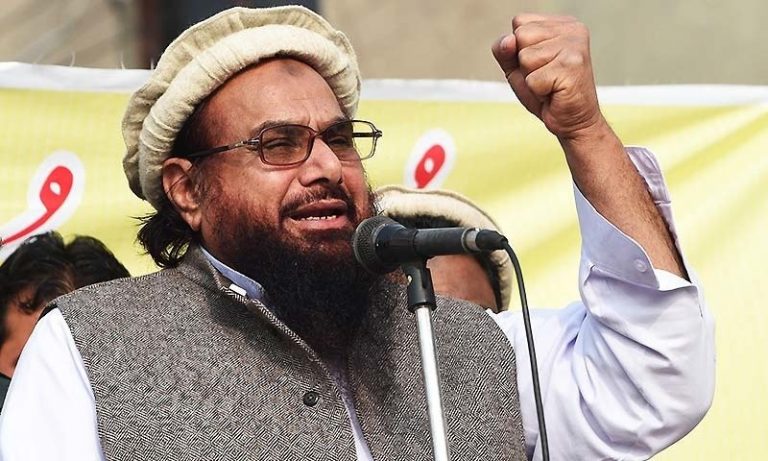
The Lahore High Court on Tuesday asked the Pakistan government not to ‘harass’ US-designated terrorist Hafiz Saeed and let him continue his ‘social welfare activities’.

Hafiz Saeed, the mastermind of Mumbai terror attacks of 26/11, was freed by the same High Court from house arrest in November last year. Last month, the Islamabad High Court had also passed an order that cleared the way for Hafiz’s political party Milli Muslim League (MML) to contest elections.

The court’s order came on a petition filed by Saeed’s organisation Jumaat-Ul-Dawa. The organisation had petitioned the court to curb the government’s efforts to restrict the seminaries and health facilities run by Saeed. According to reports, the petition stated that the Pakistan government is curtailing their welfare activities under pressure by the US and India. The court had sent notices to the government of Pakistan’s Punjab province and the federal government. It has sought a reply by 23rd April.

Interestingly, the Lahore High Court order has come on the same day on which the United Nations Security Council disclosed its updated terror list which featured Hafiz Saeed and his organisations. On 3rd April, the US had also declared the MML as a terror organisation.

The updated terror list by the UNSC had a total 139 individuals and groups from Pakistan alone. The list had also named Dawood Ibrahim and Osama Bin Laden’s heir Ayman Al Zawahiri as terrorists.

Pakistan has been facing international disgrace and sanctions for its lack of substantial efforts to curb terror havens on its territory. In February, the US state department had released a press statement demanding Pakistan to prosecute Hafiz Saeed and his terror organisations to the fullest extent of the law.

‘The Oligarchs Valley’ by Yasha Levine and the parallels in India

0

Here is a short segue I request you to indulge me:

In 1998, the Delhi Jal (Water) Board (DJB) had approached the World Bank for a loan. The World Bank suggested that the DJB hire a consultant to help make recommendations for improvements, and even offered a $2.5 million loan to the DJB to do that same. Over the course of the next seven years, the World Bank agreed to provide a loan to the Delhi Jal Board for $150 million dollars for the privatization of water supply to the capital city. What made the saga intriguing was the insistence of the World Bank and its interference to ensure that Pricewaterhouse Coopers (PwC) got selected as the consultant to the project. Thousands of pages made available as a result of RTI (Right to Information) queries filed by activists, it emerged that despite PwC failing to make the cut in the technical and financial rounds, the World Bank insisted on changes to the evaluation criteria, that the marks were given by one particular member of the evaluation committee be excluded from the final evaluation so as to favour PwC, and so on.

What most people were unwilling to put on record was that PwC had on its payrolls the son of a powerful person in the government of India and who had long-standing ties to the World Bank and the International Monetary Fund (IMF). Thanks to India’s legendary bureaucratic inertia and apathy, the privatization of water distribution in the nation’s capital never came to fruition. Else the cost of water in the city of Delhi would have increased an estimated five times.

Why is this relevant to the review of Yasha Levine’s (@YashaLevine) book, “Oligarch Valley“? Because both are tales of corruption and collusion between big business, politicians, and, in Oligarch Valley’s case – the judiciary. In Levine’s account lies a cautionary tale for those in India willing to listen.

Oligarch Valley, in case you didn’t know, is the “area along the [Interstate] 5 from Silicon Valley to Los Angeles County [and] is one of the most productive agricultural regions in the United States.” That by itself is neither here nor there, and certainly not half as interesting as the question – “who owns this land.” The answer – “a small group of billionaires who can trace their roots back to the landholdings of America’s most notorious criminal visionaries and syndicates” – leads to the rest of the fascinating book.

In 2009, California was suffering from a drought, and the “local water agency was forced to replenish its dwindling supply by buying $73 million worth of water from a Central Valley family farm.” The farm in question was owned by a real estate development company called Sandridge Partners, owned by the Vidovich family, which had received $11 million in subsidies since 1995! Which leads to the next question – water is a public good. How could it be sold for outrageous sums to the public?

To understand how California’s water theft came about, you have to travel back in time a century and meet a person named Harry Chandler. He was the son-in-law of the publisher of the Los Angeles Times, Harry Gray Otis. Harry was an unapologetic racist, and used the LA Times to pitch the city of angels to “eager Midwesterners, advertising Los Angeles as the “white spot of America”.” His greater claim to notoriety lies in how he engineered the scam more than a century ago:

“In the early 1900s, Harry Chandler mounted a shrill campaign persuading Los Angeles residents that their city was running out of water and then pushed people into supporting a costly bond measure to build an aqueduct from the Sierra Nevada mountains over 200 miles away, only to divert the aqueduct away from the city and into the San Fernando Valley just north of L.A. … He headed up a secretive syndicate that included railroad baron Henry Huntington. This syndicate snapped up massive chunks of land in the Valley on the cheap before anyone realized the aqueduct was not going to L.A. … Desert land that had been purchased for $3 million was worth an estimated $120 overnight. The syndicate made a huge pile of money divvying up the land into several towns, building railroads, trams and selling land parcel by parcel to tens of thousands of eager investors and would-be residents.”

If this sounds at least a little bit familiar to you, the movie “Chinatown” was about this saga. In case you further wonder why no one made any noise about all this, the answer is fairly obvious – “The whole city, from police to the courts, was sewn up tight. Any real critics were either paid off or quietly disappeared.”

Another investment of the syndicate that, however, did not pay off as quickly as they thought was Tejon Ranch – about 425 square miles of land – “Ten times the size of San Francisco, it is considered the largest single piece of private property left in California.” At one point, Harry Chandler bought out the syndicate’s stake in Tejon Ranch.

And Tejon Ranch is where the rest of our water story continues.

“in the 1960s, … Governor Pat Brown … successfully pushed to build the California Aqueduct, a massive concrete river over 700 miles long that could suck fresh river water from the southern edge of the San Francisco Bay and pump it all the way down to Southern California. The Chandler family used all of its political clout and media muscle to boost the project. The reason was simple: the aqueduct would traverse the length of Oligarch Valley and run right through the Chandler family’s Tejon estate. The water would enrich all the big landowners in its path with nearly free water—the $3 billion bill would be picked up by California taxpayers. But that’s not how the project was sold to gullible California voters. Governor Brown and his Oligarch Valley backers launched a campaign to scare Southern Californian suburb dwellers into believing that their water supply was on the verge of being totally exhausted. They sold the California Aqueduct as a way to diversify the over-tapped water supply of urban districts.”

Does the modus operandi sound familiar to you? I would be disappointed if it did not.

Water stress and outright scarcity is a reality across most of India. Matters are fast reaching crisis point. Like standard operating procedure in India, only once matters reach crisis point does action take place. Money is seen as the only solution to the crisis. Obscene sums of money are thrown at the problem, channelled towards solutions that achieve the end of enriching select businessmen, politicians, and bureaucrats more than solving the said crisis.

For the second story, we look at another respectable citizen of the so-called Oligarch Valley – Harris Ranch.

It is located about halfway between San Francisco and Los Angeles, and is California’s largest beef “producer.” Every year, it kills 250,000 cows (that would be approximately two cows every minute, every hour, every day of the year) to make into beef products.

How does Harris Ranch describe itself? A bucolic paradise for its cows, that live happily in its pens and even more happily lay down their lives – “cattle are cared for by cowboys who ride the pens every day to ensure the health and well-being of every animal in their care. Shade has been installed and all cattle are fed in large, well-maintained, outdoor pens that are equipped with an automated sprinkler system to reduce dust and cool cattle during the summer months.”

The reality? [bold emphasis mine] “They are huddled together in a cooling sea of excrement. Most of them are black, some are brown and there are plenty of calves. It’s pushing 100 degrees now, but summer temps are consistently over that in Oligarch Valley. The sprinklers, which are meant to cool the cows, have turned the ground into a vast puddle of liquefied shit, piss and mud.

Right next to the feedlot is a gigantic pool containing tens of thousands of gallons decomposing, liquefied cow manure. It festers for a time before being shovelled out with a tractor and dumped on a plot of adjacent land.

Living in this toxic danger zone— this giant disease incubator—it’s no wonder the cows have to be constantly juiced on antibiotics, creating an accidental R&D lab for antibiotic-resistant superbugs.”

Appetizing, innit?

The third story will also be familiar to many urban Indians, especially those in Bangalore. Once known as the city of lakes, most of Bangalore’s lakes have been killed and swanky apartment complexes and high-rise commercial buildings stand over dried lakebeds. The lakes that are not yet dead are being killed off, slowly, surely, systematically.

With that preamble, let’s dig into our third story and travel to Lake Tulare. It was, at one point, one of the largest freshwater lakes in the United States and the largest freshwater lake west of the Mississippi, covering an area of almost 700 square miles.

“Lake Tulare used to be a sight to behold. During the summer months it would all but disappear, but then in winter and spring it would grow to an immense size as it filled with runoff from the Sierra Nevada mountains.”

And today?

“Today it is mostly fields and a sprawling new prison complex, the largest and most violent state prison in California where it was revealed by the Los Angeles Times, guards regularly staged gladiator fights between prisoners for sport.”

What happened? In the 19th century, when ranchers arrived in the valley, they saw the lake as a threat to “prime farm and grazing land,” and started containing it with dykes and channels. This was all legal and was called “reclamation” of swampland, but with one caveat – the federal Reclamation Act capped such free reclaimed swampland given to farmers to 1000 acres per farmer.

“So the growers hit up on a novel idea: they’d pretend like they weren’t damming a natural lake, but simply erecting barriers to prevent a natural disaster. The

And that’s exactly what they did, despite opposition from Congress and two presidents: FDR and Harry Truman.”

Read this short book not only to learn about California’s Oligarch Valley but also the parallels that can be drawn with India. Where there is an opportunity, there is money, and where there is money, there is corruption. In many ways, history does repeat itself, albeit with a displacement of geography. What happened in the United States, a century or more back, is happening in India. Good or bad depends whether you are on or off the gravy train.

Book information: Kindle IN, Kindle US

Former Chairman of National Minorities Commission criticises polygamy among Muslims

In an opinion article published in The Indian Express, former chairman of National Minorities Commission Tahir Mahmood has criticised the clergy and defenders of polygamy. He has claimed that the interpretation of polygamy in Islam had been done from the male perspective in a way that suited them while forgetting its historical contexts. Mahmood has also said that many Muslim countries have abolished polygamy as human rights have acquired primacy in the modern world. Mahmood writes :

With the global emergence of a new social order conceding the supremacy of human rights over custom and usage, the Muslim world had also awakened to its demands. Today, polygamy stands legally abolished or at least restricted in a large number of Muslim countries. 

Tahir Mahmood has also opposed the defence of Muslim clerics of this practice, He writes (emphasis added)

A TV journalist told me that Muslim clerics may not mind restraints on these practices but are deeply concerned about the “attack” on polygamy. If true, their worry about polygamy is more baffling to me than the alleged indifference to other antiquated customs. 

While concluding that this is an opportunity to bring parity between all citizens under the bigamy law, Tahir has also urged his fellow Muslims not to block the reform under the guise of saving ‘sacred’ law. Mr Mahmood concludes with the following lines:

There is an easy way to bring all citizens under the country’s general law on bigamy. Instead of questioning the essentiality of polygamy as a religious practice, eliminate from the IPC’s anti-bigamy provision the words making its application conditional on bigamy being void under the applicable family law. This general legal reform should, perhaps, not attract agitation for “tampering” with any supposedly sacred law.

Salman Khan conviction: usual suspects are playing the victim and religion card for Khan

0

As soon as the verdict of blackbuck hunting case of Salman Khan was out, some Bollywood film journalists came out in support of Salman Khan. A film journalist named Faridoon Shahryar initially tweeted that the actor was convicted because of his last name. However, he deleted it soon after.


Faridoon is the same who had famously tweeted a fake news that Aamir Khan is going to adopt two villages in drought hit Maharashtra in 2016 which was later refuted by Aamir Khan. Faridoon then continued to tweet his displeasure with the verdict and compared it with other politicians who were acquitted in other cases.

Controversial Congress politician Salman Nizami jumped into the fray and claimed that Salman was being punished in Blackbuck case but Yogi Adityanath was letting off criminals in Uttar Pradesh and those ‘responsible’ for Godhra riots were free.

Sumit Kadel, a film trade analyst and critic felt that Salman had suffered enough by visiting courts for 20 years , so hence he must be let off.

Senior journalist Rajdeep Sardesai, who regularly likes to defend convicted criminals, too, came out in support of Khan.

Though law is equal for all, some celebrities are more equal than others.

Is the Chief Minister of Karnataka a believer of superstitions?

The Karnataka CM was hailed in intellectual circles for passing the Anti-Superstition bill. Narendar Pani, a professor at the National Institute of Advanced Studies (NIAS), while commenting on the bill told Livemint that the CM has been very Kannada-centric and that had made him less appealing to the English media. But anti-superstition bill could serve as a ‘bridge’ according to Mr Pani. Though there might have been progressive agenda in the government’s intention to bring the bill, it appears that the Karnataka chief minister himself is a believer in superstition.

The Karnataka CM allegedly changed his official car after a crow sat on his it. Though reports suggest that he changed his official car due to a technical snag, the coincidence is hard to ignore.

The same issue has been a matter of a heated exchange between Siddramaiah’s official Twitter handle and the BJP Karnataka’s official handle recently. The BJP pointed out that the Karnataka CM was campaigning with a lemon in his hand. The exact reason for this habit of the CM is not known.


The Chief minister retorted by saying that villagers gave him a lemon while campaigning and advised the BJP’s young fellows to learn about Karnataka. However, the CM got a reply with more images where he had been caught on a camera with a lemon in his hand.


What could be the reason for Siddaramaiah’s close relationship with lemons? We may never know.

Information and Broadcasting ministry approves a crèche in National Media Centre

The Modi government has taken several pro-woman steps during its tenure. This includes the Maternity Benefit Amendment Bill, 2016. The bill mandated 26 weeks of leave for women working in the formal sector and made it mandatory for every organisation with more than 50 employees to have a crèche. The bill says :

‘11A. (1) Every establishment having fifty or more employees shall have the facility of creche within such distance as may be prescribed, either separately or along with common facilities:

Provided that the employer shall allow four visits a day to the creche by the woman, which shall also include the interval for rest allowed to her

This provision in the law may help in increasing participation of women in various sectors.

According to a recent PTI report, the information and broadcasting ministry have approved setting up a crèche facility at the National Media Centre for daycare of kids of journalists. The centre is situated on Raisina Road near to offices of news organisations and is likely to help women working in the sector. Similarly, the Parliament house is also planning to have its own crèche after the matter was highlight by Minister for women and child development, Maneka Gandhi highlighted the same to the speaker of Lok Sabha.

Other pro-women steps taken by Modi led BJP government include accepting Saudi Arabia’s proposal for allowing women aged above 45 travel without a male guardian, support to Muslim women in fighting triple talaq and launch of affordable sanitary napkin ‘Suvidha’.

This latest step by the I&B ministry will come as a big relief for working mothers in the journalism fraternity who tend to work tedious hours.

Mayawati’s U-Turn: From proactively favouring a curb on misuse of SC/ST act to opposing it

Various parts of Northern India were plunged into extreme violence on Monday, during a Bharat Bandh which was called by Dalit groups to protest against Supreme Court’s March 20th verdict which sought to prevent the misuse of the Scheduled Caste and Scheduled Tribes (Prevention of Atrocities) Act.

The violence which including stone pelting and firing gunshots, resulted in at least nine deaths and a major loss to public and private property. This violence resorted to despite the Modi government filing a review petition against the Supreme Court order. Since then the apex court has stood by its judgement and observed that the rights of the innocents too need to be protected.

In this whole episode BSP supremo, Mayawati has cut a unique figure, with her U-turn in regards to the issue.

During the recent protest, Mayawati took up the regular opposition line by extending her party’s support to the protesters against the so-called ‘dilution’ of the SC/ST act. She also denied her party is responsible for the said violence. Though a BSP leader was arrested during the violence in UP, and the police had suspected him to be the main conspirator.

Such a stance by Mayawati though has led the journalist to go down the memory lane by publishing reports about how she herself had favoured curbing the misuse of the SC/ST act while being the Uttar Pradesh chief minister in 2007.

Mayawati had done so in form of two orders issued by the then chief secretaries, which sought to highlight that the act was being used to implicate innocents. The crux of the letters was that the action should only be taken against the accused after he/she is found prima facie guilty in an initial probe.

Part of the first letter dated 20th May 2007 sent by chief secretary Shambhu Nath, addressed the issue of police complaints under this act. The directive issued stated that complaint should only be registered under this act in case of serious offences like murder and rape and less serious offences should not come under its purview.

It was also instructed that in case of a rape allegation a case only should be filed after corroboration of the charge,s via a medical examination and their prima facie validation. The letter reportedly also stated that police shouldn’t initiate action on a mere accusation by an SC or ST as instances were recorded about it being misused for settling personal scores.

About six months later, another letter was sent by erstwhile chief secretary Prashant Kumar to the then DGP, giving a directive that if it was found that the complainant had wrongly accused an individual under the said act, necessary action should be taken against him/her under section 182 (giving false information to a public servant with an intention to cause harm to another person) of the IPC.

With the Mayawati government then taking such a measured view with regards to this act, the question might be raised as to whether a desperation to stay relevant following successive political debacles has prompted this U-Turn of hers?