We at OpIndia have always aspired to bring you the Right perspective on the issues of the day, whether it’s Politics or Finance. We aim to dispel the myths and lies that are nonchalantly propagated by the “left-liberal” ecosystem on a regular basis.
Our new show, ‘The Right Picture’ is another step towards achieving that aim.
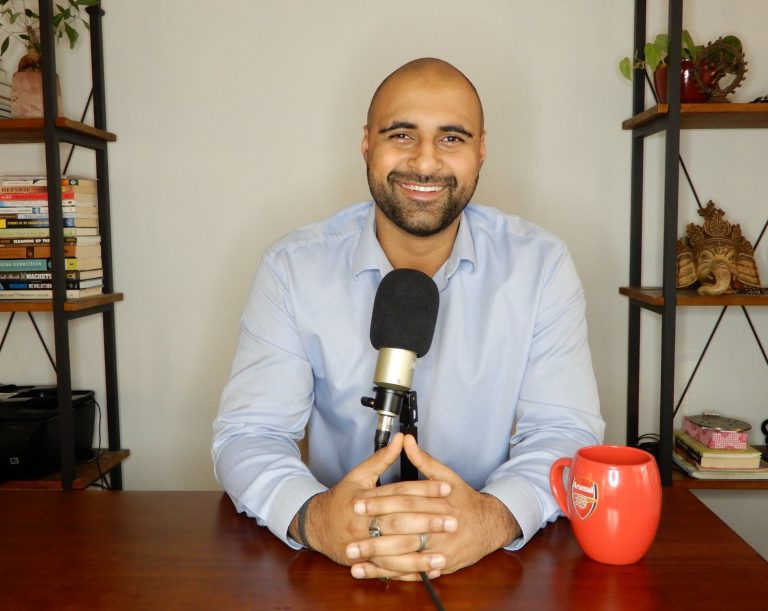
Ashutosh Muglikar, a CS by profession has made dispelling myths surrounding the Economy and the Financial sector into an art form, and with this show, we hope to bring the ‘The Right Picture’ to you via short, easy to understand videos.
In this episode, Ashutosh dispells the common lies being spread about the historic FRDI Bill introduced by the Modi government.
Karti Chidambaram, the son of former Finance Minister P Chidambaram, has been granted bail in the INX Media case by the Delhi High Court. According to reports, the Delhi HC has ordered that Karti cannot leave the country and cannot attempt to influence witnesses in the case.
INX Media Case: Karti Chidambaram has been granted bail by Delhi High Court on surety of Rs 10 lakh. He cannot travel out of the country. He cannot influence witnesses or close bank accounts. https://t.co/lgWquY2Nas
The HC has also ordered that Karti, while out on bail, cannot close his bank accounts. He was granted bail on a security of Rs 10 lakhs.
Karti’s bail plea was heard on 16th March and the court headed by Justice S P Garg had reserved its verdict after hearing the arguments by the lawyers of Karti and CBI. The CBI had argued that Karti might attempt to influence the witnesses in the INX Media case if he is granted bail.
Earlier on 12th March, Karti was sent to Tihar Jail to be in custody by the Patiala House Court in Delhi.
Karti was represented by senior advocates Kapil Sibal and Abhishek Manu Singhvi. Gopal Subramaniam who has been representing him in the Madras High Court also accompanied them as senior counsel. Karti’s father and former Finance Minister P Chidambaram were also present to witness the proceedings.
Karti’s lawyers argued that why should he be kept in jail when the investigation agency has not sought further custodial interrogations of him.
Karti was arrested by the CBI from Chennai airport on 28 February.
In what might be a big blow for BSP supremo Mayawati and her party, BSP MLA Anil Singh announced to media persons that he had cross voted for the BJP in the ongoing Rajya Sabha elections:
As per reports, he also bragged about this act of his by proclaiming his support for UP Chief Minister Yogi Adityanath, who he referred to as “Maharajji”. He though expressed ignorance about other possible cases of cross voting in his party. Other reports claimed that the MLA from Purwa met with Yogi on Thursday night, following which he voted for the BJP after listening to his “inner voice”.
This move might signal trouble for the BSP which is hoping to elect its singular candidate Bhim Rao Ambedkar to the Rajya Sabha. The BSP was earlier bolstered by the support of seven Congress MLAs in the state. Mathematically, BSP needs a total 37 votes for its candidate to win. In total it had 19 in form of its MLAs (reduced to 18 now). The party has additionally been supported by seven Congress, nine SP and one RLD votes, resulting in it theoretically fall short of 2 votes.
In total there are 10 Rajya Sabha seats in the state, with the BJP fielding nine candidates and the SP, BSP fielding one each. The voting started at 9:00 AM today, at the Tilak Hall in UP’s Vidhan Sabha building. BJP has expressed its confidence in winning its nine seats.
Apart from Singh, the BJP has also benefited via cross voting from Samajwadi Party legislator Nitin Agarwal whose father Naresh Agarwal joined the BJP recently. After casting his vote he commented that unfortunately the SP preferred Jaya Bachchan who “entertains the people” instead of Naresh Agarwal who “serves the society”.
The counting for the polls would begin at 5:00 PM on Friday.
We are back with another episode of ‘The Opindia Recap’ by Sham Sharma, an MBA student at the Roosevelt University, Chicago and a sales professional.
Kashmir is the topic that everyone seems to have an opinion. Especially the usual suspects like ‘The Quint’ who more often than not, have a view that stands contrary to the Nation’s interests.
‘The Quint’ now has come up with another video that tries its best to pain Kashmiri terrorists as ‘freedom fighters’. The souls who lost their way. In the process, they not only downplay the role of the Indian Army and the severity of terrorism but also do a grave injustice to the civilian population of Kashmir that just wants to earn its bread in peace.
However, this is not the first time ‘The Quint’ has peddled the Pakistani side of the story and indulged in blatant anti-India propaganda. In 2017, a Quint journalist was booked for abetting the suicide of Lance Naik Roy Matthew. In fact, their pussyfooting on Hafeez Saeed is not surprising, considering they had published an entire piece about Osama Bin Laden being a father and a husband. The Quint had also come up with a story that basically declared Kulbhushan Jadhav an ‘Indian spy’ thereby endangering his life and national security. We had rebutted that story threadbare and post massive backlash, The Quint had taken the story down and decided to “recheck its story“, but not before Pakistanis and its official agencies had started quoting The Quint article on Jadhav in an attempt to undermine India’s position.
This video is our attempt to debunk the dangerous narrative on Kashmir furthered by Quint.
CBI has conducted raids at the Mumbai headquarters of Financial Technologies of India Ltd (FTIL) and the offices and residences of its former chairman, Jignesh Shah, in connection with a case of alleged irregularities in launching the initial public offer (IPO) of Multi Commodity Exchange (MCX) in 2012.
“CBI has initiated an inquiry into the clearance given by Forward Markets Commission to MCX to bring its initial public offering in 2012 which was allegedly against certain regulations,” Livemint quoted an unnamed CBI source as saying.
Jignesh Shah and FTIL are also accused in the NSEL scam that surfaced at the National Spot Exchange Ltd in 2013. In its charge-sheet, the CBI accused Jignesh Shah of cheating and criminal conspiracy and violating the prevention of corruption act in connection with the Rs. 5600 crore payments fraud.
FTIL’s shares in the stock market suffered a significant dent on Friday as reports of the CBI raids emerged. The residences of top executives Shrikant Javelgekar and Joseph Massey were also raided.
The recent Supreme Court verdict in the caseDr Subhash Kashinath Mahajan versus the State of Maharashtra & others has kicked up a political storm. The court ruled that additional safeguards must be provided to civil servants before arresting them in a complaint registered under Scheduled Castes and Tribes (Prevention of Atrocities), 1989. It said that the approval of an appointing authority, a non- public servant and an S.S.P is required for arresting a public servant under the act. This safeguard has been added to avoid misuse of the act against public servants.
Anticipatory bail was denied for accused under the SC/ST (prevention of atrocities) act. The verdict has also made way for an anticipatory bail to accused if there is no prima facie case. Anticipatory bail is a provision in the law that allows a person to seek a bail if he/she anticipates an arrest on accusation of having committed a non-bailable offence. In its judgement [pdf] the apex court said :
83. Our conclusions are as follows: i) Proceedings in the present case are a clear abuse of process of the court and are quashed.
ii) There is no absolute bar against the grant of anticipatory bail in cases under the Atrocities Act if no prima facie case is made out or where on judicial scrutiny the complaint is found to be prima facie mala fide. We approve the view taken and approach of the Gujarat High Court in Pankaj D Suthar (supra) and Dr N.T. Desai (supra) and clarify the judgments of this Court in Balothia (supra) and Manju Devi (supra);
iii) In view of acknowledged abuse of law of arrest in cases under the Atrocities Act, the arrest of a public servant can only be after approval of the appointing authority and of a non-public servant after approval by the S.S.P. which may be granted in appropriate cases if considered necessary for reasons recorded. Such reasons must be scrutinized by the Magistrate for permitting further detention.
iv) To avoid false implication of an innocent, a preliminary enquiry may be conducted by the DSP concerned to find out whether the allegations make out a case under the Atrocities Act and that the allegations are not frivolous or motivated.
v) Any violation of direction (iii) and (iv) will be actionable by way of disciplinary action as well as contempt.
This has raised concerns among the SC/ST community as the rate of conviction are already low under the act. They have also felt that the judgement would dilute the provisions of the act which protect the community from atrocities. This argument might have some validity. The need of the hours is to find a balance between protection of the SC/ST community from atrocities and prevent its misuse. Instead of working on a solution, the Congress party has decided to politicise the matter.
Rahul Gandhi, wants to score a political points & mislead on every issue. Govt of India has a clear stand that it is against any kind of atrocities against Dalits, SCs & STs: Ananth Kumar, Parliamentary Affairs Minister pic.twitter.com/yV5uMJ8tIO
This is a purely logical debate which must be examined from the legal point of view. A group of BJP MPs belonging to SC/ST community have met the law minister and asked him to file a review petition on the matter. This issue could turn into a test of perception for BJP as well. The SC and ST community has supported the party in several elections and its support is crucial for any party to succeed in the key state of Uttar Pradesh. Any indication that the party is against their interests will turn the tide against the party.
Thus, it would seem like a catch-22 situation for BJP. While the Court has issued its judgement based on misuse of the law, BJP would also need to balance the perception battle with the logical steps that need to be taken to not only protect the interests of the SC/ST community but also curb misuse of the law.
In a historic moment for various global stakeholders, Air India’s flight AI-193 became the first commercial aircraft in 70 years to fly to Israel by using Saudi Arabia’s airspace. This flight thus signified the end of the overflight ban imposed by Saudi Arabia for flights bound to Israel, imposed owing to the Islamic nation not recognising the latter.
The only other aircraft to have flown from Saudi Arabia to Israel was Air Force One which ferried US President Donald Trump and George Bush.
The talks regarding Saudi Arabia allowing direct flight access to Air India over its airspace for a New Delhi – Tel Aviv were reported in February. As per the report, this breakthrough was achieved following Israeli Prime Minister Benjamin Netanyahu’s visit to India in January.
Before Saudi Arabia had granted access to its airspace for Israel bound flights, the flights between Mumbai and Tel Aviv took about eight hours and flew over the Red Sea.
Air India’s Boeing 787-8 Dreamliner, as a result, took about 7 hrs and 30 minutes to complete the journey from New Delhi to Tel Aviv. As per flight tracker website “Flightradar24”, the aircraft entered Saudi airspace at about 10:14 PM India time on Thursday:
??✈?? Air India’s inaugural Delhi-Tel Aviv flight has now entered Saudi Arabian airspace. #AI139 is the first commercial flight in 7 decades to fly over Saudi Arabia en route to Israel.⁰⁰
The flight spent about three hours inside the Saudi airspace and flew at an altitude of about 40,000 feet. After exiting the airspace it entered Jordan and the West Bank. The flight successfully landed in Tel Aviv at about 1:50 AM IST on Friday.
To mark the occasion, Israel’s culture minister Yariv Levin was present at the Ben Gurion International Airport to greet the flight’s passengers. Israel’s tourism minister Yariv Levin in a radio interview said that “This is a really historic day that follows two years of very, very intensive work”. He was also quoted as saying that India by introducing the flight has played an important bridge between India – Israel and also between Israel and other nations.
He claimed that the new route would cut flight time by two hours and also result in reduced fare. He also suggested being in negotiation with Singapore Airlines and a Filipino Airline to get them a similar air route.
This development though has upset Israeli carrier El Al, which presently flies between Mumbai and Tel Aviv four times a week. It has claimed that the new route has given an unfair advantage to Air India as the Israeli carrier continues to be excluded from the Saudi airspace. If the airline extends its operations to New Delhi, it would require two additional hours and a lot more fuel.
To this Minister Levin has commented that the permission would eventually be extended to El AI as well.
If we were to be asked whether mass media doesn’t speak for common citizens, is not neutral, is corrupt, is caste divisive, is politically controlled and its independence is a myth; most of us would say yes.
If we were to be asked if journalists such as Rajdeep Sardesai, Shekhar Gupta, Sagarika Ghose, Barkha Dutt etc are “stars” because of their prose, intellect, knowledge or impartiality, most of us would say no.
Yet, we follow media and the “star” hacks like the lemmings which jump off the cliff. We don’t question (a) why our daily public issues are not important to English media; (b) why a clinicially/morally/intellectually “dead” Congress is being kept alive by bigger and still bigger coverage on front pages; (c) Why Communists with just 11 MPs have a bigger discourse on edit pages; (d) why a Hindu life or an issue concerning Hindu majority never make it to front pages; (e) why animal rights issue of Jallikattu doesn’t extend to Bakrid; (f) Why an apparent “feminist” Swara Bhaskar would keep mum on Triple Talaq; (g) who foreign refugees Rohingyas are important and refugees-in-own-land Kashmiri Pandits are not; (h) why political killings in Bengal and Kerala are never front-page news; (i) why the Kashmir narrative is always against Indian state and its army despite the unspeakable loss of lives of its brave men and women.
We don’t seem to question why anti-BJP voices such as a Ramachandra Guha or Pavan Varma or Christophe Jaffrelot have edit pages reserved for them while right-wing intellectual giants such as Rajiv Malhotra and Dr Koenraad Elst are always ignored. Why third-rate journalists such as Saba Naqvi and Kumar Ketkar are presences in our living rooms while a Madhu Kishwar or Makrand Paranjape are rarely sought.
We don’t seem to question why the mass media is like the way it is. What could be its motive in being so overtly hostile to Hindu opinion and its causes? Is their funding legitimate or an enterprise of the left-liberal mafia? Or the “support” in form of funds and grants is a modus operandi of say, a CIA or a Ford Foundation?
We don’t seem to question what could be the unyielding goal of Left-Liberals and imperialist forces in trying to break-up India? Why there is such a ruthless agenda to ensure nothing good is mentioned of Hindu culture and heritage? Why there is a missionary zeal to ensure that Hindus only remember their past with a sense of guilt and inferiority complex?
Social media is bringing about a balance to this false narrative of mainstream media. OpIndia.com and Swarajya Mag have been phenomenal is presenting a counter viewpoint. My endeavour in NewsBred has an avowed aim of exposing media lies. Platforms such as Twitter and Facebook have held a mirror to mainstream media and its monstrous profile.
But more vigour—and certainly more vigilance—is required from all of India’s citizens. We need more counter-narratives than just a handful. We need mass dissemination of this antidote to mainstream media. Only when most grow wise to presstitutes, would they be aware of dangers embedded within our socio-polity fabric. And our children could expect a better, safer future.
So never drop guard; never be lazy on what’s good for you, your children and your country. Question the prevalent narrative and you would be closer to the truth.
And you would’ve passed on a better India to your next generation.
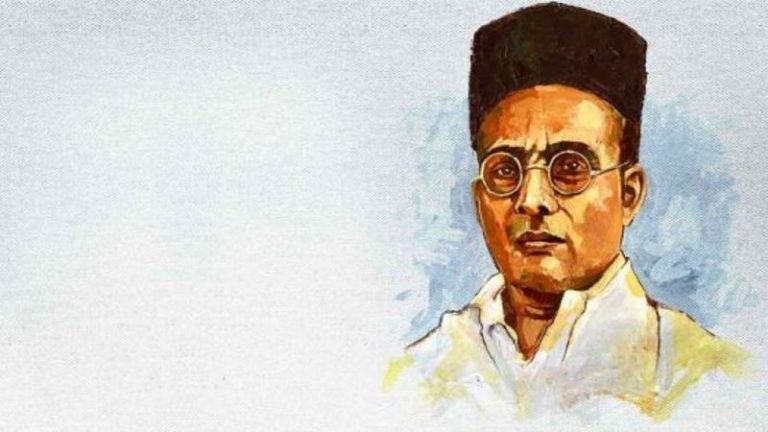
One of the most tragic things about the political discourse on Savarkar is that nobody stands up for this man when he is attacked by people in the left/ congress ecosystem. A few days back, in the Congress plenary, Rahul Gandhi commented that the Savarkar begged for clemency to the British, unlike Gandhiji who spent 15 years in jail.
Gandhiji spent 15 years in jail and died for the nation. But India must never forget that while our leader slept on the floor in jail Savarkar wrote a letter to the British begging for mercy and clemency.: Congress President Rahul Gandhi #CongressPlenary#ChangeIsNowpic.twitter.com/IbZQQzDg1V
A brief analysis of Gandhi’s arrests and unconditional releases by British shows that the jail experience of Savarkar and Gandhi cannot be compared. Unlike other British jails where Gandhi spent his time, the Andaman’s cellular jail had the worst conditions. It was reserved for the worst enemies of the empire in India. Gandhi was never sent to cellular jail. And thus, Gandhi and Savarkar can never be compared as far as their jail experience is concerned.
As can be seen, Gandhi was arrested and let off on several occasions and was not put through the kind of torture Savarkar was.
Source: mkgandhi.org
Since most readers do not take the opinion of an Indian admirer of Savarkar seriously, let us see what a neutral observer had to say about his apology to British. Julia Kelley-Swift, a student of history in Wesleyan University chose to study V D Savarkar for her BA thesis. Her study was published in the year 2015. Her thesis is titled: A Misunderstood Legacy: V.D. Savarkar and the Creation of Hindutva [pdf]. In her abstract, she states the motivation to study Savarkar.
In 2014 a Hindu Nationalist political party was elected to head the Indian government for the first time in over two decades. This victory signals a wider resurgence within India of Hindu nationalist ideas – foremost among them, the idea of “Hindutva,” originally set out by Vinayak Damodar Savarkar in his 1923 track, Hindutva: Who is a Hindu? As an ideology, Hindutva refers to a conception of Indian national identity that is tied inextricably to the Hindu people. Although Savarkar is clear in his differentiation between Hindutva and religious Hinduism, many critics have argued that the ideology is inherently exclusionary towards India’s religious minorities – primarily Muslims. This thesis is an attempt to shed light on this complex issue, and most importantly on the character of V.D. Savarkar – a man who has been both under-studied and over-simplified in the decades since his death.
In her chapter dedicated to the prison life of Savarkar, she deeply delves into all available sources on his experience in the prison. The student researches several sources on prison life in Andaman and writes (emphasis added) :
By the time Savarkar arrived at the Cellular Jail, all political prisoners were facing a much stricter regimen that was applied to ordinary convicts. The group was divided and the men were not allowed to speak with one another. In addition, even the smallest infraction of prison rules would result in one of the innumerable punishments meted out by the warders. Worst of all, the daily labour allotted to the political prisoners was changed to turning the oil-mill, the most difficult job at Port Blair. This particular work, which is singled out in almost every account by survivors of the Cellular Jail as cruel and unusual, involved being “yoked like animals to the handle that turned the wheel…Twenty turns of the wheel were enough to drain away the strength of the strongest cooly and the worst, brawny badmash. No dacoit past twenty was put on that work. But the poor political prisoner was fit to do it at any age.
After studying the details, she comes to the following conclusion. She writes (emphasis added) :
There is not a great deal of note, for the purpose of my argument, but the issue of Savarkar’s petitions to the government and his eventual release merits some discussion. A number of scholars, most prominently Ashis Nandy, have suggested that Savarkar gave up on his revolutionary aims while in jail and, through a series of petitions for clemency, essentially submitted to the will of the British government. The implication is that Savarkar became something of a teacher’s pet, doing whatever it took to curry favour with his superiors and avoid further punishment.
Although it is true that he submitted a number of petitions, and even repudiated his revolutionary past, I believe it is a mistake to vilify Savarkar for such actions. First, it is worth noting that Savarkar openly acknowledges, within ‘My Transportation for Life’, both the petitions that he sent as well as the discussion that he had with members of a Commission sent by the British Government to investigate conditions at the Cellular Jail.[..]
In addition, it is well worth noting here that it is hardly out of the ordinary for a prisoner, living under harsh conditions, to desire freedom at any cost. Already in this chapter, the immense suffering of Savarkar and his companions has been detailed at length. It is easy for any outsider, especially someone seeking to undermine Savarkar’s position, to disparage him for weakness under duress. However, such flippant criticism fails to acknowledge the incredible strain placed on the political prisoners at Port Blair. As Savarkar notes in one of the final sections of his memoir, by the last years of his sentence, he was struggling with continually disintegrating health, including a yearlong stint in the prison hospital.
If Gandhi comes out a jail due to ill health without any preconditions by British he remains a saint and leader. But if Savarkar writes an apology/petition because of his inability to sustain torture and deteriorating health, he becomes a ‘servant’ of the British. This is a laughable theory.
It shows that the liberals and Congressmen in India lack basic humanity and sympathy for a human being just because he represents another political ideology. I feel deeply ashamed about the lack of intellectual rigour and sensitivity within India while analysing Savarkar. Our country’s failure to stand up for a freedom fighter who suffered immensely for the cause of India is tragic and must be corrected at the earliest.
In a diverse and in many ways, a fragmented society like India, the left-liberal ecosystem is planning to peddle the idea of a proportional voting system in India. Its main concern is that the Lok Sabha and some assemblies have less representation because of the first past the post system. The idea found recognition at the topmost level for the first time when a parliamentary panel headed by Congress leader Anand Sharma took it up.
Their main bone of contention is that 69% of the people have not voted Modi and hence the system of elections is by itself wrong in India. Their fear increased further when BJP secured 312 seats in 401 member assembly in Uttar Pradesh with a vote share of 39.7%. The matter has been raised again as CPI(M) lost in Tripura even after getting 42% vote.
This is not a good argument because most of these parties have enjoyed power with less than 50% vote share all these years and did not bother to bring up this logic. Now that they are out of power and are becoming more and more irrelevant they have now sought to get at least some number of seats in elected assemblies. At the outset, it may appear that it is fair for someone to gain a definite number of seats for a particular percentage of votes. But in reality, for a fractured society like India, it will do more harm than benefit when it is implemented.
In a recent interview to The Hindu, former chief election commissioner S.Y. Quraishi answered a question on proportional representation as below (emphasis added) :
Q: You had mentioned in an essay that it is time to review the first-past-the-post system (FPTP)? Has the demand for replacing FPTP with proportional representation (PR) become louder after the 2014 general elections?
When I wrote An Undocumented Wonder: The Making of the Great Indian Election, which came out in the middle of the elections of 2014, I had written that FPTP was the best system for its simplicity. I had also discussed various PR systems but dismissed them as not being practical for India. After the 2014 elections, I felt compelled to change my position when we saw that even with the third largest vote share of 20%, one party (the Bahujan Samaj Party) got zero seats. This is not a democracy. I think it is time to have a national debate on this. We could look at the German model where they have a mixed system — half PR and half FPTP.
His comment ‘This is not democracy’ is irresponsible and unacceptable because there is no hard and fast rule that some party with 20% vote has to get a seat. Probably there have been such instances in the past. One can also argue that some party with 10% vote should also get some seats or else, it cannot be a democracy. At what threshold do you call first past the post system as undemocratic? Let us also remember that this rhetoric arises only when a party that the liberals hate comes to power.
In a first past the post system of elections, a party has to build a broad social alliance and come up with an inclusive agenda in its manifesto. The party may or may not be dominated by any single community, but it will have to seek votes of as many communities as possible to get elected. Once it gets elected it has to serve all sections of the society.
It has been pointed out many times in the past, this form of government will assure seats for some percentage of the population and thereby allow parties and politicians to take hardline communal positions based on a percentage of the population. Also, coalition governments formed in India are difficult to run as opposite ideologies will stall many decisions. Proportional voting would institutionalise coalition governments forever and harm public at large in the long run.
It is argued that the proportional voting system was rejected by the constituent assembly because it is complex and not understood by the large illiterate electorate at the time of independence. The fact that India is now better off in literacy is the reason for the proponents of proportional system to argue that the time has now arrived for its introduction. This is again an incorrect argument because we have still not reached 100% literacy and we would be ignoring a large number of voters who may not understand the complexity.
In my opinion, proportional voting suits a homogeneous society (or nearly homogeneous society) which has ideological diversity in its political system. In a political system like India which has both demographic and ideological diversity, it would lead to chaos and more bigotry in our political discourse.