Home Blog Page 7281

Lalu Prasad Yadav convicted in fourth fodder scam case

0

A special CBI court in Ranchi pronounced RJD chief Lalu Prasad Yadav guilty in the fourth fodder scam case today.


Former Bihar CM and another accused in the case Jagannath Mishra was found ‘not guilty‘ in this fourth case. Lalu Prasad is currently lodged in the Birsa Munda Prison in Ranchi where he is serving a 13.5 years jail term. He was admitted to the Rajendra Institute of Medical Sciences on Saturday after he complained of health issues. The sentences for this fourth case are yet to be announced.

RJD chief Lalu Prasad Yadav has already been convicted in three of the fodder scam cases previously. Former CM Jagannath Mishra, who has been found guilty in two of the previous cases which led senior journalist Shekhar Gupta had tried to insinuate a cast bias in the judiciary, has been acquitted.

The trial of the case relating to fraudulent withdrawal of Rs. 3.76 crore from Dumka treasury between December 1995 and January 1996. However, the pronouncement of the judgement got delayed since Lalu Yadav moved an application alleging involvement of former Accountant General PK Mukhopadhyay, former Deputy Accountant General BN Jha and former Director General in AG office Pramod Kumar in the scam. Lalu Yadav had urged the court to make the three of them accused in the case under section 319 (power to proceed against other persons appearing guilty of the offence) of the CrPC.

Hearing Lalu’s plea, the judge in the special CBI court, Shivpal Singh, had ruled that the allegations on the three named above are grave and asked Lalu to obtain prosecution sanction against the three officials from the concerned authority and set April 16 as the date for the next hearing.

Lalu had mentioned the statements of several witnesses recorded by the CBI and the statements of the CBI’s own officials citing possible involvement of the AG office in the fodder scam.

A special CBI court in 2013 had convicted Lalu in the first fodder scam case involving the withdrawal of Rs 37.7 crores from the Chaibasa treasury. Lalu was pronounced guilty in another fodder scam case involving the Deoghar treasury of Rs 89 lakhs in December last year.Jagannath Mishra had been acquitted in that case. Both Lalu and Jagannath Mishra were found guilty of the third fodder scam involving the Chaibasa district treasury of Rs 33.67 crores. Lalu Prasad was sentenced to five years of jail term and a fine of Rs 10 lakhs.

Gorgeous visuals of the grand Gudi Padwa celebrations across Maharashtra

0

The First day of the month of Chaitra is celebrated as the Hindu New Year in many states in India. In Maharashtra, it is celebrated as Gudi Padwa while for Telugu and Kannadiga people it is celebrated as Ugadi. Gudi Padwa in Maharashtra is celebrated with much fanfare and every year, the festival brings glimpses of the rich traditions and proud Maratha heritage.

The Gaon Devi Maidan saw a huge Rangoli made with 900 kgs of colour and hard work of 70 artists:

Photo courtesy: ANI

The people of Nashik however, saw people taking up the task of converting the serene banks of Godavari into artistic landscapes.

photo courtesy: @winsplit via twitter

The celebrations were not limited to Rangoli alone. Maharashtrian women dressed in traditional attire and carrying saffron flags took out rallies riding two-wheelers. The visuals have all the aspects of feminine beauty and power captured in frames. Shobha yatras or rallies are an essential part of Gudi Padwa celebrations and Maharashtra saw a lot of it yesterday.

shobha yatra on Gudi Padwa: image courtesy Paresh M Kanade via twitter


Photo courtesy: @RanaRan61082983


Hindu festivals are always the celebration of colours and vibrancy of nature. The visuals of Maharashtra are another reminder of our rich cultural heritage.

Harsh Mander’s article shows how ‘seculars’ are the real bigots and believers of the 2-nation theory

0

Recently, an article titled ‘Sonia, sadly’ written by ‘activist’ Harsh Mander was shared by Pakistani politician Imran Khan with a comment thanking Jinnah. In the article, the activist Harsh Mander writes about the ‘political marginalisation’ of Muslims. This is strikingly similar to one of the key reasons cited by Jinnah for a separate country. This attracted the attention of Twitter users. Some of them tacitly approved the comment, while others opposed it.


The story of partition has been brushed under the carpet in India’s discourse. India has never made attempts to highlight the villain that Jinnah was in the history of the subcontinent. Jinnah’s two nation theory argued that Hindus and Muslims were two separate nations and hence both had to have a separate country after British left India. The Congress party disagreed with the theory though it accepted a partition of the subcontinent. Pakistan became an Islamic state and India a secular state.

Post partition, one would have believed that Muslims would integrate into Indian society, accept common laws and place their Indian identity above their religious identity. The process has been stymied by the community’s staunch adherence to personal laws and opposition to the national song ‘Vande Mataram’. In spite of this, the participation of Indian Muslims in elections and all other fields of the society has been active and constructive in most cases. India’s most loved President-Dr APJ Abdul Kalam was elected by a BJP led alliance. India’s favourite music composer is AR Rahman. One can go on listing prominent Muslim figures in all fields.

Instead of forging unity over the decades, secular parties in India went ahead with their appeasement policies for the sake of garnering votes. They not only compromised principles of fairness but also went on to shed tears for terrorists. These secularists are blocking reasonable reform in Muslim society like Triple Talaq bill. Their attempts to bury the demand for a Ram Temple are also well known. The fall of ‘secular’ parties has been so drastic, that a former president of Congress had to admit that her party was now perceived as a Muslim party because of BJP.

This comment has led to deep sorrow among secular-liberal ecosystem as they see their career prospects in ‘activism’ and anti-Hindu bashing declining in future. Thus they are now writing obituaries to the ideals that had once found credence in the corridors of power. Mander, in his article, writes (emphasis added) :

Muslims are today’s castaways, political orphans with no home, for virtually every political party. This despite India being home to a tenth of the world’s Muslims, around 180 million people, making it the largest Muslim country after Indonesia and Pakistan. There has never been a harder time to be a Muslim in India, not since the stormy months that followed India’s Partition. 

The phrase ‘largest Muslim country‘ used by Mander underlines the mindset of the secular liberal ecosystem. It is a Freudian slip that shows that it is people Mander who believe in the two-nation theory. For them, any strategy to play the victim or attack RSS is valid, even if it jeopardises the national identity and unity of India.

Mander writes :

“Open expression of hatred and bigotry against Muslims have become a new normal, from schools to universities, workplaces to living rooms, internet to political rallies. Even worse, they’re forced to live with the everyday fear of hate violence.”

Mandar makes sweeping generalizations about hatred and bigotry against Muslims, while the same about Hindus can be argued equally emphatically. An example can be cited of the ‘secular’ Hartosh Singh Bal who wanted Brahmins to be targeted by Islamist mobs in Kashmir and the state to not waste resources on their protection.

Or how the secular motivated campaign like #NotInMyName turned severely anti-Hindu. When a Hindu boy is brutally murdered, the secular Karnataka government called it a “normal death”, and none seemed to bat an eye. Heck, even speaking for Hindu riot victims in Bangladesh was called “Hindu Nationalism” in the most derogatory fashion.

Mander provides no data for violence, and any attempt to provide data has been found to be manipulated, partisan or simply fraudulent. Take the ‘HT Hate Tracker for example’. We had demonstrated earlier how the tool was openly bigoted and biased considering Hate crimes against people belonging to certain political or religious inclination were conveniently ignored, and so are crimes perpetrated by people belonging to certain political or religious ideology. It was even pointed out that Hate Tracker 13 out of 15 Muslim-on-Dalit hate crimes basically shielding Muslim perpetrators.

Or how can we forget the man who spread fake gau-rakshak attack story and later admitted he lied because he hates Hindus? How can we forget how his story was lapped up by the secular-liberal ecosystem simply because it painted Hindus in bad light, no questions asked?

He sees Sonia Gandhi’s comment on ‘Muslim party’ as a final nail in the coffin of appeasement politics. He is indirectly sending an SOS to political parties not to ditch appeasement politics. He writes :

But now it is not just the BJP that shuns Muslims. Most political parties are accepting the premise that the majority Hindu vote will sour if a party is seen to be close to Muslims. In her 19 years of leadership of the Congress, Sonia Gandhi never faltered in her secular convictions. But when even she declared recently that the Congress suffered because the BJP persuaded people that it was a Muslim party, many Muslims felt their expulsion to the political wilderness was complete. [..]

Minorities have become “a taboo for the big parties” which seek to “dissociate with any step that can come across as minority appeasement”. This “shows us what is in store in the future”. It is for Hindus to decide now, he believes, “whether they want India to become a Hindu Rashtra or remain secular”. 

This commentary makes one wonder if secular intellectuals are on their way to create a separate nation of ‘Hindus’ and ‘Muslims’ in India using the strategy of Jinnah in 1940s. While the BJP and PM reiterate the ideology of Sabka Saath Sabka Vikas, these activists go around peddling the story of ‘political isolation’ in Muslim community. BJP has ensured that its policies are not meant for any religion. It has supported Muslim women in their fight against Triple Talaq. The theory of political isolation is a figment of Harsh Mander’s imagination, which was, in turn, picked up by Pakistan to prop itself up and undermine India. In effect, Mander also gave an excuse to Pakistan to whitewash how terribly they treat the Hindu minority there. The comparison is unthinkable, but Mander’s hollow scaremongering defeated their cause.

Activists like Harsh Mander, who pen articles like this not only cater to domestic propaganda but also find a cheering audience in Pakistan. The same ‘activist’ is a part of the liberal-secular ecosystem that signed a mercy petition for Yakub Memon. This would anger any sane Indian as terrorism cannot be tolerated in the larger interest of the nation. Indian secularists are blocking every avenue which could make India a harmonious society. The dangerous communal violence bill, the campaign to retain Triple Talaq and attempts to torpedo a settlement in Ram Janmabhoomi case by secularists are some examples.

Even if this ecosystem becomes politically irrelevant, its ability to damage the country remains intact. Therefore, eternal vigilance is essential to keep India on the path of progress and protect the unity of the country.

Watch: MNS workers pull down Gujarati signboards in Vasai after Raj Thackeray’s ‘Modi-Mukt Bharat’ call

0

Following the attack by Maharashtra Navnirman Chief Raj Thackeray on Prime Minister Narendra Modi, where he accused media of using Sridevi’s death to divert attention from the Nirav Modi-PNB scam, the MNS workers have reportedly vandalised shops with Gujarati signboards in Vasai, Mumbai.


In his speech yesterday, Thackeray had reportedly mentioned how Vasai ‘feels like Gujarat’ these days. This is not the first time MNS has attacked people from other states in Maharashtra. MNS has regularly attacked migrant workers from Uttar Pradesh and Bihar and there have been reports of shops being vandalised for no displaying signboards in Marathi.

In July last year, too, it was reported that MNS workers had vandalised Gujarati signboards in Dadar since they felt the Gujarati signboards ‘sidelined’ Marathi language.

Survey shows West Bengal and Kerala worst in providing information to the public

0

Research by two NGOs has brought to highlight many gaping holes in the functioning of India’s Information Commissions (ICs). As per the revelations made by the “Report Card on Performance of Information Commissions in India” by Satark Nagrik Sangathan (SNS) and Centre for Equity Studies (CES), there are 1,99,186 pending applications in the 23 Information Commissions from whom data was sought.

The Information Commissions were established after the landmark 2005 RTI Act and the two NGOs sought information from the ICs themselves by filing RTI applications. A total of 169 RTI applications were filed with the Central Information Commission (CIC) and individual State Information Commissions (SICs). The information obtained showed some concerning statistics.

The assessment showed that as of December 2016, a total of 1,81,852 applications were pending. The total number had surged to a whopping 1,99,186 by the end of October 2017. UP the most populous state had 41,561 cases pending followed by Maharashtra at 41,178.

The SNS and CES then used the data for monthly disposal rate of the state ICs and number of pending applications to calculate the average time it would take for an application filed on November 1, 2017, to be disposed of by each state ICs. The results painted a grim picture.

The analysis showed that In West Bengal, it would take 43 years for an applicant to see his application disposed of and queries answered. While for Kerala the time was 6.5 years. Odisha followed next with more than 5 years average time period.


The data also revealed that several states have a vacant post of Information Commissioner for prolonged periods and in many cases, the SICs remains non-functional for months together. Reduced capacity was found to be prevalent among almost all the ICs. It also states that after the Chief Information Commissioners retire, the post remains vacant for months. The state of Andhra Pradesh which had a common SIC with the separated Telangana till May 2017, saw the IC become defunct after the chief retired and though the state government issued order to constitute a new SIC in Aug 2017, no commissioner has been appointed so far. Currently Maharashtra, Nagaland and Gujrat are without a Cheif Information Commissioner. In Kerala, a lone commissioner is in charge of handling the 14,000 currently pending applications.

According to the RTI Act, the SICs can impose a penalty on the Public Information Officers up to Rs 25000 for violations of duties. The data analysis has shown that though a total penalty of Rs 4.4 crores by 22 ICs during the period of review, the recovery is at a meagre 49.73 lakhs. The state ICs of Andhra Pradesh, Bihar, Madhya Pradesh, Maharashtra, Rajasthan, Tamil Nadu & Uttar Pradesh did not provide information on penalties imposed and recovered.

Another concerning fact was that while the RTI act was all about transparency and availability of information to the public, 18 of the 19 ICs did not publish their annual report for 2016 on their websites. In fact, the Punjab SIC has not published an annual report after 2012, while Jharkhand, Telangana and Andhra Pradesh have not published annual reports since 2013.

In terms of the number of cases disposed of, the CIC remained at the top with 54,219 applications disposed of and UP followed at second place with 42,911.

While the communists and opposition, in general, blame the BJP for being opaque and denying the public their right to know, from this survey it appears that the public’s right to know is thwarted maximum in the two states that have a dense communist presence, West Bengal and Kerala. A whopping 43 years wait in West Bengal while 6 years 6 months in Kerala. Who is the fascist now?

Pakistan’s inaction on terror called out internationally, this time louder and stronger, but fails to convince ‘The Quint’

0

The United States of America has once again called Pakistan out for its well-known sympathy for terror. The US had told Pakistan that it “must do more” against terror groups such as the Taliban. Failing to prevent cross-border attacks could lead to the Trump administration taking “unilateral measures”, it was said post the meeting between the US Vice President Mike Pence and Pakistan’s Prime Minister Shahid Khaqan Abbasi (as reported by a Pakistani daily, Dawn).

The American officials quite clearly demanded immediate action from the Pakistani government and “not just word on the Taliban and Haqqani sanctuaries”. Yet that did not stop certain media houses from unfairly criticising the American demands. The Quint, for example, said in big, bold and prominent letters:

“The (US) official did not give any indication of the kind of actions the US was contemplating against Pakistan, given its frustration for them not taking action against terrorist groups.”

As it may already be apparent, this is an incorrect inference to draw. The official was very categorical and clear while telling the Pakistani government what the USA expected. Thus, let us remind them of what was said at the conference:

“We continue to make very specific requests. We want to end cross-border terrorism..” (followed by a citation of the recent high-profile attacks in Kabul by terrorists from across the border in Pakistan).

If that was not a clear enough “indication of the kind of actions”, let us state more. The American official also said :

“We believe that the release of Hafeez Saeed in November was a step in the wrong direction”. And if getting Hafeez Saeed in jail, is not an “indication of what kind of action” must be taken, I do not know what is.

Speaking of Hafeez Saeed, it is slightly ironic that ‘The Quint’ was the least defined of media sources when talking about the atrocious murders by this man and his group. Their words were :

“Lashkar-e-Taiba (“Army of the Pure” or LeT), a group Saeed founded in 1987 and which Washington and India blame for the 2008 attacks”.

Wait. Let that sink in.

Yes, ‘The Quint’ did not even take the whole world’s narrative and decided to call it a “blame”, that was only set by “Washington and India”. Shocking manners of downplaying, we see coming from our ‘non-partisan media house’. But anyway, hope they find these statements, to suffice an “indication of the kind of actions the US was contemplating against Pakistan”.

Besides, this was not the first time Pakistan was confronted on the issue terrorism. The President of the United States, Donald Trump had announced his South Asia Policy during August last year. The spirit of that policy was critical of Pakistan for sheltering terror groups and “carrying out attacks in Afghanistan”. Yet, no response was seen on the policy, which was picked up on this occasion by the American officials.

There were many other times when Pakistan had been pulled up on the account of defending terrorism, followed by its cross-border violence. Donald Trump himself had tweeted:


The Pakistani citizens reportedly responded by burning American flags and Trump’s photos. However, the response at a higher level was not very different, followed by a rather bombastic response by Khawaja M. Asif, “history teaches us not to blindly trust the US… (we) will not compromise our dignity anymore”. This rather upset response was perhaps reflective of the deteriorating relations between Pakistan and the States, even at a diplomatic level. Either way, as it was put on Friday, “the ball is in Islamabad’s court” to take action.

As Indians, we see other nations recognising our diplomatic efforts to take Pakistan on, for its complacency and funding of terrorist activities across the border too. While the onus is on Pakistan to deliver its basic responsibility to step away from terrorism, matters appear positive due to global pressure mounting up on our neighbours’ atrocious actions.

In the meantime, I plead such media houses to stand for national interest. If standing up for the nation is so difficult, they can at least stand up for truth. However, we shouldn’t hold our breath considering this is not the first time ‘The Quint’ has peddled the Pakistani side of the story and indulged in blatant anti-India propaganda. In 2017, a Quint journalist was booked for abetting the suicide of Lance Naik Roy Matthew. In fact, their pussyfooting on Hafeez Saeed is not surprising, considering they had published an entire piece about Osama Bin Laden being a father and a husband. The Quint had also come up with a story that basically declared Kulbhushan Jadhav an ‘Indian spy’ thereby endangering his life and national security. We had rebutted that story threadbare and post massive backlash, The Quint had taken the story down and decided to “recheck its story“, but not before Pakistanis and its official agencies had started quoting The Quint article on Jadhav in an attempt to undermine India’s position.

And that truth screams: Pakistani soldiers have murdered our innocent children from across the border. Pakistani groups have created mischief in India to harm the lives of its citizens. Pakistani organisations have catalysed bombings and murders in its neighbouring countries. While the world stands against their position, certain forums have given this terror state feeble excuses to hide behind, and exemptions to justify their silence on sheer disregard for human lives. 

Raj Thackeray says Sridevi’s death used as ruse to divert attention from Nirav Modi scam

0

Addressing party workers at a rally in Mumbai, Maharashtra Navnirman Sena (MNS) chief Raj Thackeray alleged that the media used Sridevi’s death as an excuse to divert attention from the alleged multi crore PNB scam. While he said she was a good actress, he questioned her contribution to nation for her body to be wrapped in the tricolour. Accusing the media of covering her funeral extensively on behest of the government to divert attention from the multi crore Nirav Modi-PNB scam, Thackeray said that the media is under tremendous pressure from the government.


Launching an attack on Prime Minister Modi, Thackeray urged the opposition to come together for a Modi-free India. Calling demonetisation biggest scam ever since 1947, he even said that the films like ‘Toilet Ek Prem Katha’ and ‘Padman’ are covert propaganda for government schemes. He even took potshots at Maharashtra Chief Minister Devendra Fadnavis for singing songs and not addressing problems faced by people of Maharashtra.

This is not the first time Raj Thackeray has put out wild conspiracy theories. Earlier, he had teamed up with Sharad Pawar to float a conspiracy theory that the Ahmedabad-Mumbai bullet train is a trick by embittered Gujaratis to reclaim Mumbai after losing Mumbai to Maharashtra in 1960.

Continuous electoral defeat is making Congress regressive and withdraw its own historical support for EVMs

0

The bureaucracy in India has been bashed for most of the ills in Indian society. However, one of the areas where they are doing pretty well is in the Election Commission. From time to time they have evolved the system and come up with a framework where free and fair elections can be held in the country. One of the key parts of the fair election system in India is its unique innovation i.e. electronic voting machine.

The Congress plenary in its political resolution has proposed a return to the paper ballots in future elections to restore the ‘credibility of elections’. The reason for this may have dubious motives behind it. This claim would raise questions the validity of the results in previous elections where Congress won.

When the ECI called for an ‘EVM challenge’, asking all parties to demonstrate the faults of EVMs in June 2017, none were able to prove a fault in the device. The Congress has been making wild allegations on EVMs and politicising it. In December 2017, the party had linked EVM fraud with a hypothetical GSPC scam. The hit and run strategy of the party that demonstrates how irrelevant it is becoming day by day.


In spite of the ridiculous and unfounded comments of the opposition, the BJP has not ruled out the proposal. The BJP general secretary has said that the party was ready to examine the proposal if there is a consensus on the matter. However, it would be a blunder if BJP were to accept the scrapping of one of the finest electoral reforms in the world.


Chronology of steps before the introduction of EVMs

One would be curious to know the process by which this system came into being and evolved over the years. The Election Commission has recently brought out a status paper [pdf] on EVMs. It highlights the improvements, benefits and clarifies concerns if any on the EVM. The paper includes detailed safety provisions, legal aspects, international comparisons and an assessment of some recent controversies. The paper makes a strong defence of the EVM and assures that further improvements will also be accepted.

The brief history of EVM is summarised in the paper as below. A general consensus on the use of EVMs has arrived twenty years ago in 1998. The Congress party was an integral part of this process throughout. Today it is retracting its own support to EVMs. Probably this is due to its failure in successive assembly elections. 

Benefits of using EVMs

The benefits of using EVMs and disadvantages of using paper ballots are well known. However, it is summarised by EC in its paper succinctly. The paper says (emphasis added) :

Before the introduction of the EVM, the ubiquitous Ballot papers were used to cast votes in the Indian Elections, with considerable success. The use of ballot papers was time-consuming, prone to malpractices like booth-capturing and ballot-box stuffing, a large number of invalid votes due to wrong/incorrect marking, subject to prolonged counting drills, more disputes and delayed result announcement besides being an ecologically straining and non-environment friendly method.

However, in comparison, EVM has substantial comparative and noticeable advantages.

  • The manner of voting by EVMs is much simpler and voter-friendly as the voter is mere to press the button on BU (ballot unit) for casting his votes in favour of the candidate of his choice.
  • Under the EVM system, there is no invalid vote, whereas in the ballot paper system a large number of ballot papers were invalidated and in some cases, the number of such invalid ballot papers was even more than the winning margin of the elected candidate.
  • It is auditable, transparent, accurate, secure and helps reduce human error.
  • It gives faster results in hours, which is particularly relevant in large countries like India having Constituencies of several hundred thousand voters, where counting used to take days and weeks earlier.
  •  In addition, EVM voting saves time, energy and money, not to speak of the millions of trees it saves in the process.
  • Earlier crores of ballot papers were printed requiring hundreds of tonnes of paper for printing the same and the printing of ballot papers had to be undertaken in a large number of Government Presses for very long periods, involving hundreds of election officials in each constituency.
  • Additionally, the innovative use of advancements in modern electronics for voting in the country provides for a fulsome endorsement of the creativity, inventiveness and pioneering acumen of the Indian society at large and serves to enhance the image and prestige of the country in the international arena.

Reverting to paper ballots would be a regressive step for Indian democracy

It is quite clear as to why parties like Samajwadi Party, Bahujan Samaj Party, Congress and Aam Admi Party are afraid of EVM. EVMs enable the poorest of poor and most illiterate to vote in a simple manner. The device eliminates the possibility of many election frauds (like rigging and booth capture). If this system were to be discarded, these parties could exploit the openings in order to manipulate the elections. A pattern has emerged where opposition claims a victory for democracy when they win and blame EVM if they lose.

These parties want to take us back to an age where casteism, communalism and regressive agenda of divide and rule dominate. Therefore they will continue to oppose anything that is progressive. By aiming its guns against the EVM, the Congress party is displaying its desperation to return to power and discredit the device which was used in their election victory in 2004 and 2009 Lok Sabha elections.

The previous Congress government let down the people of the country: Rahul Gandhi

0

In his speech at the Congress Plenary session, Rahul Gandhi has admitted that the previous Congress government had ‘let down’ the people of the country. The admission appears to be an effort towards damage control as the Congress Party has lost all credibility in the eyes of the voters due to the corruption of the previous government. It is also a little amusing that while Rahul Gandhi admits that the Congress government let the people of India down, his comrades continue to sing praises about how the Congress government ensured India reaches great heights.


The Congress President also stated that “BJP is the voice of an organisation, while Congress is the voice of the nation.” However, the fate of the Congress Party in the recently concluded Assembly elections in the North-East as well as in other states across the country appears to suggest otherwise.

Rahul Gandhi also made a reference to the Mahabharata and claimed that the Congress Party are like the Pandavas and the Bharatiya Janata Party are the Kauravas. The allusion to Mahabharata is in concordance with the recent efforts towards an image makeover by the Congress President which involves a lot of Temple visits, one of which led to a controversy that has raised a serious question surrounding his faith. Also, the apparent respect for the Mahabharata comes across as a little confusing as recently the Congress Party had suggested that the Ramayana is ‘fiction’.

The Congress Party is in a jubilant mood in recent times despite losing deposits in both seats in the recent by-polls in Uttar Pradesh. The party sees BJP’s defeats in two by-polls as evidence that Narendra Modi’s popularity is decreasing despite the BJP’s victory in almost all Assembly elections in recent times.

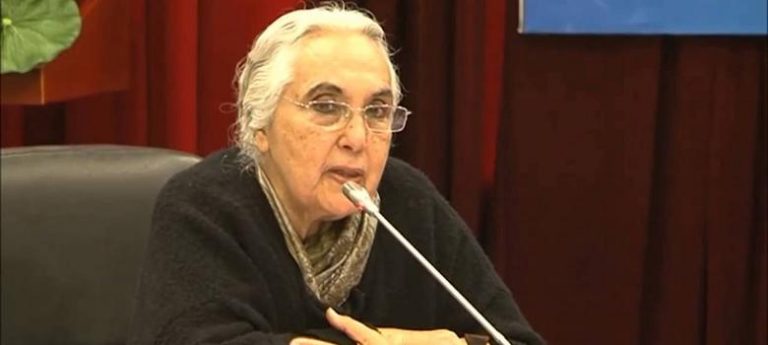
No Ms Romila Thapar, even to a 15 year old student like me, you don’t make sense

0

12th March 2018 was an amusing day when NDTV decided to publish an article on Political Parties Rewriting Books. But the biggest irony of that article was that it was written by Romila Thapar: the living legend of agenda-based distortions in academic history. She tried to suggest (in her article) that history textbooks cannot be subject to the whims and fancies of political change. I aim to demonstrate the hypocrisy behind these words and reiterate the genuine necessity for a transformation in our textbooks.

Today, in 2018 Romila says political ideology cannot change the truth. If only she told herself exactly that, some years ago. She has literally legitimised historical distortion in India and has born audacious political motives during her active years. So many things were that fell in line with the Marxist view of history, were suggested by her: including an uncanny bigotry towards Hinduism, half-baked knowledge, lies, lies and more lies. Some examples would help me convey my point better.

In her history books, she has placed massive emphasis on this idea of Hindus actually having an Aryan identity. Let’s have a look at such arguments in one of her own middle school textbooks, Ancient India:


Screen Shot 2018-03-16 at 5.41.18 PM.jpg

Reference: Ancient India, (Chapter 3: Life in the Vedic Age, Pg. 48)

Notice how there is a massive emphasis on “Aryans arriving in India”. No reference to it being a theory, no reference of there being massive evidence against it. Just a bold assertion. Aside from that, she subtly incorporates the highly flawed ‘nasal index’ concept by saying that Dravidians or “Dasyus” had “flat noses”. This suggestion is very often brought up by the brigade of communist ‘intellectuals’ to divide on the basis of a false identity.  She doesn’t stop there; naturally, Marxism in India not only involves dividing based on caste but also language. Therefore, she must obviously mention that they spoke different languages. As though that was not enough, she goes on to say that we apparently worshipped different Gods. Obviously, no historical evidence to back any of these claims, no quotations of scriptures of the time, no scientific evidence, just gutted declarations of there being a divide. In fact, the scriptures and DNA tests have proved the opposite of what Romila propagates here. But naturally, Ms Thapar has not made her motives clear enough, so do not worry dear Class 6 student. For if you answer the following questions that are only on Aryans (because that is what Ancient India was, wasn’t it?), one day you can become a Marxist too!


Screen Shot 2018-03-16 at 5.58.06 PM.jpg

Reference: Ancient India, (Chapter 3: Life in the Vedic Age, Pg. 47)


If only she stopped there. But as you probably guessed, she doesn’t. She goes on to tell the student about the gods of the time.

Screen Shot 2018-03-16 at 6.08.14 PM.jpg

Reference: Ancient India, (Chapter 3: Life in the Vedic Age, Pg. 50)

“Indra was the favourite god because he was strong and he could strike down the demons and the enemies of the Aryans”. Seriously? Firstly, there is no logical basis to announce Indra as the “favourite God”, because there’s nothing like that in any Veda, Upanishad, Purana, Itihasa or any documented piece of evidence for that matter. So it naturally makes you wonder- why would she bring up “favourite god”? Well, here’s the answer: “he could strike down the demons and enemies of the Aryans”. I almost laughed out when I read that!

Really? Is that what India’s “most eminent historian” resorts to? Indra, who is the king of Devas is perceived to somehow be pro-Aryan. But there is no logical basis to assume that. Much like her comrades, she wants you to believe that Rakshasas were “dark” and therefore “Dravidian”. Anyone who is therefore against Rakshasas is “fair” and therefore “Aryan”. So since Indra was perceived to be fair by the Marxist brigade, hallelujah! He not only struck down the enemies of Aryans but is suddenly their favourite God.

She does not stop there though. She goes on to pull every desperate attempt at misrepresenting Indian culture, just as every member of the Communist pseudo-intellectual squad has done. This time, she pronounces: “there is literary evidence” through hymns, stories and poems” to say that beef eating was a “common practice amongst Aryans”. In fact, she stands by these statements till date and has brought them up on various occasions:

Screen Shot 2018-03-16 at 6.34.48 PM.jpg

Ref- India Today, Why right is not right: Historian Romila Thapar talks about the outburst against intolerance by the intellectuals

Of course, every source of firsthand Vedic information will condemn cow slaughter, just as none permit beef eating. Romila’s beloved literary evidence seems to work against her this time though because if I quoted to you: Rig-veda (10.87.16), Manu-Samhita (5.48-49), (Mahabharata, Anu.115.47) and tens of scriptures, you would know how wrong she is. One sample verse from the Atharva Veda (10.1.29) says:

The slaughter of an innocent, O Krityā, is an awful deed. Slay not a cow, horse, or any mortal.

Therefore, all her feisty claims launched out in history textbooks of young children are riddled with holes and fallacies. She herself had evidently promoted a very specific political ideology and would, therefore, be the last person I approached on any educational advice.

But for sake of argument, let us even ignore the fact that this suggestion (of “no change in history books”)  came from Romila Thapar for a second. Should history textbooks be changed every single time a different party gains power?

The answer obviously is no.

Every time a new party comes into power, they cannot revolutionise the curriculum for no rhyme or reason. But when sheer lies are being taught to children, we cannot shy away from making changes. For example, if I had a textbook that somehow said:

“Our ancestors haven’t mentioned anywhere that they ever saw an ape turning into a man. So Darwinism is a myth”.

Whatever ideology you hold, as a rational person, you would ask for it to be removed from the textbook. Why?

Because it’s a delusion that you do not want children to study and ingrain into their minds. Previous governments have left ludicrous suggestions in the minds of little children that the government needs to get rid of. Therefore, although every party in power should not change books for the sake of displaying political muscle, genuine distortions call for a change.

I myself have examined the number of falsifications in a young student’s book, to prove the necessity for a refinement. I would even like to quote Smriti Irani’s famous speech in parliament:

History taught to standard 6th. I quote, madam speaker, “Kashmir is a much demonised land today that the State militates against… The atrocities of the Indian State”…There is a single prescribed textbook on Shivaji all over Maharashtra. Teachers from the schools in Bombay have expressed great difficulty in controlling emotions. One of them said, “The schools that have active enrollment of Muslim students are rushed through the chapter on Afzal Khan and Shivaji’s confrontation. It is a politically and socially loaded connotation. I can’t meet eye to eye with Muslim students, so I start my chapter with an apology. There are many Afzals in my class.”. As said by the teacher teaching in the 6th standard.

I do not attribute these specific distortions to Romila Thapar. But when such things are being taught to children, is it not fair to ask for books to be changed? How can you argue that this is about “political parties” when such things have been written and even commissioned irresponsibly by certain governments? Therefore change is a must in such situations.

Let us agree to something: laughable, yet equally sorry things are taught to Indian children due to some ‘academicians’ and their political inclinations and biases. It is even more saddening when these ‘intellectuals’ responsible for that corruption in knowledge, go on to talk about objectivity and worry about education now. Dear NDTV journalists, apologists and bigoted historians like Ms Thapar- please understand that we cannot be fooled anymore. If I, as a fifteen-year-old student, can see through your silly suggestions, so can the rest of our nation.