Home Blog Page 7297

All you need to know about Andhra Pradesh’s ‘special status’ demand and why TDP might be quitting the NDA Govt

0

Yesterday, the Telugu Desam Party (TDP) chief Chandrababu Naidu announced that two of the ministers in the central government would be resigning as the demands of the state were not being met in a late night press conference.

The press conference came after Arun Jaitley said that in place of a ‘special category’ a ‘special package’ which would be equivalent in terms of benefits could be arranged for. However, this offer did not satisfy the Andhra Chief minister. Though TDP has pulled out of the government it has still not announced its exit from NDA in categorical terms

The BJP responded to the announcement by saying that the claims of Chandrababu Naidu regarding lack of support from the centre were a lie.


Meanwhile, the Congress party has tried to gain political mileage from this ‘unfulfilled promise’ of special category for Andhra Pradesh even before the TDP and BJP’s difference came out in the public domain.


What is special category status and why does Andhra deserve it?

While passing the Andhra Pradesh Reorganisation Act, the new state was promised a special category status by major political parties. The special category status enables the states to get special grants and higher central assistance in the implementation of central schemes. In addition to this, industries set up in these regions are given special incentives.

The feature/features that a state has to possess for special category states was earlier decided as : (i) hilly and difficult terrain (ii) low population density and / or sizeable share of tribal population (iii) strategic location along borders with neighbouring countries (iv) economic and infrastructural backwardness and (v) non-viable nature of state finances.

Since the united Andhra was getting a large share of its revenues from Hyderabad, the new state of Andhra Pradesh would lack in funds for its sustenance (Hyderabad will eventually become the capital of Telangana alone). Hence the new state of Andhra Pradesh claimed that it was eligible for special category status.

The main complaint of the TDP is that the BJP has not fulfilled the promises made to the new state under the Andhra Pradesh Reorganisation Act. As per the TDP, the state was supposed to get a special category status as per the act. However, this term is not explicitly mentioned in the act. The part X (infrastructure and special economic measures) of the Andhra Pradesh Reorganisation Act [ pdf ] says :

94. Fiscal measures including tax incentives.––

(1) The Central Government shall take appropriate fiscal measures, including offer of tax incentives, to the successor States, to promote industrialisation and economic growth in both the States.

(2) The Central Government shall support the programmes for the development of backward areas in the successor States, including expansion of physical and social infrastructure.

(3) The Central Government shall provide special financial support for the creation of essential facilities in the new capital of the successor State of Andhra Pradesh including the Raj Bhawan, High Court, Government Secretariat, Legislative Assembly, Legislative Council, and such other essential infrastructure.

(4) The Central Government shall facilitate the creation of a new capital for the successor State of Andhra Pradesh, if considered necessary, by denotifying degraded forest land.

Arun Jaitley’s press conference confirms centre’s firm support, promises special package

In a press conference held before TDP’s announcement, the Finance Minister had said that the ‘special category’ promise was made before the report of 14th finance commission report was out. Finance commission is a constitutional body which is set up every five years to decide the basis on which funds are shared between centre and states. The 13th finance commission’s recommendations were applicable to the period 2010-2015.

The 14th finance commission’s recommendations are applicable to the period 2015-2020. The report was submitted on 14th December 2014 and the centre had accepted the recommendations of the commission. It had removed the ‘special category’ as the devolution of central funds was raised from 32% to 42%. In spite of this, the commission had made provision to help out states with revenue deficits. The commission had taken the implications of Andhra bifurcation act as well into account and made specific recommendations to the centre.

The Finance Minister highlighted that Rs 5000 crores had been disbursed for the Polavaram project and Rs 2500 crores had been disbursed for constructing the new Capital for the state. He also informed the press that the tax incentives promised in the act were already fulfilled in his first two budgets. The state had asked the centre to disburse funds through NABARD and the same demand had also been accepted in principle. The details of the ‘proposal’ were yet to be finalised, the Minister said.  He went on to say that the centre stood by the promises made in the act.

Most of the central schemes are jointly funded by the central and state government. While other states contributed 40% of the money for implementation of central schemes, special category states would have to contribute only 10% of the schemes’ budget. Arun Jaitley clarified that the ‘special category’ benefits were now restricted to the 90:10 funding formula in central sector schemes. Andhra Pradesh is already getting this benefit as per the Finance Minister. Thus, the claim that BJP is cheating Andhra Pradesh seems to be unfounded.

TDP’s move could be a political manoeuvre

Since the tantrum thrown by TDP doesn’t seem to be based on financial reality, one is inclined to believe that this new posturing is a purely political manoeuvre. The opposition parties in Andhra Pradesh have been accusing that TDP has failed in getting a special status for Andhra Pradesh. The argument seems to have found credence among the people as well. Therefore in order to survive the competition and retain its position, the TDP has been forced to assert itself in the public domain and posture itself as a true representative of Andhra region. This may also be a part of a move to deny the opposition from gaining politically by whipping up the sentiments on ‘special category’.

The TDP had benefited from its alliance with BJP electorally in 2014. Considering the popularity of the PM, it is likely to benefit in 2019 as well. Probably, that is the reason for Chandrababu Naidu refraining from a complete walkout from the NDA. Instead, he has decided to walk out of the cabinet and continued to stay within the alliance. It will be interesting to see as to how TDP will play its cards in the Lok Sabha and state assembly elections in 2019.

Dawood Ibrahim’s aide Farooq Takla to be produced before TADA court in connection with the 1993 bomb blast

Dawood Ibrahim’s aide Farooq Takla, against whom a Red Corner Notice was issued in 1995 in connection with the 1993 Mumbai serial blasts, has been brought to Mumbai after being deported from Dubai.


He had fled after the 1993 blasts and is currently being questioned by the CBI. Takla was wanted in the 1993 Mumbai blasts case and he will be produced today before the Terrorist and Disruptive Activities (Prevention) Act (TADA) court in Mumbai later in the day. Takla faces criminal conspiracy, murder and terrorist activities according to data on the Interpol website.

As per reports, criminal lawyer Shyam Keswani, who is representing Dawood’s brother Iqbal Kaskar in an extortion case, has said that Dawood Ibrahim Kaskar is also ‘keen to return to India’ if conditions set by him are met by Indian authorities. Conditions include he should be lodged in high-security precincts of Arthur Road Central Jail (ARCJ) in Mumbai and nowhere else during the trial period. Earlier, too, he had tried to negotiate with the government of India through lawyer Ram Jethmalani, but the government had refused to accept his conditions.

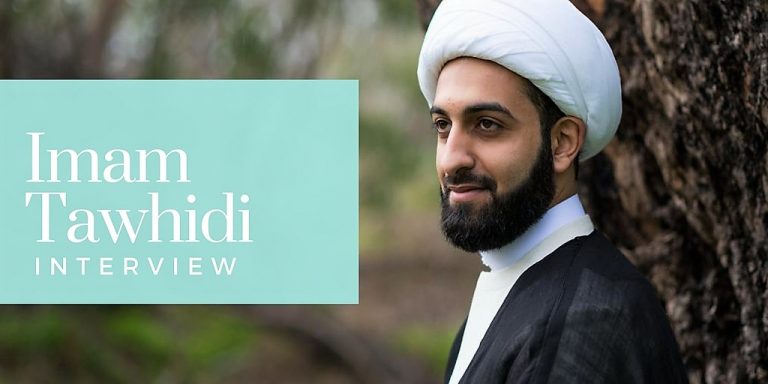
Imam Tawhidi speaks to OpIndia on Islam, India, Narendra Modi, and more

When one thinks of Muslim clerics or ‘Imams’, usually an image of someone old with obscurantist ideas and moustache-less beard gets formed in our minds, thanks to the kind of clerics we usually see outraging on different issues in the media. But Imam Tawhidi is different. He is just 35 years old, sports a moustache and trimmed beard, has a clam demeanour, supports progressive ideas, and calls himself “The Imam of Peace”.

His website describes him as an Australian Muslim Scholar, Thinker, Educator, Speaker, and one of the main leading voices in the global movement of Islamic reform who has dedicated his life to ideologically tackling the spread of Islamic Extremism. He was born in the Holy City of Qum, Iran, into a spiritual family with a history of decades in the Islamic Seminary.

Imam of Peace
Imam Tawhidi in his Australia office

He is also very active and vocal on the social media and he has attracted attention of many, including those in India, due to his outspoken views that are often different from what a normal Muslim cleric would profess. For example, he believes that those who die for the country they are born in are martyrs who deserve paradise, not those who kill non-Muslims or blow themselves up in the name of Islam.

OpIndia.com reached out to Imam Tawhidi for an interview to understand his views better, especially in context of India, to which he kindly agreed. Following are the responses by Imam (in bold) to the questions put in by OpIndia (in italics):

Even though you’re Iran born, Australia based, and mostly active in the West, you’ve attracted attention in India too, especially on the social media. How do you see your relationship with India? Does it go beyond the social media?

​Indeed, I enjoy a very healthy relationship with numerous Indian officials, activists, professors and people of other professional backgrounds. I consider myself a friend of India.

Some messages by you on Twitter hinted that you plan to visit India. Will it be a first for you?

​This will not be my first trip to India. My first trip to India was in 2014, and it was for tourism.

What kind of reactions you were met with when you talked about visiting India, possibly now as a speaker and not a tourist?

The reactions were phenomenal and I received a lot of support. However, there will always be those who wish to slow us down, but fail. These hate mongers are usually influenced by Pakistan’s corruption in the region. ​

You don’t seem to like Pakistan. What are your views about Pakistan in general?

​In my respected opinion, Pakistan is an illegitimate country founded upon hate and blood. Its constitution claims to maintain the rights of all citizens yet the government fails to recognise the rights of minorities. It has been a “terrorist haven” for many years, harbouring terrorists. It is also guilty of taking tens of billions of dollars from the West to fight terrorism, yet has made little to no efforts in fighting any extremist ideology. ​

On international platforms, Pakistan raises Kashmir issue and tries to draw parallels with the Palestine problem. You’re reported to have views on the Palestine issue that is not popular in the Muslim world, with you even referring to Palestine as ‘Jewish land’. What are your views on the Kashmir issue? Would you call Kashmir a ‘Hindu land’ for instance?

​Kashmir is Hindu land. Pakistan has no right to claim Kashmir. Kashmir belonged to India before Pakistan was “created”.

You clearly support India. Do you also support the current Prime Minister of India, Narendra Modi? Given that on occasions, you’ve tweeted phrases like “MODI-FIED” with presumed reference to the Indian Prime Minister in positive context.

I am a supporter of Modi’s policies to keep India safe and away from the infiltration of Islamic Militias funded by Pakistan. ​

While you will be welcomed by many in India, you also know that there could be opposition from some quarters. Apart from Muslim fundamentalists, many on the so-called ‘liberal’ side may also not be fond of you. How do you see this?

​Progressive and moderate Muslims such as myself believe in spreading the truth, as well as spreading peace. We do not call for violence, nor do we seek political a status. Those opposing us either don’t understand us or simply oppose truth and peace.  ​

Apart from having radically different views on politics and diplomacy, you’re also someone who is not pretty popular in the Muslim world for your views on religious issues. They accuse you of distorting Islam and pandering to “Islamophobic” sentiments. How do you respond to such charges?

​I am not looking to be popular, nor am I looking for followers. I am simply adding to the international discussion on matters of peace, counterterrorism and national security. ​

You have often talked about need for reforms and have reportedly said that Islam won’t survive without reforms. What reforms are you talking in particular? And why are they necessary?

​The moderate Muslims need to unite with the rest of the world against radicals of their own faith and religion. We must drive our Wahhabi Islam from our societies, cut ties with Iran’s terrorist regime and its allies such as Hizbullah.

Wahhabis justify all their acts and beliefs by quoting from the Holy Quran or by citing the life and deeds of Prophet Muhammad. How does one argue successfully that their interpretation is wrong?

The Wahhabi ideology is deducted from highly sacred scriptures such as Sahih Bukhari and Sahih Ahmad bin Hanbal. These books were written by scholars who adhered to a terrorist ideology and interpretation of the Quran. I refuse to believe in their violent interpretations, especially when there are other peaceful Islamic scriptures such as Sahifa Sajjadiya which can be followed or The Treatise of Rights by Imam Sajjad the Grandson of Prophet Mohammad. 

You are also working on a book, and you had, towards the end of last year, aired apprehensions that you could even be killed due to that book. What is the book about and when is it supposed to come out?

​I will speak about the book after its release due to legal agreements with publishers.

Back in India, it’s somewhat fashionable to whitewash Islamic extremism by arguing that it’s not unique to Islam. Even in the West, many people who claim themselves as ‘liberals’ end up being apologists for Islamic extremists. You yourself have flagged the support someone like Linda Sarsour is able to attract. Why do you think that people, especially with leftist leanings and who fancy themselves as liberals, wittingly or unwittingly align with the Islamic extremists?

Yes Indeed, extremism is not limited to Islam. However, Islamism and Wahhabism are the only ideologies that promise paradise towards killing and butchering other people in the name of Islam. That is the difference.

The Far-left are the real bigots. When a peaceful Muslim like myself rises against the corruption within his faith and calls for reform, they begin to classify them as “fake”. Because they believe that a true Muslim is a fundamentalist, and has every right to be an extremist, and we should get to know the extremist rather than judge them. ​

Are you optimistic about the future of India amidst all this? What suggestions you would offer to the people in governance here?

​India’s future is a bright one. It has a patriotic majority that is well aware of the plots introduced to weaken its society and security. It also has great leadership that isn’t interested in selling the countries future in exchange for money. Governments should do what benefits the country, not the pockets of politicians.

Women’s Day: the powerful Trinity in the Council of Ministers

0

It is often said Politics is a man’s world. It is a “dirty profession” and there is no place for “honourable women” in this world of politics. Initially, perhaps public perception changed slightly with the only woman in politics then. Indira Gandhi. The ‘iron woman’ of India. Or the only ‘man’ in the Indian Government. The one who had the ‘courage’ to take on Pakistan. Barring the difference in core political ideology, Indira Gandhi certainly was a woman of steel who changed how the country viewed women’s place in modern politics.

However, it is tragic that many other women, who in their own way stood toe to toe with men in politics, were sidelined by the pages of history.

Growing up, I knew Anandiben Patel, former Chief Minister of Gujarat and also the Education Minister of Gujarat. She was the only woman I had heard of in politics back then. I started observing Indian politics 2004 onwards.

It was the same year when ironically, as Anandiben Patel surged ahead in a man’s world, Sonia Gandhi did the “janana thing” by paying heed to her ‘antaratma ki awaaz‘. She became the quintessential “balidan ki murti” and passed on the baton of leading India to Dr Manmohan Singh, a man who could do it better. But it wasn’t until many years later, when I joined mainstream media as a journalist, that I started noticing nuances of Indian politics. And then in 2014, after the BJP swept the nation in a saffron wave, my curiosity increased multifold. I noticed how the power play works.

It took 70 years after independence in India for a woman fighter pilot to soar the skies solo. Hence when we are breaking the glass ceiling for women in India every other day, it is heartening to know that in the Indian government, three of the major ministries in the cabinet are headed by women. The work they do will be judged by history. What we can admire today, is what they signify. What their position in the Government means for women in India.

Sushma Swaraj, Union Minister of External Affairs

A personal favourite. If there is one thing I wish to do, is to work under her someday. When she is not strengthening diplomatic relations with foreign countries, she is busy rescuing distressed Indians stranded abroad. In 1973, at the age of 21, she was an advocate in the Supreme Court of India. During the Emergency imposed by the then Prime Minister Indira Gandhi, Swaraj, along with her husband Swaraj Kaushal was part of the team defending George Fernandes. Strangely, it is still Indira Gandhi who became the “iron lady” without so much as a whisper about Sushma Swaraj or many like her. She was also the first female Chief Minister of Delhi. I, of course, enjoy her witty quips on Twitter where she shows that politicians have a sense of humour, too. Credit here must also be given to her husband, Swaraj Kaushal, who can very well match up to his wife’s wit.

Nirmala Sitharaman, Union Minister of Defence

Being first full-time woman Defence Minister of India says something about her grit. Prior to her, only Indira Gandhi held the portfolio, which she had allocated to herself when she was the Prime Minister of India. A Jawaharlal Nehru University (JNU) graduate, Sitharaman holds an MA in Economics and served as an assistant to Economist in the Agricultural Engineers Association in the UK. She also worked Price Waterhouse during her stay in the UK. As Raksha Mantri, she has led from the front, whether it is interacting with the MiG 29k pilots and sailors or greeting the Chinese soldiers at the India-China border at Nathu La. Makes one feel we are in safe hands.

Smriti Irani, Union Minister of Textiles and Union Minister of Information and Broadcasting

From an actor to a politician, Irani has transitioned so well that she is an inspiration. As Minister of Textiles, she heads an industry which is one of the highest providers of employment, direct and indirect. As someone who faces sexist and offensive abuses on a regular basis, she gives it back as good as she gets.

Today, as we celebrate Women’s Day, here’s raising a toast to the women on top in Indian politics. The women who stand toe to toe with the most powerful men in the world and say “I AM”. To the women who bring hope to all the little girls who would have never thought of joining, and excelling, in the “dirty field of politics”. The women who rule. The women who make it look so effortless. So elegant. The ones who make power look so humble. The women who do it all with such elan.

Jewellers Association had warned Raghuram Rajan about the 20:80 scheme, accused Congress of ‘deliberately yielding to cronies’

The Rs 12,000 crores Nirav Modi and Mehul Choksi scam had shaken the nation with its sheer audacity and brazenness. While the Congress blamed the Narendra Modi led BJP Government, skeletons soon started tumbling out that pointed the fingers squarely at the Congress government.

We had reported earlier how P Chidambaram, the then Finance Minister had sanctioned the 20:80 Gold scheme on 16th May 2014, the day Congress was voted out of power, to benefit 13 companies including Mehul Choksi’s firm. Now, information has emerged that the India Bullion and Jewellers Association (IBJA) had written a letter to the then Reserve Bank of India Governor, Raghuram Rajan, warning him of the perils of the 20:80 scheme and accusing the Congress government of “deliberately yielding to the cronies” by changing the gold policy days before demitting office.

The 20:80 scheme allowed 13 ‘star trading houses (STH)’ and ‘premier trading houses (PTH)’, including Choksi-led Gitanjali Gems to import gold and sell about 80 percent of their total bullion shipment in local markets. This scheme ended up encouraging gold hoarding and aided these traders to artificially inflate the retail prices.

The letter by the IBJA to Raghuram Rajan, that has been put out by moneycontrol.com, starts by stating that the 20:80 gold import scheme as introduced the RBI per it’s circular no. 25 dated 14-8-2013 effectively checked India’s precarious CAD deficit. The letter went on to talk about how the 2013 circular by RBI linked the quantity of import of gold for domestic sale with the export performance of the importing nominated agency. Only a handful of specified banks/agencies were authorised to import gold with a clear mandate that the nominated agency shall make available gold for domestic consumption only to entities engaged in the jewellery business/bullion dealers for domestic use. Star and Premier trading houses in private sector, though assigned the status of nominated agencies, were barred from importing gold as they were private traders and their past performance showed that they had always encouraged private consumption and had never cared to cater to the jewellery exporters.

The IBJA said that the above stipulations of the 2013 circular bound the Nominated Agencies in the said circular to ensure the end use of gold bars sold in the domestic market, that is, they should be used in Jewellery manufacturing only and not otherwise.

The letter said that these restrictions had affected few big bullion traders, as they were not being able to hoard and curtailed cash transaction, and because of that, they were lobbying through electronic and print media, spreading canards about the 2013 scheme. The letter alleged that many of the ‘adverse effects’ were manufactured by them.

After this precursor and explanation of the 2013 scheme that helped the industry, they went on to elucidate how the UPA, in its 2014 circular, diluted the 2013 circular to help these cronies.

The letter says that after the initial 20:80 (2013) scheme was introduced, the few big traders lost some of their lucrative business and had started lobbying. The then Congress government gave in to their lobbying before demitting office in May 2014.

The letter says about the then Congress government (emphasis added):

“Having achieved the targeted CAD level, the outgoing government did not care for future sustenance of the CAD and deliberately yielded to the cronies by effecting last minute changes in the Gold Policy, just before demitting office by causing publication of RBI circular dated 21-5-2014″.

The letter accuses the Congress government of diluting the scheme to an extent of practically scraping it. They went on the provide a comparative analysis of the 2013 scheme and the diluted 2014 scheme by P Chidambaram because of which the gold imports in June 2014 suddenly skyrocketed.

Image courtesy: moneycontrol.com

The comparative analysis makes it extremely clear that the order signed by P Chidambaram diluted the 2013 circular to hugely benefit private players.

  1. 2013 circular applied to Nominated Agencies that comprised of Government undertakings but did not include private players. Circular effected by Congress facilitates only private players who are Star Trading House or Premier Trading House status holders.
  2. 2013 circular stipulated that out of Nominated Agencies, only those entities who in the past were engaged in availing gold to exporters are eligible to operate under 20:80 scheme. Circular effected by Congress stipulated that even private players who had a record for importing only for domestic market were eligible to import gold regardless of whether they had ever catered to the exporters.
  3. 2013 circular stated that even the entities falling under this circular, who had never catered to the exporters, cannot import Gold. The Congress circular negated this and lifted this restriction for Star Trading Houses and Premier Trading Houses. The catch, however, was that in the 2014 circular, the 2013 restrictions were still applicable to government agencies but not private players.
  4. 2013 circular required entities operating under 20:80 scheme to cater to needs of general exporters who are engaged in genuine jewellery exports. The Congress effected circular in 2014 negated this entire restriction. After 2014 circular, they did not care to reach out to general exporters. Instead, to meet the target of 20% exports of the imported lot, they either themselves or through such concerns on whom they have effective control engaged in fictitious exports by making crude bangles or similar things overnight and importing the next lot immediately.
  5. 2013 circular ensured that the entities operating under 20:80 scheme were availing gold to a wide number of jewellers in the domestic market. They were also advancing gold loans of jewellers for manufacturing. After the Congress circular of 2014, they didn’t care for the jewellery industry. Refused to provide gold loans for manufacturing and would offload the import consignment to a few big bullion dealers.
  6. 2013 scheme had mechanisms to check end use of gold sold. The Congress circular of 2014 had no such mechanism.

The letter went on to talk about the modus operandi of such fictitious exports. It said :

“India is an exporter of handcrafted gold jewellery, which is a high labour intensive industry. It takes anything between 15 to 90 days to process the jewellery before export. But those with a different motive would procure gold, convert it into crude pendants or bangles or chains with the help of machines any quantity overnight and export into to Dubai the next day. In Dubai, it directly goes to a refinery for converting into gold bars and sold within 24 hours. The loss incurred in this operation is more than compensated by the trading in domestic gold”.

It said that the 2014 circular had clearly “sidestepped nationalised banks, which have been the backbone support of our bullion importing and jewellery exporting members by allowing certain private sector export houses to import gold up to two tonnes at one time, even for those who are not in the business of bullion and gold jewellery”.

The letter asked Raghuram Rajan to make a “prudent appraisal” of the scheme affected by the Congress Government and take measures to plug the loopholes before it is too late.

According to the moneycontrol.com report:

“Stung by the surge in imports that peaked in November at 151.6 tonnes, on November 28, 2014, finance minister Arun Jaitley piloted a move to scrap the so-called “80:20” rule mandating traders to that a fifth of all the precious metal imported should be re-exported”.

Moneycontrol.com has also put out a letter written by the IBJA to the then Finance Minister P Chidambaram on 10th December 2013 detailing the issues they were facing.

Image courtesy: moneycontrol.com

It is telling that in their letter to P Chidambaram, they had mentioned :

“In India, the Bank’s exposure on Gold Industry is considered at approximately Rupees 3 Lac Crores and if Banks do not supply sufficient quantity of gold to its account holders, it is likely that all this account turn into bad account leading to a bigger crises not only for the gold industry but also for the Banking sector”.

Yet, Chidambaram sanctioned the scheme on 16th May 2014 – the day Lok Sabha results were known and it was clear that Congress was booted out of power – and the then RBI governor Raghuram Rajan cleared the file a few days later on 21st May 2014 – five days before Narendra Modi took the oath as the new Prime Minister.

Why did CN Annadurai, the founder of DMK, part ways with Periyar?

0

The alleged ‘demand’ to demolish Periyar statues in Tamil Nadu by BJP politician H Raja’s facebook account has been condemned by media. A BJP office in Coimbatore was attacked by unknown assailants as a result of this. Meanwhile, H Raja has clarified that the controversial remark was posted by his Facebook page admin without his knowledge


An incident of Periyar statue being vandalised has been reported from Vellore in Tamil Nadu. After this incident, Periyar statues have been given police protection in the state.


Who is Periyar?

Periyar is considered as the leader of the Dravidian/self-respect/anti – Brahmin movement in Tamil Nadu. His name was originally EV Ramaswamy Naicker and he was a Congress member from 1919 to 1925. He later quit Congress party and started the self-respect movement among non-Brahmins which fought for the downtrodden. Periyar served as the President of Justice Party (1938 – 1944) in erstwhile Madras state. The party formed provincial governments in Madras state between 1920 and 1937 and it was one of the first to come up with caste-based reservations. Due to the success of Congress and internal rifts, the party declined after 1937. Periyar formed the Dravida Kazhagam in 1944.

While every revolutionary and political leader has opponents and detractors, the story of Periyar is somewhat unique. Why did Periyar’s brightest protege dissociated himself from the leader and form his own party? There are a couple of theories on this path-breaking event in Dravidian politics.

Why did CN Annadurai part ways with Periyar?

Periyar and Annadurai differed on many issues. However, the tipping point that led to their breakup was Periyar’s second marriage to a much younger woman and her anointment as his heir in politics.

Periyar’s first wife Nagammai died in 1933. He had a personal assistant named Maniammai after 1942. Her original name was Gandhimati. Maniammai was the daughter of a Justice party leader named Kanagasabai Mudaliar. She joined the Justice party after her father’s death in 1942. After having served as Periyar’s personal assistant, she married him in 1949. Periyar also announced that Maniammai would be his political heir. This event sparked off a rift between Periyar and his protege CN Annadurai.

In the book ‘Political History of the Rise and Fall of Dravidian Parties in Tamil Nadu (South India)‘ by Thanjai Nalankilli, the writer says  (emphasis added) :

Many party cadres and leaders thought that marriage between Periyar in his seventies and Maniammai in her twenties went against the very rationalist principles DK and Periyar preached. Periyar explained that the marriage was to make Maniammai his legal heir and nothing more. Party leaders were also angry that Periyar was, in effect, anointing Maniammai as his successor to lead the party, superseding senior party leaders. Not everyone was opposed to the marriage. Many party leaders and cadres stood with Periyar.

However, another writer says that the anointment of Maniammai was the reason for the split between Periyar and Annadurai. The age of Periyar’s second wife was not a key reason as per the writer PC Ganesan. He writes in the book titled ‘CN Annadurai’ :

Periyar was then seventy-one and Maniammai twenty-six. The incompatibility in age was glaring. The workers of Dravida Kazhagam resented the marriage proposal. Although Periyar’s marriage became a bone of contention among a considerable section of Dravida Kazhagam, that was not the cause of the split that followed later. Periyar opposed forced marriages of young girls to old men in considerations of finance, property, social status, etc, but in this case, though there was a considerable age difference between the two,  Maniammai was a willing partner to the arrangement. What irked Anna [Annadurai] was that Periyar named Maniammai as heir both to his personal property and the political organisation. 

While the left celebrates the achievements of Periyar in the domain of social justice, it is indeed curious for a bystander as to why he needed to transfer his property to a person and not donate his wealth for charitable purposes? His disrespect to the sentiments of his own followers and undemocratic behaviour is never criticised in the media narrative. Periyar’s anti-Hindu ideas have also escaped the scrutiny of leftist thinkers and commentators.

Respect for icons of different ideologies is needed

We cannot go on demolishing statues of those we don’t like. Periyar’s supporters should also admit that his blatant anti-Hindu rhetoric is not suitable for a harmonious society. While celebrating his good deeds it is necessary to drop ideas that are incompatible with modern India.

All political ideologies and its icons need to be given minimum respected in a democracy. But it is amusing to see how this debate is framed in a one-way side. In addition to this, the major character flaws of left-wing ‘icons’ are washed off and those of right-wing ‘icons’ are amplified and demonised routinely. This bias needs to end for an environment where all icons are treated with respect in spite of their flaws and mistakes. Hopefully, this lesson will be drawn by all through this episode.

Yogi Adityanath slams politics of ‘Bahujan Samajwadi Party’, calls Socialism the biggest superstition

Mahant Yogi Adityanath, the chief minister of Uttar Pradesh in his assembly address yesterday slammed the opposition with his fiery speech. He said that Both Samajwadi Part (SP) and Bahujan Samaj Party (BSP) have only brought division and inequality in the state in the long years of their rule.

[youtube https://www.youtube.com/watch?v=RvUa5y5b6mg]

Yogi Adityanath said if anyone’s soul would be hurt by what is done in the name of socialism today, it will be Ram Manohar Lohiya’s. Ram Manohar Lohiya had said ‘sampatti and santati’ (wealth and offspring) should be kept away in politics. But both BSP and SP have long since discarded the ideology. Yogi Adityanath added that socialism is today’s biggest superstition. He joked that both the parties have merged with each other in their policies of corruption and favouritism and that he why he used to refer to them as Bahujan Samajwadi Party many times during election rallies.


He attacked the SP and BSP by saying their version of equality always meant favouritism and privileges to a select few. They ensured that only selected few villages will get electricity and rest of the places would suffer. The CM stated that his government has made sure that 34 lakh poor people get toilets to use in these 11 months. He added that his government has ensured all district headquarters have 24 hours electricity, a promise he made on Babasaheb Ambedkar’s birthday on 14 April last year. He also added that he saw to it that all tehsil headquarters get a minimum of 20 hours of electricity supply and all villages should get 18 hours of minimum electricity supply irrespective of the party they had voted for.

The CM reacted strongly to SP leader Ram Govind Choudhary’s statement that said: ” if India will ever break, it will only be due to BJP’s faulty policies”. Yogi Adityanath said that India is undivided and it will forever stay undivided. Anyone who attempts to break it will be broken.


The CM brought the remarkable action his government has shown towards dealing with criminals and said that democracy runs with accountability, not by hooliganism. He added that his government has brought massive business investments in the state to the amount of over 4 lakh crores, it is more than SP and BSP have brought in 15 years together. He said that his government will promote spiritual and heritage tourism in the state because UP has huge potential in this field. It is home to world’s oldest city Varanasi and spiritual centre of Hindus that is Ayodhya.

Yogi Adityanath added that Janata (the people) are Janardan (god) and he and his party are dedicated to the service of the people. He said that the previous governments had not treated the people right and that the government should serve the people as it is what they have promised, not as an act of benevolence.

Yogi Adityanath’s statements in the UP Assembly were praised by several people on social media.


The CM also criticised the previous governments’ policy of declaring holidays on the birth anniversary of legendary leaders. He said that his government is working on upgrading the syllabus of schools where children will be taught about the lives and teachings of leaders. Taking further digs at the opposition, he added that the corrupt people sitting in palaces who have closed down factories and industries are claiming to be the well-wishers of farmers and young people.

Yogi Adityanath also stated that after his party came to power in March last year, UP has not seen a single riot over religion or caste issues. He added that all people of the state are celebrating all the festivals as per their cultural and religious beliefs peacefully and his government will ensure that no riots will take place in UP.

Congress MLA and former state Home Minister enters Kerala assembly with a used tear gas shell

The Kerala assembly bore witness to “interesting” scenes on Wednesday after a Congress MLA decided to bring a grenade with him:


As per an ANI tweet, the leader in question Thiruvanchoor Radhakrishnan, who is a Congress MLA from Kottayam brought a used grenade and showed to the assembly speaker. While showing it he claimed that the grenades which were used by the police to disperse Youth Congress protesters sometime last week were beyond their expiry date.

Radhakrishnan is a senior state Congress leader, with him holding important portfolios like Transport, Sports and even the Home Ministry during the erstwhile Oommen Chandy government.

It isn’t yet clear as to why did the security not object to him bringing in a grenade, regardless of it being used.

This crazy incident predictably drew out reactions:


The practice of politicians entering assembly premises with armaments is nothing new. Just this Monday Manoj Nyangli a BSP MLA from Rajasthan entered the assembly with a pistol and even participated in the proceedings for about two hours while having it in his possession.

He was only caught in this act while answering the media’s questions after leaving the premises. There the pistol was supposedly dangling from his waist when it was captured on camera. After being confronted about it he claimed that he brought it by mistake.

Editor’s note: ANI has since then come up with an update that the Congress MLA actually carried a “used tear gas shell” in the assembly:


The headline has been edited to reflect the change. 

PM Modi asks BSF to cancel punishment given to a jawan for ‘disrespecting’ him

The order that penalised a BSF jawan for referring to the Prime Minister without affixing “honourable” or “Shri” to his name has now been rescinded after Prime Minister Narendra Modi expressed his displeasure over the punishment.

The incident had taken place on February 21st inside the BSF’s 15th Battalion headquarters in Maharput, West Bengal. During the zero parade, constable Sanjeev Kumar used the word “Modi programme” while giving a report. The BSF deemed it as an insult to the Prime Minister and the constable was handed down a 7-day pay cut.

The Commanding Officer of the battalion, Commandant Anup Lal Bhagat, had initiated disciplinary action against Kumar. He was tried and found “guilty” under Section 40 of the BSF Act (prejudicial to good order and discipline of the force). BSF and all security forces are known to follow strict protocols when it comes to referring to seniors within the force or in the political class.

Today, however, the BSF tweeted informing that this order had been cancelled and the pay cut was reversed.


This cancellation of punishment comes after Prime Minister Narendra Modi expressed his displeasure and instructed the Border Security Force to cancel the punishment handed out to Constable Sanjeev Kumar.


The BSF India handle had tweeted earlier confirming the chain of events and the cancellation of the punishment handed out to the Constable.

Lokayukta Justice Vishwanath Shetty stabbed, Congress leader blames Justice Shetty for attack on himself

In a shocking lapse of security, Karnataka Lokayukta Justice Vishwanath Shetty was stabbed in his office, following which he has been admitted to the hospital with injuries. The accused has now been taken into custody.


One of the eyewitnesses has claimed that the accused stabbed the Lokayukta thrice with a knife, following which the latter fell on the floor.


What is even more shocking is that a Congress leader has pinned the blame on Karnataka Lokayukta himself for getting stabbed.


BJP MP Rajeev Chandrasekhar hit out on Congress for the lapse of security.


According to Home Minister of Karnataka Ramalinga Reddy, the accused is a contractor from Tumakuru and he complained to the Lokayukta regarding some tenders and he assaulted the judge when he was alone.

Justice Shetty, who is admitted in ICU right now, is reportedly out of danger now.