Home Blog Page 7313

Ubaid, who took selfie before Kerala lynching, arrested, Muslim League tries to distance itself

0

A poor tribal youth was brutally lynched on 22nd February 2018, by a mob in Attappady, Kerala over suspicion of theft of food items. The victim, identified as 27 years old Madhu, is reported to be mentally challenged who maintained sparse contact with his family. The mob caught him hiding near the Attappadi forest and lynched him before handing him to the police and he soon succumbed to his injuries.

What was perhaps most distressing was pictures that emerged later showed a man brazenly taking a selfie right before lynching Madhu to death. As demands of his arrest grew louder, netizens found a Facebook profile of a man named Ubaid whose page was filled with people condemning him for the act.

Today, the police have arrested the selfie-man, Mukkali Thodiyil Ubaid Ummar (25) and named him the fifth accused in the case.

Ubaid has been booked under various sections of the IPC including Prevention of Atrocities against Scheduled Tribes and IT acts for circulating pictures and videos of the lynching.

Allegations also emerged that Ubaid was the personal staff member of Muslim League politician and member of Kerala Legislative Assembly, N. Samsudheen. The MLA, however, has distanced himself from Ubaid and asserted that Ubaid only ‘participated in the election campaign’.

While Ubaid has been arrested and his links with Muslim League are in question, the crusaders for justice and secularism have still not broken their stoic silence.

No Rahul Gandhi, your party doesn’t follow Basavanna’s philosophy

0

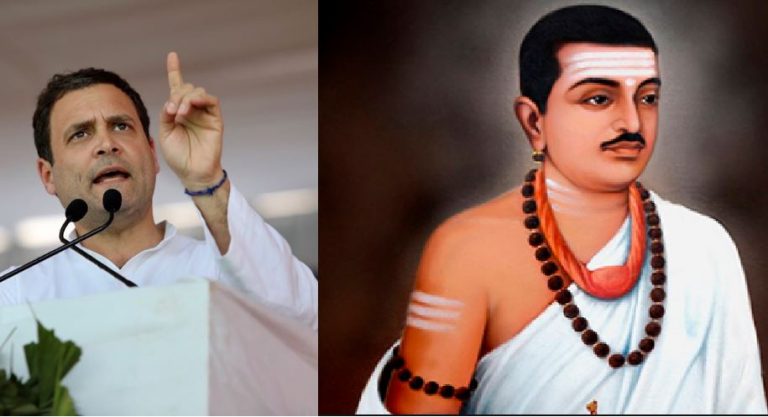
Rahul Gandhi has been actively campaigning for his party in Karnataka for the forthcoming assembly elections in the state. He has been deploying the strategy of ‘Soft Hindutva’ in public and minority appeasement in private. In Karnataka, the Congress president seems to have taken a further leap by trying to appeal to the linguistic identity of Kannada speaking people.

During a recent speech in Athani, the Congress president tried to quote the 12th century social reformer Basavanna in his speech. The Congress president tried to recite a part of this Basava Vachana (Basavanna’s sayings/teachings).

Basava Vachana in Kannada

ಇವನಾರವ ಇವನಾರವ ಇವನಾರವ ಎಂದೆನಿಸದಿರಯ್ಯಾ
ಇವ ನಮ್ಮವ, ಇವ ನಮ್ಮವ, ಇವ ನಮ್ಮವನೆಂದೆನಿಸಯ್ಯಾ.
ಕೂಡಲಸಂಗಮದೇವಾ ನಿಮ್ಮ ಮನೆಯ ಮಗನೆಂದೆನಿಸಯ್ಯಾ

Transliteration

Ivanaarava, ivanaarava, ivanaarava endenisadirayya
Iva nammava, iva nammava, iva nammavanendenisayya
Koodalasangamadevaa nimma maneya maganendenisayya.

Translation 

Oh Lord, please do not say ‘whose is he, whose is he, whose is he?’
Please say ‘he is ours, he is ours, he is ours!’
Oh Lord Kudalasangama, consider me a son of your own house!

These verses capture the essence of Basavanna’s ideology and the movement against caste, class and gender discrimination during his time. The social reformer sought to abolish these social evils in Karnataka centuries before the idea was championed by Ambedkar. Recognising the stature of Basavanna, PM Modi had unveiled a bust of Basavanna in London during his official tour to the United Kingdom in 2015.

Modi paying respects to newly unveiled bust of Basavanna in London

Rahul Gandhi didn’t even try to recite the whole Vachana. He restricted himself to the easiest words in it i.e. ‘ivanArava ivanArava ivanArava ; iva nammava, iva nammava, iva nammava’  and still managed to reduce it to utter meaningless gibberish. It was sounding so bad that no Kannadiga could have recognised it as a Basava Vachana.

Siddaramaiah claims himself to be a politician who is committed to the cause of Kannada language. He had also questioned ‘Won’t you learn Kannada?’ to the BJP president Amit Shah when he visited Karnataka in 2017.


During his tenure, he has encouraged staunch Kannada chauvinists who have been ‘anti-Hindi imposition’. These activisits did not hesitate to blacken the Hindi signboards of Namma Metro stations in Bengaluru. However, his party president’s pathetic attempt to read out simple words came across as an insult to every Kannada speaker who loves the language. Before asking the BJP president to learn Kannada, he must teach the language to his party’s president.


It is not difficult to pronounce Kannada words. Someone who doesn’t know the language can easily read out a transliterated text with a bit of practice and effort. It appears, that the dynastic scion was not ready to put in some effort to read verses that are revered by the followers of Basavanna.

While Narendra Modi has incorporated thoughts of Basavanna in his slogan ‘Sabka Saath Sabka Vikas’, the Congress party has sought to divide people on Caste and religious lines time and again. The Lingayat stir being revived also has unmistakable footprints of the Congress. In Gujarat, it tried to divide the society on the line of Patidars, OBCs and Dalits.

In Karnataka as well, the Congress-led Siddaramaiah is working overtime to divide the people by encouraging events like Tipu Jayanthi and demands for a separate religion status for Lingayat community in the states. Lingayats are followers of the Saint Basavanna who sought to remove casteism among Hindus.

The Congress party led by Rahul Gandhi has made a mockery of Basavanna’s thoughts in their speech as well as deeds. And therefore, the more they pretend to emulate him, their hypocrisy will come to the forefront more blatantly before the electorate in Karnataka.

GST has a new weapon to ensure compliance and reduce tax evasion, and you can try it

0

Besides the “one nation one tax” motto, GST had many other mandates. One of the main intentions behind the GST law was to increase compliance levels and check tax evasions. We had earlier explained various measures in the GST laws and rules, which ensure that the black economy is severely throttled. Now, another such weapon has been unleashed.

One of the fundamental principles in India’s GST laws is the “matching” concept. The logic is simple: Sales made by one person, are purchases of another. Thus, if a purchaser wants to claim credit for GST paid on purchases, the credit has to flow from the seller i.e. the seller must have collected the GST and paid it to the Government. Only then, it would be correct to give credit of these taxes collected and paid, to the purchaser.

In the erstwhile regime, there was no way to check this easily. Most officers did not bother checking this and relied on purchase invoices to allow credits. Hence, many times it was noted that some sellers had collected GST and had eventually never paid it to the Government, whereas the purchaser had claimed the credit of the same. The Government was at a loss.

With the new system in GST of “matching” i.e. matching the seller’s GST on sales with the purchaser’s GST on the same transaction, this revenue leakage has been largely plugged. But this provision in the law also had its drawback. A purchaser had no way to verify whether his seller was tax compliant and correctly paying his taxes. Thus, a purchaser could lose credits for no fault of his own. Now, the GST portal has introduced a feature to check this.

The GST portal has an option to search for GST registered persons, using their GST number. Every registered person is required to display his GST number prominently at his place of business.

Using the above option, if one searches using a GST number, the portal throws up all details such as his registered name, his jurisdiction etc. Further, it also populates the history of GST returns filed by the dealer:

The above feature can be used even without registering on the GST portal. Thus, any person can now check the compliance habits of any seller. This is intended to help the purchaser choose his sellers carefully. A purchaser would avoid dealing with people who haven’t regularly filed their GST returns.

Thus, using pure business logic, GST is encouraging dealers to be compliant. A message is being sent that if you are compliant, your business will increase. And if you are not, then it is there for all to see.

This in fact maybe a precursor to the GST Compliance Rating system, which has also been provided in the act. The GST compliance rating is akin to a performance ranking of all registered persons which tells you how compliant they are with respect to the GST provisions. This will be irrespective of nature, size, or turnover of the business. For example, a rating system can be devised on a scale of 1 to 10, with 10 being the highest compliant and 1 being least compliant.

GST Rating will be based on certain criteria which are yet to be prescribed. However, experts believe that the following factors could play a key role in deciding compliance ratings:

  • Timely payment of taxes
  • Timely filing of returns
  • Timely reconciliations
  • Compliance with various other time limits under GST
  • Cooperating with the GST authorities

It is proposed that a higher GST rating would mean easier refunds, lesser scrutiny assessments etc. A lower rating would conversely mean the dealer would be subjected to more checks. And since the rating is expected to be public, the rating would also let others decide whether they want to do business with a person or not.

The system does not provide any private data and only informs the other person about your compliance habits. Yet one may expect the usual suspects to throw up the bogey of “privacy”. Chidambaram has already used it, this argument is being used to scuttle Aadhar as well, will it be again used to block a well-meaning system intended to change the tax culture of the country?

Cheating Racket busted: Uttar Pradesh Special task Force arrest 11 for facilitating cheating

0

Uttar Pradesh’s Special Task Force (STF) has busted another cheating racket and arrested 11 people, including the Principal, for facilitating cheating at the Maa Gayatri Intermediate college in Eta. 9 copies, 2 blank copies, 18 blank answer sheets and 18 admit cards were recovered from those arrested. The Principal admitted to taking money from people to allow them to write exams in separate rooms.


Earlier, on the 22nd, UP Police had arrested over 60 people for acting as proxies in Uttar Pradesh’s Atroli area. While students wrote their exams in Bhorey Kishan Lal Sharma in Tebatu, 62 people were busy answering the same question paper at a house opposite to the campus. The answer papers would be swapped at the end of the examination. The STF had arrested 3 people, including the Principal of a school at Naini, for mass copying on the first day of the UP Board exam.

Over 1.80 lakh candidates have skipped the exams following the strict measures were undertaken by Yogi Adityanath to curb cheating. Uttar Pradesh has also seen a sharp fall in cheating cases this time around. Cheating rackets have been a huge menace in Uttar Pradesh for years and years now. Yogi Adityanath’s administration has made it one of their priorities to eradicate cheating in board exams.

Hyderabad Muslims burn diapers as a cat’s face on it resembles Prophet’s name

0

Some Muslims in Hyderabad have taken offence to the baby diapers brand Pampers, which according to them insults their Prophet Mohammed. As per reports, the image of a cat’s (on the diapers) nose, mouth, whiskers and left eye is similar to Prophet Mohammed’s spelling in Arabic.

This incidentally is the picture of the controversial cat:

Hyderabad Muslims burn diapers as a cat's picture on the packet resembles their Prophet's name
Screengrab of the controversial cat sketch. Via Metro

The Muslims claim that the above picture resembles the spelling of Prophet Mohammed in Arabic:

Hyderabad Muslims burn diapers as a cat's picture on the packet resembles their Prophet's name
The spelling of Prophet Mohammed in Arabic. Via Metro

They incidentally are so angry that they have decided to burn Pampers packets in full public view as per a video put out by Daily Mail which was shared on Twitter by @OnlineMagzin:


In the video, one person is heard saying that initially they dismissed the story as a social media rumour but were convinced after personally checking the diapers in the market. Later a few people are seen putting a few Pampers packets on the ground and then setting them ablaze. While the diapers are burning a person can be heard chanting ‘Musa, Musa, Zakir Musa’.

The Mirror report claims that this burning exercise was committed in Hyderabad, though as per a Newsminute report, this video seems to be from Kashmir.

Reports have also claimed that various Muslims have decided to file a complaint at the Dabeerpura police station in Hyderabad. One organisation named Darsgah Jihad-o-Shahadat (DJS) filed a formal complaint there on Tuesday.

The complaint alleges that it was an intentional act on part of the company which has hurt the sentiments of the entire Muslim community. The holding company of Pampers: Procter and Gamble have issued a statement that the design on Pampers depicted an innocent representation of a cat and that the company had no intention to cause any offence.

From UPA’s corruption to Modi’s governance : Swachh Shaasan Abhiyaan

0

Twenty five years ago, when we moved into our current residence, almost all the houses in the locality had their own well. Water availability was, therefore, plenty and there was no dependence on the civic authorities. A few years down the line though, due to rampant construction, the water levels in the wells started going down. Soon, due to faulty sewage systems, the wells started getting contaminated. What started as a problem for few houses became an epidemic in a few months.

Many of us tried getting our wells back into good shape. We brought in people who knew how to ‘clean’ the wells. They did their best removing the sewage and treating the water. However, in a matter of days, the contamination would occur again. Finally, almost all the wells in the locality had to be abandoned or closed down. The reason was simple – only the removal of the contamination wasn’t proving to be enough. The real issue was the inability to plug the source of the contamination. Too many faulty pipes and pits in the area meant the seepage was too deep and the water was getting contaminated at its ‘source’. The engineers told us – “Preventing new accumulation at the source is as important, if not more, to eliminate the problem of contaminated water”. We never succeeded in doing that.

The problem of corruption in this country is very similar to the problem of contaminated water. It is no doubt very important to identify acts of corruption, apprehend those who have done it, punish them and recover goods as much as possible. There are various opinions about how much the current Modi government has done on this front. The opinion is divided – to say the least. But what is equally important in this mission of removing or reducing corruption in the country is to prevent further corruption – or eliminate new contamination – to use the language of the previous analogy.

This exercise of eliminating the culture of corruption has to, no doubt, begin at the top. After all, contamination at the ‘source’ is the real root cause. In the case of a government, this translates to corruption, or the lack of it, at the level of the cabinet and ministers. A clean government not only makes it difficult for the lower levels of bureaucracy and executive to practice corruption, it also serves as a role model for lower level officials and employees to follow. The words of Lord Krishna in the Bhagavadgita – “yadyadacharati shreshtah tattadevetaro janah – sa yat pramanam kurute lokas tadanuvartate” – “people do just as the best ones do; the world follows the examples set by the best” – aptly describe the need for a clean leadership.

Governments and Corruption

In the case of a democratic government, it is the example of the cabinet and ministers that are seen as a “role model” and “standard” by the rest of the executive, and indeed the entire country. If a government falters, corruption takes over all spheres of life. Nothing can explain this fact more than the atmosphere of rampant corruption that prevailed in the country during 2009-2014. Mega scams and corruption, rising prices and cost of living – the rise of terrorism – all were hallmarks of the UPA 2 government. And the role model for this state of the country was the government itself. Consider the following

  • Due to the multi-lakh-crore 2G scam, Telecom Minister A Raja had to resign from the ministry in 2010.
  • Textiles minister Dayanidhi Maran had to resign for alleged involvement in the same 2G scam in 2011.
  • Minister of State for External Affairs, Shashi Tharoor, had to resign in 2010 due to allegations that he was trying to gain a stake in an IPL franchise through indirect means involving his (then) wife.
  • Minister for Micro, Small and Medium Industries Virbhadra Singh had to resign in 2012 after a court framed charges of corruption against him.
  • Railway minister Pavan Bansal had to resign in 2013 over allegations that his nephew accepted bribes for promoting officials to the Railway Board.
  • Law Minister Ashwani Kumar was forced to quit after it became known he had vetted a CBI report prepared for the Supreme Court on the Coal Scam.

Thus, the Union Ministry itself was full of people tainted with accusations of corruption and nepotism. No wonder this malaise spread all the way to the bottom.

Anti-corruption crusades and betrayal

Even under such circumstances, when a new Government takes over, it is not necessary that the new administration will automatically provide a corruption-free rule. This is indeed a paradox, given that the change of mandate is most often sought on the basis of the previous regime’s corruption record. Consider for example the rule of the Aam Aadmi Party in New Delhi. The various scams of the previous Delhi State Government, by Congress, was a key campaign issue – and the Aam Aadmi Party succeeded in convincing the electorate of Delhi that it would offer a clean alternative. The foundations of AAP itself are based on anti-corruption crusades. With all this serving as background, here is what AAP has managed to accomplish in the past 3 years of its rule.

  • IT officials raid an AAP MLA and find unaccounted wealth of up to Rs 130 crores
  • Former Law Minister Somnath Bharti ended up with a case of domestic violence and was arrested.
  • Two AAP MLAs were booked in a case of rioting
  • Women and Child Development Minister Sandeep Kumar was sacked after a CD of him being in a compromising position with a woman emerged.
  • Many other AAP MLAs have fallen foul with law enforcement agencies in the past 3 years.

(I have intentionally clubbed incidents of crime and law-enforcement along with corruption because the former breeds the latter)

Refusal to learn from feedback

At the level of the Union Government, UPA 2 was receiving severe flak for providing a corrupt administration. In 2013, the public mood was such that the demise of UPA in the upcoming national elections was an absolute certainty. Yet, in spite of such a prevailing mood, the new state Government that took over in Karnataka refused to learn any lessons. In the past 5 years, there have been several incidents involving its ministers in both corruption and crime.

  • In 2013, the Minister of State for Information and Infrastructure Development, Santosh Lad, had to resign due to charges of corruption.
  • After a court ordered an FIR against him in the case of the death of a Deputy SP, Senior Minister K J George had to resign from the Karnataka Cabinet in 2016.
  • The Minister for Excise, H Y Meti, had to resign after a sleazy video of his came out into the public domain.
  • In 2018, the son of MLA NA Harris was arrested after beating a man in a pub in Bengaluru. Charges of an attempt to murder have also been slapped.

Thus we can see neither proclaimed ideological beliefs nor indictment from the electorate can really force a government to be clean and corruption-free.

What becomes obvious therefore is that a government remaining clean is really the result of a conscious choice and strict enforcement of such a principle from the leader(s) of the Government.

Track record of Modi Government

In the run-up to the 2014 elections, and immediately afterwards, Prime Minister Modi had famously declared “na khaaonga na khaane doonga”. Based on how the spirit of this slogan has manifested in the past 4 years, I think we can extend this slogan to “na khaaonga na khaane doona lekin khoob kaam karvaaonga”. PM Modi has definitely adopted a policy of carrot-and-stick at the highest levels of the government.

On the issue of corruption at the ministerial level, we can confidently declare that the present government has been the cleanest one in the history of Independent India. Not one serious accusation against any of the members of the Union cabinet. This is a huge contrast to the previous governments and a huge relief to the public. At the same time, there has been a conscious effort to promote performance within the ministry. Even the few instances of ministers being dropped from the ministry have been due to performance and age-related reasons. It has been nearly 4 years since the Modi government took over. This is a long enough duration for any corruption issues to have surfaced. The fact that there are no accusations of corruption even in whispers is a great vote for Modi Sarkar.

In addition to the focus on a clean, and hardworking, cabinet, the Modi Government has also taken several steps to permeate this new work culture to the lowest cog of the government machine. A similar ‘carrot-and-stick’ policy has been initiated with respect to the IAS, IPS, IRS and other officers operating the bureaucracy of this country.

Consider the following news reports that indicate a consistent pattern with regard to engaging with bureaucrats, especially new entrants :

  • “Think about common man, be quick: PM Narendra Modi to IAS officers” – 2017
  • “PM Modi urges young IAS officers to interact fearlessly with superiors” – 2016
    • This was in an inaugural session with new joinees from the 2014 batch
  • “PM to young IAS officers; Make the most of the first 10 years of service” – 2015

Besides these talks designed to encourage the bureaucrats, the present Government has also initiated several measures to provide increased opportunities for performing officers, such as an early stint in the PMO.

The assurance, from the top to bureaucrats that performance will be rewarded and courage will be supported will play a significant role in building the culture of honesty in governance.

All the while when this attempt is underway to bring in a new atmosphere of hard work, the government is also wielding the ‘stick’ to weed out corruption and non-performance amongst officers. A recent report shows how 357 bureaucrats have been punished in the past 3 years for non-performance. The punishment includes premature retirement and cuts in their remuneration.  A total of 37 Group-A officers, including 4 IAS officers have been dismissed or ‘compulsorily retired’.

On the 2nd of August 2017, a question was asked in the Lok Sabha (Unstarred question number 2917) on cases against IAS and other officers. The Ministry of Personnel, Public Grievances and Pensions provided some numbers as part of the response which gives good insights into the pursuit of clean-up of our bureaucracy.

Cases of prosecution sanction against IAS officers (2014-2017)38
Cases of prosecution sanction against IPS officers (2014-2017)3
Cases of prosecution sanction against IRS officers (2014-2017)22
Number of IAS officers dismissed since 20144
Number of IPS officers dismissed since 20141
Number of IRS officers dismissed since 20148

These numbers show clearly that the pursuit of governance hygiene at the bureaucratic level has not remained only in words but has translated into strict action.

Just for comparison purposes, it would be good to take a look at similar data from the UPA2 time period. On the 8th of May 2013, a similar question was asked in the Lok Sabha (Unstarred question number 6837) to the UPA2 government. Some statistics from the response to that question are as below.

Total numbers of cases registered against IAS and IPS officers between 2011 and 201331
Cases of prosecution sanction against IAS and IPS officers between 2011 and 20132
Number of officers dismissed between 2011 and 2013Data not available

The total number of cases registered against officers belonging to all cadres during 2011-2013 does not even match the total number of IAS officers against whom the Modi government gave sanction for prosecution. Further, the grand number of 2 cases in which UPA2 gave sanction to prosecute only shows that the will of the government to prosecute the corrupt was non-existent.

Conclusion

The task of eliminating corruption in governance requires a multi-pronged approach. While the cleansing process by virtue of registering cases, apprehending the corrupt and prosecuting them is one side, the other equally important task has been to eliminate the systemic corruption that exists in the bureaucracy and establish a culture of performance and honesty.

The transformation from corruption to honesty is not straightforward. As with the inculcation of any value, honesty first comes in as a mandate. It then becomes a habit. Habit then becomes an addiction and finally, it becomes part of the culture. But such a transformation takes time. It most certainly cannot be completed within 4 or 5 years. The long-term rectification of our governance infrastructure has started. It needs to continue beyond 2019. Only then will this new ‘culture’ permeate further down the pyramid.

“Swacch Shasan is a must for Swachh Bharat”

Bengaluru assault case: CM Siddaramaiah ‘offers’ reconciliation to save Congress MLA’s son Mohammed Nalapad

0

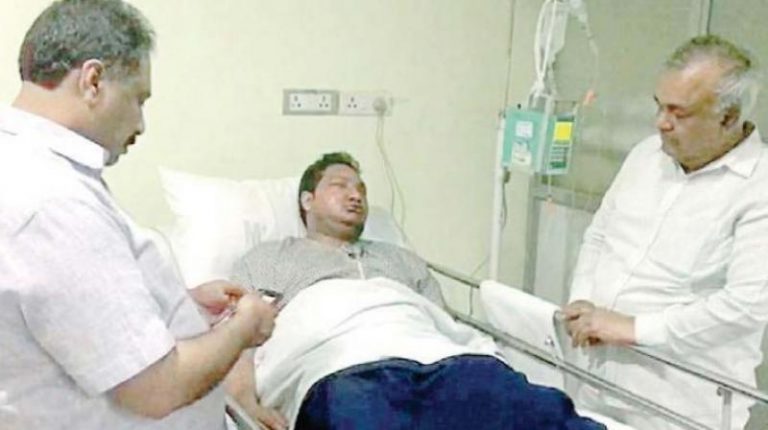
In a major embarrassment for Congress, Loganthan, father of Vidhwath, who was brutally assaulted by Congress MLA N.A. Haris’s son Mohammed Nalapad Haris, has ‘rejected‘ Karnataka Chief Minister Siddaramaiah’s offer for ‘reconciliation’.

In a desperate bid to put an end to the bitter matter, the ‘offer’ took place on Thursday night when Siddaramaiah invited Loganathan to meet him to discuss the matter, but Loganathan reportedly rejected the offer. With assembly elections round the corner, sensing the incident turn public sentiment against him, Siddaramaiah tried to persuade Loganathan to get the public prosecutor to not oppose the bail petition of Mohammed Nalapad. However, Loganathan, who is not keen on giving a political twist to the case did not show any interest.

Though Indian laws do not explicitly outlaw compromise between aggrieved parties, generally accepted jurisprudence says a crime of heinous nature should be considered crime against society, and not crime against individual. What Congress chief minister is trying to do is a subversion of law as a criminal offence, unlike the civil or financial offence, is not supposed to be settled between parties. After Siddaramaiah’s ‘offer’ was rejected, Mohammed Nalapad’s father, MLA N A Haris, visited the hospital and reportedly pleaded with the family to withdraw the case against his son. Haris along with his wife visited Mallya Hospital, where Vidhwath is undergoing treatment and made a request in this regard, but Loganathan reportedly didn’t give in.

Earlier in February, the Congress party had expelled the general secretary of its Bengaluru youth wing for six years after he was accused of brutally thrashing a person at a pub. The accused, Mohammad Nalapad Haris reportedly spent 24 hours in a 5-star hotel for a day before surrendering to the police the next morning.

Govt school in Bengaluru accused of forcing students to do namaz and admitting only Muslim students

0

A government school in Shivajinagar of Bengaluru has been accused of discriminating against non-Muslims and allocating a separate hall for doing Namaz. The teachers have also been accused of allowing Namaz during school hours and forcing students to attend Namaz in the school.

https://www.youtube.com/watch?v=4Eylc60OL-Y

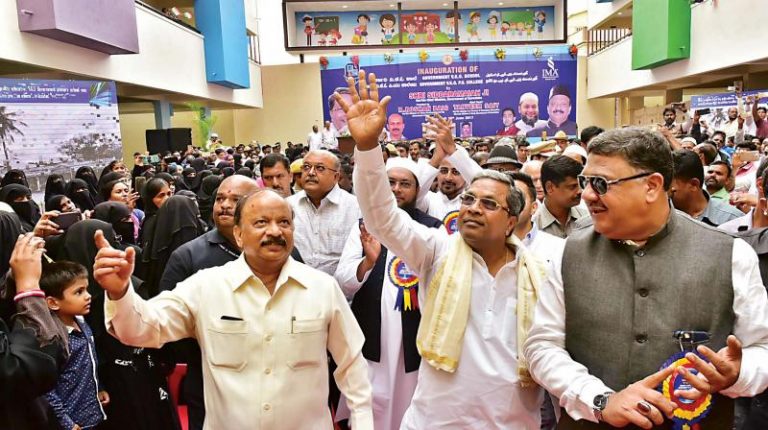
The building of the Government V.K.O school which was renovated by a charitable organisation called IMA at the cost of 16 crores was inaugurated by the Chief Minister Siddaramaiah himself.  The special gesture was made by the CM as Roshan Baig, a Minister in his government was an alumnus of the school. The IMA is accused of influencing admissions in the school by locals.

The video of the students doing Namaz inside the school has given credence to the allegations.


The teacher and principal of the school denied these allegations when confronted by reports of News9 and PublicTV. However, when they were showed the video, the principal conceded that the students may have done Namaz in the school building but it had not come to her attention so far. When reporters asked if that is allowed, she said that she will check with officials.

Students doing Namaz in Government VKO school Shivajinagar Bengaluru

The teacher conceded that the students of class 9 and 10 go out for Namaz on Fridays. She added that class 8 students do Namaz in one of the buildings for ‘concentration’ purposes. The teacher said that they don’t force or stop the students from doing Namaz.

Forcing students to participate in prayers in a government-funded institution is unconstitutional and against fundamental rights assured under the constitution. Article 38 of the constitution says  (emphasis added)

Freedom as to attendance at religious instruction or religious worship in certain educational institutions

(1) No religion instruction shall be provided in any educational institution wholly maintained out of State funds

(2) Nothing in clause ( 1 ) shall apply to an educational institution which is administered by the State but has been established under any endowment or trust which requires that religious instruction shall be imparted in such institution

(3) No person attending any educational institution recognised by the State or receiving aid out of State funds shall be required to take part in any religious instruction that may be imparted in such institution or to attend any religious worship that may be conducted in such institution or in any premises attached thereto unless such person or, if such person is a minor, his guardian has given his consent thereto Cultural and Educational Rights

The block education officer has agreed to look into the matter as per reports. The Congress-led government in Karnataka needs to launch an investigation into these allegations and ensure that all students in the Government V.K.O school are treated equally.

Gul Panag reveals Arvind Kejriwal and AAP’s dangerous pandering to Khalistanis during elections

0

Aam Aadmi Party (AAP) leaders, including the chief Arvind Kejriwal, have recently been under fire for allegedly beating up the Chief Secretary of Delhi. As usual, Arvind Kejriwal blamed the Centre and called the CS filing a complaint against AAP’s rowdy MLAs a BJP conspiracy. This shoot and scoot habit of AAP does not seem to have gone down too well with erstwhile AAP supporters. Many are being vocal about their displeasure and disappointment at the way the party has evolved.

Panag, who is a lawyer and son of Lieutenant General HS Panag (retired), an ordinary member of AAP and brother of Gul Panag, the politician who fought the 2014 Lok Sabha elections on AAP ticket from Chandigarh against Kirron Kher, has been a vocal supporter as well as a critic of Kejriwal. Yesterday he called out Kejriwal on his whataboutery and his attempt to derail the discourse.


To that, a Twitter user responded that how the fact that a civil servant was allegedly manhandled gets more outrage than the fact that Arvind Kejriwal allegedly courted Khalistan separatists during 2014 elections is surprising, to say the least. To that, Panag responded with how she had ‘warned’ against the flirtation, but Kejriwal and his team paid no heed.


Does that mean Kejriwal and his team know the gravity of their associations? That they were warned about the dangerous territory they were playing on, but still went ahead? And what does it say about the AAP leaders and supporters who knew about it and kept silent? Just how important was winning the election for them that they chose to toy with the idea of giving away country in hands of separatists?

It is time Arvind Kejriwal answers a few questions, without blaming it on Modi, and hopefully, without beating someone up.

Supreme Court issues notice to Delhi Police on Sunanda Pushkar murder case

0

The Supreme Court on Friday has issued a notice to the Delhi Police in connection to the PIL submitted by Subramanian Swamy on the death of the wife of Shashi Tharoor, Sunanda Pushkar. Initially, the Delhi High Court had dismissed the petition deeming it to be a “Political Interest Litigation”. Swamy had then approached the apex bench against the decision of the High Court. Justice Arun Mishra and Justice Amitava Roy have asked Swamy to satisfy them over the maintainability of the case.

Ishakaran Bhandari, a close aide of Subramanian Swamy, says that the notice to the Delhi Police is significant as the Police now has to explain their conduct thus far with regards to the case and their failure to submit the final report within 8 weeks as they had told the High Court on September 21 last year. The Court had then asked Delhi Police to file an affidavit within 2 weeks. According to Ishkaran Bhandari, Delhi Police will find it difficult to satisfy the Court regarding their conduct.


Sunanda Pushkar was found dead in a hotel room at Delhi on January 17, 2014. Earlier, AIIMS had confirmed that hers was an unnatural death.