Home Blog Page 7379

Senior lawyer Aryama Sundaram says “don’t politicise” when asked about Congress hashtag campaign

0

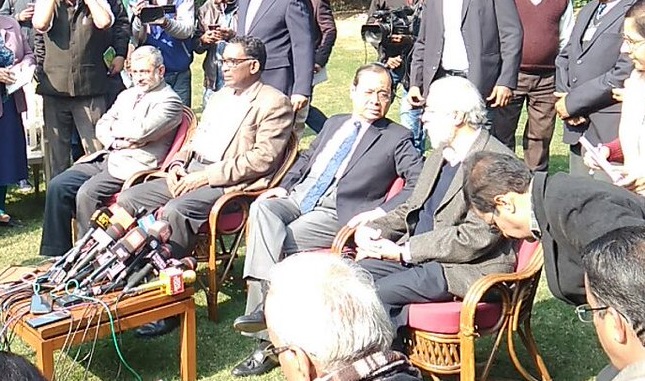
In a truly unprecedented move today, the 4 senior most judges of the Supreme Court, after the Chief Justice of India Dipak Misra, held a press conference, to let the nation know of “their failed efforts” to  convince the Chief Justice to take steps to protect the institution. The four judges are Justices J Chelameswar, Madan B Lokur, Ranjan Gogoi and Kurian Joseph.

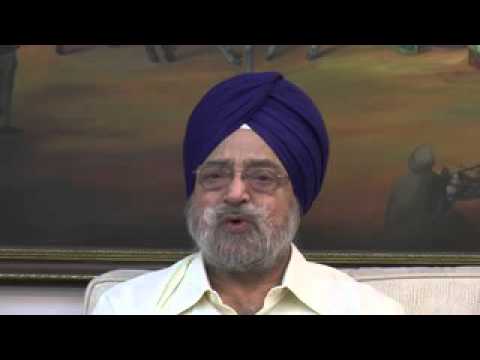
When asked about whether or not this press conference should have been held, senior lawyer of the Supreme Court, Aryaman Sundaram said that it is easy to sit in judgement and say whether the press conference should or should not have been called, but what is important is that 4 very senior judges of the Supreme Court have expressed a great deal of anguish and they have expressed anguish regarding issues that concern every citizen of India. He said that the Judiciary has an exemplary record and it sad that 4 judges should have to express such anguish that certain matters are not being set right. He said it is the message that should be considered and not the method in which that message was delivered.

When asked on Republic TV, that whether this was like washing dirty linen in public, he said that this should not be looked upon as dirty linen but something that needs to be set right. He said if 4 senior judges have concerns over administration of justice, the concerns need to be addressed and perhaps the CJI should open a line of communication and set things right.

Mr. Aryama Sundaram was also asked about how this issue is being hijacked politically with a specific party running hashtag campaigns on Twitter.

He said that this issue is sensitive and has constitutional importance and political parties should stay away from this issue. He said we as a country believe and balance and separation of power and if the Judiciary has issues that need to resolved, the Judiciary should be allowed to do so without the issue being politicised.

When journalist Arnab Goswami asked about hashtag campaign, he was referring to the campaign that has been started by the Congress party on Social Media. The party, from its official account and party functionaries have been trending #DemocracyInDanger. Party functionaries were seen saying every institution in this country is being compromised, presumably insinuating that Modi government should be answerable.


One can only hope that Congress will pay heed to Senior Lawyer Aryama Sundaram’s sound advice and not politicise an issue that is of grave concern to every citizen.

Justice RS Sodhi slams the 4 judges who held a press conference against CJI Dipak Misra

0

In a truly unprecedented move today, the 4 senior most judges of the Supreme Court, after the Chief Justice of India  Dipak Misra, held a press conference, to let the nation know of “their failed efforts” to  convince the Chief Justice to take steps to protect the institution. The four judges are Justices J Chelameswar, Madan B Lokur, Ranjan Gogoi and Kurian Joseph.

After this explosive press conference, many past justices reacted. While some supported the 4 senior judges and their methods, some like Justice Sodhi were extremely unhappy with the way things have been unfolding.

Justice RS Sodhi on Republic TV said that the judiciary stands demeaned by these 4 people. He said he was ashamed that he was a member of the judiciary. That this can’t be the judicial discipline.

He questioned how the judges could have gone public and question the master of the roster. If they had a difficulty about something, they should have raised their opinion in the court, If they had collegium issues, they should have raised them at the collegium, but how could 4 judges get together in this “trade unionism” fashion and demand that the Chief Justice will have to act on what they say?

He emphatically asked who gave them this right. He said they have demeaned the judiciary not just in front on the entire country, but in front of the entire world. He said the whole world is seeing “these people jumping around in this fashion”. He reiterated that he is ashamed of the manner in which the 4 judges have conducted himself, and he feels sorry for the country.

He said that they have caused so much damage, and since they have made clear that they don’t wish to stick to judicial opinion, all the 4 senior judges should resign and not demean the judiciary further.

While Justice RS Sodhi vehemently disagreed with this method, Justice Mukul Mudgal on the same channel supported the 4 judges.

Read: Explosive unprecedented letter by 4 SC judges to the Chief Justice

0

In a truly unprecedent move today, the 4 senior most judges of the Supreme Court, after the Chief Justice of India  Dipak Misra , held a press conference, to let the nation know of “their failed efforts” to  convince the Chief Justice to take steps to protect the institution. The four judges are Justices J Chelameswar, Madan B Lokur, Ranjan Gogoi and Kurian Joseph.

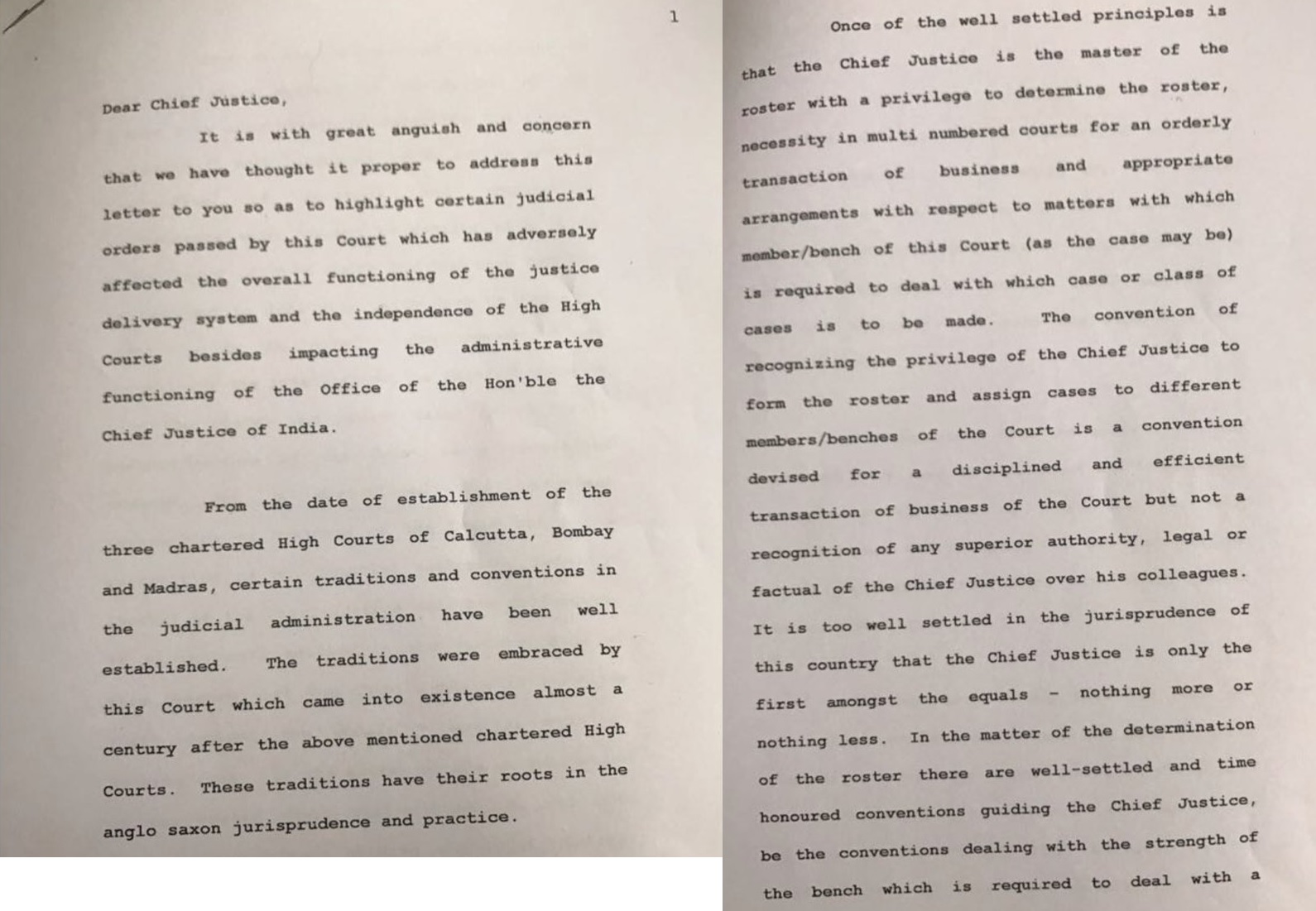
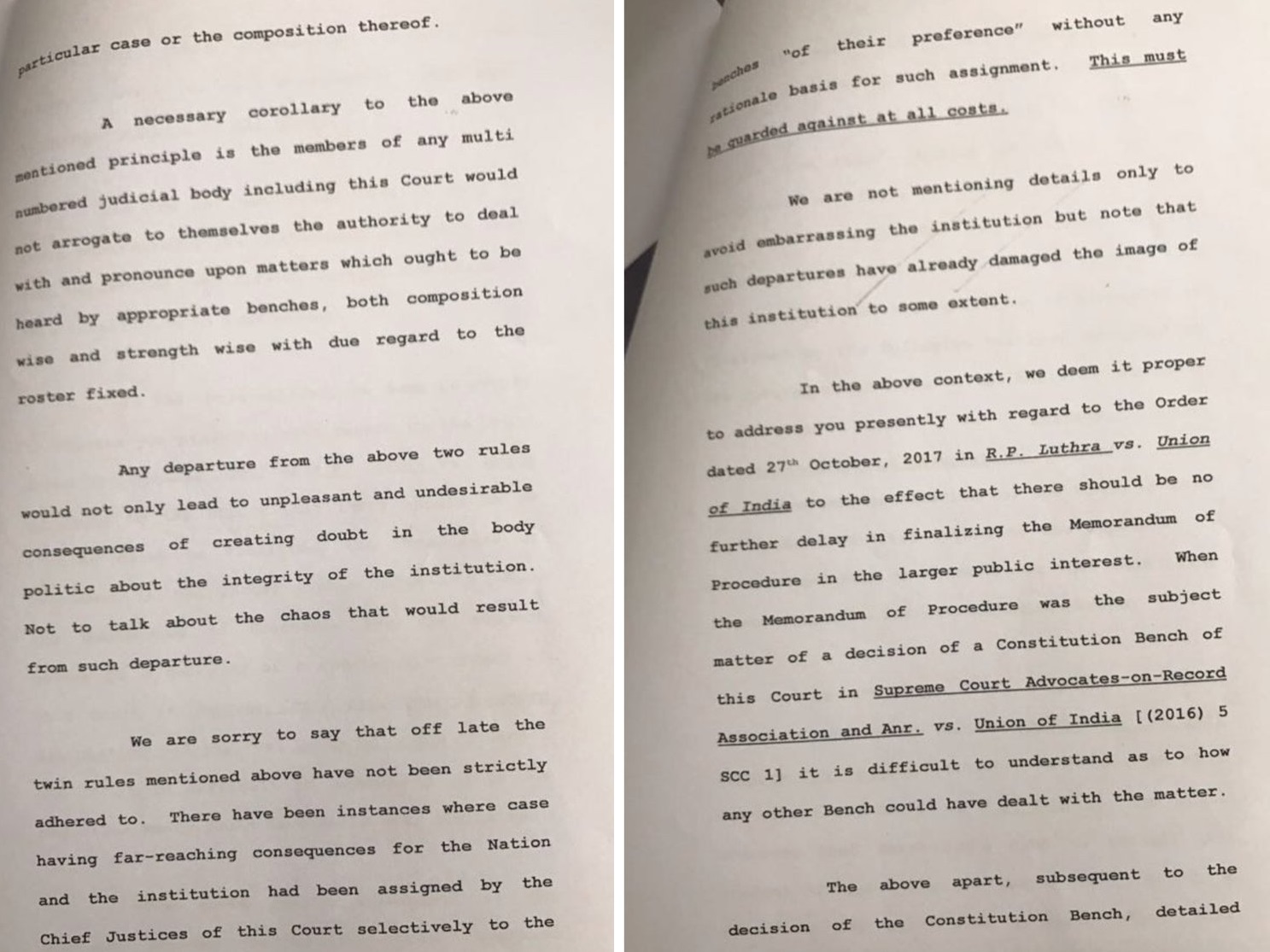
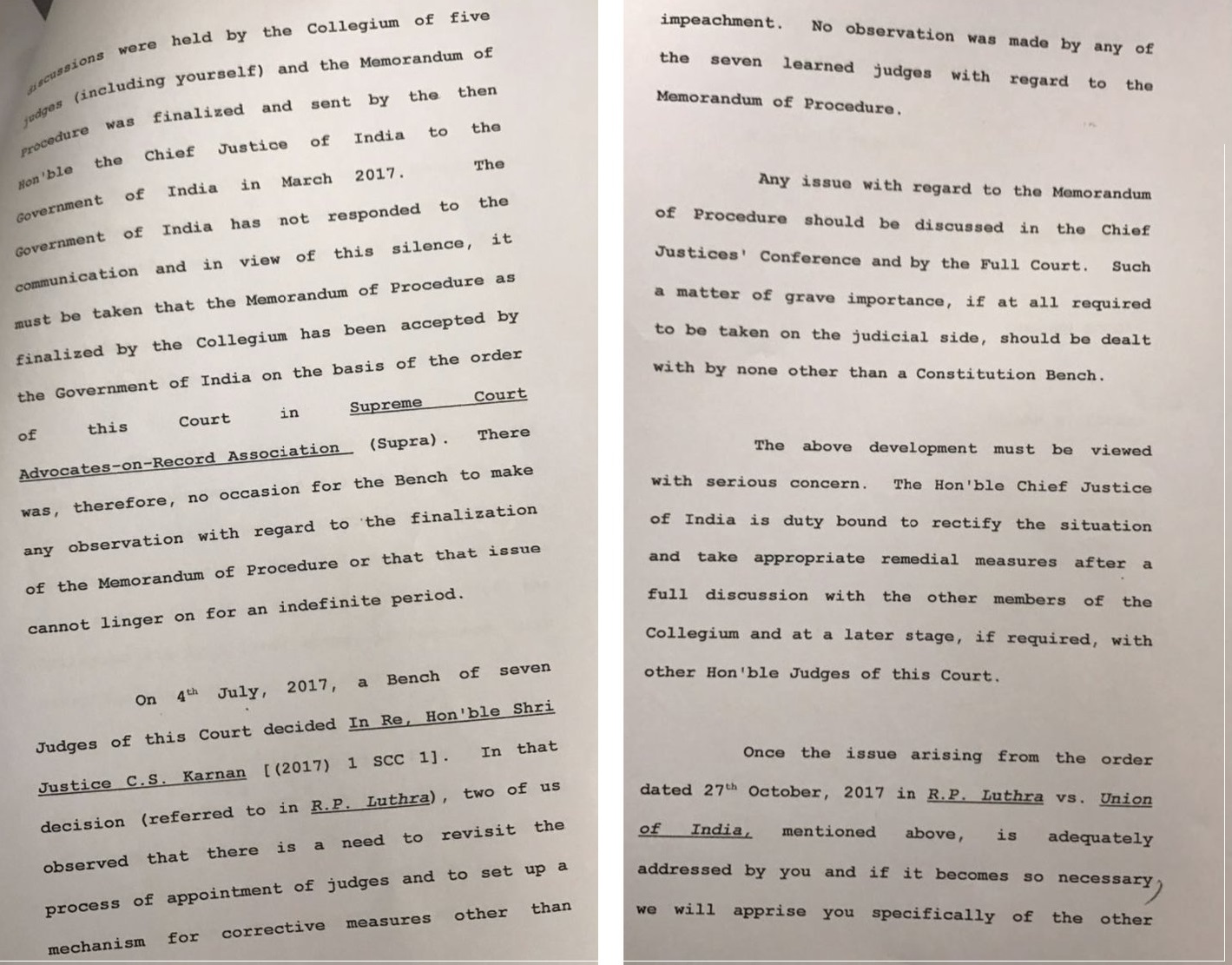
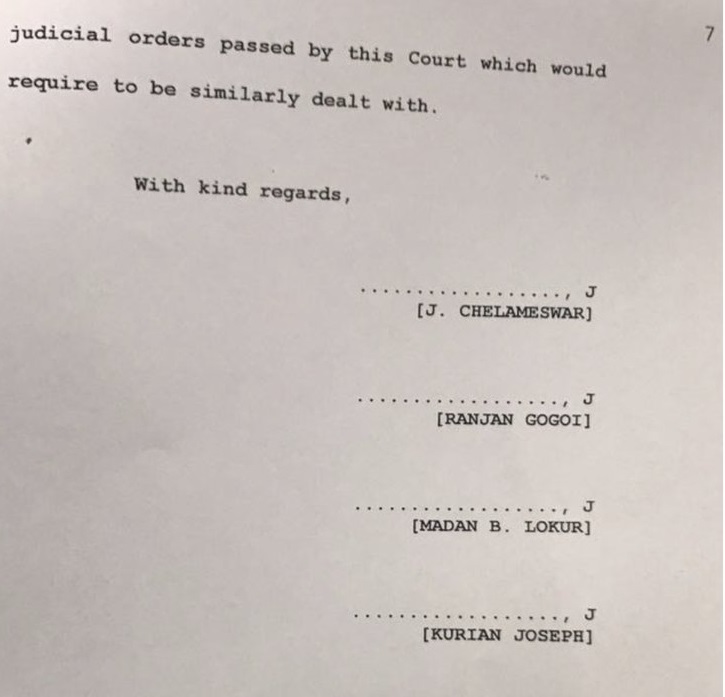
While the press conference lacked in details, and was more of a symbol of protest, they judges said that they had written a letter to the CJI a few months back, which would clarify all doubts. The letter is reproduced below:

The letter seems to say that the established principle that the CJI is merely the first among equals and not a “superior authority”, has not been adhered to by the current CJI. The letter also indicates that judges should not “arrogate” i.e. claim unfairly, the authority to deal with cases, which ought to be handled by others. The letter also makes reference to the opaqueness of the current collegium system.

All said and done, this is just the beginning of a massive churn

Molestation charge added against 14 ‘dalit protesters’ in the aftermath of Bhima Koregaon violence

0

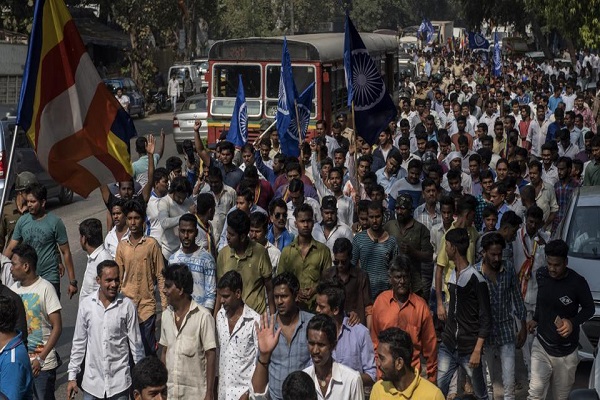
Caste fault lines were glaringly exposed in parts of Maharashtra at the start of 2018, after the 200th celebration of the Bhima Koregaon battle on 1st January, resulted in large scale violence. This battle, which resulted in a the British victory over the Peshwas, has been spun by the so called historians to be a victory of the Dalits over Brahmins, which prompts such annual celebrations.

This year, what added another angle to this whole affair, was the invitation extended to controversial Gujarat MLA Jignesh Mevani and anti-national sloganeer Umar Khalid to attend the main ‘celebrations’ where as per media reports, Mevani was allegedly seen inciting people to indulge in ‘street battles’.

In the initial violence on the day of the ‘celebrations’, mobs destroyed at least 75 cars and resulted in the death of one person. The violence which was initially confined to regions in Pune district, soon spilled over to Mumbai, with protesters damaging many buses and disrupting road, rail traffic.

In the resulting action by the administration, at least 100 protesters were detained in the Maharashtra capital. The Mumbai police had subsequently filed 25 FIRs against the supposedly dalit protesters.

Now the police has modified the FIRs to include a molestation charge against a section of these aggressors.

As reported, 14 such protesters have been booked by the police over the charges of, “outraging the modesty of a woman” and going by the FIR some of them allegedly manhandled women police officers.

This molestation charge has been added to already present accusations of rioting and causing hurt to public servants while they were discharging the duty. The accused regarding this case have already been arrested by the police and sent to judicial custody. This incident in question allegedly took place on 2nd January.

As per the senior inspector of Chembur police station, some women police officers were manhandled by these protesters in Chembur. Two of them were allegedly pushed and one was hit on the head by the protesters.

The police are now investigating video footage in order to build their case, which includes monitoring CCTV footage and clips captured by cops on their mobile phones.

Book Review : ‘Hinduism and Nature’ by Nanditha Krishna

0

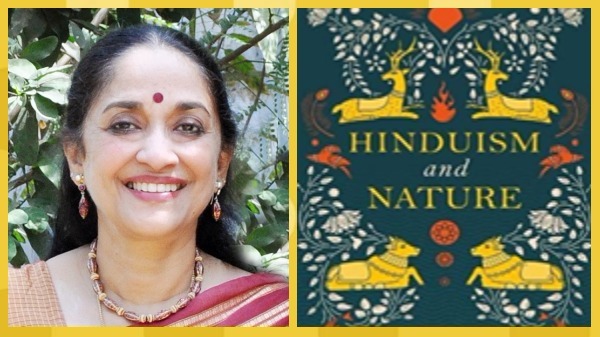
‘Hinduism and Nature’ is a book that blends spirituality, mythology, and an analysis of environmental awareness that is embedded in Hinduism. Nanditha Krishna, in her book, tries to bring out the close harmony between nature and the Hindu faith. The author quotes verses from Sangam literature, Bhagavad Gita, Vedas and Upanishads to explain the commitment that our forefathers had for the environment. This view presented in the introduction was particularly enlightening :

Hinduism has a cosmic , rather than anthropocentric, view of the world, an ontology sharply different from the Abrahamic religions which believe that ‘God created mankind in his own image'(Genesis 1:27) and ‘let them have dominion over the fish of the sea and over the birds  of the heavens and over the livestock and over all the earth and over every creeping thing that creeps on earth'(Genesis 1:26) Hindu traditions acknowledge that all life forms- humans animals and plants are equal and sacred , and thus appropriately placed to take on contemporary concerns like deforestation, intensive farming of animals , global warming and climate change.

Nanditha Krishna

The book is filled with stories attached to forests, rivers and mountains across India. While emphasizing on the central role of nature in Sanatan Hindu culture, the author incorporates tribal belief systems and traditions as well in her book.

Nanditha Krishna explains how compassion and respect for animals, plants and our environment is embedded in the Hindu rituals and festivals, at appropriate junctures throughout the book. The narrative starts with Rig Vedic people, who worshiped forces of nature like sun, fire, rain and wind. While retaining core values, it is also evident that some evolution has occurred in sacred texts in accordance with changes in material life. This is reflected in post- Vedic texts like Puranas.

In spite of being politically divided, the entire subcontinent was united by Hindu Dharma. From the book, it is evident that the geographical references in Mahabharata and Ramayana were not entirely fictional. When the new capital of Indraprasta was built after burning Khandava forests, a large number of animals and plants were killed. The author remarks that those who built cities over the destroyed forests wanted to take some measures to make amends. The corrective stance was reflected in subsequent religious texts.

Hindu puranas promised incentives to those who plant trees and punishment to those who fell trees. The author quotes Varaha Purana which says promises that a person who plants a banyan, two pomegranates, five mango trees and ten flowering plants/creepers shall never go to hell. The Agni Purana says that plantation of gardens leads to eradication of sins whereas the Padma Purana warns of punishment in hell for felling a green tree. In the light of rapid deforestation and urbanization in modern India, a strong belief in these puranas could help us combat climate change.

While writing about sacred groves of India, the author is aided by her experience as an environmentalist. She outlines the tribal and Hindu traditions wherein religious sanction has been instrumental in conservation of forests and biodiversity. The author laments the erosion of the faith and urbanization that has led to decline in people’s commitment to conserve these forests. The practice of offering terracotta horses to deities of sacred groves described in the book in particularly interesting

The mythological story behind each major river, mountain and lake of India is presented lucidly. It is quite clear from the book that the divinity attached to the water bodies because of these mythological stories helped in their conservation. Hinduism smartly blended the larger interest of society by attaching sacred value to rivers, forests and wildlife even though the society had transformed into a more materialistic civilization over the centuries. I was particularly impressed to learn that a King in Cambodia has built Angkor Wat temple inspired by Meru Parvata .

The book explains that the principle of ahimsa (non violence) was extended to animals as well. Initially, Vedas explicitly prohibited killing of animals for food. Later, this message became more implicit as deities like Shiva, Vishnu and other gods became a part of Hindu faith. This was ensured by assigning animals as vehicles to various Hindu deities. The book captures the rationale behind this aspect of Hinduism succinctly. While writing about the sacred value attached to cows, the author clears the air on beef consumption in Vedic society by interpreting the controversial word ‘goghna’ from Panini’s texts. ‘Goghna’, according to Panini is a ‘receiver of the cow’ and not a ‘killer of the cow’ as translated by leftist historians.

Unfortunately, the boundary of this sacred space, involving rivers, wildlife, lakes and forests around temples is shrinking due to growing population and wants of the people. As the author rightly points out, we have forgotten the art of living in harmony with nature. The author captures the deep reverence that Sanatana Hindu Dharma had for nature convincingly in her book. She also stresses the need to draw lessons from our ancient philosophies and alter our attitudes in order to save the earth

The book is not only informative and seamless in its flow, but also forces the reader to contemplate about the disconnect between ‘modern’ Hindus and nature. It also nudges every reader, irrespective of their religion towards a greener lifestyle and a compassionate attitude towards all living beings.

Journalist at ‘The Wire’ : Heckled by Dalit and Leftist activists, told by Editors to ‘let it go’

0

Journalism is a tough job, and the job is tougher when one is a lady journalist. In a shocking even, a journalist from the leftist propaganda website, ‘The Wire’, had made revelations about being manhandled and heckled while covering a story. She has detailed her ordeal in a Facebook post.

Damayantee Dhar was covering a case of one Doctor Mariraj, a third year resident doctor of the BJ Medical College who had alleged caste discrimination against nine people of the department. As per Damayantee, while she was investigating, she came across some proof against Dr. Mariraj and proof that some of his allegations don’t hold water.

She says that while she was interviewing Dr. Mariraj, Keval Rathod, a group of men led by Keval Rathod entered the room where the interview was being held and starting abusing and heckling Dhar. She says that in this incident that took place on 7th January, she and a journalist from the Ahmedabad Mirror were attacked by a mob of 15-20 Dalit men (presumably led by Keval Rathod, an advocate/dalit activist from Una). They were manhandled, heckled, their press card and mobile phones were snatched and their recording was deleted. She said all this happened while 7-8 men kept recording what was happening to them while abusing them verbally.

She alleges that Keval Rathod, advocate/dalit activist, kept screaming “Brahmanwad Manuwad media” and threatened her with an atrocities case. He even snatched her press card from the policeman who had come to rescue her and said “Brahman ho, Dhar ho, dekhta hu main”. He also abused the media house Damayantee represented and asked her to not ask Dr. Mariraj questions if she can’t help him, considering he was the supposed victim.

Damayantee revealed that she wasn’t as shaken by this incident as she was by the reaction of the leftist activists and Editors who have all along been standing up for Freedom of Expression and Freedom of Press. She says that she was asked to let it go and accept it as a professional hazard. That if she filed and complaint or spoke about it, it would harm to “movement”. Some even tried to scare her saying that if she spoke up, she would invite counter complaints against herself.

She said that in the past few days, at least 4 reporters have been attacked by these so called activists/dalit activists and somehow, there has been some sort of silence around it. She wonders what their reaction would be if it were right wing activists who were going around heckling reporters.

She rues that while some reporters were getting heckled, these beacons of free press were celebrating only because the reporter belonged to a ‘certain channel’.

In her post, Dhar says,

“As for me, this attack made the hypocrisy of the leftists journalists-activists-editors quite clear”. 

She says when everyone refused to write about her story, she approached the Commissioner of Police, Ahmedabad, who acted very swiftly. She says when she was asked to identify the men who attacked her, from among some dalit activists who were already being detained. It so turned out, that the man who attacked her was already being detained.

She says that even as Keval Rathod was made to apologise to her in the police station, he did not fail to downplay the entire incident in his statement to a publication.

We wonder if the so called liberals, the paragons of virtue and the beacons of press freedom and women’s right, will speak up not only against what happened to Dhar, but also condemn the Editors who tried to silence her from telling her story, detailing her ordeal and going to the police.

After abusing people of UP and Bihar, Gurmehar Kaur’s mentor now insults the Indian army

0

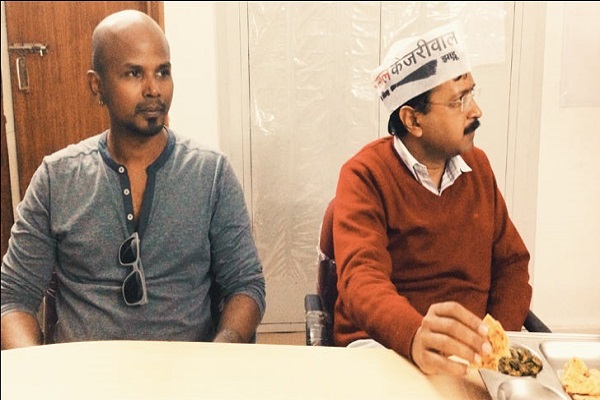
Ram Subramanian is a well known AAP supporter, and is also supposed to be an ad filmmaker who has worked with top advertising firms like Ogilvy, Contract. But in recent days the only thing he has been advertising is fascism and hate – mongering.

We had recently reported how he had decided to start openly abuse the people of UP, Bihar and Haryana on twitter, for which he was universally panned.

Apart from being known for the aforementioned reasons, he is also famous for being the mentor of celebrity student Gurmehar Kaur and being the brain behind her infamous placard holding video, where she rather naively, declared that “Pakistan did not kill my dad, war killed him.” This had later exploded into a, free speech under attack narrative after she was allegedly trolled and also supposedly received death threats.

Now he has decided to increase the venomous content in his tweet by first questioning out of the blue as to what is there to be proud of in India:


Predictably people took note and decided to respond:


He decided to take things to a new level after deciding to drag the Indian army into his venomous rants:


This further irked people who came out to heavily slam him:


One user questioned whether Gurmehar Kaur, whose father made the supreme sacrifice for the country, would now come out and condemn her mentor for his acts:


These antics of Gurmehar’s mentor, raise the question whether he regularly makes such controversial statements to somehow remain relevant in the public sphere, even if it means losing his dignity in people’s eyes.

In a bid to stop the BJP, churches in Meghalaya are getting into electoral politics, claims HT report

0

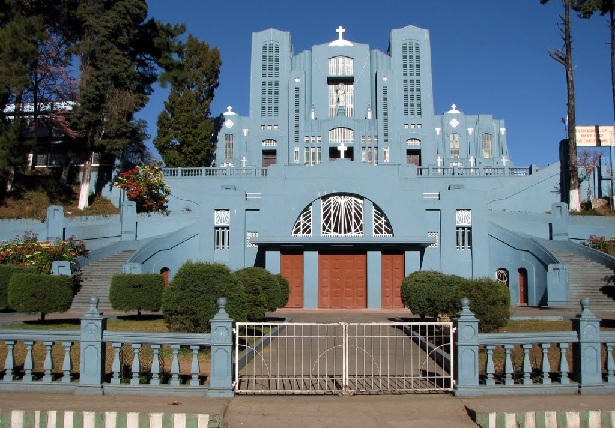
In a report published by Hindustan Times, the churches in poll bound Meghalaya are getting insecure by the efforts of the BJP and hence are trying to put up a concentrated effort to stop the BJP.

Last Sunday, the Catholic Church in Garo Hills, called for a protest to express their ‘concerns’ against the alleged attacks on minorities and growing sense of insecurities. While the protests weren’t explicitly held against the BJP, but a Father belonging to the Catholic Church in Meghalaya’s Tura town placed it in context of the upcoming elections in the state and the rising popularity of the BJP.

The report quotes the Father who does not wish to be named, “These incidents keep on happening. When one Christian is affected, all of us are affected. We wanted to give a message before elections that people here must be concerned at what is happening and act appropriately. It is our duty to alert people about the dangers of the situation.” Tura is home to Catholic as well as Baptist church, both of which have played an important role in influencing education, society and culture of the town. However, this time around, they are aiming at playing a larger role to influence politics.

Over 70% population of Meghalaya consists of Christians and hence, individual church leaders are expected to play an important role in the upcoming elections. The Father of the Catholic Church, which is an influential body running schools with over 60,000 students, fears that the BJP government may ban foreign funding. They say while they will never support a candidate (explicitly), but they will tell the people to choose a candidate who does not interfere in their faith and in their food choices.

This is not the first time the churches have tried to indirectly influence electoral politics. Last year, during Goa elections, Goan Padre had asked devotees to vote for specific candidates. In fact, a Congress leader from Goa had been forced to retire from active politics after the Church allegedly refused to back his candidature. Following that, in August last year for the by-polls, a magazine named Renowakao, run by a Panjim church Bishop’s House, carried an article which directly attacked the BJP and asked the voters to rein in the ‘tyranny’ prevalent in the whole nation by voting against Goa Chief Minister Manohar Parrikar.

In the recently concluded Gujarat elections, too, a Church in Gujarat urged the people to save India from ‘nationalistic forces’. In a letter, Archbishop Thomas Macwan associated with the Archdiocese of Gandhinagar, had subtly tried to influence the voters’ preference.

As Meghalaya goes to vote in few weeks’ time, it would be interesting to see how things unfold.

Police arrest three persons including a Rohingya Muslim in connection with dacoities in Kerala

0

Delhi’s crime branch has arrested three persons in connection with a dacoity carried out in Ernakulam district of Kerala. As per the India Today report, one of those arrested is a Rohingya Muslim. The arrested have been identified as Arshad, Shezad and Romi.

Of the three, Arshad hails from Seemapuri in Delhi, and the two others lived in Pappu colony of Sahibabad, Uttar Pradesh.

The dacoity in question took place on 15th December in a Kochi, when the accused with the help of their five-six accomplices barged into a house at about 3-4 AM, held the family members hostage and even proceeded to assault them. They later looted gold ornaments from the home. As a result a case was registered at Ernakulam Town North Police Station.

A day later another such dacoity took place in Hill Police Station area of Kochi, where 9 to 10 people assaulted the house owner and looted about 450 grams of gold ornaments, mobile phones, laptop and Rs 20,000 in cash from that house.

Subsequently an FIR was filed against them under various sections of the IPC. One of the clues available to the police regarding this matter was that the dacoits were conversing in Hindi during the robbery as a result of which they were suspected to be hailing from Delhi.

This breakthrough was achieved as a result of a joint operation between Delhi and Kerala police after the latter sent a team of cops to the national capital. On Tuesday, the police received a tip off that, one of the accused named Arshad, was spotted in Northeast Delhi’s Dilshad Garden area.

He was subsequently arrested and the cops managed to recover some of the jewellery looted from him. After intense interrogation, he gave up his colleagues Shezad and Romi.

Incidentally this isn’t the only time Rohingyas have been known to have been involved in crimes in the country.

We had reported how a section of the Rohingyas who were freely allowed to enter India by the erstwhile UPA government, had started to get radicalised by the Lashkar-e-Toeba (LeT) to avenge the sectarian violence in Myanmar.

It was also noted that a Rohingya Muslim was arrested in connection with the Burdwan blast. Later a foreign terrorist gunned down by security forces in South Kashmir also turned out to be a Myanmar national.

In September, 2017 it was noted that an Al Qaeda was arrested from Delhi while he was trying to recruit Rohingyas.

School History textbooks are breaking the civilisational spine of the country

0

Indus Valley civilisation, Aryan-Dravidian Theory, half a page on the Mauryan Empire, one case study on the Cholas, followed by a direct leap to the Delhi Sultanate, an extensive coverage of the “brilliant” Mughal Empire, The British rule in India, The Indian independence, abolition of “regressive Hindu norms” and finally, the formation of a “sovereign, secular, socialistic, democratic, republic”.

This would be an overview of all the areas in social science/history that every student, studying the Indian curriculum is taught. I can vouch for the fact that no student who has learnt history only from his textbooks, would be able to dive deep into any other topic but these. That is a massive problem. I affirm that there are numerous flaws in today’s education system with regard to social sciences and that it is vital for the educational board to eliminate debunked myths from the textbooks of students. 

But before this, I would want the reader to understand why it is so important for a student to get the history right. If what has been done for the past five decades continues, every student done with their schooling would leave with a biased narrative that is preached by this education board. A narrative that directly conveys messages like:

– Hinduism and Sanskrit never were a part of Indian culture and they came from elsewhere.

– Indian culture with regard to art, poetry, monuments, cuisine came from Muslim empires.

-Caste system, Sati and many such regressive practices all came from Hinduism and the reformers had to “refine” the primitive religion, to form a more tolerant, liberal “Neo-Hinduism”.

By carrying such mindsets, students start to lose their national identity, their religious identity and begin to criticise Dharmic customs and traditions with their half-baked knowledge, standing on the grounds of zero understanding over Hindu civilisations and their advancements in various fields. Rajiv Malhotra in his book ‘Breaking India’ says, “(A civilization) gives a definite sense of who ‘we’ are, and ensures a deep psychological bond among ourselves, along with the feeling that the nation is worth defending…Breaking a civilization, therefore, is like breaking a spine of a person.”

I accuse the Indian educational board of having made serious moves towards breaking this very spine, through the downplaying of Dharmic culture and Hindu civilisations and very cunningly, propagating a disproved theory that was used as a tool to divide our nation: the Aryan Invasion theory. Therefore, I aim to expose these grey areas, that manufacture more and more misguided mindsets in the youngsters of India.

Since it is impossible for me to go through each and every distortion the textbooks hold in this one article, I have decided to conduct a case study for now. This case study will aim to dive into the narrative a Class 8 student is left with, thanks to his/her textbooks. Predominantly, the syllabus focuses on British rule in India and therefore, that is what will be looked at. In the near future however, I will be writing about other such distortions including those that exist in my own textbooks.

And so, let us analyse the first source which lies at the very beginning of the booklet ‘Caste and Reforms’
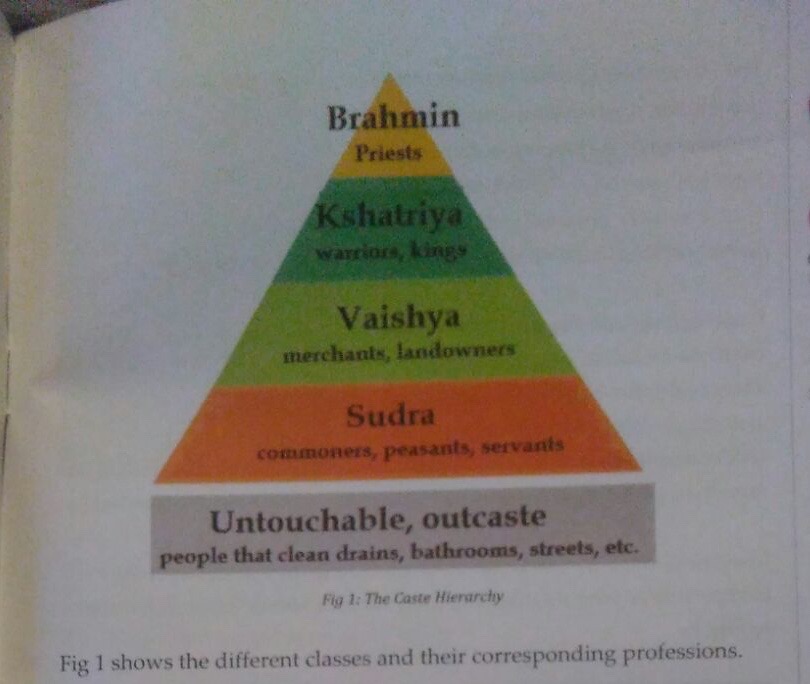
This diagram is a typical illustration of how the Varnas are depicted to be a matter of “inferiority” and “superiority” when they originally were nothing but outlines of the duties that were meant to be fulfilled by different elements of society. You will see exactly how the education board portrays Hindu scriptures as the cause for the discrimination as you read on.

Upon making a ghastly first impression on the supposedly regressive Hindu practices, let us take a look at what this beautiful booklet (which I was taught from along with thousands of students) has to say about Christian missionaries
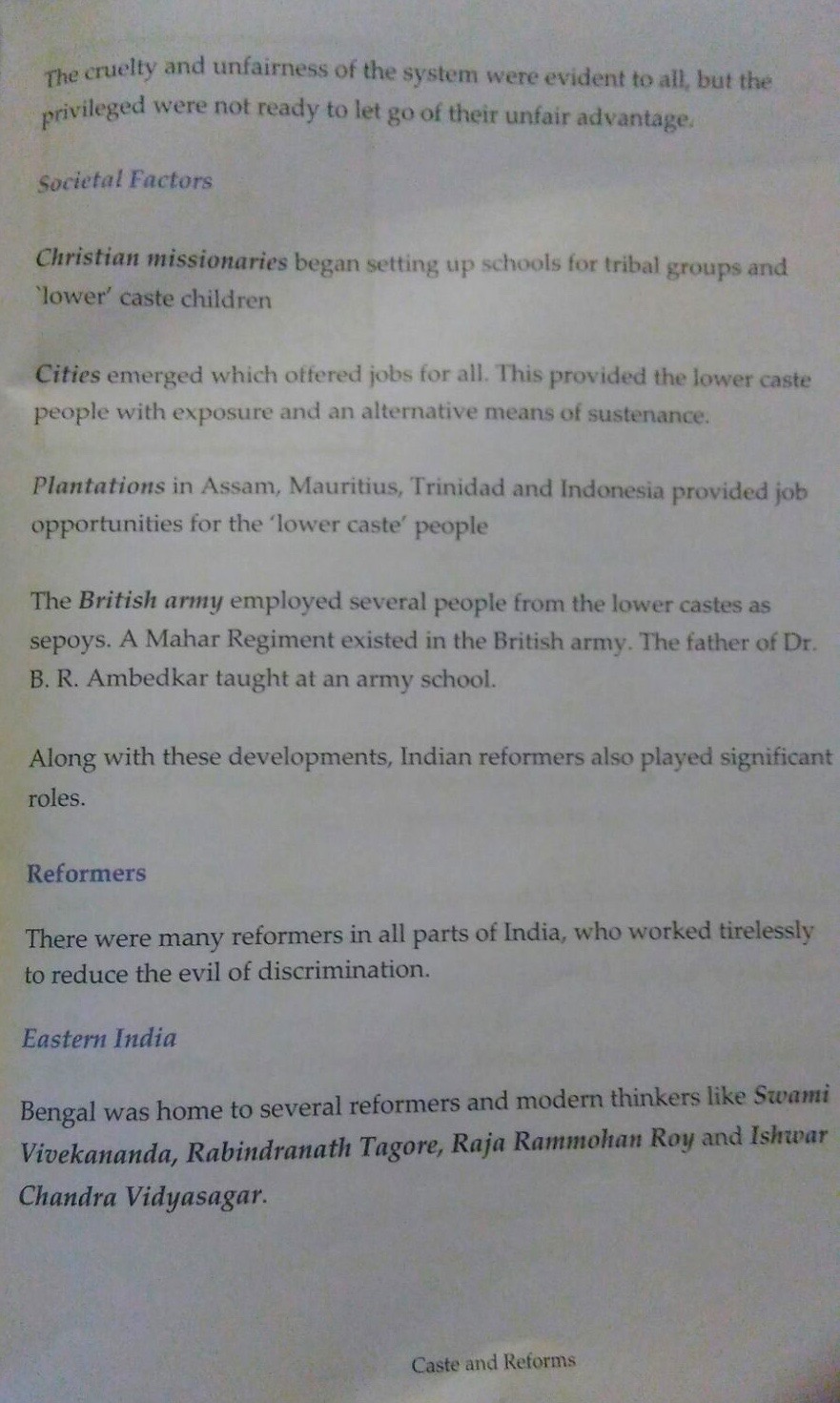
The book says, “Christian Missionaries began setting up schools for tribal groups and ‘lower caste’ children.”Just so one knows, this is the only reference made towards missionaries in the topic. The only thing the booklet has to say is that Christian missionaries provided services towards these oppressed. However, there is no mention on the ulterior motives, especially the conversion activities that they ran in exchange for these “services”. Bias? I think so.

Any neutral reader is bound to already sense that Hindu practices are primitive and that the Christian organisations selflessly aided the oppressed ‘lower castes’. Where as, in truth, Hindu traditions were demonized and radically misinterpreted for the benefit of some people and missionaries simply capitalised on that to convert: a fact that these textbooks blatantly ignore. However, if one doesn’t get the demonization of Vedas clear enough, here’s another rich piece of evidence:
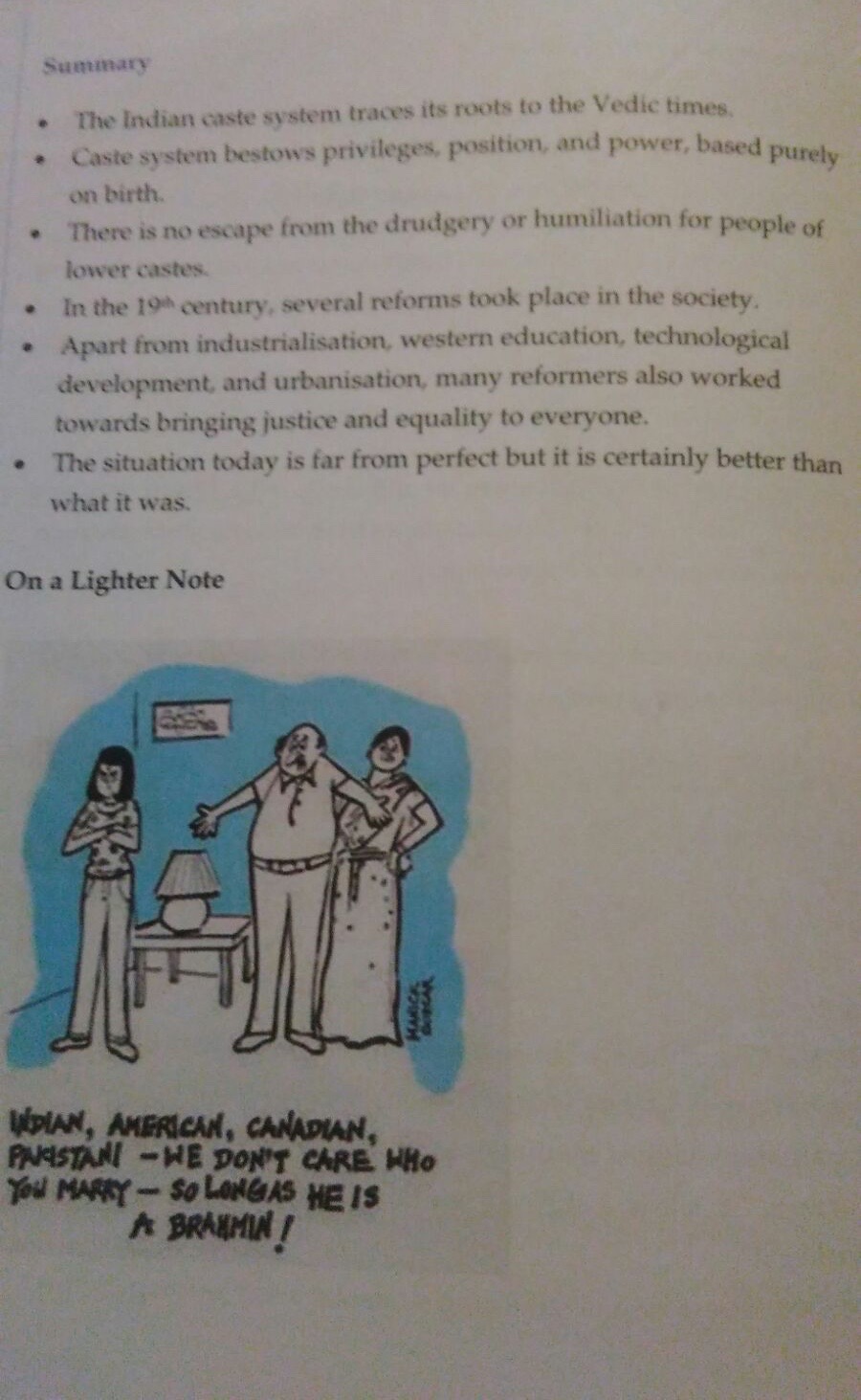
 

Lie 1:

“The caste system traces its root to Vedic times”. False! The word ‘caste’ comes from the Portuguese word ‘casta’ which only dates back to 1726. Where as Vedic period goes to hundreds of thousands of years before Christ (some say millions). So the textbook only got the year wrong by a few thousand years if not more: not bad! Perhaps what they are referring to, is the Varnas which are fundamentally different from caste. While Varnas are thrusted on co-ordination rooted on ability, the caste system is deep rooted in inequality.

Lie 2:

“Caste system bestows privileges, position, and power based purely on birth”. False again! Since the sentence above uses the word ‘caste’ instead of Varna (as they talk about the Vedic period), let’s assume again that they made the same mistake. Excusing that mistake, is it true that Varnas were allotted based on birth? No! To quote a Hindu scripture which disproves that- In the Bhagavad Gita, Krishna says that Varnas are decided based on the deeds and the qualities of a person, as opposed to birth. Therefore 2 plain fallacies in the first two lines. But my favourite part of this page, lies in the joke made at the bottom (apparently all these claims were not jokes). They have the audacity to ludicrously distort and blow the truth way out of proportion and on top of that, make an unfunny, exaggerated joke on that lie! I would be lying if I didn’t say I expected better.

So far, it’s been the caste system only. However, the cliches only get worse. Read on, as the beloved textbook goes on to tell us about the much awaited Sati:
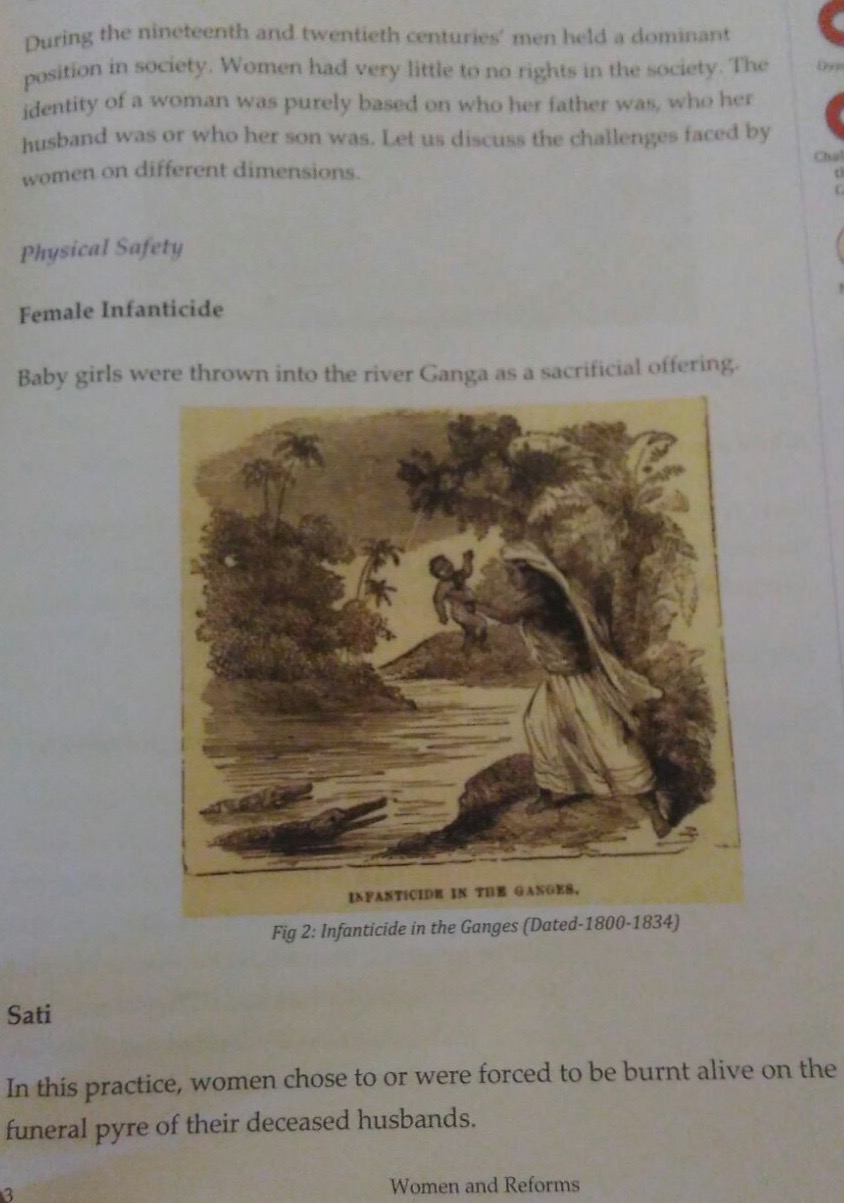
One more lie:

“Sati- In this practice, women were forced to be burnt alive on the funeral pyre of their deceased husbands.” The reader of the textbook is given an impression that Sati was imposed on women even against their will, as a practice. Let’s understand the authenticity of the point. To do this, let’s go to a story in the Mahabharata where there is reference to Sati: When king Pandu dies, Madri (one of his wives) jumps into his funeral pyre. However, does Kunti (his other wife) do this? She doesn’t. Another obvious example lies the Ramayana: when Dasaratha (Rama’s father) dies, none of his wives commit Sati. Why? Simply because Sati was a choice that women were provided with: yes, even from “Vedic era”. Therefore, why does the board like to lie so much to the students is a question I still have not gotten an answer to.

Finally, I wish to look at one more attempt to misguide the students in this very booklet:
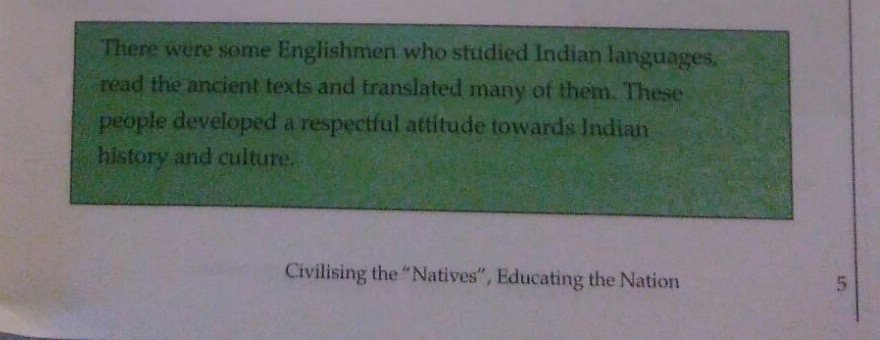
 

It says, “There were some Englishmen who studied Indian, read the ancient texts and translated many of them. These people developed a respectful attitude towards Indian history and culture”. I’m losing count of the lies that this book is making! This idea of Englishmen developing a “respectful attitude towards Indian history and culture” is nothing but farce. One of the most famous examples of such a person is Sir William Jones, who distorted Sanskrit verses in order to justify Draconian laws on Indians and even distorted the dates of Vedic civilisations to match the Christian beliefs, thus making conversions activities easier.

In conclusion dear reader, you have been very patient to read this article. Therefore, it is my duty to tell you the essence of all this reading. Most students who don’t take up social sciences after their 10th grade simply leave history forever. What they are left with, is prejudices and false opinions created by leeches in the education system, that create adults who do not have an understanding of their own culture and nation. They therefore, lose national identity and a sense of who they truly are. It is important for us to combat this fundamental flaw in the education. I myself interact with a lot of students to spread the awareness, yet that is not enough. We need more and more people to be aware of the truth, that lies in our history. I would therefore like to end on a quote by Theodore Roosevelt.

“The more you know about the past, the better prepared you are for the future”

(Disclaimer : This specific textbook is a non NCERT textbook being used in certain schools as per the CBSE prescribed curriculum)