Home Blog Page 850

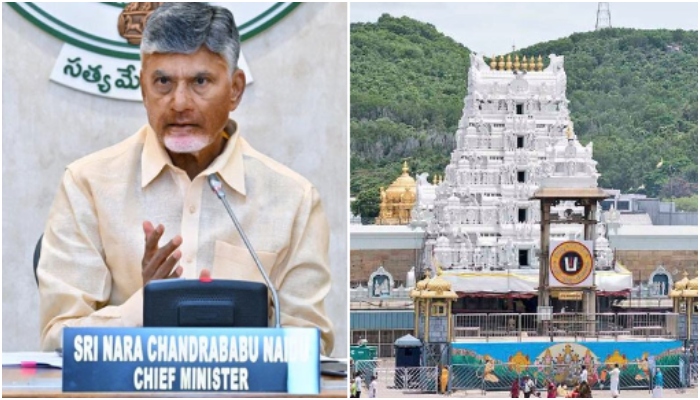
Only Hindus would be employed in state temples: Andhra Pradesh CM N Chandrababu Naidu announces as he also increases wages for temple Archakas

Andhra Pradesh Chief Minister N Chandrababu Naidu made a bold announcement to protect Hindu jobs within temples in the state, guaranteeing that temple positions are solely for members of the Sanatana faith. At an important meeting with the Hindu Religious Endowment Department, the Andhra CM said that only Hindus would be employed in the temples in the state.

CM Naidu unveiled a comprehensive plan to revive temple administration, promote religious tourism, and ensure spiritual and cultural integrity throughout Andhra Pradesh. The Naidu government has also decided to raise the salary of 1,683 Archakas who operate in various temples across the state from Rs 10,000 to Rs 15,000 per month.

Furthermore, the Andhra Pradesh state government has consented to boost the monthly financial support granted to minor temples under the Dhoopa Deepa Naivedyam Scheme to Rs 10,000 from Rs 5,000. During the meeting on Tuesday, 29th August, CM Naidu underlined the importance of spirituality in all temples across the state. He directed that temples and their surroundings must be kept immaculately clean to maintain the spiritual aura.

“Spirituality must thrive in every temple in Andhra Pradesh. Spiritual programs should be conducted in a way that attracts devotees to return to the temple without feeling extorted for money. It is essential that the temples and their surroundings are kept extremely clean,” the Andhra CM was quoted as saying.

Furthermore, a proposal to grant a monthly payment of Rs 3,000 to youth who have completed Veda Vidya but are currently unemployed was approved. Naidu additionally established a minimum monthly pay of Rs 25,000 for Naai Brahmins, barbers who serve in temples. 

CM Chandrababu Naidu also announced the formation of a committee comprised of officials from the Tourism Department, Hindu Charities Department, and Forest Department to oversee temple development, particularly in forested areas, in order to preserve the natural beauty and religious significance of these sites while making them more easily accessible to visitors.

During the meeting, it was decided that two additional board members would be added to the temple trust. Temples with an income of Rs 20 crore or more have 15 members on their trust board. The number will now be increased to seventeen. Furthermore, it was emphasised that the trust board will include a Brahmin and a Naai Brahmin, as promised by the NDA prior to the elections.

During the conversation, Naidu sharply criticised attacks on Hindu temples under the former YS Jagan Mohan Reddy regime, including the burning of a temple chariot. He demanded harsh action against individuals involved in such acts, emphasising that forced religious conversions would not be accepted in Andhra Pradesh.

He stated that the sentiments of devotees are extremely important and that non-Hindus should not operate in temples. “Forced religious conversions should not happen in Andhra Pradesh. No jobs should be given to non-Hindus in Hindu temples. Trustees are going to be appointed for 1,110 temples in Andhra Pradesh,” the CM said.

CM Naidu also promised that 87,000 acres of temple land that are currently illegally occupied will be restored through legal action.

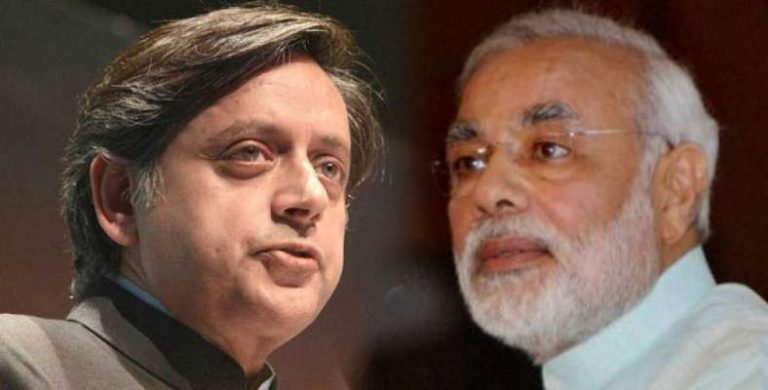
Shashi Tharoor’s ‘Scorpion over Shivling’ remark against PM Modi: Delhi High Court refuses to quash defamation case against the Congress leader

0

The Delhi High Court on Thursday refused to quash the defamation case against Congress leader Shashi Tharoor for allegedly comparing Prime Minister Narendra Modi to a “scorpion sitting on a Shivling” at the Bangalore Literature Festival in 2018.

Additionally, the court has lifted the previous stay on the trial court proceedings in the case.

Stating that the HC found “no grounds to quash the proceedings at this stage,” the bench of Justice Anoop Kumar Mendiratta instructed the parties to appear before the trial court on September 10. In 2020, the Delhi High Court had stayed proceedings against Tharoor.

The stay was issued by the court while hearing Tharoor’s plea challenging a trial court order that summoned him in the defamation complaint filed by Delhi BJP leader Rajeev Babbar.

In April 2019, a trial court summoned Tharoor in response to a criminal defamation complaint filed by Babbar in 2018. A Delhi court granted bail to Tharoor in June 2019.

Babbar claimed that Tharoor’s October 2018 remarks, allegedly made at the Bangalore Literature Festival, compared Prime Minister Narendra Modi to “a scorpion sitting on a Shivling.”

Babbar argued that the statement was hurtful to his religious sentiments and defamatory towards BJP workers and supporters. Tharoor sought to quash the complaint, which was filed under Sections 499 and 500 of the Indian Penal Code, related to defamation.

(This news report is published from a syndicated feed. Except for the headline, the content has not been written or edited by OpIndia staff)

Haldwani violence: Uttarakhand police respond to reports of delay in chargesheet filing, say they had applied for extension under UAPA provisions. Details

On Thursday, 29th August, the High Court granted bail to 50 people, including six women, accused of violence and arson in protest against the encroachment removal action in the Malik Ka Bagh area of ​​Banbhulpura. The division bench also canceled the order of the lower court in which the police did not file a chargesheet even after 90 days of the incident.

As per the reports, the court slammed the state police for failing to file FIR within 90 days leading to orders allowing bail to 50 accused Islamists. As per the rules, the police are supposed to file a chargesheet in the case within 90 days of the incident. Despite evidence, the police did not file the charge sheet in the case even after 200 days. The accused persons submitted an application in the lower court seeking bail. The bail was earlier denied by the lower court given serious charges framed against the accused.

A total of 51 accused have been granted bail so far. One person was granted bail on the grounds of serious illness.

A total of 107 people, including several women were arrested in the case. The Banbhulpura violence where 5 persons lost lives was the first instance where internet was shut down in the city.

As per a detailed report by Jagran, accused Nabi Raza Khan, Akhtari Beg, and Abdul Lateef were already dead when the police included their names in the list of accused. The inclusion of deceased persons’ names, and the failure to submit the charge sheet for over 200 days was cited as major lapses on the part of the police.

Haldwani riots on February 8

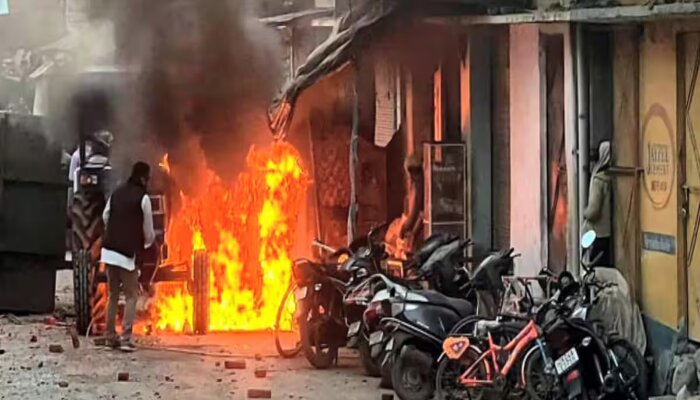
Islamists resorted to stone pelting and arson in Uttarakhand’s Haldwani area on 8th February this year. The frenzied mob attacked authorities who went there to demolish a madrasa, which was built on illegally encroached govt land near the Banbhulpura police station.

3 main FIRs were registered in the case, the first by Haldwani municipality, the second by Banbhulpura police station and the third one by the SHO Mukhani Pramod Pathak. The investigations were carried out by CO Ramnagar, CO Bhawali and CO Lalkuan respectively.

The Islamists pelted stones at the policemen and Haldwani Municipal Corporation workers present there. Later, they surrounded the police station and went on to set fire to the vehicles stationed outside the Banbhulpura police station.

The mob also set a transformer on fire, resulting in a power outage in the area. Several journalists and administration officials were trapped inside the police station as a mob surrounded the Banbhulpura police station.

A division bench of senior judge Justice Manoj Kumar Tiwari and Justice Pankaj Purohit had reserved the decision after completing the hearing on the special appeals filed by the accused against the lower court’s decision.

Gulzar, a resident of Banbhulpura, and 50 others implicated in the violence and arson case in the Banbhulpura area of Haldwani had submitted bail applications claiming that the police had not filed a chargesheet against them within 90 days after the incident. They did not provide a cogent rationale for extending the remand. Notably, the lower court prolonged the remand and denied the bail applications.

The accused claimed that the prolongation of the remand term violated Article 21 of the Constitution. The police cannot detain somebody without a justification, no matter how serious the allegations. The accused claimed that the charge sheet had not yet been produced, thus they should be freed on bond.

Meanwhile, following the violence in Haldwani, over 75 individuals were held and interrogated. Official complaints had been registered against 19 named and 5000 unknown individuals. Among the detained was Javed Siddiqui, sibling of Samajwadi Party’s Uttarakhand state in-charge Abdul Mateen Siddiqui. The Councillor of line number 16, Mehboob Alam, and line number 14, Zeeshan Parvez, a resident of Indira Nagar, had also been arrested.

Arshad Ayyub, a mining entrepreneur who lives in line number 12, and Aslam Chaudhary, who manages a diary, were also caught. Many women were also arrested in the case.

Uttarakhand Police responds to reports of delayed chargesheet

The Uttarakhand Police have responded to the reports saying that they delayed the filing of chargesheet. The police, in a statement, declared that the section 43(D) of UAPA allows the investigation team to apply for an extension of remand duration to get more time for filing the chargesheet and accordingly, they had sought for 180 days remand. They added that they filed the chargesheet in 180 days. Hence the claims of negligence and delays on the part of the police are misleading, they added.

She is ill and hospitalised, she might have committed suicide: Recordings of calls made by RG Kar Hospital to parents of rape and murder victim trainee doctor appear

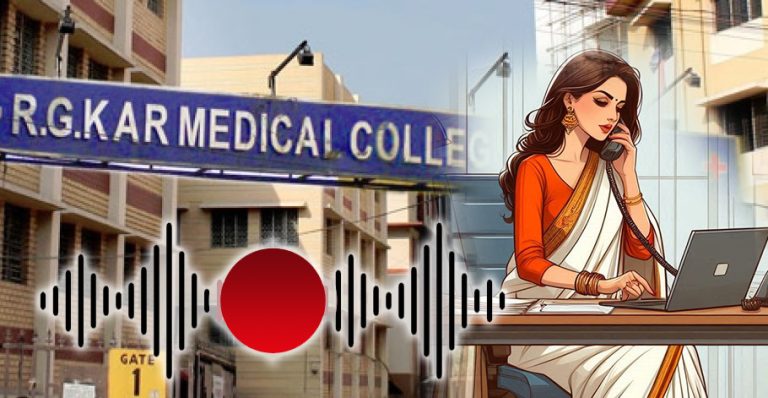
As the CBI continues probe into the rape and murder of a junior female doctor at RG Kar Medical College and Hospital in Kolkata, the recordings of the phone calls made to the family of the victim on the day of the incident have surfaced. As it was already revealed, the call recording shows that the hospital authorities had told the family said that the PG student died by suicide.

Recordings of three calls made from the hospital to the father of the victim have appeared, which proves that the hospital tried everything to hide that the woman was raped and murdered. The calls were made by a female employee of the hospital, who was reportedly the assistant superintendent of RG Kar Hospital.

In the first call made to the father of the victim, the female employee said that his daughter has fallen ill and she has been admitted at the hospital. When the father insists on knowing what has exactly happened, the employee refused to divulge further details, asking them to go to the hospital immediately instead. Sher said that doctor will tell them everything once they reach the hospital.

“Your daughter is not well. Can you please come to the hospital immediately?” the caller told the father. When he asked what has happened, she replied, “She is not well. We have admitted her. Can you come quickly?”

When the father still stressed for further details about the nature of the illness, the caller said, “The doctors will tell you what happened when you get here. We found your number and called because you are the family”.

The hospital then made a second phone call, saying that their daughter’s condition is very critical, and asking them to rush to the hospital. “Her condition is very critical. Please come as soon as possible,” she said. When the father again asked for details, she said, “The doctors will explain. Please come here quickly”.

When the father who was speaking to him, the caller said that she is the assistant superintendent. “I am the assistant superintendent, I am not a doctor,” she said.

When the victim’s mother asked whether the woman has fever, the employee reiterated that they should rush to the hospital. When the father asked if her condition is very serious, the employee said that the woman was in critical condition.

The woman was found dead in the hospital, as it is not possible that doctors at the hospital didn’t know that she was dead. Despite this, the hospital in the first phone call told the family that she was alive but ill. They also lied that woman was admitted at the hospital, when she was already dead.

In the third call made to the family, the same employee told them the woman has died, but claimed that she committed suicide. The employee said, ‘Perhaps she has committed suicide, she has died. Police have arrived, we everyone are at the hospital gate, calling from here.’

These call recordings raise serious questions on the role of the hospital in handling the case. In three phone calls made to the family, they lied to them, when the dead body of the trainee doctor was in front of them.

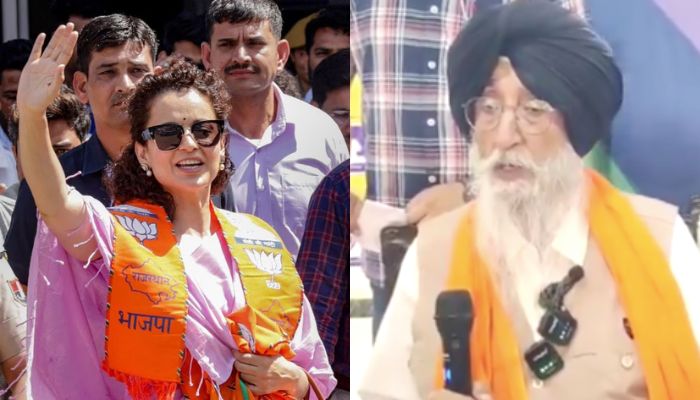
‘Kangana Ranaut has a lot of experience of rape’: Khalistan supporting former MP Simranjit Singh Mann says over the BJP MP’s remarks on farmers protest

On Thursday (29th August), former Sangrur MP and pro-Khalistan leader Simranjit Singh Mann sparked outrage after making disparaging statements about actor and BJP MP Kangana Ranaut saying that she has more “experience of rape” so she must know better. Simranjit Singh Mann’s outrageous comments came days after Ranaut claimed that “rapes” occurred during the farmers’ protest.

You can ask her (Kangana Ranaut) how rape happens so that people can be explained how rape happens. She has a lot of experience of rape,” Mann said.

When the journalist asked how can she have the experience of rape, Mann further added, “The same way people learn riding a bicycle, they have the experience of riding a bicycle. She has a similar experience of rape.”

Notably, during one of the promotion events for her upcoming movie, Emergency, Kangana Ranaut lauded the Union government for its actions during the farmer protest. “What happened in Bangladesh, it could have easily happened here too. bodies were seen hanging and rapes were taking place,” Kangana said while referring to criminal incidents that were widely reported during the first farmers’ protest.

Soon after, Kangana Ranaut started getting multiple threats for speaking up on the farmer’s protest as well as for her upcoming movie, Emergency. While some alleged ‘influencers’ threatened that she would meet an Indira Gandhi-like fate, others issued threats of physically assaulting her or filing a defamation case.

It is pertinent to mention that Simranjit Singh Mann is infamous for his support of Khalistani separatism. Back in 2022, he gave an interview wherein he justified his demand for Khalistan. Mann claimed he never wanted to become Chief Minister of Punjab. He wants to become the Prime Minister of Khalistan.

Simranjit Singh Mann has a long history of openly supporting the Khalistan movement. He had left Police Services because of Operation Blue Star, which was initiated by the Government of India to eliminate Khalistani terrorists lodged in Harmandir Sahib in Amritsar. Reports suggest his party workers raised pro-Khalistan slogans at Golden Temple on Operation Blue Star anniversary in 2022. Until his X account was withheld, Mann published several controversial posts including paying tribute to slain Khalistani terrorist Bhindranwale.

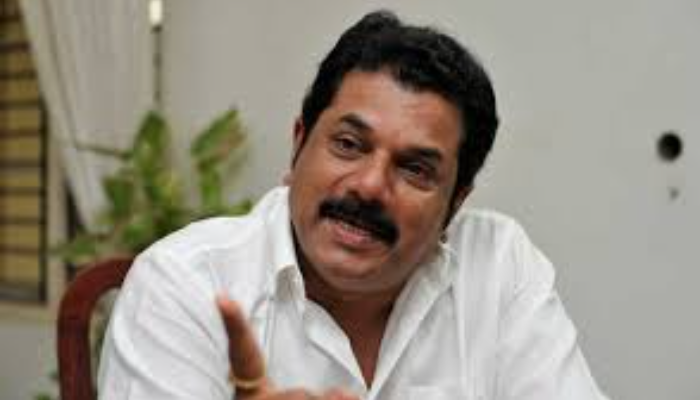
Malayalam Film Industry Sex Scandal: Kerala police files rape case against actor and CPI(M) MLA M Mukesh; 17 cases filed after release of Hema Committee report

On Thursday, 29th August, the Kerala Police registered a case of rape against actor and Communist Party of India (Marxist) MLA M Mukesh following a complaint from a fellow female actor. The incident allegedly took place in 2013. The Special Investigation Team (SIT), which was established by the Kerala government to look into sexual assault charges related to Malayalam Film Industry, recorded the actress’s testimony at her Aluva flat on 28th August.

The case was registered by the Marad police. He is booked for rape and “use of criminal force against women with intent to outrage her modesty” among other non-bailable offences.

The development transpired in the wake of the Justice Hema Committee report which highlighted the sexual assault and harassment of women in the Malayalam film industry. The actor-turned-politician, who is a two-time legislator from the Kollam Assembly seat, has refrained from attending public events and responding to any comments since the scandal broke out and shook the entire film industry. However, he demanded an impartial investigation into the accusations made against him and other film personalities in a Facebook post on 27th August.

“They had tried to blackmail me by demanding money. I am not ready to yield to such blackmail tactics. Truth should come out. I would initiate strong legal action against such persons,” Mukesh claimed while reacting to the allegations against him. Sections 376(1) which addresses rape, 452 (house trespass with the intent to hurt or assault someone), 509 (intend to insult a woman’s modesty by using words, gestures, or acts) and 354 (assault or use of criminal force against a woman with the intent to outrage her modesty) of the Indian Penal Code are the charges included in the case against Mukesh.

The opposition and some of Mukesh’s own party members are putting pressure on him to resign which has further escalated the matter. Annie Raja, the general secretary of the National Federation of Indian Women (NFIW) and a leader of the CPI, called for the actor’s resignation, emphasising that Mukesh is no longer morally qualified to serve as an MLA. “Now with a case being registered against him, he no longer has the moral or legal standing to continue in that post. He should resign from his post as MLA. It will also affect the image of the state government. The Left Front is pro-women,” Annie Raja said.

Ministers from the CPM and the Left Democratic Front (LDF) administration, however, have insisted that no action will be taken based just on the charges, but rather on the investigation’s findings. According to a close aide of Mukesh, the party has not asked him to vacate his position. Mukesh reportedly met with Chief Minister Pinarayi Vijayan in Thiruvananthapuram.

Meanwhile, on 29th August, LDF chairperson E P Jayarajan asked two Congressmen who were accused of sexual violation to step down in response to the call for Mukesh’s resignation. “Had they resigned, then the third MLA (Mukesh) too would have to resign. The law applies equally to all legislators. By asking for Mukesh’s resignation, you are protecting the other two,” he alleged.

The Hema Committee report, which exposed startling information regarding the pervasive sexual abuse against women in Malayalam cinema, was released a few days prior to the claims made against the seasoned actor. The actress, who accused Mukesh of sexually abusing her, revealed that he had attacked her in a Kochi hotel while promising to offer her acting roles. The actress added that Mukesh had raped her after forcing his way into her hotel room.

The police have also charged four more actors including Jayasurya, Maniyanpilla Raju, and Edavela Babu, in relation to the same actress’ accusations. “I am writing to report a series of incidents of physical and verbal abuse I suffered at the hands of Mukesh, Maniyanpilla Raju, Idavela Babu, Jayasurya, Advocate Chandrasekharan, production controller Noble and Vichu,” she disclosed and further narrated, “Once, as I was coming out from the toilet, Jayasurya hugged me from behind and even kissed me forcefully. After that, Idavela Babu expressed his interest in a sexual relationship with me.”

The actress said that the sexual and physical abuse had caused her to leave the Malayalam film industry and relocate to Chennai.

The cantonment police have opened a case against famous actor Jayasurya on allegations about him violating the woman’s modesty. Moreover, film production controller Noble, and leader of the pro-Congress lawyers association, V S Chandrasekharan has also been accused of sexual assault. All five of the accused were included in the seven names that the actress included in the numerous petitions that she filed with the SIT led by DIG Ajeetha Begum, to probe the cases of sexual harassment on 27th August.

Notably, the authorities also filed cases against veteran actor Siddique and director Ranjith after allegations of inappropriate sexual behaviour emerged against them. An actress who accused Siddique shared that he summoned her to his room at the Mascot Hotel, where he sexually assaulted her in the name of a film discussion. “He sexually abused me in that hotel. It was a trap. Whatever he is saying now is completely false,” she added.

The First Information Report was filed under sections 376 (rape) and 506 (criminal intimidation) at Thiruvananthapuram city police limits. Siddique also lodged a complaint with the Director General of Police (DGP), alleging that the accusations were a vile attempt to damage his reputation. He claimed to be innocent and asserted that he had only ever met the actress once in 2016 when her parents were present.

“The reputation of the entire Malayalam film industry is being deliberately tarnished by a group of people and it is essential that the persons behind this criminal conspiracy are brought to light. I request you to take effective action in this matter to bring out the truth and the perpetrators behind the criminal conspiracy of fabricating and publishing false and scandalous allegations,” Siddique further charged.

Ranjith had been forced to resign as chairman of the state organization Kerala Chalachitra Academy, while Siddique had been forced to resign as general secretary of the actors’ organization Association of Malayalam Movie Artistes (AMMA). The Association of Malayalam Movies Artistes (AMMA) also resigned on 27th August along with its president popular actor Mohanlal, and the other 17 members of the executive committee including Siddique and Edavela Babu. Seventeen cases have been filed against Malayalam actors and directors after a number of women came forward with allegations following the publication of the Hema Committee report.


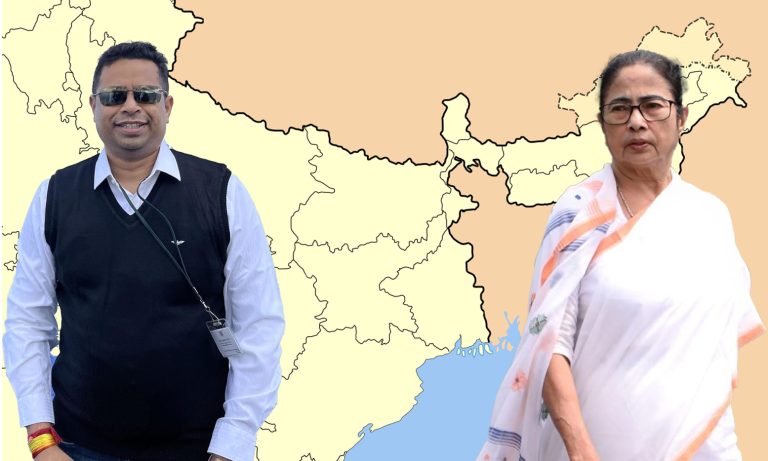
Mamata Banerjee will close the path to North East India by shutting down the Siliguri Corridor by 2026, says BJP MP Saumitra Khan

0

In a big allegation, BJP MP and West Bengal BJP Vice President Saumitra Khan on Thursday claimed that Mamata Banerjee might block the ‘Siliguri’s Chicken Neck Corridor’ that connects north-eastern states to the rest of India if she comes in power again in 2026.

Claiming that she might accommodate terrorists and criminals for her politics, Khan further urged the top courts and the government of India to take cognisance in this regard.

Reacting to the West Bengal CM Mamata Banerjee’s remarks, West Bengal BJP Vice President Saumitra Khan said, “I live in West Bengal and I fear that Mamata Banerjee will close the path to North East India by shutting down the (Chickens’) neck of India in the Siliguri portion by 2026 if the Government of India does not pay attention to it. She can do anything for politics. She will accommodate terrorists and criminals there for her politics. The Courts and the Indian government should see to this otherwise India would be in danger.”

On Himanta Biswa Sarma’s tweet against WB CM Mamata Banerjee’s remarks, Khan said, “Assam is a developing state. After Assam CM Himanta Biswa Sarma came to power, the people of Assam were getting work in Assam, at their homes. Employment is increasing and industries are established. On the other hand, Mamata Banerjee is destroying Bengal. I also think that she is connected to foreign powers.”

Earlier on Wednesday, while speaking at a public function in Kolkata, in response to BJP’s 12-hour long ‘Bengal Bandh’ call, Chief Minister Mamata Banerjee had claimed that Prime Minister Narendra Modi is using his party to cause a fire in Bengal over the Kolkata woman doctor rape and murder incident and warned that If you burn Bengal, other states including Assam, North-East, Uttar Pradesh, Bihar, Jharkhand, Odisha and Delhi too shall burn and your chair will be toppled.

“Some people think this is Bangladesh. I love Bangladesh; they speak like us and share our culture. But remember, Bangladesh is a separate country, and India is a separate country. Modi Babu is using his party to cause fire here. If you burn Bengal, Assam, North-East, Uttar Pradesh, Bihar, Jharkhand, Odisha, and Delhi too shall burn! We will topple your chair,” Mamata Banerjee said.

In a post on X, the Assam Chief Minister also targeted CM Mamata and said, “Didi, how dare you threaten Assam? Don’t show us red eyes. Don’t even try to burn India with your politics of failure. It does not suit you to speak divisive language.”

Speaking on a delegation visit to NHRC that includes BJP leaders, Khan said, “Senior Supreme Court lawyers are going to the NHRC (National Human Rights Commission) regarding the RG Kar issue. I will also go because those involved in the RG Kar hospital incident should be arrested immediately. We are going (to the NHRC) against the police lathi-charge on the protestors.”

Earlier in the day, citing the ‘Nabbana Abhijan’ rally and its aftermath, Saumitra Khan said that a group of concerned citizens will call upon the chairperson of the National Human Right Commission to submit a representation on the events that took place on August 27 and 28, which he said are a blatant violation of human rights.


(This news report is published from a syndicated feed. Except for the headline, the content has not been written or edited by OpIndia staff)

Israeli forces kill 5 Palestinian terrorists, including local terror leader, hiding inside a Mosque in the West Bank

On the intervening night of August 28 and 29, Israeli forces killed five Palestinian terrorists who were hiding in a mosque in the West Bank city of Tulkarem as per reports. The dead terrorists included a local terror leader, the IDF, police and Shin Bet say.

Israeli Defense Forces (IDF) had launched a large-scale operation in the city of Tulkarem on August 28. Along with that, reportedly, troops are also operating in the city of Jenin and the Far’a camp near Tubas as part of the operation. A day earlier, Palestinian media had reported that 11 Palestinians have been killed during the ongoing IDF operation, means the toll has now risen to 16 after neutralisation of these 5 terrorists.

In the West Bank city of Tulkarem, troops of Israel Border Police’s elite Yamam counter-terrorism unit battled a group of terrorists who had been holed up in a mosque, following intelligence of their whereabouts provided by the Shin Bet, the joint statement by Israel Security Forces says.

Reportedly, among the dead is Muhammad Jaber, known as Abu Shuja’a, who had been previously reported by Palestinian media to be the commander of the Palestinian Islamic Jihad’s local wing.

The Shin Bet says that Mohammed Jaber was involved in planning and directing many terror attacks, including the killing of Amnon Muchtar in a terror attack in Qalqilya in June. One of the terrorists was also arrested in the operation.

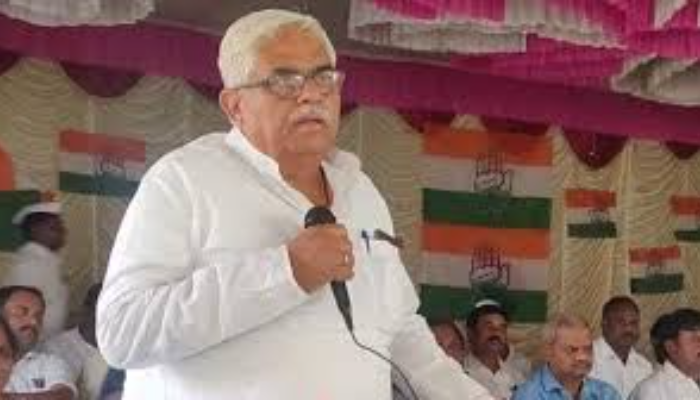
If Siddaramaiah’s power is curtailed, it won’t be long before people storm into PM Modi’s house, just like in Bangladesh: Karnataka Congress MLA GS Patil

Dreams of imitating the violence in Bangladesh to undemocratically topple Prime Minister Narendra Modi have been plaguing the Congress and its allies since the ouster of former Prime Minister Sheikh Hasina Wazed. Now, the same has been voiced by Karnataka Congress leader and Ron MLA GS Patil who declared that agitation akin to those in Bangladesh will erupt in India if Chief Minister Siddaramaiah’s powers are curtailed. The controversial statements were made during a protest organized by the Taluk Ahinda Union in Gajendragad. “The day is not far when people will storm Prime Minister Narendra Modi’s residence, similar to what happened in Bangladesh,” he threatened.

The MLA claimed that the Modi administration is attempting to undermine the Karnataka government headed by the Congress party via the governor. He charged that the interests of capitalists were given precedence over those of the general public by the central government and claimed that Siddaramaiah’s administration was pro-people. “Siddaramaiah is implementing schemes that support the development of all communities in the state.”

He further accused that the Governor had previously refused to authorize prosecution against Bharatiya Janata Party and Janata Dal (Secular) leaders despite chargesheets against them, but had now permitted Siddaramaiah’s prosecution based on one activist’s complaint. He also slammed BJP leadership and accused PM Modi and Home Minister Amit Shah of taking the country down a perilous path and accused them of causing political unrest in the nation.

Meanwhile, BJP leaders reacted strongly to his statement. Party’s Vijayapura Lok Sabha MP Ramesh Jigajinagi condemned his comments. He criticized the intelligence and comprehension of Congress leaders and charged them with deceiving the public. He argued that the Congress administration has failed to contribute to the state’s growth. Furthermore, he made fun of GS Patil’s assertion, noting that the Congress party’s leadership was disconnected from the practicalities of governance.

Notably, a few days prior Ivan D’Souza, a Congress MLC from the state threatened Governor Thawar Chand Gehlot of encountering a “Bangladesh-like fate” if he refused to revoke his directive for an investigation into Chief Minister Siddaramaiah. He announced, “If the President fails to send the Governor back, the Governor’s office will encounter a predicament similar to the one faced by Bangladesh’s prime minister, who was forced to vacate her position abruptly during the night. Our next fight will be with the slogan Chalo Governor’s office,” during a demonstration organised by his party.

On 17th August, Governor Thawar Chand Gehlot authorized and sanctioned an investigation against Siddaramaiah about the anomalies in the Mysuru Urban Development Authority’s (MUDA) allocation of substitute locations. Siddaramaiah responded by contesting the Governor’s decree at the Karnataka High Court. The trial court was ordered by the High Court to hold off on taking any further action against the Chief Minister until the 29th August hearing.

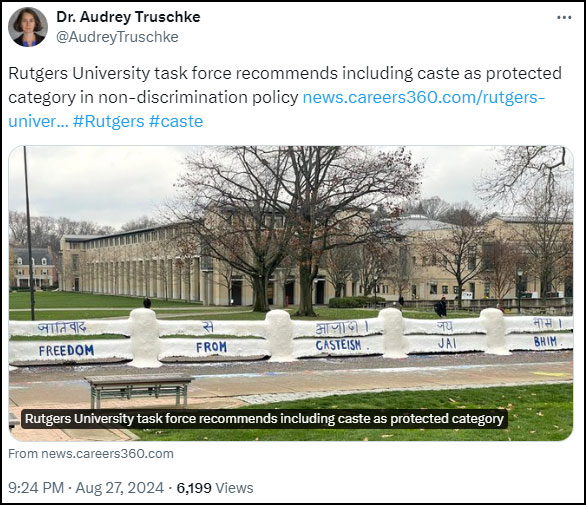
Rutgers University publishes report co-chaired by Audrey Truschke claiming caste discrimination a pervasive issue on campus, gives no evidence, cites unrelated examples

In August 2024, a task force at Rutgers University released a “Caste Report,” which they wanted to push forward to include “caste” as a new protected category under the university’s discrimination policy. The Rutgers Caste Report was co-chaired by Audrey Truschke – a leading anti-Hindu propagandist masquerading as a professor of history at this very university. Truschke has a long history of whitewashing heinous crimes committed by the Mughals against Indians, especially Aurangzeb.

Source: X

The task force said that discrimination based on caste is widespread on campus. It recommended a number of educational and policy measures that, presumably, would resolve the issue. However, the report supported these conclusions with a limited set of anecdotal testimonies. It has had no substantial evidence and has raised serious concerns over the objectivity and motivations behind the recommendations.

Its claims were based on the principle of caste-based discrimination on campus. “The Task Force Report claimed that the so-called caste discrimination is a significant problem at Rutgers and it is impacting students, faculty and staff.” The discrimination is preventing good students, faculty members, and staff from contributing to it and availing opportunities because of its hostile environment says the report by the task force.

Prevalence of Caste-Based Discrimination

It said that the report was of the view that discrimination based on caste is a pervasive issue at Rutgers. It maintained that such discrimination has devastating consequences for people coming from caste-oppressed backgrounds. Various testimonies were cited, such as a student mentioning his identity as Brahmin during a class, a housing situation in which the Dalit student faced discrimination because of caste. However, these testimonies were anecdotal and did not make up a representative sample from the campus population. The report itself acknowledged that an undue lack of systematic data on caste-based discrimination existed. It said, however, “that these personal stories do justify comprehensive policy changes.”

Recommendations for Policy Changes

With less-than-substantial evidence of caste-based discrimination at Rutgers to go on, the task force urged that caste be added to the university’s non-discrimination policy. Rutgers Caste Report further recommended that the university spread awareness on caste-related issues and conduct large-scale data collection of incidents related to caste discrimination. The report contended that these recommendations of the task force will help in maintaining inclusiveness at the campus and looking into issues that any form of caste-based discrimination does not get unnoticed on the campus of the University.

Absence of Evidence and Systematic Data

It should be stressed that even the report has admitted that there is an absence of systematic data on its claims of caste-based discrimination at Rutgers University’s campus. According to the report, the Office of Employment Equity reviewed no complaints on specific caste discrimination at the campus.

The fact that the Task Force has to confess that there is a lack of documented evidence of any type of caste-based discrimination at any level on the campus itself is indicative of the fact. However, the report still insisted that caste-based discrimination is a “problem” at the campus and recommended further data collection. It essentially called for policy changes based on unverifiable and limited anecdotes. By pushing for policy changes without substantial evidence has raised concerns if the issue of caste is being manufactured or exaggerated to serve specific ideological ends.

The report read, “At Rutgers, the Office of Employment Equity (OEE) enforces the Policy Prohibiting Discrimination and Harassment, 60.1.12, which this Task Force recommends be expanded to include caste as a protected category. A review of OEE’s records showed no complaints that pertained to caste specifically. This absence of data is inconsistent with the “Testimonies about Casteism and Caste-Based Discrimination at Rutgers.” This underscores the report’s recommendations to enhance Rutgers policies against caste-based discrimination and provide education to all members of the Rutgers community on the harms of casteism.”

Questionable Testimonies and Examples

For any study to become substantial and trustworthy, the data should be verifiable and if there are testimonies they should be clear enough with proof to support the claims. However, in this case, the anecdotes used in the report are questionable and often unrelated to the institutional discrimination

For example, one of the stories mentioned in the report involved a student discussing his family’s caste-based marriage preferences. It is unclear how it affects the students or anyone on the campus as it is just a discussion and every family or individual has his or her own preferences. Claiming that this leads to caste-based discrimination on the campus is overstretching and exaggerating the matter for vested interests.

Another story involved a Dalit student being advised by her family not to reveal her caste to anyone on the campus. This is an unnecessary fear being rooted by elders of the family into the children. The student in question here was going to study at a university in the US where caste-based discrimination is mostly not heard of until recently when the CISCO Caste Case made the headlines and it became the baseline to import the caste system to the US from India and create a non-existence fear of it. 

These examples in no way demonstrated systematic discrimination at the campus or provided a basis for altering the policies at the university. The testimonies reflect individual social tensions rather than institutional biases.

Potential Ideological Bias

The Rutgers Caste Report was co-chaired by Audrey Truschke who has a history of anti-Hindu sentiments. It raised questions about the objectivity of the findings. Truschke has a history of portraying Hindu culture and texts negatively and aligning herself with groups that have been accused of propagating Hinduphobia. Her involvement in the task force suggests that there is a potential bias in framing the issue of caste discrimination at the campus.

Notably, Truschke has frequently distorted facts to fit her ideological narratives. She often positions Hinduism in a negative light. Her role in the task force and the continued push for caste to be a protected category despite the lack of data raises questions about the motivation behind the report. It appears that she will use this report as a vehicle to promote a specific narrative that aligns with her previously documented biases against the Hindu community.

SB403: A failed precursor to the Rutgers Report

For the unaware, the Rutgers Caste Report by the task force closely follows the narrative of California’s SB403 legislation that sought to add caste as a protected category under state civil rights laws. SB403 was introduced in early 2023 and gained support from several activist groups. However, it faced severe criticism due to a weak evidentiary basis, which was the Cisco Caste case.

The Cisco Caste case was a lawsuit where two engineers were accused of caste discrimination against a Dalit colleague. However, this case was later withdrawn because of lack of evidence. In effect, serious criticism walloped the Californian Department of Fair Employment and Housing for filing a case without concrete evidence. The outcome of the case exposed the lack of credible evidence supporting the claim that caste-based discrimination is widespread in the US companies where Indians are employed.

Notably, California Governor Gavin Newsom vetoed SB403. He stated that the existing laws were enough to cover all forms of discrimination including caste under broader categories like race, religion and national origin. The failure of SB403, however, did not deter the activists and it appears that they continued to find ways to set the narrative that caste discrimination is widespread in the US. This time, they used the Rutgers campus to propagate the agenda and to set a base for the policy change at university campuses.