

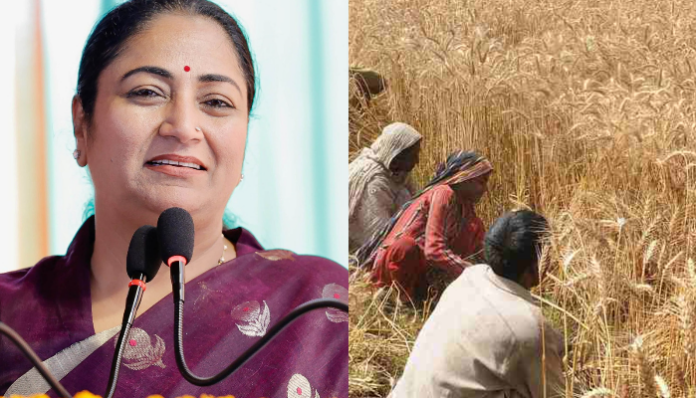
On 29th April (Wednesday) Chief Minister Rekha Gupta announced significant relaxations in wheat procurement restrictions in light of this year’s poor weather conditions. According to her, exceptional relaxations on quality criteria for wheat procurement have been allowed for all districts of Delhi for the Rabi marketing season 2026–2027. The move was made in response to a proposal made by the Delhi government to the centre on 21st April. The relaxations will take effect at the start of the current procurement season.
मुख्यमंत्री श्रीमती रेखा गुप्ता के नेतृत्व में दिल्ली सरकार लगातार किसानों के हितों को महत्व दे रही है।
— CMO Delhi (@CMODelhi) April 29, 2026
🔹 मौसम से प्रभावित गेहूं की खरीद को मंजूरी प्रदान की गई।
🔹 70% तक लस्टर लॉस वाले गेहूं की भी खरीद सुनिश्चित की जाएगी।
🔹 सिकुड़े और टूटे दानों की सीमा 15% तक बढ़ाई गई है।
🔹… pic.twitter.com/Wn9AYixkEs
Officials stated, “Under the revised norms, wheat with up to 70% loss of lustre will be accepted. Additionally, the permissible limit for shrivelled and broken grains has been increased from 6% to 15% to ensure that weather-affected produce qualifies for procurement. However, to maintain quality balance, it has been specified that broken and slightly broken grains together must not exceed 6%.”
According to Gupta, wheat purchased under these lenient terms would be managed differently from ordinary stock, with a unique accounting system to guarantee transparency. “Such grain will be stored independently from regular stock, with a distinct accounting system to ensure transparency,” she mentioned.
Gupta further stated that this wheat will not be stored for long and will be utilised as soon as possible. She highlighted that that wheat obtained in line with these provisions will only be employed in Delhi to satisfy regional food demands.
“Ensuring fair value for the hard work of our ‘annadatas’ is our responsibility. The decision is a significant step towards providing relief to farmers, safeguarding their interests, and strengthening food security. The Delhi government will bear any financial or operational implications arising from this decision,” she noted. The chief minister instructed officials to carry out the procedure in a “transparent, accountable, and time-bound manner” in order to directly benefit farmers and consumers.
