

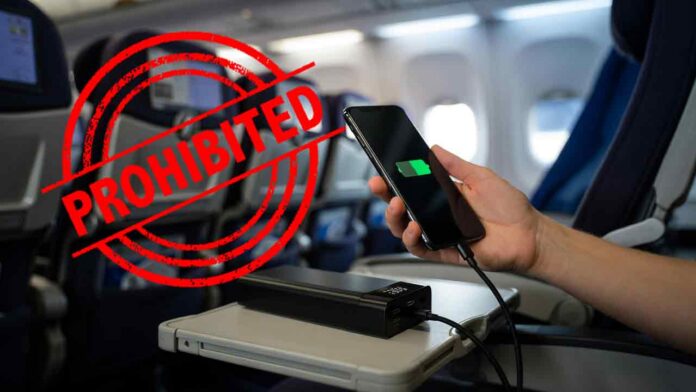
The Directorate General of Civil Aviation (DGCA) has introduced stricter regulations on the carriage and use of power banks on commercial flights, effective immediately, in response to growing concerns over lithium-ion battery fires. The new measures prohibit passengers from using power banks to charge mobile phones, laptops or any other portable electronic devices during flights.
The decision came after reports of a series of incidents involving overheating and fires caused by lithium batteries, both in India and internationally. Notable cases include a power bank catching fire on an IndiGo flight taxiing at Delhi airport in October 2025, as well as similar events on international carriers that prompted global airlines like Emirates and Singapore Airlines to impose restrictions earlier in the year. The DGCA highlighted that lithium battery fires can be intense, self-sustaining and difficult to extinguish, posing a significant risk in the confined environment of an aircraft cabin.
“The widespread usage of lithium batteries in various rechargeable devices has led to an increase in carriage of lithium batteries by air. Power banks, portable chargers, and similar devices containing lithium batteries can act as ignition sources and potentially initiate on-board fires,” the circular issued by DGCA said.
Under the updated guidelines outlined in a Dangerous Goods Advisory Circular issued in November 2025 and now being strictly enforced, power banks and spare lithium batteries must be carried exclusively in hand baggage, and they can’t be kept in checked-in baggage. They are also prohibited from overhead bins, as storage there could delay detection of smoke or fire.
“Lithium batteries placed in overhead stowage bins or within carry-on baggage may be obscured, difficult to access, or not readily monitored by passengers or crew members. This may result in delayed detection of smoke or fire and response actions, increasing the potential hazard to flight safety,” DGCA added.
If hand luggage is gate-checked due to space constraints, airlines must ensure power banks remain with the passenger. Passengers are also advised to immediately alert cabin crew if any device shows signs of overheating, emitting smoke or unusual odours.
Airlines have been directed to make in-flight announcements about these restrictions, review their safety risk assessments for lithium batteries, and report all related incidents promptly to the DGCA. Airports are encouraged to display educational materials on the risks and safe handling of such devices. Existing capacity limits remain in place, allowing power banks up to 100 watt-hours without approval, those between 100 and 160 watt-hours with airline permission, and banning anything above 160 watt-hours.
While power banks are still permitted in carry-on luggage, passengers have been urged to fully charge their devices before boarding and check specific airline policies for compliance. Major Indian carriers, including IndiGo and Air India, have begun implementing the directives to prioritise passenger and crew safety.
