

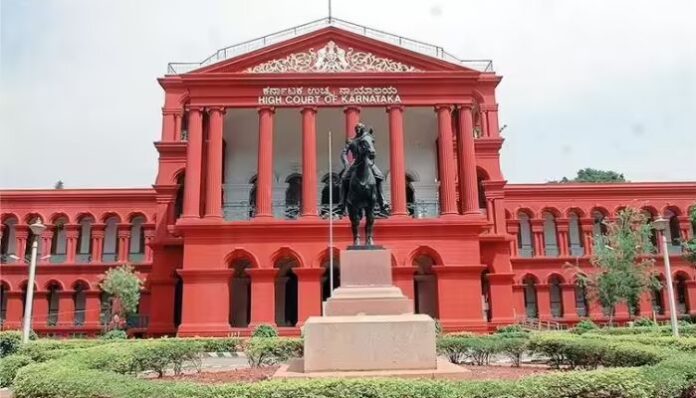
On Friday, 30th January, the Karnataka High Court rejected a plea to quash a criminal case filed against a man for sharing obscene and highly offensive pictures of Hindu gods in a WhatsApp group. The court was very clear that the freedom of speech cannot be used as a shield to protect material that offends religious sentiments and has the potential to disturb communal harmony.
A single-judge bench of Justice M Nagaprasanna rejected the petition filed by Sirajuddin, a 30-year-old resident of Dakshina Kannada. He had filed the petition to quash the criminal case registered against him under Section 295A of the Indian Penal Code, which pertains to deliberate and malicious acts intended to outrage religious feelings, and Section 67 of the Information Technology Act, which is related the publication of obscene content online.
Complaint over offensive content in WhatsApp group
The case arose from a complaint filed in 2021 by K Jayaraj Salian. In the complaint, Salian said that after he joined a WhatsApp group through a link sent to him, he realised that obscene, vulgar, and highly objectionable pictures of Hindu gods were being circulated in the group. He also claimed that some political personalities were being targeted through such content.
Salian added that the WhatsApp group had six administrators and close to 250 members. He claimed that the content was circulated with the intention of insulting the Hindu religious beliefs.
Court finds content prima facie offensive
After examining the investigation records and the images circulated in the group, the High Court observed that the material was clearly offensive. The bench said the content was so objectionable that reproducing it in a judicial order would itself be inappropriate.
“The material on its face tends to outrage religious feelings and disturb communal harmony,” the court noted.
Justice Nagaprasanna also rejected the argument that the content was protected under free speech. He observed that even if an act does not immediately lead to disorder, content that has the potential to disrupt public order can still be restricted. “In the garb of free speech, anything and everything cannot be countenanced,” the judge said.
The court also rejected the petitioner’s contention that a previous sanction is necessary for the registration of an offence under Section 295A of the IPC. The court held that the previous sanction is necessary only at the time of taking cognisance of the case by the court, and not at the time of registration of the case or investigation.
The High Court refused to intervene in the ongoing investigation and held that if the investigation is halted at this point, it would amount to suppressing a lawful investigation into serious allegations.
