

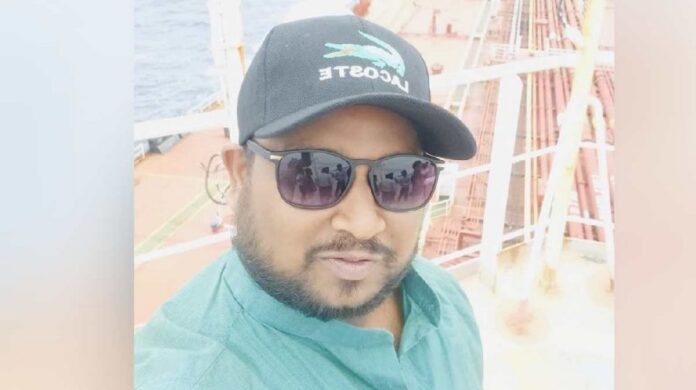
Rakesh Chauhan, a resident of Deoria in Uttar Pradesh, was reported to have died in Venezuela in May. His employer allegedly informed the family that he had suffered a cardiac arrest. However, when his body was repatriated to India nearly a month later, the absence of an autopsy report from Venezuelan authorities raised serious concerns.
In a statement posted on X, the FSUI alleged that Chauhan’s body was sent back without any official medical records explaining the cause of death. The organisation said a re-autopsy conducted in India uncovered a shocking finding: almost every major internal organ was missing.
According to the union, the second post-mortem found that Chauhan’s brain, heart, lungs, liver, kidneys, spleen, pancreas, stomach, intestines, thyroid, hyoid bone, larynx and trachea were all absent. Doctors also documented extensive surgical stitching—22 stitches running from the neck to the pubic region and another 21 stitches extending from ear to ear—suggesting that a full autopsy had previously been performed. Since no organs remained for examination, the Indian medical team stated that the exact cause of death could not be established.
The FSUI said the condition of the body raises troubling questions about transparency, the treatment of Indian seafarers abroad, and the accountability of foreign authorities. The union has called for an independent probe, intervention by the Indian Embassy in Venezuela, disclosure of the original autopsy findings, and compensation for Chauhan’s family.
Family alleges inconsistent accounts
Chauhan had travelled to Venezuela in November 2025 after being recruited by Xfinity to serve aboard a merchant vessel.
His family says the sequence of events shared by the company changed over time. Initially, they were informed that Chauhan had fallen on the ship and suffered serious injuries. They were later told his condition was critical, with only a slim chance of survival. By the evening, the company informed them that he had died. According to the family, company officials attributed his death to the injuries sustained in the fall.
The family also claims they were assured that Chauhan’s body would be returned within a week. Instead, his remains reached Deoria only on June 4, nearly a month after his death.
“We were kept completely in the dark,” Chauhan’s father, Ram Dev Chauhan, said. He alleged that while an autopsy had already been conducted abroad, the second post-mortem ordered by the district administration in India revealed that all internal organs were missing, making it impossible to determine the cause of death. The family has demanded an investigation into both the company and the circumstances surrounding Chauhan’s death.
What the Indian post-mortem found
After the body arrived in Deoria, local doctors initially declined to conduct another autopsy, noting that the remains bore clear signs of a previous post-mortem. Following orders from the District Magistrate, however, a second examination was carried out.
The report recorded long stitched incisions running from the neck to the lower abdomen and across the back of the head. It also noted that the body had remained in deep freeze from May 7 to June 5.
Doctors found that the cranial cavity had been opened and that the brain, meninges and major blood vessels were absent. The examination further recorded the absence of the thyroid, hyoid bone, larynx, trachea, heart, lungs, pericardium, coronary arteries, stomach, intestines, liver, gall bladder, spleen and kidneys. With no internal organs available for forensic examination, the report concluded that the cause of death could not be determined.
Why this has raised questions
In forensic practice, organs are often removed during an autopsy for detailed examination and laboratory analysis. However, such procedures are ordinarily accompanied by a formal post-mortem report documenting the findings and explaining the cause of death.
In Chauhan’s case, the family and the FSUI allege that neither Venezuelan authorities nor the company provided any autopsy report or medical records explaining why the organs had been removed or how the sailor died. It is this absence of documentation, coupled with the inability of Indian doctors to independently ascertain the cause of death, that has intensified calls for a thorough investigation.
