

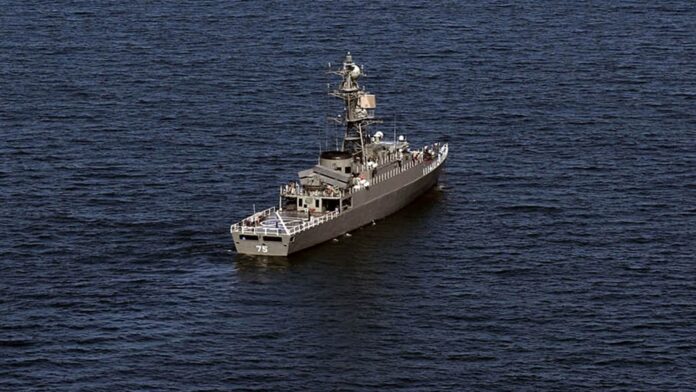
In a dramatic escalation of the widening Middle East conflict, the United States has reportedly sunk an Iranian naval warship in the Indian Ocean, just off Sri Lanka’s southern coast. The strike, carried out by a US Navy submarine late Tuesday night, destroyed one of Iran’s most modern frigates.
US Secretary of Defence Pete Hegseth confirmed that the American military was responsible for the attack. According to him, the Iranian vessel had been operating in international waters near Sri Lanka when it was hit.
BREAKING: US defence secretary Hegseth confirms that it torpedoed & sunk Iran Ship IRIS Dena in the Indian Ocean pic.twitter.com/i1rd48otVe
— Sidhant Sibal (@sidhant) March 4, 2026
“An American submarine sank an Iranian warship that believed it was safe in international waters,” Hegseth said. “Instead, it was struck by a torpedo and sent to the bottom.”
If confirmed, the strike would mark the first time since the Second World War that the United States has targeted an enemy naval vessel in the Indian Ocean.
Sri Lankan authorities were alerted to the incident early Wednesday morning. Foreign Affairs Minister Vijitha Herathsaid the Sri Lankan Coast Guard received a distress signal at 5:08 a.m. from an Iranian naval ship identified as IRIS Dena. Crew members reported a powerful explosion onboard.
Within hours, Sri Lanka deployed rescue vessels to the site. “By 6 a.m., we had dispatched one naval ship, and another followed shortly after,” Herath said. He added that Sri Lanka was obligated to respond under international maritime search and rescue conventions.
The damaged vessel was located about 44 nautical miles (81 km) south of the coastal city of Galle, outside Sri Lanka’s territorial waters but still within its exclusive economic zone.
Rescue teams have so far saved 32 sailors, while 28 bodies have been recovered. The frigate reportedly had around 140 personnel onboard, leaving many still missing as search operations continue.
Sri Lankan Navy spokesperson Buddhika Sampath said the focus of the ongoing mission remains on finding survivors.
Back-channel communications from Iranian diplomats in Colombo reportedly suggest Tehran believes the ship was deliberately targeted by the United States. According to a senior Sri Lankan official, Iranian representatives claim the vessel’s defensive systems may have been disabled using electromagnetic interference before the strike.
Another Sri Lankan defence source said the warship appeared to have been hit by two torpedoes, both striking near the vessel’s midsection.
Security analyst Rohan Gunaratna, who maintains close contacts with Sri Lanka’s defence establishment, also confirmed he had been briefed that the attack was carried out by a US submarine.
The destroyed vessel, IRIS Dena, was one of the newest frigates in Iran’s navy. It carried a range of weaponry, including surface-to-air missiles, anti-ship missiles, cannons, machine guns and torpedo launchers. The ship is believed to have been sailing home after participating in an international fleet review hosted by India’s navy last week.
The attack comes amid rapidly intensifying hostilities between the United States, Israel, and Iran. Over the weekend, US and Israeli forces launched coordinated strikes on Iranian targets. In retaliation, Iran has fired missiles across the Middle East and temporarily halted oil shipments through the Strait of Hormuz, one of the world’s most critical energy corridors.
The confrontation has already resulted in significant casualties among Iran’s leadership, including the reported death of Supreme Leader Ayatollah Ali Khamenei, along with several senior military officials.
Meanwhile, Sri Lanka’s President Anura Kumara Dissanayake expressed solidarity with the United Arab Emiratesafter it was targeted in Iranian retaliatory strikes. In a social media post, he said Sri Lanka “stands firmly with the UAE and is ready to assist in any way possible.”
With tensions continuing to rise across the region, the sinking of an Iranian warship in the Indian Ocean signals that the conflict is no longer confined to the Middle East and may now be spilling into the wider Indo-Pacific.
