

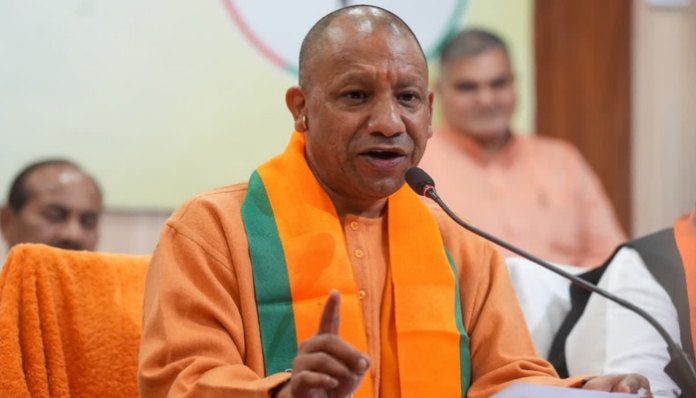
The Yogi Adityanath Government is preparing a long-term roadmap to strengthen Uttar Pradesh in technology, digital infrastructure and agriculture. During a review meeting held at his official residence on Wednesday, 20th May, Chief Minister Yogi Adityanath discussed the Uttar Pradesh Data Centre Cluster, Project Ganga and reforms linked to wheat processing and mandi charges.
UP data centre cluster to support the state’s AI mission
Chief Minister Yogi Adityanath said the Uttar Pradesh Data Centre Cluster project will become the base infrastructure for the state’s AI Mission. He made it clear that the project will not remain limited to the NCR region and will be linked with other parts of the state as well.
Officials informed the meeting that the project is being planned as a long-term strategy to turn Uttar Pradesh into India’s biggest AI compute power centre and also a major hub in the Global South. The idea is to build Uttar Pradesh as a global centre for Artificial Intelligence, data centres, cloud infrastructure and advanced digital manufacturing.
According to the plan, the initiative aims to help achieve a $5 trillion economy target, generate over 1.5 lakh direct jobs and build a 5 GW AI Compute Corridor by 2040. Officials described it not as a single project but as a new economic blueprint for the next 50 years.
Bundelkhand to become AI power centre, Lucknow planned as ‘AI City’
The Chief Minister suggested that the project could begin from the Bundelkhand Industrial Development Authority (BIDA) region because of the large land availability there.
He also directed officials to work on developing Lucknow as an “AI City” and asked them to engage with major technology companies, including the Tata Group.
During the meeting, officials presented Uttar Pradesh as “Asia’s Most Secure, Scalable and Connected Inland AI Territory”. They said almost all major fibre networks of India pass through the state, and UP is linked with every marine cable landing point in the country.
The presentation highlighted that network latency inside Uttar Pradesh remains below 5 milliseconds, while connectivity to digital centres such as Mumbai and Chennai stays within 5-12 milliseconds. Officials said these advantages make the state attractive for global technology firms because of lower costs, easier expansion and stronger network backup systems.
Project Ganga aims to take high-speed internet to villages
The Yogi Government also reviewed Project Ganga Government Assisted Network for Growth and Advancement, which focuses on expanding broadband connectivity in rural Uttar Pradesh.
The project is planned not only for internet access but also for telemedicine, digital education, skill training, e-governance services, digital jobs and rural entrepreneurship.
The scheme targets training more than 10,000 youths as Digital Service Providers (DSPs). It is expected to create around 50,000 direct jobs and over one lakh indirect employment opportunities.
The Chief Minister said selected youth should receive quality training, and a system should be developed so that survey companies can also use their services. He also stressed the fast expansion of optical fibre networks, transparency in implementation and early incentives for digital entrepreneurs.
Wheat processing push and mandi reforms under review
The meeting also focused on boosting in-house wheat processing in the state. Chief Minister Yogi Adityanath called for reforms in mandi tax and mandi fee systems and said mandis should become cleaner, modern and better managed.
He asked officials to ensure proper upkeep, cleanliness, painting work, festival lighting and removal of encroachments in mandis.
Officials informed the meeting that Uttar Pradesh remains the country’s biggest wheat-producing state. Wheat output for 2025-26 is estimated at 372 lakh metric tonnes, while total availability may reach 407 lakh metric tonnes. Nearly 2.88 crore farmers are linked with wheat production.
Despite this, a large quantity of wheat still moves outside the state as raw grain because processing capacity remains underused, leading to loss of value addition, GST collection and employment opportunities.
At present, Uttar Pradesh has 559 roller flour mills with a total milling capacity of 218.4 lakh metric tonnes, but actual utilisation stands at only 126.45 lakh metric tonnes. More than 40,000 atta chakkis are also operating across the state.
The report presented in the meeting said that increasing wheat processing within Uttar Pradesh could boost jobs, electricity use, GST collection and food industries.
The committee suggested exempting wheat bought by registered mills for processing within the state from mandi fees and development cess. However, this relief would not apply to trading activities.
Food security concerns were also discussed
Chief Minister Yogi Adityanath also referred to the possible impact of El Nino and said changing weather conditions could affect crops in the coming years. He stressed that Uttar Pradesh must stay prepared and maintain strong food grain reserves to ensure food security in the future.
