

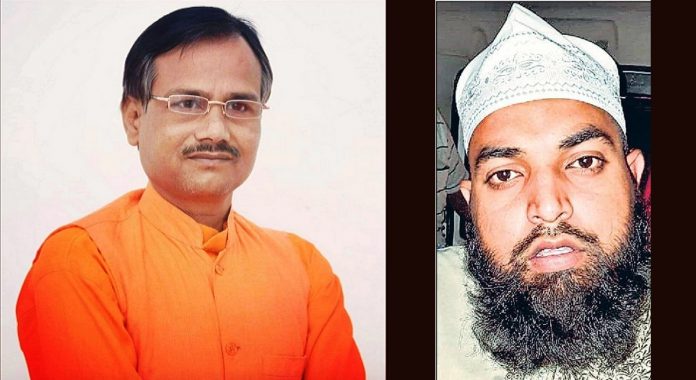
A maulana named Sayyed Kaifi Ali of Bareilly, who was detained for questioning in the Kamlesh Tiwari murder case by the Anti-Terrorism Squad (ATS) earlier this week has now been arrested by the police on charges of helping the killers of Hindu Samaj Party leader, Kamlesh Tiwari.
According to a report by Zee News, the maulana was arrested after a long interrogation under Section 216 of the Indian Penal Code (IPC). It is being said that the killers, namely Ashfaq and Moinuddin, had visited the cleric in Bareilly after they killed Tiwari in Lucknow on October 18.
In a major breakthrough in the gruesome murder case, Gujurat ATS had nabbed the two prime accused, Sheikh Ashfaq Hussain and Pathan Moinudddin Ahmed from Gujarat-Rajasthan border on October 22. Sources in the police said that Ashfaq and Moinudddin had spoken to the maulana immediately after the murder of Tiwari.
According to the agencies, the last location of the two suspected killers was traced to Bareilly. The ATS picked up another youth from Pilibhit along with the maulana after agencies found that he had spoken with Syed Asim Ali, who was arrested from Nagpur for his alleged role in the murder conspiracy. On Tuesday, Asim Ali was brought to Lucknow from Nagpur by Lucknow police.
Until now, the Gujarat police as nabbed six people in connection with the case.
Also Read- After brutally murdering Kamlesh Tiwari, Ashfaq spoke to his wife and father: Listen to the call
Moinuddin, along with Ashfaq, was arrested by Gujarat ATS on October 22 from Gujarat-Rajasthan border after being on the run for four days. While Moinuddin worked as Zomato delivery boy, Ashfaq, second man arrested for the murder of Kamlesh Tiwari, worked as a medical representative in a pharma company. He had forged his colleague’s Aadhaar to pose as Rohit Solanki, a Hindu rights activist, to gain the trust of Tiwari.
Tiwari, a former Hindu Mahasabha leader, was assassinated at his Lucknow office by Ashfaq and Moinuddin from Surat. The Uttar Pradesh police and Gujarat ATS sprung into action to blow the lid off a Surat-based Jihadi group that was indoctrinated by one of the accused who planned the murder, Maulana Mohsin Sheikh. Two other conspirators, Rashid Pathan and Faizan Sheikh have been arrested on late Tuesday evening from Surat in Gujarat in connection with the murder.
While Ashfaq and Moinuddin will be handed over to the UP Police for further investigation, the other three accused have already been sent to UP on transit remand.


