

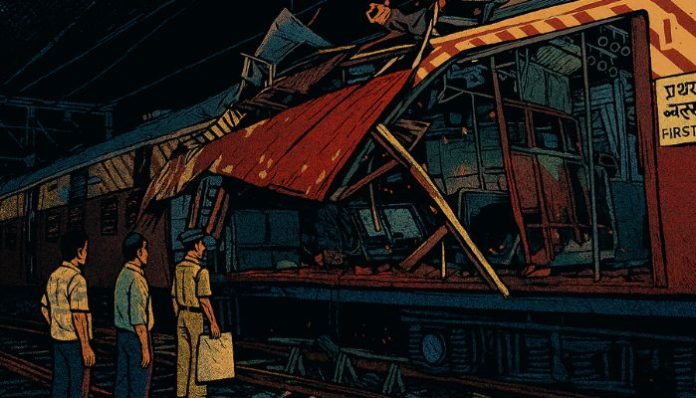
On 21st July, the Bombay High Court acquitted all 12 individuals who were earlier found guilty in the 2006 Mumbai train blasts case. In 2015, a special MCOCA Court had sentenced five of them to death and the remaining to life imprisonment.
A two-judge bench comprising Justice Anil Kilor and Justice Shyam Chandak gave the judgment. They observed that the majority of the evidence and statements of witnesses were not trustworthy.
OpIndia accessed both the MCOCA Court judgment from 2015 and the Bombay High Court judgment from 21st July 2025 to create a timeline of the events, trials, appeal in the High Court and finally the current judgment.
The evening that shook Mumbai
On 11th July 2006, the city of Mumbai was struck by a series of coordinated bomb blasts that targeted its life, the suburban railway network. Between 6:24 PM and 6:28 PM, seven powerful explosions occurred inside first-class compartments of local trains on the Western Railway line. The blasts took place at or near the stations of Matunga Road, Mahim, Bandra, Khar, Jogeshwari, Borivali, and Mira Road, affecting trains bound for both Churchgate and Virar. As the blasts took place at peak hours, there were thousands of commuters in the trains at the time of the incident.
According to the court documents, each bomb was placed inside a pressure cooker and hidden in black Rexine bags. The bags were reportedly kept in overhead luggage racks of the first-class compartments. The explosives were made of RDX and ammonium nitrate, combined with ball bearings to maximise the damage. Timer devices were reportedly used to synchronise the blasts.
Government records stated that 187 people lost their lives and 829 others sustained injuries of varying severity. The compartments were completely destroyed. Bodies were scattered across platforms and tracks. FIRs were registered at Railway Police Stations at Borivali, Bandra, Mahim, Khar, Matunga Road, and Jogeshwari based on the location of each incident.
As the scale and precision of the attacks was of massive scale, the authorities suspected a larger conspiracy. The Maharashtra Anti-Terrorism Squad (ATS) took over the investigation the next day. The manner in which the bombs were planted and the locations were selected suggested there was meticulous planning behind the attacks. In the detailed findings, the trial court later described the event as a deliberate attempt to cause mass casualties and terror, executed during peak hours when the trains were most crowded.
Cases filed across Mumbai, ATS takes over the probe
In the immediate aftermath of the serial bomb blasts on 11th July 2006, multiple FIRs were registered. Each of them was registered under Sections 302 (murder), 307 (attempt to murder), 326, 324, 120B (criminal conspiracy), and 427 of the Indian Penal Code, along with provisions under the Indian Railways Act, Explosives Substances Act, and Prevention of Damage to Public Property Act.
The ATS later clubbed the FIRs for investigation under a common conspiracy based on the interlinked nature and scale of the attacks. A consolidated case was registered by the ATS Kalachowki Unit, Mumbai, and the case was treated as a single, large conspiracy spanning multiple locations and involving organised crime syndicates.
The judgment recorded that during the investigation, the ATS invoked the Maharashtra Control of Organised Crime Act (MCOCA). On 30th September 2006, the competent authority sanctioned the application of MCOCA against all accused. Later, based on further sanction dated 11th January 2007, other specialised laws, including the Unlawful Activities (Prevention) Act (UAPA) and Prevention of Damage to Public Property Act, were applied.
Detailed technical analysis was carried out by the ATS, including forensic examination of blast sites, recovery of explosive materials, and post-blast residue analysis. Over time, the investigation led to the arrest of 13 individuals, most of them from Maharashtra and neighbouring states. Several others were reported absconding during the trial. Several accused were said to be members of the banned Students Islamic Movement of India (SIMI) and had purported links with Lashkar-e-Taiba operatives from Pakistan. According to the judgment, the prosecution’s case relied heavily on confessional statements recorded under MCOCA, forensic recovery, witness testimonies, and disclosures made during police custody. The ATS said that the conspiracy was planned across the border in Pakistan and executed with local logistical help.
The long trial and 2015 convictions
Formal trial proceedings began after the filing of the consolidated chargesheet in the ATS Kalachowki case in the Special MCOCA Court. Charges were framed against 13 accused under a wide range of laws, including the Indian Penal Code (IPC), the Maharashtra Control of Organised Crime Act (MCOCA), the Unlawful Activities (Prevention) Act (UAPA), the Explosives Act, the Railways Act, and the Passport Act.
The first chargesheet was filed on 30th November 2006 and the final verdict came almost a decade later on 11th September 2015. During this period, the court examined 192 prosecution witnesses, including eyewitnesses, medical officers, forensic experts, ATS officers, and panch witnesses. The evidence included site reports, medical post-mortem documentation, seizure panchanamas, forensic lab reports, and statements made under MCOCA provisions.
The prosecution’s case centred around a conspiracy hatched in Pakistan between the operatives of LeT and Indian members of SIMI. The court noted that the accused persons had reportedly undergone training in Pakistan-occupied Kashmir and later assisted in assembling bombs, conducting recces of train stations, and transporting the explosives. Pressure cookers filled with RDX and ammonium nitrate were allegedly prepared in a rented room in Govandi and then planted on seven different trains departing Churchgate that evening.
Confessional statements recorded under MCOCA were heavily relied upon. While many of these were later retracted, the trial court, after a detailed analysis, admitted them as valid under the special law. The court also admitted material evidence showing the procurement of pressure cookers, travel of accused to various training and execution locations, and circumstantial evidence that allegedly linked them to the blasts.
The court convicted 12 accused namely Kamruddin S Ansari, Ehtesham K Siddiqui, Faisal M Shaikh, Zeeshan M Siddiqui, Sohail S Shaikh, Asif A Khan, Mohammad Sajid Ansari, Majid S Shafi, Muzammil S Shaikh, Tanvir R Ansari, Navin A Khan, and Sharif A Khan. The only accused acquitted was Abdul Wahid Shaikh due to lack of admissible evidence. Five of them were handed death sentences and the remaining received life imprisonment.
The court observed that the blasts were not only a brutal act of terrorism but also an attack on the sovereignty of the nation. It accepted the prosecution’s case of a meticulously planned operation and concluded that the accused played direct and active roles in its execution.
Post-conviction – Appeals filed, legal battle and the acquittal
Following the judgment in 2015, multiple appeals were filed in the Bombay High Court. After another decade, on 21st July 2025, the Bombay High Court overturned the 2015 conviction of the 12 accused. The Division Bench acquitted all the accused and stated that the prosecution had failed to prove its case beyond reasonable doubt.
The High Court noted that the judgment was passed after re-examination of the trial court record, including witness testimonies, forensic reports, confessional statements, and procedural compliance. Notably, the prosecution’s case heavily relied on confessional statements recorded under Section 18 of the MCOCA. While such confessions are admissible under the special law, the High Court noted on several instances in the judgment that confessions alone were not sufficient. The court reiterated that confessions, especially those made in police custody, cannot form the sole basis of conviction unless supported by independent and credible evidence. According to the High Court judgment, that evidentiary support was missing in this case.
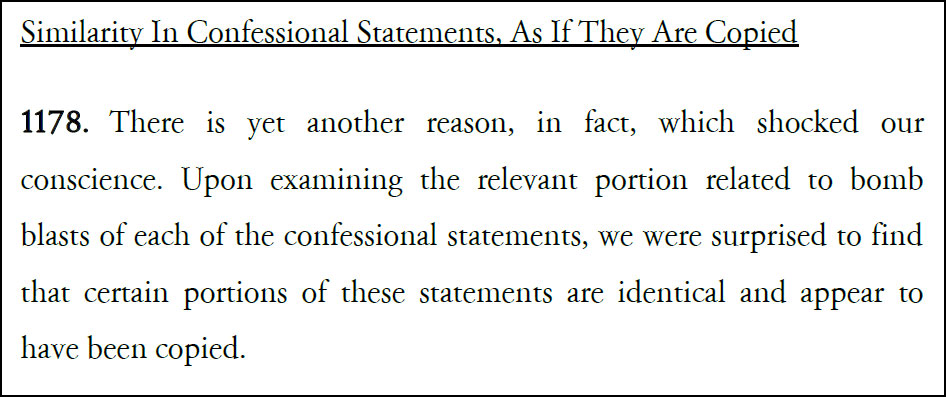
Notably, the court raised serious doubts about the authenticity and voluntariness of these confessions by highlighting an unusual pattern. Several confessions shared identical content, including the sequence of names and descriptions of events. The Bench noted it was “shocked” by the extent of similarity and even suggested that portions appeared to have been “copied”. The court observed that it was “beyond the realm of reasonable imagination” that such identical narration would occur naturally.
The prosecution also cited recoveries of pressure cookers, ammonium nitrate, timers, SIM cards, and other materials, allegedly made at the instance of the accused. However, the court observed that these items were not conclusively linked to the devices used in the blasts. In some instances, materials were recovered from easily accessible or common spaces, further reducing their evidentiary weight. Forensic reports too did not bridge the gap between the recoveries and the materials used in the actual explosions.
In the judgment, the court stated that the prosecution had failed to bring a single piece of evidence on record to directly connect the accused to the crime. The observation was made in the context of the prosecution’s inability to produce or preserve Call Data Records (CDRs) that could have established the movement and presence of the accused around the time of the blasts. The court called it a “grave violation of the right to a fair trial” and invoked adverse inference under Section 114(g) of the Indian Evidence Act.
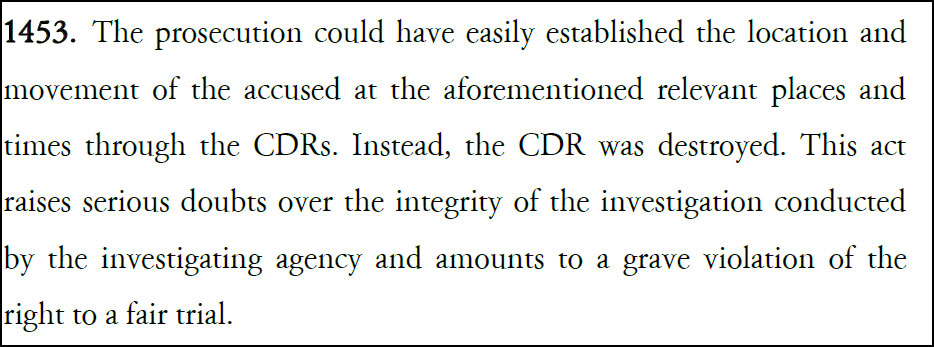
The investigating agencies told the court that as the mobile phones were not in the names of the accused, CDRs were not relied upon. The defence sought access to CDRs, but it was denied. By the time it was allowed, the period for preserving the CDRs had lapsed.
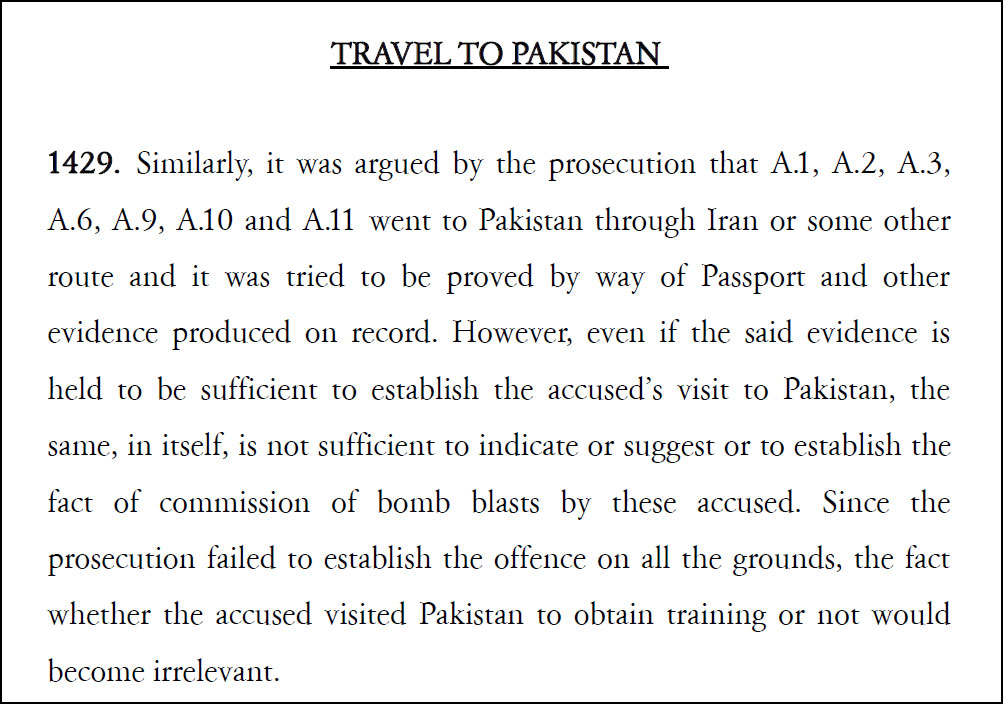
The court further pointed out that the assertions of international linkage required a far more rigorous evidentiary foundation, especially in cases involving terrorism and national security. The court noted that even if visits to Pakistan were assumed to have occurred, there was no evidence to connect that alleged training to the actual commission of the 7/11 bomb blasts. The court held that the mere fact of travel or training abroad could not establish guilt unless supported by material proof linking those actions directly to the blasts. As the prosecution failed to prove the offence on other grounds as well, the court concluded that the question of whether the accused visited Pakistan became irrelevant in the absence of such corroborative evidence.
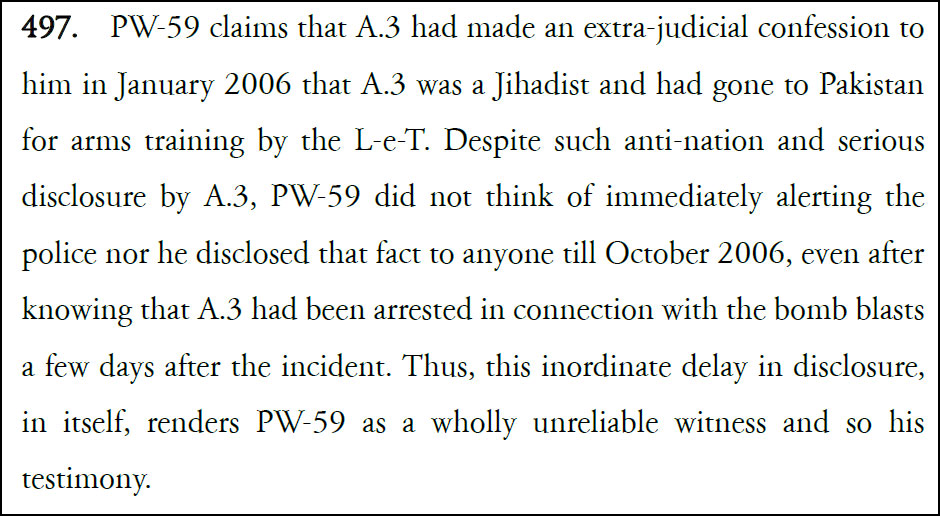
Several of the prosecution witnesses were declared hostile. Some witness testimonies, while recorded, lacked corroboration or legal weight, and did not ultimately strengthen the prosecution’s case. The court also deemed several testimonies unreliable. For instance, in case of witness number PW-59, Alam Gulam Qureshi, said in his testimony that accused no 3, Mohammed Faisal Shaikh, told him that he was a Jihadist and had gone to Pakistan for arms training by the LeT. Despite the seriousness of the disclosure, the witness did not “think of immediately alerting the police not he disclosed that fact to anyone till October 2006.” The witness was aware that the accused was arrested in connection with the bomb blasts. The court said, “Thus, this inordinate delay in disclosure, in itself, renders PW-59 as a wholly unreliable witness and so his testimony.”
While Indian courts are well within their rights to convict based purely on circumstantial evidence if the chain of events is strong, consistent, and points unmistakably to guilt, in this case, the High Court chose not to rely on that route. Despite multiple pieces of circumstantial evidence that the prosecution believed formed a clear pattern and the trial court relied on, the High Court remained unconvinced that that evidence legally connected.
Without dismissing the seriousness of the offence or denying that a conspiracy did occur, the judges ruled that the burden of proof was not met as per the standards of criminal law. As a result, all 12 men, once convicted for one of the deadliest terror attacks in Mumbai’s history, now walk free.
While the prosecution laid out a detailed case, the High Court found that it failed to satisfy legal thresholds of admissibility and proof. The accused were not acquitted because the crime did not happen, but because the prosecution could not connect them to it with the rigour the law demands.


