

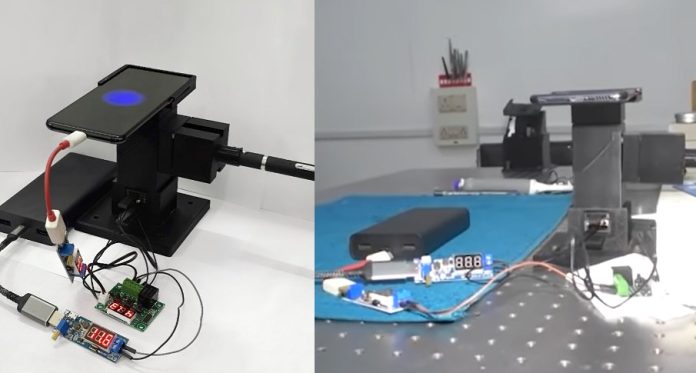
A team of researchers from Tezpur University has created an affordable, portable device that can detect Tuberculosis (TB) using a smartphone, offering new hope for early and accessible diagnosis in rural India.
Designed for rural healthcare
Developed under the leadership of Prof Pabitra Nath from the Department of Physics, the device is specifically tailored for areas with limited medical infrastructure. Unlike conventional TB testing, it does not require chemical dyes or expensive laboratory facilities. Instead, it harnesses the natural glow (autofluorescence) of TB bacteria for detection, supported by a built-in heating system that improves accuracy.
Weighing less than 300 grams and costing under ₹25,000, the device is light, cost-effective and easily portable. These features make it a practical solution for regions where advanced healthcare facilities and trained technicians are scarce.
Overcoming challenges of current methods
Currently, the World Health Organisation and India’s National TB Elimination Programme recommend LED fluorescence microscopy (LED-FM) as the gold standard for TB screening. However, as Prof Nath explained, LED-FM has limitations due to its reliance on costly equipment, chemical staining agents such as auramine-O, and trained personnel for sample preparation. Its dependence on laboratory settings makes it unsuitable for many rural areas.
“The device we developed leverages the principle of autofluorescence, a natural property of certain microbial cells, including Mycobacterium tuberculosis. By integrating a heating element within the sensor system, the device amplifies the natural fluorescence signal, enabling trace-level detection without stains or dyes,” Prof Nath said.
Team effort and recognition
The project team includes research scholars Biprav Chetry and Chunuranjan Dutta, Dr JP Saikia and Santanu Goswami from the Department of Molecular Biology and Biotechnology, and Abhijit Gogoi from Labdig Innovations and Systems Pvt Ltd. A patent has already been filed (Indian Patent Application No. 202431035472), and the findings have been published in the international journal Biosensors and Bioelectronics.
Congratulating the researchers, Vice Chancellor Prof Shambhu Nath Singh said the innovation has the potential to make a significant impact in the fight against TB, particularly in underserved rural communities.


