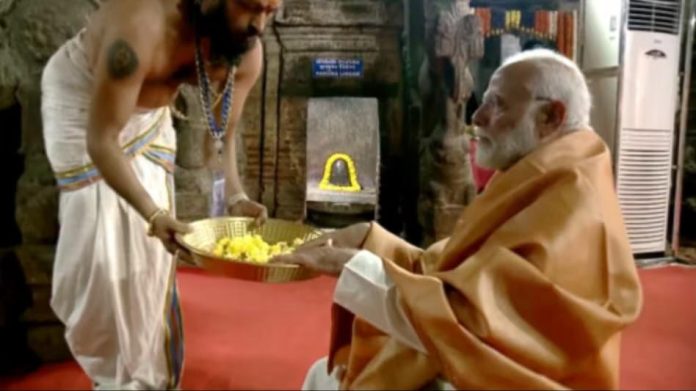
Ahead of the much-awaited Pran Pratishtha ceremony in Ram Mandir in Ayodhya, PM Modi is on his visit to ‘Lepakshi’ in Andhra Pradesh. The Prime Minister will visit the Veerbhadra Temple in ‘Lepakshi’, which holds profound significance in Ramayana.
Besides visiting the hallowed temple, PM Modi also heard verses from the Ranganatha Ramayan, a Telugu rendition of the great Hindu epic.
#WATCH | Prime Minister Narendra Modi listens to verses from the Ranganatha Ramayan at the Veerbhadra Temple in Lepakshi, Andhra Pradesh pic.twitter.com/N7i25CTS1n
— ANI (@ANI) January 16, 2024
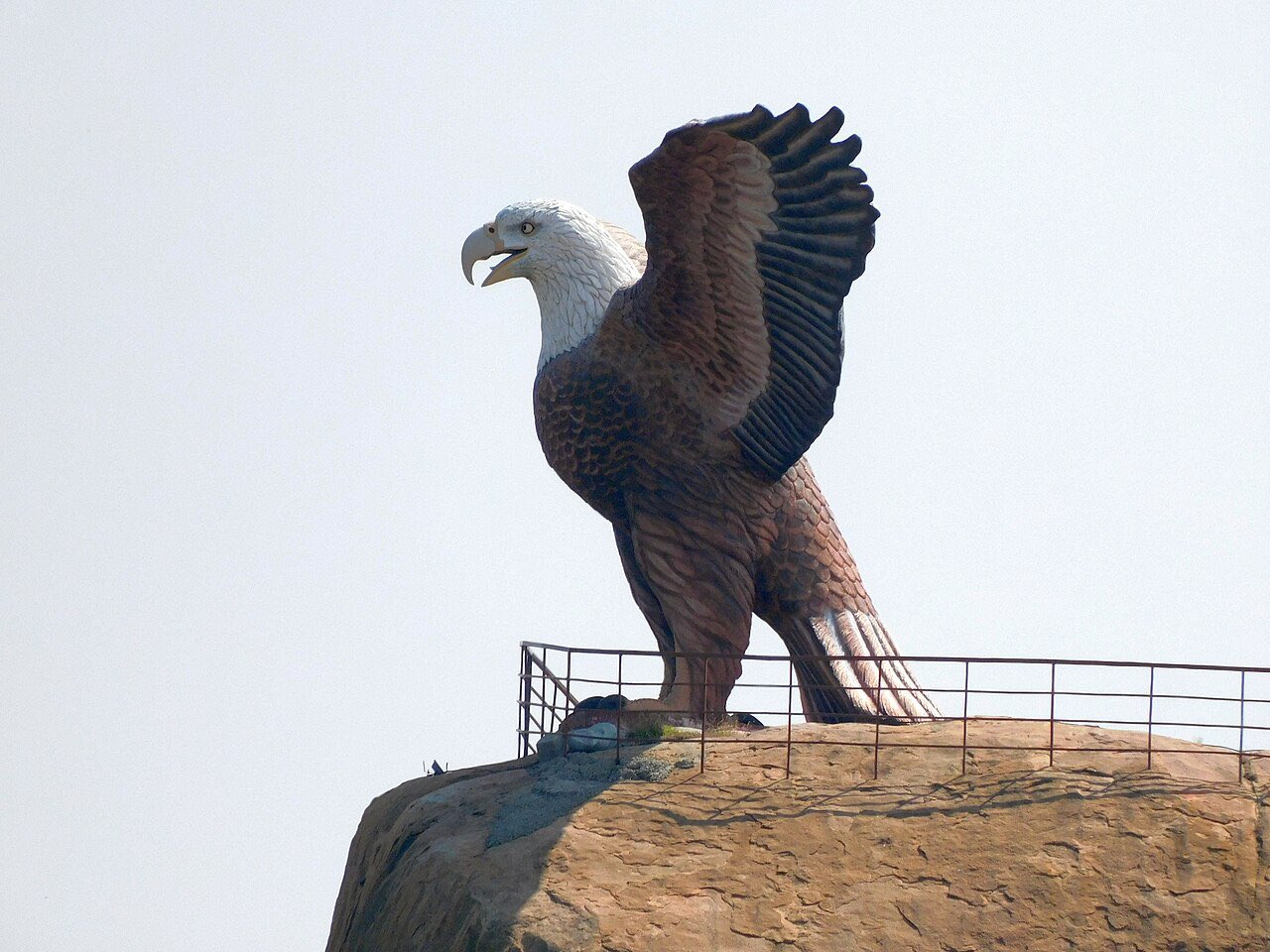
Located in Anantapur district of Andhra Pradesh, around 120 km from the southern metropolis of Bengaluru, Lepakshi is a backwater town infused with mythological splendour, speaking to the confluence of India’s rich architectural and spiritual heritage. As per the Valmiki Ramayana, it is believed to be the site where Lord Ram met the dying Jatayu, who valiantly fought with Ravana when he was on his way to Lanka after abducting Lord Ram’s wife, Goddess Sita.
It was this town, according to Valmiki Ramayana, where the mortally injured Jatayu informs Lord Ram and his brother Lakshman that Goddess Sita had been abducted by the King of Lanka, Ravana, and that they should move towards the seashore in the south to reach Lanka.
The name ‘Lepakshi’ in Telugu means ‘Rise, oh bird’, a tribute to Jatayu, who made the supreme sacrifice to stop Ravana from abducting Goddess Sita. The town is replete with ancient temples that serve as a treasure trove of narratives from Hindu mythology.
House to several shrines devoted to Shiva, Vishnu, Papanatheswar, Raghunath, Ram, and other revered deities, the intricate carvings and larger-than-life sculptures leave the visitor spellbound and transfixed. The finely detailed carvings on the pillars of the Veerabhadra Temple or beholding the colossal Nandi acclaimed as the world’s largest monolithic bull, the craftsmanship of the artisans from the Vijayanagara dynasty is unmistakable in the sculptures that grace the entire town.
One of the major centres of attraction in Lepakshi town is the Veerabhadra Temple, commonly known as the Lepakshi temple, which stands as a testament to the marvels of ancient Indian architecture. Created from rock, the intricately carved masterpiece attests to the historical grandeur of the Vijayanagara Empire.
The Lepakshi temple is a totem of timeless art, adorned with exquisite frescoes and murals. A substantial portion of the temple complex perches upon a small, rocky hill known as Kurmasailam, influenced by its resemblance to the shape of a tortoise.
One of the much-vaunted features of the temple is the Hanging Pillar, indistinguishable from the surrounding pillars but miraculously suspended without resting on the ground. The temple is also believed to have preserved the footprints of Goddess Sita.
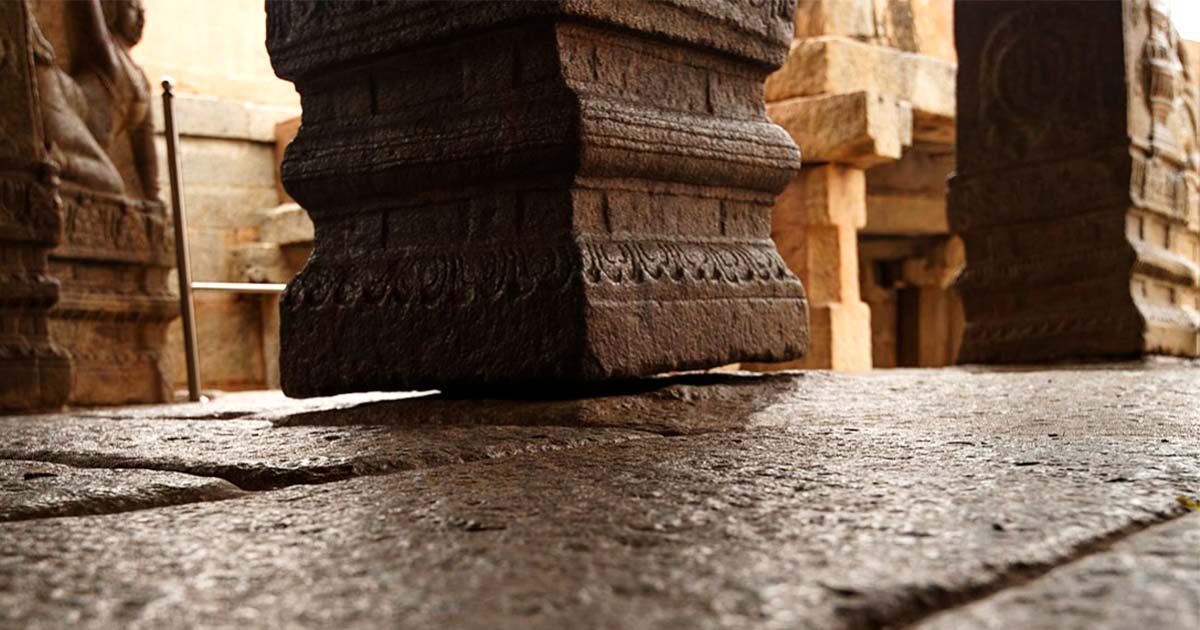
The temple’s beauty and grandeur exemplify the magnificence of the Vijayanagara Kingdom, a powerful realm that reined in large parts of southern and peninsular India for a considerable period in the medieval era. The Kingdom, known for commissioning temples across the length and breadth of its empire, also sponsored artists in crafting the extraordinary pictorial depictions that line the walls of the Veerbhadra Temple.
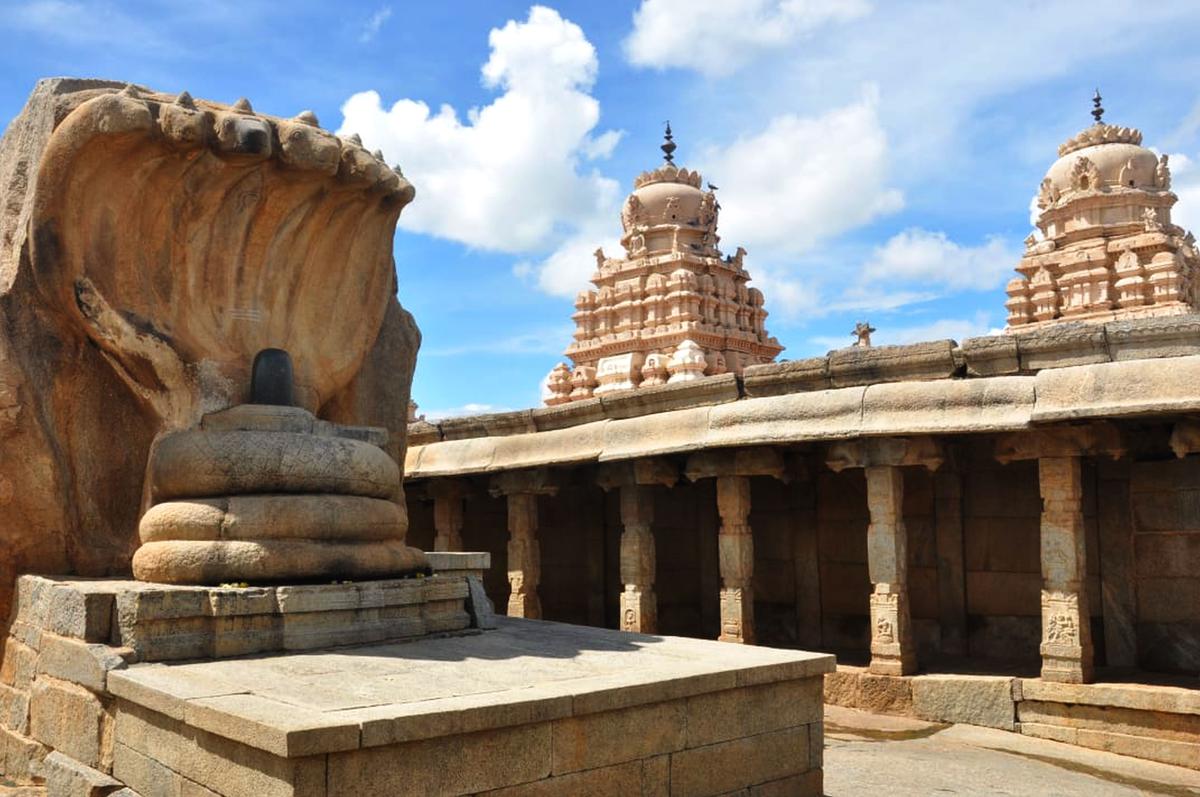
The temple’s walls portray the images of musicians, saints, and celestial entities, featuring captivating sculptures of dancing Ganesha, Mata Parvati, and Lord Shiva. An inner cave chamber is believed to be the abode of Sage Agasthya, while the temple itself is adorned with 70 pillars. Of particular interest is the renowned snake sculpture on the Nagalinga, reputedly carved from a single stone during a sculptors’ lunch break. Furthermore, the adjacent hillocks, known as Kurma Saila, host temples devoted to Papanatheswara, Raghunatha, Srirama, and Durga, adding to the vibrant legacy of Lepakshi.