

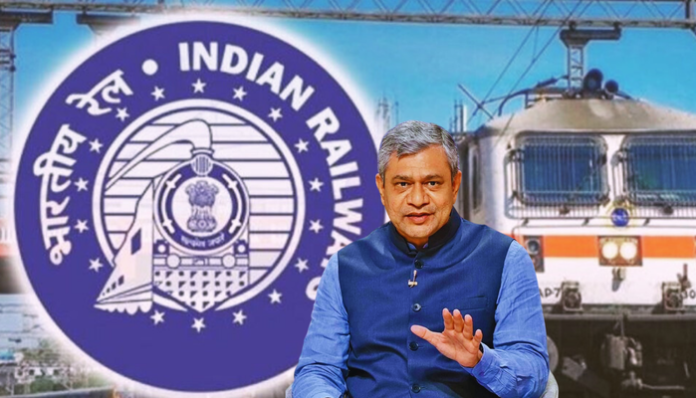
Due to the proactive measures adopted by the Ministry of Railway, the number of train accidents has significantly come down over the last year. Speaking in the Rajya Sabha on Friday (25th July), Railway Minister Ashwini Vaishnaw said that the case of train accidents reduced to 31 during 2024-25 compared to 135 cases during 2014-15. He added that only three train accidents have been recorded till June this year.
Responding to a query, the Minister said that a total of 1,711 train accidents happened between 2004 and 2014, which amounted to an average of 171 train accidents every year. However, this number has hit a record low in the last year.
Explaining the reason behind the reduced train accidents, Vaishnaw said that the Indian Railways adopted a number of measures to ensure the security of passengers. The measures include installing electronic interlocking systems at 6,635 railway stations, which has reduced the accidents caused by human error. Apart from this, interlocking systems have also been installed at 11,096 level-crossing gates to enhance safety at railway crossings.
Along with this, track circuiting has been done at 6,640 railway stations to electronically confirm the presence of a train on a railway track. Besides, the ‘Kavach’ technology adopted by the National Automatic Train Protection System in 2020 is being implemented in a phased manner.
The Railway Minister said that all the engines have been fitted with ‘vigilance Control Devices’ to ensure alertness of loco pilots. Retro-reflective sigma boards have been installed on the OHE masts to alert the pilot about low visibility during foggy weather. In addition to that, GPS-enabled ‘Fog Safety Devices’ have been provided to loco-pilots in fog-affected areas so that they can locate important points like railway signals and level-crossing gates in foggy weather.


