

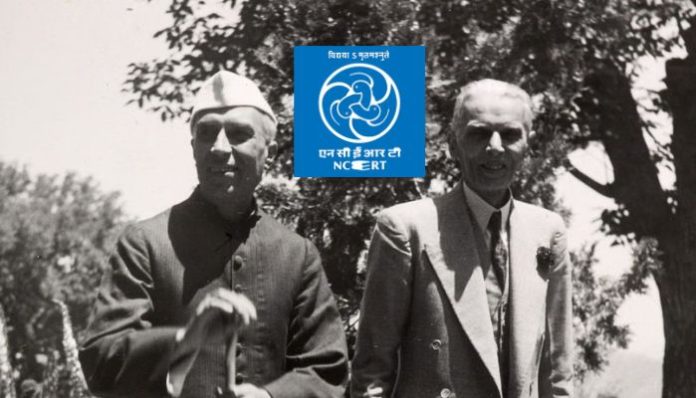
The National Council of Educational Research and Training (NCERT) has released a special module on Partition Horrors Remembrance Day, which is observed on 14th August each year, for Classes 6 to 12.
NCERT is an autonomous body under the Education Ministry, which prepares the national curriculum framework and publishes textbooks that are used by CBSE students from Classes 1 to 12.
In the newly released module [pdf], NCERT highlighted how political Islam and its ideology were the driving force behind Partition. It highlighted the persecution of Hindus, the use of violence by Muslim League, responsibility of the Congress party and how most Muslims who voted for Pakistan stayed back in India.
Political Islam at the forefront of Partition, most Muslims did not leave for Pakistan
The module pointed out that most Muslims did not leave for Pakistan, which was created for them.
“Even though a separate country was created for Muslims, about 3.5 crores Muslims did not shift and continued to stay in India. Pakistan was demanded and created as a homeland for all Indian Muslims.”
It stated that the Muslim League won 73 out of 78 seats reserved for Muslims in the March 1946 elections, and yet the majority of those voters did not migrate to Pakistan.
The module made it clear in no uncertain terms that the ‘sentiment’ that led to the creation of Pakistan persists in India.
On Page 6 of the module, NCERT emphasised the fundamental cause of Partition and the divisive nature of the ideology of political Islam.
It referenced the speech of ‘Muslim League’ leader Muhammad Ali Jinnah of 22nd March 1940, wherein he propagated his 2-nation theory.
The module stated, “…Muslim leaders called themselves as fundamentally separate from Hindus. The root of this lay in the ideology of political Islam, which denies the possibility of any permanent or equal relationship with non- Muslims. This principle has been consistently applied in various parts of the world for centuries and can still be seen today.“
NCERT questioned the failure of the Indian leaders to reflect on the ideology of religious separatism and claims of special privileges for the Muslim community. (Page 11 of the module)
On Part 12 of the module, the NCERT underlined how Indian leaders ignored the harsh realities of Hindu-Muslim relations and conveniently blamed the British.
“They blamed the British rulers for every problem, including communalism. It was an exaggerated narrative. Had they remained grounded in history, they might have drawn very different conclusions and curtailed Muslim League’s communal politics from the start,” it concluded.
Pakistan – An exporter of terrorism that has support of ‘powerful nations’
NCERT, in its newly released module (Page 5) underlined the jihadist terrorism of Pakistan, which it unleashes on India with the hopes of inflicting ‘a thousand cuts.’
It pointed out that ‘some powerful nations’ continue to arm Pakistan and support it militarily, despite its track record on terrorism.
The module read, “Pakistan has waged three wars to annex Kashmir and, after losing them, adopted a policy of exporting jihadist terrorism to inflict “a thousand cuts” on India from within. This has claimed thousands of lives, both civilian and military.
It further noted”…Some powerful nations regularly use Pakistan to exert pressure on India. Several countries continue to arm and support Pakistan militarily and strategically. As a result, India has had to spend heavily on defense.“
Congress was one of the factors behind Partition: NCERT
The NCERT stated that the Congress party was one of the 3 actors, besides Jinnah and Mountbatten, which was responsible for the Partition of India.
It noted that the British government wanted to keep India as one and several Viceroys had conceded that Partition was not going to solve the ‘Hindu-Muslim problem.’
“All those who agreed to the abrupt timeline for Partition and transfer of power were responsible for it,” read Page 9 of the module.
It pointed out that most leaders, both within the Congress and the Muslim League, could not believe that the idea of an independent Muslim country was possible.
Page 10 of the module said, “Since it had long been the known position of the British government that it was against Partition, Congress leaders underestimated Jinnah.”
It added, “But in 1947, for the first time, Indian leaders themselves willingly handed over a vast part of the country permanently outside the national fold—along with tens of crores of its citizens— without even their consent. This was a unique event in human history, when a nation’s own leaders, without a war, peacefully and in closed meetings, suddenly severed crores of their people from the country!
Persecution of Hindus and use of violence to facilitate Partition
On Page 4, the module noted,”A large number of families were forced to convert into Islam.”
It highlighted how Jammu and Kashmir started losing its social character and how the position of Kashmiri Pandits began weakening in the aftermath of Partition.
“In later decades, this decline worsened with the additional export of terrorism to the region,” the module stated.
NCERT added how Muhammad Ali Jinnah directed his followers to use violence and arms to enforce the idea of Pakistan during the Direct Action Day on 16th August 1946. (Page 7 of the module).
Muslims oversaw creation of Pakistan, many stayed back despite voting for the Muslim League
During the provincial elections in 1946, Muslims voted overwhelmingly for Muslim League which had stirred up religious passions with its demand for a separate Islamic State at the time.
The Muslim League asserted that Hindus and Muslims cannot co-exist in the same country and thus, Muslims should have a country of their own carved out of India itself, post-independence.
In total, 87% of seats were won by the Muslim League in India in 1946. A closer look at the numbers shows how the demand for a separate Islamic State bolstered the political demand for a separate state.
The table below shows a comparison between the seats won by the Muslim League in 1937 and 1946. As one can see, the number of states that were won by the Muslim League of Jinnah went up manyfold in 1946.
In every state, the rise in the popularity of the Muslim League was substantial. In states like Bihar, for example, from zero seats in 1937, the Muslim League won a whopping 34 seats out of 40 seats.
In Madras, the increase was from 9 to all 29 seats. The pattern holds across all states, or provinces, as they were called during that period. It is to be remembered that though the two-nation theory itself existed for much longer, a formal political demand was made for a separate state for Muslims in 1940.
It was in 1940 that Jinnah formally announced the demand in Lahore that the Muslim League formally recommitted itself to creating an independent Muslim state, including Sindh, Punjab, Baluchistan, the North-West Frontier Province and Bengal, that would be “wholly autonomous and sovereign”.
The resolution guaranteed protection for non-Muslim religions. The Lahore Resolution moved by the sitting Chief Minister of Bengal A. K. Fazlul Huq was adopted on 23 March 1940, and its principles formed the foundation for Pakistan’s first constitution.

The formalisation of the demand in 1940 led to a huge surge in the Muslim population supporting the Muslim League and by extension, supporting the demand for a separate Islamic State called Pakistan, which would be carved out of India.
It is thus intriguing when several apologists claim that most Muslims stayed back in India out of choice and that most Muslims at the time did not want a separate Islamic state.
There can be no denying that there was opposition even from the Muslims at the time to the idea of a separate state, however, political statements and what counts during voting are two rather separate concepts.
If Muslims wanted a separate Islamic State and voted overwhelmingly in its favour, why did so many Muslims stay back?
The obvious argument that is presented, sans facts, to counter the overwhelming support for the creation of Pakistan is that if most Muslims at the time supported the two-nation theory, then why did so many Muslims stay back?
And if they indeed did stay back, it only means that they rejected the two-nation theory. After partition, several leaders were in support of the full exchange of population, including leaders like BR Ambedkar.
In his book on Partition, Ambedkar clearly outlines how and why he was in favour of a full population exchange between India and Pakistan, which would essentially mean that all Hindus and other religious factions other than Muslims would come back to India and all Muslims from India would go to Pakistan.
In fact, he had even written a basic framework on how the issues arising out of full population exchange could be dealt with.
Sardar Patel had, even after the partition spoken extensively about how Muslims had helped create Pakistan. His famous quote from his speech in Kolkata, 1948, bears testament to the fact. He had said, “Most of the Muslims who have stayed back in Hindustan, helped in creating Pakistan.
Now, I don’t understand what has changed in one night that they are asking us not to doubt their loyalty”.
Further, one has to remember that the demand for full population exchange was supported by several stalwarts at the time.
A report in Sunday Guardian says, “Dr Mookerjee, accompanied by Rajkumari Amrit Kaur, went to plead with Gandhi for agreeing to Jinnah’s proposal for an exchange of population, the old man’s flat reply was that partition was on a territorial basis and not on religious grounds. Hence, no question of exchanging Hindus from Pakistan with Muslims from India. This was when the division was exclusively on the criterion of religion, Hindu and Muslim”.


