

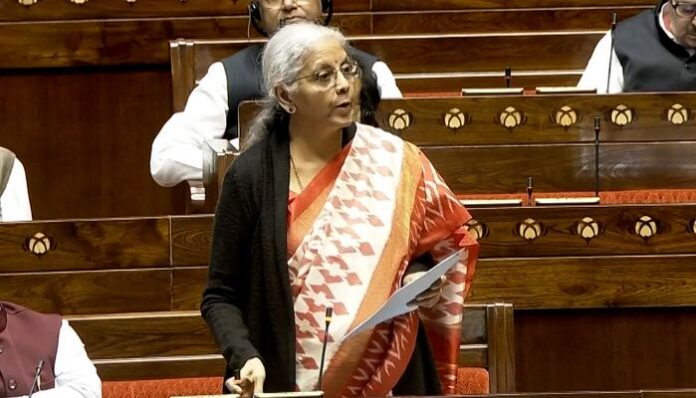
Union Finance Minister Nirmala Sitharaman tabled the Economic Survey 2025-26 in both Houses of Parliament on Thursday, 29th January. The survey gives a clear picture of how the Indian economy has performed in the current financial year and points out the key challenges ahead.
Union Finance Minister @nsitharaman tables the Economic Survey 2025-26 in Lok Sabha during the Budget session of Parliament#EconomicSurvey #EconomicSurvey2025_26 #BudgetSession #BudgetSession2026 pic.twitter.com/tj4awKzsfi
— PIB India (@PIB_India) January 29, 2026
Soon after the document was presented, the Lok Sabha and Rajya Sabha were adjourned. Both Houses will meet again on 1st February, when the Union Budget will be presented. This will be Ms Sitharaman’s ninth consecutive Budget, a first for a woman Finance Minister in India.
PM Modi on the budget session and India-EU FTA
Ahead of the Budget Session, Prime Minister Narendra Modi said the Free Trade Agreement (FTA) with the European Union is a major step for a confident and ambitious India. Calling it the “mother of all deals”, he said the agreement opens new markets for Indian manufacturers across 27 EU nations.
He added that India is now focusing on long-term solutions and growth, especially for young and aspiring Indians, as part of the goal of building a “Viksit Bharat”.
Space sector and Digital connectivity in focus
In the Rajya Sabha, Union Minister Jitendra Singh said the space sector is set to play a big role in India’s future economic growth. He pointed out that the launch of foreign satellites by the Indian Space Research Organisation has increased sharply. Out of 434 foreign satellites launched so far, 399 were launched after 2014.
He said India has earned 323 million euros and 233 million US dollars from these launches, showing the strong potential of the space industry.
Communications Minister Jyotiraditya Scindia spoke about the BharathNet project, which aims to connect 6.5 lakh villages with high-speed internet. He said the scheme, amended in 2023–24, faces a 3 % shortfall due to tough terrain and left-wing extremism in some regions. He also said 1.65 lakh post offices have been upgraded under a new indigenous technology system, marking a major shift in postal services.
Jobs, education and prices raise concern
Labour and Employment Minister Mansukh Mandaviya told the House that the gig economy now employs around 2 crore people. He said India was the first country to clearly define gig work and added that steps have been taken to provide social security to informal and contract workers.
He also said the National Career Service Portal now has over 55 lakh companies and that more than one lakh people have got government jobs through job fairs.
Several MPs raised public issues during the session. Concerns were voiced about the shortage of permanent teachers in schools and colleges, delays in solar power projects, rising gold prices affecting household savings, high airfares and lack of competition in the airline sector.
Members also called for support to rubber farmers in Kerala, better awareness on organ donation, and protection for small kirana stores facing pressure from online delivery platforms.
The first day of the Budget Session highlighted economic priorities and everyday concerns, setting the stage for detailed discussions in the weeks ahead.
