

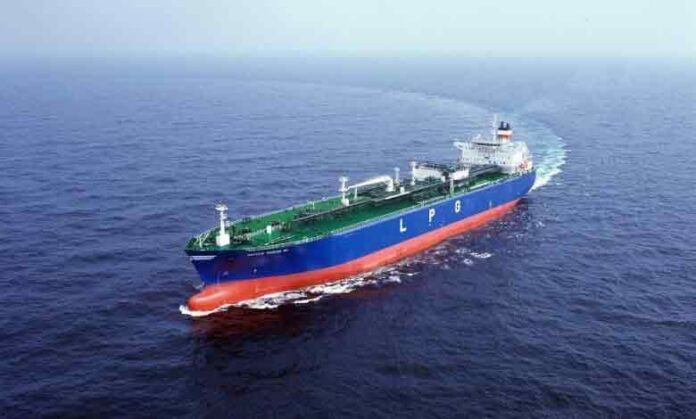
India has bought its first shipment of Iranian Liquefied Petroleum Gas (LPG) after a gap of several years, marking a significant shift in energy trade. According to a report by Reuters based on industry sources and shipping data, this is the first such purchase since 2019, when India had stopped importing Iranian oil and fuel due to US sanctions.
The LPG shipment is being transported on the vessel named Aurora and is set to arrive in Mangalore port shortly. This shipment will be distributed between the three major oil and fuel companies in India, namely Indian Oil Corporation, Bharat Petroleum Corporation, and Hindustan Petroleum Corporation. This shipment has been procured through a trader and will be paid for in rupees.
The shipment comes at a time when the United States has temporarily allowed oil and fuel exports from Iran. Interestingly, the tanker was initially headed towards China before being redirected.
However, not all in the government are aware of this development. “We have not heard of any loaded cargoes from Iran,” said Rajesh Kumar Sinha, a senior official in the shipping ministry, speaking to the media on Wednesday, 25th March.
US lifted sanctions on Iranian oil to balance the oil prices
This development comes at a time when global oil prices have shot up sharply due to the ongoing conflict between the US and Iran. The rising tensions in West Asia have disrupted supply chains and pushed crude prices to multi-year highs, affecting fuel prices globally, including in the United States.
Faced with this situation, the US took a surprising step on 21st March by temporarily lifting sanctions on Iranian oil that is already loaded on ships. This allows countries like India to buy Iranian fuel again, at least for a limited period.
For years, Washington had blocked most countries from purchasing Iranian oil. But now, it is allowing more oil to enter the global market to control rising prices. The Trump administration’s goal is simple: ‘allow as many barrels of oil as possible to flow into the international market’, especially at a time when domestic pressure in the US is high.
India’s long history with Iranian oil
India has traditionally been one of the biggest buyers of Iranian crude oil. Before sanctions tightened, Iran was a key supplier for India’s energy needs.
Back in 2009-10, India imported over 22 million tonnes of crude oil from Iran, making up more than 14% of its total oil imports. Even during earlier sanctions, India continued buying Iranian oil through special payment arrangements.
Under one such system, Indian refiners paid a portion of the amount in rupees into accounts held by Iranian banks in India. Iran would then use this money to buy Indian goods, while the rest of the payment was delayed until sanctions were lifted.
However, everything changed in May 2019 when the US ended sanction waivers for countries importing Iranian oil. After that, India completely stopped buying oil from Iran to avoid penalties from Washington. Since then, Indian companies have stayed away from Iranian crude, until now.
From pressure tactics to policy reversal
The current situation, therefore, points to a major shift in the policy of the United States. President Donald Trump had earlier taken a hardline stance against Iran, imposing several sanctions and even going to the extent of using the military to teach Iran a lesson.
However, the same government is now forced to lift the restrictions imposed earlier, but for a very simple reason: the rise in the prices of crude oil. The conflict has made the global energy situation unstable, and the United States can’t allow the prices to rise for a longer period, especially during a crucial time.
In a way, the strategy has come full circle. While the US wanted to pressure Iran by cutting off its oil exports, it now needs that very oil to stabilise global markets. Allowing other countries, including India, to resume purchases is part of that adjustment.
This shift shows how geopolitical decisions often collide with economic realities. What began as an attempt to isolate Iran has now led to a situation where its oil is once again being welcomed into the global market, highlighting the limits of sanctions when energy security is at stake.
