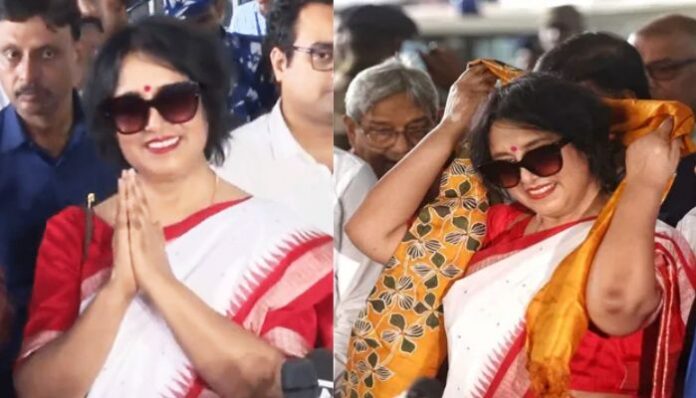
Taslima Nasreen, the Bangladeshi author and critic of Islamism, returned to Kolkata on 31st July 2026 after nearly 19 years of being forced out of West Bengal.
Nasreen arrived in Kolkata from Delhi to attend a literary programme organised by Secular Mission, Paschimbonger Jonno (For West Bengal), and Human Rights Beyond Frontiers at the Rabindra Sadan Cultural Centre on 1st August 2026.
As per the organisers, West Bengal Chief Minister Suvendu Adhikari, state finance minister Swapan Dasgupta, and noted author Shirshendu Mukhopadhyay will also attend the event.
After 19 years, exiled Bangladeshi author Taslima Nasrin returns to Kolkata
— Nabila Jamal (@nabilajamal_) July 31, 2026
Forced to leave the city in 2007 after violent protests over her book Dwikhandita, Nasrin is back ahead of a literary event at Rabindra Sadan on August 1
Her visit comes amid tight security, reflecting… pic.twitter.com/1cAcxAIbgF
Nasreen described her return to Kolkata as an emotional homecoming. While noting the pain of lost years, the renowned author said, “It was like returning to my own country.”
The Bangladeshi physician-turned-author’s literary works and activism first drove her out of her homeland, Bangladesh, and then Kolkata, the city she grew to call her second home.
Why Taslima Nasreen was driven out of Bangladesh
Islamists across the world, including those in Bangladesh, have been strictly opposed to women’s rights, secularism, freedom of expression, rational criticism directed at Islam, and any advocacy against their oppression of religious minorities.
As Taslima Nasreen’s writings focused on these issues, she came under the radar of Bangladeshi Islamists. The trigger, however, for widespread protests and Nasreen’s ouster was her 1993 novel, Lajja.
Lajja depicted the persecution of a Bangladeshi Hindu family in the aftermath of the Babri Masjid demolition in the Ayodhya city of India’s Uttar Pradesh.
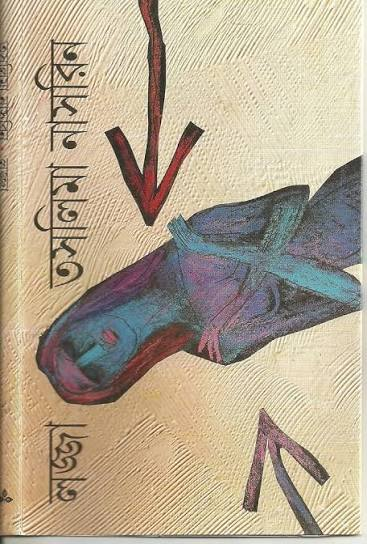
The novel centres on the Hindu Dutta family in Dhaka. Sudhamoy, the father, is a doctor and a secular patriot who refuses to leave Bangladesh despite the raging anti-Hindu riots, with Islamic fanatics destroying Hindu houses, temples, and shops.
The Hindu family’s tragedy begins when Sudhamoy’s daughter, Maya, is abducted by Islamists. The Hindu family searches for the girl in vain. Eventually, an unidentified boy resembling Maya is found under a bridge, leaving the family devastated. Ultimately, the reluctant Hindu family is forced to flee their homeland and seek refuge in the Hindu-majority India.
Taslima Nasreen’s brutally honest depiction of the horrors Hindus in Bangladesh endured in the 90s irked Islamist groups. What followed was a massive backlash, protests, a ban on the book in Bangladesh, a fatwa, several death threats, and bounties.
In 1994, when Bangladesh Nationalist Party (BNP) was in power, a non-bailable arrest warrant was issued against Taslima Nasreen under Section 295A (hurting religious sentiments) of the Bangladesh Penal Code. Nasreen was forced into hiding for weeks before she flew to Sweden.
Instead of ensuring her safety and acting against Islamists baying for her blood, the PM Khaleda Zia-led government invalidated Nasreen’s passport.
The subsequent governments, including those of Awami League supremo Sheikh Hasina, out of fear of upsetting Islamists, did not enable Nasreen’s safe return. All this while, Taslima Nasreen’s works were banned in Bangladesh, and she was forced to live in a prolonged exile.
Taslima Nasreen found a home in India, only to be exiled all over again: CPIM’s surrender before the street veto of Islamist mobs
Forced out of Bangladesh, Taslima Nasreen spent her days in Europe and elsewhere, before India granted her a residence permit. Nasreen settled in West Bengal’s Kolkata in 2004, drawn by the shared Bengali culture and language.
Taslima Nasreen continued writing columns focusing on human rights, Islamic fundamentalism, minority rights, and issues concerning women.
However, Taslima Nasreen ended up hurting the fragile religious sentiments of the perennially offended Islamists who are all the same across the world regardless of nationality, when she published an autobiographical volume in 2003.
Nasreen’s book Dwikhandito (Split in Two / Bifurcated) was banned by the then ruling CPIM-led Left Front government in West Bengal. Reason? The same given by the BNP regime in Bangladesh for banning Lajja.
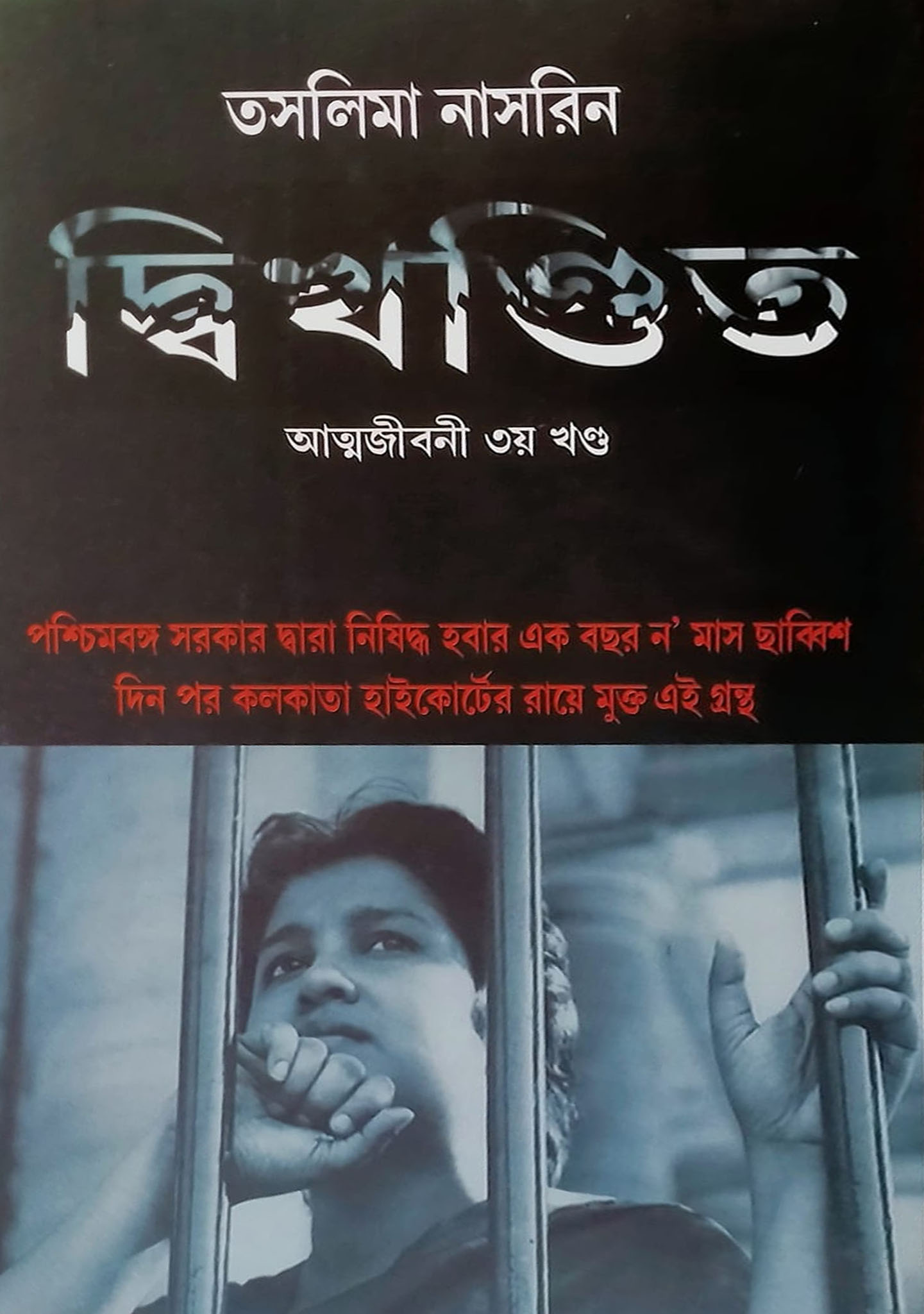
The Communist government, led by Chief Minister Buddhadeb Bhattacharjee, capitulated before Islamist mobs and banned the book’s publication and sale in West Bengal.
It was only in 2005 that the Calcutta High Court overturned the ban, calling it unjustified. The ban on Dwikhandito was lifted; however, Nasreen’s troubles did not end here.
Muslims organisations, politicians, and ordinary Islamists alike grew intolerant of the Bangladeshi author’s mere presence on the soil of Kolkata.
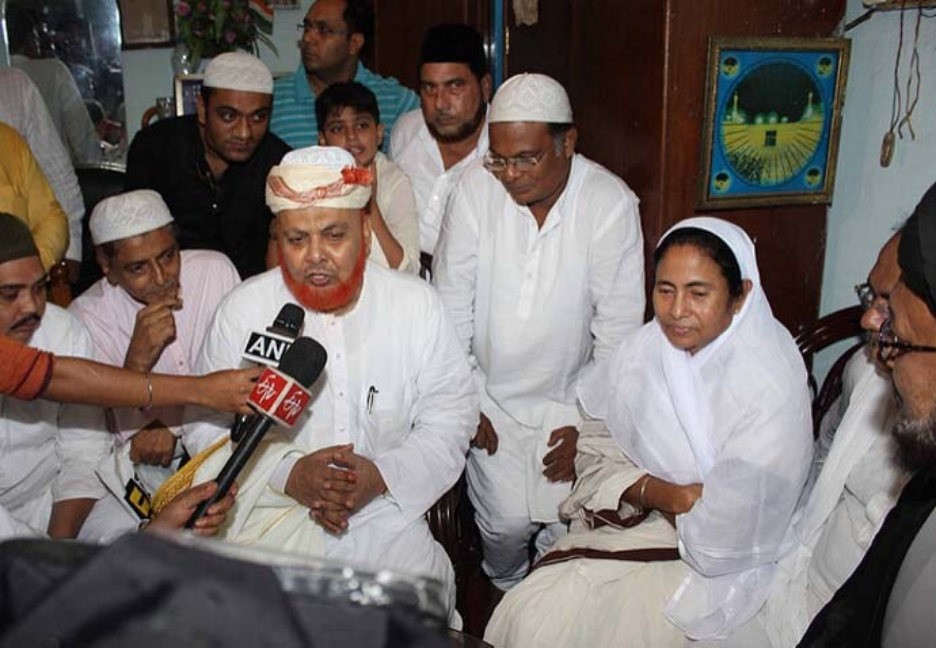
While protests against Taslima Nasreen continued, a Kolkata imam, Syed Mohammed Noorur Rahman Barkati, then Imam of the Tipu Sultan Shahi Masjid, sought her deportation to Bangladesh and offered an unlimited cash reward to anyone who blackened Nasreen’s face in 2007.
“If our demand is not met, there will be an unlimited cash reward for whosoever kills her. The United Progressive Alliance government at the Centre and the Left Front government in the state will be responsible for the consequences,” the imam announced after Jummah namaz in August 2007.
Interestingly, Barkati is a ‘rakhi brother’ of Trinamool Congress supremo, Mamata Banerjee, who went on to rule West Bengal for 15 years and crossed all limits of Muslim appeasement.
A week before Barkati’s announcement, Taslima Nasreen was physically attacked in Hyderabad by Islamist political outfit, All India Majlis-e-Ittehadul Muslimeen (AIMIM) while Nasreen was attending a book event.
On 21st November 2007, Islamist groups, including the All-India Minority Forum, staged violent protests in Kolkata, demanding Nasreen’s expulsion. The violence also spilt outside Kolkata.
Islamist mobs blocked roads, vandalised vehicles and public property, and injured dozens. The Islamist violence magnified to such an extent that the Indian Army had to be called in to control the situation as the state law enforcement became insufficient to tackle the crisis.
The ultimate capitulation of the Left government before Islamist intransigence was CM Buddhadeb Bhattacharjee’s statement that his government can no longer guarantee Taslima Nasreen’s safety in West Bengal.
Soon after, senior CPIM leader Biman Bose publicly said that Taslima Nasreen should leave West Bengal so the situation could cool down.
First to Rajasthan’s Jaipur, and then to Delhi, Taslima Nasreen was forced to flee her second home due to the same Islamist intolerance she faced in Bangladesh.
Ironically, the Communist government that boasted of being defenders of ‘secularism’ offered an abject surrender in the face of pressure from Muslim mob violence rather than protecting the Bangladeshi author’s right to live with dignity, speak and work safely in Kolkata.
Although there was no legal ban on Nasreen’s entry into West Bengal, it was only when the Bharatiya Janata Party (BJP) came to power in May 2026, ending the 15-year tyrannical rule of Mamata Banerjee, that Taslima Nasreen could return to Kolkata.
Taslima Nasreen’s return to Kolkata holds both personal and symbolic significance. Her return to West Bengal marks the return of a fierce voice that Islamists tried to silence, and the reversal of a dark chapter that was inked by Islamist intolerance and violence facilitated by a pliable Communist regime.
Even Nasreen’s return has outraged Islamists; however, times have changed, political winds in Bengal have changed, and so has the practice of accommodating Islamist whims for the sake of political gains.