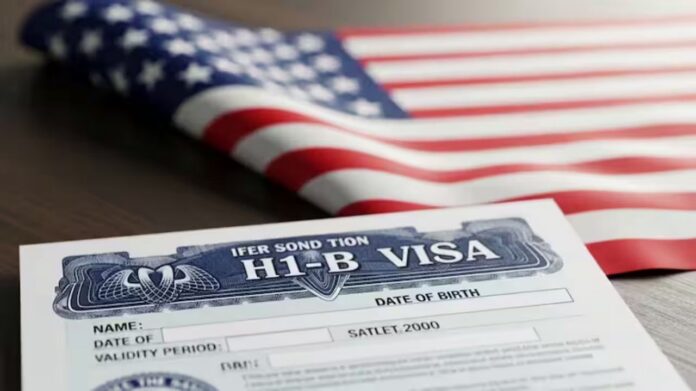
The Trump administration is weighing a fresh set of measures that could significantly increase the cost of working and studying in the United States for foreign nationals, with H-1B workers and international students on Optional Practical Training (OPT) potentially facing steep new fees.
The US Department of Homeland Security (DHS) has sent proposed regulations to the White House Office of Management and Budget (OMB), including a proposal that could push the H-1B visa fee to $103,265. The administration had introduced a $100,000 H-1B fee last year, but its implementation was subsequently blocked by the courts.
The proposals could have major implications for Indians, who account for more than 70 per cent of H-1B beneficiaries. In 2024, the US Citizenship and Immigration Services approved 399,402 H-1B petitions, with Indian-born beneficiaries accounting for around 71 per cent of them.
According to immigration services firm Fragomen, the DHS proposals could also introduce a fee of around $100,000 for certain OPT applications. The firm said the proposed rules have already cleared the OMB review process, although their exact provisions remain confidential until they are formally published.
The proposals could therefore make the US significantly more expensive for foreign professionals, international students transitioning from universities into employment, and American employers seeking to sponsor skilled foreign workers.
H-1B and OPT fees could rise sharply
Fragomen said an OPT fee proposal was submitted to OMB on August 20, while a proposal concerning fees for certain H-1B petitions was received and cleared by the OMB a day earlier, on August 19.
The immigration services firm cautioned that the DHS could propose a $100,000 fee for OPT applications. The proposed H-1B fee, meanwhile, could be linked to the ongoing legal battle over the administration’s earlier $100,000 H-1B petition fee.
The exact details of both proposals are not yet public and will only become clear once the regulations are officially released.
Indians among the biggest stakeholders
Any major change to the H-1B system is particularly significant for India because Indian nationals dominate the programme.
USCIS data shows that Indians accounted for roughly 71 per cent of approved H-1B beneficiaries in 2024. That means higher visa costs, tighter rules or increased financial burdens could disproportionately affect Indian technology professionals and other skilled workers seeking employment in the US.
The impact could extend beyond workers themselves. US companies that depend on H-1B talent could also face substantially higher costs when sponsoring foreign employees.
For international students, a steep OPT fee could make the transition from an American university to the US job market considerably more expensive.
H-1B workers could also lose a 60-day grace period
The proposed fees come alongside another potentially significant change.
Earlier this month, DHS proposed eliminating the existing 60-day grace period available to certain H-1B workers after their employment ends. Under the current system, eligible workers can generally remain in the US for up to 60 days after losing their jobs while seeking new employment or otherwise resolving their immigration status.
If the proposed rule is finalised, affected workers and their dependants could be required to leave the US much sooner after employment ends, potentially creating additional uncertainty for thousands of families.
The proposed changes signal a broader tightening of the US immigration system under the Trump administration, with foreign workers, international students and employers likely to bear a greater share of the financial and regulatory burden.
For Indians, who form the overwhelming majority of H-1B beneficiaries, the consequences could be particularly significant.