

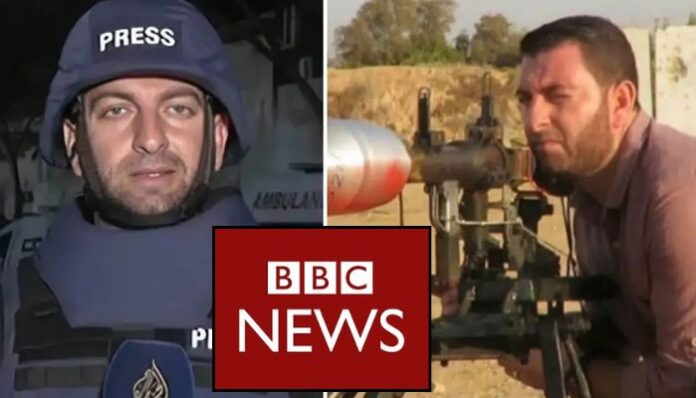
The BBC has found itself facing intense, renewed criticism after the broadcaster passed off 53 slain Hamas terrorists as “journalists” who were martyred by Israel. According to various reports, photographs, and other concrete evidence, these individuals actually had direct links to terrorist organisations, including Hamas. While some of them actively participated in the brutal 7th October 2023 Hamas terrorist attack launched on Israel, others were openly described as “martyrs” by the terrorist groups themselves.
Most of these misleading reports identifying the individuals as journalists appeared on BBC Arabic, though an investigative report published by The Telegraph on Saturday, 26th September, exposed these fake claims. The report revealed that out of the 53 individuals, 10 were also labelled as journalists on the English-language BBC News website, while the remaining 43 were exclusively identified as journalists by BBC Arabic.
The BBC has reported the deaths of 53 “journalists” in Gaza who have been claimed as terrorists by Hamas and other groups.
— The Telegraph (@Telegraph) September 26, 2026
Some of them took part in the Oct 7 attacks and several have been hailed as “martyrs” by their terrorist organisations.
🔗: https://t.co/RLgGRqi3TP pic.twitter.com/2Qr0DYte71
Following this massive criticism, the BBC claimed that it is now reviewing information regarding Palestinian terrorists who were identified in its coverage as journalists killed during the ongoing war in Gaza, as an attempt to save face.
This is not the first propaganda involving the BBC’s coverage of the Israel-Gaza war. The broadcaster faced serious criticism last year over its documentary Gaza: How to Survive a Warzone. The programme was later found to have breached the BBC’s own editorial guidelines because it failed to disclose a significant fact about the background of its teenage narrator.
What the investigation found about the 53 ‘journalists’
The details surrounding how the BBC framed these Hamas terrorists as press workers are staggering. Many of the individuals described as journalists were actually pictured on social media wearing combat fatigues and carrying lethal weapons. In several instances, they were even seen wearing headbands directly associated with terrorist organisations.
Out of the 53 names initially promoted, 12 had to be removed from the official list of killed journalists maintained by the Committee to Protect Journalists (CPJ), a US-based organisation advocating for media workers in conflict zones. The CPJ determined that these specific individuals either did not qualify as journalists or media workers, or they had directly participated in combat.
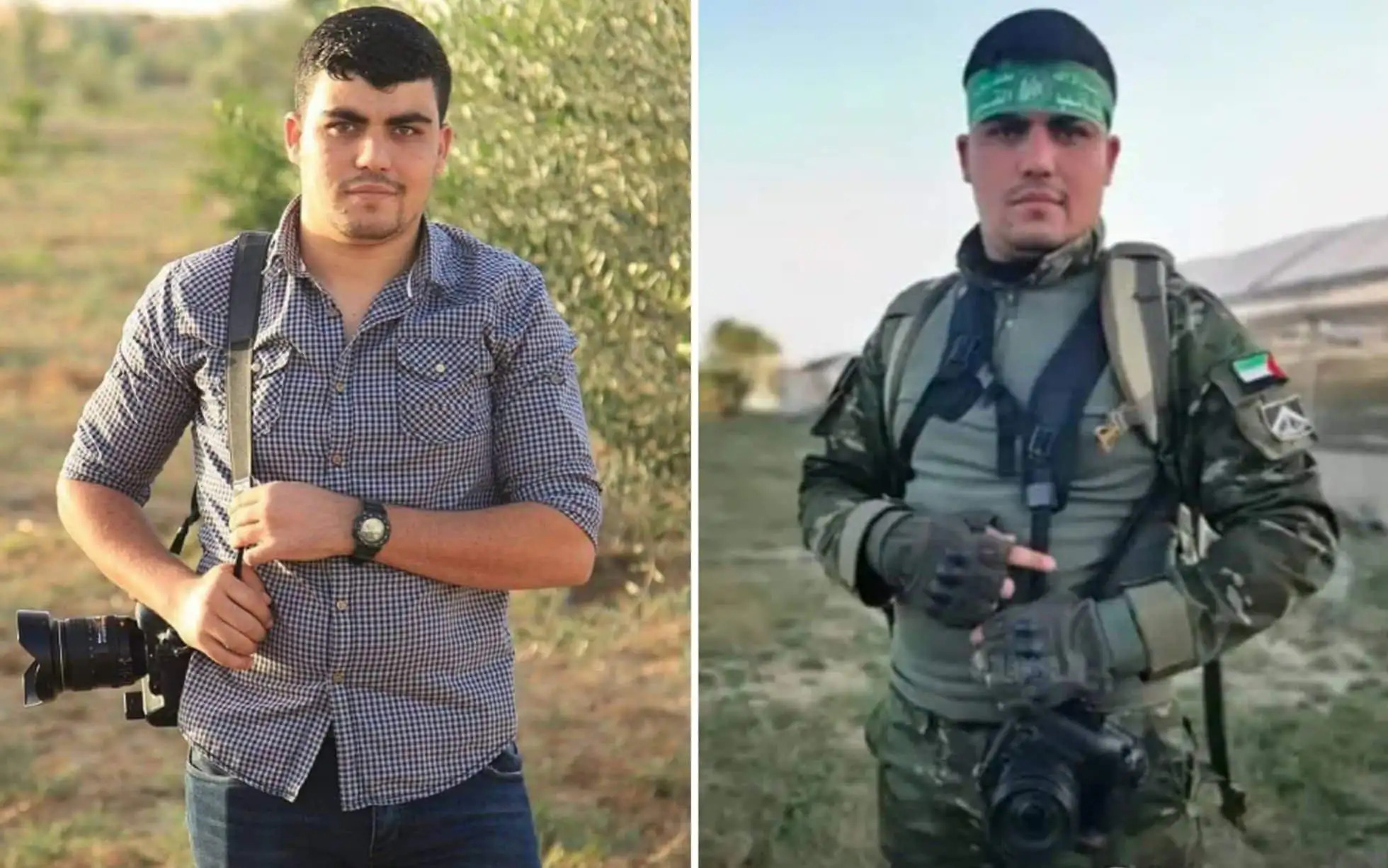
The case of Abdullah Darwish, whom BBC Arabic originally described as a cameraman for Hamas’ Al-Aqsa TV. He was subsequently removed from the CPJ’s list after undeniable evidence emerged showing he had participated in the 7th October attack as a terrorist of Hamas’ Izz ad-Din al-Qassam Brigades. He was even photographed wearing the green headband associated with the terror organisation before he was killed in a targeted airstrike in December 2023.
Another striking case is Yacoup al-Borsh, whom BBC Arabic described as the executive director of Namaa Radio. He was also removed from the CPJ’s list after being identified as a member of the same Hamas terrorist organisation, which prominently featured him on its official page commemorating its “martyrs”.
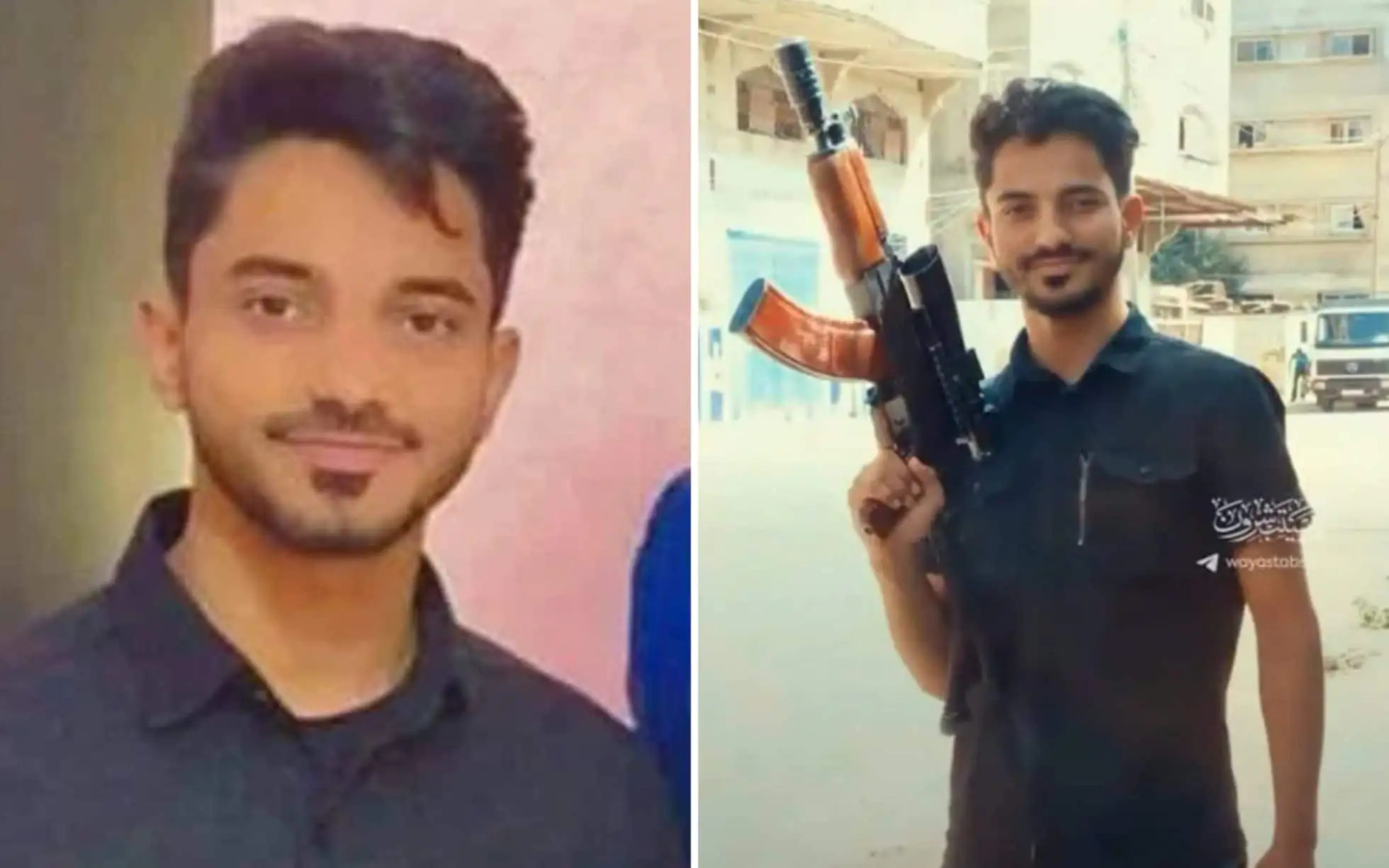
Similarly, Rizq Abu Shakian, whom the BBC described as a journalist in Palestine. However, footage cited in the investigation showed him wearing a Hamas uniform and carrying an automatic rifle. CPJ also lists Abu Shakian among those removed after research established engagement in terrorism.
The deception did not stop there. Another 20 of the 53 individuals were labelled as journalists by the BBC despite terrorist organisations publishing explicit death notices to commemorate them. This group included Mohamed al-Zaq, whose death was commemorated by the Palestinian Islamic Jihad; Mostafa Bakeer, described by Hamas as a field commander in its Rafah Brigade; Abdallah Iyad Breis, honoured by Hamas as a “knight” in its Khan Younis Brigade; and Ahmed Abu Skheil, whom the Palestinian Islamic Jihad openly described as a “martyr”.
Furthermore, the remaining 21 people commemorated by the BBC as “journalists” appeared in online material heavily armed and wearing combat fatigues. Among them, Ahmed Samir Mohamed Washah was filmed actively training with a grenade launcher, while terrorist Amer Abu Ouda was proudly presented as a hero of the Izz ad-Din al-Qassam Brigades.
Not the first time: A pattern of Gaza propaganda
Notably, this is not the first time the BBC has made false claims or attempted to push biased propaganda related to Gaza. OpIndia earlier reported that last year, the BBC admitted that its documentary titled “Gaza: How to Survive a Warzone” was essentially propaganda. The broadcast was found to have breached basic editorial guidelines because it completely failed to disclose a critical conflict of interest: the child who narrated the documentary was actually the son of a member closely linked to the Palestinian terrorist outfit Hamas. Following a damning review commissioned by BBC director general Tim Davie, the corporation acknowledged that the programme should never have been approved for broadcast in the first place.
The documentary itself was produced by an independent company named Hoyo Films and was quietly removed from iPlayer in February of this year after serious concerns emerged regarding the boy’s background. The internal review confirmed that at least three members of the production company were fully aware that the boy’s father was serving as the deputy minister of agriculture in the Hamas-run Gaza government. Astonishingly, not a single person within the BBC was made aware of this vital fact before the documentary went live.
The review heavily criticised the BBC for failing to conduct basic editorial checks, pointing out a severe “lack of critical oversight” during the programme’s production and approval stages. Although the review concluded there was no direct editorial interference by the narrator’s family, it explicitly stated that utilising the child under those specific circumstances was “not appropriate”.
Addressing the fallout, CEO of BBC News Deborah Turness stated that the broadcaster has “owned” its mistakes and confirmed a series of corrective measures. These measures include new oversight rules, tighter narrator vetting, and an internal compliance “first gate” before any high-risk documentary is ever released.
Adding to the controversy, Deborah Turness later addressed a second Gaza documentary titled “Gaza: Doctors Under Attack,” which was also pulled before broadcast due to mounting impartiality concerns. This project faced internal red flags after the lead journalist, Ramita Navai, exhibited problematic social media activity and used language on BBC Radio 4’s Today programme that Turness deemed completely “incompatible” with BBC impartiality standards. Turness remarked, “It made it impossible for us to continue with the project,” adding that no genuine BBC journalist could have uttered such statements on air. In July last year, Navai had stated on the airwaves that Israel is “a rogue state that’s committing war crimes and ethnic cleansing, and mass-murdering Palestinians”.
