

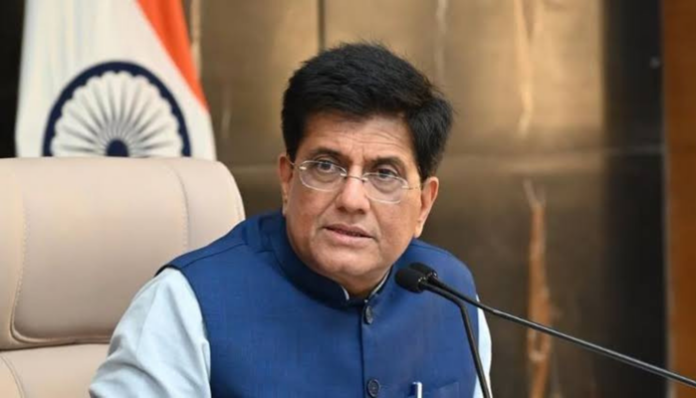
Commerce and Industry Minister Piyush Goyal on Sunday (November 15, 2026) said that the US has agreed to give Indian goods preferential treatment in the American market. The country has assured that it will impose lower duties on Indian goods compared to goods from other competing nations.
The Union Minister made the statement while addressing the media after attending an event organised by the Indian Community Association in Egypt. Goyal said that the agreement was part of a broader framework agreed on by US President Trump and PM Modi a few months ago.
“This was already agreed between the leaders — President (Donald) Trump and Prime Minister Narendra Modi — when they announced that we have both come to a broad framework agreement a few months ago, and it has been acknowledged that India will get preferential trade access in the US with lower duties than our competitor countries,” Goyal said, responding to queries on reports of the US offering India a competitive trade advantage.
#WATCH | Cairo, Egypt: On reports that the US has assured India of a comparative tariff advantage over competing economies under the proposed Bilateral Trade Agreement (BTA), Union Minister Piyush Goyal says, "This was already agreed between the leaders, President Trump and Prime Minister Modi, when they announced that we have both come to a broad framework agreement a few months ago. And it has been acknowledged that India will get preferential trade access in the US with lower duty than our competitive countries."
— ANI (@ANI) November 15, 2026
The first phase of the agreement between India and the US was finalised earlier this year, in February. It is not yet clear to what extent the US will lower duties on Indian goods.
After coming to power for a second time last year, the US President Donald Trump rolled out reciprocal tariffs, which were a centrepiece of his 2024 Presidential campaign. The tariffs that were imposed on nearly all US trade partners, including India, had the stated objective of making trade more balanced by imposing duties on foreign goods entering the US.
Trump initially imposed a 26% tariff on Indian goods, which was later reduced to 18% after PM Modi’s intervention. Trump later said that the tariff reduction was done out of friendship and respect. The tariffs that were widely criticised by economists and experts were eventually struck down by the US Supreme Court in February 2026. The court held that Trump did not have the required authorisation from Congress to impose the tariffs.
