

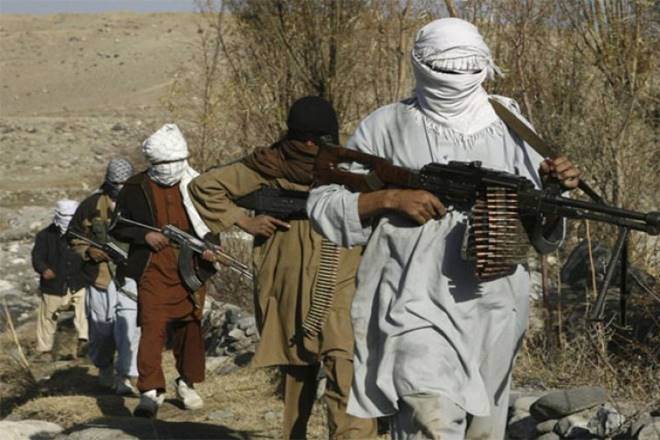
Pakistan is home to stunning mountains, valleys and glaciers. The fabulous cultural patterns throughout such regions pave the way for an unforgettable experience for those who visit.
Sadly, this is not the first thing that comes to mind when Pakistan is mentioned. Pakistan’s strategic territories have been labelled by the United States Defense Secretary as “havens for terrorists.”
Although Pakistan denies that it is a ‘safe haven for terrorists’ its democratic credentials have been suspect from the very beginning, simply due to the fact that the Pakistani state lacks a strategic vision and policy to deal with the ongoing issue of terrorism. For decades, the government has failed to investigate and prosecute terrorists in a proper manner.
Pakistan’s approach towards terrorism is not only a hesitant one, but it is also selective. Many within the diplomatic community had hoped for change under Imran Khan, yet the very few counterterrorism institutions within the country remain weak and dysfunctional. The reason for this is quite obvious, as it has everything to do with the lack of consensus among the country’s politico-military leadership.
Among leading global intelligence agencies, Pakistan is known for its constant support of the Taliban in Afghanistan, as well as terrorist groups within Jammu and Kashmir. These terrorist organizations, as well as others such as Al-Qaeda, consider Pakistan’s government a perfect asset due to the government’s reliance on a particular portrayal of Islam to justify its existence.
Furthermore, it is no secret that Pakistan created and continues to support many of these terrorist groups in order to achieve its geostrategic interests within the subcontinent. A living example would be Pakistan’s complete failure to launch any genuine counterterrorism operations against the Punjabi Taliban or the sources of finance of any Islamist Terrorist groups.
One may wonder why this is the case? The answer is simple: The Pakistani government defines terrorism differently. Not all forms of terrorism are bad in the eyes of the military, especially if it destabilizes regions administrated by India.
The matter doesn’t end here, Pakistani authorities actually strive to silence critics of Islamic terrorism. They plant fear in the hearts of intellectuals by intimidation, arrests and public shaming. In 2018, Pakistani diplomats in Canada have openly threatened outspoken critics Tarek Fatah and Tahir Gora on Canadian soil, while Former Ambassador Husain Haqqani continues to receive threats on social media.
Pakistan’s military will wage war against all critics in order to score points in the race to gain equality with India. The government has its eyes on the diplomatic developments of India while ignoring key issues at home; such as poverty, illiteracy, lack of justice and of course the growing cells of Islamic terrorists.
On the other hand, Pakistan claims that since 2001 it has spent $80 billion on the War on Terror. The Coalition Support Fund continues to reimburse Pakistan for its so-called counter-terrorism operations. Though the reality is that the Pakistani government is more part of the problem than the solution.


