

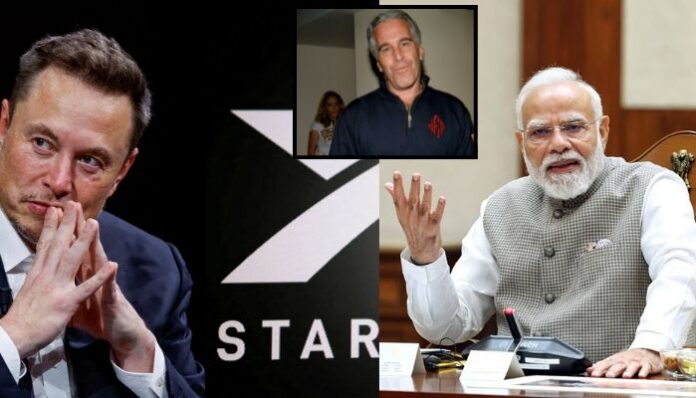
In a dramatic escalation of his push to enter the Indian telecom market, tech billionaire Elon Musk stepped up his personal and political attacks against Reliance Industries Chairman Mukesh Ambani and the ruling Bharatiya Janata Party (BJP), Musk turned to his social media platform, X, to launch a series of blistering posts aimed at Ambani and the political establishment.
Musk’s latest barrage featured screenshots of media reports alleging a close nexus between Reliance and the ruling party. He shared a 2022 Al Jazeera report titled “How a Reliance-funded firm boosts BJP’s campaigns on Facebook” alongside an archived 2024 Indian Express article about Qwik Supply Chain Private Limited. Sharing these articles was part of Musk’s attempt to portray Indian telecom regulations as an insider’s game rigged to protect domestic giants.
https://t.co/DJYynAyO0W
— Elon Musk (@elonmusk) October 10, 2026
This post followed an even more direct jab earlier the same day, where Musk openly mocked Mukesh Ambani’s influence in Indian politics. “Dear Prime Minister Ambani, Please accept my humble apologies for not realising that you are the real boss of India. Naturally, you would prefer to maintain your monopolistic exploitation of the great people of India, but would you nonetheless consider allowing Starlink to compete?” Musk wrote. He further alleged that certain “oligarchs” were seeking to block Starlink in order to “maintain their monopolistic chokehold on the Indian people.”
Dear Prime Minister Ambani, Please accept my humble apologies for not realizing that you are the real boss of India. Naturally, you would prefer to maintain your monopolistic exploitation of the great people of India, but would you nonetheless consider allowing Starlink to compete? There are many areas of India, as there are in all countries, with no Internet access, which denies children the opportunity for education and for small businesses the opportunity to sell their goods to a global market. Starlink would change their lives for the better. Thank you 🙏
— Elon Musk (@elonmusk) October 9, 2026
Reliance has chosen not to publicly respond to Musk’s provocative comments.
Unearthing the Epstein Files: Released documents show Musk’s interest in Epstein’s parties
As Elon Musk poses as a champion of open competition and play against corporate powerhouses in India, he is struggling to defend own reputation back home in the United States. The released Justice Department documents in January this year revealed that Musk had far more extensive and friendly communications with the late convicted sex offender Jeffrey Epstein than he had previously admitted.
The Department of Justice made public a massive tranche of 3 million documents, shedding light on Epstein’s networks with world leaders, politicians, and business titans. Among these files were email threads showing Musk and Epstein cordially messaging each other between 2012 and 2013 to schedule a trip for Musk to Epstein’s private Caribbean island, Little St. James.
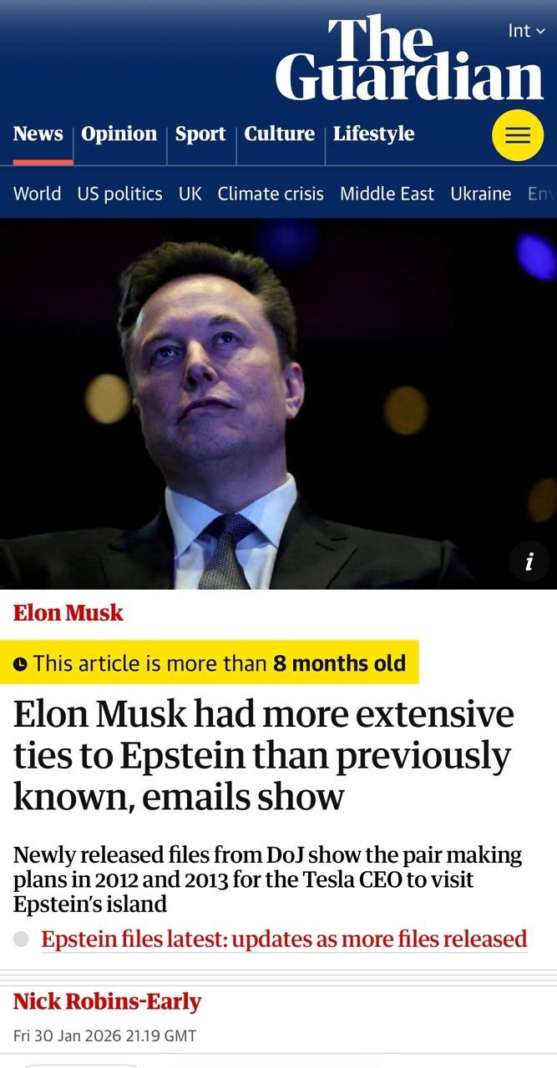
In November 2012, Epstein emailed Musk asking, “How many people will you be for the heli to island”. Musk replied, “Probably just Talulah and me. What day/night will be the wildest party on your island?” referring to his former wife, Talulah Riley. On Christmas Day in 2012, Musk wrote back to another invitation from Epstein: “Do you have any parties planned? I’ve been working to the edge of sanity this year and so, once my kids head home after Christmas, I really want to hit the party scene in St Barts or elsewhere and let loose. The invitation is much appreciated, but a peaceful island experience is the opposite of what I’m looking for.” Epstein responded, “Understood , I will see you on st Barth, the ratio on my island might make Talilah uncomfortable,” to which Musk quipped, “Ratio is not a problem for Talulah.”
Logistical issues ultimately prevented the trip from taking place. On 13th December 2013, Musk checked in again: “Will be in the BVI/St Bart’s area over the holidays. Is there a good time to visit?” Epstein answered, “any day 1st – 8th . play it by ear if you want. always space for you.” The two settled on 2 January, but Epstein had to cancel because he was held up in New York, writing to Musk, “Bad news- Unfortunately , my schedule will keep me in New York . I was really looking forward to finally spending some time together with just fun as the agenda. so i am very disappointed.”
These revelations starkly contradict Musk’s previous statements, shortly after Epstein’s arrest in July 2019. The Tesla CEO told Vanity Fair in 2019 that Epstein was “obviously a creep” and claimed that Epstein “tried repeatedly to get me to visit his island. I declined.” While Musk previously admitted to visiting Epstein’s Manhattan apartment for 30 minutes with Talulah Riley for book research, he always maintained he turned down island invitations. He also claimed that a widely circulated photograph showing him with Epstein’s co-conspirator, Ghislaine Maxwell, was merely a case of her “photobombing” him at a party.
The DOJ files also include records from Epstein’s assistant, Lesley Groff, making plans for Epstein to have lunch at SpaceX headquarters on 25th February 2013, as well as friendly congratulatory notes sent by Epstein after SpaceX rocket launches.
Earlier, in September 2025, documents released by Congressial Democrats on the US House Oversight Committee also mentioned Musk’s name. One entry in Epstein’s schedule, dated 6th December, 2014, read: “Reminder: Elon Musk to island Dec. 6 (is this still happening?)”
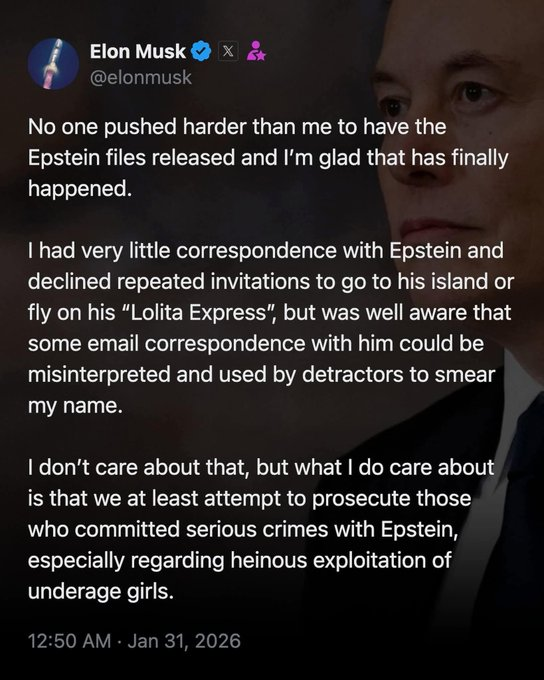
In response to the document release, Musk took to X and attempted to clarify his position, insisting he had nothing to hide. “No one pushed harder than me to have the Epstein files released and I’m glad that has finally happened. I had very little correspondence with Epstein and declined repeated invitations to go to his island or fly on his ‘Lolita Express’, but was well aware that some email correspondence with him could be misinterpreted and used by detractors to smear my name. I don’t care about that, but what I do care about is that we at least attempt to prosecute those who committed serious crimes with Epstein, especially regarding heinous exploitation of underage girls,” Musk posted.
SpaceX paid $250,000 to settle sexual Misconduct case against Elon Musk
Compounding the intense scrutiny surrounding Musk’s sexual misconduct, revelations surfaced regarding a $250,000 settlement paid by SpaceX in 2018 to resolve a sexual misconduct case involving Musk. The case involved a flight attendant who worked on a contract basis for SpaceX’s corporate jet fleet.
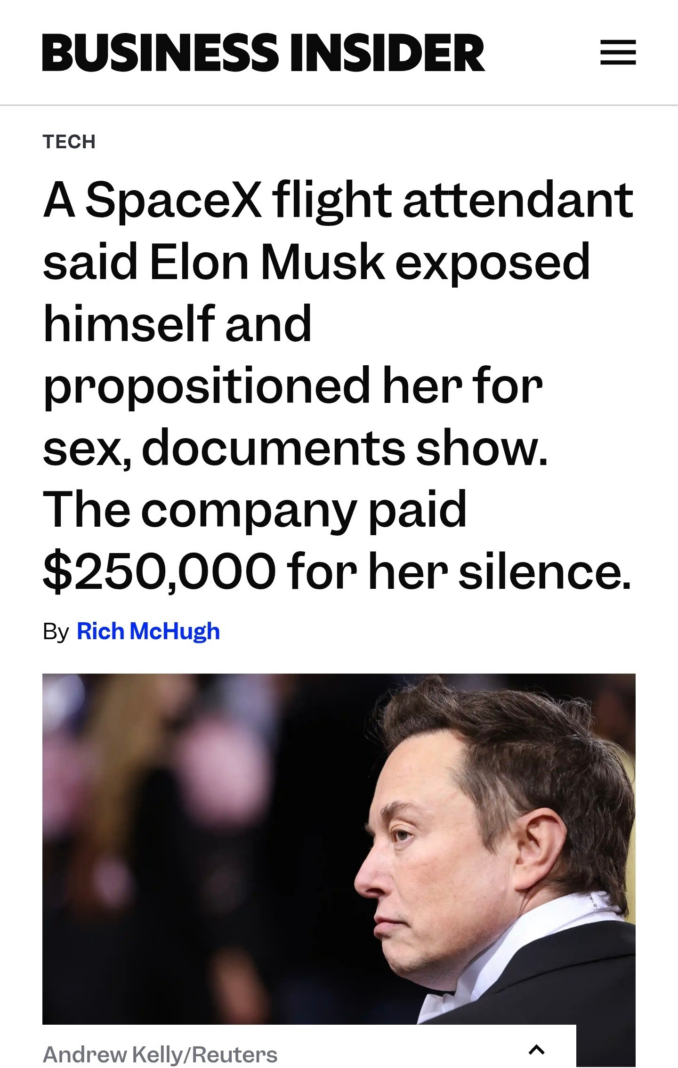
According to a declaration signed by a friend of the attendant, the flight attendant was encouraged by her superiors to complete professional masseuse training at her own expense so she could provide massages to Musk during flights. During a late 2016 flight to London inside a private cabin on Musk’s Gulfstream G650ER jet, Musk asked her to come to his room for a full-body massage. The attendant found Musk completely naked except for a sheet covering the lower half of his body. During the massage, Musk exposed his erect penis, touched her thigh without consent, and offered to buy her a horse if she would perform sex acts. The attendant declined the proposal and continued with the massage without engaging in sexual conduct.
Following her refusal, the flight attendant experienced retaliation, with her work shifts cut back significantly. Feeling pushed out, she retained a California employment lawyer in 2018 and submitted a complaint to SpaceX’s HR department. The matter was resolved quickly following a mediation session attended by Musk personally, culminating in a $250,000 severance payment bound by strict non-disclosure and non-disparagement agreements.
Global security concerns: Starlink’s connection to crime and terrorism
Beyond Musk’s controversial personal ties, Indian national security agencies and global law enforcement bodies have serious reservations regarding the deployment of Starlink technology. Around the world, Starlink’s high-speed, satellite-based internet terminals have repeatedly ended up in the hands of terrorist groups, scam syndicates, and violent criminals.
The threat has already hit close to home for India. Security forces in Manipur recovered Starlink satellite equipment from Kuki terroists groups, raising alarm bells over how advanced communication systems are being smuggled across borders into sensitive conflict zones.
This issue extends far beyond India’s borders. In Myanmar, signal intelligence reports revealed that transnational crime syndicates rely heavily on Starlink systems to run massive online scamming hubs targeting victims worldwide. Security forces raiding a Chinese-run scam centre in Myanmar seized 30 Starlink satellite units that provided high-speed connectivity for international fraud operations.
🧵Important As Elon Musk claims that ‘oligarchs’ in India are allegedly running a monopoly and blocking Starlink, read how his satellite internet system has been repeatedly used by terror outfits (1/n) https://t.co/Y68RGNK7dT
— OpIndia.com (@OpIndia_com) October 8, 2026
In Africa, violent extremist organisations have exploited Starlink to coordinate brutal campaigns. Islamic terror groups, including Jama’at Nasr al-Islam wal-Muslimin (JNIM), Boko Haram, and the Islamic State West Africa Province (ISWAP), actively smuggle portable Starlink terminals across the borders of Nigeria and Libya into the Sahel region. By deploying these satellite kits across Mali, Niger, and Burkina Faso, terrorist organisations circumvent traditional telecom blackouts and enhance their command-and-control capabilities.
In South America, Brazilian authorities discovered Starlink terminals installed at illegal gold mining sites deep within remote Amazonian rainforests, where wildcat miners used the internet connection to evade police raids and organise logistics.
Starlink’s potential for geopolitical misuse became glaringly evident during the conflict in the Middle East. Elon Musk triggered massive international concern when he announced plans to provide Starlink satellite internet to recognised aid organisations in Gaza following an internet blackout during military operations. The decision drew fierce opposition from Israeli authorities, who warned that the terrorist group Hamas would inevitably hijack the connectivity to plan and carry out insurgent attacks.
Indian government dismisses allegations, prioritises National security
Given the real-world security risks demonstrated across multiple continents, the Indian government has firmly rejected Musk’s narrative that Starlink is being blocked to shield domestic monopolies like Reliance. Official statements emphasise that telecom licensing is strictly a matter of national security and regulatory compliance, not political favouritism.
Addressing Musk’s aggressive social media posts, the government clarified its position, stating: “The Government has put in place a fair and non-discriminatory authorisation framework for all telecommunication services, including satellite communication services. Under this, telecom licences have been granted to three Global Mobile Personal Communication by Satellite services based on non-geosynchronous satellite orbit-based satellite communications, as part of its commitment to enable provision of satellite communication services in India.”
India dismisses Elon Musk’s claim on "oligarchs" blocking starlink: https://t.co/zJchUe20oo
— Sidhant Sibal (@sidhant) October 8, 2026
The government made it clear that every operator seeking to offer satellite broadband must undergo rigorous security vetting before being allowed to operate or receive spectrum assignments. “Under the terms and conditions of license, every such licensee is required to demonstrate compliance with security conditions. This is aimed at ensuring that services provided meet various security requirements to ensure safety of all users and their data. Security assessment as part of this process is currently under way in respect of all the three licensees,” the government explained.
Rubbishing claims of cronyism, official authorities confirmed that all applicants are treated equally and face the exact same security standards. “As and when this process is completed for a licensed entity, it may proceed to the next step of seeking assignment of spectrum. At present, all three entities are at broadly the same regulatory stage. As such, the suggestion that the framework or its application is unfair or discriminatory is baseless and misconceived,” the statement concluded.
Ultimately, while Elon Musk continues his public relations war against Mukesh Ambani and the Indian government, New Delhi remains steadfast. Facing valid security concerns illuminated by global instances of Starlink misuse, the government is taking a cautious, safety-first approach to protect national sovereignty and consumer data before handing over the keys to India’s digital skies.


