

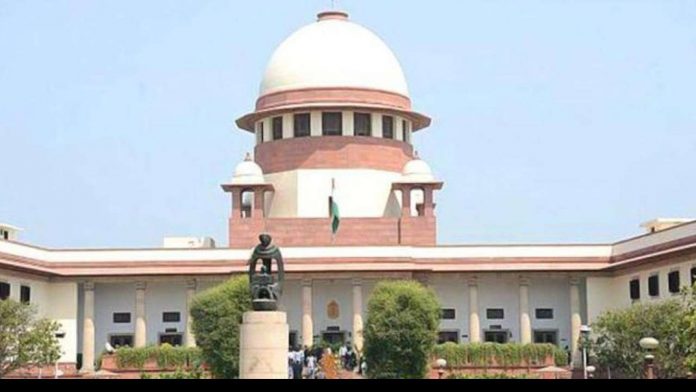
While pronouncing judgment in several cases on OBC quota in medical colleges of Tamil Nadu, the Supreme Court has said that the right to reservation is not a fundamental right. The three-judge Bench of Justices L Nageswara Rao, Krishna Murari and Ravindra Bhat objected to the petitions filed under Article 32 of the Constitution of India by political parties DMK, AIADMK and others.
Lack of quota benefits is not a violation of constitutional rights
Justice Rao categorically stated that no one has the right to claim reservation as a fundamental right. Thus, if the state does not provide quota benefits, it is not a violation of any constitutional right. He added that as per the current law right to reservation is not a fundamental right. The bench was hearing petitions against the Tamil Nadu government for not keeping reserved seats for OBC students in the medical colleges.
Petitioners asked for 50% OBC reservation in medical and dental courses
CPI, DMK, AIADMK and others had filed several petitions and asked for 50% OBC reservation in colleges for undergraduate, postgraduate medical and dental courses in 2020-21. The petitioners said that Tamil Nadu provides 69% reservation for SC, ST and OBCs out of which 50% seats are reserved for OBCs. They asked the court to ensure that 50% of OBC candidates get admission in medical colleges out of the seats that Tamil Nadu surrendered under All India Quota.
The petitioners said in their pleas that if OBC candidate is denied admission, it is a violation of his or her fundamental right. They mentioned in their petitions that the OBCs did not get appropriate representation in the past academic years. The petitioners requested the court to stay the counseling under NEET till the court decides on the reservation.
SC objected to petitions filed under Article 32
The Supreme Court was not impressed with the submissions made by the petitioners. The bench questioned the petitioners under which law they filed a petition under Article 32 as the right to have reservation benefits is not a fundamental right. The court further asked the petitioners to explain whose fundamental rights are being violated by denying reservation.
The court added that they appreciated the efforts political parties in Tamil Nadu putting in for the cause, but they refused to entertain the plea. The court further asked them to file the petition in Madras High Court. The petitioners asked for permission to withdraw the petitions to which Supreme Court obliged.
In February 2020, the Supreme Court had passed a verdict in which they said that no one could claim reservation in public jobs stating it as a fundamental right. The judgment also noted that no court has the right to order a state government to provide reservation to SC/STs.


