Home Blog Page 1300

’16 lakh fake or duplicate votes’: BJP urges West Bengal Chief Electoral Officer to address the issue

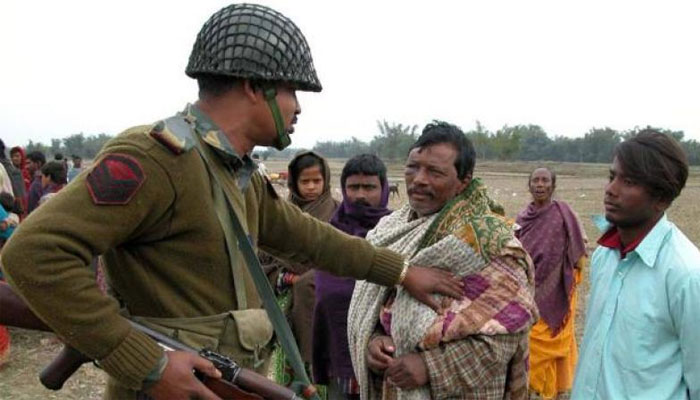
On 28th February, a Bharatiya Janata Party (BJP) delegation led by Suvendu Adhikari submitted a memorandum to the Chief Electoral Officer of West Bengal alleging there were 16 lakh fake or duplicate votes in the state. The six-member delegation urged the commission to take immediate steps to address the issue. Notably, the BJP has been raising the issue of fake voters for years. They have pointed out that illegal Bangladeshi immigrants got access to voter cards in the state.

Addressing the media after the meeting with the CEO, Adhikari said, “Around 16 lakh fake voters have been found in West Bengal. There is evidence of double entry and deceased individuals are still named on the voters’ list. We have presented our findings to the ECI, alleging that these discrepancies were brought to facilitate the casting of fake votes in favour of the Trinamool Congress (TMC).”

Furthermore, he said that there were assurances in the past that the duplicate voters would be removed but no action was taken. He said, “Despite assurances of weeding out duplicate voters, nothing much was achieved. We regret to put on record that practically no steps were taken. There are around 16 lakh duplicate names in the voter list. Most interestingly, the gap between votes polled by the TMC and the BJP in 2019 was around 17 lakh only.”

Furthermore, they requested to conduct the 2024 Lok Sabha Elections in West Bengal in 42 phases as there are 42 Lok Sabha seats in the state. They asserted it would help in curbing malpractice.

BJP has been raising issue of illegal Bangladeshi immigrants getting voter cards for years

This is not the first time the BJP has raised the issue of fake or duplicate voters in the state of West Bengal. In December 2023, BJP MP Nishikant Dubey pointed out the problem of Bangladeshi illegal immigrants in the country and demanded that the Central government implement the National Register of Citizens (NRC) as soon as possible. Dubey is an MP from Jharkhand’s Godda. He has raised the issue multiple times in the Lok Sabha since he resumed office. Dubey alleged that the demography in many parts of West Bengal, Bihar and Jharkhand was changing because of the increasing number of illegal immigrants from Bangladesh.

He said, “When Mamata Banerjee was MP she had said the demography of Bengal was changing because of Bangladeshis. Since she became chief minister, Malda, Murshidabad and Kaliachak, is full of Bangladeshi infiltrators. The same is the situation in Katihar, Kishanganj, Araria, Purnia, and Bhagalpur (of Bihar). Demography is changing because of Bangladeshis.”

In November 2022, the Central Government alerted the Director General of Police of States and Union Territories about the illegal Bangladeshi immigrants living in India. They told the DGPs to take appropriate action against the illegal immigrants who sneaked into the country via West Bengal. As per reports, a well-connected network of agents and locals in West Bengal facilitated the entry of illegal immigrants. They also helped them in obtaining documents including bank passbooks, voter cards, Aadhaar cards and PAN cards. After entering into India, the illegal immigrants migrated to several other states as well including Kerala, Karnataka and Tamil Nadu. 

In November 2022, West Bengal MLA Khokan Das stirred a controversy by saying that the Bangladesh immigrants who support TMC should get a place on the voter’s list. He said, “Many new people are coming…they are from Bangladesh. Many of these people vote for the BJP based on Hindu sentiments. Please ensure that only those who support our party get a place in the voters’ list.” The alleged statement was given during a public meeting in Bardhaman town and the video could not be independently verified by OpIndia. Later, speaking to the media, he claimed that he told the party workers that, “Illegal Bangladeshi immigrants are entering our area every day. I gave a message to TMC workers that their names should not find a place in the voters’ list.”

Reacting to the controversy, BJP’s Bardhaman organisational district’s spokesperson Soumyaraj Mukhopadhyay said MLA should inform the Centre and State government about the illegal immigrants. He added, “This is why we will implement the Citizenship [Amendment] Act.” TMC on the other hand claimed that the MLA’s statement was misconstrued.

The issue of illegal immigrants has been a political matter for years. In January 2020, BJP leader Dilip Ghosh said the National Register of Citizens would be implemented soon and one crore Bangladesh illegal immigrants would be sent back to their home country. He further alleged that the illegal immigrants were living on subsidised rice that the state government was providing for Rs 2 per KG. “These illegal Bangladeshi Muslims are involved in arsons across the state,” He said.

In October 2018, the Union Home Ministry sent details of 1.5 lakh illegal Bangladeshi immigrants to the West Bengal government. BJP leader Sidharth Nath Singh accused the Mamata Banerjee-led state government of hiding the information sent by the central government. He said, “The Union government has forwarded to the state government the details of about 1.5 lakh illegal Bangladeshi immigrants who are currently staying in West Bengal. But the state government is hiding the fact. I do not understand why they are doing so. The state government should understand that it is all about national security since people staying in West Bengal illegally is nothing but a criminal offence.”

In 2016, the Central Government informed the Rajya Sabha that there were around 2 crore illegal Bangladesh immigrants living in the country. Notably, before the 2016 revelation, in 2004, then minister of state for Home Sriprakash Jaiswal told the Rajya Sabha that there were 1.2 crore illegal Bangladesh immigrants living in India out of which around 57 lakh were living in West Bengal. In his reply to Rajya Sabha, then Union Minister of State for Home Kiren Rijiju said, “Deportation of illegally staying foreign nationals is a continuous process.”

In 2014, during his election rally in May, then-prime Ministerial Candidate Narendra Modi threatened to deport Bangladeshi immigrants if NDA came to power. He accused the state government of welcoming illegal immigrants with the red carpet for vote bank politics.
Hyderabad: Sahnaz Khan kidnaps 9-month-old baby of her employer, had started working as house-help only 2 days ago

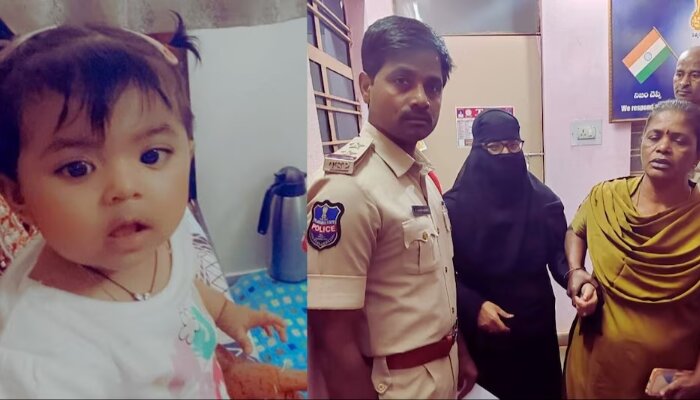
A shocking case has come to light in Hyderabad where a woman named Sahnaz Khan abducted a nine-month-old baby. The incident occurred in Madannapet neighbourhood in Hyderabad at about 8 pm on the night of 2nd March. The perpetrator started working at the household only two days before she committed the crime.

After the kidnapping came to light, it became a challenge for the authorities to recover the infant safely. However, the child was successfully rescued within a few hours by the police personnel in a swift response operation. Notwithstanding the grave circumstances, an extensive investigation by the police led them to the baby who was discovered in Zaheerabad, Telangana.

The police thoroughly examined the CCTV footage material in the early phases of the inquiry which helped them identify the culprit. Sahnaz was captured carrying the child in the recorded video. The accused had boarded the bus from Mahatma Gandhi Bus Station (MGBS) to Zaheerabad. The Zaheerabad police were promptly notified by the Madannapet police officials of the development and tipped off to apprehend her, ensuring a coordinated effort between the two sides.

The police caught the woman and securely retrieved the child when the bus arrived at the location. The family members breathed a sigh of relief when the cops found the baby and expressed their gratitude to the Madannapet and Zaheerabad police for their prompt action. The child was later reunited with his family, bringing a quick resolution to the distressing problem.

Notably, it was also discovered that the offender was recently employed as a house-help in the residence where the abduction took place. She had started working at the house just a couple of days before the crime. However, the police managed to save the child and arrest Sahehnaz Khan before the situation escalated into a major crisis.

MRP means Minimum Price: Rahul Gandhi bizarrely equates Maximum Retail Price on consumer goods with Minimum Support Price on crops

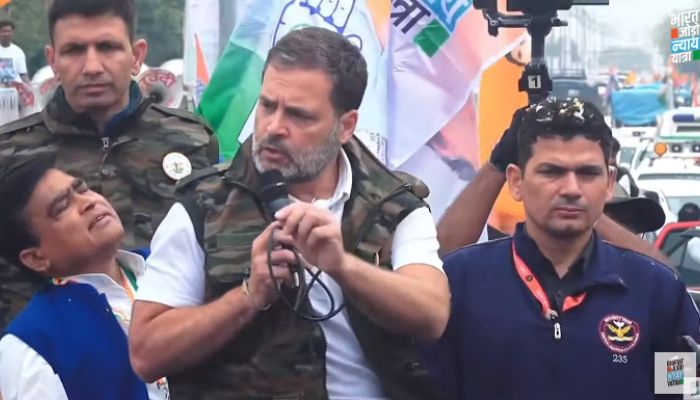
In a bizarre analogy, Congress scion Rahul Gandhi equated the Minimum Support Price (MSP) declared on crops with the Maximum Retail Price (MRP) set on commodities like FMCG products. Rahul Gandhi gave this false equivalence while addressing his supporters in Gwalior, Madhya Pradesh. 

Notably, on 2nd March, the Congress prince resumed his Yatra from Madhya Pradesh after taking a break for a paid, private event at the Jesus College of the University of Cambridge. While extending support to the demand of the protesting farmers to legalise MSP, Rahul Gandhi argued that the MSP for farmers is like the MRP for shopkeepers. He added that shopkeepers can’t sell their commodities like cameras, chips, and water bottles below the designated MRP. 

The specific reference equating MRP with MSP can be heard at 18 minutes and 21 minutes into these two videos uploaded by the official YouTube handle of the Congress party, video links here and here respectively. 

However, MSP and MRP are two different and contrasting limits, and contrary to the claims of Congress leader Rahul Gandhi, retailers/shopkeepers are not legally or otherwise barred from selling below the Maximum Retail Price set on several commodities. In fact, as normal market practice, to maximise sales, retailers do offer discounts and sell commodities below the MRP rate.  

Incidentally, the leftist ecosystem had earlier manufactured this false equivalence to intellectualise the demand for MSP. Evidently, on 22nd February, Sumant Banerji, the National Editor of LiveMint, came up with a bizarre justification to argue in favour of MSP legalisation. Taking to X, he also compared the Minimum Support Price to the Maximum Retail Price (MRP) of products sold in general stores.

Meanwhile, several netizens slammed and mocked the Congress leader for making false equivalences of MSP and MRP.  

An X user wrote, “He doesn’t know the difference between MSP and MRP. And dreaming of becoming PM.” 

Lawyer and BJP media panelist, Charu Pragya tweeted, “Rahul Ji is so smart! No wonder Cambridge gaye the! He doesn’t know it’s “Maximum Retail Price” and he doesn’t know the printed price means a product can’t be sold ABOVE that price. Koi batao Rahul Ji ko MSP and MRP are different (and opposite!)”

Author and BJP Spokesperson Tuhin Sinha wrote, “The Gandhi siblings needs an urgent crash course in MSP, MRP, GST et al..”

MRP and MSP differences explained

The Central Government sets the minimum support price (MSP) for crops using a formula that considers production costs and sets the price at one-and-a-half times these expenses. This method considers both explicit costs (A2), which include expenses for items such as seeds, fertiliser, pesticides, fuel, irrigation, hired labour, leased-in land, and the estimated value of unpaid labour performed by family members (Family Labour or simply FL). Notably, the government decides MSP for 22 mandated crops based on recommendations from the Commission for Agricultural Costs and Prices (CACP), state governments, and relevant Central Ministries /Departments.

Now, coming to Maximum Retail Price, the Maximum Retail Price (MRP) is a type of price regulation used to regulate the price at which consumer goods are permitted to be sold. The MRP is the maximum price that can be charged for a specific product, and it is usually stated on the product packaging or label.

Unlike MSP, the MRP is not decided by the government. It is decided by the manufacturers to safeguard consumers from overpaying for products by ensuring that it is not sold at a higher price than the MRP. While the government is bound to procure the crops at MSP, in the case of MRP, the retailers often sell items at prices lower than the MRP by undercutting their margin and offering discount.

Also, the Kirana shop owner would get an MRP on a product only if it is sold. On the other hand, the farmers are demanding MSP as a legal right meaning that the government will be bound to purchase the crops farmers want to sell regardless of its demand. The customers have no legal obligation to buy the products from a Kirana store.

The comparison of two different contrasting ‘Maximum’ and ‘Minimum’ limits is akin to comparing apples and oranges which neither holds water in the logical domain nor in legal or political sphere.  

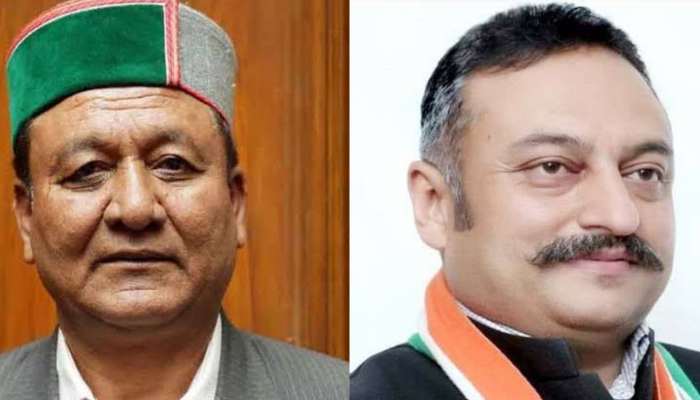
High drama in Himachal Pradesh: Two Congress ministers leave cabinet meeting midway after ‘heated debate’

The Himachal Pradesh cabinet meeting on Saturday, 2nd March, witnessed high drama as Minister of Horticulture, Revenue and Tribal Minister Jagat Singh Negi, and Education Minister Rohit Thakur left in the middle of the meeting over policy decisions following a heated debate. However, Thakur later returned when Deputy Chief Minister Mukesh Agnihotri calmed him down. Furthermore, the Industries Minister along with portfolios of Parliamentary Affairs Harshwardhan Chauhan and Public Works Minister Vikramaditya Singh who is visiting Udaipur, Rajasthan, for “personal work” were not present at the meeting either.

According to people with knowledge of the events, Rohit Thakur left following a contentious argument over differing opinions on decisions pertaining to the education department. However, when the minister spoke to the media thereafter, he claimed that he left the meeting due to “personal reasons” that left him “emotionally disturbed.”

Rohit Thakur mentioned, “We are Pahari people and we get emotional, I dropped my son at his hostel in the morning.” He met with Mukesh Agnihotri in his chamber before returning to the meeting but said that he left for a little while to see someone and returned later.

Chief Minister Sukhvinder Singh Sukhu presided over the meeting, which Jagat Negi stated began at approximately 12.30 pm rather than the planned 11 am and conflicted with another appointment he had. It was getting late, he remarked, so he left the meeting.

Rumours about unrest in Himachal Congress gained momentum when Mukesh Agnihotri was seen running after Negi. According to the sources, the purpose of the meeting, the second ministerial session in three days, was to address the building dissatisfaction among ministers concerning Chief Minister Sukhvinder Singh Sukhu’s leadership.

The Chief Minister asked Rohit Thakur to update the media on the decisions taken by the government in the cabinet meeting, seemingly to downplay the tensions. Ayush, Youth Services & Sports Ministe,r Yadvinder Goma, and Minister of Technical Education, Vocational and Industrial Training, Rajesh Dharmani, were with him during the news briefing.

Later, Jagat Negi and Yadvinder Goma headed to Chandigarh. According to reports, the six disqualified lawmakers who are camped in Panchkula could speak with the two leaders. Jagat Negi informed, “I am going to Chandigarh but can not disclose the purpose of my visit. I will tell you later.”

The latest cabinet reshuffle resulted in the technical education department being reassigned to newly-appointed minister Rajesh Dharmani, further straining Rohit Thakur’s relationship with the Chief Minister. Afterwards, Rohit Thakur was assigned the additional charge of stationery and printing. Harshwardhan Chauhan had also lost the Ayush department and was given the department of labour and employment.

Chief Minister Sukhvinder Singh Sukhu is a liar: Rebel Congress MLA

Rajinder Rana, a rebel Himachal Pradesh Congress MLA, stated earlier in the day that nine other party legislators were in contact with them (six disqualified lawmakers) because they too were “feeling suffocated” by the Chief Minister’s style of functioning. Accusing that the Chief Minister was attempting to distort the truth, Rana referred to Sukhvinder Singh Sukhu as “liar number one.”

Rajinder Rana noted, “Neither Public Works Department Minister Vikramaditya Singh had told the Chief Minister that he is meeting the Congress rebels at Panchkula nor the CM had sent him. Vikramaditya Singh, who met us on his way to Delhi, did not ask us to patch up. He has his grievances against the government which failed to provide land for installing Virbhadra Singh’s statue and interfered in Vikramaditya’s functioning.”

Despite calling the six rebel MLAs “black serpents,” the Chief Minister claimed to have asked Vikramaditya Singh to meet with the rebels who had cross-voted in the Rajya Sabha election.

Political turmoil in Himachal Pradesh

The Congress is in firefighting mode in the hill state after the Bharatiya Janata Party won the state’s lone Rajya Sabha seat despite being in the minority with just 25 MLAs against 40 of Congress, as nine MLAs, including six from the ruling party, voted for the saffron party. Assembly Speaker Kuldeep Singh Pathania disqualified six Congress MLAs for abstaining from voting on the Cut Motion and the Finance Bill. He stated, “Six MLAs, who contested on Congress symbol, attracted provisions of anti-defection law against themselves. I declare that the six people cease to be members of the Himachal Pradesh Assembly with immediate effect.”

Vikramaditya Singh had also announced his resignation from the Cabinet following the cross-voting. He asserted, “All I would like to say is that under the current circumstances, it is not correct for me to continue as a part of the government. So, I have decided that I am resigning from the Council of Ministers. I am resigning as a minister.” However, he later backed down after meeting with Congress observers Bhupinder Singh Hooda and DK Shivakumar who reported that the resignation had been rescinded.

According to the sources, the observers informed the party’s central leadership that MLAs and ministers are “extremely dissatisfied” with the Chief Minister. Party insiders, however, disclosed that they recommended Sukhvinder Singh Sukhu to stay on as Chief Minister until the upcoming general election.

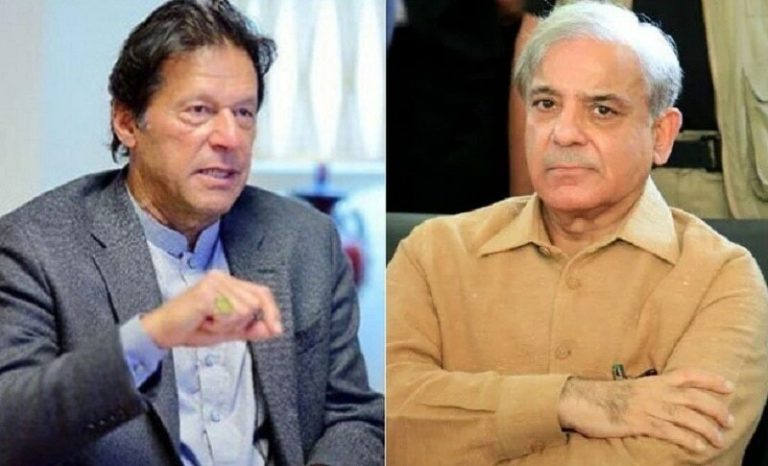
Pakistan: Shehbaz Sharif, brother of Nawaz Sharif, set to become PM despite his party getting defeated by Imran Khan’s independents in the election

0

 Pakistan Muslim League-Nawaz (PML-N) President Shehbaz Sharif, who is the prime ministerial candidate for the newly-formed eight-party alliance, is poised to take the PM’s seat for the second time, Pakistan-based Dawn reported.

He will face Pakistan Tehreek-e-Insaf (PTI)-nominated Omar Ayub Khan in the contest scheduled to be held in the newly constituted National Assembly on Sunday.

The two leaders submitted their nomination papers to the National Assembly Secretariat, which Pakistan’s National Speaker Ayaz Sadiq declared valid after the scrutiny, conducted in the presence of the leaders from both sides.

According to the National Assembly Secretariat, Shehbaz Sharif submitted eight nomination papers while Omar Ayub Khan submitted four nomination papers which included signatures of different proposers and seconders, according to Dawn’s report.

Omar Ayub Khan had objected to Shehbaz Sharif. He said Shehbaz Sharif was ‘gifted’ his NA seat through manipulation in Form-47. He said the PML-N President could not contest the Pakistan PM election as he had lost the constituency as per Form-45.

In a post on X, he said “Shehbaz Sharif has been wrongly administered the oath as Member of Pakistan’s National Assembly and he cannot be a candidate for the prime minister’s post. However, the objection raised by Omar Ayub Khan has been rejected.”

After getting the offices of the speaker and the deputy speaker in nearly one-sided contests on Friday, the newly-formed alliance seems confident to take over the post of Pakistan PM.

Meanwhile, the PTI lawmakers, who had been elected as independents and later joined the Sunni Ittehad Council (SIC), are expected to continue their protest in the house over the alleged rigging in the elections conducted on February 8.

Apart from PML-N, Sharif is supported by the PPP, MQM-P, PML-Q, BAP, PML-Z, IPP, and the NP which implies that he has the backing of 205 members. Two MNAs-elect from the MQM-P and PPP have yet to take the oath. To become the leader of the house, Sharif needs 169 votes in the 336-member house.

Meanwhile, the PTI-backed opposition has 102 lawmakers. Out of those, one member has not taken the oath. Meanwhile, the JUI-F and BNP-Mengal are likely to boycott the elections.

At present, 304 lawmakers have taken oath while the Election Commission of Pakistan (ECP) has so far withheld the notification of 23 reserved seats for women and minorities.

On Friday, PML-N’s Sadiq won the Speaker’s election after securing 199 votes against his rival PTI leader Amir Dogar, who won 91 votes in the house.

The elections of the speaker and deputy speaker were held through a secret ballot amid protests by PTI lawmakers who declared it “unconstitutional.”

The eight JUI-F members and BNP-M chief Akhtar Mengal, who had boycotted the elections for the speaker and the deputy speaker, have not made any announcement regarding their participation in the Pakistan Prime Minister’s election, Dawn reported.

However, Maulana travelled to Karachi on Saturday night, indicating he would not be in the assembly for the PM’s poll. The election will be conducted in the NA under Article 91 of the Constitution.

Article 91(3) reads, “After the election of the speaker and the deputy speaker, the National Assembly shall to the exclusion of any other business, proceed to elect without debate one of its Muslim members to be the prime minister.”

Article 91(4) of the Constitution reads, “The prime minister shall be elected by the votes of the majority of the total membership of the National Assembly: provided that, if no member secures such majority in the first poll, a second poll shall be held between the members who secure the two highest numbers of votes in the first poll and the member who secures a majority of votes of the members present and voting shall be declared to have been elected as prime minister.”

The procedure for the polls is mentioned in Chapter IV and Second Schedule of the Rules and Procedure for the Conduct of Business in the National Assembly 2007.

As per the Second Schedule, “Before voting commences, the speaker shall direct that the bells be rung for five minutes to enable members not present in the chamber to be present. Immediately after the bells stop ringing, all the entrances to the lobby shall be locked and the assembly staff posted at each entrance shall not allow any entry or exit through those entrances until the voting has concluded,” Dawn reported.

The speaker will ask the members who are willing to vote in favour of the candidates to go to the allocated lobbies through the entrance where tellers shall be posted to record the votes.

Upon reaching the tellers desk, each member shall, in turn, call out the division number allotted to them as per the rules. The tellers shall then mark off the number on the division list simultaneously calling out the name of the member, Dawn reported.

To ensure that his vote has been properly recorded, the member shall not move until they have heard the tellers call his/her name. After the recording of his/her vote, the member shall not return to the chamber until bells are rung.

When the speaker gets information that all the members willing to cast votes have recorded their votes, he shall announce that the voting has ended. Following this, the secretary shall cause the division list to be collected, count the recorded votes, and present the result of the count to the speaker.

The speaker will then direct that the bells be rung for two minutes to allow the members to come back to their chamber. After the bells stop ringing, the Assembly’s Speaker will announce the result in front of lawmakers.

(This news report is published from a syndicated feed. Except for the headline, the content has not been written or edited by OpIndia staff)

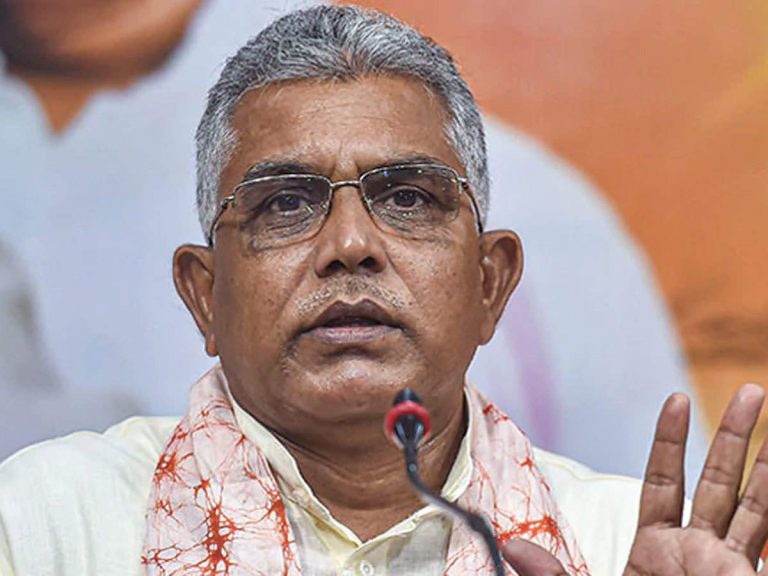
“Protected a criminal, rapist…”, BJP MP Dilip Ghosh slams TMC over Sandeshkhali

0

Tearing into Trinamool Congress government in West Bengal over allegations of “sexual abuse” and “land grab” in the Sandeshkhali area of North 24 Parganas district, BJP MP Dilip Ghosh alleged that “goons and rapists are present in every nook and corner” of the state and are “being protected under the flag” of the ruling party.

He further alleged that the TMC “protected a criminal” and a “rapist” for two months, referring to the arrest of Shahjahan Sheikh. Sandeshkhali has been on a boil and witnessed violent protests in recent days over the allegations of “sexual abuse” against Shahjahan Sheikh, who was arrested earlier this week after remaining elusive for over a month.

“Goons and rapists are present in every nook and corner of the state, protected under the flag of TMC. TMC protected a criminal, a rapist for two months…,” Ghosh told ANI in Medinipur on Sunday.

Claiming to take credit for the arrest of the Sheikh, TMC strongman, Ghosh said, “After being pressured by our protests and the media, the state police were forced to arrest him, and he was soon suspended from the party…”

“TMC has destroyed Bengal. They have looted everything from property to women’s modesty…,” He alleged.

Hailing Prime Minister Narendra Modi (for changing the status of Kashmir post abrogation of article 370), the BJP leader said, “If PM Narendra Modi can cool down the Kashmir issue, it will take him only 2 minutes to cool down Bengal.”

Tensions have been escalating between the BJP and TMC over Sandeshkhali in North 24 Parganas district. 

(This news report is published from a syndicated feed. Except for the headline, the content has not been written or edited by OpIndia staff)

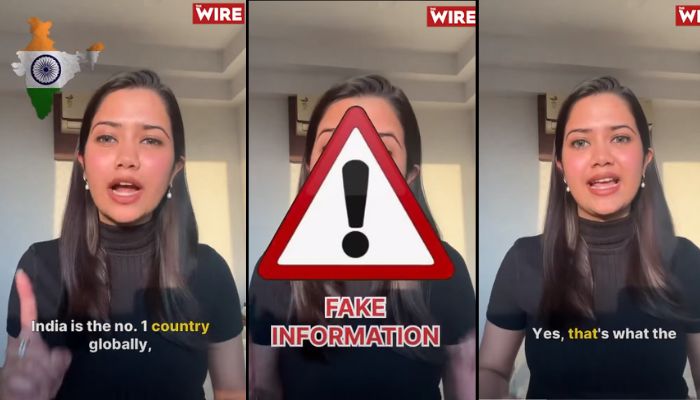
Former NDTV anchor Priyanshi Sharma spreads fake news about India on The Wire ironically while complaining about fake news: Details

On Saturday (2nd March), The Wire courted controversy after falsely claiming that India ranks first globally in ‘fake news.’

In a video published on the YouTube channel of the leftist propaganda outlet, ex-NDTV anchor Priyanshi Sharma was heard saying, “India is the number one country globally, not in GDP, employment or health indicators, but in fake information.”

To back her claims, she cited the 19th edition of the ‘Global Risk Report’, which was published by the World Economic Forum (WEF) on 10th January this year.

“It ranks misinformation as the biggest danger to the world in the next two years, even more dangerous than natural disasters and armed conflicts,” Priyanshi Sharma said, highlighting 5 recently viral fake news stories.

When OpIndia checked the ‘source’ of her claim, we found huge discrepancies in the assertions made by the ex-NDTV anchor about India topping the list of countries in fake information.

The 124-page ‘Global Risk Report 2024’, published [pdf] by the World Economic Forum, did not make any such claims.

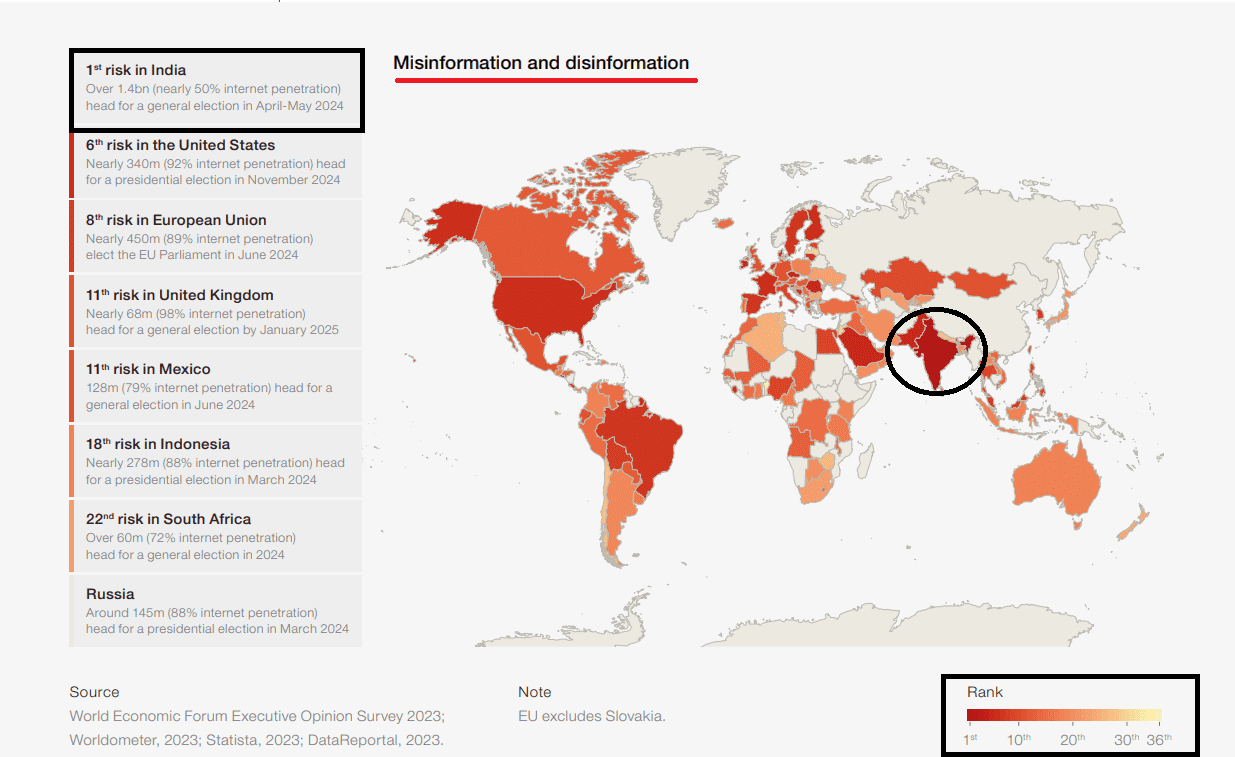
On the 8th page of the report, it noted that misinformation and disinformation remain great challenges for poll-bound nations such as Bangladesh, India, Indonesia, Mexico, Pakistan, the United Kingdom and the United States.

Disclaimer: The screenshot from Page 19 of the WEF report contains a distorted map of India. Both PoK and Aksai Chin are integral parts of India

“As close to three billion people are expected to head to the electoral polls across several economies – including – over the next two years, the widespread use of misinformation and disinformation, and tools to disseminate it, may undermine the legitimacy of newly elected governments,” the ‘Global Risk Report 2024’ read.

Page 19 of the report further stated, “Over the next two years, close to three billion people will head to the electoral polls across
several economies, including the United States, India, the United Kingdom, Mexico and Indonesia. The presence of misinformation and disinformation in these electoral processes could seriously destabilize the real and perceived legitimacy of newly elected governments, risking political unrest, violence and terrorism, and a longer-term erosion of democratic processes.
“

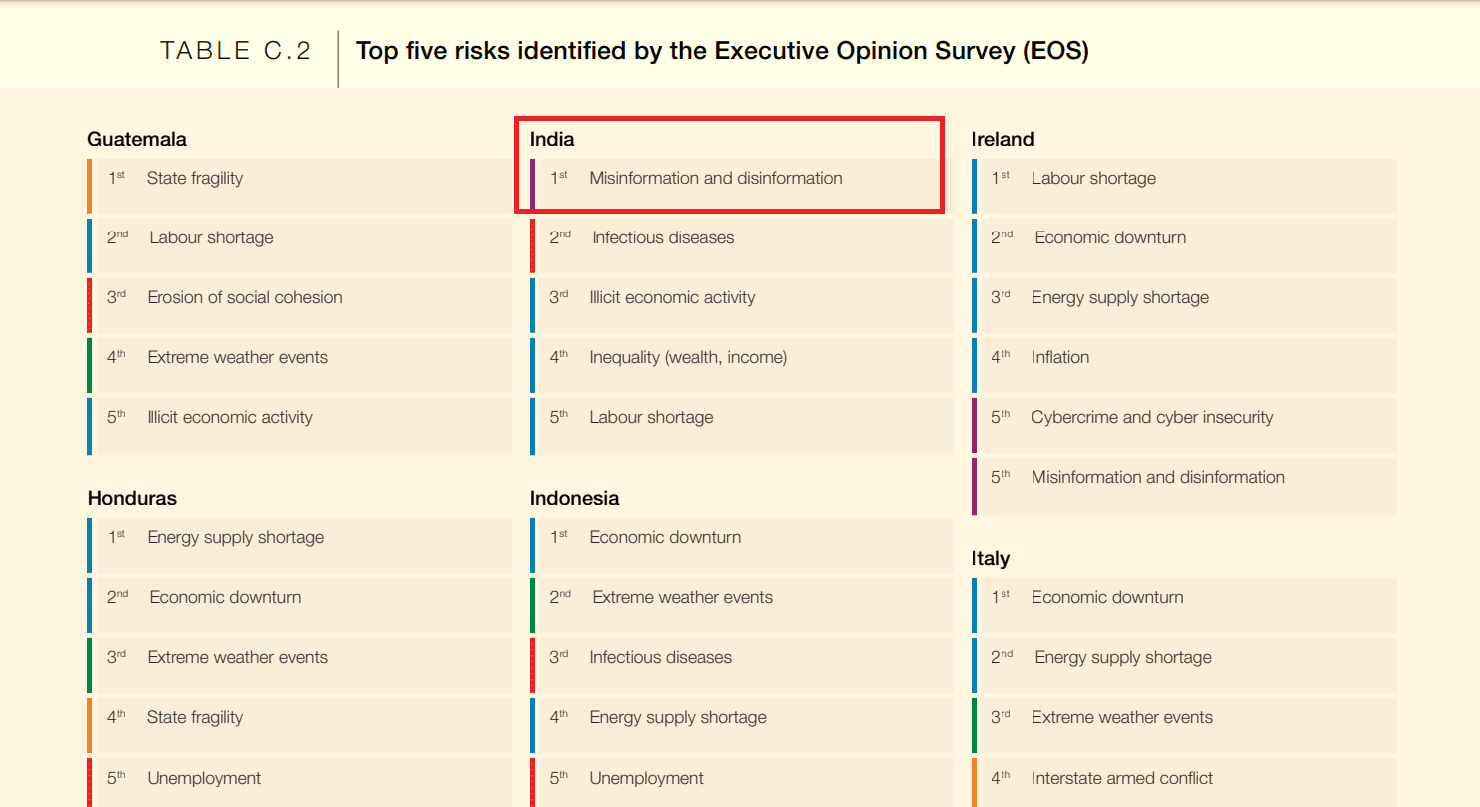
Based on its Executive Opinion Survey (EOS) conducted in 2023, the World Economic Forum identified ‘top 5 risks’ facing individual nations in the world. In that context, it concluded that ‘misinformation and disinformation’ remain the top risk in India.

The other risks facing the nation include infectious diseases, illicit economic activity, inequality (wealth, income) and labour shortage.

Page 106 of Global Risk Report 2024, image via World Economic Forum

The World Economic Forum similarly listed the ‘top 5 risks’ for other countries as well. It even released a world map highlighting misinformation and disinformation as ‘top risk’ in India.

However, ex-NDTV anchor Priyanshi Sharma took the findings of the report out of context to claim that India ranked first globally in ‘fake information.’ This was not claimed by the ‘Global Risk Report 2024’ in any form or manner.

It did not imply anywhere that India is No.1 globally in fake information. The controversial video published on the YouTube channel of The Wire aimed to make people aware of ‘misinformation and disinformation’ while peddling fake news at the same time.

Global Risk Report notes India’s growing economic strength

Priyanshi Sharma, in her video for The Wire, failed to mention the acknowledgement of India’s economic prowess by the World Economic Forum in its report.

Page 59 of the report read, “Further, a handful of states, such as India, may soon have the scale and economic might to disrupt technology development directly, with new innovations capturing market share or key stages of the value-added supply chain.

It is thus clear that with the Lok Sabha elections just around the corner, an all-out attempt is being made to tarnish the global perception of India by the left-liberal ecosystem within the contrary.

From social work to commitment to Hindu causes: Know about BJP candidate Madhavi Latha challenging Asaduddin Owaisi on his home turf in Hyderabad

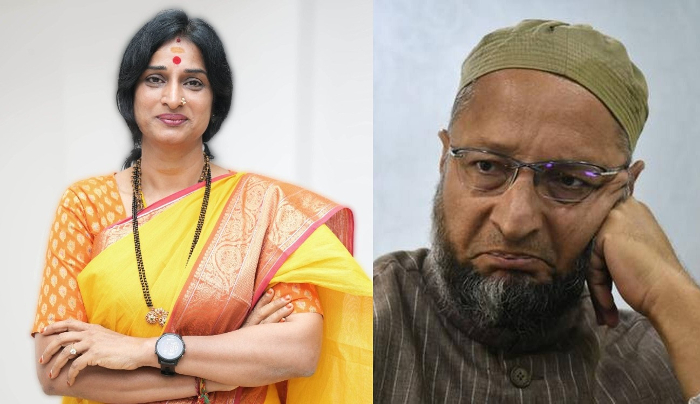
On Saturday (2nd March), the Bharatiya Janata Party released the first list of its candidates for the upcoming Lok Sabha elections. The party has fielded Virinchi Hospital chairperson Kompella Madhavi Latha from the Hyderabad constituency in Telangana. She will fight against the incumbent MP, AIMIM chief Asaduddin Owaisi.

Hyderabad seat is considered Owaisi’s stronghold due to the significant Muslim population in this constituency and Owaisi’s stronghold over them. To challenge him there, BJP has entrusted the responsibility to Madhavi Latha to contest on this crucial seat. Besides being a businesswoman, Madhavi Latha is also a Bharatnatyam dancer and a one-time NCC cadet.

Madhavi Latha, also known as Dr Madhavi Latha Kompella, is a prominent figure in Hyderabad’s socio-political landscape. She holds a bachelor’s degree from Nizam College, and has a post-graduate degree in political science from Koti Women’s College. Her educational background reflects her commitment to understanding political dynamics, which has likely influenced her entry into public life.

Madhavi Latha’s upbringing and ideological stance align closely with the principles of Hindu Dharma and nationalism. She has emerged as a vocal advocate for Hindu values and has actively engaged in discussions regarding cultural preservation and societal development, particularly in the Old City area of Hyderabad. Her emphasis on Hindu values suggests a strong belief in traditional Indian ethos. She also runs a Gaushala in the city.

Reacting to her nomination, Madhavi Latha shared her concerns about the neglect and underdevelopment in the Hyderabad constituency, particularly in the Old City area. She highlighted issues such as poverty, lack of educational opportunities, and illegal occupation of Hindu properties.

Madhavi Latha said, “There is no cleanliness, education or health facilities in Hyderabad Lok Sabha. Children in Madrasas are not getting food. Temples and Hindu homes are being occupied illegally. Muslim children are uneducated. There is child labour. They have no education, house or future. Nothing is done for the people. The old city is neither a mountain nor a tribal area. It is in the centre of Hyderabad but there is poverty over there. They have only one thing to do, riot. And those who are making this happen are taking advantage of it.”

Beyond her educational qualifications, Madhavi Latha’s involvement in social work is noteworthy. She has collaborated with various Muslim women’s groups to advocate for the abolition of triple talaq, demonstrating her commitment to gender equality and social justice. Additionally, her initiatives such as creating a fund for destitute Muslim women and involvement in organisations like Forum for Awareness of National Security and Samskruthi Telangana State highlight her multifaceted approach to community development. While she advocated a law against triple talaq for the benefit of Muslim women, her opponent Asaduddin Owaisi had opposed this law.

As the Chairperson of Virinchi Hospitals and the founder of Lopamudra Charitable Trust and LathaMa Foundation, Madhavi Latha has played a pivotal role in healthcare, education, and food distribution initiatives in Hyderabad. Her contributions to these sectors underscore her dedication to improving the lives of the underprivileged and marginalised communities.

Madhavi Latha’s recent foray into politics under the BJP’s banner marks a significant shift in Hyderabad’s political landscape. Challenging the long-standing dominance of Asaduddin Owaisi, she represents the BJP’s strategic move to assert its presence in a constituency considered a stronghold of the All India Majlis-e-Ittehad-ul-Muslimeen (AIMIM). Her nomination signals the party’s intent to offer a strong Hindu challenge and disrupt existing political equations.

Over the past decade, the Bharatiya Janata Party (BJP) has experienced a notable increase in its vote share in Telangana. From a mere 7% in 2014, it surged to nearly 15% vote share in the 2023 assembly elections. In the recent assembly polls, the BJP made significant strides by securing eight seats, marking its emergence as the main opposition in various constituencies surrounding Hyderabad, including Charminar, Karwan, LB Nagar, Rajendranagar, Amberpet, Quthbullapur, and Sanathnagar.

Having previously fielded Dr Bhagvanth Rao, an experienced BJP candidate, in both the 2014 and 2019 elections, the party has now opted for a different strategy by nominating Madhavi Latha, a 49-year-old newcomer, to contest against Asaduddin Owaisi. As the first female candidate fielded by the BJP in Hyderabad, her candidacy symbolises a shift towards inclusivity and gender representation in politics, potentially reshaping the dynamics of electoral competition in the region.

Driver, assistant were watching cricket on phone: Railway Minister Ashwini Vaishnaw reveals details about 2023 Andhra Pradesh train accident

On Saturday, 2nd March, Railway Minister Ashwini Vaishnaw revealed that the driver and the assistant driver of one of the two passenger trains that collided on 29th October 2023 in Andhra Pradesh were watching a cricket match on the phone. The accident took place at around 7 PM on the Howrah-Chennai line in Kantakapalli of district Vizianagaram. The Rayagada Passenger train hit the Visakhapatnam Palasa train from behind, resulting in the death of 14 passengers and leaving 50 injured.

Speaking to news agency PTI, the minister said, “The recent case in Andhra Pradesh happened because both the loco pilot and co-pilot were distracted by the cricket match which was going on. Now we are installing systems which can detect any such distraction and make sure that the pilots and the assistant pilots are fully focussed on running the train.”

Vaishnaw added, “We will continue to put our focus on safety. We try to find out the root cause of every incident and we come up with a solution so that it is not repeated.”

The Commissioners of Railway Safety (CRS) conducted a probe into the Vizianagaram train accident. Its report is yet to be made public. On the next day of the accident, the railway said in a preliminary report that the driver and the assistant driver of the Rayadaga Passenger train were responsible for the accident as the train passed two defective auto signals violating norms. Both of them died in the accident.

Vizianagaram train accident

On 29th October, two passenger trains collided in the district Vizianagaram of Andhra Pradesh, leading to the death of at least 13 passengers. Several passengers were reported injured in the accident. The incident happened after a passenger train that was heading to Rayagada from Visakhapatnam derailed after colliding with another train in Andhra Pradesh’s Vizianagaram district

Balasore Train Accident

Just four months before the train accident in Andhra, India’s most devastating train accident took place in Balasore, Odisha. On 2nd June 2023, 296 people died, and over 1,200 were injured in the tragic accident at Bahanaga Bazar station in Balasore, Odisha. On the day of the accident, the Coromandel Express crashed into a stationary freight train. As a result of the Balasore Train Accident, some of the derailed coaches fell onto the adjacent tracks. A few minutes later, the Yeshwantpur-Howrah Express train came on those tracks and collided with the derailed coaches.

Convict in Bilkis Bano case challenges SC verdict saying cancelling his remission violates judicial propriety

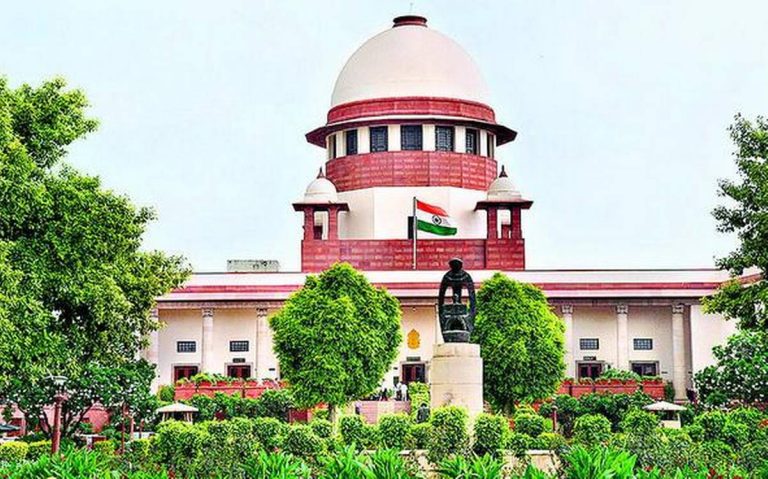
Radheshyam Bhagwandas Shah, a convict in the Bilkis Bano gangrape case, has approached the Supreme Court asserting that the verdict on January 8, which revoked his remission and re-imprisoned all eleven convicts, was judicially improper. Shah’s plea, filed with the top court, argues that since the two-judge bench led by Justice BV Nagarathna and Justice Ujjal Bhuyan disagreed with another two-judge bench (led by Justice Rastogi), the matter should have been referred to a larger bench.

Shah submitted the plea through his lawyer Rishi Malhotra, claiming that the decision of Justice Nagarathna’s bench to overturn a judgment by Justices Ajay Rastogi and Vikram Nath was legally incorrect. Malhotra, in conversation with TNIE, mentioned urging the apex court to reconsider Shah’s plea for premature release. He also requested bail for Shah until the Supreme Court clarified which of the two-judge bench judgments should take precedence.

“The January 8 judgment pronounced by Justices Nagarathna and Bhuyan not only displayed judicial impropriety but also created uncertainty and chaos regarding which legal precedent should be followed in the future,” stated Shah’s petition filed with the top court.

In a landmark ruling on January 8, the Supreme Court nullified the Gujarat government’s decision on August 15, 2022, to grant remission to the 11 convicts serving life sentences for the gangrape of Bilkis and her family members during the 2002 Gujarat riots. The Court directed all 11 convicts to surrender within two weeks by January 21.

The remission was granted by the Gujarat government on August 15, 2022, following a May 2022 judgment in which the Supreme Court stated that any application for remission should align with the state’s policy where the crime occurred, not where the trial took place.

This move by the Gujarat government to release all 11 convicts of Bilkis sparked significant public outcry, with social activists, lawyers, and civil society denouncing it as a “miscarriage of justice.”

The 11 convicts released by the Gujarat government include Jaswant Nai, Govindbhai Nai, Shailesh Bhatt, Radhyesham Bhagwandas Shah, Bipin Chandra Joshi, Kesarbhai Vohania, Pradeep Modhiya, Bakabhai Vohania, Rajubhai Soni, Mitesh Chamanlal Bhat, and Ramesh Rupabhai Chandana.

In a related development, on February 14, the Gujarat government also submitted a review petition to the Supreme Court challenging its January 8, 2024, order. The petition seeks to expunge certain critical remarks made against the state regarding the premature release of the 11 convicts.

The Gujarat government’s review petition, filed before the top court, argues that the adverse remarks in the judgment have unfairly prejudiced the state. The government is requesting the Supreme Court to direct the removal of these unfavourable remarks from the record.