Home Blog Page 2072

Impersonation, identity fraud, and anti-India terror activities: The curious case of Hardeep Singh Nijjar and ‘Ravi Sharma’

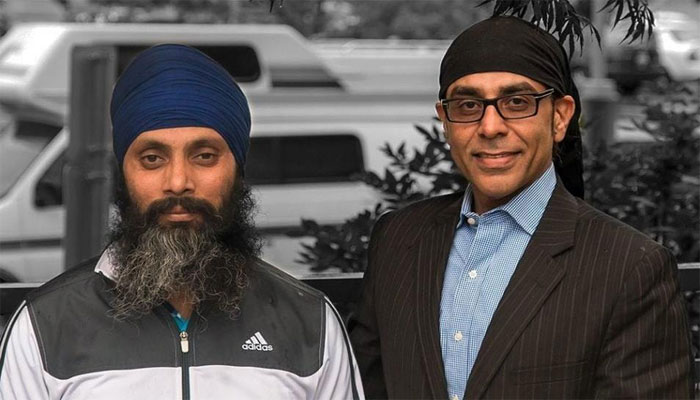
On February 10, 1997, one Ravi Sharma fled India and arrived in Toronto. Global News managed to get its hands on his immigration records. But why was the portal seeking Sharma’s immigration records? It turns out Ravi Sharma was a fraudulent alias used by none other than Khalistani terrorist Hardeep Singh Nijjar who was recently assassinated by unknown assailants in Canada.

As per Global News, Nijjar used fake identity as he “feared” persecution in India for his association with “a particular social group, namely, individuals associated with Sikh militants.” Nijjar was linked to a Khalistani terrorist organisation, and in the 1990s, a full-fledged operation was ongoing in Punjab against Khalistani groups.

Nijjar, the head of Guru Nanak Sikh Gurdwara Sahib, was shot dead in Surrey by two unidentified assailants on June 18 this year. He was a wanted terrorist by the Indian Government. The 46-year-old hailed from the village Bhar Singhpura of Jalandhar.

Najjar lied to immigration officials in Canada

The Global News report suggested that Nijjar told immigration officials that his troubles began in 1990 when police started a crackdown on insurgency in the Indian state of Punjab. The Punjab Police arrested his brother and father. Initially, his brother Jatinder was picked up by the police, and later, his father was also arrested. Nijjar claimed both of them were tortured.

In a sworn affidavit, Nijjar told the immigration officials that he was picked by Punjab Police in 1995 and was tortured to find the whereabouts of his brother and father. Nijjar further claimed he bribed police with Rs 50,000 and cut his hair to change his appearance. Till 1996, he stayed away from the public eye at a relative’s house in UP. When police reached the relative’s house, Nijjar was not there, and his uncle was arrested.

He claimed in the affidavit that he submitted to the immigration officials in June 1998 that his life was in grave danger in India. However, immigration officials did not believe him and said the letter submitted by Nijjar was fabricated. The information provided by a physician who claimed to have treated Nijjar after his release from police custody had spelling mistakes that raised a red flag. His immigration request was dismissed as unreliable, the report noted. The panel categorically said they did not believe Nijjar was ever arrested and tortured by the police.

Just eleven days after immigration officials refused his claims, he married a woman from British Columbia who sponsored him to immigrate as her spouse. In his application form, he refused to associate with any group that advocated “armed struggle or violence to reach political, religious or social objectives.” His application was, however, again rejected by the officials, saying it was a “marriage of convenience”. His supposed wife was sponsored by a “different” husband in 1997 when she arrived in Canada. Nijjar appealed in court against the decision but lost in 2001.

During his stay in Canada, he kept calling himself a citizen of Canada, which has now been clouded by the report of Global Times.

Nijjar’s anti-India activities and cases against him

Nijjar travelled to Geneva in 2013 and asked UN Human Rights Council to recognise the anti-Sikh violence of 1984 as genocide. He also lobbied for a referendum for Khalistan at the UN headquarters in New York in June 2014.

In November 2014, an arrest warrant was issued through Interpol’s National Central Bureau in New Delhi, in which he was described as a mastermind/active member of the Khalistani terrorist organisation Khalistan Tiger Force. He was accused of having involvement in the 2997 Srinagar Cinema bombing in Punjab in 2007. Another notice was issued by Interpol against him in 2016 in which he was accused of being a mastermind and key conspirator of several terrorist activities in India.

In 2018 he took charge of Guru Nanak Sikh Gurdwara in Canada as President. In March 2019, he was charged with assault, but the case was stayed in December 2019. He was also accused of not returning a printing machine to Ripudaman Singh Malik, who was acquitted of alleged involvement in the 1985 Air India bombing. A case was filed by Malik against Nijjar, saying he handed over the printing press to Nijjar in November 2020 for safekeeping, but Nijjar refused to return it. Malik was murdered in July 2022. In February 2023, a lawsuit was filed for the return of the machine.

Nijjar was an associate of Gurpatwant Singh Pannun, a designated terrorist by the Government of India under the UAPA Act. Pannu runs a terrorist organisation Sikhs For Justice, that is behind the Referendum 2020. Nijjar was working on organising the so-called referendum scheduled for September 18 this year. In a statement to Global News, Pannu claimed National Investigation Agency (NIA) placed a bounty of 1 million (CAD 16,000) on Nijjar.

Fraudulent documents to get immigration in Canada

In March 2023, OpIndia published a detailed report on how Sangrur MP Simranjit Singh Mann admitted in a June 2022 interview that he gave letters to asylum seekers for permanent residency in other countries. He claimed to have issued 50,000 such letters for approx Rs 35,000 per letter.

Recently, around 700 students were found to have presented fraudulent documents in Canada and faced possible deportation. The fraudulent documents were given to the students by immigration agents in India. The politics around the matter is still on while the future of these students hangs mid-air.
Telangana: Case lodged against private school for objecting to students wearing hijab in classrooms, violating uniform norms

0

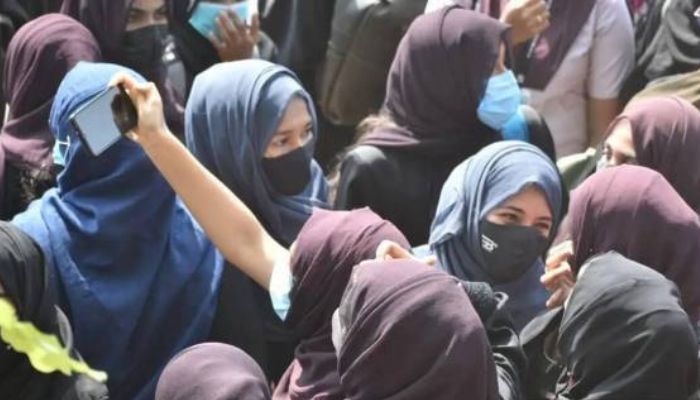
A case was filed against a private school at Hayathnagar in Telangana after the Principal allegedly objected to two students wearing ‘hijab’ (head scarves worn by Muslim women).

Police said the students filed a complaint in connection with the incident and an investigation was underway. “The incident was reported at a private school in Hayathnagar. A Class 10 student, who happens to be the daughter of a judge, and another girl, who studies in the same class, came to the school on June 22 wearing hijabs. However, the Principal and some staff members objected to the same, saying, initially, they could not wear it in school. They later said that they couldn’t wear headscarves inside the classroom and could only do so on the school premises. The Principal also demanded that the students bring consent letters from their parents,” Surya, sub-inspector, Hayathnagar police station, said.

“The next day, on June 23, the students allegedly came wearing headscarves just like the previous day. Their class teacher spotted this and asked them to step outside the classroom. The teacher demanded an explanation on why the students came to school wearing hijabs when the Principal had issued clear instructions not to do so, the previous day. At this, there was an argument between the students and the teacher. While the school authorities did not report the incident to their parents, the students, after reaching home, briefed their guardians on what happened,” the sub-inspector said, adding, “On the advice of her parents, one of the students lodged a complaint. A case has been registered against the Principal and some members of the teaching staff. Further investigation is underway.”

The incident on Saturday served as a reminder of a similar incident at a college in Karnataka, where some Muslim students were allegedly asked to remove their hijabs before attending classes. The alleged diktat was issued following a protest by a section of students demanding uniform rules.

(This news report is published from a syndicated feed. Except for the headline, the content has not been written or edited by OpIndia staff)

A day after the opposition’s “unity meeting”, AAP tells Congress that Rahul Gandhi should not be projected as the PM face

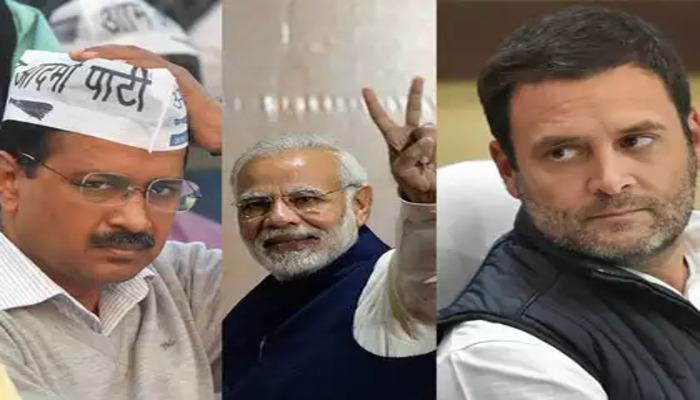
On Sunday, June 25, the Aam Aadmi Party (AAP) made it clear that it is in no mood to accept Congress scion Rahul Gandhi as the leading face of the so-called “mahagathbandhan” (grand alliance) of the opposition parties. AAP’s national spokesperson Priyanka Kakkar in a tweet advised the Congress party to not place a bet on Rahul Gandhi for the third time. She added that Congress should refrain from pressuring the opposition parties to accept him as their leader. 

“If the country is to be saved, then first of all Congress should say that they will not stake a claim on Rahul Gandhi even for the third time and will not put pressure on the entire opposition. In the interest of the country, this constitution is above saving,” Kakkar tweeted in Hindi. 

Notably, Bihar CM Nitish Kumar hosted opposition parties in Patna for the Friday Unity conference. In particular, this was the first gathering of opposition parties to send a message of ‘unity’ ahead of the 2024 general elections. 17 opposition parties met to discuss the timeline and road map for the upcoming Lok Sabha elections in 2024.

Media reports suggest that during the meeting on Friday, AAP supremo Arvind Kejriwal had raised the issue of the Centre’s ordinance over control of administrative services in Delhi. While most other opposition parties have backed AAP in this matter, the Congress party has refused to do so. 

Subsequently, the AAP leaders did not stay for the joint statement and instead returned to Delhi after lunch.

AAP issued a statement from Delhi saying that any alliance with the Congress party would be difficult if the Congress refused to back AAP on the Delhi Ordinance issue. In its statement, AAP said that out of the 15 ‘like-minded’ parties, 12 have extended support of AAP over the Ordinance issue, however, only Congress refused to denounce the ‘Black Ordinance’. 

“Today, during the like-minded party meeting in Patna, many parties urged the Congress to publicly denounce the Black Ordinance. However, the Congress refused to do so. Congress’s silence raises suspicions about its real intentions. In personal discussions, senior Congress leaders have hinted that their party might informally or formally abstain from voting on it in the Rajya Sabha. The Congress’ abstention from voting on this issue will help the BJP immensely in furthering its attack on Indian democracy,” the AAP statement read. 

Following the ‘unity meeting’ both AAP and Congress have been accusing each other of being the ‘B-team’ of the Bhartiya Janata Party (BJP). Congress’s ambiguous stand on the Ordinance issue has triggered the Aam Aadmi Party to augment its attacks on Congress. 

In a News24 debate program, AAP’s Priyanka Kakkar said that why stops the Congress party from taking a stand against the alleged attack on the constitution. She insinuated that the Congress party is BJP’s B-team by giving examples of Uttar Pradesh elections, and Congress’s walkout during the voting of MCD Mayoral elections.

“In UP elections, you see, at many places, Samajwadi party was the runner-up, if Congress had not contested on such seats, SP would have won,” Kakkar said.

Notably, Congress national president Mallikarjun Kharge on Friday had his party will decide on the Ordinance issue before the parliament session. “We all want to fight together against BJP and our agenda is to remove the BJP govt… We will take a decision on this (on supporting AAP against the Centre’s ordinance) before the Parliament session,” Kharge said.

Reacting to Kharge’s statement, AAP’s Priyanka Kakkar on Friday claimed that BJP and Congress have had an agreement already as she said, “We have got info that Rahul Gandhi and BJP have done an agreement…Congress should clear its stand against this unconstitutional Ordinance, why they are taking so long in doing so?

Government of National Capital Territory of Delhi (Amendment) Ordinance 2023

On May 19, 2023, the Government of National Capital Territory (Amendment) Ordinance, 2023 was enacted. It modifies the Delhi National Capital Territory Act of 1991. The Act establishes the framework for the Legislative Assembly and the administration of the National Capital Territory of Delhi. 

PM Modi conferred with Egpyt’s highest state honour ‘Order of the Nile’, the 13th such accolade in 9 years

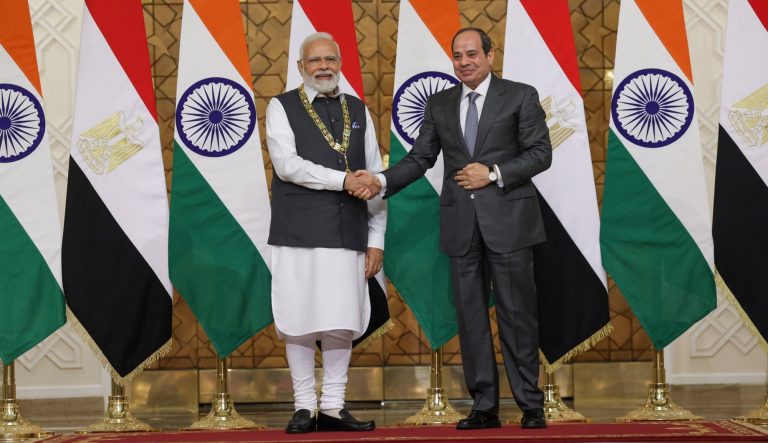
On Sunday, June 25th, Egyptian President Abdel Fattah al-Sisi conferred Egypt’s highest state honour, the ‘Order of the Nile’ award, upon PM Narendra Modi in the country’s capital, Cairo.

PM Modi is currently on a two-day visit to Egypt which is his maiden State visit to the country. It is worth noting that he is the first Indian PM to visit the African country since 1997. Upon his arrival in Cairo from the USA, PM Modi was accorded a ceremonial welcome and a Guard of Honour.

Order of the Nile

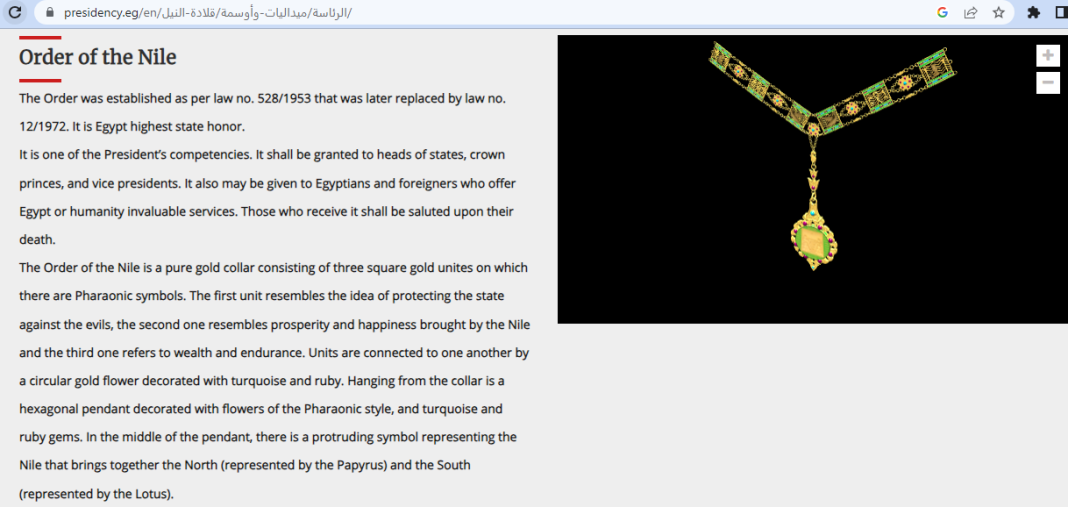
The Order of the Nile (Kiladat El Nil) was established in 1915 by Sultan Hussein Kamel of Egypt. According to the official website of the Egyptian Presidency, the ‘Order of Nile’ is the country’s highest state honour and it can be given to foreigners as well. The award is given to those individuals who offer Egypt or humanity invaluable services.

The website further reads, “The Order of the Nile is a pure gold collar consisting of three square gold units on which there are Pharaonic symbols. The first unit resembles the idea of protecting the state against evils, the second one resembles prosperity and happiness brought by the Nile and the third one refers to wealth and endurance.”

It adds, “The units are connected to one another by a circular gold flower decorated with turquoise and ruby. Hanging from the collar is a hexagonal pendant decorated with flowers of the Pharaonic style, and turquoise and ruby gems. In the middle of the pendant, there is a protruding symbol representing the Nile that brings together the North (represented by the Papyrus) and the South (represented by the Lotus).” 

Earlier, PM Modi paid a visit to the Heliopolis Commonwealth War Cemetery. There he paid his respects to the Indian soldiers who demonstrated bravery and made the ultimate sacrifice in Egypt and Palestine during the First World War.

Before that, he held a meeting with Egyptian PM Mostafa Madbouly. They held talks on deepening cooperation across a range of sectors including trade and investment, renewable energy, green hydrogen, IT, digital payment platforms, pharma and people-to-people ties.

Past awards received by PM Modi

Over the course of the past nine years, PM Modi has been honoured with numerous international awards. The recent accolade marks the 13th highest state honor bestowed upon him by various countries around the world.

Earlier in May 2023, the Island nation of Papua New Guinea conferred PM Modi with their highest civilian award, ‘Companion of the Order of Logohu’. 

In May 2023, Fiji also awarded PM Modi with their highest honour, ‘Companion of the Order of Fiji’. 

Similarly, in May 2023, President Surangel S. Whipps, Jr. of the Republic of Palau conferred PM Modi with the ‘Ebakl Award by the Republic of Palau’.

In December 2021, PM Modi won ‘Order of the Druk Gyalpo’, Bhutan’s highest civilian decoration. 

In 2020, the US bestowed PM Modi with the ‘Legion of Merit by the US Government’. 

In 2019, Bahrain conferred PM Modi with ‘King Hamad Order of the Renaissance’. 

Similarly, Maldives conferred PM Modi with the ‘Order of the Distinguished Rule of Nishan Izzuddin’ in the same year. 

In 2019, Russia bestowed PM Modi with their Highest civilian honour, the ‘Order of St. Andrew Award’.  

Another award in the line is, UAE’s ‘Order of Zayed Award’, the Highest civilian honour of the United Arab Emirates was awarded to PM Modi in 2019. 

A year before that, in 2018, Palestine awarded PM Modi with their Highest honor for foreign dignitaries, the ‘Grand Collar of the State of Palestine Award’.

In 2016, Afghanistan gave its Highest civilian honour, ‘State Order of Ghazi Amir Amanullah Khan’ to PM Modi. 

In 2016, Saudi Arabia gave PM Modi, the ‘Order of Abdulaziz Al Saud’, the Highest honour of Saudi Arabia awarded to non-muslim dignitaries.

Uttar Pradesh: Police arrest one Shaukat Ali for running madrassa in the name of coaching institute

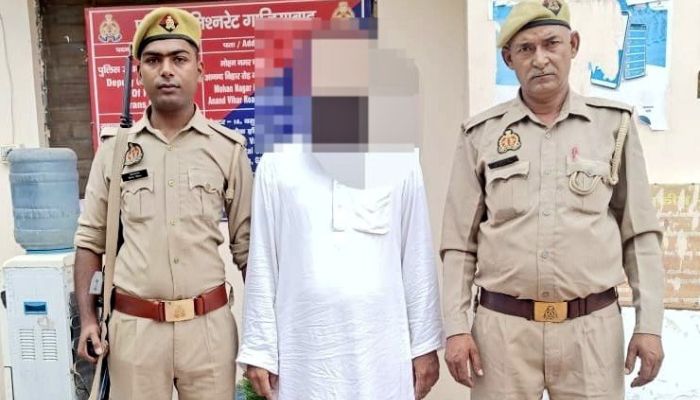
On Friday (June 23), the police arrested a man for running a madrassa in the garb of a coaching centre in the Deepak Vihar locality in Khoda in the Ghaziabad district of Uttar Pradesh.

As per reports, the accused was identified as Shaukat Ali. He ran an unregistered coaching centre named ‘Future Track’ and would teach Islamic scriptures to students.

A police complaint was filed against him by local residents in January this year for a similar offence, following which he closed down the coaching centre. Recently, he reopened the centre and began running a madrassa from the coaching institute.

Reportedly, Shaukat Ali was also using the coaching centre to offer community prayers, despite the fact the institute was being attended by students of other Faiths.

While speaking about the matter, Deputy Commissioner of Police Vivek Chandra Yadav said, “The local residents objected to the religious activities and informed the police. The place was used for offering prayers and there are several videos of the religious activities.

He added, “The coaching centre is also attended by students of different communities. We have registered an FIR and arrested the suspect. Coaching centres cannot be used for offering prayers and other religious activities.”

Another officer from Khoda police station informed that objections were raised by local residents about large gatherings of people for mass prayers at the coaching institute.

On Friday (June 23), Shaukat Ali was arrested by the police and booked under Indian Penal Code (IPC) Section 153A (promoting enmity between different groups on the ground of religion).

PM Modi reflects on darkest era of Indian democracy: Remembers the imposition of Emergency 48 years ago

On the fateful day of 25th of June, 1975, exactly 48 years ago, the then Prime Minister of India Indira Gandhi imposed an ‘Emergency’ on the nation. Remembering that dark phase of Indian democracy, PM Modi shared a tweet paying homage to all those people who courageously resisted it and worked to strengthen our democracy.

PM Modi further remarked that “the dark days of Emergency” remain an unforgettable period in our history. He asserted that it was totally opposite to the democratic values that are celebrated in our Constitution.  

In a tweet, PM Modi wrote, “I pay homage to all those courageous people who resisted the Emergency and worked to strengthen our democratic spirit. The dark days of Emergency remain an unforgettable period in our history, totally opposite to the values our Constitution celebrates.”

In his earlier ‘Mann Ki Baat’ address, PM Modi referred to the ‘Emergency’ as a “dark period” in India’s history.

Reflecting on that era, PM Modi reminisced that those who stood in support of democracy at that time were tortured. He added that having a glance at such crimes that endangered the country’s freedom would make it easier for the young generation to understand the meaning and significance of democracy.

The ruling party, BJP, and Union Ministers penned their views on Emergency

Taking to Twitter Union Minister Smriti Irani shared a video highlighting the ordeals of several politicians and how they fought against this autocratic move by then PM Indira Gandhi. In her tweet, she claimed that the 25th of June, 1975 symbolises torture, imprisonment, murder, stifling the voice of the free press, all that, and more.

With the hashtag #DarkDaysOfEmergency, she tweeted, “Torture, imprisonment, murder, stifling the voice of free press – 25th June 1975 symbolises all that and more. Lest you forget what the Emergency imposed on India and Indians entailed; do watch this video & see what the Congress party is capable of!” 

The Bharatiya Janata Party’s official handle also took to Twitter and shared a poster with Indira Gandhi’s photo and the caption read – “The darkest chapter of Indian democracy.”

The party said that around 1,40,000 people were arrested without trial during the Emergency period.

Similarly, several Union Ministers like Kiren Rijiju, Rajnath Singh, Hardeep Singh Puri, and Nitin Gadkari. condemned the imposition of Emergency and atrocities committed during that period.

Maharashtra: ‘Long live Aurangzeb’ slogans raised at Asaduddin Owaisi’s rally in Buldhana; police to probe the video

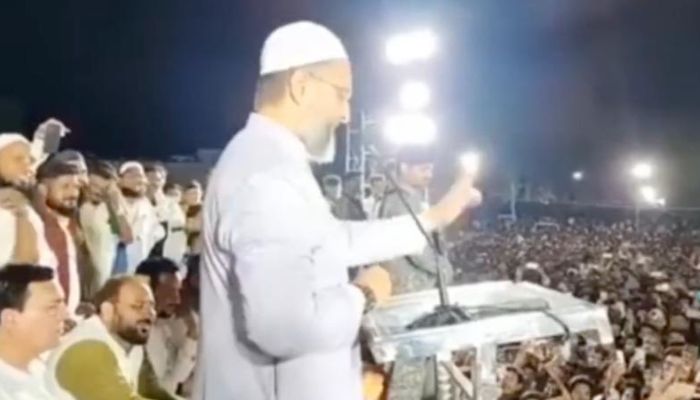
Slogans of ‘Aurangzeb Amar Rahe’ meaning ‘long live Aurangzeb’ were allegedly raised at a rally of AIMIM president Asaduddin Owaisi in Maharashtra. The police have also started investigating the video of this incident after it went viral recently. On 24th June 2023, when Owaisi was addressing people in Buldhana, his supporters started shouting slogans glorifying Aurangzeb.

The public meeting in which the slogans of ‘Aurangzeb Amar Rahe’ were raised was held in Buldhana on Saturday, June 24, 2023. Those who raised the slogans also shouted ‘Jab tak suraj chand rahega, Aurangzeb tera naam rahega‘ which translates to ‘As long as the sun and the moon remain, Aurangzeb will be remembered’. Local police have said that some videos are received by them regarding this matter and that these videos are being investigated. However, no complaint has been lodged by anyone so far. The police are also taking legal opinions on the matter.

Buldhana police have said that action will be taken on the matter after taking legal opinion. Recently, posters were also seen in Maharashtra, in which Aurangzeb’s picture with Shiv Sena (UBT) chief Uddhav Thackeray and ‘Vanchit Bahujan Aghadi’ chief Prakash Ambedkar. Prakash, the grandson of Dr Babasaheb Ambedkar, also visited Sambhajinagar (formerly Aurangabad) and offered flowers at Aurangzeb’s grave.

When these slogans were being raised, the leaders standing behind Asaduddin Owaisi on the stage were also laughing. At the same time, Owaisi was saying ‘yes, rahega, rahega’ meaning ‘yes he will be remembered‘ to calm the people and was asking them to keep quiet with a hand gesture.

Recently, violence took place in the name of Aurangzeb at various places in Maharashtra. The Aurangzeb controversy and subsequent violence started in Kolhapur after a WhatsApp status was put up in support of Aurangzeb.

Apart from Kolhapur, tension had also erupted in Ahmednagar due to the Muslim fundamentalists supporting Aurangzeb. A large number of Hindu activists took to the streets. There was also a war of words between Owaisi and Maharashtra Deputy Chief Minister Devendra Fadnavis over the issue.

Karachi-based Dawood Ibrahim’s aide Haji Salim trying to revive LTTE with the help of a massive Drug Network

On the 15th of June, the National Investigation Agency (NIA) filed a charge sheet against 13 suspects for trying to revive LTTE, out of which 10 were reportedly Sri Lankan nationals and three others were Indian nationals. The NIA has been investigating the illicit trade of contraband substances and weapons, for a very long time now. During this probe, the agency found out that Pakistan-based outfits have been making efforts to resurrect the banned terror outfit Liberation Tigers of Tamil Eelam (LTTE) in Sri Lanka and India.

As per media reports, experts reveal that Indian agencies have discovered that a Karachi-based gangster Haji Salim, an aide of notorious terrorist Dawood Ibrahim, is one of the kingpins responsible for hatching the revival of the proscribed terror outfit, LTTE. For this sinister purpose, he has been carrying out large-scale smuggling of drugs and arms in India and the sub-continent.

Haji Salim: Kingpin of drugs and weapons smuggling

Haji Salim is also said to be the kingpin of the multimillion-dollar drug network operating in Pakistan and the Indian Ocean. Nearly 70% of the drug trafficking in India comes through sea routes and the majority of this consignment is facilitated by his network alone. 

The officials involved in the case claim that the mastermind of this drug and weapons network, Salim has been closely working with India’s most wanted terrorist Dawood Ibrahim and Pakistan’s notorious spy agency, Inter-Services Intelligence (ISI). Apparently, Salim has been seen multiple times visiting Dawood Ibrahim’s Clifton Road residence in Karachi. It is suspected that both of them have pooled their resources for smuggling contraband substances and weapons in India. 

In its charge sheet filed last week, the NIA highlighted that Sri Lankan drug mafia members were sourcing drugs from Haji Salim. The charge sheet said, “The accused used various foreign WhatsApp numbers to carry out the clandestine trade.”

Salim was also framed in the charge sheet filed last week. The case relates to the smuggling of 40kg of heroin and pistols using a boat named Al-Soheli in December last year. In this operation, the Gujarat Anti-Terrorist Squad arrested 10 Pakistani individuals.

A security official said, “Even though D-Company’s network was eliminated by Indian agencies in the late 90s, it is possible his old contacts may be working with Salim’s syndicate as the drug trade via maritime and land route has exploded after Taliban’s takeover of Afghanistan in August 2021. Salim has been seen at Dawood’s residence in Karachi and is protected by armed guards round the clock.”

There have been extensive media reports that Salim works with ISI and the terror outfit Lashkar-e-Taiba (LeT). He also oversees the drug smuggling network operating in India, the Maldives, Sri Lanka, and Middle Eastern countries.

Furthermore, his cartel operates many clandestine laboratories in Balochistan. Reportedly, Salim uses code numbers and code names to label heroin packets in Afghanistan to hide his direct connection. Some of the different symbols or inscriptions are as ‘555’, ‘999’, ‘Unicorn’, and ‘Dragon’.

Joint operation and widespread Crackdown

In a collaborative effort to combat this illicit trade, multiple prominent Indian agencies have joined forces to dismantle this criminal network. These include the Narcotics Control Bureau (NCB), the National Investigation Agency (NIA), and the Directorate of Revenue and Intelligence (DRI). Together, they are working closely to identify the Indian contacts and handlers associated with Haji Salim and Dawood Ibrahim’s D-Company. 

Last month, the NCB and the navy launched a joint operation and seized 2,500kg of high-purity methamphetamine worth ₹12,000 crores. Reportedly, they made these seizures by intercepting a mother ship in the Indian Ocean. 

The consignment was sent from Makran coast in Balochistan province. Apparently, this region falls in the death crescent (a term coined by Home Minister Amit Shah for the smuggling route of Iran, Pakistan, and Afghanistan). 

In its annual report for 2022, the NCB said, “The maritime drug trafficking in the Arabian Sea and Bay of Bengal poses new challenges to drug law enforcement agencies and they anticipate a further increase of this route by international drug trafficking syndicates operating from Pakistan and Afghanistan.”

According to the first official mentioned, the government has allocated extra funds to the NCB and other agencies in order to improve surveillance of Indian waters. 

Ports are now conducting thorough inspections of all suspicious containers, ensuring a 100% checking rate. 

Additionally, the NCB has identified specific sites at international borders and inland locations where mobile vehicle scanners will be installed. Currently, the Home Ministry is looking for technological solutions to scan containers.

Governments should help make porn “normal and boring”: new owners of PornHub

The new owner of Pornhub in a recent statement said that the government should take pride in sexual expression instead of cracking down on porn websites. It further urged the governments to help make porn “normal and boring”, the AFP reported.

Ethical Capital Partners (ECP), a Canadian private equity firm, bought MindGeek, the parent company of Pornhub, three months ago, bringing with it a stable of additional websites including YouPorn.

The acquisition has also resulted in a slew of legal issues. Its websites were removed from the US state of Utah in May after being ordered to verify user ages.

For months, website owners and regulators in France have been negotiating how to put a 2020 age verification law into action. Two of MindGeek’s sites have not implemented age verification and face a court ruling on July 7 that could result in their closure.

“We do not want any underage users on our websites,” ECP founder Solomon Friedman told AFP in an interview. However, he rejected the notion that the onus should be placed on websites, instead urging operating systems to come up with a solution.

“We strongly support age verification solutions that do two things: effectively protect children and do not expose personal data, “Friedman said. “The only solution that achieves both of these goals is device or browser-based verification,” Friedman explained, adding that it would be a “very simple step for Google and Apple.”

Notably, in the year 2020, the New York Times published an article levelling allegations that MindGeek’s sites were hosting material depicting rapes and sex involving minors.

The NYT‘s 2020 article read, “Its site is infested with rape videos. It monetizes child rapes, revenge pornography, spy cam videos of women showering, racist and misogynist content, and footage of women being asphyxiated in plastic bags. A search for “girls under18” (no space) or “14yo” leads in each case to more than 100,000 videos. Most aren’t of children being assaulted, but too many are.”

The article sparked intense scrutiny from regulators in several countries, and Visa and MasterCard suspended payment processing.

The owners tried for two years to sell the company, which is primarily based in Canada but has a complex corporate structure that spans many of the world’s tax havens, with its official headquarters in Luxembourg. Jean-Noel Barrot, the digital minister, has called children accessing porn websites a “scandal” and has directly challenged ECP to explain how they will comply with the law.

Solomon stated that he had contacted Barrot’s office and promised to deliver a report soon, stating that his company was committed to “talking openly and proudly about the porn industry.” “I think society has moved in the direction where we are proud of sexual expression. The fact that it’s adult is going to be boring, just as (legalised) cannabis in Canada has become boring.”

‘Fake news aimed at derailing the deal’: Defence Ministry refutes claims that MQ-9B drone deal with US is worth $3 billion, says price not finalised yet

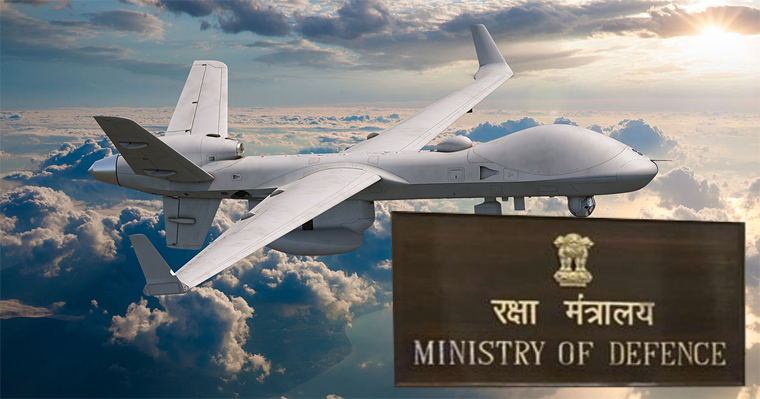
Among the many important deals announced during PM Narendra Modi’s just-concluded visit to the US was the deal to purchase the MQ-9B drone. India is purchasing 31 drones made by General Atomics, 16 Sky Guardian and 15 Sea Guardian variants. While reporting the government-to-government, several media reports said it is worth $3 billion. However, now the defence ministry has refuted this claim and said that an amount has not been announced yet. The ministry also said that such fake claims are being spread to derail the acquisition.

In a statement issued today, the union defence ministry said that the amount $3 billion is only the quoted price by the USA, and it has not been finalised yet. It said that while issuing the Acceptance of Necessity (AoN) on June 15 for the deal, the Defence Acquisition Council (DAC) noted the estimated cost of 3,072 million US dollars provided by the US Government, but it has not been accepted and finalised.

“However, price will be negotiated once policy approval of the US Government is received,” the ministry stated. The statement said that the Ministry of Defence will compare the acquisition cost with the best price offered by General Atomics to other countries. The procurement is in progress and would be completed as per the laid down procedure, the statement added.

India is purchasing the drones through Foreign Military Sale route, and a Letter of Request (LOR) would be sent to the US Government under it. The LOR will contain requirements of the Tri-services, details of equipment and terms of the procurement. Based on LOR, the US Government and MoD will finalise the Letter of Offer and Acceptance (LOA) where details of equipment and terms of the procurement would be negotiated and finalised in accordance with the FMS program and the price and terms offered by the US Government and GA to other countries.

The ministry stated that some speculative reports emerged in sections of social media referring to the price and other terms of purchase. “These are uncalled for, have ulterior motives and aimed at derailing the due acquisition process. Price and other terms & conditions of the purchase are yet to be finalised and subject to negotiations,” the ministry added.

In this regard, all are requested not to spread fake news/misinformation which can have a serious impact on the morale of the Armed Forces and adversely impact the acquisition process, the ministry added in its statement.

General Atomics MQ-9 Reaper, also known as Predator B, is a High Altitude Long Endurance (HALE) Remotely Piloted Aircraft System (RPAS), developed by General Atomics Aeronautical Systems. Originally developed for intelligence gathering, reconnaissance and surveillance, it is also used for offensive purposes as it can carry guns, bombs and missiles.

The air force version of the drone is called SkyGuardian, and its maritime version is called SeaGuardian. India Navy already operates two MQ-9B SeaGuardian drones, taken on lease. Now as part of the deal, 16 SkyGuardian and 15 SeaGuardian drones will be acquired.

According to a Wall Street Journal report, some of the drones will be assembled in India, and some of them will be armed. It is notable that India is planning to buy the Hellfire missile, and the drone can carry this missile, therefore, it is possible for the drones to be armed with the Hellfire missile.