Home Blog Page 2155

First, Hindus and Muslims were separated, then, 94 Hindus were locked in a school, tied up and shot with machine guns: Forgotten 1971 Burunga massacre in Bangladesh

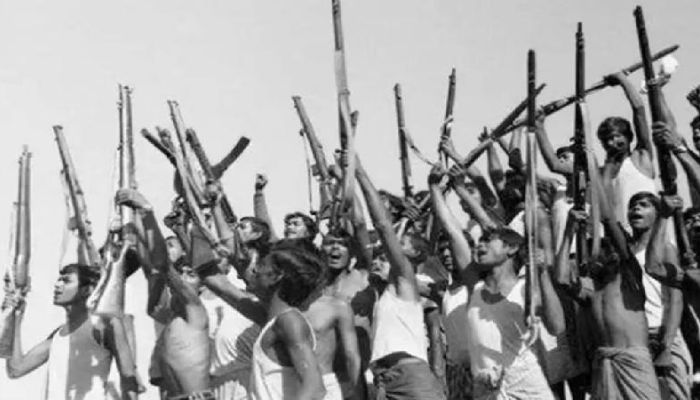
The year 1971 witnessed the remarkable bravery of the Indian Army, leading to the birth of a new nation known as Bangladesh. The courageous people of Bangladesh fought the Bangladesh Liberation War with the goal of achieving Swarajya (self-governance). However, the Pakistani army, in its efforts to suppress this movement, resorted to brutal oppression and committed acts of extreme violence. The local Hindu community actively participated in this liberation struggle, which unfortunately resulted in them enduring the atrocities inflicted by the Pakistani army.

During the Bangladesh Liberation War, radical Islamist Pakistani soldiers engaged in targeted killings of Hindus, perpetrating widespread atrocities. Countless women were subjected to looting and rape by the Pakistani army. Hindu massacres were carried out with alarming frequency, one of which was the infamous Burunga massacre. On May 26, 1971, the Pakistani army mercilessly murdered 94 Hindus at Burunga High School. This appalling incident is just one among numerous horrific massacres inflicted upon the Hindu population in Bangladesh.

Burunga village, located in the Balaganj division of the Sylhet district in Bangladesh, was home to a mixed population of both Hindus and Muslims. As the third week of May 1971 approached, the villagers became increasingly apprehensive about the looming threat of an attack by Pakistani soldiers. While the freedom struggle in Bangladesh was gaining momentum, the people of Burunga lived in constant fear, as they anticipated a potential assault from the Pakistani army.

According to Bangladeshi media reports, the concerned residents of Burunga approached Burunga Union Chairman Injad Ali. On the afternoon of May 25, 1971, Injad Ali, along with Soyef Uddin Master, the Chief of the Union Peace Committee, made a public announcement in Burunga and the surrounding villages. They declared the formation of a peace committee at Burunga High School on the following day, May 26. The primary objective of this committee was to issue identity cards to the villagers. Possessing these identity cards would provide a safeguard against any harm from the Pakistani army. Furthermore, it would grant cardholders the freedom to move unrestrictedly within the region.
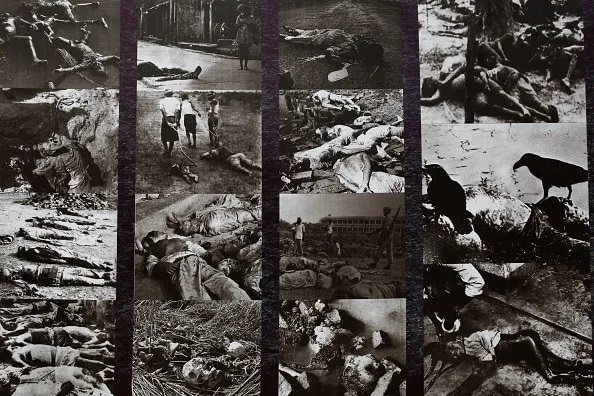
Images of the massacre

Upon receiving the assurance from Union Chairman Injad Ali and the peace committee members, both Hindus and Muslims from the village assembled at Burunga High School on the morning of May 26. The purpose of their gathering was to participate in the committee meeting. By 8 am, approximately a thousand individuals had gathered at the school premises. The peace committee commenced the process of compiling a list of the villagers. At around 9 am, the Pakistani army arrived at Burunga High School, accompanied by Abdul Ahad Chaudhary, the commander of the nearby Karansi village Razakar group, and Abdul Khaleque, the village doctor.

The Pakistan Army obtained the list of individuals from the Peace Committee and proceeded to conduct thorough house-to-house searches in the village. Those who had not attended the Peace Committee meeting at the high school were forcibly taken out of their houses and brought to the school grounds. The people’s faces bore clear expressions of fear, as reported. Local Razakars, members of the Pakistan Army, and peace committee representatives segregated the residents into separate groups of Hindus and Muslims based on the provided list.

The Hindus were directed to the school office, while the Muslims were confined to a classroom. They were compelled to recite the Kalma and sing the national anthem of Pakistan. At approximately 9:30, Abdul Ahad Chaudhry, accompanied by a Pakistani soldier, demanded that the people surrender any money and jewellery they possessed. Following this, the majority of Muslims were released. The Pakistani soldiers instructed the Muslim villagers to procure a nylon rope and tightly tie all the Hindus together. Frightened and defenceless, the unarmed Hindus began shouting in response to this order from the Pakistani soldiers.

According to the reports, Preeti Ranjan Chaudhary, a teacher at the school, was also planning to attend the Peace Committee meeting at Burunga High School, but he arrived late. Upon his arrival, Preeti Ranjan Chaudhary discovered that all the Hindus were confined within an office. The Pakistani soldiers spotted him and apprehended Preeti Ranjan Chaudhary, escorting him to the same office. In a desperate bid for saving his life, Preeti Ranjan Chaudhary searched for an opportunity to escape. He noticed a partially broken window in the room and managed to widen the opening. Preeti Ranjan Chaudhary, along with several others, including Ranu Malakar, seized the chance and successfully fled through the broken window.
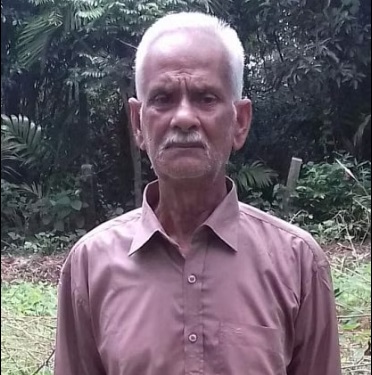
The individuals who were unable to escape were forcibly assembled on the school grounds under the watch of Pakistani soldiers. Their hands were bound, leaving them defenceless. Suddenly, a barrage of gunfire erupted, resulting in a harrowing pile of corpses. Srinivas Chakraborty, the second survivor of the massacre, vividly recalled the horrifying scene as machine gun rounds were unleashed upon the helpless Hindus from behind. The assailants proceeded to douse them with kerosene and set ablaze ensuring that no Hindu remained alive. Chakraborty recounted being shot in his left hand. Upon sustaining the gunshot wound, he collapsed to the ground and feigned death.
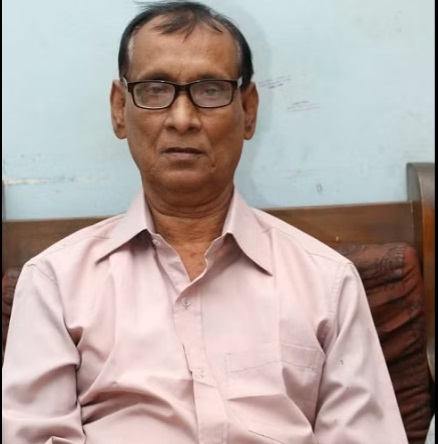
According to Chakraborty’s account, some of the wounded individuals mustered the strength to rise upon witnessing the departure of the Pakistani soldiers. However, their brief respite was abruptly interrupted when the soldiers returned and resumed firing at the injured victims. It was during this chaos that Preeti Ranjan sustained a gunshot wound to his back, yet remarkably managed to survive. Preeti Ranjan, one of the survivors of the massacre, recalls that after some time, cries of anguish and despair began to echo on the grounds.

A number of wounded individuals were desperately in need of water. Preeti Ranjan’s father, Nikunj Bihari, along with others, helped the injured and provided them with water. Tragically, Nikunj Bihari himself sustained injuries during the incident. Additionally, Preeti Ranjan endured the devastating loss of his father and brother, Nita Ranjan Chakraborty, in this horrific massacre.

The Pakistan Army and Razakars asked Ram Ranjan Bhattacharya, a sick lawyer from Sylhet court, to flee in order to save his life. However, as soon as the ailing Ram Ranjan attempted to rise from his chair, he was shot. Led by Abdul Ahad Chaudhary and Dr Abdul Khaleque, the local Razakars proceeded to pillage the entire village and set fire to the houses of Hindus.

Throughout the war for the liberation of Bangladesh, an estimated three million people lost their lives at the hands of Pakistan. This devastating toll included numerous instances of mass massacres. The Burunga massacre of Hindus in 1971 stands out as one such atrocious event that occurred in Bangladesh.
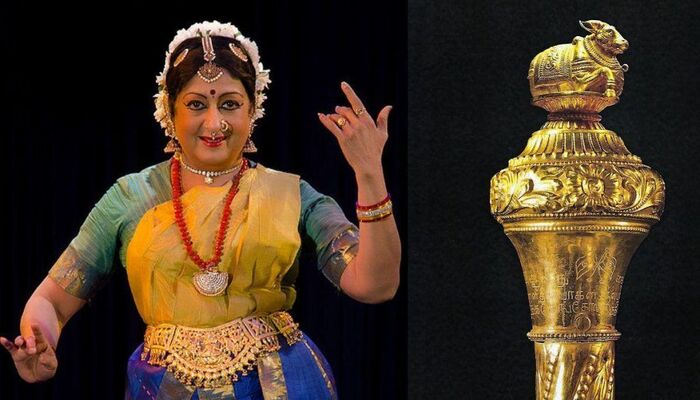
‘Did my little might like the Ramayana’s squirrel’: Dancer Padma Subrahmanyam narrates how she brought the Sengol to PM Modi’s notice through a letter

As the Modi government is set to revive a long-forgotten tradition by installing the historic sceptre ‘Sengol‘ near the Lok Sabha speaker’s chair in the new parliament building on May 28, renowned dancer Dr. Padma Subrahmanyan told India Today how an article she translated from Tamil to English and sent it to the Prime Minister’s Office (PMO) in 2021, triggered a chain of events that led to the historic development. In the letter, she requested to locate the Sengol explaining its significance, and also laid emphasis on the need to widely publicize it.

Dr. Padma Subrahmanyam spoke about a Tamil article published in Thuglak magazine, written by its editor S. Gurumurthy, that drew her attention toward the story of Sengol.

“It was an article in Tamil that came in Thuglak magazine and I was very attracted to the content of the article, which was about the Sengol. It was about how Kanchi Maha Swami (Chandrasekharendra Saraswati) told his disciple Mettu Swamigal about the Sengol and the whole tale has been retold in a book by Dr Subramaniam.”

Dr. Padma Subrahmanyam also talked about the significance of the golden sceptre in Tamil culture which also finds mention in a Tamil epic.

“The Sengol, in the Tamil culture has great significance. The umbrella, the Sengol, and the throne are the three objects that give you the concept of the reigning power of the king. The Sengol is not only a symbol of power but also of justice,” Dr. Padma Subramanyam said.

“The Sengol is just not something which came to us from thousand years from the later Cholas but Sengol is also mentioned in the Tamil epic Silappathikaram (also spelled Cilappatikaram). It is mentioned with regard to the Chera king (Nedunchezhiyan) who by mistake gave the order to behead the hero (Kovalan) and it was a wrong judgment as Kannagi (Kovalan’s wife) proves that he was wrong, he says my Sengol has bent with that he also dies. So the Sengol is a symbol of justice,” Dr Subramanyam added.

Dr. Padma Subrahmanyam further revealed how she became interested in locating the golden sceptre as she said, “I was interested to know where this Sengol was.” According to the magazine article, the Sengol that was presented to the first Prime Minister Jawaharlal Nehru had been kept in Anand Bhavan, Panditji’s birthplace. How did it go there, and what the relationship between Nehru and Sengol was is also very interesting.”

When the British handed over power to Indians in 1947, the occasion was marked by the presentation of a Sengol (sceptre) to first Prime Minister Jawaharlal Nehru. Dr Padma Subrahmanyam detailed that when it was decided that the British will hand over power to the Indians, Lord Mountbatten asked Pandit Nehru about the cultural symbol that should be used as a representation of the transfer of power.

However, Nehru had no answer. He discussed the matter with Rajaji (C Rajagopalachari). Rajagopalachari then sought guidance from Chandrashekhendra Saraswati who advised him to go to the Thiruvavaduthurai Adheenam in Madurai who have been the Raja Gurus of the Cholas. The Raja Guru used to hand over the Sengol to the king during the coronation and that marked the transformation of power.

Then the Thiruvavaduthurai Adheenam in Madras commissioned the beautiful 5-feet-long Sengol at the request of C Rajagopalachari to mark the transfer of power in 1947. The Adheenam’s pontiff had entrusted the family of Vummidi Bangaru Chetty to craft the golden sceptre.

Following that Dr Subrahmanyam says that the head of the Thiruvaduthurai Mutt Sri La Sri Ambalavana Desika Swamigal sent the Sengol to Nehru, who accepted it to use as a symbol of power. The seer had sent a delegation carrying the sceptre in a special aircraft arranged by the government. 

The sceptre was then handed over to Lord Mountbatten by Sri La Sri Kumaraswamy Thambiran. The British Viceroy then handed it back to the seer. After that, a purification ceremony of the Sengol was carried out by Sri La Sri Kumaraswamy Thambiran by pouring the holy Gangajal on it amidst the recitation of the Kolaru Patham Thevaram. It comprises 11 stanzas and the last stanza says: it is by order of god you will rule perfectly.

Dr Padma Subrahmanyam lamented that following the transfer of power ceremony, the Sengol was out of sight and the despite being an extraordinary historic event, not much was known to the public. She added that as the country is celebrating 75 years of independence, that historic event should be re-enacted. 

An overjoyed dancer said that her dream has come true as the Sengol will be installed in the new temple of democracy. She further asserted that “the Sengol will stand unbent at the new parliament, inspiring the parliament to be really serving the country.”

Despite being the driving force of the historic resurrection of the forgotten tradition, Dr Padma Subrahmanyam said that she is a nationalist and like the squirrel mentioned in the Ramayana she has done her “little might”.

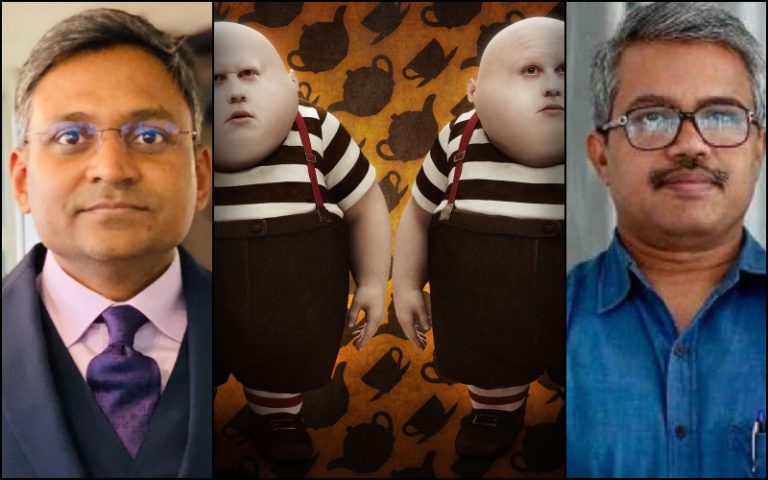
Tweedledum and Tweedledee of caste politics get upset with the Judge who had dismissed the petition against Bageshwar Dham katha, say will complain to CJI

Days after the Jabalpur Bench of Madhya Pradesh High Court dismissed a Public Interest Litigation (PIL) to stop Bageshwar Dham’s religious event, habitual ‘caste baiters’ sought to exploit the opportunity to target Justice Vivek Agarwal.

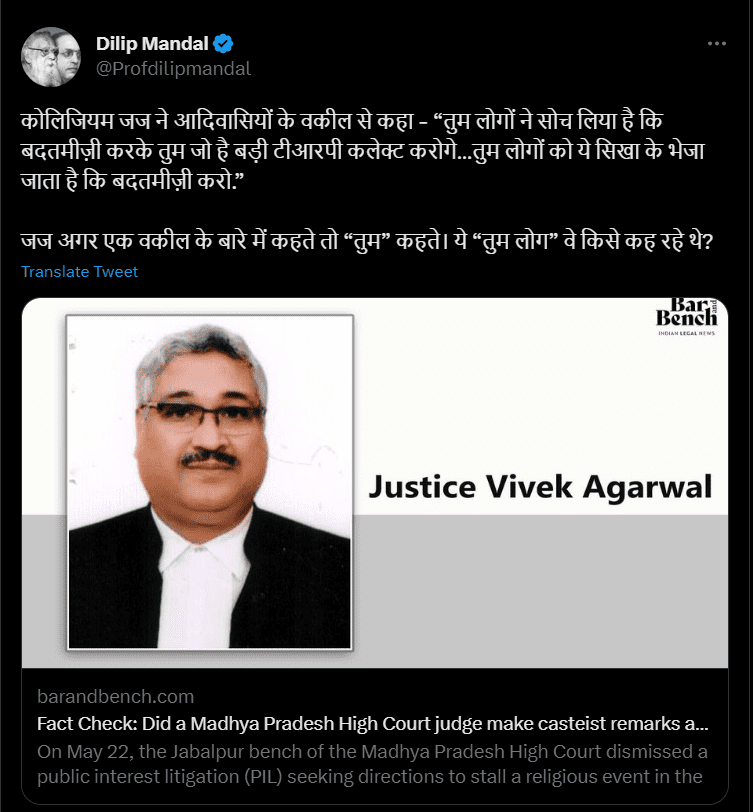
In a tweet on Thursday (May 25), The Print columnist Dilip Mandal took to Twitter to suggest that the Judge who dismissed the PIL in the Bageshwar Dham case is prejudiced against Adivasis.

“The collegium judge told the counsel for the tribals – “You people have thought that you will collect huge TRPs by doing bad things… If the judge had said about a lawyer, he would have used the word ‘tum’. Who was this ‘tum log (you people)he was referring to?

Screengrab of the tweet by Dilip Mandal

It must be mentioned that Dilip Mandal is known for raking up unnecessary and trivial issues and falsely alleging caste discrimination.

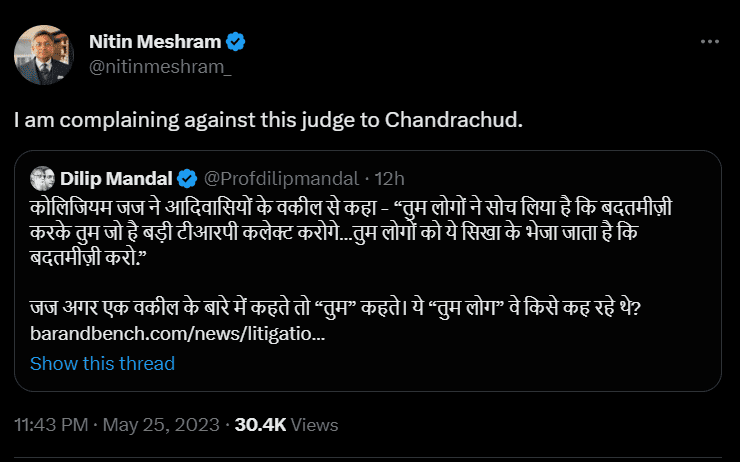
Advocate Nitin Meshram, infamous for helping child rapist Firoz justify his action, also hopped on the bandwagon of ‘caste baiting’ and vowed to raise the matter with the Chief Justice of India (CJI) DY Chandrachud. “I am complaining about this judge to Chandrachud,” he said.

Both Dilip Mandal and Nitin Meshram are similar to the characters of ‘Tweedledum’ and ‘Tweedledee’ when it comes to caste-baiting.

Screengrab of the tweet by Nitin Meshram

It must be mentioned that ‘Tweedledum’ and ‘Tweedledee’ are fictional characters from Lewis Carroll’s famous novel “Through the Looking-Glass, and What Alice Found There.”

Tweedledum and Tweedledee are a pair of identical twin brothers who are constantly engaged in nonsensical arguments and disagreements. They have since become iconic characters in popular culture and are often depicted as two foolish individuals who mirror each other’s behaviour.

Their names have even been adopted as a metaphor for two people who are so similar that they are virtually indistinguishable.

The Background of the Controversy

On May 22 this year, the Jabalpur Bench of Madhya Pradesh High Court dismissed the second Public Interest Litigation (PIL) filed to stop Bageshwar Dham’s religious event in the State.

The event was scheduled for May 23 and May 24 at Rani Durgavati Mahavidyalay Ground, village Linga in Paraswada of district Balaghat, Madhya Pradesh.

During the hearing, Justice Vivek Agarwal warned the advocate of contempt of court if he continued to argue with the bench inappropriately. The advocate appearing for the “Tribal” organisation claimed that organising such an event would hurt the religious sentiments of the tribals.

When Justice Vivek Agarwal asked him to explain the traditions of the ‘Bada Dev Bhagwan Sthal’ (Religious place of Tribals) of the area and how tribals’ sentiments would be hurt. The advocate read a paragraph from the petition that was vague with no detailed information on the local traditions.

Justice Vivek interrupted the advocate and explained his question in Hindi and English so that the counsel could understand. Confused by the question, the advocate could not provide any detail of the primitive traditions and said they do not have a problem if the event was held at another place.

Justice Vivek said, “You are not answering my question. Who are you to decide where the event will take place and where it cannot take place?” The advocate got agitated and said, “I am trying to explain it through Constitution but you are not listening to me.” Justice Vivek warned him to talk properly. Advocate said, “You are not listening to me. ‘Kuch bhi bole ja rahe hain’ (You are saying whatever you want)” to the judge.

Justice Vivek did not take the advocate’s tone lightly and asked to issue a contempt notice against him. The advocate continued to speak inappropriately and said, “I am trying to mention the provisions under Article 51 but you are not ready to listen.” He further asked the judge to listen to his argument first.

Justice Vivek again warned him of contempt if he continued to speak to the bench in an appropriate manner after which the advocate apologised. The advocate’s associate came and asked him to calm down. Justice Vivek, who was visibly angry at the way the advocate behaved, said, “First answer my questions then we will read the constitution. Don’t try to be over-smart. If you try to argue inappropriately, I will send you directly to jail from here.

The part of the court proceeding that Tweedledee and Tweedledum took offence to was the following:

Justice Agarwal is seen telling Udhe in Hindi, 

“Tum logo ne soch liya hai ki badtameezi karke tum jo hai, apne aap ke liye bohot badi TRP collect karloge? (You people think that by misbehaving you will garner TRPs for yourself?).” 

Udhe then mumbles an apology, which prompts the judge to say,

“You should be sorry.” 

Justice Agarwal then again says in Hindi, 

“Tum logon ko ye sikhake bheja jaata hai ki badtameezi karo? (Are you people tutored and sent to misbehave?)”

They alleged that “tum log” essentially alluded to the caste of the lawyer, however, that is not true. If not actually watching the proceedings, once would realise that the judge and the lawyer had got into an argument much before these comments were made because of the repeated misbehaviour of the lawyer. The lawyer constantly claimed that the event would hurt the Adivasi religious feelings and the judge kept asking him to substantiate his comment.

Another lawyer is then seen asking Udhe to calm down and it is then that Udhe mumbles his apology and Justice Agarwal makes the “tum log” comment. 

It is evident that the Judge, when he said “tum log”, was alluding to lawyers who file sponsored PILs and motivated cases and his comment had nothing to do with caste or the adivasi identity.

The seemingly small steps, mocked by the opposition, that transformed Rural India: As PM Modi completes 9 years in office, here is a lowdown

The Prime Minister Narendra Modi-led BJP government at the Centre will complete 9 years on May 30, 2023, since it came to power after securing a large mandate in the 2014 Lok Sabha elections. Throughout the years, the Narendra Modi-led BJP government has undertaken a number of efforts to help the oppressed and marginalised. Prime Minister Narendra Modi’s vision has not only revolutionised the world’s perception of India but also catapulted the country to the top of the global world order.

Despite several roadblocks and challenges thrown at him, Prime Minister Modi has relentlessly worked to improve the economic condition of India. His initiatives have been grassroots in nature, with the goal of meeting the basic needs of the downtrodden and the marginalized sections of society, one of the key factors that possibly helped the BJP to come back to power that too with a much bigger mandate in the 2019 Lok Sabha elections.

In the past nine years, the Narendra Modi government has been devoted to providing social justice, equality, respect, and equal chances for all Indian citizens. In his tenure, Modi introduced several path-breaking welfare schemes and initiatives which brought drastic changes in the lives of millions of people both in rural and urban India.

The BJP government, however, did not have an easy start as the opposition in the country was far more interested in petty politics than the welfare and upliftment of the citizens of the country. From 2014 until now, the opposition has relentlessly mocked Prime Minister Modi’s such endeavour, attempting to thwart the implementation of several initiatives and welfare measures of the Narendra Modi government. However, the upshot of disregarding these obstacles and moving ahead was that the country’s conditions, the standard of life of individuals and their thinking began to change.

While Modi’s welfare schemes have had a positive impact and elevated the standards of living of people across the country it has had a significant impact in rural India. The Narendra Modi government has achieved considerable success in the execution of marque schemes targeting rural India. The Pradhan Mantri Ujjwala Yojana, Deen Dayal Upadhyaya Gram Jyoti Yojana (DDUGJY) and Pradhan Mantri Sahaj Bijli Har Ghar Yojana, or the Saubhagya scheme, are all part of this initiative to empower rural India.

Har Ghar Nal Se Jal Scheme

Recognising the hardships of rural people who had to stand in lengthy queues or travel long distances for potable drinking water, Prime Minister Narendra Modi announced the Jal Jeevan Mission on 19 March 2019, which aimed at supplying tap water to every rural family by 2024. The vision of the Jal Jeevan mission is to provide and ensure that every rural household has drinking water supply in adequate quantity on a regular and long-term basis at affordable charges and thus lead to improvement in the living standards of rural communities.

According to the government website, “Jal Jeevan Mission, is envisioned to provide safe and adequate drinking water through individual household tap connections by 2024 to all households in rural India. The programme will also implement source sustainability measures as mandatory elements, such as recharge and reuse through grey water management, water conservation, rain water harvesting. The Jal Jeevan Mission will be based on a community approach to water and will include extensive Information, Education and communication as a key component of the mission. JJM looks to create a jan andolan for water, thereby making it everyone’s priority.”

Last year it was reported that the Modi government allocated Rs 60,000 crore under the Jal Jeevan Mission (JJM) to provide tap water to 3.8 crore households.

According to the dynamic Jal Jeevan Mission dashboard, as of this date, 62.20% of households in rural India have access to tap water supply. Until August 2019 only 16.64% of households in rural India had tap water supply. Moreover the total number of households that have been provided with tap water connection since the launch of the mission in March 2019 stands at 8.86 crores.

Har Ghar Shauchalay under Swachh Bharat Mission

According to a UNICEF report from 2015, as many as 524 million (52.4 crore) people in India are forced to defecate in the open due to a lack of sanitation infrastructure, which meant that even after 67 years of independence, 52 crore people, or more than 60% of our population, lacked access to basic amenities such as toilets.

Modi government decided to address this issue head-on and started building sanitation infrastructure in mission mode. The government’s relentless focus under Swachh Bharat Mission (Grameen) ensured that sanitation coverage started improving dramatically year after year. As per the data from Economic Survey 2017-18, only 39% population had access to toilets in 2014, when this initiative was launched by the Modi government. However, as per data published in 2022, under this scheme, more than 10 crore 93 lakh toilets had been built in rural areas of various states, while this figure has surpassed 62 lakhs in urban areas.

In fact, in March this year, Minister of State for Jal Shakti Prahlad Singh Patel confirmed that over 11 crore toilets and 2.23 lakh Community Sanitary Complexes have been built across All States and UTs Under Swachh Bharat Mission- Grameen.

Flagships schemes of the Narendra Modi government

Several welfare measures and initiatives launched by the Narendra Modi government in these 9 years of governance have accrued a host of direct and indirect benefits to millions of Indians.

Prime Minister Narendra Modi launched the “Make in India” campaign on September 25, 2014, which increased the focus on the manufacturing sector to create a powerful growth engine to propel India’s economy. People understood the value of indigenous items and limited the utility of imported goods as a result of the Prime Minister’s efforts. Since its launch in 2014, “Make in India” has attracted some of the most prominent global manufacturers in heavy machinery, defence equipment, automobiles and electronics to name just a few.

The Pradhan Mantri Ujjwala Yojana has benefited millions of Indian women and also prevented them from getting sick by providing them with smoke-free and safe fuel.

Under the Pradhan Mantri Awas Yojana (PMAY), the Modi government constructed more than 3 crore houses and provided them at an affordable price to the marginalised section of the country.

PM Modi announced the Pradhan Mantri Jan Dhan Yojana (PMJDY), the world’s largest financial inclusion initiative, from the ramparts of the Red Fort on August 15, 2014, with a special emphasis on the financial inclusion of Indian residents. To date, more than 45 crore bank accounts have been opened under PMJDY.

Not only this, electricity reached dark villages through the Deendayal Upadhyaya Gram Jyoti Yojana. Farmers are getting Rs 6000 per month as help from the PM Kisan Samman Nidhi Yojana.

Besides, the Modi government also launched Pradhan Mantri Kisan Maandhan Yojana – a pension scheme for the small and marginal farmers of India in September 2019. Under this yojana, farmers in India get a minimum pension of Rs 3000 per month upon attaining the age of 60. However, those who fall in the age group of 18 to 40 years can apply for the scheme.

Further, in order to provide insurance coverage accessible to ordinary Indians, Pradhan Mantri Jeevan Jyoti Bima Yojana and Pradhan Mantri Suraksha Bima Yojana were launched in 2015. 

Another public welfare scheme, the PM Garib Kalyan Yojana, which was started during the first wave of Covid-19, gave free foodgrains to more than 80 crore people, assuring food security for millions of people. The scheme was extended during the second Covid-19 wave in the country.

During PM Modi’s nine-year tenure, the BJP government has also introduced a number of women-centric initiatives aimed at empowering women and making them socially and financially self-sufficient. ‘Beti Bachao, Beti Padhao,’ one of the Modi government’s most talked-about programmes, was started in 2015 with the primary goal of reducing the country’s dropping sex ratio, raising social awareness, and expanding opportunities for girls.

Sukanya Samriddhi Yojana and Poshan Abhiyaan are some other key women-centric initiatives of the Modi regime.

Besides, implementing several such path-breaking schemes the Modi government’s firm resolve led to the scrapping of Article 370, the construction of the grand Ram Temple in Ayodhya, the abolition of instant triple talaq, the passing of the Citizenship Amendment Act and surgical strikes on terror camps across the border.

The clamour created by Opposition against Modi

It is worth mentioning that the opposition’s clamour has persisted since Narendra Modi was elected with an overwhelming majority in 2014. It started with the Opposition parties, especially the Congress using the “chaiwala” jibe in a derogatory fashion against PM Narendra Modi. Ahead of the 2014 elections, Mani Shankar Aiyar tried to target PM Modi with the ‘chaiwala’ jibe, which PM Modi then used to his massive advantage to campaign for the elections. He also referred to PM Modi as ‘neech aadmi’ and even justified it.

Since then, the veiled attacks on Modi have not only continued but have become more vicious. On several occasions, Congress has openly insulted the Modi government’s flagship scheme and politicised the significant policies and executive decisions made by his administration. In 2018, Congress senior leader and former Minister of Drinking Water and Sanitation Jairam Ramesh mocked the Narendra Modi government’s Swachh Bharat Mission calling it mere propaganda. In 2022, Congress Goa Pradesh Congress Committee general secretary Janardhan Bhandari called Goa’s certification as a ‘Har Ghar Jal’ state a farce.

Be it undermining the flagship initiatives undertaken by the Modi government to levelling phoney corruption charges against them to their high-pitched hyperbole about Modi ‘working for industrialists’ to using slurs like ‘nalayak’ and ‘poisonous snake’ to portraying Modi as an instigator of hatred, the Congress has tried everything in their power to demoralise PM Modi but have been unable to shake his resolve to serve the nation and remain the world’s most popular leader.

London: Man arrested after a car nudges into gates of British Prime Minister’s residence

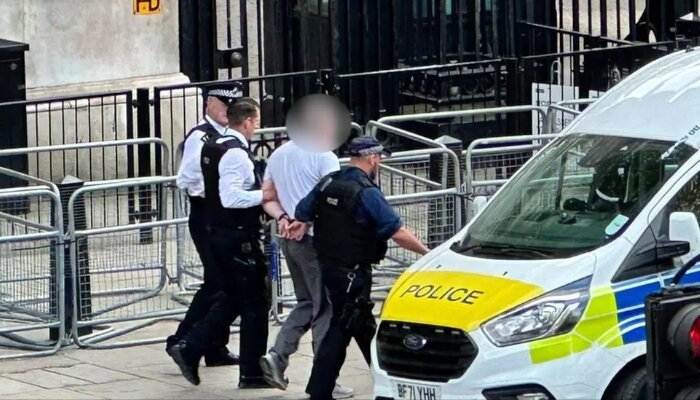
A man was arrested on Thursday in London on suspicion of criminal damage and dangerous driving after a car crashed into the gates of 10 Downing Street, the official residence of the British Prime Minister. PM Rishi Sunak was in his office at the time of the incident but left soon after in a motorcade from another exit for a pre-scheduled departure. No injuries have been reported.

The 2009 silver Kia, which was registered in London, can be seen slowing down as it approaches Downing Street’s main entrance in surveillance footage of the event. Footage of the incident shows the car crossing the street and then moving straight ahead towards 10 Downing Street at a slow speed. The car had reversed into a Ministry of Defence car park across the road before crossing the road.

The Metropolitan Police informed that the occurrence is not being treated as terror-related. Following the incident at 16:20 British Summer Time (BST), a portion of Whitehall, the main thoroughfare that passes through the centre of various government offices, was evacuated.

Since then, the police barrier has been lifted and traffic on the route has resumed. The automobile was put onto a police recovery truck and driven away from the site at 19:45 BST.

Officers examined the vehicle and also took a cell phone from the car. Sniffer dogs and a forensics officer were at the location investigating the car. It was not clear if the crash had been deliberate or not. Many people on social media noted that the car was moving to slow to call it a ‘crash’.

One witness reported seeing police holding the culprit “face to the floor” and detaining him while pointing Tasers. Witness 44-year-old Simon Parry heard a “bang” and saw officers pointing Tasers at the man. “A lot of police vehicles came very quickly and were very quick to evacuate the area,” he stated.

“We saw people that were in a panic running away and we saw people who were excited,” he described the reaction of people regarding the instance.

Matthew Torbitt, a 32-year-old, claimed he heard a loud blast and was halted on Whitehall when police cordoned off the area.

Armed and unarmed police officers are stationed at the street’s entrance 24 hours a day, and Whitehall is the only route that leads there. The PM and the Chancellor Jeremy Hunt as well as a network of offices that connect to other government buildings were in Downing Street at the time of the crash.

Whitehall was reportedly “pretty much back to normal” with people entering and exiting Downing Street on foot as usual, and it looked that the gate had sustained minimal damage.

Central London is an iconic landmark and has been a target in the past including one in which a driver struck several pedestrians with a vehicle outside government offices near Westminster Bridge. At least four people, including the assailant, were killed and forty others were injured in the terrorist attack.

Recently an Indian-origin man named Sai Varshith Kandula (19) was charged with attempting to kill the US president after he rammed a U-Haul truck into the White House barricades.

Hindu org conducts survey of Americans about their understanding of caste: How it shows bias, ignorance and high chance of racial profiling of Hindus

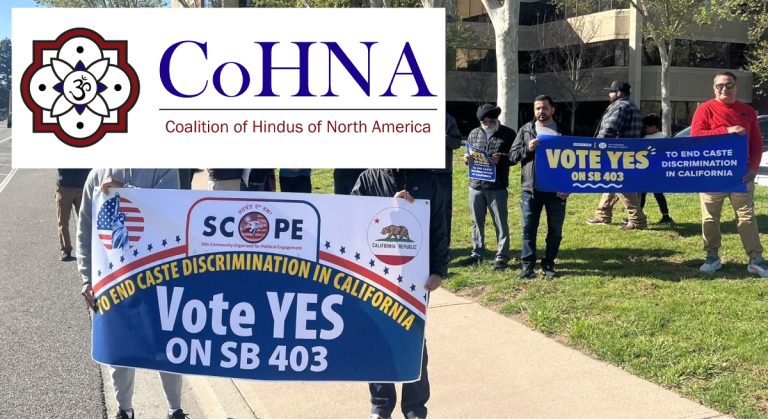
The California State Senate in the US recently passed legislation (SB-403) that would ban caste-based discrimination in the State. A similar measure is being submitted in the State House of Representatives, according to the bill’s supporters, who are led by the nonprofit Equality Lab. This is necessary before the governor can sign the bill into law.

The Unruh Civil Rights Act, which states that everyone in the state of California is entitled to the full and equal accommodations, advantages, facilities, privileges, or services in all business establishments, is amended by SB 403, which was introduced by California Senator Aisha Wahab, to include caste as a protected category.

As per the reports, those who have suffered systematic injury as a result of caste bias and prejudice are explicitly protected under SB 403’s provisions. Additionally, it establishes clear legal repercussions for anyone who tries to escape accountability or responsibilities for condoning or taking part in caste-based violence.

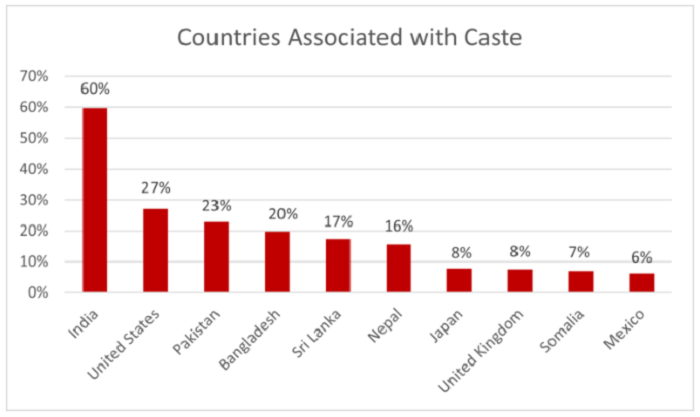
However, the understanding of caste by Americans is biased and firmly associated with Hinduism and India. While the proponents of the legislation believe that caste does not automatically mean India and that it is found across multiple religions and not just Hinduism, the opponents tend to believe that caste is associated with Hinduism due to the popular narrative.

A recent survey conducted by the Coalition of Hindus of North America (CoHNA) in March 2023, which is based on a YouGov US national sample of 1,500 responses, provides utter clarity on the American understanding of caste. The survey revealed that Americans claiming caste exists across geographies from Japan to South America is a misdirection and that they firmly believe that caste is clearly associated with India and therefore Hinduism.

Americans think caste is clearly associated to India and Hinduism

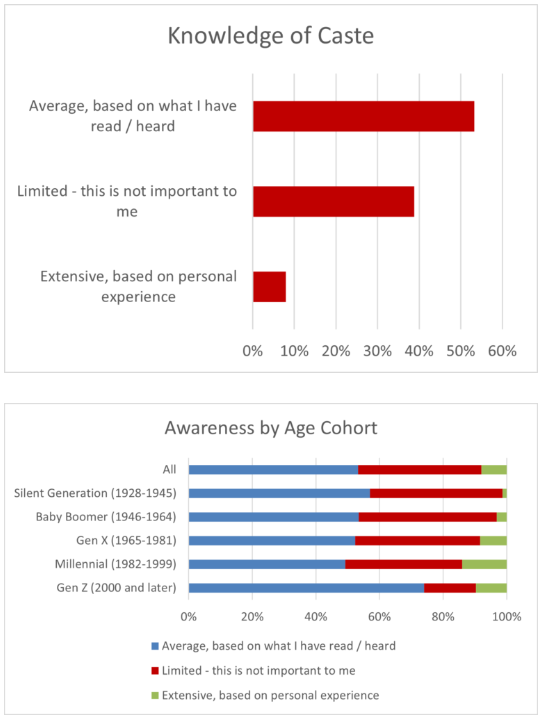
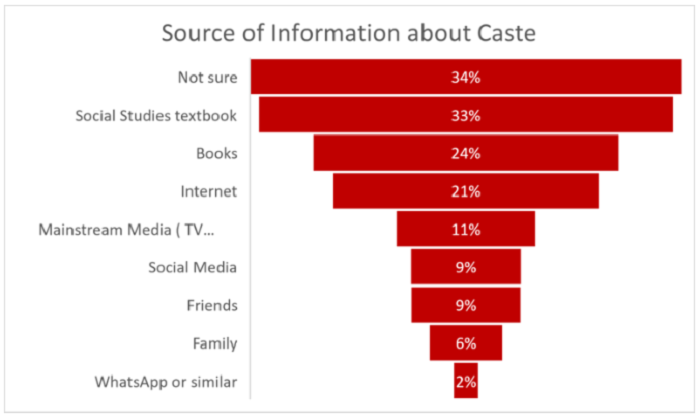
The survey also noted that only 8 per cent of those surveyed have first-hand knowledge of the caste system. It is not as prevalent as is suggested. Even for those who claim to have in-depth knowledge of caste, it is impossible for them to differentiate between castes based on last names or other traits. The vast majority of those polled stated that they first learnt about caste through their social studies textbooks in middle and high school.

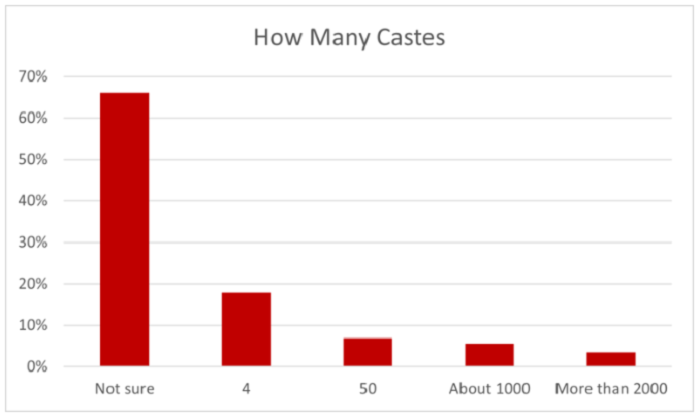
Few people are aware that India has 25,000 sub-castes in addition to thousands of castes. In India, there are an astounding 4.6 Million castes, subcastes, and clans according to the socioeconomic census conducted in 2011! A resounding majority of those who do have an opinion on the subject hold that there are just four castes. Caste is taught in American schools in a manner that is congruent with this.

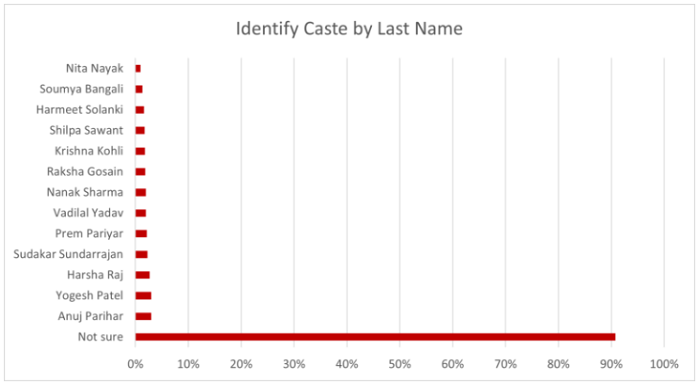
According to the Equality Labs Caste Report (p.44), a person’s last name is frequently the best indication of their caste origin. However, the survey revealed that nine out of ten respondents indicated they had no idea how to identify one’s caste from his/her surname. 

Americans can’t identify caste from one’s surname

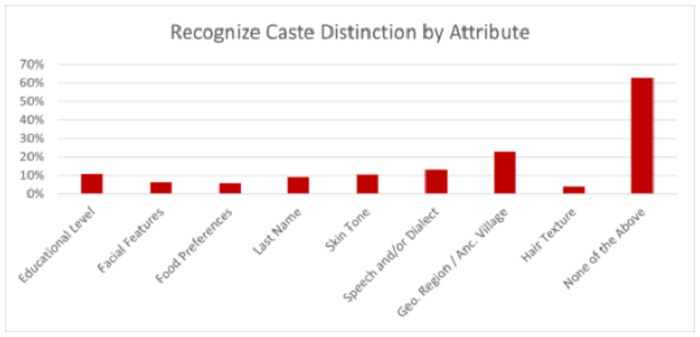
A combination of apparently “Dalit” or “Upper Caste” names in the study included a number of popular Indian names. The first notion was that the typical American would not be able to distinguish between “Dalit” and “Upper Caste” last names. It is evident that caste is connected to India and Hinduism, at least in the thoughts of a statistically significant cross-section of Americans, but attempting to pinpoint a caste based on last name is no more accurate than a wild guess.

And this is a scathing refutation of the myth that one can readily discern “caste” based on characteristics like last name, eating habits, skin tone, etc.

Most people in America either have a basic understanding of the system based on what they have read or heard or don’t think it’s significant. Only the Millennial and Gen-Z groups share information based on personal experience in any appreciable quantity. This is not caste-based prejudice; it is only a knowledge of the concept, the survey noted. 

General knowledge of caste system among Americans

The poll further looked at where most Americans get their information on the caste system from. The survey revealed that more than half of respondents from all generations had been exposed to the caste system by the time they completed high school. More people would have first encountered caste talks in their employment if caste conversations were as common in the workplace or on college campuses as is stated.

How Americans learn about castes

Also, the Americans have very little knowledge about the total number of castes in existence. As per the survey, majority of them claimed that they were unsure about the number while the others said that there are only four castes. Very few agreed to believe that there are more than 2000 castes existent in the world.

How many castes do Americans think exist

According to some estimates, there are thousands of castes and more than 25,000 ‘sub-castes’; however, the 2011 socioeconomic census of India found that there are an astounding 4.6 million castes, sub-castes, clans, etc.

Before hastily passing legislation forbidding it and attributing the (mythical) prejudice on Hindus from India who reside in America, a more thorough, statistically sound research of the real prevalence of caste-based systems of discrimination in America is necessary. It is also immoral to pass laws and regulations based on false or unreliable information since doing so might result in the targeting and profiling of Hindu Americans and other small-scale minorities, as well as civil rights violations. “Specious arguments that caste laws do not target Hindus or people of Indian origin are rejected with the results of this statistically valid survey,” report by Coalition of Hindus of North America stated. 

Indian Economy is set to surpass 7% growth rate in the fiscal year 2023: Manufacturing to be the key driver. Read details of the SBI report

The Indian economy is on track to surpass 7 per cent growth rate in Fiscal Year 2023 with manufacturing being the key driver, according to a report released by the State Bank of India. 

State Bank of India’s research report, Ecowrap released on Friday said that India’s growth in the fourth quarter of FY23 is likely to be 5.5 per cent, which would lead to the country’s growth for FY23 at 7.1 per cent. This is in line with the advance estimates released by the National Statistical Office (NSO) in January that pegged growth for the year ended March 31, 2023, at 7 per cent. 

According to Ecowrap the variegated patterns of growth emerging across the globe is bringing forth unprecedented challenges before policymakers, regulators and economists in assessing the real rates of projected growth, not only during the current year — 2023 — but continuing through 2024 and 2025 as the inflation trajectory management for central banks has been elongated after the surprising turn of events last year. 

Amidst this global hullabaloo, the SBI Research report said India is expected to continue its showdown in pursuing a different pathway of zeroing in on drivers of growth, looking for a renewed surge in resilient manufacturing while supporting services sector to embrace enhanced efficiency. 

Locally, domestic consumption and investment stand to benefit from stronger prospects for agricultural and allied activities, strengthening business and consumer confidence, and strong credit growth while supply responses and cost conditions are poised to improve as inflationary pressure is easing, the report said. 

The Union Budget 2023-24’s emphasis on capital expenditure is expected to crowd-in private investment, strengthen job creation and demand, and raise our growth potential, the report said. 

RBI has estimated Q4FY23 Real GDP growth to be 5.1 per cent and full year FY23 estimates by National Statistical Office (NSO) is 7 per cent. For 2023-24, RBI is projecting GDP growth at 6.5 per cent with the first quarter (Q1) pegged at 7.6 per cent. 

SBI’s ANN (Artificial Neural Network) model, based on 30 high-frequency indicators from key sectors, and tuned/trained to project the GDP numbers forecasts the quarterly GDP growth for the fourth quarter of fiscal 2022-23 (Q4FY23) at 5.5 per cent, the SBI Research Ecowrap said. It added at this rate, India’s GDP growth for FY23 is likely at 7.1 per cent. 

World Economic Outlook (WEO) report from International Monetary Fund (IMF) in April 2023 revised the baseline growth forecast from 3.4 per cent in 2022 to 2.8 per cent in 2023, before settling at 3 per cent in 2024. The report said advanced economies (AEs) are expected to see an especially pronounced growth slowdown, from 2.7 per cent in 2022 to 1.3 per cent in 2023. 

Global headline inflation in the baseline case is set to fall from 8.7 per cent in 2022 to 7 per cent in 2023 on the back of lower commodity prices though underlying (core) inflation is likely to decline more slowly, the report said. 

Meanwhile, India Inc continues to front lead the economic turnaround while embracing better operational and financial efficiency, the SBI Research Ecowrap said. It added in Q4FY23, around 1,700 listed entities reported top line growth of 12, while PAT grew by around 19 per cent as compared to the same period previous year. It added the same set of companies reported earnings before interest, taxes, depreciation, and amortization (EBITDA) growth of around 23 per cent in Q4FY23. 

The report said corporate results, ex-banking, financial services and insurance (BFSI), for Q4FY23 showed both top line and bottom line growth of around 10 per cent, while EBITDA grew by 7 per cent as compared to Q4FY22. 

Further, the report said it was pertinent to mention that corporate margin, which was continuously under pressure for last few quarters, shown sign of improvement in Q4FY23. As reflected in results of around 1,500 listed entities ex-BFSI, EBITDA margin, on aggregate basis, improved from 13.96 per cent in Q4FY22 to 14.34 per cent in Q4FY23, according to the report. 

SBI research report also said green shoots are also emerging on foreign capital inflows in capital markets with year-to date (YTD) foreign institutional investors (FIIs) inflows in FY24 touching USD 6 billion, a reversal of trend from 2022. 

It also added that start-ups financing has been hit due to banking turmoil in the US, in particular failure of niche banks though it also offers a gearing up pedestal to domestic FIs to ring fence the financial needs of these changelings internally to ensure the sweet spot enjoyed by India grows in a disruptive and disproportionate manner. 

(This news report is published from a syndicated feed. Except for the headline, the content has not been written or edited by OpIndia staff)

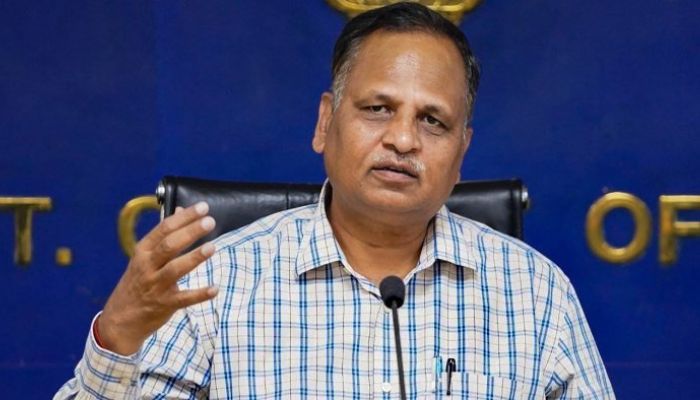
Supreme Court grants interim bail to AAP leader Satyendar Jain, accused of money laundering

On Friday (May 26), the Supreme Court of India granted interim bail to Aam Aadmi Party (AAP) leader Satyendar Jain for a period of 6 weeks.

As per reports, the apex court turned down the plea of the Enforcement Directorate (ED) to first let a panel of doctors from the All India Institute of Medical Sciences (AIIMS) examine the AAP leader.

Satyendar Jain, who has been arrested in connection to a money laundering case filed by ED, has now been granted bail till July 11, 2023. He has been directed to not speak to the media during the 6-week interim bail period. The case is adjourned for hearing till July 10 this year.

The AAP leader has been in Tihar Jail since May 2022. After his bail petition was dismissed by the Delhi High Court on April 6, 2023, he approached the Supreme Court. 

On April 6 this year, the Delhi High Court made scathing observations about Satyendar Jain while dismissing his bail application. A single Judge Bench of Justice Dinesh Kumar Sharma stated that there was enough evidence to suggest that the AAP leader maintained indirect control in the alleged money laundering operation.

It must be mentioned that the Enforcement Directorate had earlier attached properties worth ₹4.81 crores, belonging to five companies – Akinchan Developers, Indo Metal Impex, Mangalayatan Projects, Paryas Infosolutions, and J.J. Ideal Estate Pvt Ltd.

The court rejected the defence of Satyendar Jain that he did not have physical possession of the attached properties. It also noted that the special court under the Prevention of Money Laundering Act (PMLA) took cognisance of the usage of Kolkata-based hawala operators by Satyendar Jain and his accomplice.

Justice Dinesh Kumar Sharma took note of the special treatment provided to Satyendar Jain in Tihar Jail. “The special treatment extended by the prison authorities to Satyender Kumar Jain shows that the ED’s apprehension throughout was correct that being a former Minister of Prisons and Health he is receiving favourable treatment from the prison officials including the prison doctors,” he said.

Bihar: JDU govt decides to remove a 350-year-old Temple to build a flyover, BJP opposes. Read about the war of words

The decision of the Bihar government to remove temples as part of clearing encroachments from roads has been opposed by the BJP. This has also led to a war of words between the Janata Dal United (JNU) and the Bharatiya Janata Party (BJP).

The latter objected to the removal of a 350-year-old temple in Patna, while the former countered that several temples had been removed from national highways and other locations with the approval of the Centre.

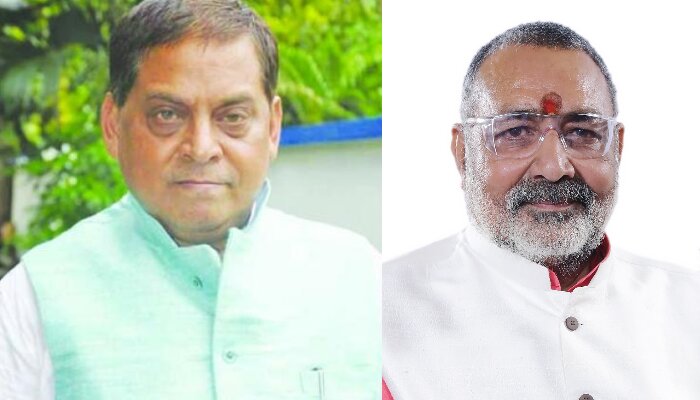
The dispute began when Begusarai MP and Union Minister Giriraj Singh vowed to protest in order to oppose the Bihar government’s intention to demolish the 350-year-old temple that is now in the way of an upcoming flyover on Patna’s Ashok Rajpath road.

Neeraj Kumar, a former minister and JD(U) MLC questioned the BJP’s lawmaker decision not to oppose the relocation of temples off national roads.

“First, the alignment of the proposed flyover on Ashok Rajpath was cleared by BJP MLA Nitin Nabin when he was road construction minister. Second, when the matter of removing temples from roads had come up in 2018, several BJP-ruled states told the courts concerned that temples could be removed,” he stated in an interview with The Indian Express.

“I want to know from Giriraj Singh why he did not oppose the removal of 15 temples during elevation and repair work between Simaria and Khagaria along NH-31,” he remarked citing central government data.

“In fact, several temples had been removed to clear encroachments in Rajasthan, Delhi, Madhya Pradesh, Uttrakhand, Karnataka and Assam. We respect all religions and our government has shifted several temples, gurudwaras and churches when they had to be removed to clear encroachments in the recent past,” the JD(U) leader mentioned.

He accused the BJP of using the temple argument to deflect attention away from governance-related concerns. In addition, Neeraj Kumar, who also serves on the Bihar State Religious Trust Council, claimed that no BJP MP nor MLA had contributed to the maintenance and development of the revered Patan Devi temple.

He alleged that however, six JD(U) legislators had given Rs 7.75 crore in support for the same. “Notably, JD(U) MLC Aafaq Ahmad donated Rs 50 lakh, thus reaffirming our belief and respect in the shared culture and tradition of our communities.”

The centuries-old building on Ashok Rajpath, according to BJP national general secretary (OBC Morcha) Nikhil Anand, should be protected from demolition in the name of encroachment.

“There are policies, but there are exceptions also. One cannot remove the 350-year-old structure just because it is within the encroachment area or town planning area. Will the Bihar government remove many mosques or Mazars that come in the way of a national highway,” he questioned.

He charged that the Bihar Chief Minister is attempting to pacify minorities. “Nitish Kumar should give one example where any mosque or Mazar has been removed in the name of development in Bihar. This historical site, which is basically a temple, is being removed to send a message to a certain section of society in the name of appeasement.”

The JD(U) and the BJP have been at odds ever since Bageshwar Dham peethadhish (high priest) Dhirendra Krishna Shastri visited Patna earlier this month for five days for religious functions. The ruling party poked fun at a number of top BJP figures for attending his sessions, while the opposition fired back by arguing that everyone was allowed to affirm their beliefs.

The Nitish Kumar administration was also slammed by the BJP for not allocating the Gandhi Maidan in Patna for Bageshwar Dham Sarkar’s event, which was instead hosted in Naubatpur, a suburb of Patna.

Tamil Nadu: NCPCR confirms that the two-finger test was conducted to humiliate minors to defame priests of Lord Nataraja Temple

On Friday, the National Commission for Protection of Child Rights (NCPCR) conducted an investigation into the ‘forced virginity test’ also known as the two-finger test on minor girls as exposed by the Governor of Tamil Nadu earlier this month. According to some reports, Dr RG Anand of the NCPCR revealed that no two-finger test was performed on minor girls in Chidambaram and the test was conducted by touching their private parts. However, it was later revealed in a report by Swarajya that the media misquoted him and that the NCPCR probe had confirmed that two-finger test was indeed conducted.

On May 4, the governor of Tamil Nadu, Ravindra Narayana Ravi, stated that the minor girls in the state were forced to undergo the two-finger test, also known as the virginity test, by the state administration in an effort to defame the podhu dikshithars. He also said that false cases of child marriage were filed against the podhu dikshithars, whereas there were no such marriages.

Pothu dikshithars are the hereditary priests and custodians of Sri Sabanayagar Temple, popularly known as Lord Nataraja Temple. Parents were arrested and put in prison. And the girls, sixth and seventh standard students, were forcibly taken from home to the hospitals and made to undergo ‘two-finger tests,’ virginity tests. Some of them tried to commit suicide,” he was quoted as saying.

The NCPCR took cognizance of the revelation and launched an investigation into the case. The NCPCR has commenced suo motu procedures to examine the charges, despite the Tamil Nadu police and health department authorities refuting these assertions. Irai Anbu, the chief secretary of Tamil Nadu, was also given instructions by the NCPCR to produce a report on this issue.

On Wednesday, NCPCR member Anand travelled to Chidambaram as part of the continuing probe. He immediately went to the Nataraja Temple and asked about the accusations made by the Podhu Dikshithars there. After that, he went to the Chidambaram All Women Police Station and questioned Collector in-charge R Rajasekaran, and SP, R Rajaram, the investigating officers of the case, and the doctors who conducted the tests on the girls.

Additionally, Dr Anand went to the girls’ homes and conducted individual interviews with both their parents and the girls. The Podhu Dikshithars’ legal representative, G Chandrasekaran, was present during the investigation.

“In response to the interview given by the Tamil Nadu Governor, the NCPCR chairperson requested a report from the Tamil Nadu Chief Secretary, which has already been submitted to us. My visit is aimed at cross-checking the information mentioned in the report. I interviewed the Dikshithars, officials, and the victims. A comprehensive report, including their statements, will be prepared and submitted to the NCPCR chairperson within the next two or three days,” he added.

The girls, according to Anand’s quotes, claimed that there had been no child marriage and that they had been forced into fraudulently accepting it throughout the investigation.

Two finger test declared unconstitutional in 2013

In this procedure, two fingers are inserted into the rape victim’s vagina by a medical professional in an effort to ‘test the laxity of the vagina’ and determine if the hymen is ruptured. The test is frequently used to label rape victims as being habituated to sex.

The medical proof of prior sexual encounters is used to refute the rape allegation, either to imply that the victim lied about the rape, to suggest that the rape was not harmful, or to argue that the victim is morally odious and hence not entitled to justice.

The problematic test was declared as unconstitutional in 2013 by India’s Supreme Court. The test has no scientific basis and it instead re-victimizes and re-traumatizes women, the court had said. It had also then stated that the test violates the right of rape survivors to privacy, physical and mental integrity and dignity.