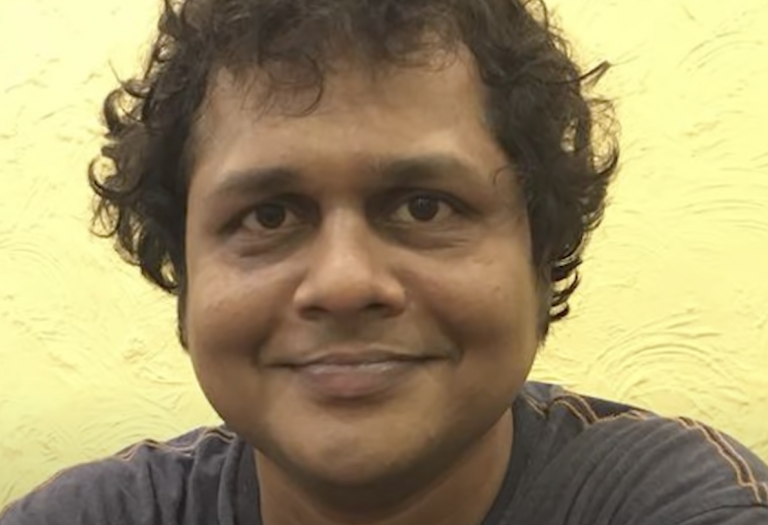
The Supreme Court on Monday (April 17) granted bail to Trinamool Congress (TMC) spokesperson Saket Gokhale in the case where he is accused of misusing money he had collected through crowdfunding. The Supreme Court was hearing a plea filed by the TMC leader against a Gujarat High Court order refusing him bail in the matter.
The allegations against him are that he collected over Rs 72 lakh from more than 1,700 persons through a crowdfunding platform ‘our democracy’ and used that money for personal use and thus, misappropriated the funds.
Additional solicitor general (ASG) SV Raju representing the state, opposed bail claiming that the allegations were serious. Senior advocate Siddharth Agarwal appearing for the TMC leader apprised the court that Gokhale had been in jail for the last 109 days.
After hearing the arguments presented by both sides, the Supreme Court bench of justices BR Gavai and Vikram Nath said, “Taking into consideration that the charge sheet has already been filed, the applicant is directed to be released on bail.”
Gujarat HC dismisses Gokhale’s bail plea in the crowdfunding case
Notably, in January this year, the Gujarat High Court dismissed the bail application filed by Trinamool Congress (TMC) spokesperson Saket Gokhale observing that prima facie it appears that Gokhale had utilised the funds raised through crowdfunding for his personal expenses.
Noting that the case is of the nature of fraud and cheating and that the investigation is still going on and that the necessary evidence is to be recovered, the court denied bail to the TMC leader.
On December 29, Gokhale was arrested in Delhi by the Ahmedabad Cyber Crime Branch. Gokhale is accused of misappropriating Rs 1.07 crore collected from the public through crowd-funding. Saket Gokhale was charged under sections 420 (cheating), 406 (criminal breach of trust), and 467 (forgery) of the Indian Penal Code.
ED arrests TMC spokesperson Saket Gokhale and his repeated arrests
TMC leader Saket Gokhale was arrested by the Gujarat Police in December last year for siphoning off money in the name of activism. The police had found accounts linked to Gokhale where he was receiving money, which he claimed was being used for legal fees for activism-related cases but were instead being used for personal expenses. Before that, he was arrested by Gujarat police for spreading fake news about PM Modi.
On January 25, the Enforcement Directorate arrested Gokhale under sections of the Prevention of Money Laundering Act in Ahmedabad.
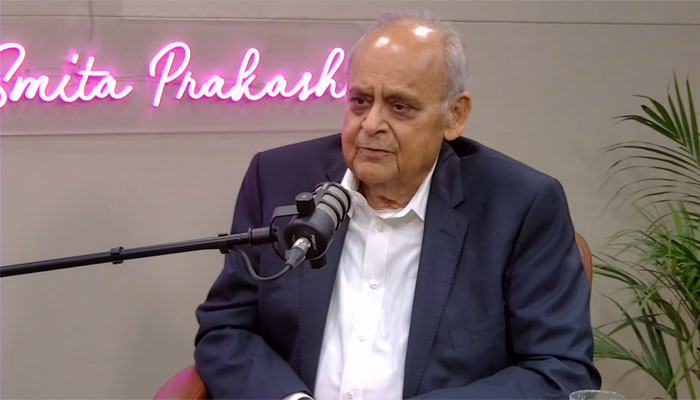
On Sunday, April 16, News Agency ANI published the 57th episode of ‘Podcast With Smita Prakash’ with former RAW chief Vikram Sood as the guest. During the interview, Sood talked in detail (to the point he could divulge) about the Kargil war with Pakistan. Sood mentioned that intelligence about the possible attack from Pakistan’s side was given not only by RAW but also by Military Intelligence and Intelligence Bureau.
“We can only give intelligence, how they [the government] react is up to them,” he said. Sood also talked about the incident when RAW taped a conversation between Musharraf and Aziz Khan that had the mention that the then-Prime Minister of Pakistan, Nawaz Sharif, was not fully informed about the operation against India. He said, “RAW sent a report in 1998 that they were planning something big. The report even mentioned the word war. But it was not accepted.”
Sood added that the conversation gave evidence that the Pakistanis wanted to maintain no involvement in the Kargil infiltration. When Sharif got information about the recording, he ran to the then-President of the United States, Bill Clinton, for intervention as Sharif’s “own people” were playing a game without getting him in the loop.
Smita Prakash reminded him of the incident when then-Deputy Prime Minister Lal Krishna Advani held a screening of the movie LOC which was based on the Kargil war. There was a mention in the movie that intelligence was given to the government and at that time, the whole theatre looked at Sood who was fuming. “It becomes the storyline,” Sood said as nothing in the aftermath could have been done.
‘I will not be considered secular’ – Indira Gandhi recalled Sikh guards
Though there is no written documentation of the incident, Sood pointed out that after Operation Blue Star, the Sikh bodyguards protecting then-Prime Minister Indira Gandhi were removed based on intelligence. However, the legend says, when Indira Gandhi came to know about it, she recalled the bodyguards saying, “Bring them back otherwise how can I be considered secular”.
Sood pointed out that it is a legend. There have been instances in the past when the ministers including the Prime Minister ignored the intelligence reports. Though the ministers like doing adulation and mixing, it is a nightmare for the security agencies. The same happened in the case of Rajiv Gandhi. The intelligence provided was checked after the assassination of Gandhi. On that day, Sood said, Gandhi did not have ample security with him which led to the incident.
Bhindranwale was made in India and Amritpal Singh is a copycat
Talking about Operation Blue Star, Sood mentioned that in his book ‘The Khalistan Conspiracy’, Special Secretary of RAW GBS Sidhu mentioned that Bhindranwale was created by India. He said, “Once you create [it] then it has a life of its own. It evolves and develops.” Sood mentioned that the Bhindranwale went out of hand and the same happened with LTTE chief Prabhakaran who was behind the assassination of Rajiv Gandhi.
Speaking on the Amritpal Saga that has been going on in Punjab, Sood called it a copycat of the Khalistan movement of Bhindranwale. In December 2022, OpIndia published a detailed report on the similarities between Bhindranwale and Amritpal Singh that can be read here. He said, “[Once it has evolved and developed] it gets repeated or copycat instant like now there is Amritpal movement is growing which is aided from abroad.”
Sood also compared the threat posed by Pakistan and China. He said the bigger threat is China which is a totalitarian state. “We are not even ready to accept Balakot happened” he added while slamming the opposition for not trusting the armed forces.
India did not retaliate in time
Regarding several major attacks initiated by Pakistan on Indian soil, Sood said India did not react to many attacks in time. From the Kashmiri Hindu exodus to the 2008 Mumbai attack, there were several instances where India should have reacted but it did not.
“We had these horrible incidents in Kashmir where the Kashmiri Hindu Pandits had to flee. We had the kidnapping of sister [he meant the daughter of then Home Minister of India Mufti Mohammad Sayeed, Rubaiya Sayeed]. We had the killing of the Air Force Squadron leader [Ravi Khanna]. What did we do in return, we later described Yasin Malik as a moderate”, Sood said. Notably, it was only after the BJP government came to power, Malik was arrested and subsequently put behind bars.
Furthermore, India did not react adequately to the 1993 Mumbai blasts, the 2006 Mumbai blasts, and the Mumbai terror attack in 2008. All these incidents required a strong reaction from India but were missed. Speaking about the importance of a political message, Vikram Sood talked about the Uri surgical strike and Balakot surgical strike. He said, “The message was important. We will strike. We can do it and we will do it and we will do it again.”
Speaking about how spies are depicted in Indian movies, Sood said it is nowhere close to reality. “They are good as a comedy but not reality,” he said. He talked about different levels of intelligence, how spies who go to collect intelligence are completely different from those who are on the desk job or are handlers, and more. While spies who collect information may have to go silent in terms of communication with the families for months or even years, the case of those like Sood, who was a handler, go for missions with a much smaller span.
Sood agreed with Smita’s point that it is said “it is better to die than to survive in Pakistani jails owing to the torture Indian spies suffer.” He said, “We can only take care of their families [without talking about the courage they showed for the country]. We can provide them with employment and jobs. Everything else is forgotten.”
Media needs to be careful so does the general public
Speaking about the use of the latest technology in reporting what has been happening at the borders or during an attack, Sood emphasised that media should restrain from live reporting. Those, including the general public, who gets photographs or intel, should share it with the authorities first before putting it on social media.
Intelligence needs experts from outside the ‘circle’
Vikram Sood talked about the involvement of experts from all arenas in gathering information from different means. He noted that the intelligence personnel cannot be just those who have passed UPSC. In today’s time, there is a need of bringing all possible experts to the table. It could be a time-bound contract or a lifetime association with the agency. The intelligence agencies need explosive experts, communication experts, financial experts, cipher experts, and even global warming experts who can gather data and provide workable inputs to the agencies. All such experts cannot be from one sector and have to be pulled from across sectors.
Another AAP leader was arrested today, adding to Aam Aadmi Party’s woes. Gopal Italia, a senior leader of the AAP in Gujarat, was detained by the Crime Branch of the Surat Police for making a contentious remark about the state’s BJP president CR Patil and home minister Harsh Sanghvi. He was eventually released on bail today.
AAP National Jt Secy Gopal Italia was arrested by Surat Crime Branch for his alleged remarks on Gujarat HM Harsh Sanghavi. He was later granted bail.
"Since offences in the FIR were bailable, Crime Branch let me go. AAP showed its strength in the last election in Gujarat, which… pic.twitter.com/F1fTbZNQYQ
Italia was detained as a result of a viral video that surfaced last year in which he was heard calling Harsh Sanghvi “Drugs Sanghvi.” A complaint was filed against him, following which he was arrested by the Crime Branch of Surat Police. Italia is no stranger to such problems; in the past, he has also made offensive remarks about Prime Minister Narendra Modi and his late mother.
The arrest of Italia comes as several other AAP leaders, including Satyendar Jain and former deputy chief minister of Delhi Manish Sisodia, are being held in Tihar jail on various charges. Arvind Kejriwal, the national convenor of the AAP and the Chief Minister of Delhi, was recently interrogated by the Central Bureau of Investigation (CBI) over the excise (liquor) policy scam for more than nine hours on Sunday, April 16.
The arrest of Italia has once again brought attention to the AAP’s leaders’ purported inappropriate behaviour and controversies. This most recent incident only compounds the party’s problems as it continues to experience legal difficulties and political setbacks across the nation.
Italia’s arrest is linked to his derogatory remark against Harsh Sanghvi and CR Patil, wherein he referred to Sanghvi as “drugs Sanghvi” in a viral video that had caused a stir in political circles, and a case was filed against Italia based on a complaint filed by a BJP worker. The case was later handed over to the Crime Branch, which arrested Italia for his alleged defamatory comments.
Italia’s controversial statements have been a cause of concern for AAP in the past as well. Last year, he was detained by the Delhi Police and taken to the Sarita Vihar police station for allegedly making derogatory remarks about Prime Minister Narendra Modi. A video of Italia calling PM Modi a “neech aadmi” (a lowly person) surfaced, reportedly from 2019 during the run-up to the general elections. The video was widely shared on social media, and it sparked controversy, drawing criticism from various quarters.
AAP’s national convenor, Arvind Kejriwal, who has been leading the party’s charge in various state elections, including Gujarat, has also faced intense questioning by investigative agencies in recent times. The CBI’s questioning of Kejriwal in connection with the excise (liquor) policy scam has further intensified the spotlight on AAP and its leaders.
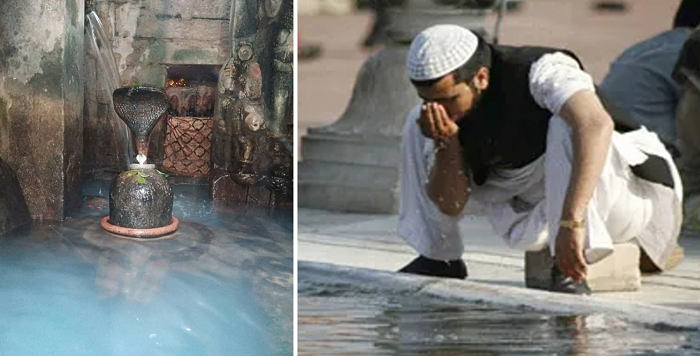
On Monday, the Supreme Court ordered the Varanasi district collector to convene a conference to provide “congenial” working arrangements for ‘wuzu’, Muslim worshipers’ rites of bathing at the disputed Gyanvapi mosque complex. It also said that it would deliver official verdicts on whether “Wuzu,” an Islamic ritual, could be conducted at the disputed Gyanvapi premises, where a mosque is located, on Friday, April 21.
The appeal of the Committee of Management Anjuman Intezamia Masjid was presented to the bench later in the week after the Solicitor General of India (SG) Tushar Mehta promised that a meeting with the parties involved would be held tomorrow to discuss a resolution. In the plea, it was requested that Wuzu be performed in the contested location and that Ramzan pilgrims have access to restrooms.
A bench comprising Chief Justice of India DY Chandrachud, Justice PS Narasimha and Justice JB Pardiwala was hearing an application filed by the Committee of Management Anjuman Intezamia Masjid. “The Wuzu was being held at the fountain area. There were washrooms there too. But now the entire area has been sealed,” the committee informed to the Supreme Court.
Later, Solicitor General Tushar Mehta was asked for a solution by the Chief Justice. “The order has already been passed and it is being complied with and I have no issues if the authorities want to take care of the same,” Mehta said.
However, the SG warned the top court that if an order was made without careful consideration because Wuzu was being sought in the same region as the Shivling, it may cause issues. After the committee’s attorney, Huzeifa Ahmedi informed the court that even portable restrooms would suffice, the SG said that it is crucial to preserve the sanctity of the location under all circumstances.
The Supreme Court referred to its judgement from May 20 of last year, in which it had ordered that worshipers be given ‘wazu’ and lavatory facilities after some interior sections had been sealed off. “The problem is that the area where wuzu performance is being sought has the Shivling and that may create an issue,” SG Mehta was quoted as saying.
The mosque management committee’s declaration that it would be content even with mobile restrooms was noted by the bench. The issue has now been set for another hearing on Friday, and the court has ordered that if a solution is found at the meeting, it may be put into effect immediately and a formal order may be made at the next hearing.
Last year, the Supreme Court extended permanently the temporary protection for the region where a Shivling was discovered at the contentious Gyanvapi site in Varanasi. The Varanasi District Magistrate on May 13 was instructed to seal the area by the local court where the ‘Shivling’ had been discovered. The District Magistrate, Police Commissioner, and CRPF Commandant of the city were each given personal obligations by the court to safeguard the restricted area.
On May 17, the Supreme Court of India affirmed the Varanasi Court’s ruling but amended it so that it will not restrict Muslims’ access to the mosque or their use of it for praying and other religious activities.
Previously, the Supreme Court had declined to order the Varanasi Gyanvapi-Shringar Gauri complex survey to continue in its current course. The inspection, videography, and evidence-gathering procedures surrounding the presence of Hindu deities within the Gyanvapi Mosque complex, which is adjacent to the Kashi Vishwanath temple, had been disallowed by the court.
On Monday, April 17, the Supreme Court refused to hear petitions seeking the registration of FIRs in recent incidents of violence witnessed during Ram Navami processions in different parts of the country.
BREAKING: #SupremeCourt REFUSES to entertain plea seeking probe into Ram Navami Violence incidents across India
The petition was filed by Hindu Front for Justice (Trust), through advocate Vishnu Shankar Jain. Alleging that disturbances and violent acts are committed by members of the Muslim community every year during Ram Navami processions across the country, the plea sought the filing of FIRs in the violent incidents that took place during this year’s Ram Navami celebrations in various parts of the country.
The petitioner demanded that chief secretaries of each state involved produce a report on the violence and called for action against the culprits. Additionally, it requested guidance from the affected state governments on how to calculate the loss suffered by those who were hurt or died as a result of the violence.
“It is submitted that this year on the occasion of Ram Navami, large-scale violence has been committed by the members of the Muslim community in a pre-planned manner in different parts of the country, namely, at Howrah, Uttar Dinajpur (West Bengal), Sasaram and Nalanda (Bihar), Hyderabad (Telangana), Aurangabad (Maharashtra), Vadodara (Gujarat), Jamshedpur (Jharkhand),” the petition said.
Rejecting the plea, the apex court asked the petitioner to approach the high courts of the respective states where the incidents were reported.
Ram Navami violence
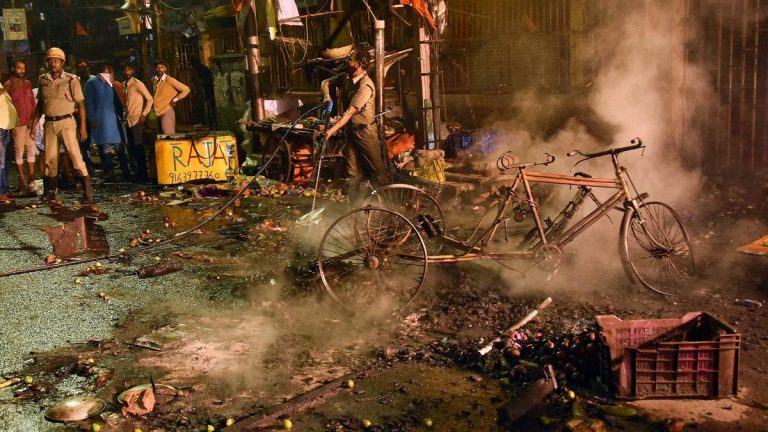
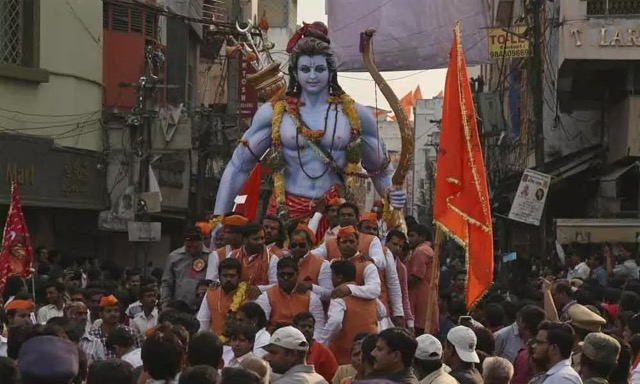
Ram Navami or the birth anniversary of Lord Rama is an auspicious occasion in the Hindu calendar year. However, like every year, Hindus came under attack when they celebrated one of their most revered festival on March 30 this year. There were reports of stone-pelting and violence in many cities of the country. One person was killed in West Bengal and one in Maharashtra in these violent incidents. Apart from this, there have also been reports of stones pelting on the Shobha Yatra of Ram Navami in Gujarat and Uttar Pradesh.
In fact, a fact-finding team, probing the violence that had erupted in West Bengal this year during Ram Navami Shobha Yatra, had alleged that the “riots were pre-planned, orchestrated and instigated.” It said that the West Bengal Police allowed the violence to go on during a Ram Navami Shobha Yatra in the Hooghly district.
The Calcutta HC also observed that Ram Navami violence in West Bengal was prima facie ‘pre-planned.’
OpIndia recently documented the current status of each such case. While we provided a summary of the incidents of violence, we also included the action taken by the police and their statements of the incidents, and in many cases, we also documented the versions of those Hindus who were victims of the hate crime.
In a horrific incident, a young farmer couple in Gujarat’s Rajkot beheaded themselves to death using what seemed to be a guillotine, most likely as part of a black magic ceremony.
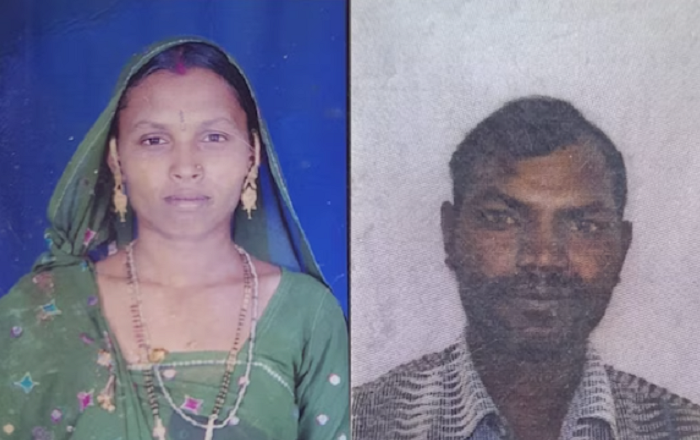
Children of farmer Hemu Makwana, 38, and his wife Hansa Makwana, 35, who had been staying briefly at their maternal uncle’s home in a neighbouring village on Sunday morning, were horrified to discover their parents’ severed heads on their own property. The boy (13), and the daughter (12), promptly sounded the alarm and informed the neighbours.
The couple had murdered themselves voluntarily and no one was to blame, according to a handwritten Gujarati message that was discovered after the police were called. The note also included a thumbprint of the pair. In order to conduct a forensic post-mortem, the remains were brought to Rajkot civil hospital.
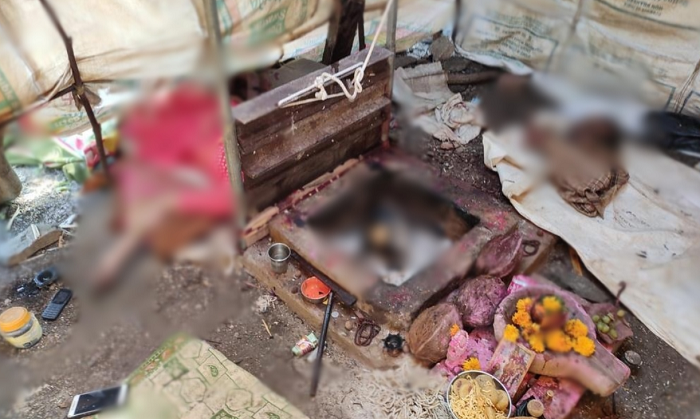
“The couple used a make-shift guillotine to end their lives. It is believed that they pulled up the blades of the guillotine themselves and released it in such a manner that their heads fell into a havan kund,” said Vinchiya police sub-inspector Indrajitsinh Jadeja.
Jadeja said, “We are recording statements to ascertain the reason behind the extreme step,” and added that the couple had left their kids to live with their maternal uncle the day before the incident.
Hansa was not doing well, according to a note that was discovered next to the bodies and their cell phones. Hansa’s cousin Jayanti Jatapara denied claims of financial hardship, saying that the couple were not having trouble paying for basic expenditures. She reportedly informed authorities, “Nor were they having any marital or family disputes.”
The duo executed it in such a manner that their heads rolled into the fire after getting severed, Jadeja added. A case of accidental death has been registered in the case and the dead bodies have been sent for the post-mortem. Further investigations are underway.
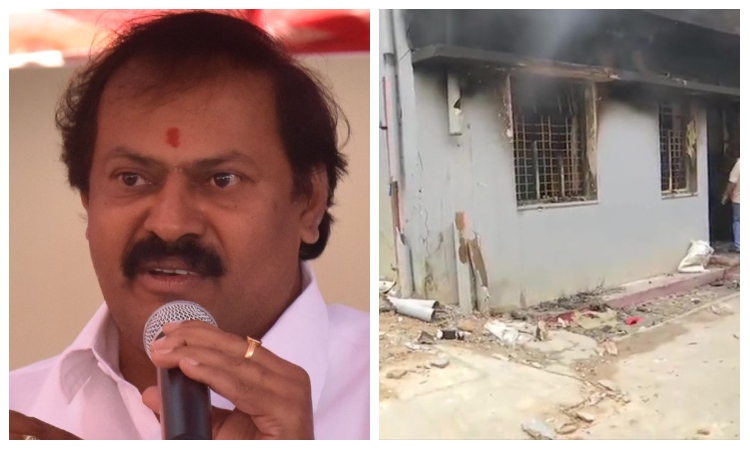
On April 16, Sunday, Karnataka Congress MLA R Akhanda Srinivas Murthy tendered his resignation as the MLA from the Pulakeshinagar constituency. The decision came after Murthy was denied a ticket by the party for the upcoming assembly polls. Incidentally, he is the same Congress MLA whose house was burnt down by rabid Islamists during last year’s Bengaluru riots.
According to reports, the Congress MLA went to Sirsi in Uttara Kannada district and submitted his resignation to Karnataka Assembly Speaker Vishweshwar Hegde Kageri on Monday (April 17).
After handing over his resignation Murthy told the media that he was disappointed that his name did not appear in the candidate lists.
ಶಿರಸಿಯಲ್ಲಿಂದು ವಿಧಾನಸಭೆ ಸಭಾಧ್ಯಕ್ಷರನ್ನು ಭೇಟಿಯಾಗಿ ವಿಧಾನಸಭಾ ಸದಸ್ಯತ್ವಕ್ಕೆ ರಾಜೀನಾಮೆ ಸಲ್ಲಿಸಿದ್ದೇನೆ.
— R. Akhanda Srinivas Murthy (@AkhandaSrinivas) April 16, 2023
“I am a legislator who has secured the highest number of votes. I was very disappointed when my name did not appear in any of the three lists. My constituency members and I were hurt, so I decided to resign.” Srinivas Murthy said.
Srinivas Murthy further stated that he has not yet made up his mind on his next move. He hinted that he might run as an independent in the elections.
When asked if any of the party member’s actions has hurt him, Murthy said, “If the party hasn’t announced my name in any of the lists, it’s implied who hurt me. My constituency people were hurt, and concerned daily about whether I would get the ticket or not.”
“All Hindus, Muslims and Christians are united in my constituency. This is also where I grew up and we are all united. I have faced injustice by attention being paid to the words of someone else. I want to avoid this injustice. So I am resigning as the MLA, not from the party itself. That’s why I approached the Speaker,” he added.
Islamists had burnt down the house of Karnataka Congress MLA R Akhanda Srinivas Murthy
It may be recalled that last year during the horrifying Bengaluru riots, a huge mob of Muslims rampaged on the streets and attacked the DJ Halli and KG Halli police stations, torched police vehicles and numerous other vehicles and caused immense damage to public property. In the incident, Congress MLA R Akhanda Srinivas Murthy’s house was also burnt down.
Reminiscing the horrifying incident, the Congress MLA said that a mob of 3000-4000 Muslim rioters arrived at his house, pelted stones, poured petrol, burnt tires and set the house on fire. “They attacked with swords, hatchets, sticks and also threw petrol bombs at my residence”, he had recalled.
The MLA had also blamed ‘outsiders’ for instigating the riots and urged the local residents to help him nab the culprits. He requested that the case be handed over to the CBI, or CID for a thorough investigation.
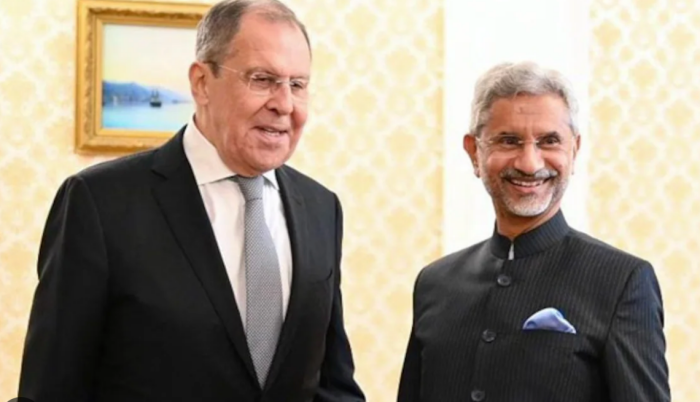
External Affairs Minister S Jaishankar on Monday said that India and Russia have crossed bilateral trade target of USD 30 billion before 2025 adding that it is expected that the trade will continue to increase.
While addressing the India-Russia Business Dialogue in Delhi, he said, “We have crossed the bilateral trade target of USD 30 billion before the year 2025 which was the target year given to us by our leaderships. And in fact for the period April 2022 – February 2023, I understand that the trade is actually about USD 45 billion and the expectation is that this will continue to grow.”
Jaishankar said that India and Russia need to motivate businesses on both sides. He said that they are determined to make India a “global manufacturing hub.”
“We need to motivate business on both sides. You can see that there are big changes going on like Make in India. We are determined to make India a global manufacturing hub. I want to emphasise the opportunity of Make in India and Russia as Russia is known for its technological strength,” Jaishankar said.
Speaking about the relations between India and Russia, Jaishankar said that the two nations have historic people-to-people ties. He also spoke about the possibility for greater business between the two nations in the tourism sector.
In his remarks at the India-Russia Business Dialogue, Jaishankar said, “Our two countries historically have also had a strong people-to-people connection. But, I must point out that we actually get less than 1 per cent of Russia’s outbound tourism. So, now when we are talking today of exploring new areas and new opportunities, I would also flag that whether more direct flights to more destinations will provide a possibility for greater business when it comes to tourism.”
EAM Jaishankar emphasised that the ties between India and Russia have not changed. He said, “Our partnership today is a subject of attention and comment, not because it has changed, but because it has not. Indeed, it has been among the steadiest of the major relationships of the world in the contemporary era. But that by itself is not enough.”
Jaishankar said that Russia is looking more towards Asia and for India, it means broadening of engagement between the two nations which was overly dependent on military, nuclear and supply space cooperation.
“We share a commitment to a multipolar world and that also means a multipolar Asia. Russia is today looking much more towards Asia, a reassessment from its traditional focus. For India, this could mean a broadening out of our engagement that was overly reliant on the triad of military, nuclear and supply space cooperation,” Jaishankar said.
“For Russia also it presents a broader set of options as Russia looks eastwards, its resources and technology complementarity can be a powerful contribution to India’s growth. And this is a growth of a 3.5 trillion economy that is expected to grow at more than 7 per cent for at least a decade or more. And I would say that our ties, our cooperation are best advanced through more intensive bilateral engagement,” he added.
In his address at the India-Russia Business Dialogue, he said, “We are discussing the importance of connectivity and the north-south and maritime corridors have been considered. There is also discussion on payment issues like International trade settlement in the Indian Rupee.”
EAM Jaishankar said that there is concern regarding the trade imbalance. He highlighted the need to work with Russia on a very urgent basis to address the trade imbalance. He said that addressing the issue means addressing the impediments, whether they are market access impediments, non-tariff barriers or they are regarding payment and logistics.
“There is also understandable concern about the trade imbalance which these new volumes have created. And we need to work together with our Russian friends on a very urgent basis of how to address that imbalance. And addressing that imbalance really means addressing the impediments, whether they are market access impediments, whether they are non-tariff barriers, whether they are related to payments or to logistics,” Jaishankar said.
He further said, “I really cannot emphasize this enough. I think we should also, in a business gathering be honest about the short and medium-term challenges that we face. And there could be, quite frankly, there could be over compliance there could be over anxiety or even over caution on our side and equally on the Russian side there could be an inadequate appreciation of the concerns and the risks that Indian businesses face. So I would say what really the future of our economic cooperation requires is the willingness, the ability to really look at it from the point of view of the other party and then come up with solutions which will overcome the obstacles.”
In his remarks at the India-Russia Business Dialogue, Russian Deputy Prime Minister Denis Manturov said that his country is looking forward to intensifying negotiations on Free Trade Agreement (FTA) with India. While addressing the Russia-India Business Dialogue, Manturov who is also the Russian minister of industry and Trade said, “Together with Eurasian Economic Commission, we are looking forward to intensifying negotiations on Free Trade Agreement with India.”
(This news report is published from a syndicated feed. Except for the headline, the content has not been written or edited by OpIndia staff)
Over the past couple of days, Indians are expressing outrage and frustration over what they perceive as a blatant display of hypocrisy in the labelling of crimes as “terror” and “hate crime” based on the religious affiliations of the perpetrators. The recent killing of Gangster Atiq by three assailants, who allegedly chanted “Jai Shri Ram” after the murder, has been labelled as “Hindutva terror” by some media outlets and activists. Several netizens have pointed out that the horrific attack by Adil Ahmed Dhar, who blew up 40 CRPF jawans in a suicide bombing, has not been classified as an act of religious terrorism, despite his Islamist fundamentalist views and statements.
In fact, people are often told that terror has ‘no religion’ but perhaps this statement holds true only in the case of Islamist terror attacks.
A Muslim ex-MP shot dead on live TV by people screaming "Jai Shree Ram" as the police stand by and ministers celebrate.
There are significant parts of the Indian Union which have seen a collapse in not only rule of law but basic societal functioning. https://t.co/HKJVbFyuxV
Many netizens have argued argue that if the killers of gangster Atiq, who chanted “Jai Shri Ram” after the murder, can be labelled as “Hindutva terrorists,” then Adil Ahmed Dhar, who openly expressed his hatred towards “cow urine drinking Hindus” and carried out a deadly suicide bombing, should also be classified as religious terrorism.
Remember: Gangster Atiq's murderer chanting Jai Shri Ram after killing him is Hindutva terror, Adil Ahmed Dhar blowing up 40 CRPF jawans because he didn't like 'gaay ka peshab peene wale' is neither hate crime nor an act of terror fuelled by religion.
For years now, Islamists have referred to Hindus as ‘cow urine drinkers’ or used ‘gau mutra’ jibes to derisively mock and insult Hindus. However, the Pulwama terrorist attack was a watershed moment, given that the attack led to the death of 40 CRPF soldiers and a video released in its aftermath saw the terrorist responsible for the ghastly attack spewing venom against Hindus.
This shameful mainstreaming of ‘gau mutra’ jibes for Hindus holds uncanny similarity with the “hooked nose” stereotype that Jews were subjected to in the past. The damaging consequences of such stereotyping became apparent only in the early part of the 20th century, when supporters of Hitler used those archaic typecasts to inflame public sentiments against the Jews.
Jai Shri Ram ≠ Allahu Akbar
A truck driver who ran over 20 people on a bike path in Manhattan was reported to have yelled “Allahu akbar” before being shot by a police officer. The same slogan was yelled by the men who attacked the French weekly Charlie Hebdo in 2015. The same words were heard as a British soldier was run over and subsequently hacked to death in 2013 close to military barracks. There are thousands of other terrorist attacks where the slogan was raised by Islamist terrorists.
In recent years, the slogan “Jai Shri Ram” has become a subject of controversy, with some segments of the media and political groups labelling it as a war cry or an aggressive slogan. However, “Jai Shri Ram” is not a call for violence, but rather a slogan that represents the awakening of Hindus from centuries of intellectual and political slumber, and embodies the ideas of universal peace and brotherhood.
The term “Jai Shri Ram” is a Sanskrit phrase that translates to “Victory to Lord Rama,” one of the most revered deities in Hinduism. Lord Rama is considered to be an embodiment of righteousness, virtue, and compassion, and his story of valour and sacrifice is celebrated in the Hindu epic, the Ramayana. “Jai Shri Ram” is often used as a form of greeting or salutation among Hindus, and it is chanted during religious ceremonies, festivals, and processions.
Contrary to the portrayal by some sections of the media, “Jai Shri Ram” is not a call for violence or aggression. It is a slogan that symbolizes the pride and reverence that Hindus have towards their culture, heritage, and spirituality. It is seen as a way to express devotion to Lord Rama and seek his blessings for victory over ignorance, injustice, and evil.
“Jai Shri Ram” is seen as a rallying cry for Hindus to assert their identity and assert their rights in the face of such challenges.
Furthermore, “Jai Shri Ram” is an assimilative slogan that embodies the ideas of universal peace and brotherhood. Hindu philosophy teaches the concept of Vasudhaiva Kutumbakam, which means “the world is one family.” The slogan is seen as a call for harmony and unity among all individuals, irrespective of their caste, creed, or religion. It is considered a way to foster inclusiveness, tolerance, and mutual respect among different communities.
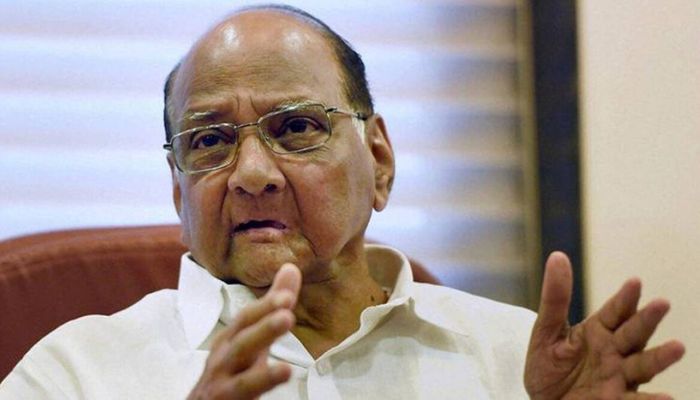
If media reports are to be believed, Maharashtra could be eyeing another political upheaval with at least 13 MLAs of Sharad Pawar’s National Congress Party (NCP) joining the saffron camp. On Monday, April 17, India TV quoted Maha Vikas Aghadi ‘sources’ as hinting that as many as 13 NCP MLAs are currently in touch with the state BJP and may soon switch over.
Sources in the NCP reportedly claimed that these MLAs are under pressure to defect from Sharad Pawar’s party. Sharad Pawar has reportedly made several attempts to convince these MLAs, but they are hell-bent, reported India TV.
Meanwhile, two days ago, Shiv Sena (UBT) leader Sanjay Raut claimed that when they met Sharad Pawar recently, the NCP chief told them that the way Shiv Sena was broken by using ED, CBI and Police, the same tactics are now being used to break NCP.
“NCP MLAs are under pressure, they are being threatened. Some people may leave the party under pressure but NCP will not align with the BJP,” Sanjay Raut quoted Sharad Pawar as saying.
It is pertinent to recall here how in June last year, a major political crisis gripped Maharashtra when Uddhav Thackeray, who was running the government in alliance with Congress and NCP, lost his power after Eknath Shinde led a revolt against him because he disagreed with Thackeray’s decision not to end the alliance with Maha Vikas Aaghadi. Shinde’s faction was successful in seizing control of the party and, with the help of the BJP, establishing a new government in Maharashtra.
In a recent development, the Election Commission of India (ECI) withdrew the national party status of Sharad Pawar’s Nationalist Congress Party, reassigning it as a regional party. Besides, Sharad Pawar’s NCP, Mamata Banerjee’s Trinamool Congress and the Communist Party of India (CPI) also lost their national party status.
In a statement, the poll panel announced that it was withdrawing the status of three recognized National Parties- AITC, CPI, and NCP. The Election Commission said they are doing it “following due process and providing the sufficient opportunity of two Parliamentary elections and 21 State Assembly Elections”.