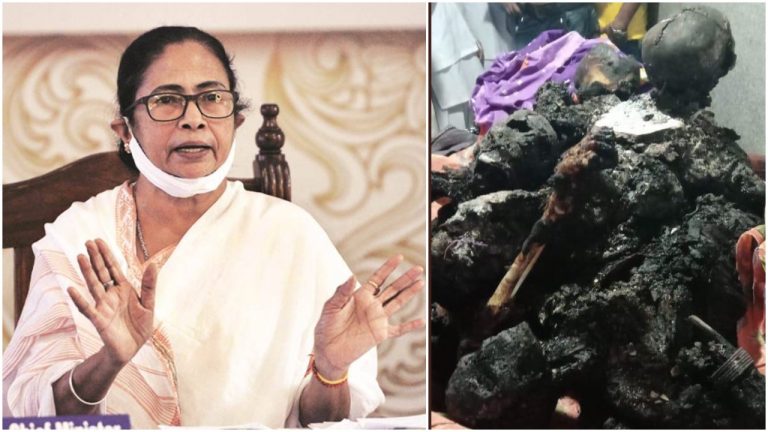
A day after the horrific Birbhum massacre in which at least eight people were charred to death following the death of a TMC leader, West Bengal Chief Minister Mamata Banerjee tried to paly it down by saying that such incidents are more common in other states. The CM on Wednesday said that while she did not justify Birbhum killings, such incidents are more common in the Uttar Pradesh, Gujarat, Madhya Pradesh, Bihar and Rajasthan.
The West Bengal Chief Minister attempted to dilute the issue by claiming that incidents such as the Birbhum massacre have happened in other states as well.
“I am not justifying the incident in Rampurhat. We will take action in a fair manner. This is Bengal, not Uttar Pradesh. I had sent a delegation of TMC to Hathras, but we were not allowed an entry. But we are not stopping anyone from coming here,” the West Bengal CM said.
This is Bengal, not Uttar Pradesh. I had sent a delegation of TMC to Hathras but we were not allowed an entry. But we are not stopping anyone from coming here: West Bengal CM Mamata Banerjee pic.twitter.com/R9FW8Jox45
Trinamool Congress chief Mamata Banerjee claimed that she would be visiting the violence-hit Birbhum district where at least eight people, including two children, were charred to death and nearly a dozen houses were set ablaze on Tuesday as a response to the alleged killing of a ruling TMC panchayat official.
“Will be going to violence-hit Birbhum district on Thursday to take stock of the situation….have also postponed visit as other political parties huddling there,” Bengal CM Mamata Banerjee was quoted as saying by ANI.
The Chief Minister also claimed that the government would take strict action against those found guilty of the Birbhum violence. “The government is ours, we are concerned about people in our state. We would never want anyone to suffer. The Birbhum, Rampurhat incident is unfortunate. I have immediately dismissed the OC, SDPO. I will go to Rampurhat tomorrow,” CM Mamata Banerjee said.
Birbhum massacre
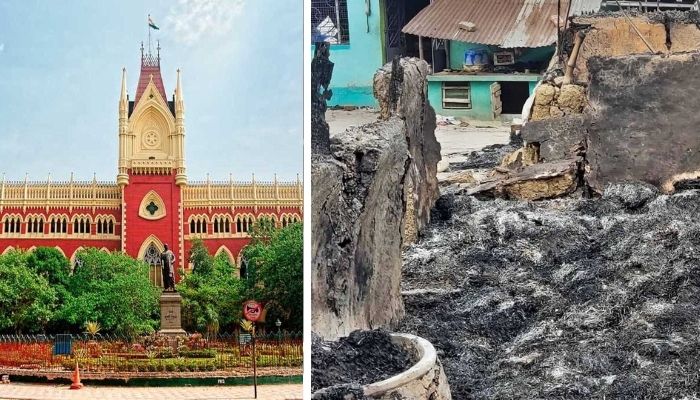
At least eight people were charred to death after unidentified miscreants set a dozen houses on fire. The incident took place in the Rampurhat area in the Birbhum district of West Bengal.
The West Bengal police have recovered seven dead bodies from a single house, which was then sent to the Rampurhat medical college hospital. As per a report, the miscreants locked the houses outside before setting them ablaze, leaving no room for the occupants to vacate.
The incident took place after the killing of a Trinamool Congress (TMC) functionary named Bhadu Sheikh. The deceased was a panchayat member who has allegedly attacked with crude bombs while he was sitting at a shop on National Highway-60 on Monday (March 21).
At least 20 people have been arrested so far in connection with the violence in West Bengal’s Birbhum district.
Meanwhile, the Union Home Ministry has sought a detailed report on the incident from the state government. The Calcutta High Court has also taken suo moto cognisance of the Birbhum massacre. A bench comprising Chief Justice Prakash Srivastava and Justice Rajarshi Bharadwaj is slated to hear the matter after 2 pm on Wednesday.
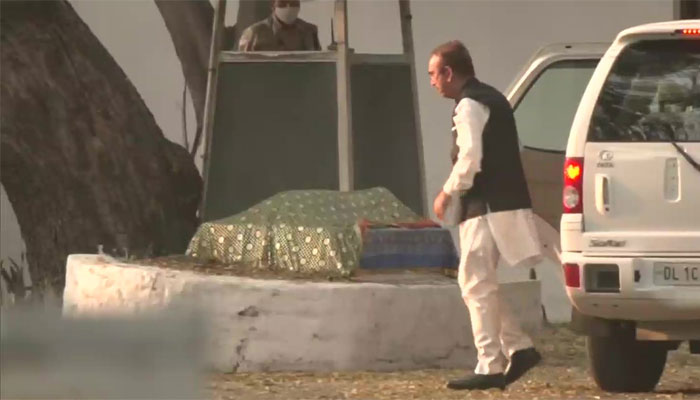
A few days back, a photograph of Congress leader Gulam Nabi Azad surfaced on social media where he could be seen changing the cars while going for a meeting with Congress President Sonia Gandhi. A mysterious structure in the photograph that caught the attention of many. Netizens wondered if there indeed was a mazar inside the official residence of Congress President.
Congress leader Ghulam Nabi Azad reaches 10, Janpath to meet party president Sonia Gandhi. pic.twitter.com/rtW7EyTekN
While many reports have published that there indeed is a mazar at 10, Janpath, there were very little details about it. OpIndia decided to take it upon itself to find out whose mazar is this. Usually, mazars, dargahs, masjids, madarsas are registered with the Waqf Board. Hence, OpIndia thought it would be wise to find out if the Waqf Board in Delhi has list of all such mazars in the national capital. Here is what we found:
Whose mazar is it anyway?
OpIndia reached out to the Delhi Waqf Board to find out if they have details. An email to the Board was left unanswered. Our calls, too, did not elicit any response. Hence, we depended on all the information the Internet had to offer.
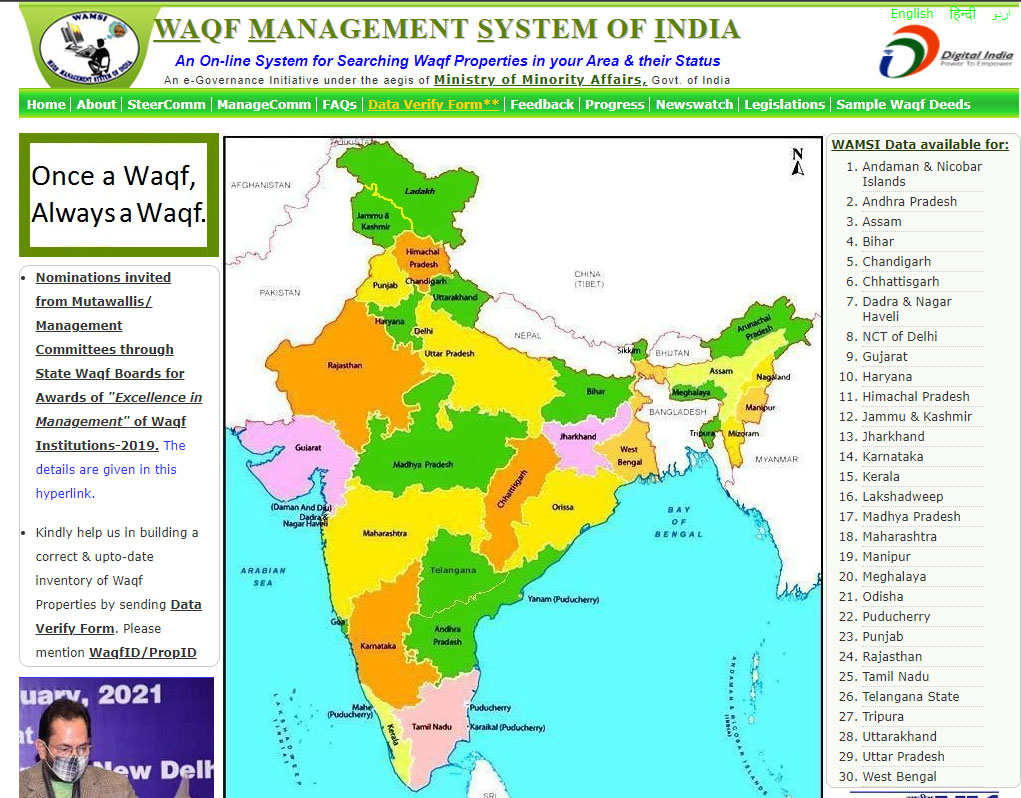
First of all, it was essential to find out if Delhi Waqf Board has made records of properties available online. On the Waqf Board’s website, there is a section where a person can search for properties under the board across the country. On the state page under the property search section, in this case, Delhi, there is an option to search properties region wise.
On the search page, you can choose multiple criteria to find details of the properties. Just to point out the fact that there are 1,045 properties registered under the Delhi Waqf Board as per the website. We cannot verify if there are more properties under the board that have not been linked to the website yet. It is not clear whether the website is regularly updated.
Janpath region falls under New Delhi district. There are three sections under New Delhi on the website that are Chanakya Puri, Connaught Place and Parliament Street. We checked on all three regions but could not find any reference to a Mazar on Janpath or close to 10 Janpath. There is only one mention of Dargah Sheikh Karimullah Mazar in the list.
Source: Waqf Board Website.
If there are any further updates on this, we will update the report.
Mysterious mazar at 10, Janpath
As we hit a dead end on the Waqf Board website, the next logical step was to search for any information available about the said Mazar on the internet. During the research, we came across a report by DailyO, and things got very interesting. In the 2019 report, it was mentioned that the house Sonia Gandhi lives in, i.e. 10, Janpath, has been deemed as unlucky. It talked about a Mazar in the compound built under a tree.
The report connected the resident being unlucky with multiple incidents of the past. Important to mention former Prime Minister of India, Lal Bahadur Shastri, lived in the same building. He had moved to 10, Janpath after becoming PM, and within two years, he was found dead in Russia. No one knows what exactly happened, how he died and who was behind the alleged murder. It was termed as death by a heart attack, but no one knows if the reports were true or not.
The next occupants of the house were Sonia Gandhi and Rajiv Gandhi, who moved there with their kids. At that time, VP Singh was the Prime Minister. Gandhi campaigned for the Lok Sabha elections from 10, Janpath. In 1991, he was assassinated by LTTE terrorists. Sonia Gandhi still lives in the building. Her son and former Congress President Rahul Gandhi, though lived at Tughlak Marg, he had lived at 10, Janpath at one point in life and the struggle he is going through to maintain his image as a possible national leader is known to everyone. The same goes for Priyanka Gandhi. Interestingly, when Congress won Lok Sabha elections in 2004, Sonia Gandhi, resident of 10, Janpath, was set to become PM but could not the following uproar over her Italian background. One may call it superstition, but is it really a superstition when the chief of the grand old party struggle to save the party while living in an allegedly “unlucky” building?
In a 2014 report of Sunday Guardian, it was mentioned that many Youth Congress members from the time when the building was its office during Emergency had seen blood marks in certain areas. Before Rajiv Gandhi moved to the house, senior Congress leader KK Tewari stayed there for some time. His political career went south over time. It is also reported that mysterious blood stains would appear inside 10, Janpath. However, we are not sure if the mazar has anything to do with these rumours.
The notable superstitions that shocked us
During the research, we found a few notable superstitions linked to famous locations in Delhi, including Lutyens Delhi and Delhi Airport. A few of them need special mention here. The first one is the jinxed house at the address 33, Shamnath Marg. As per a report in the Sunday Guardian from 2014, senior BJP leader Madan Lal Khurana lived there for three years while he was Chief Minister of Delhi. He shifted to the house in 1993 and within three years in 1996 following Hawala Scam. Notably, his name was not involved in the scam.
Later then-Delhi Minister in Shiela Dixit’s government, Deep Chand Bandhu, shifted to the house. He died while being an occupant of the house. Since his death, the particular building has been considered inauspicious.
Another superstition linked to a famous location in Delhi is Qutab Colonnade. It is believed to be still haunted by the curse of girls and women who were abducted for the pleasure of Nawabs and senior officials. Those girls and women were kept captive and abused in the Qutab Colonnade. Those who live around its claim to hear screams during the night.
The Runway Dargah
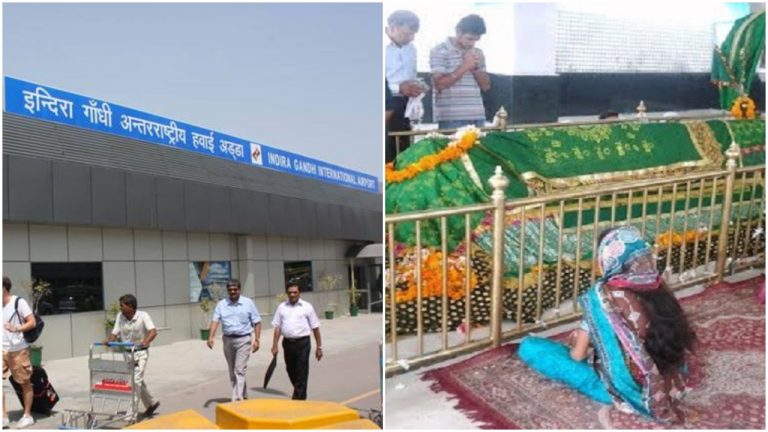
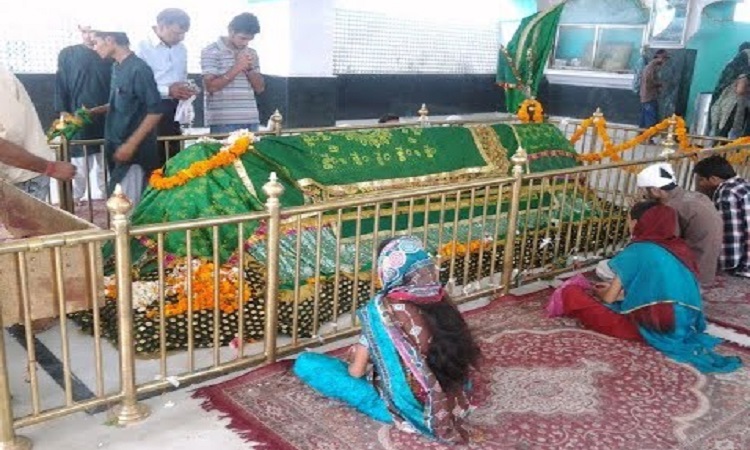
Do you know there is a Mazar on Indira Gandhi International Airport’s premises? There is a belief that two Sufi saints, Hazrat Kale Khan (Bade Baba) and Hazrat Roshan Khan (Chote Baba) that were buried at the place, provide protection to the flights. The employees of IGI and several airlines regularly visit the Mazar and believe the ‘Peer Baba’ of the Mazar would protect them. The two saints were believed to be lived during the 14th and 15th centuries.
Also known as the Runway Dargah (a name given because of its close proximity to the runway), it is open to the public every Thursday for a few hours. A special bus is also provided by the airport authorities for the devotees that take them to the Mazar free of cost.
Once a Waqf, always a Waqf
Usually, when a property gets registered with the Waqf, it forever remains the property of the Waqf. In this case, it is not yet clear whether the mazar and the complex surrounding it, i.e. Sonia Gandhi’s official residence, are registered with the Waqf. Hence, it is not yet clear whether the official residence of the President of Indian National Congress is property of the Waqf or not.
Source: Waqf Board Wesbite.
Recently, the Gujarat Waqf Board had staked claim to the Surat Municipal Corporation building which is now property of the Waqf because the documents were not updated. As per Waqf, back during the Mughal era, the Surat Municipal Corporation building was a sarai and used during the Hajj travels. The property then belonged to British Empire during British rule. However, when India got independence in 1947, the properties were then shifted to government of India. However, since the documents were not updated, the SMC building then became Waqf property, and as Waqf Board says, once a Waqf, always a Waqf.
If you, as reader, have any information on whose mazar is there at 10, Janpath and/or whether 10, Janpath and/or the mysterious mazar inside its compound are Waqf properties, we would be happy to update the report. You may reach out on [email protected]
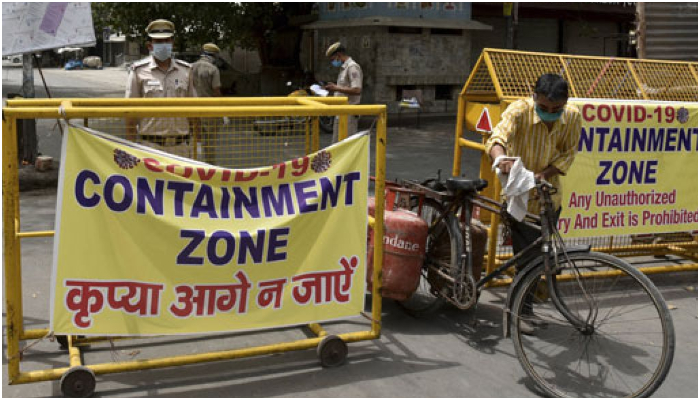
On Tuesday, the National Disaster Management Authority (NDMA) announced the revocation of the Disaster Management Act 2005 for COVID containment measures. This is exactly two years after the Central govt had imposed the ‘Janta Curfew’ as the beginning of a long standing battle against the corona virus outbreak in the year 2020.
Taking note of the NDMA recommendation, the Union Home Secretary yesterday wrote to the Chief Secretaries of all States and Union Territories to discontinue the orders and guidelines issued under the Disaster Management Act for COVID containment measures. “I would advise all the States/UTs to consider appropriately discontinuing issue of orders and guidelines under the DM Act, 2005 for COVID containment measures”, the Home Secretary stated in the letter dated March 22.
Correction | Union Home Secretary writes to all Administrators, advises them to consider appropriately discontinuing issue of guidelines under Disaster Mgmt Act for Covid containment measures.
Advisories on Covid containment measures, including use of face masks will continue. pic.twitter.com/5kbCeKMzSe
The letter states that over the last 24 months, significant capacities have been developed for various aspects of management of the pandemic, such as diagnostics, surveillance, contact tracing, treatment and vaccination, hospital infrastructure and the general public has much higher level of awareness on the CO VID appropriate behaviour. States and UTs have also developed their own capacities and systems and implemented their detailed State/UT specific plans for managing the pandemic.
The letter further stated that the total COVID caseload in the country stood at 23,913 only and the daily positivity rate had declined to 0.28 percent. It added that a total of 181.56 crore vaccine doses had been administered. “Considering the overall improvement in the situation and preparedness of the Government to deal with the pandemic, NDMA has decided that DM Act will not be invoked after March 31 for Covid containment,” the letter by Bhalla read.
It therefore states that, “After taking into consideration the overall improvement in the situation and preparedness of the Government to deal with the pandemic, NDMA has taken a decision that there may not be any further need to invoke the provisions of the DM Act for COVID containment measures.”
According to the NDMA, after the expiry of the existing MHA order dated February 25, no further order may be issued by MHA. However, it said that COVID containment measures, including the use of face masks and hand hygiene, will continue. NDMA further has stated that the states and UTs may act at the local level if they record a surge in the active corona virus cases.
According to the reports, India has reported 1,778 new COVID cases and 62 related deaths in the last 24 hours. With this India’s total tally of COVID cases have increased to 4,30,12,749 and the death toll has climbed to 5,16,605. The data revealed by the Union health ministry further says that the active cases have declined to 23,913, the recovery rate currently being at 98.75%.
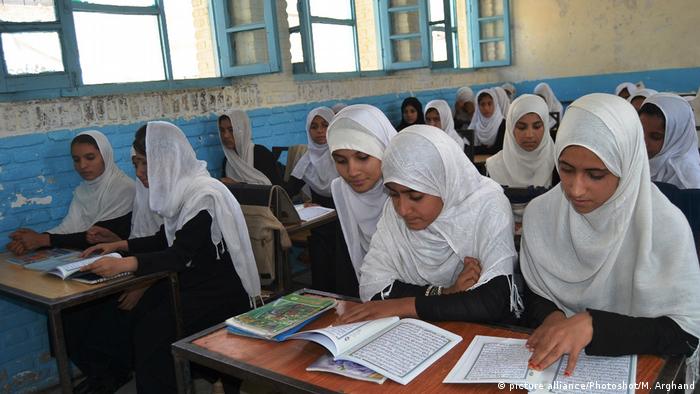
Hours after the Taliban regime in Afghanistan reopened schools for girls, the hardline Islamist group backpedalled on its decision, ordering the closure of secondary schools for girls on Wednesday.
The policy reversal was confirmed by Taliban spokesperson Inamullah Samangani after the closure led to confusion and heartbreak among students yearning to visit schools since last August when the Taliban swept to power in Afghanistan for the second time in over two decades.
Nevertheless, the move is likely to cause heartbreak among girls in a country where the return of Islamic fundamentalists to power threatens to undo years of progress achieved in empowering women, which also included providing women with access to quality education.
After capturing power in Afghanistan, the Taliban had tried to bill itself as a modernist group, committed to ‘protecting’ the rights of women, children and minorities. But that pretence has often been called out by analysts and observers around the world, who assert that the change in tune of the Taliban is to seek western funds in order to prop up the country’s foundering economy.
Even so, the regime kept up with its promise when in September 2021, it allowed some schools for girls, up to class 6, to reopen. In addition to this, women were also permitted to visit universities. However, high schools for female students had remained closed, with the Taliban regime announcing that classes for all girls would resume ‘at the earliest’.
Then in March 2022, months after the closure of schools for girls in Afghanistan, the Taliban announced that the schools will reopen from March 23 in several provinces, including Kabul. However, the schools in Kandahar—the stronghold of the Taliban—continued to remain close. Even then, the directive was observed patchily, with many schools around the country remaining closed despite having permission to reopen from the Taliban regime.
“We are reopening schools not to make the international community happy, nor to gain recognition from the world,” a spokesperson said at the time.
Plight of women under the Taliban during its earlier stint
However, ever since the Taliban commenced its offensive to recapture Afghanistan last year, it has consciously sought to project greater moderation in its rule, something that is in stark contrast to its ham-handed rule from 1996 to 2001.
Back then, women were proscribed from attending school or working outside their homes, in conformity with Sharia Islamic law. Besides, they were also mandated to wear fully covered overgarments called chadaree and be chaperoned by a male relative whenever they went outside. The Taliban had also placed a ban on music and imposed severe punishments on those who violated the Sharia law, such as chopping off the hands of thieves, lashing women in public and stoning people over allegations of adultery.
Hidden inside the busy runways and vast terminals of Delhi’s Indira Gandhi International Airport, a mysterious structure of a mazaar – the resting place of two Sufi babas have left travellers perplexed for years now. The mazaar or dargah of Peer Baba, supposedly one of the most revered places, rests deep inside one of the world’s busiest airports, especially adjacent to a runway.
Nobody knows when and how the shrine came up inside Delhi’s international airport. But, the mazaar of the two Muslim saints inside a public property, that too within a strategic airport, has raised eyebrows of many. But, according to the employees, the shrine has been there for a long time. Several people are allowed to enter the IGI premises to pay reverence, make a wish, offer prayers at the mazaar that stands tall near the Terminal-2 of the airport.
Located close to the runway 10/28 in the middle of the airport, the mazaar is clearly visible from the terminals. Interestingly, the Airports Authority of India provides a free bus from the cargo complex T-2 to the shrine between 2 pm -5 pm. Every Thursday is Jumme Raat, the day considered auspicious for the people visiting the shrine and praying there.
The dargah is very close to the runway. A 2011 India Today report said that flowers, incense sticks and other offerings for the dargah are sold outside Customs House at the airport. In fact, back then the security at airport was so lax that the India TOday team even managed to sneak in their spy camera till the dargah close to the runway of one of the busiest airports in the world.
As per the hearsay, the mazaar or dargah belongs to two Sufi saints – Bade Baba (Baba Kale Khan) and Chhote Baba (Baba Roshan Khan). The visitors need to undergo a security check-up at Gate number 6 before entering the mazaar. People are forbidden to take photos of the shrine. Except for Thursdays, the dargah is open to all Delhi Airport employees.
Peer Baba ki Mazaar inside Delhi’s Indira Gandhi International airport/ Image Source: Youtube
The caretakers of the mazaar claim that it is the saints that keep the operations at the IGI airport safe. “Flights come and go, but our saints are the ones keeping all the operations safe,” reports citing caretaker of the mazaar claim.
There have been reports which cite the airport employees and claim that they believe in the Sufi babas’ supernatural myths. Reports claim that one of the bricks at the mazaar dates back to 1860 and the Peer Baba Dargah is believed to be even older.
Media reports citing employees of airport claim that the dargah has prevented tragedies. Citing one Satish Singh alias Satish Jha, reports claimed that once a flight’s engine caught fire while landing but when it came near the Dargah, the fire miraculously extinguished and flight was controlled. There are no details about which flight was this and when it happened.
Despite being a threat to the security and safety interests of the airport, the mazaar has been operating inside the airport for decades now. The devotees claim that it is the power of the dead saints that has ensured that the dargah remains at the place it is.
A grand festival called “Urs” is celebrated inside the dargah annually, with the Airports Authority of India and other airlines organising grand cultural events. The dargah is maintained by the donations made by the devotees, and a committee runs it called the “Baba ki Committee”.
Taking cognizance of the honorific killings in Rampurhat village in Birbhum district that broke yesterday, The Calcutta High Court has decided to hear the matter at 2 PM today. A suo-moto case was registered in the High Court after the killings of eight people, including three women and two children following the killing of TMC leader Bhadu Shaikh took place in Rampurhat village of Birbum district in West Bengal.
BREAKING: Calcutta High Court registers suo moto case in the incident of Rampurhat, Birbhum district where several homes were set ablaze. Chief Justice bench to hear the case today at 2pm. #BengalBurnings
The bench led by Chief Justice Prakash Srivastava is set to hear the matter today at 2 pm. Violence broke out in the Rampurhat village a day after Trinamool Congress deputy Panchayat chief Bhadu Sheikh was allegedly murdered. In the wave of arson that erupted, an angry mob set as many as eight houses on fire in which eight people including innocent women and children lost their lives. In the petition filed in the High Court, it was demanded that a thorough investigation should be done by central investigation agencies be it the Central Bureau of Investigation (CBI) or the National Investigation Agency (NIA).
After a delegation of Bengal BJP leaders met Central Home Minister Amit Shah regarding the violence, sought a report from the state government on the burnings. After the violence broke out, Bengal Governor Jagdeep Dhankar tweeted, “Horrifying violence and arson orgy Rampurhat in Birbhum indicates the state is in grip of violence culture and lawlessness. Already eight lives lost.”
Horrifying violence and arson orgy #Rampurhat#Birbhum indicates state is in grip of violence culture and lawlessness. Already eight lives lost.
Have sought urgent update on the incident from Chief Secretary.
— Governor West Bengal Jagdeep Dhankhar (@jdhankhar1) March 22, 2022
Eleven people have been arrested and two FIRs have been registered against the killings in Birbhum by West Bengal Police. A Special Investigation Team (SIT) led by Additional Director General (CID) Gyanwant Singh has been formed to probe the matter.
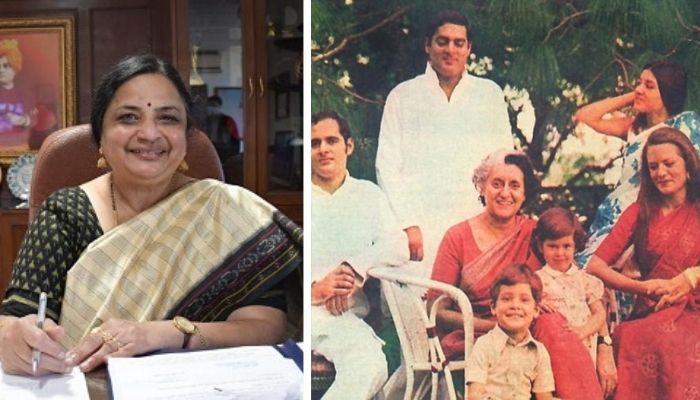
“We have contesting historical interpretations which have not allowed us to get to unified history writing in this country,” argued the new JNU VC Santishree Dhulipudi Pandit in an old speech that has resurfaced now. Pandit was talking at the 17th Asian Security Conference while batting for the position of India as a ‘norm-builder’ held in February 2015.
While making a case for rewriting our history to accommodate multiple narratives, Santishree Pandit made some glaring and unapologetic assertions in her speech. “Everybody begins (talking about) India at 1947. I think India is a Civilization. And as a civilizational state, are we saying that we had no norms earlier?” she asked. She contested the position that India hardly played any role in securing its strategic autonomy while arguing that it has been building norms for a large course of world history.
Throwing light on the history of India beyond its foreign invasions, she said we’ve had a history of rupture, denial and ignorance while identifying who we really are. “There’s a dichotomy among Indian scholars – some who believe that the Indian tradition communal and if it is touched, that would make India a sectarian state. But at the same time, we applaud China doing it on its Confucian tradition and bringing a lot of texts on strategic thought,” the JNU VC elaborated.
Pandit argued that when we talk about India as a norm builder, we have to go far behind. She said that because of the break we’ve done in recognizing south-east Asian countries as trading proto-states of our civilization, it has been turned into a China-centric organisation. “When Rajendra Chola completed 1000 years of his rule (in 2014), no one celebrated it. So we are a marginalised history of India.” she highlighted. While pointing out the need to make way for more Indic narratives in Indian history, she stated fiercely, “Indian history is not Mughal history and not and the Nehru-Gandhi dynasty. I think we should go beyond that.”
“We have been builders of norms when it comes to statecraft, individual freedom, tolerance, peaceful coexistence, and (although) not soft power but sublime power and spiritual universalism,” Pandit further added.
The JNU VC also highlighted that the values of Indian democracy come from its civilisational history and are not entirely a gift of British colonialism. “The soil in which you transplant institutions has to be equally fertile and acceptive as the institutions themselves,” said Pandit while arguing that the Indian civilization has a long tradition of democracy and cultural pluralism.
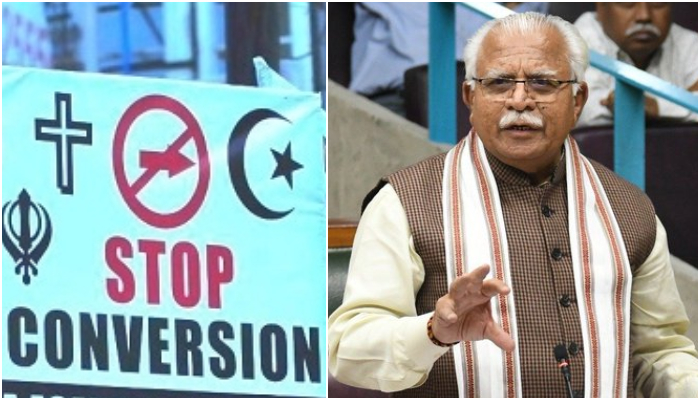
On Tuesday, the Haryana assembly passed the Haryana Prevention of Unlawful Conversion of Religion Bill, 2022 amid opposition by Congress and walkout from the assembly. The bill that was introduced during the budget session of the Vidhan Sabha on March 4, prohibits religious conversions which are effected ‘through misrepresentation, force, undue influence, coercion, allurement or by any fraudulent means or by marriage’, making it an offense.
Haryana Chief Minister Manohar Lal Khattar, while speaking on the bill, said that the bill is not aimed at discriminating against any religion and that it talks only about ‘forcible conversions’. “The bill is aimed at instilling fear among those who commit crimes. A person can change religion as per his own free will, but it will not be allowed to happen to anyone forcibly. Action will be taken against such people if they convert religion by deceit or by giving any kind of greed”, he said.
हरियाणा में जबरदस्ती धर्म परिवर्तन बिल्कुल नहीं होने दिया जाएगा।
इसी उद्देश्य से आज सदन में ‘हरियाणा विधिविरुद्ध धर्म परिवर्तन निवारण विधेयक, 2022’ पास कर दिया गया है। pic.twitter.com/p2sH0HXQjw
Criticizing the bill, the Leader of the Opposition, Bhupinder Singh Hooda stated that there was no requirement for a fresh law as the existing laws already have a provision of punishment for forcible conversions. He added that the implementation of new law might increase dispute among the families where inter-religion marriages have taken place. “If dispute takes place between the husband and wife after two years of marriage and a complaint is lodged against him for forcible conversion of religion, then the man would be behind the bars”, Hooda said suggesting addition of a provision in which no such complaint is lodged after a month of marriage.
Senior Congress leader Kiran Choudhary also called the new law a ‘black chapter’ in Haryana’s history and opined that the bill would deepen the communal divide and could have grave consequences in the future. Also, another senior Congress leader, Raghuvir Singh Kadian, said that there was no urgency for passing the bill and that it was a sharp slap of divisive politics, which he termed as ‘not good. He also said that inter-caste marriage should instead be encouraged by the government.
Provisions of the anti-conversion law in Haryana-
The Haryana Prevention of Unlawful Conversion of Religion Bill, 2022, provides for imprisonment of one to five years and a fine of not less than Rs 1 lakh, if the conversion is practiced by ‘allurement, use of force, fraudulent means or coercion’. According to the law, the onus of proof lies with the accused. It, however, provides an exemption in the case of a person who reconverts to his immediate previous religion as the same shall not be deemed to be a conversion under this Act.
Further the law says, whoever converts or attempts to convert a minor, a woman or a person belonging to the Scheduled Castes or Scheduled Tribes, shall be punished with imprisonment for a term which shall not be less than four years and may extend to 10 years and liable to a fine not less than Rs 3 lakh. The bill also provides for declaring marriages, which were done solely for the purpose of conversion from one religion to another religion, null and void.
The draft of the Bill was approved by the state Cabinet chaired by CM Khattar in February. The government had then said to have noticed several instances of conversion with an agenda to increase the strength of one’s religion. “People marry persons of other religion by either misrepresentation or concealment of their religion and after getting married they force such other person to convert to their religion. Such incidents not only infringe the freedom of religion of the persons so converted but also militate against the secular fabric of our society”, the govt had said.
As noted by the Haryana Chief Minister, the new law solely aims at instilling fear in the minds of those who forcefully practice conversion in society with a vested interest. The bill is not aimed at discriminating against any religion.
Similar Bill passed by several Indian states-
It is important to note that similar anti-conversion bills have recently been passed in the states of Himachal Pradesh, Uttar Pradesh, and Karnataka with the opposition parties sharply criticizing the law. In the state of Karnataka, Congress and the members of the Christian community protested against the anti-conversion bill. Siddaramaiah, leader of the Opposition of the Karnataka Legislative Assembly also affirmed that the anti-conversion law would be rescinded when Congress would come to power. In the statement, he had said, “The Congress will scrap the anti-conversion bill within a week of the party coming to power”.
In November 2020, the state of Uttar Pradesh had also approved the bill titled Uttar Pradesh Vidhi Virudhh Dharm Samparivartan Pratisdhedh Adhyadesh, 2020 or UP Prohibition of Unlawful Religious Conversion Ordinance 2020, criminalizing Love Jihad and other forms of illegal conversion. The law has provisions that can land offenders in jail for up to 1 to 5 years and attract a fine of Rs 15,000. The bill also has provisions for 10 years’ jail for mass conversion.
Other states like Arunachal Pradesh, Chhattisgarh, Gujarat, Jharkhand, Madhya Pradesh, Odisha, and Uttarakhand have also passed anti-conversion bills.
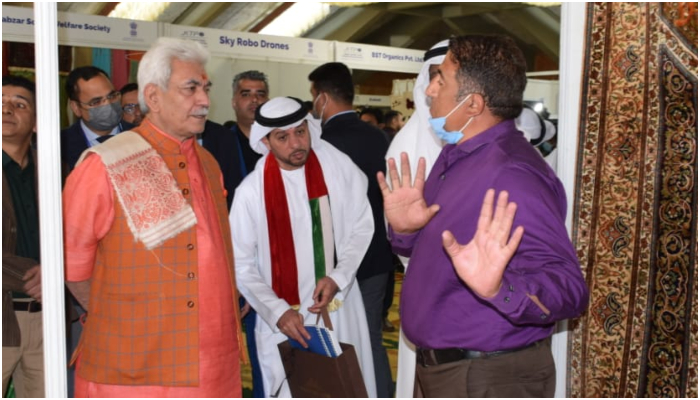
Intending to explore massive investment opportunities in the Indian Union Territory of Jammu and Kashmir, a delegation of around 30 CEOs from India and Gulf countries visited the Kashmir valley on Tuesday and looked for business and partnership ventures there. This is a month after India signed a significant and expansive free trade agreement with the United Arab Emirates (UAE) bringing both economies closer towards realizing $100 billion in trade over the next five years.
Lieutenant Governor of Jammu and Kashmir, Manoj Sinha tweeted the event and said that the visit of the CEOs of top companies, entrepreneurs, start-up representatives, exporters in Jammu and Kashmir was an expression of confidence of the industry leaders in the potential for business cooperation between the UT and the Gulf countries. “India’s relationship with Gulf countries is being translated into a vibrant, revitalized economic partnership with Jammu and Kashmir that will not only diversify our export basket but will also create a conducive environment for the expansion of the existing trade”, Sinha’s office tweeted.
India’s relationship with Gulf countries is being translated into a vibrant, revitalized economic partnership with J&K that will not only diversify our export basket but will also create a conducive environment for expansion of the existing trade.
Lt Governor further added that the UT had worked with a coherent framework in the past two years to harness the immense natural resources and economic potential of Jammu and Kashmir. He stated that under the guidance of Prime Minister Narendra Modi and Home Minister Amit Shah, Jammu and Kashmir had also considered unlocking investment flows from compliance and restrictions. In the wake of economic and business development, the Lt Governor also promised to provide global standard end-to-end facilities for the businesses, skilled workforce, transparent and hassle-free regulatory mechanism, and creation of necessary infrastructure wherever required.
PM Modi meanwhile lauded the UT’s efforts and said that the business interest of the Gulf countries in the valley would ensure greater opportunities for the people of Jammu and Kashmir. “Exemplary efforts to draw more investment to Jammu and Kashmir, and ensure greater opportunities for the people”, he tweeted.
Exemplary efforts to draw more investment to Jammu and Kashmir, and ensure greater opportunities for the people. https://t.co/ooxWDsD79M
According to the reports, the visit of the CEOs from several Gulf countries comes two months after the UT of Jammu and Kashmir signed six agreements with the global investors at the Dubai Expo 2020. The agreements have been signed to attract investments in the Indian Union Territory’s real estate, infrastructure, tourism, healthcare, and manpower employment sectors, among others.
Several UAE-based businesses signed memorandums of understanding (MOUs) with Jammu and Kashmir, which includes, Al Maya Group, MATU Investments LLC, GL Employment Brokerage LLC, Century Financial, and Noon E-commerce. One letter of intent (LOI) was also signed with Magna Waves Pvt. Ltd, Emaar Group, and Lulu International.
According to Lieutenant Governor of Jammu and Kashmir, Manoj Sinha, the UT has transitioned from a dormant commercial destination to a region of opportunity and investment. He stated that the government is hopeful to bring an investment of over Rs 70,000 crores in the next six months. In 2021, the Union Territory had got $2.5 billion (approximately Rs 18,568 crore) in investments, demonstrating the region’s vast opportunities and business potential. “By now, we have cleared investment proposals of around Rs 27000 crores. If and when the investments take place on the ground, it will generate a minimum of six to seven lakh jobs in Jammu and Kashmir”, he was quoted.
It is important to note that, on February 19, India and the UAE signed a significant and expansive trade agreement to bring both economies closer towards realizing $100 billion in trade over the next five years. PM Modi and the Crown Prince of Abu Dhabi met virtually to inaugurate the Comprehensive Economic Partnership Agreement (CEPA), an economic cooperation deal made on the coattails of the rapidly expanding strategic partnership between Abu Dhabi and New Delhi. The agreement is expected to come into effect in the first week of May.
The visit of the 30 Gulf CEOs to Jammu and Kashmir on March 22 was coordinated by Bal Kishan, CEO of Century Finance and a resident of Jammu and Kashmir’s Doda. The delegates from the real estate, hospitality, development, food processing, and agriculture sector met the top officials of Jammu and Kashmir including Lt Governor Sinha, and discussed their issues and concerns.
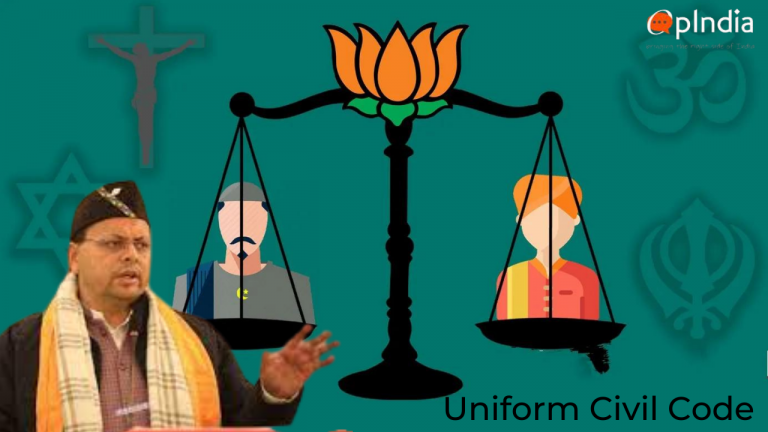
On Tuesday, Pushkar Singh Dhami, who is all set to swear-in as the 12th Chief Minister of Uttarakhand, assured that the newly elected BJP government would implement the Uniform Civil Code (UCC) in the hill state, as promised before the election.
According to the reports, the Uttarakhand Chief Minister-designate Pushkar Singh Dhami said soon after cabinet formation, his government would set up a committee of experts to draft a framework for implementing the UCC.
The CM-designate said that the committee would include judicial experts, retired personnel, intellectuals from various fields and other stakeholders. The committee will hold a wide range of consultations before preparing the draft, he said, adding, “UCC is a promise made by me to the people of Uttarakhand, and we will soon introduce it in the state.
On February 12, the BJP had announced that if voted to power, the government would bring in UCC to provide equal rights to everyone in the state.
Chief Minister Dhami had said the UCC would provide a legal framework for marriage, divorce, land, property and inheritance for all citizens irrespective of their faith, adding that the reform would bring social harmony, end gender-based discrimination and strengthen women empowerment.
Uttarakhand will be the second state in India to have Uniform Civil Code after Goa. Presently, Goa is the only state with UCC, which goes back to the times of annexation of Goa. India had retained the Portuguese Civil Code of 1867 that applied to all state residents, irrespective of their religion. All marriages in the state are registered under the Goan Civil Code.
The CM-designate also added that his government would fulfil other promises made in the manifesto to take development to the last village of the state.
“We want people in remote and far-flung areas to benefit from our government’s schemes. By electing BJP with a two-thirds majority, the people of the hill state have already hinted towards the outcome of the 2024 Lok Sabha polls,” the Chief Minister said.
The BJP had won 47 of the 70 seats in the recently held assembly elections, the results of which were announced on March 10.
The long-standing demand for Uniform Civil Code
The Uniform Civil Code (UCC) has been a long-standing demand of the BJP. UCC overrides personal laws and calls for similar rules for adherents of different religions in civil matters, including marriage, divorce, adoption, succession, and maintenance. The Supreme Court of India even recommended UCC during the infamous Shah Bano case of 1985.
Currently, the Hindu Personal law applies to Hindus, Jains, Sikhs and Buddhists, while the non-codified Muslim personal rules are based on the Shariat Law of 1937. Similarly, marriages and divorces in the Christian community are governed by the Indian Divorce Act of 1869 and the Indian Christian Marriages Act of 1872. Zoroastrians are governed by the Parsi Marriage and Divorce Act of 1936.
The provision to set up Uniform Civil Code has been laid down in Article 44 (Part IV) of the Indian Constitution. UCC has been included in the Directive Principles of State Policy (DPSP) and can be implemented by the State governments. They are not enforceable by courts.