Home Blog Page 3417

As the Australian Cricket Team is in Pakistan after 24 years, here is how the Sri Lanka team had come under attack on a similar tour in 2009

The Australian men’s cricket team landed in Pakistan last Sunday for a multi-format cricket tournament series. This is Australia’s first visit to Pakistan in 24 years, following the 1998 tour of the country.

The tournament starts today with a three-match Test series, followed by an ODI series on March 29, and one T20 match on April 5. This will be Pat Cummins’ first foreign Test since taking over as captain of the Australian cricket team.

This tour by the Australian Cricket Team to Pakistan comes after a long gap of international cricket teams visiting the terror-stricken country. Last September, shortly before the toss in the first one-day international scheduled in Rawalpindi, New Zealand had cancelled its tour to Pakistan citing security concerns.

Since an attack by Islamist terrorists on the Sri Lankan Cricket team in Lahore in 2009, international teams have stayed away from Pakistan. 

The terrorist attack of Sri Lankan Cricketers in 2009

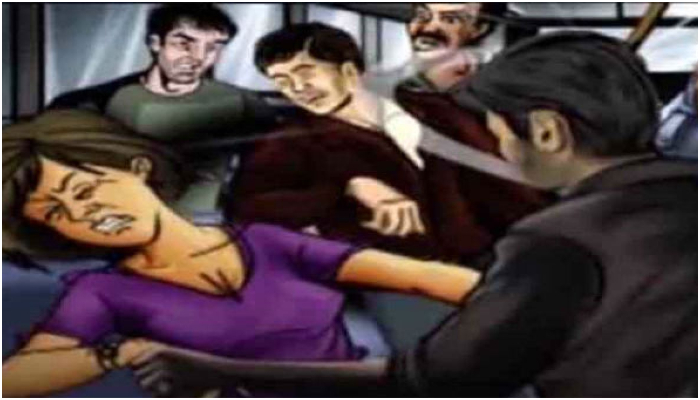
In 2009, the Sri Lankan cricket team visited Pakistan to play cricket matches. On March 3, they were on their way to the Gaddafi Stadium in Lahore in their team bus. They were accompanied by some more vehicles of staff and security personnel.

Terrorists armed with Rocket-Propelled Grenades (RPGs) and assault rifles attacked the whole convoy before they could get to the stadium. When terrorists opened fire on the visiting team’s cricketers and assistants, six Sri Lankan players were critically injured, as was the team’s assistant coach who was British. Terrorists killed six security personnel and two civilians in the horrific attack.

The incident reverberated throughout the sports community and all over the world. The tour was cancelled immediately following the cancellation of the test. The Sri Lankan players were escorted to a neighbouring airbase after being evacuated from the Gaddafi stadium in a helicopter.

Pakistan says three accused of 2009 Sri Lanka cricket team attack killed
Image: Livemint

No major team played any cricket match in the country since then. After terrorists attacked the Sri Lanka cricket team in Lahore, Pakistan experienced worldwide sports isolation. ICC President David Morgan stated that security was “not as expected” during the March 3 attacks in Lahore.

In March 2019, ten years after the attack on the Sri Lankan team in Pakistan, Bangladesh’s trip to New Zealand was cancelled after a gunman opened fire at two mosques in Christchurch. The incident happened close to the location where Bangladesh was due to play the last Test match of their New Zealand trip.

In light of Pakistan’s past with international cricket, authorities have deployed 4,100 security personnel, army snipers, and road closures for the players. Despite the high level of security, Pakistani authorities have apparently planned for the worst-case scenario.

Bhagalpur: Massive explosion leaves 7 dead, cause of blast believed to be illegal firecrackers. Here is what we know so far

On Thursday (March 3) night, a massive explosion rocked a 3-storey residential building in the Kajwalichak area in the Bhagalpur district of Bihar. The area falls under the jurisdiction of the Tatarpur police station.

As per reports, the incident claimed 7 lives and injured 8 others. About 10-15 people are believed to be stuck underneath the debris of the collapsed building. The blast took place near an orphanage and damaged 2-3 nearby buildings as well.

On receiving information, the police and emergency services rushed to the spot. The injured were taken to Jawaharlal Nehru College and Hospital in Mayaganj for immediate medical attention.

According to the neighbours, the owners of the damaged 3-storey building were into making firecrackers. A man by the name of Mohammad Yusuf, who lived in the same neighbourhood, confirmed the development to India Today.

Deputy Inspector General of Police (Bhagalpur Range) Sujit Kumar informed that the blast took place due to the presence of country-made bombs, gun powder and illegal firecrackers in the building.

“We have so far taken out four bodies from underneath the debris of the house. Prima facie investigation shows it was firecracker and desi bomb manufacturing unit. Forensic samples are being taken. So far, only one person has been identified,” he remarked.

A probe has been launched into the matter. So far, the police have made no arrests and are involved in the rescue operation.

Russia Ukraine war: Indian student shot while trying to escape from Kyiv, hospitalized

On Friday, an Indian student was shot with a bullet in the capital city of Ukraine and was hospitalized immediately in Kyiv amid the ongoing conflict between Russia and Ukraine. The news was confirmed by the Minister of State (MoS) for Ministry of Civil Aviation (MoCA) General VK Singh who said that the student is in the hospital and is being treated.

“A student from Kyiv was reported to have been shot and was immediately admitted to the hospital in Kyiv. The Indian embassy had earlier cleared on the priority that everyone should leave Kyiv. In the event of war, the gun bullet does not look at anyone’s religion and nationality,” he added.

According to the reports, the Indian students in Ukraine are making their way back to India safe via countries neighboring Ukraine. The Indian government is also making all the required efforts to rescue all the Indian nationals trapped in the war. Four Union Ministers, Hardeep Singh Puri, Jyotiraditya M Scindia, Kiren Rijiju and Gen (Retd) VK Singh are looking into the evacuation efforts in the countries adjoining Ukraine.

Earlier one Indian national named Naveen from Karnataka was killed in shelling in Kharkiv. Kharkiv is a big Ukrainian city in the Eastern region where intense fighting has been going on between Russian and Ukrainian forces. The MEA had confirmed the news with deep sorrow and had demanded the Ambassadors of Russia and Ukraine for safe passage for Indian nationals from the conflict zones.

Nearly 20,000 Indian students, most studying medicine, were stuck in Ukraine amid the conflict. Out of the total number, 60% have already reached India and are safe. Efforts are being made to evacuate the balance 40% of the Indian nationals.

The Indian government has started an evacuation operation named ‘Operation Ganga’ for the stranded Indian students. Several special flights have been running from Poland, Romania, and Hungary to bring the students home. Around 200 more students and Indian citizens reached Delhi yesterday on a special Indigo flight.

Air India, Air India Express, IndiGo, and SpiceJet have joined the Operation Ganga mission operating multiple flights from Ukraine’s neighboring countries to Delhi and Mumbai.

Indian Railway designed ‘Kavach’ to be tested: Two trains, one with Minister Vaishnaw and other with Railway Board Chairman, will hurtle towards each other but won’t collide

For strengthening the safety of moving trains, the Indian Railway has designed its own indigenous Automatic Train Protection (ATP) System known as “Kavach”. The Railway is promoting ‘Kavach’ as the world’s most affordable automatic train accident protection technology.

Today, Kavach will be tested when two trains will hurtle towards each other at full speed near Secunderabad, one carrying the Railway Minister Ashwini Vaishnaw and the other the Chairman of the Railway Board. However, due to the indigenous ‘KAVACH’ technology, they won’t collide.

The Automatic Train Protection (ATP) system was created in-house to aid the railways in meeting their aim of “zero accidents.” Kavach is a system that automatically brings a train to a stop when it detects another train on the same track within a certain range.

Kavach is designed and developed in conjunction with three Indian vendors and Research Design and Standards Organization, which is a company under Indian Railways.

Kavach operates on the concept of providing Movement Authority with continual updates through radio. In the event that Loco Pilot fails to do so, it limits the speed by applying brakes automatically. Signal elements are duplicated in the cab, which certainly helps at greater speeds and in foggy conditions. Kavach is connected to current signal interlocking systems for this purpose. Also, it meets the highest level of safety certification, SIL-4 (Safety Integrity Level). 

The project is now being executed as a trial on several sections of the South-Central Railway zone. In the initial phase, Indian Railways plans to install the technology on high-density routes like as Delhi-Mumbai and Delhi-Howrah. As per sources, it will be deployed on all major routes by 2024. Kavach will also be exported to other nations. In her budget address, Finance Minister Nirmala Sitharaman declared that 2,000 kilometers of the network will be placed under Kavach as part of Atmanirbhar Bharat.

‘Let them fly on their broomsticks’: Russian space agency to stop delivery of rocket engines to USA after US sanctions

Amid the wave of sanctions from the USA on Russia over the war in Ukraine, Biden had stated that the Russian space industry will be hit.

Dmitry Rogozin, director-general of Roscosmos, has announced on 3rd March 2022 that Russia would be halting the delivery of rocket engines to the US. Rogozin has stated to Russian state media, “In a situation like this we can’t supply the United States with our world’s best rocket engines. Let them fly on something else, their broomsticks, I don’t know what.”

Dmitry Rogozin further said, “Russia will be ending cooperation with the US on experiments on the ISS. The priority of the country’s space program will be adjusted to focus on satellites for defence interests.”

Rogozin stated that Russia has delivered a total of 122 RD-180 engines to the USA since the 1990s. 98 of those engines have been used to power the Atlas launch vehicles. He added that Russia will also stop providing technological assistance for the service and maintenance of the existing rocket engines in the USA.

Germany halts scientific projects in collaboration with Russia, switches off its own blackhole mapping telescope

ROSCOSMOS has informed that Dmitry Rogozin has also written a letter to the administrator of the German Aerospace Center (DLR), Anke Kaysser-Pyzalla. In this letter, he has announced that Roscosmos would be terminating all joint scientific projects in the International Space Station.

Tweet by ROSCOSMOS

Dmitry Rogozin has written in his letter, “The termination of cooperation with the Russian Federation in the field of higher education, scientific research and professional training announced by the leadership of the Federal Republic of Germany, of course, causes irreparable damage to the established long-term cooperation ties and significantly slows down activities in the field of outer space exploration for peaceful purposes.”

On February 25, Germany’s Federal Ministry of Higher Education and Research had announced that they are halting all existing, long-standing cooperation in scientific research collaborations with Russia.

It is notable that the DLR has announced on Thursday that it was terminating all collaboration activities with Russian institutions and would not start any new projects or initiatives with them. Later, Germany switched off its own eROSITA telescope, engaging in the mapping of blackholes on board a Russian satellite.

The Alliance of Science Organisations in Germany announced last week that it would immediately freeze cooperation with Russian universities and businesses until further notice, issuing a condemnation of the Russian invasion of Ukraine.

Earlier on Wednesday, Russian space agency ROSCOSMOS chief Dimitry Rogozin had posted a video showing workers at the Baikonur launch pad covering up the flags of the USA, Japan, and the UK on the OneWeb rocket which is scheduled to be launched on Friday. However, the flag of India was left intact.

13,000 Indians moved out of Ukraine under Operation Ganga: CNN News 18 anchor asks why Indian students were not evacuated ‘earlier’. What Jyotiraditya Scindia said

Amidst the ongoing conflict between Russia and Ukraine, BJP leader Jyotiraditya Scindia informed that about 13,000 Indian students have been safely evacuated to the neighbouring countries and only 1000 more Indian nationals are still stuck in war-torn Ukraine.

While speaking to CNN-News 18, Scindia was asked about the supposed ‘late’ evacuation by the Centre. “Why couldn’t it have been done earlier? Why did you wait till the situation became so bad for the incoming students?” quizzed ‘journalist’ Pallavi Ghosh.

He remarked, “Any government or Opposition party cannot preempt when the war is going to break out. And the day the war broke out, from that day onwards, we have been working 24/7 to ensure that all our children could get out. There were 19760 odd children in Ukraine. Prior to the war breaking out, through the advisories, about 4800 children had left.”

Jyotiraditya Scindia informed, “So, we had roughly about 14000 students left after the war broke out. We have roughly about 1000 or so odd students left in Ukraine. We have moved out close to 13000 students over the last 6 days, safely from Ukraine to all our neighbouring countries and being moved to India.”

On being asked about using the allegations of using Operation Ganga as a Public Relations (PR) exercise, the BJP leader responded, “My heart and soul is with every child. When I landed at 10:30 in the night, I was at the airport till 2 am, trying to reassure every child, understand their pain points. (I was not focused) on the elections, Opposition or criticism.”

“I have been given a task and that is the only thing that I am concentrating on. There are people, who even in times of emergency wants to sit and criticise. That is something that I cannot help. If there is an ostrich in the sand approach of just criticising, then, this is not my mentality,” he concluded.

Earlier on Thursday (March 3), Jyotiraditya Scindia had informed that 18 flights were scheduled for the day to evacuate Indian nationals from neighbouring countries of Ukraine. The destinations included Bucharest and Suceava in Romania, Kosice in Slovakia, Budapest in Hungary and Rzeszow in Poland.

On February 15 this year, the Indian embassy in Ukraine had issued the first advisory, urging Indian nationals to immediately evacuate the country in the run-up to the full-fledged war. According to the Ministry of External Affairs (MEA) spokesperson Arindam Bagchi, a total of 18000 Indians had been moved out of Ukraine since February 15, 2022.

“30 flights under Operation Ganga have brought back 6,400 Indians from Ukraine so far,” he informed on Thursday (March 3). It must be mentioned that by Tuesday (March 1), the Indian government had evacuated over 9000 Indian nationals.

The Central Government on Wednesday (March 2) confirmed that 60% of the Indian nationals stranded in Ukraine have crossed the borders and are safe amid the ongoing war in Ukraine. The government added that it was undertaking all possible efforts to evacuate the remaining 40% as well.

“We will continue to make utmost efforts to ensure the return our citizens stranded in Ukraine,” ANI had tweeted, citing government sources.

Operation Ganga to the rescue

The Indian government has started an evacuation operation named ‘Operation Ganga’ for the stranded Indian students. Several special flights have been running from Poland, Romania, and Hungary to bring the students home.

It must be mentioned that the Ukrainian airspace was closed for civilian aircraft from Thursday (February 24) morning onwards. As such, the Indian embassy in Ukraine had to coordinate with the embassies of neighbouring countries in Poland, Romania and Hungary for the creation of safe evacuation channels.

Under ‘Operation Ganga’, Indians were first taken in batches from Ukraine to bordering countries (currently Hungary and Romania) via buses/commute arranged by the embassy. They were then airlifted to Delhi or Mumbai through chartered Air India flights.

The Indian government had sent its 4 Union Ministers, namely, Hardeep Singh Puri, Jyotiraditya Scindia, Kiren Rijiju and General (Retd) VK Singh to Hungary, Romania and Moldova, Slovakia, and Poland respectively, to coordinate the Operation Ganga

West sponsored foreign mercenaries in Ukraine will not be treated as Prisoners-of-War, warns Russian military: Read details

Mercenaries deployed by the western countries in Ukraine will not be treated as prisoner-of-war (POW) and will be subject to criminal liability, Russian Defense Ministry spokesman Igor Konashenkov said on Thursday, reports Russian News Agency TASS.

Amidst the ongoing clashes between NATO-backed Ukrainian and Russian troops, the Russian Defense Ministry has said that the mercenaries the West is sending to Ukraine will not enjoy the right of combatants under international humanitarian law.

“I wish to make an official statement that none of the mercenaries the West is sending to Ukraine to fight for the nationalist regime in Kiev can be considered as combatants in accordance with international humanitarian law or enjoy the status of prisoners of war,” Konashenkov said.

Igor Konashenkov stated that mercenaries in Ukraine are carrying out sabotage activities with the weapons supplied by the West. Konashenkov said that foreign mercenaries were attacking the Russian military and supporting aircraft. Konashenkov also said the US intelligence has launched a mass campaign to recruit more mercenaries.

The Russian Defense Ministry accused Great Britain, Denmark, Latvia, Poland, and Croatia of legally authorising their citizens to participate in the ongoing Ukraine war. France plans to send ethnic Ukrainians serving in its foreign legion to Ukraine as well, Konashenkov added.

“According to Zelenskyy, about 16,000 foreign mercenaries are expected to arrive in Ukraine in addition to those already available to compensate for the crushing military failures of the Ukrainian security forces. A visa-free regime is officially introduced for them,” the spokesperson said.

Konashenkov also revealed that nearly 200 troops arrived in Ukraine from Croatia to join one of the Nazi battalions.

He also warned that all foreign mercenaries detained in Ukraine would be brought to justice on criminal charges.

“At best, they can expect to be prosecuted as criminals. We are urging all foreign citizens who may have plans to go and fight for Kiev’s nationalist regime to think a dozen times before getting on the way,” Konashenkov said.

Konashenkov also alleged that the Ukrainian secret services are putting out propaganda videos filmed by local civilians.

China reverts to its own currency in pursuing trade with Russia, opposes sanctions posed by the US, EU against Russia

As Russia’s economy gets hammered by sanctions imposed upon by many countries including the US, China has emerged as the key player after it has decided to revert back to its own currency in pursuing trade with Russia.

Amid Moscow’s deepening international isolation, Analyst Tom Fowdy on Thursday opined that the US might have to face long-standing consequences of strategic changes in trade pacts between China and Russia. “Both China and India are reverting to their own currencies in pursuing trade with Russia. The combined population total of these countries is 2.7 billion people. Do the US and its allies realize the long term strategic consequences of this?”

According to the reports, China has opposed to the sanctions imposed upon Russia by the United States, European Union and has said that it will continue to carry out normal trade cooperation with Moscow. “China and Russia will continue to carry out normal trade cooperation in the spirit of mutual respect, equality and mutual benefit”, said Foreign Ministry spokesman Wang Wenbin at a regular press briefing in Beijing.

He added that economic sanctions are not a solution to the problems, instead, they create new ones. He also demanded that US should not harm the legitimate rights and interests of China and other parties when handling the Ukraine issue and its relations with Russia.

This is specifically after the US moved to disallow certain Russian banks from SWIFT, the payment system used for international financial transactions amid the ongoing war in Ukraine. Western governments are trying to shut off Russia’s economy from the global financial system, pushing international companies to halt sales, cut ties and dump tens of billions of dollars worth of investments.

It is pertinent to note that China and Russia had decided to reduce their dependence on the US dollar before the year 2020 itself. As of 2020, only 46% of the trade between the two countries was recorded in the US dollar as compared to 90% in 2015 and before.

China and Russia have close bilateral ties in trade. According to the reports, trade between Russia and China has recorded a rise of 35.9% last year recording the total trade at $146.9 billion. The two have aimed to boost the total bilateral trade to $250 billion by 2024, as unveiled on the sidelines of the Winter Olympics.

How Congress ally MK Stalin is using the Russia-Ukraine war to fan the North-South divide in India after Rahul Gandhi’s ‘Union of States’ remark

The Congress party allies are now using the Russia-Ukraine war to fan the North-South divide in India and the epicentre of this unfortunate politics seems to be Tamil Nadu.

It was reported yesterday, on the 3rd of March 2022, that the Tamil Nadu government was set to send 4 legislators to Hungary, Romania, Poland and Slovakia for evacuation of stranded students from the State. Reportedly, there were 4 IAS officers also deputed for the task, the assist the legislators in their task.

Besides the supposed PR stunt to send a contingent from Tamil Nadu specifically to help Tamil students, MK Stalin, the Chief Minister of Tamil Nadu took to Twitter to share a letter that he had written to the External Affairs Minister urging him to help the Tamil students with more alacrity than other students. In his letter, Stalin sought MEA clearances for the team proposed by GoTN to coordinate with the Indian embassies in Romania, Poland, Hungary and Slovakia.

In the letter, MK Stalin first thanked the MEA for appointing an exclusive nodal officer for the Tamil students being evacuated at the request of Stalin. Stalin says that he has shared the details of 2,223 students with the MEA and Ukraine for speedy evacuation. He then goes on to say that while he appreciates the efforts, the “number of Tamil Nadu students being brought back needs to increased by focussed intervention at the ground level”. Stalin claims that more than 1,000 Tamil students are awaiting evacuation in Romania, Hungary, Poland and Slovakia.

Essentially, MK Stalin says that he has deputed a contingent of 4 politicians and 4 IAS officers from the state to go to these countries and coordinate the safe return of 1,000 Tamil students with the embassies there, and therefore, he should get clearance for the same.

At first glance, this might look like a cheap PR student by the Tamil Nadu government in alliance with the Congress party, however, one has to wonder if there is more than meets the eye given the statements being made by Rahul Gandhi himself.

In February 2022, Rahul Gandhi – the scion of Gandhi Parivar ignited a massive debate in the country by questioning the very idea of India as a ‘nation’. Speaking in the Parliament on the motion of thanks to President’s Address in Lok Sabha, Congress MP Rahul Gandhi claimed that India was just a “union of states” and not as a nation.

“India is described in the Indian Constitution as a union of states and not a nation. One cannot rule over the people of a state in India. Different languages and cultures cannot be suppressed. It is a partnership, not a kingdom,” claimed Rahul Gandhi, who launched a tirade against the Modi government. 

In his speech, Rahul Gandhi insisted that the power arrangement between the states and the centre is of a “negotiation” and insinuated that India did not have a single national identity, instead, the idea of India rose from an agreement or a negotiation between the provincial units. The Gandhi-scion also brought the reference of Tamil Nadu and Maharashtra, imagining them to be distinct entities and asserted that the ruling dispensation treated these constitutional units as its kingdom.

It is evident from Rahul Gandhi’s speech that he truly believes that Tamil Nadu is a state distinct in its identity and existence from the rest of India and he believes that the fact that it is a part of India is only a “negotiated” reality.

In this light, the actions of Stalin appear far more sinister than a simple PR stunt.

Firstly, it is evident that MK Stalin has no concern for INDIAN students who are stuck in war-torn nations and are trying to make their way back as the Indian government does everything conceivable to bring them back home. He is more concerned solely about Tamil students because he seems to believe that the regional identity of these students are far more important than their national identity.

The far more sinister aspect of the stunt being pulled by MK Stalin is that he somehow insinuates that the central government is being partial against Tamil students as compared to students from the rest of India. There is no plausible reason why only Tamil students must be expeditiously evacuated when every Indian life is just as precious. Therefore, this stunt appears specifically targeted at giving out the message that there is some sort of partiality being met out on the basis of regional identity.

Essentially, therefore, it would appear that MK Stalin, Congress’ ally, is using the Russia-Ukraine conflict to further fan regional divide.

The ‘Union of States’ speech of Rahul Gandhi was not the first time this playbook was used. In February last year, Rahul Gandhi had claimed that representing a constituency in Kerala has been a refreshing change for a person like him who had represented a constituency in Northern India for the first 15 years of his career. The Congress leader had said that people in Kerala are interested in issues, unlike others. Though it looked like he was praising Keralites, in reality, he was insinuating that the people in the north were not as serious as the people of the south. 

It seems like Rahul Gandhi and his allies have now gotten hold of a new playbook of covertly reviving sub-nationalism sentiments to polarise the country on regional lines, if unchecked, which may slowly result in strengthening separatist tendencies in many states.

Russia-Ukraine war: Fire breaks at Zaporizhzhia, Europe’s largest nuclear power plant, which provides more than a fifth of electricity to Ukraine

A fire broke out in a building outside the Zaporizhzhia nuclear power plant in Ukraine during intense fighting between Russian and Ukrainian forces.

On Friday, Ukrainian Foreign Minister Dmytro Kuleba claimed that the Russian troops opened fire from all sides upon Zaporizhzhia nuclear power plant, the largest nuclear power plant in Europe. Kuleba warned that the fallout from a disaster at the Zaporizhzhia plant would be ten times worse than the Chernobyl disaster.

“If it blows up, it will be ten times larger than Chornobyl! Russians must IMMEDIATELY cease the fire, allow firefighters, establish a security zone,” Kuleba tweeted.

Earlier, the Ukrainian authorities had claimed that the Russian troops were attempting to seize the plant and had entered the town with tanks.

According to the reports, the spokesperson for the Zaporizhzhia nuclear power plant has confirmed that background radiation levels had not changed. The authorities also said there was no threat to radiation security.

A purported video of the fire incident at the Zaporizhzhia nuclear plant has gone viral on social media sites, which show smoke and flames coming from an unidentified building.

Dmytro Orlov, Mayor of the Energodar, said due to the continuous enemy shelling of buildings and units of the largest nuclear power plant in Europe, the Zaporizhzhia nuclear power plant is on fire.

Following the fire incident at Zaporizhzhia nuclear plant, the International Atomic Energy Agency said in a tweet that it was “aware of reports of shelling” at the power plant and was in contact with Ukrainian authorities about the situation.

Zaporizhzhia provides more than a fifth of the total electricity generated in Ukraine.

Weeks ago, Russian troops took control of the defunct Chernobyl plant, 100 km north of Kyiv. In 1986, the Chernobyl nuclear plant had suffered a meltdown, the world’s worst nuclear disaster, affecting more than half of Europe due to radioactive radiation.