Home Blog Page 3578

100 years of Palchitaria massacre in Gujarat and its cover-up by the British govt

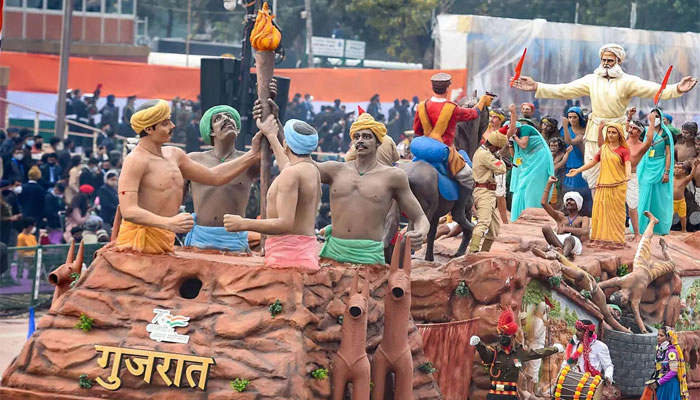
On 73rd Republic Day parade at Rajpath in New Delhi, Gujarat’s tableau displayed the freedom movement of the tribals in 1922, marking 100 years of the horrific Palchitaria massacre. On March 7, 1922, Motilal Tejawat, a tribal leader who was often known as ‘Gandhi’ among his Tribal followers, was addressing a crowd of over 10,000 Bhil tribals from Dadhvav villages (Sabarkantha District, Gujarat) as a part of the Eki Movement.

The front of Gujarat’s tableau represented the freedom fighting spirit of the ancestors of tribals. The rear portion of the tableau represented the massacre by British soldiers on March 7, 1922. The tribal artists dressed in their traditional costumes performed ‘Ger’ dance along with the folklore based on the incident.

The village of Palchitaria was renamed Dadhvav and now lies in Vijaynagar taluka, Sabarkantha district in present-day Gujarat. British officer Major H.G. Saturn from Mewad Bhil Corps ordered to open fire at the innocent tribals. 1,200 were shot dead, and two wells were filled with the martyred tribals.

The incident took place just three years after the Jallianwala Bagh incident, but it never found its rightful place in history. When Prime Minister Narendra Modi was Chief Minister of Gujarat, he brought the incident back in front of the world and built a memorial to Motilal Tejawat at the site of the massacre in Sabarkantha.

The coverup of the massacre that claimed lives of three times more than Jallianwala Bagh

There was no official record of the massacre maintained by the British. Unlike Jallianwala Bagh, which happened three years before the Palchitaria massacre, this incident was washed and forgotten in the leaflets of history. A 1997 India Today report suggested when they tried to find records of the incident in the official diary maintained by Sutton, there was no mention of the massacre at Palchitaria. Though, the diary had references to the much smaller incidents involving Bhils in the same area around that period.

According to then-98-year-old Balwant Singh Mehta, Tejawat’s colleague and a freedom fighter, there were two reasons the incident never made to the history books. First, those who died were poor and illiterate tribals. Secondly, the British government had already faced a lot of flack after the Jallianwala episode, and they took all possible steps to suppress the incident.

Notably, Rajasthan State Archives does not have any records of the massacre either. LP Mathur, an expert on reforms and movements among the Bhils, told India Today the official records of the period on Tejawat and his movement mentioned that Bhil followers had marched towards from Walren village near Khedbrahma on February 18, 1922, i.e. 17 days before the incident. Notably, Mathur claimed to have come across several such incidents that British rulers covered up.

What happened on the day of massacre?

Thousands of tribals had gathered to hear Tejawat. There were 21 demands on his agenda that he had raised on behalf of the tribals, including lowering the revenue or lagaan levied on tribal farmers. 67-year-old Kala Ramji Gameti narrated the story of the massacre. His grandparents had gone to attend the meeting. His grandmother Somiben was one of those who died in the massacre, and his grandfather Dhulabhai escaped unhurt. The meeting was held on the banks of Heir River on a three-acre land.

The MBC soldiers were present at the meeting. Somiben was standing next to a British officer, possibly Sutton, when a tribal fired a shot in the air. Allegedly, the bullet grazed Sutton Gameti said Somiben begged him not to open fire on innocents just because one of them fired a shot.

Meanwhile, Tribals started raising slogans in their native language that further irked Sutton, who then ordered to open fire at the tribals. Somiben was shot dead among hundreds of others. Another attendee who was present at the meeting, Koyaji Dhulaji Patel said while narrating the incident, “As the firing began and people started running helter-skelter, I hid behind a farm fence. What I then saw was simply unbelievable. People were literally falling like ninepins to the bullets. The sepoys were even killing people for their silver ornaments. I distinctly remember one person, Nathaji Mothaliya of a nearby village, Anodra, whom a sepoy shot dead before removing silver kadas (bangles) from his hands.” Koyaji was hit with the back of the butt of a gun by a sepoy who later asked him to escape.

There were corpses everywhere after the firing stopped. Some of the corpses were dragged away by the family members and friends of the deceased, while the remaining were dumped into a well nearby. Tejawat narrowly escaped the massacre. He suffered two bullet wounds on his thighs. His supporters picked him to safety. Till 1929, Tejawat stayed underground allegedly at the request of Mahatma Gandhi. After that, he remained in jail for seven years.

The spot of the massacre was named “Virubhumi” by Tejawat after independence when he visited the place to pay respect to the martyrs. The massacre became part of the local folklore but did not get a place in the history books.

Jonty Rhodes, Chris Gayle, Gad Saad and more: PM Modi extends Republic Day greetings to eminent personalities from around the world

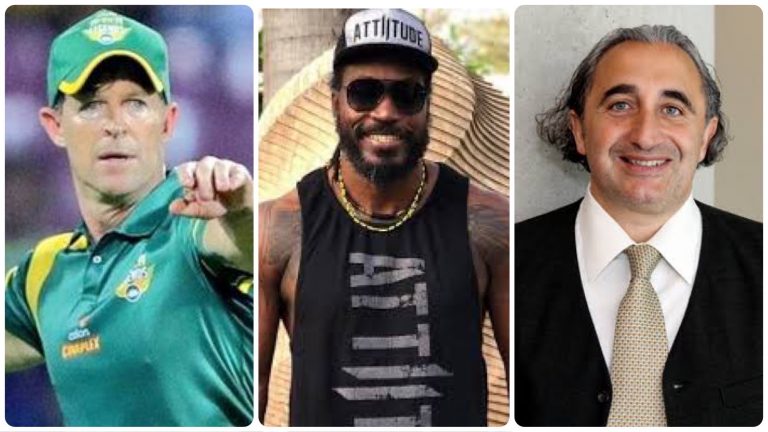
On January 25, Prime Minister Narendra Modi extended personal wishes to several notable personalities from across the world, including former South African cricketer Jonty Rhodes, explosive batsmen Chris Gayle, novelist Ashley Rindsberg, behavioural scientist Gad Saad among others on the occasion of the 73rd Republic Day of India.

PM Modi explained the importance of Republic Day this year

In his letter to Rhodes, PM Modi called him a special ambassador of the strong relations between India and South Africa. While extending greetings for Republic Day, PM Modi said Republic Day this year is more special because it is happening at the time when India is celebrating 75 years of freedom from colonial rule. He said, “January 26 this year is even more special because it is happening at a time when India marks 75 years since freedom from colonial rule. Thus, I decided to write to you and a few other friends of India, with a sense of gratitude for your affection towards India and hope that you continue to work closely with our nation as well as our people.”

He further acknowledged the bond Rhodes has with India as he has named his daughter ‘India’. He said, “Over the years, you have developed a profound connection with India and its culture. This special bond was truly reflected when you named your daughter after this great nation. You truly are a special ambassador of the strong relations between our nations.”

He added, “India is witnessing a series of historic socio-economic transformations. I am confident these will empower lives and contribute to the global good. Once again, I extend Republic Day greetings and look forward to interacting with you in the times to come.”

Rhodes shared the letter he received from PM Modi on Twitter and said, “Thank you, Narendra Modi Ji, for the very kind words. I have indeed grown so much as an individual on every visit to India. My whole family celebrates #RepublicDay with all of India, honouring the importance of a #Constitution that protects the rights of the Indian people #JaiHind.”

Chris Gayle thanked PM Modi for the personal letter

Cricketer Chris Gayle also received a letter from the PM. In a Tweet, Gayle said, “I would like to congratulate India on their 73rd Republic Day.”

Thanking PM Modi for the letter, he added, “I woke up to a personal message from Prime Minister Modi reaffirming my close personal ties with him and to the people of India. Congratulations from the Universe Boss and nuff love.”

Novelist Ashley Rindsberg says he’s honoured to receive letter from PM Modi

Author Ashley Rindsberg also received a personalised letter from PM Modi on the occasion of the 73rd Republic Day. Taking to Twitter, Rindsberg shared the picture of the letter he had received from PM Modi and expressed his gratitude for the same.

“Happy Republic Day to all my friends in India!!! I’m beyond honoured to receive a letter from @PMOIndia marking the occasion. And thank you to @indemtel for working to foster strong relations between Israel and India to create a brighter future,” he said.

“As a novelist and author, you have been widely read and appreciated by the people. At the same time, your interesting perspective about India and its way of life are valuable,” said PM Modi in his letter along with extending the greetings on Republic Day.

Behaviourial scientist Gad Saad tacitly admits receiving letter from PM Modi

Renowned Behavioural Scientist Gad Saad on Wednesday took to inform that he has received a letter from the Prime Minister of one of the leading democracies in the world. Although he claimed that receiving the letter was truly incredible, Saad, however, stated that he was not at liberty to share the content of the letter.

“I just received an official letter from a very high representative of the prime minister of one of the leading democracies in the world. I’m not at liberty to share any additional information but it is truly incredible,” Saad wrote on Twitter.

While he did not mention PM Modi’s name, the fact that he received a letter similar to those received by other notable personalities around the world hint that the letter was indeed sent by PM Modi.

Trinidadian singer Machel Montano expressed his gratitutde to PM Modi and people of India

Trinidadian singer Machel Montano also received a letter from PM Modi, greeting him on the 73rd Republic Day of India. The singer took to his official Twitter account to share the letter received by him and thanked PM Modi, the High Commissioner of India to Trinidad and Tobago and to the people of India.

“I would like to thank the Honorable Prime Minister Narendra Modi @narendramodi, the High Commissioner of India T&T and the people of India for this honour. I receive this letter with the utmost gratitude, humility and joy. Travelling to India and learning…” he tweeted.

“You have been a singer and performer par excellence. I have come to know that you are also drawn to India’s spiritual ethos. The ancient civilisation of India offers a multitude of sources that can give answers to the questions asked by humanity since the beginning of existence. Hope you enjoyed Indian delicacies during your last visit to India. You should visit more often and explore India even more,” PM Modi said in his letter.

Republic Day in Kashmir: Tricolour hoisted at Lal Chowk, youths march with 30-meter-long national flag on Srinagar roads

0

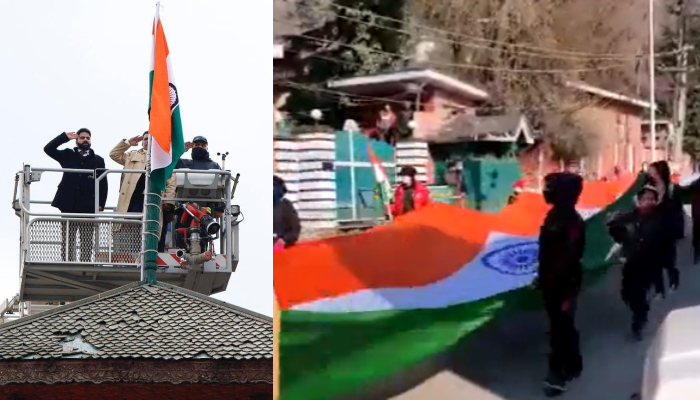
On Wednesday, the state of Jammu and Kashmir celebrated the 73rd Republic Day with the greatest pride as the youth activists who are local Kashmiri Muslims, hoisted the Indian tricolour at the Clock Tower of Lal Chowk in Srinagar. The children in Kashmir also unfurled 30 metres long Indian national flag at the Gupkar Road and walked with it all around the city.

The residences of the Abdullah family and Mufti family are located on the Gupkar Road in Srinagar, and youths in the city unfurled a 30-meter-long Indian national flag on this road and carried it along the road in front of the said residences. This as done on the initiative of local members of the ABVP.

The flag at Lal Chowk was hoisted by Advocate Sajid Yousuf Shah and Socio-Political activist Sahil Bashir Bhat backed by regular security arrangements and assistance. The local Kashmiri people were seen enjoying Republic day today which has also marked the end of Pakistan sponsored separatism in the state.

Journalist Aditya Raj Kaul shared beautiful pictures of tricolor being hoisted at Clock Tower at Lal Chowk of Srinagar today and said that the local Kashmiri Muslims had taken a bold and courageous step. “Love for mother India. Tricolour comes up for the first time at Lalchowk on India’s 73rd Republic Day today”, he tweeted.

In a series of tweets, he further recalled the time not very long ago when the Jammu and Kashmir Police used to arrest anyone who tried to unfurl the Indian tricolour at Lal Chowk under the political direction of some local communal politicians. He added that the day in Srinagar was just normal like in any other city of India and Kashmiris was enjoying their national holiday.

In the meanwhile, the patriotic events today in Kashmir were a big blow to the state PDP chief Mehbooba Mufti who had said that nobody would hold tricolour in Kashmir. Back in 2020, Mufti had demanded the restoration of Jammu and Kashmir’s flag and Article 370 and had said that no one in Kashmir would raise the national flag until Kashmir’s own flag was returned.

She had called the Central Government ‘robbers’ who according to her had stolen constitutionally-guaranteed rights of Kashmiris by revoking the special status of the state and challenging Article 35A of the Constitution. It may be noted that political leaders from Jammu and Kashmir, including Mufti, Farooq Abdullah and his son Omar, were detained for months as part of measures taken by the Centre to prevent a backlash against announcing its decision to withdraw special status under article 370 and bifurcate the former state into two union territories.

Though time has changed for local Kashmiris today, it seems it hasn’t for PDP chief Mehbooba Mufti who settled on utter silence on the occasion of 73rd Republic Day. Omar Abdullah meanwhile tweeted the Constitution of India Preamble and said that words like Secular, Democratic, Justice, Liberty, Equality, Fraternity included in it were not just for 26th January but for all time.

It is worth noting that on the eve of Republic Day, all the special sights of Jammu and Kashmir were illuminated in the tricolours. Clock tower at Lal Chowk, Salal Dam in Reasi district, Jammu Tawi Railway Station were all illuminated in tricolor on the eve of 73rd Republic Day.

Andhra Pradesh: Hindu Vahini members manhandled, detained by Guntur Police for trying to hoist the Tricolour at ‘Jinnah Circle’

0

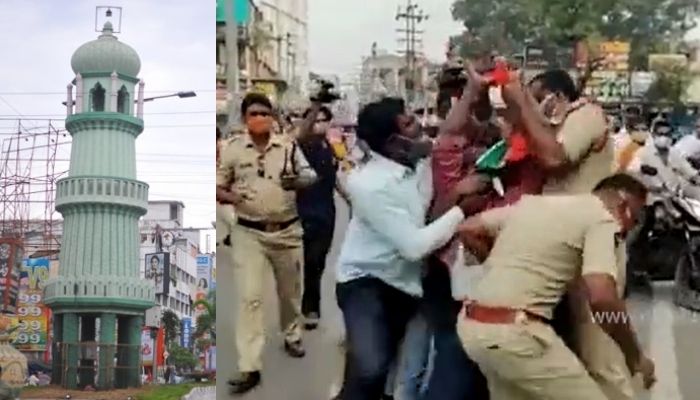
On January 26, as the nation celebrates its Republic Day, The Guntur Police has arrested members of the Hindu Vahini trying to unfurl the Indian National flag at the ‘Jinnah Circle’ in Guntur. The Hindu Vahini had announced to hoist the tricolour on the Jinnah tower in the city, but the Guntur Police has thwarted their attempt while trying to do so.

Tensions rose in the area as some people who tried to climb the Jinnah tower were arrested by the police. In the video that emerged, the Police is seen using force while controlling the people with the tricolour in their hands. It is now learnt that the policee has increased the security cover to the tower and has added a fence to prevent anyone from entering the tower.

The move has sparked strong reactions from netizens. People are questioning the police action against Indian citizens trying to hoist the National Flag on Republic day and are asking why there is still a tower and a circle named after Jinnah in India.

The ‘Jinnah’ tower in Guntur is a one-of-a-kind building named after Mohammed Ali Jinnah, the founder of Pakistan. According to some, it allegedly stands as a ‘symbol of peace and harmony’ in the city. One theory of its origins suggests that Lal Jan Basha, a Telugu Desam Party member felicitated Judaliyaquat Ali Khan, a representative of Jinnah when visited Guntur in the pre-Independence era by building this tower.

However, The state BJP unit leaders have demanded to change the name of this tower saying that it is an insult to the country to have a centre with the name of a ‘traitor’ even after 75 years. BJP national secretary, Y. Satya Kumar and Telangana BJP MLA Raja Singh had earlier demanded renaming the Jinnah tower with APJ Abdul Kalam’s name. Y. Satya Kumar questioned Andhra Pradesh CM Jagan Mohan Reddy over the additional security provided to the tower at a time when a 102-year-old Bhagwan Ram Temple is being demolished in Tenali, Guntur.

BJP leaders from Andhra Pradesh and Telangana have continuously demanded to change the name of the tower by replacing it with that of freedom fighters. The forceful detaining of Hindu activists by Guntur Police to unfurl tricolour on the tower has added fire to the ongoing controversy.

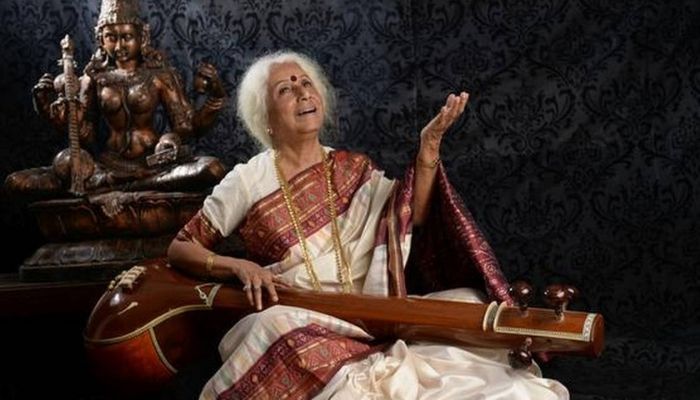
Meet Prabha Atre – The classical vocalist from Kirana Kharana awarded the Padma Vibhushan this year

One of the many ironies of our times is when we wonder about our maestros only when they are conferred upon the highest civilian awards. Vidushi Prabha Atre is one such name, who is one of the only four recipients to be awarded the Padma Vibhushan this year.

Prabha Atre who is revered as ‘Gaan Prbha’ (The sunrise of Music) among Classical aficionados, started from Pune as an aspiring musician of tomorrow. Born in 1932 to Abasaheb and Indirabai Atre, she started taking music lessons from the early age of eight. Later into her serious training as a classical musician, she went on to learn from Pt. Sureshbabu Mane and took the training of Kirana Gharana’s khayal gayaki from Late Vidushi Hirabai Badodekar.

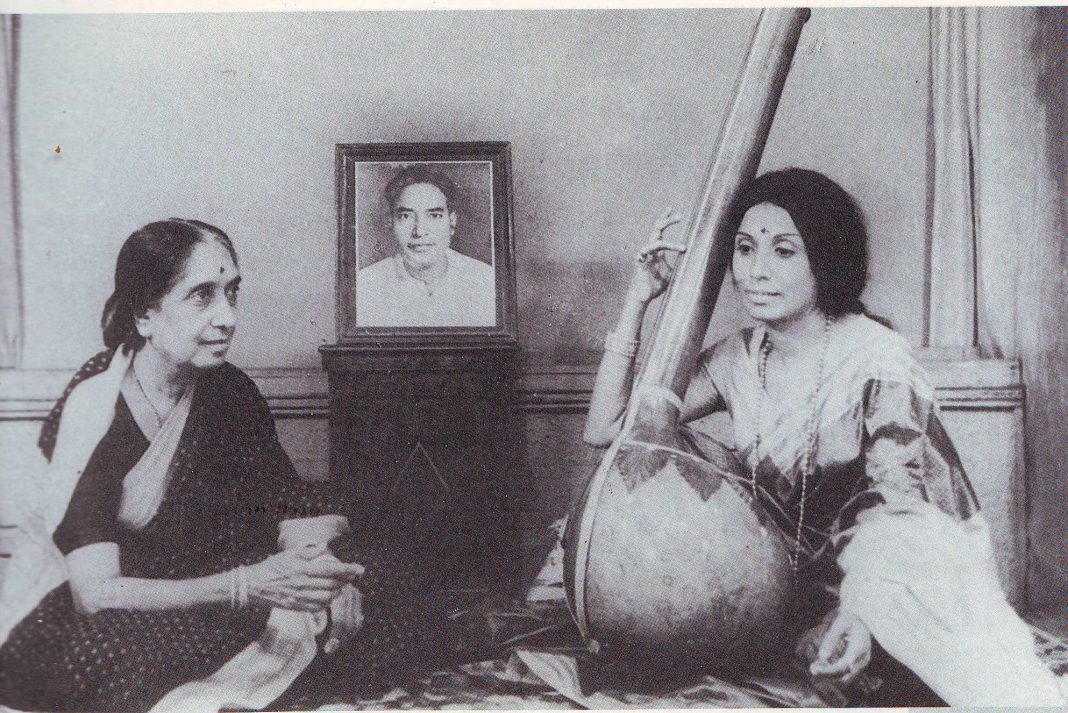
young Prabha Atre (Right) taking lessons from her Guru Vidushi Hirabai Badodekar

However, not many know that she also holds two bachelor’s degrees – one in science from Fergusson College, Pune and the other in Legal studies. While studying music, she also completed her PhD in music on ‘Sargam‘ and the pertained use of the seven notes in Indian Classical music. She started off as a stage artist in Marathi Sangeet Nataks and has played roles in mythological dramas like Sangeet Sanshay Kallol, Maan-Apmaan, Saubhadra and Vidyaharan.

Today, her career spans six decades – which is underlined with accolades achieved through years of struggle and practice. Her versatility as a singer is reflected through her mastery in diverse classical and semi-classical forms including Khayal, Thumri, Dadra, Ghazal, Natyasangeet and Bhajans to name a few. While she did not stop at mastering the traditional Ragas, she did create quite a new – Apurva Kalyan, Darbari Kauns, Ravi Bhairav to her credit. Her style typically involves intricate alaaps, a common feature in the gayaki of the Kirana Gharana.

Vidushi Prabha Atre has played an important role in popularising Indian Classical music by acting as a visiting professor in many western universities including the Rotterdam Conservatory in the Netherlands, the University of California in Los Angeles and the University of Calgary in Alberta, Canada. Her portfolio includes prestigious awards and many memorable performances at leading Classical concerts across the globe. At the age of 91, she is at the fountainhead of the galaxy of classical musicians from the Kirana Gharana. As a singer who is taking the legacy of Bharat Ratna Pt. Bhimsen Joshi ahead, she concludes with her performance at the prestigious Sawai Gandharva Bhimsen Mahotsav every year held in Pune.

On being conferred upon the Padma Vibhushan, the second-highest civilian award of the country this year, she said it is the recognition of her dedication to the craft. While talking to Times of India in Pune, she said, “I am elated. This award is for my gurus, my listeners, and all lovers of Hindustani classical music. Till my last breath on this earth, I want to sing and talk to my listeners, and dedicate my life to music.” She also advised young musicians to persevere and stay on the course while keep practising the art. “You have to have satisfaction in your own work, and not expect awards. They will come along eventually,” she added.

This Republic Day tableau with the water tap on it has netizens thinking of ex-Uttar Pradesh CM, here’s what happened

One of the integral parts of the Republic Day parade is the showcasing of tableaus from various states and ministries. This year too, on the occasion of 73rd Republic Day celebrations, a total of 21 tableaux, 12 of various states and Union Territories, nine ministries was displayed during the Republic Day Parade.

Goa, Maharashtra, Uttar Pradesh, Punjab, Meghalaya, Chhattisgarh, Jammu and Kashmir, Karnataka, Arunachal Pradesh, Uttarakhand, Haryana and Gujarat were the 12 states whose creative tableaus were selected to be featured during the Republic Day celebrations. Besides, tableaus by 9 government ministries were also showcased during the parade.

And quite predictably, the tableaus had the audiences in awe. Even on social media, users started discussing the themes, the creativity, the message the tableaus displayed in the Republic Day celebrations conveyed. Inevitably, the discussion veered in the direction of which was the best tableau on display at the Republic Day parade.

Social Media users declare UP’s tableau as best, share picture of the tableau with water tap on it

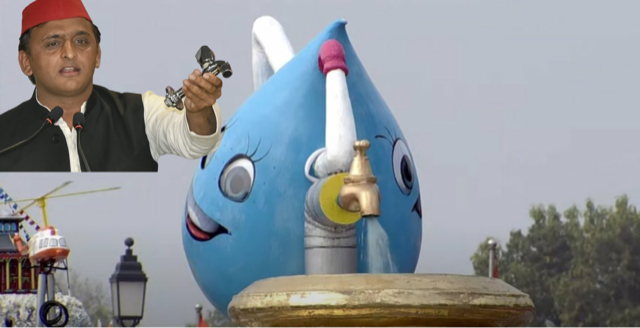
A large number of social media users responded to the question stating that they found Uttar Pradesh’s tableau more than others and shared the picture of the tableau that showed water flowing from a tap placed above a container.

Tap reminds people of former UP chief minister Akhilesh Yadav, referred by some as ‘tonti-chor’

The users claimed it was a tableau by Uttar Pradesh, taking a sly dig at former chief minister Akhilesh Yadav, who came to be known as ‘tonti-chor’ after taps(tontis) were found missing from his residence after he vacated the government-allotted bungalow in 2018.

In May 2018, after having a head-on fight with the state government over the allotted residence, Yadav was finally ordered by the Supreme Court to vacant the place and hand over the keys to the estate department. The following month, former-CM Akhilesh Yadav vacated his government allotted residence.

When the government officials entered his house later, they found it in a disarray, with imported tiles, air conditioners, centrally air conditioner fitting, electric switchboards and other items missing from the house.

All those expensive items that were missing from the government accommodation took a backside as the officials reported taps, aka tonti, were also missing from the bathrooms. Rest all “stolen items” were forgotten but the alleged petty act of “taking taps” stuck with the former CM. This was the point he earned the monicker ‘tonti chor’ that is still being used against him.

The existence of a water tap or tonti at the front section of the tableau instantly reminded social media users of former UP CM Akhilesh Yadav, who had earned the sobriquet of ‘tonti-chor’ after the government accommodation he was forced to vacate was found to have been stripped of water taps among other expensive embellishments.

Water tap Tableau not by Uttar Pradesh but by Jal Ministry

While the portrayal of tap instantly reminded netizens of Akhilesh Yadav, the tableau was not commissioned by the Uttar Pradesh government. In fact, it was Jal Ministry’s tableau that depicted the government’s achievement of providing clean tap water to homes of people living in Ladakh at an altitude of more than 13,000 feet in harsh winters.

The droplet leaning on the tap at the front represented the achievement of ‘Har Ghar Jal’ and community ownership of the village water supply. The middle section displayed the elation of the community receiving clean tap water in the comfort of their homes, schools and anganwadies. And the rear part of the tableau signified the challenging environment in freezing Ladakh, where providing clean water becomes all the more difficult because of lower temperatures and the inoperability of supply lines.

On the other hand, the tableau of Uttar Pradesh displayed the achievements scored by the state through skill development and employment through One District One Product. Development in the Kashi Vishwanath corridor was also exhibited.

Karnataka: Man files complaint against in-laws for forcing him to convert to Christianity

0

A man identified as Marappa had filed a complaint against his father-in-law Vasanthkumar and other relatives for allegedly forcing him to convert to Christianity. The complainant is a resident of Budga Jangam Colony in Aravind Nagar near Hospet, Hosadurga, district Chitradurga, Karnataka. In the complaint, Marappa alleged that his in-laws are not allowing him to meet his wife and newborn baby.

He further added his wife’s family members threatened, blackmailed and assaulted him to convert him to Christianity. Along with his father-in-law, Marappa named Ramachandrappa, his wife’s grandfather, relatives Sudhakar, Manjunath, Sankappa in his complaint.

As per reports, Marappa got married on July 6, 2020. He alleged in his complaint that while getting married, he was forced to take a dip in holy water, and it was declared he was then converted to Christianity. He further alleged the accused torn and burnt Hindu Gods’ photos and asked him not to worship Hindu Gods and Goddesses. Marappa said in the complaint that the accused termed Hindu Goddesses Sunklamma, Maramma, Durgamma as “evils”, and had told him that if he worshipped them, he would be damned to hell.

As per a Times of India report, Marappa and his family converted back to Hinduism only a month after the wedding as they did not believe in Christianity. “My father also told my wife to leave Christianity and come back home within three months. But her father did not allow her to get back to Hinduism,” he said.

When Sarala, Marappa’s wife, was pregnant, he had sent her to her parents’ house on December 2, 2021. He came to know about the birth of his baby from others. When his family members, including his brothers Doddahusseni, Sana Hussaini, Karthik, Chandru, met the newborn baby, they were abused by the accused. They were not allowed to enter the house, the man has alleged.

The Police said Marappa was told he could see his newborn child and wife only if he started following Christianity. When his brothers questioned the accused, they were allegedly assaulted. Marappa has urged the Police to initiate action against his in-laws for hurting his religious sentiments and ensure that his wife and newborn are reunited with him.

Hyderabad Karnataka Alemari (nomadic) Budga Jangam Jagruthi Samithi and local BJP MLA Gulihatty D. Shekhar have demanded justice. The investigation in the case is underway.

Notably, the issue of religious conversion has been raised in Karnataka state Assembly was BJP MLA Sudhakar, after which Anti-Conversion Bill was introduced. MLA G Shekhar had stated in the assembly that his own mother was converted to Christianity by missionaries. However, some religious leaders, especially those belonging to Christianity, have been opposing the bill.

OpIndia tried reaching out to Police and MLA Shekhar for more details into the case but could not connect.

‘I feel humiliated, tired and dejected’: Goa TMC leader Yatish Naik resigns from the party ahead of the polls

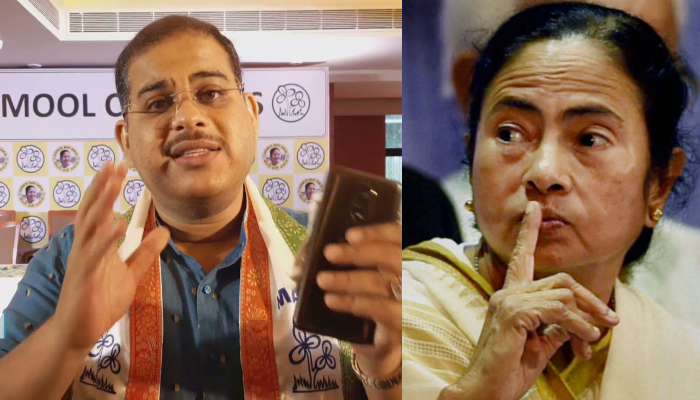
Ahead of the Goa state assembly elections, Yatish Naik, general secretary of the state Trinamool Congress (TMC), resigned from the party alleging that the TMC had promised him a seat to contest from Saligao constituency but was left out of the first three lists of party candidates.

In his resignation letter addressed to the Goa TMC President, Naik said that he was not interested in witnessing the manner in which the party was functioning in the state. “I find no good reason to continue being a member of the party. I feel humiliated, tired and dejected for having been made to go through all this”, the letter added.

Naik added that he was let down by the party by including the names of people hopping from other parties at the last minute. This is simply not acceptable, he wrote. He also stated that his principles were important and that he would stay aloof from the party at least till the elections.

It is pertinent to note that Naik was one of the earliest nine members who had joined TMC in the presence of Mamata Banerjee in Kolkata along with ex-Chief Minister Luizinho Falerio. Yesterday, the Goa TMC party announced its third list of candidates nominating former Congressman Bholanath Ghadi Sakhalkar and silently sidelining Naik from Saligao constituency for the upcoming Goa Assembly Elections, 2022.

The Mamata Banerjee-led party has declared a total of 24 candidates for the upcoming polls. It had declared its first list on January 19 and the second one on January 22. According to the reports, the party has nominated Rajya Sabha MP Luizinho Faleiro from Fatorda and former Goa Forward Party (GFP) working president Kiran Kandolkar from Aldona instead of Tivim. Meanwhile, Jagdish Bhobe, who switched allegiance from GFP to the TMC after being denied a ticket from St. Andre, has also found a place on the list.

The TMC has further given the opportunity to former Congressman Saifulla Khan to contest from the Vasco Assembly seat, whereas Tarak Arolkar, who recently quit the Congress to join the TMC, has been given a ticket from Mapusa Assembly constituency.

The TMC party is fighting the polls for the 40 member assembly in alliance with the Maharashtrawadi Gomantak Party (MGP). The election for the 40 seats will take place on February 14, and the votes will be counted on March 10.

PM Modi’s warm farewell to Virat, the Commandant’s Charger from President’s Bodyguard who is retiring this year

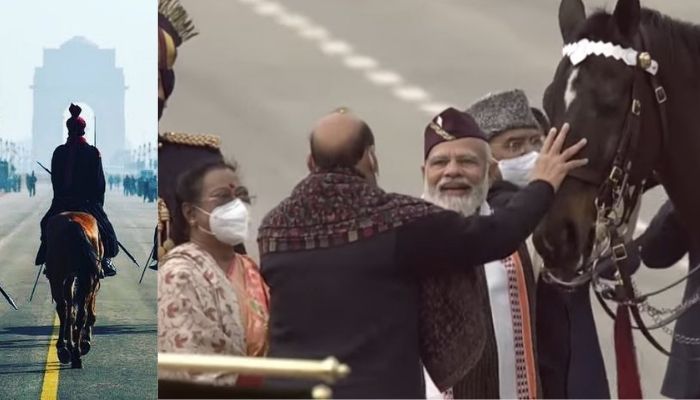
Soon after the Republic Day parade concluded, the visuals of PM Narendra Modi petting a horse have started doing rounds on social media. With PM Modi is also seen Defence Minister Rajnath Singh while they were later joined by the President of India Ram Nath Kovind and the First Lady Savita Kovind in adoring the retiring horse.

The Republic Day Parade ended with full colour and fervour on the newly refurbished Rajpath. While biding the farewell to the President of India who graced the occasion, PM Modi was introduced to Virat, a horse with the President’s Bodyguard who is about to retire from its exemplary services.

As the contingent of the President’s Bodyguard astride on the horses came to receive the President, PM Modi, Raksha Mantri Rajnath Singh and the President himself were seen warmly greeting and petting the horse. This was the last Republic Day service for Virat, as the horse retires from its duty this year.

Virat – The Commandent’s charger with the President’s Bodyguard

Virat, a Hanoverian breed horse was inducted to the President’s Bodyguard (PBG) on September 12, 2000. He has been the Commandant’s Charger for over a decade and was very popular among spectators and even visiting foreign dignitaries. For his exemplary services, Virat was awarded the Chief of the Army Staff Commendation on the eve of Army Day on January 15 this year.

Virat had participated in 13 Republic Day parades so far, as per reports.

Officials while bidding a farewell to the old horse have praised it for the abilities it showcased over the years. Within a short span of time, Virat rose to become the most trustworthy Parade Horse and perpetually graced the Republic Day Parades and the Beating the Retreat ceremonies held every year.

The warm gesture by political leaders to show their love to Virat has sparked gleeful reactions from people on Twitter. While the informal move has yet again underlined what an important role the trained animals play in guarding the nation.

The President’s Bodyguard

The President’s Bodyguard (PBG) is an elite cavalry regiment of the Indian Army. The regiment is based in the Rashtrapati Bhavan and the recruited personnel are all paratroopers. While their role is ceremonial during peace, they are trained to perform reconnaissance and work as parachute pathfinders during the war. The Indian Army is one of the few modern forces in the world that still have active cavalry units. The PBG, the 61 Cavalry Regiment BSF camel regiment are the operational cavalry units of the Indian security forces.

The PBG is the oldest regiment of the Indian Amry. It is the successor of the Governor General’s Bodyguards under the British Raj and it was first raised by Governor-General Warren Hastings in 1773. In 1950, with the formation of the Indian Republic, it was formally named the President’s Bodyguards.