Home Blog Page 3596

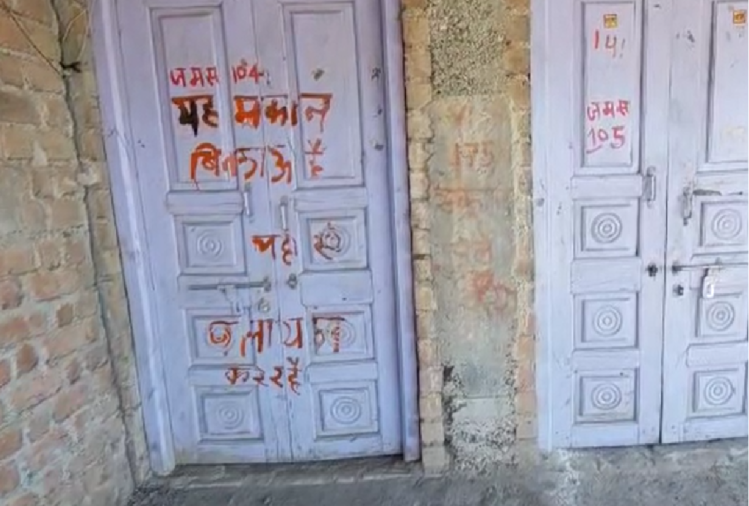
Madhya Pradesh: Hindus in Ratlam put up ‘on sale’ signs outside their houses fearing persecution from Muslims, Govt takes cognisance

Something akin to Uttar Pradesh’s Kairana, where Hindus were forced to leave their homes over communal violence, is underway at a village in Madhya Pradesh’s Ratlam district. Hindus in the village have threatened to leave their homes alleging threats from Muslim community and inaction from the local administration.

The Hindu villagers have alleged that they are living under constant fear of persecution from a particular community, presumably Muslims, and have submitted a memorandum to the district collector on Tuesday, warning them that they would leave the village of Surana in three days if the administration fails to address their concern.

Surana, a village located under the Ratlam district, is a small hamlet with a population of close to 2,200. Over 60 per cent of people in the village are Muslims while the remaining 40 per cent are Hindus. A group of Hindus who had reached the office of SDM Abhishek Gehlot on Tuesday, told media that communal harmony prevailed in their village for year but recently, tensions have flared following excesses from members of the other community.

The two communities lived in a calm and peaceful manner for decades, but of late, attacks and abuse of Hindu families have risen dramatically, the locals told media. They have alleged that Hindus are being browbeaten and bullied with the registration of fake FIRs against them.

As tensions grip the region, the Hindus have put up ‘on sale’ signboards outside their houses, realising that walking away from their life’s possessions is better than dealing with an intractable adversary and an indifferent administration.

The Police had recently organised a meeting in the village between the two communities. It said the things are under control, though they have filed a complaint lodged by one Mukesh, who had alleged thrashing by some locals. During the meeting, Hindus had accused Muslim natives of being involved in illegal acts. They accused police of registering false cases against them and slapping them with NSA.

MP govt takes cognisance of Hindus in Ratlam

In their memorandum addressed to chief minister, the villagers had sought land tracts somewhere else as they did not wish to live in their native village, anymore.

On Wednesday, state home minister Narottam Mishra took cognizance of the reports and sought a report from the district officers. “None will be allowed to spread terror and we will take the required action,” said Mishra.

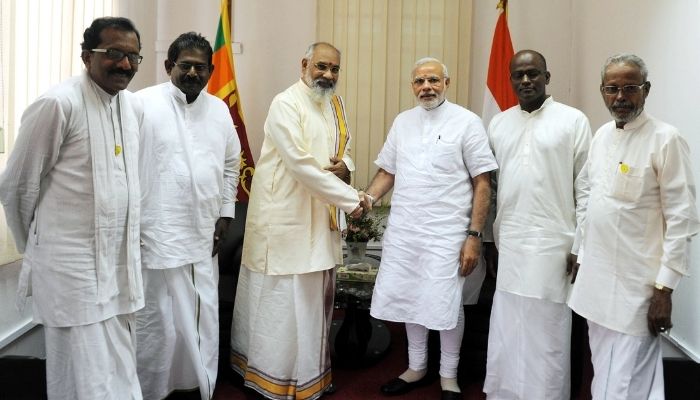
Tamil MPs of Sri Lanka write to PM Modi for seeking intervention in implementing the 13th amendment of Sri Lankan constitution

Tamil Politicians from Sri Lanka’s Northern and Eastern Provinces have written a letter to Indian Prime Minister Narendra Modi over seeking his intervention in the implementation of the 13th Amendment to the Sri Lankan Constitution. On Tuesday, the delegation of politicians met with the Indian High Commissioner in Colombo Gopal Baglay and handed over the letter to seek India’s help in safeguarding Tamil interests in the country.

In a seven-page letter, the leaders have asked for India’s help in ensuring unfulfilled promises made by the Colombo government while implementing the 13th amendment and to seek a long-term political solution in this regard. The amendment highlights rights given to the Tamil community and increases their influence in the politics of the region. Led by senior Tamil leader of the Tamil National Alliance (TNA) R. Sampanthan, the letter was signed by influential constituent party leaders including Mavai Senathiraja, Dharmalingam Sithadthan, and Selvam Adaikalanathan, former Northern Province Chief Minister CV Wigneswaran and former MP Suresh Premachandran.

The MPs have appealed to PM Modi to urge the Sri Lankan govt to keep its promises to fully implement the provisions of the 13th Amendment to the Constitution, which ensures a measure of power devolution. The letter also requests India to put pressure to ensure implementation of “the clear commitments made by all sections of government from 1987 onwards and enable the Tamil speaking peoples to live with dignity, self-respect, peace and security in the areas of their historic habitation, exercising their right to self-determination within the framework of a united, undivided country.”

The letter to the Indian PM also highlighted some of the shortcomings in the 13th amendment, and said that the efforts by the Sri Lankan govt should go beyond it. Saying that some in the Tamil community say there are limitations in the amendment, the letter says, “every effort made thereafter moved in the direction of surpassing the 13th Amendment towards a federal structure.”

What is the 13th Ammendment to the Consitution of Sri Lanka?

In 1987, The Indo-Sri Lanka Accord was signed between then Prime Ministers Rajiv Gandhi and J. R. Jayewardene with a view to tame the insurgency led by LTTE. The resolution between the two countries led to the drafting of the 13th Amendment to the Srilankan Constitution paving more power to the hands of Tamilians in the region. Since then, through the accord, India has repeatedly affirmed its position to secure and preserve the rights of the Tamil linguistic minority in Sri Lanka. The amendment also confirms Tamil as an official language of the Island nation alongside Sinhalese, with English as a ‘link language’.

It was also the result of the 13th amendment that the Northern and Eastern regions got independent provincial councils. However, the Hardliners among Sinhala politicians have called for the complete abolition of the Provincial Council system. Moreover, several questions have been raised earlier over the practicality of the amendment throughout the country. “There have been a lot of promises made on the Tamil national question from time to time. Ours is a request to implement them”, MA Sumanthiran, TNA leader said.

The Letter also highlighted interventions made by the Indian leadership at various moments in this issue, including PM Modi’s speech in the Sri Lankan Parliament in 2015 pressing on the issue of ‘co-operative federalism’. The letter now requests PM Modi to “Ensure Tamil speaking people live with dignity, self-respect, peace and security in the areas of their natural habitation, exercising the right to self-determination within the framework of a united undivided country”

In an interesting development, the move comes barely a week after India extended a USD 900 million loan to Colombo to build up its depleted foreign reserves while the country grapples with a shortage of essential commodities currently.

It is also not the first time that Lankan leaders have asked India to intervene on the Tamil issue. In 2016, The former Chief Minister of Sri Lanka’s Northern Province, C.V. Wigneswaran expressed confidence that India would intervene to set up a federal government in the northern and eastern provinces of Sri Lanka.

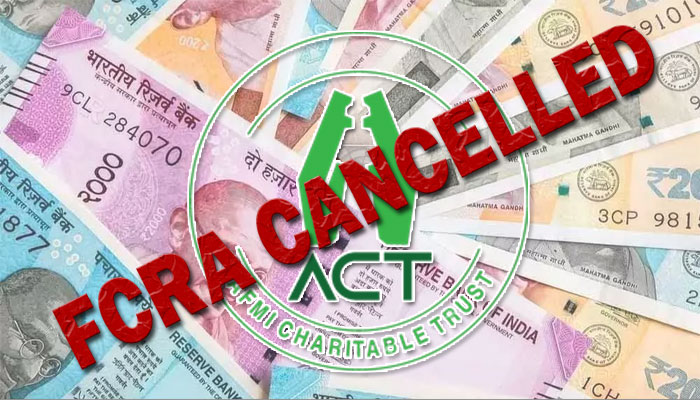
Vadodara: FCRA license of NGO AFMI Charitable Trust cancelled for illegal mass conversion, funding anti-CAA protests using foreign funds

Ministry of Home Affairs (MHA) revoked the FCRA (Foreign Contribution Regulation Act) license of the Vadodara-based American Federation of Muslims Of Indian Origin (AFMI) in December 2021. The action was taken by MHA based on a report sent by the Vadodara Police in which it was alleged that the NGO had been siphoning off foreign funds for “illegal Islamic activities”. It was first reported in July 2021 that AFMI had allegedly used the foreign funds received mainly from the United Kingdom for mass conversion practices.

The Vadodara Police has also begun the process of issuing a red corner notice against two of the alleged benefactors of the NGO named Abdullah Fefdawala and Mustafa Thanawala. These two had sent hawala funds to Salahuddin Sheikh, the managing trustee of the NGO, between 2016 and 2021.

In July 2021, a Special Investigation Team (SIT) of the Vadodara Police initiated a probe against the NGO for alleged misuse of foreign funds that came to light following a case of illegal conversions against Sheikh booked by Anti-Terrorist Squad of Uttar Pradesh Police. During the investigation, SIT found that the NGO siphoned off close to 19 crores of the foreign funds received mainly from Al-Falah Trust of the UK along with some other benefactors.

During the investigation, SIT summoned Fefdawala of Al-Falah Trust. He was co-accused in the case of hawala transactions of about Rs 60 crore routed via Dubai. Another accused Thanawala from Dubai was also summoned. Neither of them responded to the summons, after which the Police initiated the process of issuing a red corner notice.

DS Chauhan, Assistant Vadodara city Commissioner of Police, Crime, was quoted by the Indian Express saying that the Police had submitted the report in the case related to the misuse of foreign funds to the Central Government. He said, “We have informed the MHA as well as the Intelligence Bureau (IB) about the investigation findings into the misuse of the foreign funds that were meant for the specific purpose of the trust. However, the money was routed to fund various Islamic activities, including illegal religious conversions, construction of mosques, funding individuals for various activities in Kashmir and the areas of the Indo-Nepal border… The IB also must have submitted a second report to the MHA, as is the process, which could have led to the cancellation of their FCRA Registration.”

He further added, “The two accused did not respond to the summons. They have also disabled their email addresses and phone numbers… Our investigation has revealed that Sheikh also facilitated money to two persons in Bharuch district to execute illegal religious conversions to Islam.”

On November 24, SIT filed a 1,860-page charge sheet in the case. They named Fefdawala and Thanawala as two wanted accused in the case and mentioned numerous activities of AFMI Trust where the NGO misused the funds received under FCRA. The charge sheet said AFMI Trust, in collusion with IH Kasuwala Firm, siphoned Rs 1.65 crore using fake invoices. It added, “AFMI Trust knowingly presented accounts of expenditure of Rs 94.65 lakh (of the Rs 1.65 crore) to the government agencies.”

Involvement in Delhi Riots of 2020

The NGO has also been accused of providing funds to support the Delhi Riots of 2020 and CAA protests along with other criminal activities aimed at strengthening Islam. The Police alleged the NGO was involved in illegal conversions of people of the Hindu community to Islam.

The Uttar Pradesh mass conversion racket

The Uttar Pradesh police filed a case in June 2020 against Umar Gautam of Dawah Centre. Gautam was accused of the illegal conversion of a Hindu girl. During the investigation, it was revealed that Umar Gautam, who himself was a convert, ran a racket to convert Hindus to Islam. He lured poor and marginalized people in the Hindu community and did not even spare hearing and speech impaired students of an institute in Noida.

The Bharuch mass conversion case

On November 15 2021, a case was registered at Amod Police Station Part A under Gujarat Freedom of Religion Act under sections 4, 5, 4-G along with Indian Penal Code section 120 (B), 153 (B) (C), 506(2), 153A (1), 295 (K), 466, 467, 468, 471, Atrocities Act section 3 (2) (5-a), 3 (2)(5) and Information Technology Act, 2000 section 84-C against nine accused. The nine accused were: Shabbir Bakerywala (Amod), Samaj Bakerywala (Amod), Abdul Aziz Patel (Kankaria, Amod), Yusuf Patel (Kankaria, Amod), Ayub Barkat Patel (Kankaria, Amod), Hasan Tisli (Achhod, Amod), Fefdawala Haji Abdullah (Nabipur, currently, London, UK), Ismail Achhodwala alias Delawala (maulvi) (Achhod, Amod) and Ibrahim Patel (Kankaria, Amod).

As per the FIR filed, the accused had promised jobs and money to Hindu Vasava tribal families in the area and got them to convert to Islam in 2018. The complainant has accused them of a nationwide racket of religious conversion and alleged that they were given death threats if they complained against the religious conversion. The accused had threatened that they are well connected from Kashmir to Pakistan, the FIR states.

In December 2020, Bharuch Police issued an arrest warrant against Abdulsamad Mohammad alias Dawood Suleiman Patel (Bakerywala), Shabbir Mohammad Patel (Bakerywala), Hasan Isha Patel (Hasan Titli), Ismail Yakub alias Ismail Achhodwala (maulvi), all residents of Amod as well as Abdullah Aadam Fefdawala from Nabipur, Bharuch, who is currently residing in London, UK.

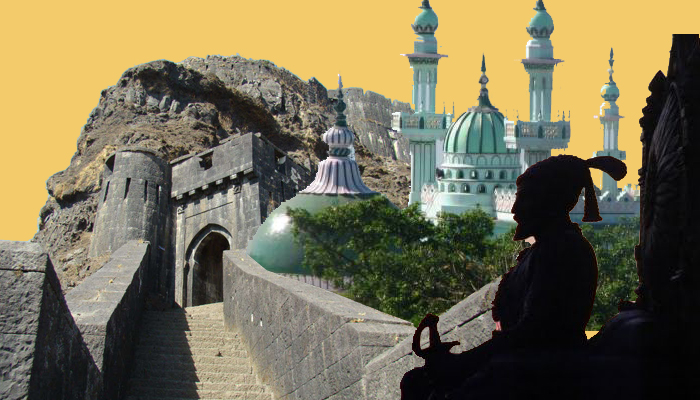
How 21st-century invaders are capturing Chhatrapati Shivaji’s forts the way even Mughals didn’t

To be on the wrong side of history is a choice – more so when the attempts to reclaim an invader identity are unapologetic. Be it inventing fictional military commanders in his cavalry to claiming false religious associations with forts built by him, the attempts to paint Chhatrapati Shivaji a ‘secular’ king have come a long way. For the unabashed Chhatrapati of the Hindavi Swarajya that he was, Shivaji Maharaj was no bigot.

Unlike his Islamic contemporaries, Chhatrapati Shivaji treated his subjects equally and became one of the most revered rulers in the history of Indian Civilization. While he remains equally relevant in the present political discourse, nefarious attempts to appropriate him for personal political gains or scoring religious goals should be called out.

Recently, a leaflet calling out celebration of ‘Urus Sharif’ for a Sufi Saint on Lohagad Fort situated near Pune, made its way on social media. Starting with the ‘Sarv Dharm Samabhav’ rhetoric, the poster asked people to participate in the celebration of ‘Urus’ for some ‘Umar Shahwali Baba’ whose tomb supposedly lies on the Lohagad fort, scheduled on January 17. Flagging the event, Malhar Pandey, a resident of Pune tweeted about the sudden urge to hold a celebration for the bygone ‘saint’ with no recent cultural relevance or any historical identification.

Malhar Pandey, a history buff and President of social organization Zhunj raised some serious concerns about the political ploy to reclaim obscure ideals in order to highlight distinct Muslim identity in Maratha history and heritage – often devoid of facts. In his tweet, he said, “There is no contemporary evidence which shows that there existed a mosque on Lohagad fort during Chhatrapati Shivaji Maharaj’s time or Sambhaji Maharaja’s time. Under the name of secularism, the Muslims have encroached many forts before, with help of politicians.”

Talking to OpIndia about the incident, he mentioned that any such celebration of Urs has no historical or cultural relevance and is an altogether new fabrication. “There is no evidence of any celebration of such event during Chhatrapati Shivaji Maharaj’s time or at any point when the Lohagad fort was in the control of the Marathas until 1818. Also, it is impossible to suspect any such happening after the Marathas, as Lohagad was under strict British regulation until the 20th century” he added.

Pandey, who hails from Pune also suspects political intent in order to charge up Muslim sentiments behind this act. According to the Poster, Haji Hussain Baba Sheikh, a veteran Shivsena leader is the chairman of this event while NCP MLA Sunil Shelke from Maval is the guest invitee.

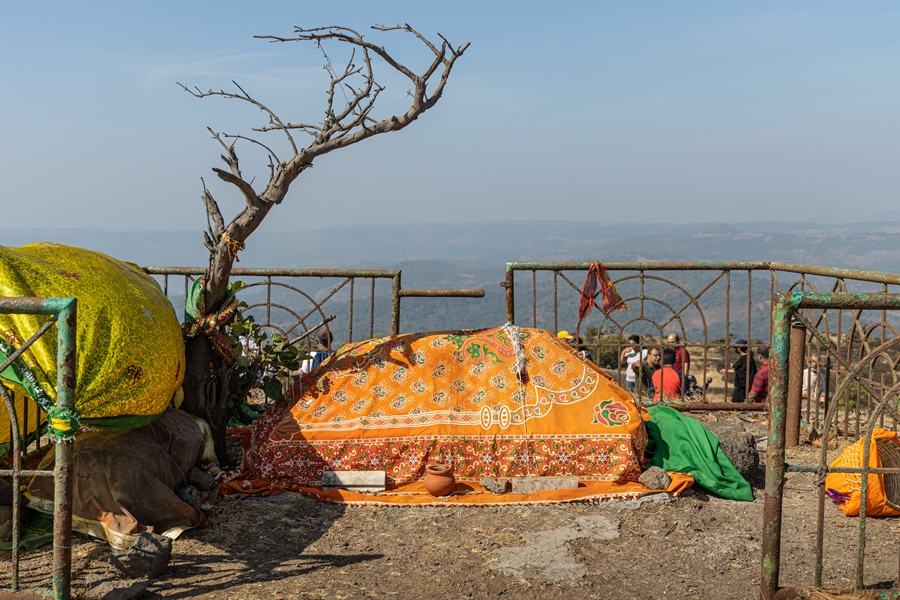
Alleged tomb of Umar Shahwali Avliya at Lohagad. Image Courtesy: Kevin Standage Photography

We went a little ahead to trace the roots of ‘Umar Shahwali Baba’- if at all he existed. Pune based historian Ashutosh Potnis found his mention in the Bombay state gazetteer of Pune from 1889. He added, “Sheikh Umar Avlia was part of Sufi saints who arrived in the Deccan from Arabia in the 14th century. With the support of local sultans, he settled down at Lohagad. Sheikh Umar Shahwali Baba – The Sufi Saint who is being venerated today is said to have destroyed the temple of a local deity situated on the fort when he made it his base. Adds Potnis, “The Bombay Gazetteer mentions that a local folk deity was desecrated by him. The site of Umar Shahwali’s tomb is likely where the shrine of this folk diety once stood.”

Moreover, Lohagad being a protected monument under ASI, the archaeological department at Bombay has already denied permission for conduction of any religious function there. If at all, venerating an iconoclast can be morally downright for some, the recent phenomenon also violates the legal framework for heritage laid down by the ASI. Shah’s jerkwater tomb stayed silently for years and while he died in irrelevance, nobody was aware of his questionable past. One fine day, a group of people start celebrating him to make religious identities to be associated with Lohagad at par with each other. It seems the celebration is more of a political exercise than a spiritual one.

The Lohagad fort case stands out, yet is not an isolated one. Several forts in Maharashtra, who have failed to get attention from authorities for restoration have come under the radar of this religious expansionism. Last week, Yuvraj Sambhaji of Kolhapur wrote to the Archeological Survey of India to flag the attempts to build a mosque on Fort Raigad – which once stood as the capital of Hindavi Swarajya.

This came after a video of miscreants attempting to move stones in order to raise a structure at the Madari Morcha of Raigad emerged. Later, it was found that a part of the precinct was already painted, and a ‘chadar’ was laid in an attempt to assign Muslim identity to an already existing structure. “It is unfortunate that illegal construction activities are allowed to go on in an iconic place like the Raigad Fort,” Sambhaji wrote in the letter.

Another Fort, Kille Vishalgad lies in abysmal neglect while also withstanding the legacy of commander Bajiprabhu Deshpande whose jerkwater Samadhi near the Pavankhind lies in neglect. Even though, The state government has made sure that funds are raised for the illegally encroached Dargah of Baba Rehan standing in Reinforced concrete. Instead of clamping down on the continued illegal encroachment of the Dargah, the government has sanctioned funds for building pavements along the road to the structure instead.

All of this, when the traditional temples on the fort remain to be in a state of absolute decay. Local historians say Malik Rehan once attacked Vishalgad in a siege and died on the battlefield. With unapologetic religious undertones, Baba Rehan Dargah stands atop Vishalgad while the legacy of Chhatrapati Shivaji’s enemy is being reclaimed on his own property.

The above cases are mere eyeopeners to how determined encroachments are being made to claim unjust stakes in heritage. Beyond Historical narratives, some Islamists have gone forward to enroach on-ground heritage sites out of no facts, context and participation in history. In February last year, an attempt to rename the Fort of Vandangad in Satara was done by the state forest department as ‘Pir Vandangad’ (Pir suggesting Muslim saint). While the fort lies in a restricted forest area, it too has been encroached by the Abdal Sahab Dargah Trust.

The Hindu Janajagruti Samiti had criticised this move while the issue of renaming the fort has now been resolved. Recently, a panel of history aficionados comprising of Dr Vinay Sahastrabuddhe (Director, ICCR), Sunil Deodhar (National Secy, BJP) and Vaibhav Dange have also submitted a memorandum to prevent illegal construction activities on many historic forts to the Minister of State for Culture, Arjun Ram Meghwal.

While conservation of our built heritage continues to be a challenge, the battle of illegal encroachments is a violation of the rules-based order. The attempts of encroachments over Chattrapati Shivaji’s heritage reveal the brazen tactics adopted by the Islamists of late. Moreover, the inventive ways employed to appropriate places of cultural import underscores the challenges in safeguarding our heritage. As if the falsification of history through bastardised narratives was not enough, 21st-century invaders have now claimed a direct stake in the prized heritage of Hindus itself. It is a message to the Hindus that invasions and conquests would continue as Islamists buckle down on usurping Chhatrapati Shivaji’s forts in ways even Mughals didn’t.

4-yr-old Swarnav tracked down by Pune Police, was kidnapped last week from Balewadi

0

The Pune City Police has been successful in tracking down a 4-year-old boy after a week-long search operation in the city. Swarnav Chavan aka Duggu was abducted from the Balewadi area on the morning of January 11 while he was on his way to a daycare centre.

Last week, social media platforms were abuzz with a missing notice of Swarnav Satish Chavan (4 yrs) being kidnapped near the Balewadi Police station. It was told that Swarnav was on his way to his daycare centre with his 12-year-old cousin. CCTV footage was found of a man carrying Swarnav on his two-wheeler. His parents Dr Satish and Prachi Chavan had lodged a complaint about his search in the Chatushrungi Police Station.

Pune Police charted out a week-long search operation within the city. Many task forces were created for the search of Swarnav. It is being reported that over 300 policemen were involved in his search and special confidentiality was maintained throughout.

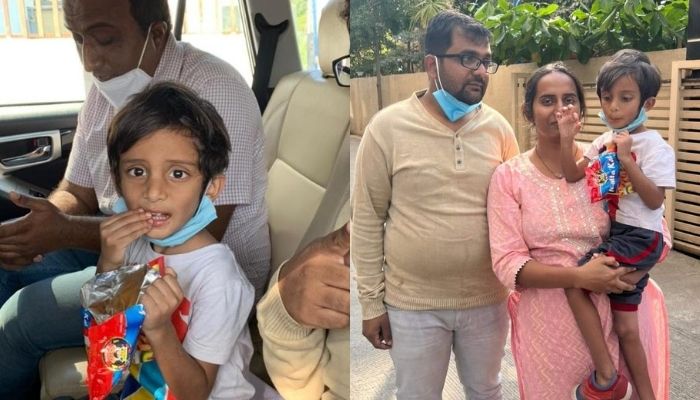
Today, the search team was successful in locating Swarnav at Punawale near Wakad. According to Punekar News, The boy was dropped by the kidnapper with a local labourer near a Private institution today. The labourer was asked to look after the boy until the kidnapper came back. Eventually, the kidnapper never returned and Swaranv started crying. After finding a mobile phone number in his bag, the labourer dialled Dr Chavan (Swarnav’s father) who then contacted the police. The Police team reached the spot and handed over Swarnav to his parents.

Swarnav’s Father, Dr Satish Chavan had earlier shared appeals on social media seeking any information regarding his missing child. Social organizations, Whatsapp groups, influencers and Politicians were keeping an eye on the case by sharing SOS calls of Swarnav’s missing note on social media. Today, Siddharth Shirole, BJP MLA from Pune had shared the news of the successful tracking of Swaranav by Police on Twitter.

The Police Police has informed that Swarnav who was kidnapped from Balewade High Street has been found today and appears to be in good health.

The investigation to trace the kidnapper is on and the Police has refused to reveal any further details.

Congress model of ‘farm loan waiver’: Farmland in Rajasthan auctioned after farmer died without repaying loan, BJP slams Rahul Gandhi

0

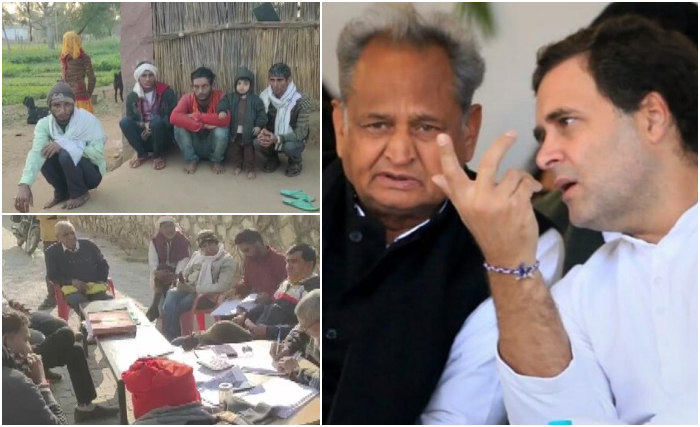
On Wednesday, a deceased farmer’s land in Dausa, Rajasthan was auctioned two and a half months after his death, for non-payment of the loan amount. The farmer’s family reportedly had asked for a reasonable time span to repay the loan of Rs 7 lakh but was denied by the bank. About 15 bigha 2 biswa land of the farmer was auctioned for to Rs 46 lakh in Ramgarh Pachwara village of Dausa.

According to the reports, Kajod Meena, resident of Jamun Ki Dhani of Dausa district had taken a loan of Rs 3.5 lakh under the Kisan Credit Card (KCC) from the Rajasthan Marudhara Gramin Bank of Ramgarh Pachwara. The farmer could not pay the loan for several years and after 2017 the outstanding loan amount accumulated to more than Rs 7 lakh including interest and penalties.

The bank issued notices to sons Rajulal and Pappulal after father Kajod Meena died last year. Due to the poor financial condition of the family, the sons also could not repay the KCC loan and the bank decided to order for attachment of the land.

Mithlesh Meena from Ramgarh Pachwara SDM office confirmed the development saying that ‘the bank had called the farmer’s family for settlement but they didn’t appear, so as per law their land was auctioned’. It is reported that the family of the farmers had remained hopeful with the promise of loan waiver made by the government a couple of years ago.

It is pertinent to note that in 2018, Rahul Gandhi in Jaipur had promised farm loan waiver within 10 days if Congress was voted to power. He specifically also mentioned that Congress was not making false promises and that it had already implemented the same in Punjab and Karnataka. He had also attacked PM Modi for writing off Rs 3.5 lakh crores of 15 industrialists and had ‘confusingly’ assumed that the loans were ‘waived off’.

BJP Spokesperson Shehzad Poonawalla slammed the Congress Government for betraying the farmers and snatching away their lands. “On one hand Uttar Pradesh govt has waived loans of 36,000 cr of lakhs of farmers but Rahul Gandhi who promised loan waiver in Rajasthan in ten days publicly has betrayed farmers and today their lands are being snatched away while Gehlot govt looks on! KISAN KI DUSHMAN CONGRESS”, he tweeted.

Misinformation about loans ‘written off’-

Rahul Gandhi has always had difficulty in understanding the difference between loans being ‘written off’ and loans being ‘waived off’. In December 2020, Rahul Gandhi had claimed that the Modi government had ‘waived off’ Rs 2,37,206 crore loan of the industrialists. According to him, the huge amount, which was ‘waive-off’ by the government, could have been provided for 11 crore families in the difficult time of COVID, each with Rs 20,000. In the financial year 2019-2020, scheduled commercial banks, both private and public sector banks, in an effort to restructure the stressed assets, had reportedly ‘written-off’ Rs 2,37,206 crores of loans.

Also, many times in the past, Gandhi has repeated the lie. According to him, the Modi government has in his tenure waived loans of 5.50 lakh crore, 3.50 lakh crore, 3.00 lakh crore. 2.50 lakh crore, 1.50 lakh crore, 1.40 lakh crore, 1.30 lakh crore, 1.10 lakh crore owed by richest industrialists.

In November 2016, Rahul Gandhi had spread lies and claimed that the Modi government had then waived off loans worth Rs 1.1 lakh crores of big industrialists. During campaigning for Gujarat assembly polls in 2017, Rahul Gandhi repeated the same trite, he inexplicably increased this figure by 20,000 Crores to Rs 1.3 lakh crores. In Karnataka, he went a step ahead and conjured up another grand figure, Rs 2.5 Lakh crores that were waived-off.

Loan Write off

In April 2020, Finance Minister Nirmala Sitharaman had schooled Rahul Gandhi when he again tried to spread misinformation by terming ‘bad loan write off’ by banks as ‘loan waiver’. ‘Write-off’ is a process of balance sheet cleaning up exercise undertaken by banks to depict the real status of the bank’s assets and liabilities. The write-offs are not loan waivers as claimed by the Congress party and its ecosystem, she had said.

Write-offs are a purely technical, accounting entry. Loans, which may not be repaid by the borrower in the normal course of business are written off. Even when these loans are written off, various recovery procedures like recovery suits filed before the Debt Recovery Tribunal and action initiated under SARFAESI Act continue. Hence, the writing-off a loan is not simply a ‘waive-off’.

Loan waive off-

Reports mention that loan waive off is an offer made by the government to the borrower where he is no longer under burden to of paying back the loan amount. The government can offer the loan waive off considering the genuine change of the borrower’s financial condition.

After completing 2 years of office, CM Ashok Gehlot in 2020 had again vowed to waive the farm loans taken from nationalized and commercial banks. He had also blamed the commercial banks for not cooperating and had informed that loans availed from scheduled banks were not to be waived off.

Grooming Jihad in Madhya Pradesh: Minor girl lured into marriage by Arbaaz posing as Vishal, gang-raped and pressurised to accept Islam

0

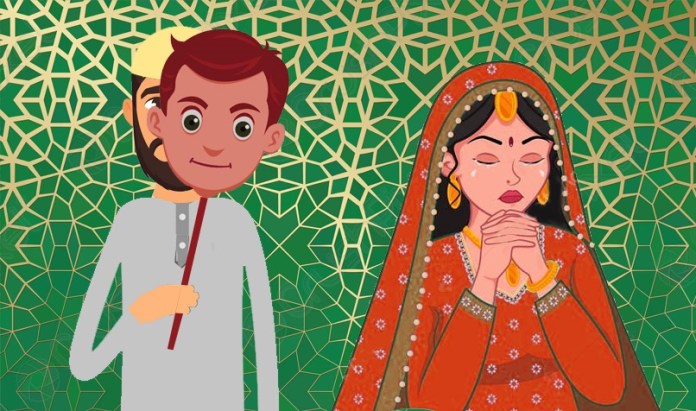
A horrifying case of Grooming Jihad has come to light from the Khandva district in Madhya Pradesh, where a man named Arbaaz, who masqueraded as Vishal, and his friend Sadiq, reportedly gang-raped a 10th stand standard girl from neighbouring village Harsud after luring her into a relationship. The girl was also forced into converting her religion and embracing Islam.

The Harsud police station in Khandwa district has filed a case against the accused, charging them with sections including rape and sexual abuse. While Sadiq, a government employee, is already under arrest, the police are still searching for Vishal alias Arbaaz who is on the run.

As per reports, Arbaaz created an account under the false identity of Vishal and befriended a girl on Instagram. Gradually, the friendship turned into a love relationship, following which Arbaaz, posing as Vishal, invited the 10th standard girl from Harsud over to Khandwa under the pretext of marriage.

The girl, who was head over heels in love with Arbaaz, promptly accepted his invitation and left her home for Khandwa. She was also carrying a red saree and jewellery, hoping to wear them in her marriage with Vishal alias Arbaaz. However, upon reaching Khandwa, she was taken as a hostage by Arbaaz and taken to the official residence of his friend Sadiq, who is an employee in the Municipal Corporation.

In her statement to police, the girl said, “I left the house on Monday night with a wedding dress and jewellery. After I reached Khandwa and met Vishal there, I came to know that his real name was Arbaaz Khan and he was a resident of Khanshawali village. He took me to a government building behind the collector’s bungalow with the help of Sadiq.”

Here, they took turns to rape her, according to reports. The duo also clicked objectionable pictures and videos of the girl and threatened her with making them viral. After being gang-raped, they forced the girl to renounce her faith and accept Islam. Arbaaz reportedly assured her that he would marry her if she became a Muslim. When she resisted conversion attempts and threatened them with police action, Sadiq and Arbaaz locked her up and fled from the place.

The girl somehow managed to escape her captivity, after which she approached the police and narrated her ordeal to them. Based on her complaint, the police rounded up Sadiq but they could not get hold of Arbaaz who was absconding. They have now launched a manhunt to determine his whereabouts and arrest him.

The Hindu Jagran Manch also took cognisance of the case where a girl was entrapped by a Muslim man pretending to be a Hindu. District president Anish Arjhare said the matter is a love jihad case and urged authorities to take stringent steps to bring the culprits to book.

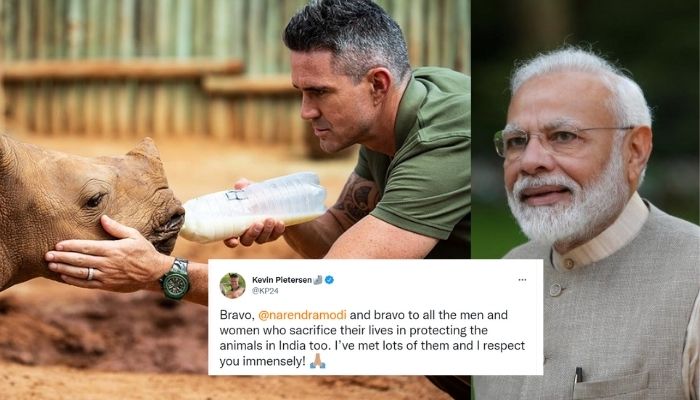
As Kevin Pieterson hails PM Modi for success in Rhino conservation efforts in Assam, read how he also plays an important role in saving rhinos

It has been a while since the former cricketer Kevin Pieterson has started batting for Rhino Conservation across the globe. As an active wildlife enthusiast himself, he thinks of India as a leader in animal conservation. He recently took to Twitter to congratulate PM Narendra Modi and wildlife conservationists in India for charting a massive decline in Rhino poaching last year. While quoting a report from Organiser, he wrote, “Bravo! Narendra Modi and bravo to all the men and women who sacrifice their lives in protecting the animals in India too. I’ve met lots of them and I respect you immensely!”

The one-horned Rhinoceros which is considered as the ‘Pride of Assam’ had witnessed a terrible decline in population after being killed by poachers, especially in the Kaziranga National Park. In a major achievement, the anti-poaching task force set up by the state government managed to bring down Rhino poaching cases in the state to only one last year. Earlier, Pieterson had lauded the Assam government’s decision to burn rhino horn piles with a view to ending poaching in Assam.

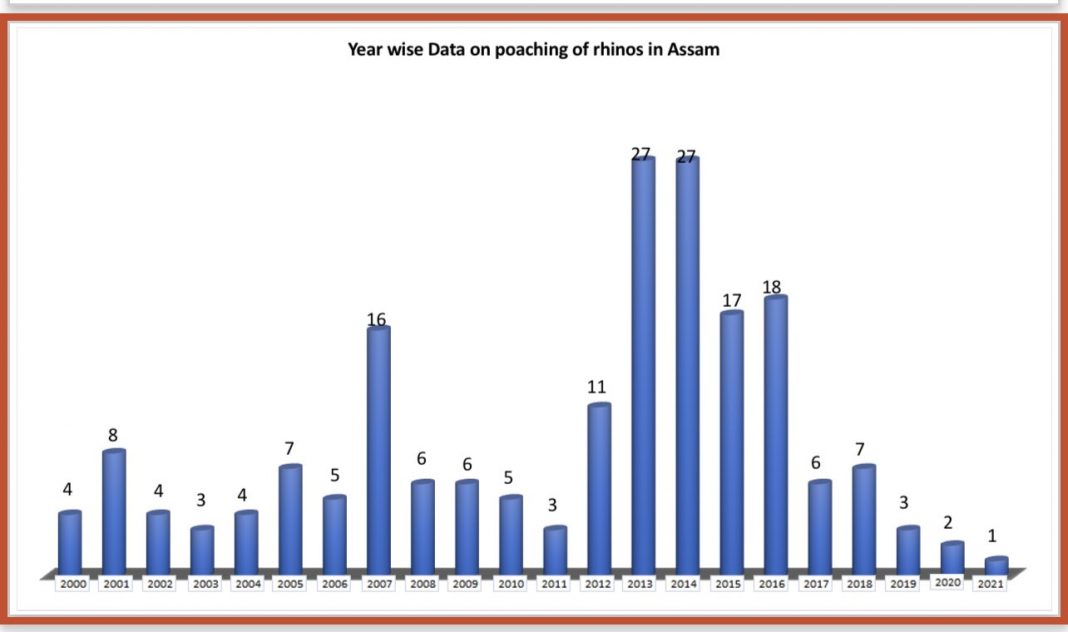
The successive BJP governments in Assam has been successful in clamping down on poaching of Rhinos in the state for its horn. While only one rhino was killed by poachers in 2021, the number was 2 in the previous year. In 2019, three rhinos were poached.

The credit of this success can be attributed to the Anti-Poaching Task Force (APTF), which was formed last year to end the menace of poaching in Assam. Chief of the task force GP Singh shared data of rhino poaching in the state for 22 years, which show that poaching had reached its peak in 2013 and 2014 during the two decades, and started to come down after that.

Kevin Pieterson : An ambassador for Rhinos

While Kevin retains his popularity in India as a cricketing maven, he has worn many a cap in wildlife conservation as well. He runs a foundation, SORAI an acronym for ‘Saving Our Rhinos Africa and India’ which empowers attempts of conservation of Rhino species across the continents. With a view to maintaining a balanced ecosystem for future generations, Kevin thinks the preservation of endangered species is the first step towards a sustainable future. Through this initiative and his touring national parks across the world, Kevin Pieterson has emerged as an ambassador for the cause of Rhinos.

In 2018, he started a Rhino-themed luxury resort in South Africa to create awareness for the endangered species in the continent. Realising that Rhinos face a great threat over poaching activities and horn smuggling across the world, he started SORAI in 2021. The initiative also has a sustainable merchandise label that raises funds for the cause as well as promotes eco-friendly fashion. Kevin has also partnered with National Geographic to shoot a docu-series ‘Save This Rhino: India’ which is premised around the Kaziranga National Park. Speaking about the series to The Hindu, Kevin said, “I want people to see, hear and understand how magnificent India is, how colourful the surroundings are and how engaging the story is,”

Kevin Pieterson while dedicating most of his time to the cause of Rhino Conservation, is really walking the talk on the individual front. The government of Assam has also been phenomenal in translating its policies and vision for the preservation of Wildlife over the years. It is about time we realise the challenges before the endangered wildlife cycles and take a step towards a sustainable future.

Kidnapped toddlers, then murdered them: The story of serial killer sisters Renuka Shinde and Seema Gavit

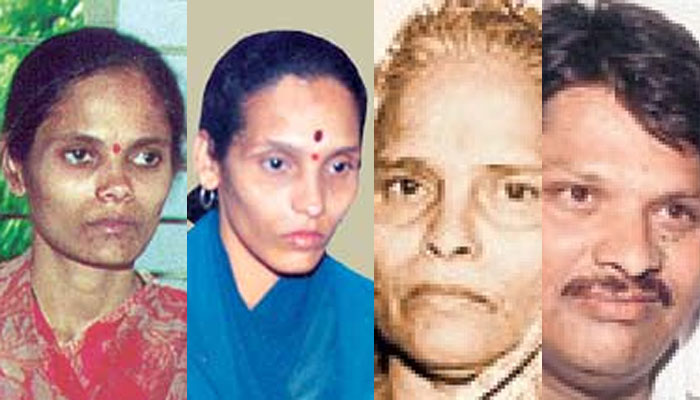
On January 18, the Bombay High Court commuted the death sentence of serial killer sisters Seema Gavit and Renuka Shinde to a life sentence. The court cited inordinate delay and indifference by the state government in dealing with their mercy petition as the reason for reducing the sentence.

Renuka and Seema have been convicted of kidnapping 13 children and killing five of them between 1990 and 1996. They were sentenced to death in 2001 by the sessions court. The Bombay High Court in 2004 and the Supreme Court in 2006 [Judgement PDF] upheld the decision. Their mercy petition was rejected by the Governor in 2008 and by the President in 2014.

From kidnapping to murder – the horrifying story that shocked the nation

In 2006, after the Supreme Court upheld the death sentence of the two sisters, special public prosecutor Ujjwal Nikam said in a statement, “We limited the period of killing to six years. However, this had been going on for longer than that. The women could not remember how many children they had killed.”

The facts revolving around the case are horrifying and spine-chilling. The two sisters, along with their mother, Anjana Bai, kidnapped at least 13 children and used them in petty crimes and begging. At least five of the kidnapped children were killed as they allegedly refused to co-operate or did not stop crying. The cruel and merciless faces of the two serial killer sisters still haunt those who were involved in the case.

The killer sisters had kidnapped children, mostly toddlers, from Nashik, Satara, Pune, Kolhapur and Sangli.

According to a report in the New Indian Express, Nikam had said they had information that the sisters killed at least 44 children, but they could only pinpoint 12 murders. He said, “Our case was based on circumstantial evidence. It had shocked the conscience of the country.”

How Police come to know about the killings

In October 1996, senior police officer Mandaleshwar Madhavrao Kale was assigned to a case where a nine-year-old girl Kranti Gavit was kidnapped in Nasik. Kale, who had experience of 36 years in the force, did not expect to uncover a series of murders during the investigation. The Mint quoted Kale narrating how Anjana’s ex-husband’s wife filed a case against her, his step-daughter Renuka Shinde and daughter Seema Gavit.

Kale said, “Pratibha Mohan Gavit, wife of a Mohan Gavit, had filed a kidnapping case against her husband’s first wife, Anjana Bai, his step-daughter Renuka Shinde and daughter, Seema Gavit. Pratibha’s older daughter Kranti had been missing, and she was convinced that these three women were responsible.”

Anjana, who was allegedly the mastermind of the racket, was married once before marrying Mohan Gavit. She was a petty thief and had a criminal history. Owning to the repeated questioning by the Police, Gavit left Anjana and the two girls. He then married Pratibha. Mohan and Pratibha had a daughter named Kranti, who was allegedly kidnapped by Anjana.

When Police started an investigation into the disappearance of Kranti Gavit, Anjana, Renuka and Seema went underground. After a few days, they resurfaced and attempted to kidnap Mohan’s younger daughter. However, Nasik police arrested the trio before they could kidnap the girl. During interrogation, Kale said Anjana did not say a word. He said, “She would just sit there and look. Never once did that woman crack.” Among the three, the weakest was the step-daughter Seema who finally admitted to kidnapping and killing Kranti Gavit. However, she claimed to have committed the crime at the behest of her mother.

A special investigating team visited their house in Nasik, where they uncovered evidence of many more kidnappings. They found discarded clothes of the children. Another piece of evidence that they recovered were photographs of the birthday party of Renuka’s children in which non-local children were present. The Police came to know about the petty crimes the women were involved in, but they did not know who the children were.

The incident that triggered the kidnapping of children

During the investigation, the Police found that in 1990, Renuka’s son from the first marriage, Sudhir, was with her at the Chaturshringi temple, Pune, where she was attempting to pickpockets of the devotees. While she was trying to pick someone’s pocket, the person caught her. Using her presence of mind, she used Sudhir to prove her innocence. She gave the argument how a woman with a little child could commit a crime. The crowd believed her and let her go. The incident gave an idea to the trio to always keep a child with them to escape if caught.

Ujjwal Nikam, in a statement, informed that according to the details the Police mentioned in the case files, during one of the theft attempts in Kolhapur, Seema was caught by the crowd. At that time, Anjana Bai deliberately injured a one-year-old child named Santosh, whom the trio had kidnapped, to create a distraction. Nikam said, “Anjana Bai threw the child down with force in order to create a distraction.” The merciless women did not blink an eye before injuring the children who accompanied them during the acts of crime.

The case files further revealed that the majority of kidnappings took place at busy places such as fairgrounds and temple compounds in cities including Pune, Kolhapur and Nasik. While cases were filed in some cases, many kidnappings went unreported as the children belonged to poor families, and Police allegedly did pay heed to the suffering of the families. Nikam said, “It is estimated that the kidnappings might have been more than 40 in number, but we had no evidence to back that claim.” He added, “Maybe, the parents tried to file a complaint and were turned away. Maybe, they were unable to do so. The kidnapping reports did not start coming in till very late.”

The chilling details of crimes

Santosh, the kidnapped child who was used as a distraction, was one of the children the trio killed. He was the son of a beggar woman. After the said incident, Santosh would not stop crying as the trio did not try to provide any medical assistance to him. Frustrated with the non-stop crying, Anjana repeatedly bashed his head against an iron rod till he died. According to an investigating officer, the two sisters witnessed their mother’s crime while munching vada pav.

In the Supreme Court judgement, it was mentioned, “They left the dead body [of Santosh] near the heap of some old rickshaws and came back to Dharamshala. On the next day, the dead body of Santosh was found, and the matter was reported to the Laxmipur police station.”

One of the kidnapped children, seven-month-old baby Swapnil, was dropped by Seema as he was constantly crying, and she “could not deal with it”. Another 2-year-old boy was hanged upside down, and his head was slammed repeatedly against the wall.

Another child was drowned by Renuka and Seema in the bathroom. One of the sisters held his legs to stop him from moving, and the other drowned him.

The prosecution informed the court that the trio killed most of the children only because they “did not stop crying”. They were charged with the murder of five children, three boys and two girls. According to the case files, the post-mortem of the dead bodies revealed the children were thrown downstairs and beaten repeatedly.

Renuka’s second husband’s testimony

One of the important witnesses that provided details of the crime was Kiran Shinde, the second husband of Renuka. He turned approver and provided details of the crimes committed. He also provided details of where the bodies were disposed of. One of the most horrifying details he provided to the Police was the incident when a dead child was stuffed in a gunny bag and kept between the sisters while they enjoyed watching a movie. Before leaving the theatre, they left the dead body in the women’s lavatory.

A person named Saroday, who was associated with the case in the Supreme Court, described the murder in a statement. He said, “They chopped the body of one child and stuffed it into a gunny bag for disposal. The gang carried the bag with them and watched a movie at Alka Talkies in Kolhapur and ate bhel puri while the bag lay between their feet.”

Apex court called the killings ‘acts of depraved mind’

Kiran Shinde was acquitted for his co-operation. Anjana Bai died in 1997 while the case continued in court. During the trial, the two sisters were lodged in the same prison as Fahmida Sayed, one of the 2003 Mumbai blast accused. The sisters had attacked her in the prison as she was provided with hot water when she was ill. The Supreme Court had pointed out the incident during the trial. The apex court said, “The killings demonstrated a ‘depraved mind’ that killed without any compulsion. Prison, it is said, causes even the most hardened nut to crack, pondering over what landed them there. The two sisters are, however, more concerned about why Fahmida gets hot water when ill than the memory of those whose lives they cut short even before they began.”

The serial killer sisters will not be hanged despite the President denying mercy petition because of Maharashtra’s inordinate delay and indifference in dealing with their mercy petition.


BJP brings in sarees with Modi and Yogi images from Surat ahead of Uttar Pradesh elections

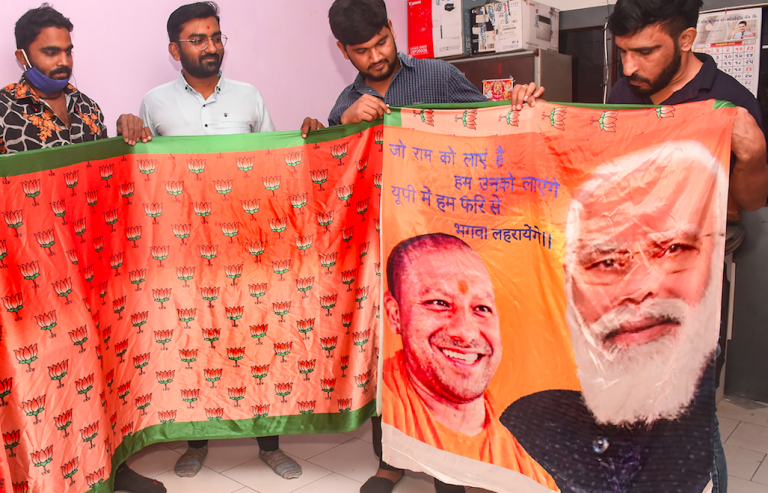
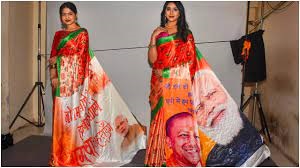
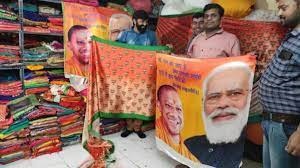
To woo the voters in Uttar Pradesh, the BJP has ordered a huge lot of sarees with images of PM Modi and UP CM Yogi Adityanath from Surat.

Uttar Pradesh assembly elections are leading the topics of discussion in India. With every passing day, new political developments are seen and campaign gimmicks of various parties are seen. One of the most attractive things in the assembly election run-up are sarees from Surat which are being sent to UP.

Other campaign material to reach UP from Surat includes catalogs, dupattas, flags, etc. The photos of PM Narendra Modi and Uttar Pradesh’s CM Yogi Adityanath are printed on the sarees and other campaigning material. The packing boxes also carry pictures along with slogans.

Sarees have pictures of Modi and Yogi on the pallus.

A Surat-based textile trader has made Modi and Yogi’s 3D printed sarees. Along with Modi and Yogi, he has also prepared sarees with the picture of the Ram temple in Ayodhya, different ghats of Varanasi as well as Kashi Vishwanath Corridor.

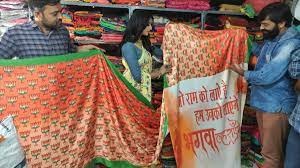
The slogan printed on the sarees says ” ‘we will bring back to those who brought Rama, we will again hoist the saffron flag in Uttar Pradesh.”

Textile youth brigade president Lalit Sharma has said that a large number of sarees and dress materials are delivered from Surat to UP. The slogan printed on those is ‘Jo Ram ko laye hain, hum unko layenge, UP me fir se hum bhagwa lahrayenge’, which means ‘we will bring back to those who brought Lord Rama, we will again hoist the saffron flag in Uttar Pradesh’.

Lotus flower being the election symbol of the BJP, it is also printed on the Sarees, along with the pictures of PM Modi and CM Yogi. Lalit Sharma said that “1 lakh sarees printed with Modi Yogi’s picture will be sent to UP, for which all the credit goes to BJP and Narendra Modi. 3D print and digital print sarees are being made in Surat to campaign in support of BJP in Uttar Pradesh.”

BJP’s election symbol lotus flower is also printed on the sarees.

He further added that “Earlier, during the Assembly polls we had got orders for sarees with prints of the Uri incident and homecoming of Captain Abhinandan. Surat is the hub of digital printing and we have printed sarees and sent them to poll-bound states.”

The prices of the sarees are in the range of Rs 150 to Rs 350. These sarees will be distributed in UP as well as other poll-bound states. Manohar Sihag, a saree trader has said that “Traders are happy with the government’s decision to roll back the new GST rate on clothes.”