Home Blog Page 4171

Maulana Hafiz Raza who declared Rs 1 crore reward for beheading Hindu activist Swami Darshan Bharti arrested by UP police

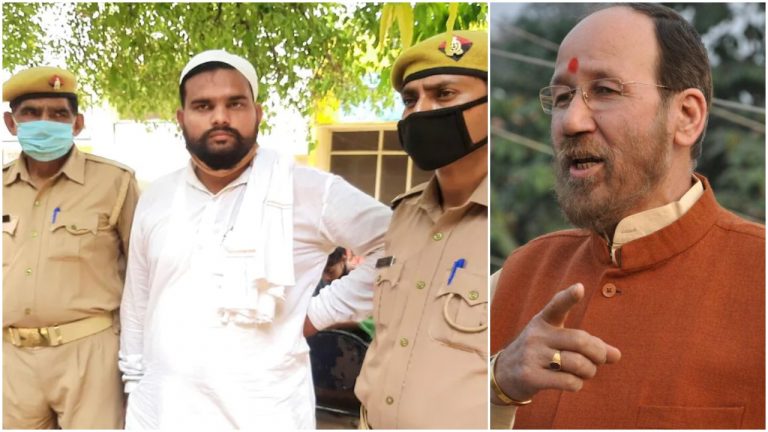
Maulana Hafiz Faizan Raza, who had recently announced a reward of Rs 1 crore for beheading Hindu activist Swami Darshan Bharti, has been arrested by the Uttar Pradesh police, reports Aaj Tak.

A viral video had gone viral recently in which Maulana Hafiz Faizan Raza was seen declaring a bounty of Rs. 1 crore to anyone who can behead Swami Darshan Bharti and bring his head to him. Maulana Hafiz Faizan Raza released two videos on social media, in which he could be heard making objectionable statements.

Maulana Hafiz Faizan Raza, who hails from Bareilly in Uttar Pradesh, brazenly issued a death threat to the Hindu Sadhu Swami Darshan Bharti. The Islamist cleric did not stop there. He went ahead to issue threats saying anyone who speaks against Islam will face the same fate.

Maulana Raza claimed Swami Darshan Bharti of Uttarakhand has been spreading hate against Islam and Muslims.

Hafiz Faizan Raza is the head of a local madarsa in Bareilly and is also the national president of an organisation called “Sarva Samaj Sangathan”. He has been politically active in Uttar Pradesh and has developed close connections with various opposition leaders in Uttar Pradesh.

As his death threat video went viral on the internet, Uttar Pradesh Police took cognisance of the video and arrested the controversial Maulana from his madarsa on Saturday. While Maulana released another video in his defence and claimed that his mental condition is not proper, the UP Police has continued with the investigation.

Who is Swami Darshan Bharti?

Swami Darshan Bharti is a Hindu activist who has been quite vocal about the issues of Hindus in Uttarakhand for a very long time. Swami Bharti is known for starting a campaign to save lands belonging to Hindu temples. He had recently opposed purchasing of land by people from Muslim community near the holy town of Badrinath and constructing any mosque or madarsa there, reports Hindu Post.

In fact, Swami Bharti has been at the receiving end of hatred and death threats for a while now after he started speaking against illegal land encroachment by Muslims. Following that, several clerics from Deoband had stoked a controversy by claiming that Badrinath is originally Badruddin Shah, a holy place of Muslims encroached by Hindus and should be given back to Muslims.

Protesting this, Swami Bharti and his organisation had organised several protests to save the encroachment of lands belonging to Hindu temples.

In recent times, Swami Darshan Bharti has also been quite active in sensitising Hindus about the increasing migration of Muslims to Uttarakhand. He reportedly demanded a stricter law to check “Love Jihad” against Hindu girls by Muslims in Uttarakhand. He had also sat on a hunger strike in April to demand a stronger law against “Love Jihad”. Swami Bharti is also extremely vocal about Christian conversions in the state.
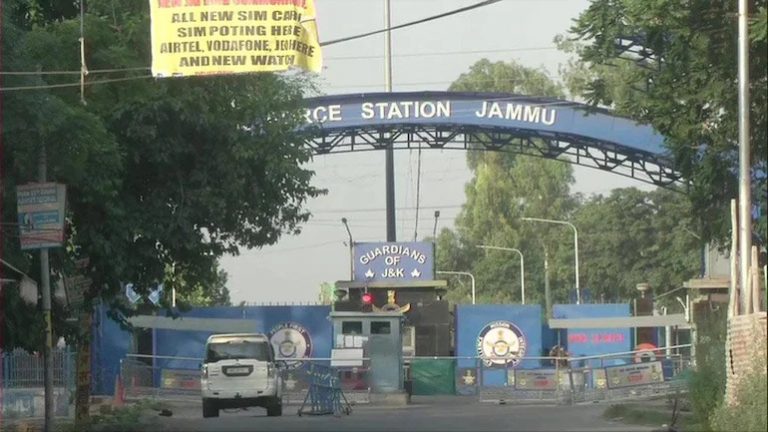
Twin blasts inside Jammu air base leaves 1 injured hours after two suspected terrorists arrested near prominent mall with explosives: Details

Averting a major terrorist attack, the Jammu Police on Saturday nabbed two terrorists with arms, ammunition and explosive materials from near the Wave Mall situated on the Jammu-Srinagar national highway. 

As per a report, the Jammu Police had received specific inputs about the presence of two terrorists on the outskirts of the city. Reportedly, the two had been carrying out a recce of prominent locations before carrying out a terror strike. 

Out of the two, one 20-year-old terrorist in possession of 5kgs of IED was arrested by the police. An investigation is underway to ascertain whether their other accomplices have managed to enter the city. Search raids were later conducted across the city. 

Blast heard from Jammu Air Base’s technical area

Indian Air Force on Sunday tweeted that two low intensity explosions took place in the technical area of Jammu Air Force Station. The blasts took place at around 1:42 AM on Sunday and were so powerful they could be heard till 1 km distance.

One explosion caused minor damage to the roof of a building while other took place in an open area. A team of forensic experts and Bomb Disposal Squad have reached the explosion site to determine the cause of the blast. 

No injuries or casualties have been reported due to the blast. The area, however, has been cordoned off and a probe is on. News agency ANI citing sources said that two drones were used to carrying out the explosions at Jammu air base.

As per reports, two people have been arrested from near the area.

This comes just ahead of Defence Minister Rajnath Singh’s visit to Ladakh to carry out an extensive review of India’s operational readiness amid a prolonged standoff with China.

Rajnath Singh’s office took to Twitter to announce, “Raksha Mantri Shri @rajnathsingh will be visiting Ladakh tomorrow for three days. During his Ladakh visit he will inaugurate infra projects constructed by BRO and also interact with troops deployed in the region.”

The Defence Minister spoke to Vice Air Chief, Air Marshal HS Arora regarding today’s incident at and Air Marshal Vikram Singh is reaching Jammu to take stock of the situation, informed the Defence Minister’s office.

Post Prime Minister Narendra Modi’s meeting with the Jammu & Kashmir political parties last week, several coercive actions to strike terror have been reported from the Union Territory. On June 24, PM Modi met Kashmiri leaders and reiterated central government’s commitment to restoration of full statehood of Jammu & Kashmir.

Grenade attack on CRPF in Srinagar

Terrorists on Saturday attacked a CRPF post in Srinagar’s Barbarshah falling under Kralkhud police station. The attack missed the target with the grenade exploding on the roadside and leaving four civilians injured. 

The area has been cordoned off with an extensive manhunt launched by the security forces. 

“The grenade missed the intended target and exploded on road. In this incident, four civilians got injured and were evacuated to a nearby hospital for the treatment of their injuries,” informed the police. 

Founder of NGO to end sexual violence against minors sentenced to 13 years in jail for child pornography, having sex with minor boy

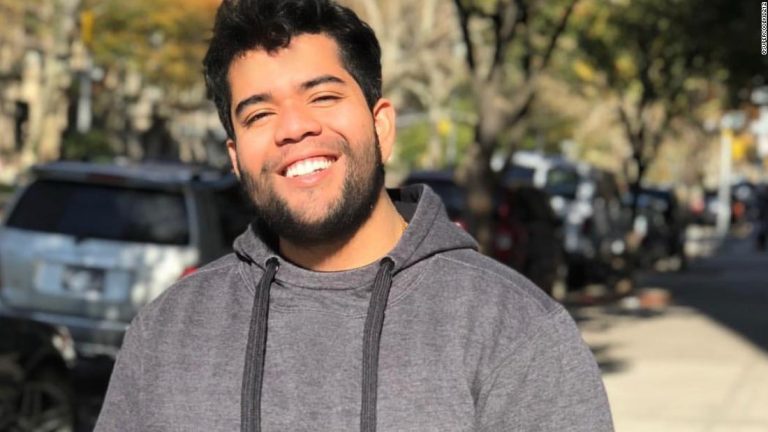
Columbia University student and founder of the non-profit organisation “Youth to End Sexual Violence”, Joel Davis, was awarded 13 years of imprisonment after pleading guilty to child pornography and having sex with a 15-year-old boy.

Davis was found to be in possession of over 3,700 images and 330 videos of child pornography, with some of the victims as young as 12. David was also accused of using a dating app to lure a 15-year-old minor to visit him at his Manhattan apartment in June 2018, where he had a sexual encounter with him. He is also accused of recording some of his abuse and sharing it with two people, one of them being an undercover FBI agent.

Audrey Strauss, the United States Attorney for the Southern District of New York, announced that Joel Davis has been sentenced to jail for indulging in child pornography and having sexual acts with minors.

“As he previously admitted, Joel Davis, founder of a non-profit called ‘Youth to End Sexual Violence,’ admitted to engaging in the very abhorrent behaviour he had publicly pledged to fight. Davis, who also claims to be a Nobel Prize nominee for his work with his organization, engaged in sex acts with a minor, recording them, and distributing that recording to others – including an undercover FBI agent. Sex with minors is obviously never permissible, acceptable, or justifiable, and by virtue of his non-profit work, Joel Davis was acutely aware of the irreparable harm these crimes inflict on victims. Davis will now serve a long time in federal prison, where he can no longer victimize minors,” Strauss said.

Joel had pleaded guilty on 16 January 2020. The court has sent him to prison for 156 months for luring a child to engage in illicit sexual activity, 60 months for possession of child pornography, and 60 months for distribution and receipt of child pornography, all of which will run simultaneously, according to the U.S. Attorney’s Office in the Southern District of New York. After his release from prison after 13 years, he will spend the next five years on ‘supervised release.’ 

Davis was caught by the FBI during an operation to trap child sexual abusers. Earlier he had claimed that he was a victim of sexual abuse himself, and had launched the non-profit “Youth to End Sexual Violence” to fight the issue. In 2017, he had written an op-ed on Columbia Spectator describing the psychological damage the abuse had inflicted on him. He had written that for his non-profit, he had taken a break from the Columbia University School of General Studies, where he majored in Ancient Studies. Months before his arrest, he was a featured speaker at a Columbia University Ted Talk. In 2014, he had written in Huffington Post calling for an end to sexual violence against children in conflict zones.

But he came under the FBI radar after he responded to an advertisement the officials had posted on a fetish website. He then began talking to an undercover FBI agent. He sent the officer explicit images of infants and toddlers engaged in sexual acts with adults, and told him that he was interested in children ‘0+’.

Reportedly he had told investigators that he had once tried to have sex with a 7-year-old boy but ultimately didn’t, and had once sexually assaulted a 3-year-old girl. After his arrest in 2018, Davis told the officials that he had used the Grindr app to meet a 15-year-old boy, and he had “engaged in oral sex and digital penetration”.

NCPCR summons DCP Cyber Cell in connection with availability of child porn on Twitter, requests FIR against platform

The National Commission for Protection of Child Rights has summoned the DCP of Delhi Police Cyber Cell on the 29th of June in connection with the availability of child pornography on Twitter. The DCP has been asked to appear before NCPCR through video conferencing and a request has also been made to register an FIR against the platform for the same.

NCPCR chief Priyank Kanoongo told ANI, “NCPCR has issued summons to DCP Cyber Crime, Delhi seeking personal appearance along with a copy of FIR which is to be filed on Twitter.” He added, “Twitter was found to have given false and misleading responses during the enquiry conducted by NCPCR for the presence of pornographic and child sexual abuse matter, a grievous offence under the POCSO ACT.”

NCPCR had asked Delhi Police to register an FIR against the platform last month as well in connection with the same matter. Last year, the Commission had issued notices to companies like Google, Twitter, WhatsApp, Apple India etc to know about steps taken by them to remove and prevent CSAM on their platforms. The rights body had also has requested the IT ministry to ensure that access to the microblogging platform is suspended for children till it becomes safe for children.

GoI Twitter account promotes book authored by anti-India propagandist Arundhati Roy, removes after outrage: Details

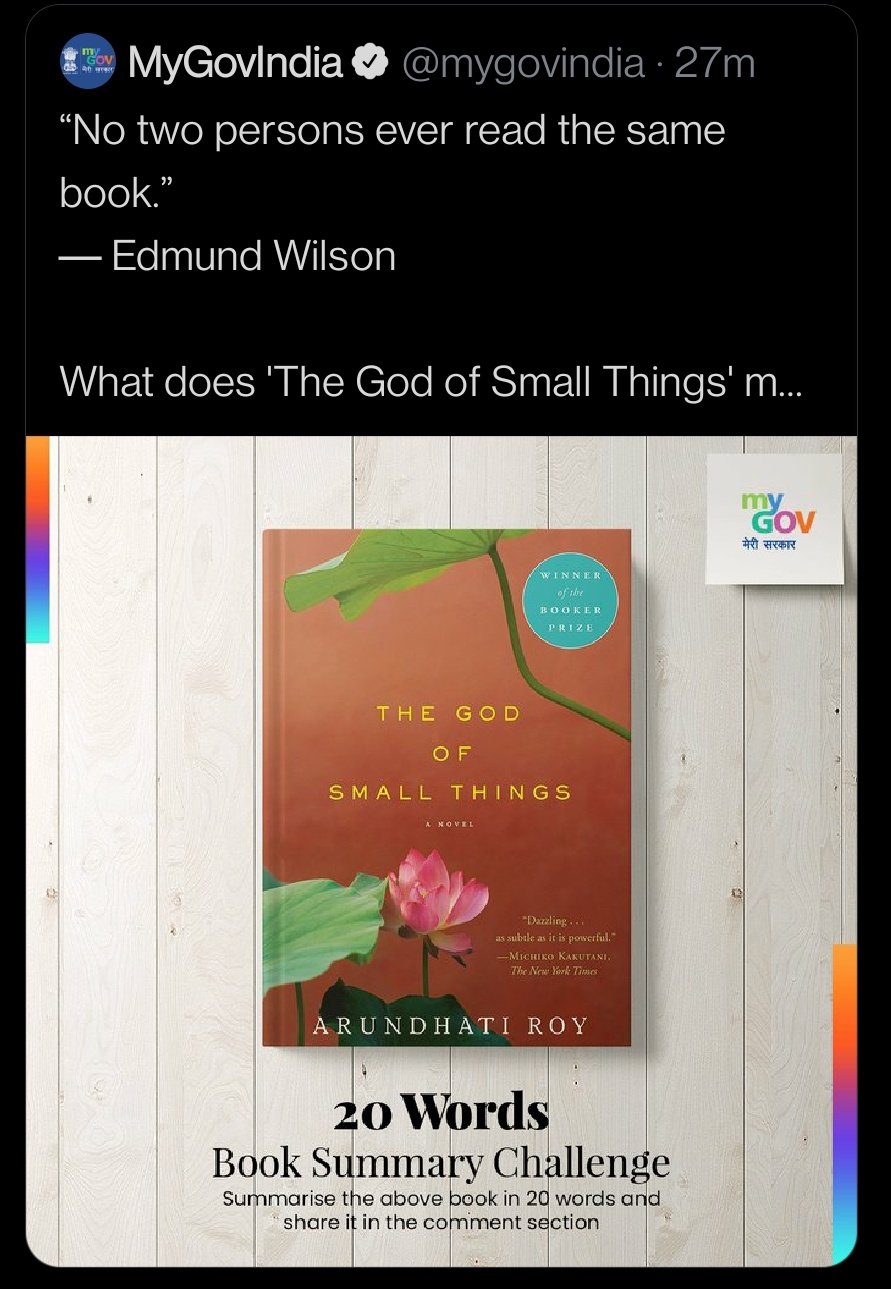
The official Twitter account of the citizen engagement platform of the Government of India on Saturday committed a faux pas after it was found promoting one of the books written by anti-India propagandist Arundhati Roy.

The Twitter account, which goes by the handle @MyGovIndia, posted a picture of the book ‘The God of Small Things’ written by Arundhati Roy, as a part of its 20 words book summary challenge. Along with the picture of the book, the tweet included a quote by Edmund Wilson that said: “No two persons ever read the same book”.

Source: Twitter

Post deleted after government draws flak from online users for promoting a controversial author

However, the government endorsement of a book written by an inveterate anti-India propagandist did not sit well with the social media users, who expressed their outrage and promptly called out the government for promoting an author who has a history of peddling propaganda against India.

Seemingly after taking cognisance of the online outrage, the Twitter account @MyGovIndia quickly deleted the post where it was seen recommending a book written by an author with contentious antecedents.

Arundhati Roy, a career propagandist for whom lying and being deceitful is second nature

Arundhati Roy is a controversial figure in Indian politics. For years now, Roy has been accused of advancing the anti-India narrative and purveying falsehoods and misinformation under the garb of “freedom of speech”. Just recently, Roy had penned an article in The Guardian, using the cover of the pandemic to push her propaganda against the Modi government.

While being deceitful is second nature to Arundhati Roy and lying her favourite hobby, the extent of lies she peddled in The Guardian at a time when India was grappling with a ferocious second wave of COVID-19 is particularly egregious. Roy not only lied about the PM Cares Fund in her article but also spread misinformation about India’s vaccination drive and COVID-19 vaccines developed by SII and Bharat Biotech. If this did not suffice, she also peddled propaganda about the West Bengal elections in her article for the British daily.

Earlier last year, career propagandist Arundhati Roy, in her bid to continue spreading lies about India, alleged that the Modi government was using coronavirus outbreak to commit a Muslim genocide.

Not just the government, but Roy has vilified the Indian Armed Forces as well. She had been consistently referring to the anti-terror ops in Kashmir as “state-sponsored” terrorism. In her infamous speech that she made in 2002, Roy said, “In India, not hundreds, but millions of us would be ashamed and offended if we were in any way implicated with the present Indian government’s fascist policies which, apart from the perpetration of State terrorism in the valley of Kashmir (in the name of fighting terrorism), have also turned a blind eye to the recent state-supervised pogrom against Muslims in Gujarat. It would be absurd to think that those who criticize the Indian government are “anti-Indian”—although the government itself never hesitates to take that line.”


UNDP applauds rapid development in 117 under-developed districts in India, Jal Shakti Mission proved to be a game-changer

On June 11, the United Nations Development Programme (UNDP) published an independent appraisal report, wherein it praised the success of local area development in India via the Aspirational Districts Programme (ADP). The ADP programme was launched by PM Modi in January 2018 to uplift the quality of life in districts that were lagging behind in Human Development Index (HDI) parameters.

The Aspirational District Programme focuses on development across 5 sectors of Healthcare and Nutrition, Education, Agriculture and Water Resources, Basic Infrastructure, and Skill Development and Financial Inclusion.

The report says that the programme has served as a catalyst for expediting development among Aspirational districts, and certain sectors such as Healthcare and Nutrition, Education, and to an extent Agriculture and Water Resources have seen some major changes. Other sectors of Basic Infrastructure, Financial Inclusion and Skill Development also achieved improvement in indicators since the inception of the programme and offer scope for further strengthening, the UNDP report states.

The UNDP used two components to calculate the growth achieved by the districts, Net Resilience Index and Difference in Difference Analysis. Findings from the Net Resilience Index indicate that the Aspirational Districts, on average, have been on an upward trajectory since the inception of the programme.

According to the report, the five districts that achieved the highest growth were Ranchi, Chandauli, Simdega, Sonbhadra and Rajgarh. On the other hane, the 5 worst performing districts were Sitamarhi, Gumla, Dantewada, Bijapur and Nawada.

The Indian government has allocated a budget of ₹50,011 crores for 2021-2022 and has kept a target to cover all rural households under the Jal Shakti Mission by 2024. In addition to states’ own resources and ₹26,940 crore grant for water by the 15th Finance Commission, a total of ₹1 lakh crore has been invested in providing a safe drinking water supply. It has helped in boosting the rural economy and generating employment opportunities.

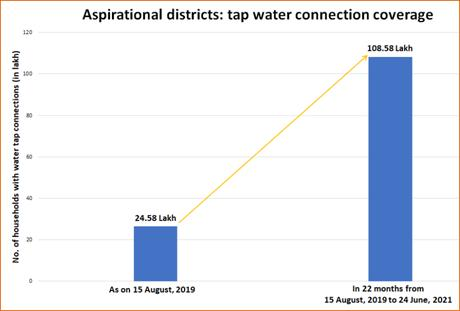
In a tweet on Friday (June 25), Press Information Bureau informed, “Tap water supply increases four-fold from 7% to 31% In 117 Aspirational Districts with 84 lakh households getting tap connections in just 22 months. UNDP lauds India’s Aspirational Districts programme ‘as a very successful model of local area development”

PIB informed that a total of 117 districts, across the country, with a low Human Development Index (HDI), has witnessed fast development under the Aspirational Districts Programme (ADP). One of the key factors behind its success has been Jal Jeevan Mission, which came into force on August 15, 2019. At that point in time, only 7% of households (24.58 lac) in these districts had access to tap water. In less than 2 years’ time, tap water connections were provided to more than 84 lac households. As such, about 31.37% of households now have access to tap water supply.

The increase of tap water coverage by 24% in the 117 districts was higher than the 22.72% increase in water supply across India in the past 22 months. Under the vision of ‘Sabka Saath, Sabka Vikas,’ the Indian government is ensuring that every household in rural areas has access to tap water. In 2019, about 3.23 crore rural households (17%) had access to tap water supply. Despite the Coronavirus pandemic and the subsequent lockdown, about 4.36 crore additional rural households were provided with tap water supply. This increased the total coverage by 39.58%.

Increase in access to tap water supply in ADP districts (Image Courtesy: PIB)

As of 2021, two States namely Goa, Telangana, and two Union Territories of Puducherry and Andaman and Nicobar Islands have 100% rural tap water supply coverage. In all, about 63 districts in 94000 villages have access to tap water connections. Reportedly, all Aspirational districts in the State of Telangana have access to tap water. Similarly, it is predicted that all Aspirational districts in Bihar will be covered by the end of this year. States such as Gujarat, Haryana, Himachal Pradesh, Jammu and Kashmir, Manipur, Meghalaya, Sikkim and Punjab will have 100% access to tap water by 2022.

Moreover, 72% of households in Aspirational Districts in Bihar have access to tap water. A similar phenomenon was observed in Narmada (77% households) in Gujarat and Kadapa (82% households) in Andhra Pradesh. Jal Shakti Mission Minister, Gajendra Singh Shekhawat, had written to all Chief Ministers to provide safe, potable drinking water in all schools, ashramshalas, and Anganwadi centres. The Modi government had initially led the campaign in Andhra Pradesh, Goa, Tamil Nadu, Telangana, Andaman & Nicobar Islands, Haryana, Himachal Pradesh, Punjab, and Gujarat.

Top Maoist terrorists dying of Covid-19, several leave terror group due to fear of infection

The Maoist belt in India, also called the Red Corridor, is witnessing a drastic surge in the number of Wuhan Coronavirus cases and several Maoists have died, reported The Times of India. The terrorist stronghold is spread across the States of Andhra Pradesh, Maharashtra, Odisha, Chhatisgarh, and Telangana.

Maoists, who carry out their terror activities from dense jungles, have always been susceptible to vector-borne diseases such as dengue, malaria, and chikungunya. Citing sources in the Special Intelligence Branch, TOI reported that the second wave of the Wuhan Coronavirus pandemic had badly hit the top leaders and foot soldiers of the domestic terror group. Superintendent of Police (Bhadradri Kothagudem district) Sunil Dutt informed, “At least eight Maoist leaders and cadres have died of Covid-19 in the second wave.”

At the same time, the police informed that about 15-20 Maoists had succumbed to Coronavirus infections. Reportedly, several domestic terrorists had deserted their group out of fear of contracting the deadly virus. A senior official of Special Intelligence Branch informed, “A senior officer of anti-Naxalite intelligence told TOI, “Couriers or militia members may have met Maoists in the jungles due to which the virus has transmitted.” The vulnerability of Maoists to the Coronavirus infection had been exacerbated due to snake bites, consumption of expired food, and negligible medical treatment.

Maoists die due to Coronavirus

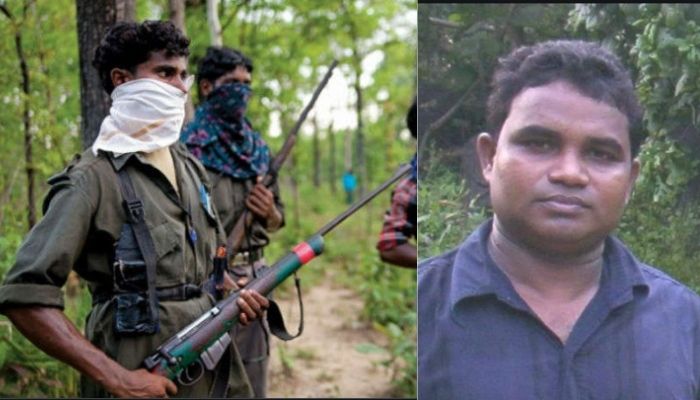
The devastating effect of the pandemic on the Maoists came to light after top leaders Yapa Narayana and Siddabonia Sarakka died of Covid-19. They were known by their respective aliases of Haribhushan and Bharatakka. While Haribhushan was the Telangana State Committee secretary, Bharatakka was the Indravati Area Committee member. Their deaths were confirmed by the Communist Party of India (Maoist) on Thursday (June 24). Haribhushan died on June 21 and Bharatakka succumbed to the deadly disease on the following day. Their last rites were conducted on June 22.

Uttar Pradesh: Local administration in Hardoi demolish a 10-year-old Muslim shrine that was illegally constructed on encroached land

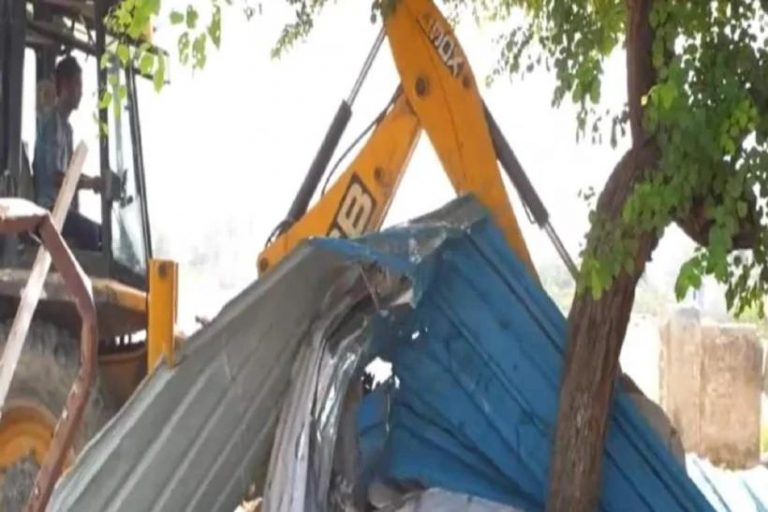
A 10-year-old Muslim shrine built illegally and on encroached land in Hardoi’s Kashiram Colony was demolished by the local administration in the presence of a heavy police force. The Executive Officer of the Municipality said a notice was issued informing in advance about the removal of the shrine. He further informed that the shrine was removed by the encroacher himself, along with his people.

As per the report, a case of illegal encroachment of the government land in Kashiram Colony and the illegal construction of a religious place had brought to the attention of the Municipality. The EO received information that one Sagir Ahmed had illegally encroached upon a piece of government land and erected a shrine over it. A notice was issued to him in this regard.

After receiving the notice, Ahmed agreed to the removal of the shrine. On Friday, in the presence of other officials including the CO City, the illegal shrine built was removed. However, in anticipation that the removal of the shrine might attract public outrage, police troops were deployed in the region.

As per Mutawalli Sagir Ahmed, the shrine was as old as the colony. He told it was 10 years ago that the shrine came into existence. The illegal encroachment of the government land was reported by Bajrang Dal members, following which the administration issued a notice to Ahmed and informed him about the removal of the shrine.

Administration in UP’s Barabanki demolishes illegally constructed mosque

It is noteworthy to mention that last month, the administration in Uttar Pradesh’s Barabanki district had pulled down a 100-year-old illegally constructed ‘mosque’. On May 17, following the SDM’s instructions, the illegal structure was demolished.

The officials confirmed an illegal residential structure situated inside the ‘tehsil’ premises in the Ram Sanehi Ghat area in the district. As per officials, a notice was served on the people who had been residing there, asking them to produce documents supporting their claim, but they fled after the notice was served.

However, the local Muslim organisations and opposition began to outrage claiming that the ‘mosque’ was legal. The UP Sunni Central Waqf Board had termed the district administration’s action illegal and moved the Allahabad High Court against it.

In a setback to Muslim organisations, the Lucknow Bench of the Allahabad High Court had disposed of a petition filed in this connection on April 2, which proved that the construction was illegal. It is pertinent to note that The Wire had spread misinformation about the case after the High Court had disposed of the petition filed in this case.

NCPCR writes to Rajasthan govt to conduct an enquiry against illegal arrest and harassment of anti-conversion activist by Jaipur police

The National Commission of Protection of Child Rights has issued a notice to the Rajasthan government and Director General of Police, Rajasthan Police seeking a response from them regarding the arrest of an activist and harassment of minor kids by the state police officers.

In a scathing letter, NCPCR chief Priyank Kanoongo said that the commission received a complaint against the illegal apprehension of an activist Bawi Singh, a mother of two minor children, by the police officers of Crime Branch, namely Maan Singh Rathod and Sanjay Chaudhary, under the direction of Jaipur Crime Branch DCP Satyapal Yadav.

Activist Bawi Singh, who tweets under the Twitter handle @BawiSingh to highlight the illegal conversion activities, was recently arrested by the Jaipur police recently based on a complaint filed by one Poonam Chand Bhandari.

In response to the arrest, NCPCR, in its letter to the Rajasthan government, said the activist had written a letter to the commission alleging targetted harassment by the Jaipur police and collision with the complainant to illegally detain her for spreading awareness against the conversion activities across the country.

The child rights commission said that the arrest was not only a violation of the rights of the activist but also affected her two children, who were deprived of safety and security by their mother’s detention. The commission said that such arrest and the resultant harassment is a violation of child rights under the Juvenile Justice Act, 2015 and also the fundamental right under Article 21 of the Indian Constitution.

“Further such deprivation of safety and security of children exposes them to numerous abuse and exploitation of their vulnerabilities such as trafficking, etc.,” said the NCPCR in its letter.

In regards to the same, the NCPCR has asked the DGP, Rajasthan Police, to conduct an enquiry on the harassment meted out to the anti-conversion activist and send the report in the next three days.

Note: An earlier version of the report said that Bawi Singh tweets from both @BawiSingh and @noconversion Twitter accounts. But she only tweets from the former, and is an admin of a group under the @noconversion account

Kerala govt calls vandalism of Assembly ‘Parliamentary privilege’, moves SC seeking permission to withdraw vandalism cases against CPM leaders

The Pinarayi Vijayan government in Kerala has moved the apex court seeking permission to withdraw cases against prominent CPM leaders for vandalism of state assembly in 2015. The government claims it is their parliamentary privilege and not vandalism.

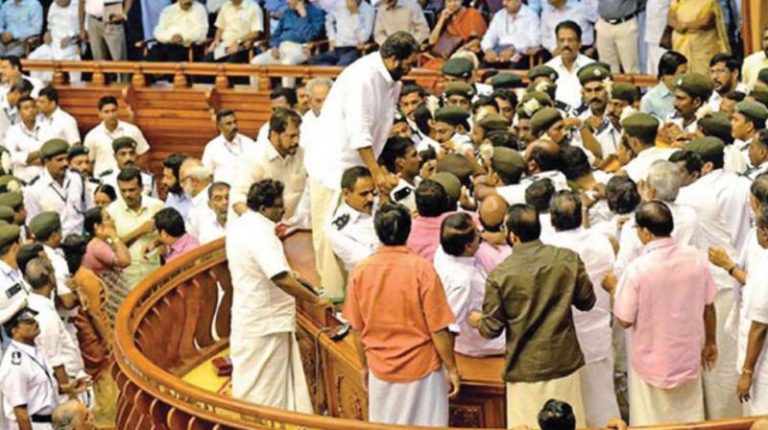
The case pertains to the vandalism of the Kerala Legislative Assembly by CPM members, who created a ruckus in the House and caused damages to the public property when the budget session was underway in 2015. The Congress-led UDF was in power in Kerala at that time, with Oommen Chandy as the CM.

In its defence, the Kerala government in the Supreme Court argued that the budget session of the legislative assembly in 2015 was carried out in a ‘charged atmosphere’ and the allegations of nepotism were levelled against the finance minister and it was during the protests by opposition members that the alleged chaos ensued.

In its plea to the Supreme Court, the Kerala government says: “At best, their action will only amount to a breach of privilege or code of conduct for which only the Speaker is empowered to take action. The Public Prosecutor performs an executive function while submitting an application under Section 321 and the role of the court is only supervisory.”

The Pinarayi Vijayan government avers in the Supreme Court that though members of the “ruling party were equally at fault”, they have certain privileges on account of being MLA’s, in terms of Articles 105(3) and 194(3) of the Constitution of India.

On April 28 this year, the Kerala government filed a plea in the top court, seeking a stay on High Court order dated March 12, 2021, in which it had rejected the plea against an order of dismissal by the Chief Judicial Magistrate’s Court at Thiruvananthapuram. The state government requested permission from the apex court to withdraw prosecution from the accused ministers.

High Court had earlier observed that vandalism of public property cannot be shielded by citing parliamentary privilege

The High Court in its order dated March 12, 2021, noted that the question is whether the alleged act of vandalism committed by the accused, which, if proven, would be offences punishable under the Indian Penal Code, are to be considered as part of the proceedings of the House, for the purpose of their protection.

The High Court observed: “The answer can only be in the negative since privileges and immunities are provided to ensure smooth functioning of the House by guaranteeing absolute freedom to the members to speak and participate in its deliberations. Here the allegation is of the functioning of the Assembly Session having been disrupted by the members by trespassing into the Speakers Dias and committing mischief. The aforementioned acts, if proven to be true, can, by no stretch of the imagination, be deemed to be acts done in furtherance of the free functioning of the house.”

However, the Kerala Government contended that the alleged acts were carried out by the accused concerning their function as members of the House, and therefore, no criminal proceedings can be initiated against them.

Earlier, the Chief Judicial Magistrate court had turned down the Government’s plea to withdraw the case pertaining to the vandalism caused in the state assembly, which resulted in disruption during the annual budget speech.

The court had then noted that the case of vandalising and destroying public properties cannot be withdrawn and excoriated the government for seeking the withdrawal of cases against their leaders.

Vandalism in Kerala state legislative assembly

On March 13, 2015, the legislative assembly Kerala witnessed unprecedented vandalism as members of the opposition, in their attempt to prevent scam-tainted Finance Minister K M Mani from presenting the Budget, trashed the Speaker’s dais and even flung out his official chair. However, despite the imbroglio, Mani managed to wrap up the presentation of his 13th Budget in six minutes after the Speaker permitted him to do so. The Opposition alleged that the Budget presentation was invalid as House procedures were not followed.

The Opposition MLAs also blocked the path of Speaker N Sakthan to prevent his entry into the dais. Around 20 Opposition MLAs, including senior leaders Thomas Isaac and C Divakaran, and 12 watch-and-ward staff were injured in the scuffle.

The protest demonstrations and the Secretariat blockade by the LDF took a violent turn when the protesters took to the streets and torched two government vehicles, including a police bus. One LDF supporter had died. Police had to resort to firing teargas shells and cane charge to control the LDF and Yuva Morcha activists. The Opposition had blocked all entry points to the House in the morning itself. Opposition leader V S Achuthanandan and his LDF colleagues were present well before the start of the session at 9 am.