Home Blog Page 5143

The Wire and Shashi Tharoor say Muslims have a greater claim on India than Hindus: Why this notion needs to be mocked and dismissed

Political commentator Badri Raina has came up with a bizarre claim in an article for The Wire. While it is widely recognised that ‘intellectuals’ of a liberal hue spend an inordinate amount of mental effort to bolster the narrative of Muslim victimhood and strengthen the claim of Muslims to special rights and privileges, the author here has traversed into territory hitherto uncharted by any liberal ‘intellectual’.

In the said article, Badri Raina claims that he had the opportunity to converse with a driver who bore an “uncanny resemblance” with the self-taught Abraham Lincoln during a trip to Uttar Pradesh. This particular driver, according to the author, said something so utterly bizarre and preposterous that it could be said with a reasonable degree of certainty that the argument made therein came from the author himself.
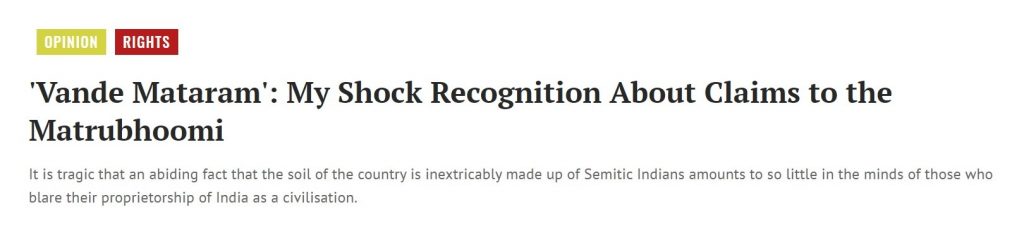
headline of the article on The Wire

The minutest functional part of his brain must have realised the atrocious nature of the argument and therefore, to save Badri Raina from utter embarrassment invented the character of an Abraham Lincoln look-alike driver to save him the blushes. Regardless, the argument in question is that Muslims (and Christians) apparently have a greater claim to India because they bury the dead while other communities choose to cremate theirs.

The driver supposedly said, “Dr Sahib, do you ever think about the reality that when you die, your ashes will be immersed in the Ganges, or some other water-body, and, in course of time, the waters will carry them beyond the territories of India into the sea; but when I die, my remains will be buried in our own mother earth and be mingled with it for eternity? So, I ask you, which of us has a better claim to the matrubhoomi?”

While any sane individual would have found the argument utterly inexplicable, Badri Raina found great merit in it, although the reasons are not specified. His enlightened mind appears to have interpreted the argument as something so self-evident that switching on the tube-light inside his head was enough for him to realise its truthfulness. However, to those of us who have not been fortunate enough to be blessed with such flamboyant intellectual faculties, the whole argument appears wacky.

As if in a spell of great intellectual clarity, Badri Raina declared, “I had never ever in my long life confronted this perception. The stark irony embedded in it suddenly made me feel an outsider to my own land—something of a tenant than an owner. It was as though I had been dispossessed of a claim trumpeted over millennia of a self-evident assertion and unquestionable truth.”

He continued, “I was hit by the thought that where my flesh and bone would not fertilise my matrubhoomi, Abdul Rashid’s would. What metaphysical rejoinders I could think up seemed puerile next to the earthy home truth Abdul Rashid had placed before me.” While the idea of fertilising one’s motherland with our own body would appear macabre to most, if we are to take Raina’s words to their logical conclusion, then the demand to hand over graveyards to farmers for them to grow crops would appear entirely legitimate.

Any person with an iota of a functional brain would dismiss such assertions without so much as a second thought. Therefore, naturally, senior leaders of the Congress party have found great merit in them. Shashi Tharoor said it was an ‘intriguing question’ and said, “Don’t those whose flesh and bones are interred in the soil of India, to become part of its earth, have a greater claim to the matrubhumi than those whose ashes are poured into rivers that flow into the sea?”
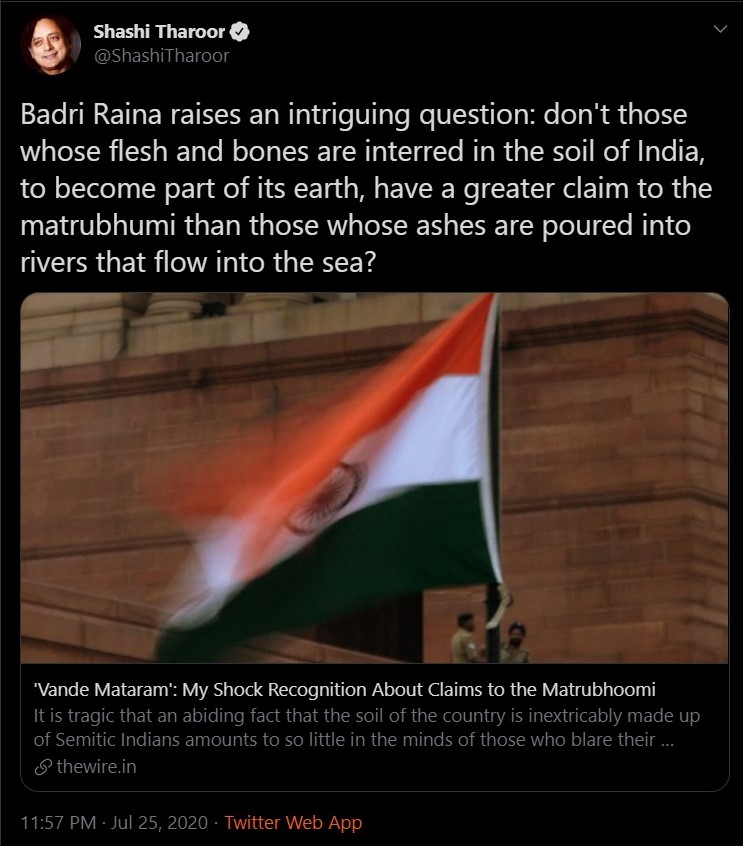
Tweet by Shashi Tharoor

That Shashi Tharoor supports the idea of Muslims and Christians having a greater claim is not surprising at all as it was Manmohan Singh, Tharoor’s colleague, who as Prime Minister declared that minorities have the first right to resources in India. And naturally, given the conduct of the Congress party during the UPA regime, it can be said without any shred of doubt that when Manmohan Singh referred to minorities, the category did not include Jain, Buddhists or Sikhs.

The objective of the article was quite clearly to justify the refusal of the Muslim community to sing the Vande Mataram. However, in the process, Badri Raina had a Freudian Slip and revealed why liberals are so enthusiastic about providing citizenship rights to illegal Muslim immigrants from Bangladesh and Myanmar. It is because such people genuinely believe that Muslims have a greater claim to India than Hindus.

The only concern here is that a senior leader of the country’s largest political party, Shashi Tharoor, actually found merit in Raina’s argument. But then again, it serves to explain the policies of the UPA government and the rationale behind the blatantly anti-Hindu Communal Violence Bill perfectly well.
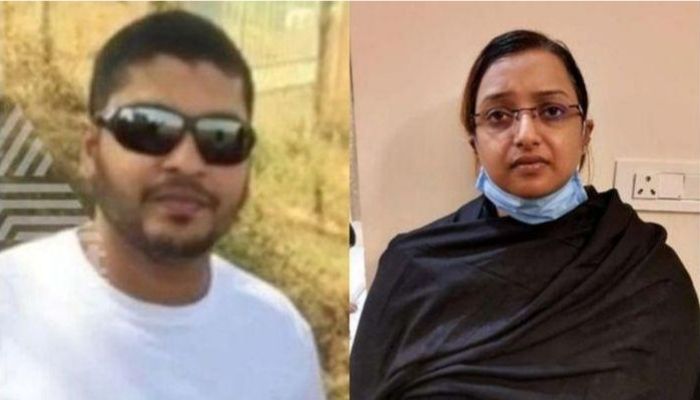

NIA probe unearths terror funding link with Kerala Gold smuggling accused Rameez

The National Investigation Agency (NIA) has reportedly hinted in its report on the Kerala gold smuggling case, filed before the Court, about the links of one Rameez KT of Malappuram to terror funding and anti-national activities. Rameez is the key mastermind of the sensational gold smuggling case that has wreaked havoc on the incumbent Kerala State government.

As per another accused Sandeep Nair, he has been involved in anti-national activities that can undermine the country’s security. In its report, the NIA noted, “Sandeep stated about the suspected unlawful activities of Rameez KT that are likely to affect the security of the nation. The same is under investigation.” Rameez had suggested smuggling maximum gold amidst the Coronavirus lockdown. In another report filed by the security agency on July 21, the NIA stated he had extensive contacts abroad and ‘commanded’ a group of people.

He was first booked in 2014, at the tender age of 20, for smuggling 15kg gold through cargo. Reportedly, his activities in the United Arab Emirates (UAE) and diversion of funds for sponsoring anti-national activities are under investigation. Rameez knew everyone linked with the gold smuggling case, including the source of smuggled gold to buyers in Kerala. As per the preamble of the NIA, the agency has the power to investigate cases that can affect India’s relationship with ‘friendly nations.’ Reportedly, UAE had recalled its top diplomat Rashed Khamis Ali Musaiqri Alshemeli, former in-charge of the consulate in Thiruvananthapuram, in the aftermath of the case.

Rameez would travel to Dubai frequently

According to a senior Intelligence officer, the mastermind of the gold smuggling racket would frequently travel to Gulf countries on a visiting visa under the pretext of doing a job or running a business. However, the investigation into the case has revealed that he did not own any business there. Reportedly, Rameez would live in Dubai for two months and would return to India for a brief period. The investigation officer informed that the record of frequent travellers such as Rameez to foreign nations is maintained by the Customs Department. NIA is now seeking his custody, besides the Enforcement Directorate (ED).

Gold smuggling scandal linked to Anti-CAA riots

Earlier, central investigative agencies, under the Ministry of Home Affairs (MHA), reportedly had been probing whether the proceeds from the gold smuggling case were used to fund protests against the humanitarian Citizenship Amendment Act (CAA), 2019. As per reports, a youth from Kerala was nabbed in UP in connection to the case. Reportedly, he had revealed critical information about the funding of these protests.

Speaking to the New Indian Express, an intelligence official informed that investigative agencies have found the connection of a few Keralites with organisations in the Gulf States, which funded the violent protests. “We’ve analysed the evidence, and gold smuggling is one of the fundraising sources,” the official claimed. NIA has also reportedly received tip-offs about the funding of anti-national activities through the gold smuggling racket.

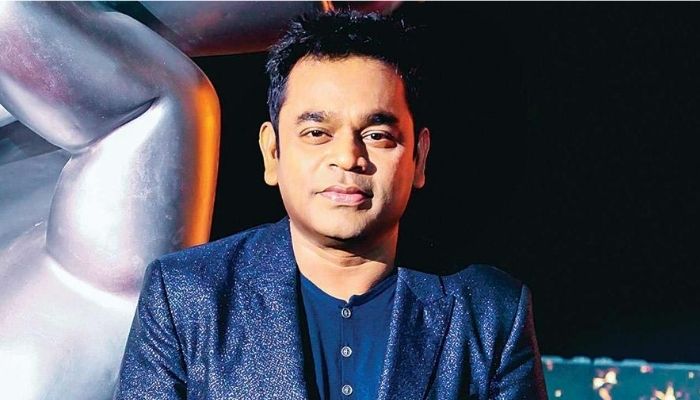
Words from Quran cannot be used to describe a woman’s beauty: When AR Rahman was hounded by Islamic clerics

The raging debate in the country over nepotism in the movie industry, which erupted after the tragic death of 34-year-old actor Sushant Singh Rajput, seems to have now opened a hornet’s nest as more voices are coming out sharing their story of suppression in the industry. Joining the ranks of Bollywood actor Kangana Ranaut, singer Sonu Nigam, music maestro and Oscar-winning composer AR Rahman too opened up about his experience about a vicious ‘gang’ that has been working tirelessly to ensure that he finds less work in Bollywood.

The legendary music director, speaking to a media, recently said that he has been forced to do ‘dark movies and not the good ones’ as several people have ganged him against him, without realising that they are ‘harming’ his career prospects.

Just as AR Rahman pointed at how he is being targeted by a powerful lobby in the Bollywood, a 16-year-old incident involving him, where he was harassed and bullied by Muslim clerics has once become a talking point.

In 2004, the Islamists and Muslim clerics of the All India Ulema Council had ganged up against fellow Muslims – the controversial painter MF Husain and music director AR Rahman after a controversy had erupted over a qawwali song in the film. A song composed by AR Rahman for Husain’s movie ‘Meenaxi’ had received severe backlash from the Muslim society accusing them of insulting their religion.

The song ‘Noor-un-Ala-Noor’ composed by AR Rahman was called ‘blasphemous’ by Islamic clerics, who had claimed that the song featuring the film’s main protagonist, Tabu, contained words directly lifted from the Quran.

The council’s statement was supported by Muslim organisations like the Milli Council, All-India Muslim Council, Raza Academy, Jamiat-ul-Ulema-e-Hind and Jamat-e-Islami.

“For us, the term Noor-un-Ala-Noor is very sacred. It shouldn’t be used to describe the physical beauty of a heroine,” Maulana Abdul Quddus Kashmiri, general secretary of the All-India Ulema Council said in his statement.

A complaint was also registered against the moviemakers in Mumbai and the clerics had also demanded them to change the words of the song.

The constant hounding of AR Rahman and MF Husain by the Islamic clerics had resulted in Husain pulling out his movie ‘Meenaxi — A Tale of Three Cities’ out of movie theatres.

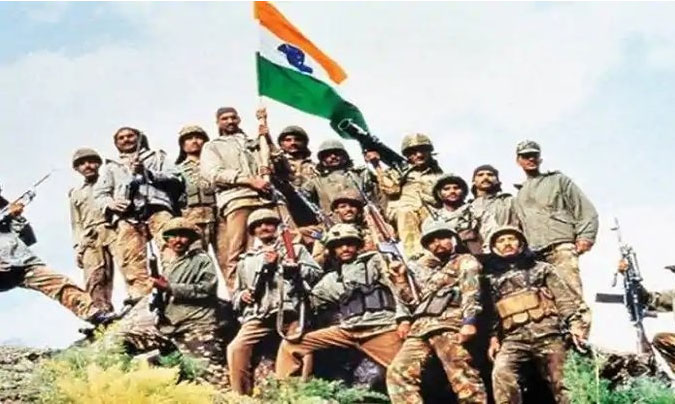
While India fought Pakistan at the border in 1999, here are 6 ways in which Congress insulted Kargil victory and our war-heroes

For every Indian, 26th July is no less than a celebration. On this day, the Kargil war was officially over. No one can forget the sacrifice of Capt Vikram Batra, Lieutenant Balwan Singh, Major Vivek Gupta, Naik Digendra Kumar, Lieutenant Manoj Kumar Pandey and Major Saurabh Kalia among many others. Even though the Pakistan army and terrorists supporting them had the benefit of altitude, the Indian Army and the Air Force had unforgettably unleashed the might.

Border tension between India and Pakistan has always been on edge for one reason or the other. After the India Pakistan war of 1971, the tension was at peak during the 90s. The terrorist activities in Kashmir caused an agitated atmosphere in the valley. In February 1999, the Lahore Declaration was signed between the two countries to defuse tensions over deputed areas of Jammu. However, Pakistan had a different plan altogether. It was training terrorists and its army men to cross the Line of Control on the high altitudes.

When India found out about the infiltration, the first assumption was they might be terrorist groups. However, the armed forces kept on learning about the infiltrations in different locations that led to the conclusion that it was a well-planned attack on a vast scale. The Government of India launched Operation Vijay, and more than 2,00,000 troops were deployed in the Valley. India lost 527 soldiers in the war. Pakistan claimed that over 3,000 of its soldiers and terrorists died in the war.

Indian Air Force played a vital role in the war. Showing its might at the height of 32,000 feet for the first time that too only after a week’s training is noteworthy. Under operation Safed Sagar, the Indian Air Force identified and eliminated Pakistani troops and terrorists to perfection. While the operation was over on 14th July 1999 and then-PM Ajal Bihari Vajpayee informed the country about it, the official declaration of the war being closed came on 26th July 1999.

While Pakistan betrayed the Lahore Declaration and attacked India after putting up a pretence of peace, another treachery, this one from within the country was being mounted. The Congress party, headed by Sonia Gandhi at the time decided to indulge in petty politics when the country was fighting a war with Pakistan.

The statements and ignorance from the Congress party since 1999 has been widely spoken about. The Vajpayee government not only had to manage the border situation at that time, but they also had to face the vicious attack by Sonia Gandhi and her party.

1. Sonia Gandhi’s call for an emergency session of Rajya Sabha

Sonia Gandhi, not to anyone surprise, was Congress President at that time. She called for an emergency session of Rajya Sabha. At that time, she said in a press conference that if Pandit Jawaharlal Nehru can call for such session during Indo-China war, why can’t she ask for one to discuss Kargil.

It was the CPI that had initiated the demands for a special Rajya Sabha session in an attempt to paint the Vajpayee government as incompetent, even though the country was in the midst of a war. When the CPI had called for the special session, Congress was skeptical fearing that the request could appear to be motivated so soon after the outbreak of hostilities, reported India Today at the time. However, soon Sonia Gandhi, joined the bandwagon and launched a scathing, traitorous attack against the Government of India.

She further added, “We cannot leave the fate of the country in the hands of an incompetent caretaker government and hence we have demanded a special session of the Rajya Sabha.” Not only Congress, but other opposition parties like CPI tried to corner Vajpayee government over Kargil while the war was still on.

Further, it was Digvijay Singh and Ashok Gehlot, according to a 1999 India Today report who were pressing for a special session and trying to convince all opposition parties.

Casting shameless aspersions against the Vajpayee government, Digvijay made his party’s intention clear when he said, at the meeting that a Rajya Sabha session was necessary to probe if the Union government knew for a “long time about the infiltration and yet had kept quiet”.

2. The infamous “defence expert” views in The Guardian

Kanchan Gupta wrote an article in 1999 in which he explained how the Congress party took refuge under the international media. They used an article published in the Guardian during the Kargil war that had the whole scenario and the Army’s preparations wrong. In the article, it was stated that in the lack of weapons and ammunition, the army stood handicapped in Kargil.

Later, it was found that the report in the Guardian was the handiwork of a frustrated arms dealer who came to India amidst war to sell his weapons. What he failed to factor in that the Italian mastermind behind the Bofors scandal is no longer facilitating Indian weapon purchases and the thing went south quickly for him. Congress Party used a particular article to attack the government but failed miserably in this attempt as well.

3. No recognition of the war heroes for years

For years, since the Congress government came to power in 2004, the party refused to celebrate Kargil war heroes. In 2017, Rajeev Chandrashekhar, BJP MP posted a tweet in which he shared a letter dated July 2009 asking Congress party in power to remember the sacrifices of the soldiers during Kargil War.

In the letter, he reminded the Congress Party about the sacrifices of the soldiers. He said, “I believe the actions of the men and women of our armed forces in that conflict and every other conflict deserve out shradhanjali, respects and salutes. I appeal to the Ministry of Defense and Government to memorialize this day and celebrate it every year.”

4. Congress MP Rashid Alvi: Kargil was BJP’s war, no need to celebrate victory

MP Rashid Alvi, in 2009, said that there is no reason India should celebrate Kargil Vijay Diwas as it was fought in our territory. Only NDA may celebrate it as it was its war (and not India’s). The attitude of the Congress government towards the fallen soldiers was painful not only for the families of the soldiers but also for every patriotic Indian.

5. Congress’ former MoS Home could not even remember when Kargil was fought

At the time when Congress MP Rashid Alvi said that the Kargil war was an “NDA war” to celebrate and that there was no need for Congress to celebrate, former minister of state for home Sri Prakash Jaiswal couldn’t even remember when the Kargil war was fought and won. Asked about Vijay Diwas, he wanted to know when the day was celebrated.

6. Siddaramaiah government’s apathy towards Kargil war hero

Congress, on several occasions, on the national and state level, failed to recognize the war heroes. In 2018, then-Karnataka government led by Congress and its associates under CM Siddaramaiah failed to recognize the importance of a Kargil war hero. Col MB Ravindranath took his last breath at the age of 59 in Bangalore. The then Commanding Officer of 2 Rajputana Rifles, Col Ravindranath was famously known for taking back the Tololing Top from the Pakistani aggressors during the 1999 Kargil war. The government of India awarded him Vir Chakra.

Siddaramaiah government’s apathy over his death miffed everyone. While his government provided full state honours to late journalist Gauri Lankesh during her funeral, not even a single government official came for Col Ravindranath’s funeral.

While the Congress party today talks about defence-related issues and attempts to bring the Modi government down, its history has been shady when it comes to times when the country needed them.

Coronavirus fight: Human trial of vaccine begins in 6 Indian cities, no major side effects yet

Amidst the rising cases of Wuhan Coronavirus in India, the human clinical trials for the much-anticipated vaccine has been initiated in six cities. Reportedly, the vaccine candidates of two companies, namely, Bharat Biotech and Zydus Cadila are currently being used for the clinical trials.

As per the report, both the vaccine candidates were approved for Phase I and Phase II trials and they were administered for the first time to volunteers on July 15. Reportedly, another vaccine developed by Oxford University will also be tested in India, on receiving regulatory approval.

Covaxin, developed by Bharat Biotech, is used for human trials in several Indian cities such as Delhi, Hyderabad, Patna, Kancheepuram, and Rohtak. The clinical trials will then be reportedly initiated in other cities including Nagpur, Visakhapatnam, Belgaum, Gorakhpur, and Kanpur. As per reports, while the testing of ZyCov-D developed by Zydus Cadila is limited to Ahmedabad, Covaxin is set to be tested on 500 volunteers between 18 and 55 in 12 different hospitals in 12 different cities. The vaccine candidate is the result of a joint collaboration between the Indian Council of Medical Research (ICMR) and the National Institute of Virology (NIV).

No major side effects of Coronavirus vaccine

Dr. Sanjay Rai who serves as the principal investigator of the human trial project at AIIMS Delhi informed that there was no immediate major side effect on a volunteer after he was administered the vaccine.

There are some minor side effects – like redness of the skin where the dose was given, pain and mild fever – which can be seen in any vaccine test. But, it went smoothly without any other health issues. The doctors are continuously monitoring their health, ” PK Singh heading the clinical trials at AIIMS Patna was quoted as saying.

The Bollywood ‘gang’ gets to AR Rahman too: Read what he said about the industry hounding him and spreading rumours

Music maestro and Oscar-winning composer AR Rahman has opened up about his experience about a vicious ‘gang’ that has been working tirelessly to ensure that he finds less work in Bollywood. He has composed soundtracks for several movies such as ‘Slumdog Millionaire,’ ‘Swades’, ‘Dil Se’, ‘Guru’, and ‘Rockstar’.

While speaking to Radio Mirchi, he said, ”I don’t say no to good movies, but I think there is a gang, which, due to misunderstandings, is spreading some false rumors.” Rahman added that he is now forced to do ‘dark movies and not the good ones as several people have ganged him against him, without realising that they are ‘harming’ his career prospects. He recounted how filmmaker Mukesh Chhabra had informed him about stories that he had heard about the composer. It made him realise the reason as to why he is finding less work in the Hindi film industry.

AR Rahman believes in the power of destiny

“When Mukesh Chhabra came to me, I gave him four songs in two days. He told me, ”Sir, how many people said don’t go, don’t go to him and they told me stories after stories. I heard that, and I realised, yeah okay, now I understand why I am doing less work in Hindi films and why the good movies are not coming to me,” Rahman was quoted as saying.

Reportedly, the ace musician said that he believed in God and the power of destiny. He reiterated, “So, I am taking my movies and doing my other stuff. But all of you are welcome to come to me. Make beautiful movies, and you are welcome to come to me.”

Ace composer pays tribute to Sushant Singh Rajput

On Wednesday, AR Rahman uploaded a musical tribute to the late 34-year-old actor Sushant Singh Rajput who committed suicide on June 14. He wrote, “In loving memory of Sushant Singh Rajput. Watch our musical tribute on Disney Plus and Sony Music featuring various artists.”

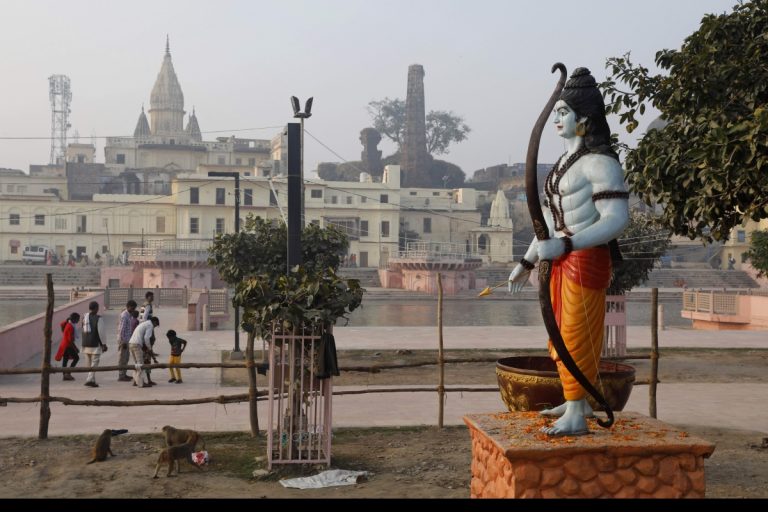
Here are the 11 sacred places, including Jain temple and Gurudwara, the soil from which have been sent to Ayodhya for Bhoomi Pujan

As preparations are underway for the historic Bhoomi Pujan of the Ram Mandir at Ayodhya, the Vishwa Hindu Parishad (VHP) has sent sacred soils from 11 sacred places to Ayodhya to be used in the foundation of the grand temple.

According to the reports, the VHP, which spearheaded the Ram Mandir movement, has despatched water and soil collected from 11 sacred sites collected from Hindu and Jain temples, Sikh Gurudwaras to Ayodhya.

Soil from the following 11 sacred places have been collected and already taken to Ayodhya ahead of the religious event scheduled on August 5:

  1. Siddha Kalka Peeth
  2. Ancient Bhairav Mandir
  3. Gurudwara Sheesh Ganj
  4. Gauri Shankar Mandir
  5. Sri Digambar Jain Lal Mandir
  6. Prachin Hanuman Mandir
  7. Prachin Shiv Navagrah Mandir
  8. Prachin Kali Mata Mandir
  9. Sri Lakshmi Narayan (Birla) Mandir
  10. Bhagwan Valmiki Mandir
  11. Badri Bhagat Jhandewalan Mandir, Karol Bagh

Besides, the holy waters of various rivers across the country are also being sent to Ayodhya for the foundation laying ceremony.

Addition to this, the soil from the Rashtriya Swayamsevak Sangh (RSS) headquarters has also been sent to Ayodhya for the Bhoomi Pujan ceremony of the Ram temple. The soil from a temple in Ramtek and water from the confluence of five rivers, both near Nagpur city, have also been sent for the Vishwa Hindu Parishadupcoming event, a senior VHP functionary said.

VHP appeals to people to celebrate the event in a ‘big way

On Saturday, the Vishwa Hindu Parishad issued an appeal to the people of the country to celebrate the ground-breaking ceremony of the Ayodhya temple in a big way on August 5. The VHP said that the historic day will mark the end of a 500-year-wait for the bhakts to witness the reconstruction of Ram Mandir.

“The occasion is seen as a moment of Hindu redemption and we want that every single family witnesses it,” said VHP working president Alok Kumar.

VHP general secretary Milind Parande also appealed saying that as PM Modi along with members of the Trust will perform rituals for construction of the temple, devotees too should celebrate the occasion by decorating their household, performing aarti and chanting devotional songs.

Ram Mandir Bhoomi Pujan event to be held on August 5, 150 to attend

Prime Minister Narendra Modi will be visiting Ayodhya for Bhumi Pujan of Shri Ram Mandir on August 5. The ceremony will be graced by Defence Minister Rajnath Singh, UP Chief Minister Yogi Adityanath among several other invitees.

BJP stalwart and former deputy prime minister LK Advani, who was instrumental in shaping the Ram Mandir movement, is likely to accompany Prime Minister Narendra Modi for the historic event. The Ram Janmabhoomi Tirtha Kshetra has invited 150 guests – including Shiv Sena Supremo Uddhav Thackeray, BJP veterans Murli Manohar Joshi, Home Minister Amit Shah and several CMs, asserting that all rules of social distancing will be followed.

The trust has estimated that construction of the temple will be completed in the next three years i.e by 2023.

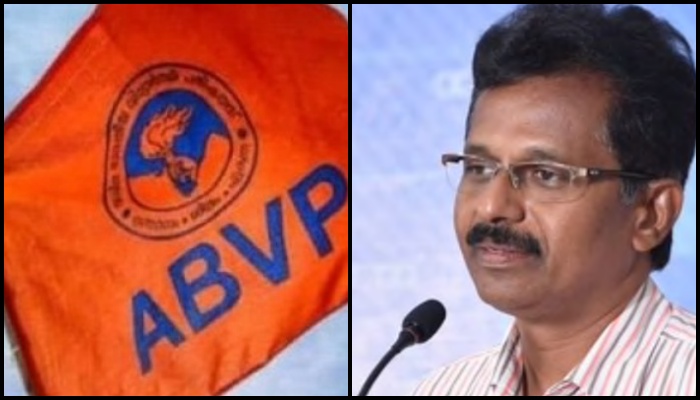
Complaint filed by neighbour against ABVP President over harassment charges withdrawn: Read details

A complaint filed against Akhil Bharatiya Vidya Parishad (ABVP) National President Dr Subbaiah Shanmugam by one of their 62-year-old neighbour in Chennai over charges of alleged harassment has been withdrawn by the complainant on Saturday.

While media reported that Dr Shanmugam had been booked by police on Saturday, on Sunday, ABVP released a statement confirming that the complaint which was filed by one neighbour of Dr Shanmugam at Chennai Adambakkam police for allegedly harassing the woman over a parking spot was withdrawn. In the complaint filed against ABVP President, the lady had alleged that he had urinated at her doorstep and thrown garbage at her doorstep.

The student outfit, late at night, issued a statement saying the complainant, Balaji Vijayaraghavan, the woman’s nephew, has withdrawn the complaint.

“Misunderstandings between two families now stand cleared and all issues between the two parties have now resolved,” the ABVP stated.

Earlier, the 62-year-old women had submitted CCTV footage and photos, showing a man, supposedly Dr Subbiah, urinating at her doorstep. The misunderstanding between the woman and the ABVP leader had started over the parking space issue. Since January, the doctor had not paid the money which led to a fight between the duo. 

In the complaint, the woman had said that the ABVP president had allegedly threw used surgical masks, garbage, after which she installed a CCTV camera at her doorstep on July 5. On July 10, the camera recorded him allegedly urinating in front of the house.

Dr Subbiah is a professor and Head of the Department of Surgical Oncology at Kilpauk Medical College and Government Royapettah Hospital. The 62-year-old complainant had registered a case under IPC sections 271 and 427, besides TN Prohibition of Women Harassment Act.

Meanwhile, Dr Subbiah had contended that the video was doctored. “The video is doctored. That is not me. Someone is manipulating the situation,” Dr Subbiah had said.

ABVP attacks NSUI over purported video

As the videos went viral on the internet, the ABVP blamed the Congress-backed National Students’ Union of India (NSUI) for circulating the video. Reacting to the issue, ABVP National General secretary Nidhi Tripathi had said that Congress affiliated students’ body was running malicious and derogatory propaganda against its National President and demanded an investigation into the claims made by NSUI.

The ABVP had said that the video which is being shared by Congress affiliated body is tampered and being used with malafide intentions.

“NSUI is running malicious, derogatory propaganda against Dr Subbiah Shanmugam with a tampered video purported as harassment. ABVP demands investigation to be done on the claims by NSUI which are libellous in nature and have invited legal action against the national office bearers of INC, IYC, and the NSUI. The video shared by NSUI with an allegation of harassment is tampered with and is being used with malafide intentions. The two families have discussed this within their housing society and have already concluded that the harassment allegations were caused due to misunderstandings and are untrue,” the statement released by ABVP read.

Nehru helped PLA forces to rampage and decimate Tibet by supplying rice in 1950s: Read details

Weeks after India pushed back Chinese troops from the Line of Actual Control along the northern borders, there has been an ongoing debate about the Nehruvian blunders, that has imposed a severe cost on the country and its citizen.

One such Nehruvian idealism, while dealing with the hostile communist China in the 1950s, not only cost India a peaceful ally in the form of Tibet but also enabled the aggressive PLA troops to annex one of the greatest ‘rooftops of the world’ – Tibet, wrote French-born author and historian Claude Arpi.

In his book, Will Tibet Ever Find Her Soul Again?, Claude Arpi has made significant disclosures on how the then Prime Minister Jawaharlal Nehru had supplied rice for the invading PLA troops in Tibet at a time when Chinese army was busy rampaging and decimating the Tibetan way of life and culture in the early 1950s.

“The most grotesque incident of this period was the feeding of the PLA’s troops with rice coming through India,” writes the France-born expert on Tibet and China. According to Arpi, without the active support of the Indian government, the Chinese troops would not have been able to survive in Tibet.

Tibet, before the massive Chinese influx of the 1950s, was a self-sufficient society. For centuries, The locals had prospered and there was no food shortage or starvation. However, with Chinese troops annexing the Tibet, there began a breakdown in the Tibetan economy.

In his book, Arpi writes, before the arrival of the Chinese Army in the forbidden kingdom few Tibetans had ever eaten rice. Largely, Tibetians ate roast barley, known as tsampa, for centuries. “The influx of fresh troops brought the first serious problem in the new co-existence between the Chinese occupants and the Lhasa government: the availability of foodstuff,” he writes.

To overcome the food crisis for the PLA troops in Tibet, Chairman Mao and his comrades looked towards India. SK Krishnatry, the Indian Trade Agent (ITA) in Gyantse, wrote that the Chinese government had requested the Government of India “for an agreement allowing facilities for the transport of food and other supplies through India”.

The Chinese government wanted India to transit facilities for 10,000 tonnes of food grains through India. The Jawaharlal Nehru-led Indian government initially agreed only to allow the transit of about 3,000 tonnes of rice to Tibet.

“While pointing out the transport problems involved in the proposal, the Government of India expressed their (sic) willingness to consider it together with all outstanding issues regarding their position in Tibet,” wrote Krishnatry.

Nehru was blinded by ideological lenses, duped by Chinese

Prime Minister Nehru, blinded by dark ideological lenses and duped by China’s “bhai-bhai” delusion, the leadership turned a blind eye to the real intentions of communist China and its devastating presence in Tibet. Nehru did not even grasp that China was hitting out at India when it gave a call in the 17-Point Agreement, signed in May 1951, to “drive out imperialist aggressive forces from Tibet”.

“Who were these imperialist forces? Very few realised then that it could be against India,” Arpi wrote.

This rice diplomacy between India and China continued for the next four years. India, on 20 October 1954, re-emphasised that it would continue to supply rice to the PLA stationed in Tibet. “Rice which China would buy was intended exclusively for Tibet, and only difficulties of transport have necessitated this purchase by China,” reported The Hindu then.

Ten months later, the first truck would reach Lhasa from the Chinese side. With China supplying rice directly to Tibet, imports from India wasn’t required anymore.

At a time when Indian leadership should have confronted Chinese aggressiveness in China, Nehru pushed his ill-advised rice diplomacy, which not only created hostilities against India within Tibet but also allowed Chinese to consolidate its position in the Tibet. The blunders of Nehru directly allowed China to forcefully annex Tibet, by providing food for the invading troops.

China did not inform Nehru govt regarding PoWs

In his book, Arpi further reveals about the saga of four Indian “prisoners of war”, who were caught during the 1950 invasion. Out of the four PoWs, two of them were in the PLA’ confinement for almost two years without the “friendly” Chinese government informing India about them.

What more shocking is that these PoWs were not soldiers or even spies, but were “employed by the Tibetan government and worked under Robert Ford, the British radio operator in Chamdo”. Ford recalled how the four young Indians had been trained to man a wireless station. The fact that China kept them in jails without informing India, should have shown the Indian government that China was not a friend, writes Arpi.

Interestingly, as per Apri, KM Panikkar, India’s ambassador to China from 1950-52, was more aligned to China and acted like Mao’s envoy rather than Nehru’s. Panikkar invariably defended the Chinese acts of omission and commission. Even when the Chinese were caught napping with their wrong, aggressive foot forward, he would defend them.

“The Chinese attitude about these issues has all along been that these arise from unequal treaties and are ‘scars left behind’ by the British,” Apri notes Panikkar’s words. Even as China was trampling on the Tibetan way of life, Panikkar would send a note back home, saying, “Not much news has been appearing about Tibet of late and it is expected that the work of re-organisation there will naturally take time and will be handled with tact and care by the Chinese authorities.”

Not jus Panikkar, the most prominent among others being the then Defence Minister, VK Krishna Menon, who, according to his biographer T.J.S. George, was such a votary of self-reliance that he rejected the idea of importing crucial defence equipment and turned the military factories into production lines for hairclips and pressure-cookers.

Chhattisgarh police register FIR after 40 cows die due to suffocation in Bilaspur

On Saturday, about 40 cows reportedly died due to suffocation in the Medapar village of Takhatpur in Bilaspur district, Chhattisgarh. 

As per the report, the cows were kept in a claustrophobic environment in the Panchayat Bhawan of the Medapar village on the orders of the Sarpanch or the Panchayat head. He put the bovines inside the Bhawan for two days without informing or seeking permission from their owners. Reportedly, senior officials reached the spot to assess the ground situation that led to the death of the animals. According to Bilaspur District Magistrate Dr. Saransh Mittar, a First Information Report (FIR) has been filed in the case.

He informed that while 40 cows died, around 20 of them were successfully rescued from the Panchayat Bhawan by the district authorities. He stated that the cattle owners will be provided adequate compensation for their loss. As per the report, veterinary doctors rushed to the spot to attend the bovines that were evacuated. The Bilaspur police also rushed to the spot and recovered the carcasses of the cows. According to the Superintendent of Police (SP) Prashant Agarwal, an FIR has been registered in the case and an investigation is underway.

Cattle owners faced with challenges in Chhattisgarh

Reportedly, there is a ban on grazing cattle in the open to minimise the risk of damage to Kharif crops. As such, the cattle owners are faced with major difficulties due to limited cowsheds in several villages in the State. As per the report, the Chhatisgarh government is now building 5000 cowsheds in the State under the Suraaji Gaon Yojana. It has also directed the Sarpanchs to ensure that the bovines remain in their sheds during the enforcement of the ‘open grazing ban’.