Home Blog Page 550

UP: Akeel allows his friends to rape his wife for money in Bulandshahar and watch the videos in Saudi Arabia, case filed

An appalling incident has come to light from Uttar Pradesh’s Bulandshahar where a man allowed his friends to rape his wife and record the videos of the act which he used to watch.

According to reports, the man named Akeel works as an automobile mechanic in Saudi Arabia. He married the victim in 2010 and has 4 children from the marriage. In her complaint to the police, the woman said that her husband used to visit her once or twice a year. However, he hasn’t visited her for the last three years.

The last time he came to visit her, he allowed his friends to rape her. However, his friends continued to rape her even after he returned to Saudi Arabia and have been paying her husband money for that. The victim revealed that her husband makes his friends record the video of her rape which he watches sitting in Saudi Arabia.

When the victim confronted her husband regarding this, he reportedly threatened to divorce her. Therefore, she kept it to herself enduring the abuse for three years. She was even threatened by her husband’s friends that they would leak her videos if she told anyone about it. The victim reportedly tried to complain to her husband’s family about the matter but they did not support her.

The victim’s brother reportedly said that her family only came to know about the incident after she had a fight with her husband who came to visit her recently. That’s when she decided to tell her family about the abuse.

The 35-year-old victim, who is currently one month pregnant, met Bulandsheher SSP Shlok Kumar to file a complaint. A case has been registered by the police in the matter under relevant provisions.

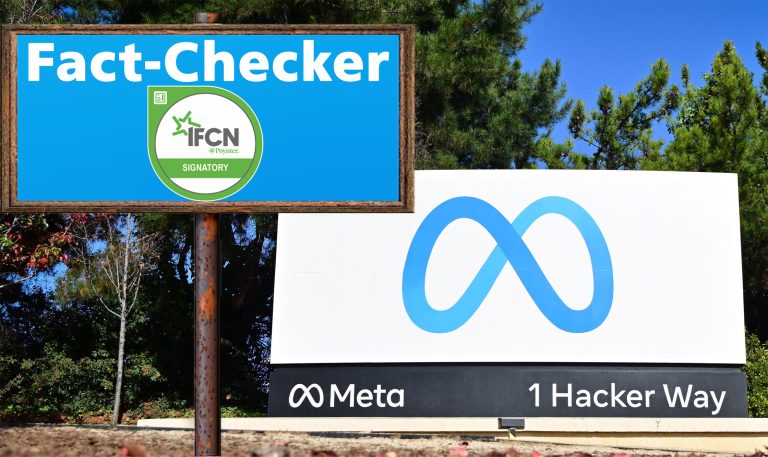
Who in India is going to be most affected by Meta’s decision to do away with ‘fact checking’

Meta’s co-founder and Chief Executive Officer (CEO), Mark Zuckerberg recently announced significant changes to the company’s moderation policies and practices. This decision is attributed to the evolving political and social environment, as well as a commitment to promoting free speech. Notably, the social media platform will phase out its fact-checking program with established partners and introduce a community-based system akin to Community Notes on X (earlier Twitter).

Meanwhile, a tangible feeling of panic has enveloped fact-checkers in India as well, following the development. Several fact-checking organizations that have emerged in India over the past few years depend significantly on financial support from Meta. Consequently, any repercussions stemming from the company’s position in the United States may potentially jeopardize the future of many of these platforms. A senior executive from a fact-checking organization stated, “This is possibly the biggest existential threat many fact-checkers will have to contend with,” reported The Indian Express.

The current cessation of Meta’s third-party fact-checking program is limited to the United States, however, fact-checkers in India foresee that similar changes will soon be implemented in the country. They interpret the company’s strategic shift towards a more President-elect Donald Trump-friendly approach as a move likely to endure for at least the next four years. There are two significant concerns of financial resources and audience reach in the event that this situation unfolds.

Fact-checkers have expressed that for various Indian entities, involvement in Meta’s third-party fact-checking program is their only means of financial sustenance. The loss of this funding could force them to shut down their operations. Additionally, these fact-checkers depend on Meta’s platforms for visibility. Facebook and Instagram serve as the primary channels for directing traffic to their websites. The removal of their content from these platforms could drastically reduce the number of visitors to their sites.

Meta engages with fact-checkers certified by the International Fact-Checking Network (IFCN), who analyze and rate the veracity of posts on Meta platforms based on original reporting. Meta has formed alliances with 12 such fact-checking partners, including notable publishers like PTI, AFP, India Today Fact Check and The Quint, as well as a selection of smaller organizations, in India.

As of now, it is uncertain if Meta will extend its decision to discontinue fact-checking partnerships in India. A company spokesperson added, “We are ending our third-party fact checking program, and over the next couple of months we’ll phase in a more comprehensive Community Notes system, in the US. There are no changes to other countries at this time.” Furthermore, it is unclear how such a system would comply with regulations like the EU’s (European Union) Digital Services Act, which requires online platforms to implement strategies to address illegal content and allegedly protect users.

Meta’s New Beginning

Meta’s recent actions are perceived as a strategic shift by the company in preparation for the upcoming Trump era. Mark Zuckerberg mentioned a series of content-related modifications to Meta’s platforms including Facebook, Instagram and Threads. A primary highlight of this is the termination of the third-party fact-checking program in the United States. He declared, “We’re going to get back to our roots and focus on reducing mistakes, simplifying our policies and restoring free expression on our platforms.”

Zuckerberg further conveyed, “More specifically, here’s what we’re going to do. First, we’re going to get rid of fact-checkers and replace them with community notes similar to X, starting in the US.” Meta in a blog post added, “Once the program is up and running, Meta won’t write Community Notes or decide which ones show up. They are written and rated by contributing users. Just like they do on X, Community Notes will require agreement between people with a range of perspectives to help prevent biased ratings.”

“We intend to be transparent about how different viewpoints inform the notes displayed in our apps, and are working on the right way to share this information. People can sign up today (Facebook, Instagram, Threads) for the opportunity to be among the first contributors to this program as it becomes available,” it informed.

“We’ve seen this approach work on X, where they empower their community to decide when posts are potentially misleading and need more context, and people across a diverse range of perspectives decide what sort of context is helpful for other users to see. We think this could be a better way of achieving our original intention of providing people with information about what they’re seeing and one that’s less prone to bias,” Joel Kaplan, Meta’s chief global affairs officer proclaimed.

Meta has indicated that it will begin the rollout of its Community Notes strategy over the upcoming two months, with further enhancements planned for the rest of the year. This initiative will entail the discontinuation of content demotion based on user fact-checking and the introduction of what the Joel Kaplan described as “a considerably less obtrusive label” that guides users to additional resources.

Alongside the cessation of its fact-checking program in the United States, Meta has disclosed its intention to transfer its content moderation team from California to Texas, a decision that is widely viewed as a gesture towards the fresh Trump presidency. Furthermore, the company has strengthened its ties with the incoming presidential administration by appointing Dana White, the founder of UFC (Ultimate Fighting Championship) and a notable supporter of Trump, to its board of directors.

The company has also contributed $1 million to President-elect Donald Trump’s inaugural fund, aiming to foster a constructive relationship with the administration following a period of strained interactions. Earlier, Zuckerberg had made a trip to Trump’s Mar-a-Lago residence located in Florida. Meta also appointed Joel Kaplan, a prominent Republican, to the position of president of global affairs.

Indian fact-checker organizations affiliated with IFCN

International Fact-Checking Network (IFCN) official website declared, “Signatories of the IFCN Code of Principles are subjected to the established vetting process and evaluated by external assessors. Through this process, an organization must exhibit a commitment to nonpartisanship and fairness, transparency of sources, transparency of funding and organization, transparency of methodology, and a commitment to open and honest corrections.”

As expected, many fact-checking organizations from India are featured on the website. The list of “verified signatories of the IFCN Code of Principles who are active” included mutliple names from the country: Boom, Digital Forensics, Research and Analytics Centre (D-FRAC), Digiteye, Factly Media & Research, Fact Crescendo, First Check, India Today Fact Check, News Mobile, Newschecker, Newsmeter (Fifth Estate Digital Private Limited), THIP (The Healthy Indian Project) Healthtech Pvt Ltd, TV Today Network Limited – The Lallantop, Telugupost.com, The Quint, Vishvas News and Youturn. If the updated Meta policy adjustments are enforced in India, then the company will snap ties with these platforms.

Press Trust of India is currently undergoing a renewal process as IFCN informed, “Verified signatories are reminded a month prior to their expiration date with a notice to start their renewal process and the IFCN offers them a three months period to complete their renewal process. The renewal process is subject to a new assessment and approval by IFCN’s advisory board in reference to IFCN’s Code of Principles.”

“Due to the high volume of applications, some of the signatories that have expired may be undergoing the renewal process. To confirm which organization is undergoing renewal, please reach out to us at [email protected]. Thank you for your understanding,” the network added in relation to the expired entites which had FactChecker.in, Pravda Media Foundation and The Logical Indian in its roster from India.

Alt News and IFCN

Alt News, a self-identified fact-checking site in India, was a signatory partner of the IFCN until April 2020. However, its parent company Pravda Media Foundation was found in the “expired” list. “This badge (IFCN displayed over logo) confirms Pravda Media Foundation was deemed compliant with the IFCN principles when subjected to the established vetting process and evaluated by external assessors. Through this process, an organization must exhibit a commitment to nonpartisanship and fairness, transparency of sources, transparency of funding and organization, transparency of methodology, and a commitment to open and honest corrections,” the webiste stated.

The most recent accreditation to Alt News was granted on 26th April 2019 which ended on the corresponding date the following year. The accreditation granted by IFCN remains valid for a duration of one year. Interestingly, IFCN reported that Alt News, might have possibly contravened a clause of the its code, in June 2019. The provision that Alt News could have breached pertains to the organization’s nonpartisanship policy.

The former was notified on 7th June by a netizen that Pratik Sinha, Alt News’s co-founder, was violating the neutrality regulation. Pratik Sinha had confirmed his association with Jan Sangharsh Manch, a civil rights outfit founded by his late father Mukul Sinha, in his X profile. Notably, it has since been removed from there. Furthermore, it was highlighted that Jan Sangharsh Manch has organized political events and is linked to the political party referred to as the New Socialist Movement. It is also known for its stance against the ruling party in India.

How non-partisan is IFCN 

The IFCN claims to be a global consortium of organizations focused on combating false information across mass media and social media platforms. However, a review of their dubious history unveiled otherwise. IFCN had indicated that it was investigating possible infractions by Alt News, in 2019 after it was discovered that its founder, Pratik Sinha, along with directors Nirjhari Sinha and Murlidhar Deomurari are associated with the Jan Sangharsh Manch. Furthermore, the leadership of the Jan Sangharsh Manch played a pivotal role in founding the New Socialist Movement, which was registered as a political party with the Election Commission in 2007.

Afterward, Baybars Orsek, the director of the International Fact-Checking Network (IFCN), announced that they had posed a series of inquiries to Alt News and alleged that there was no basis for any further action after evaluating the responses. It appeared that IFCN did not make any attempts to verify the explanation presented by the platform. A brief investigation would have easily exposed the narrative it was attempting to establish. However, the primary purpose of the entire exercise or rather charade was to absolve Alt News of any culpability.

America First Legal (AFL) utilized social media platforms to reveal the collaboration between the Global Engagement Centre (GEC) of the US State Department and private media organizations in disseminating deep state propaganda, in 2023. It obtained documents related to the GEC through the Freedom of Information Act (FOIA). The organization previously initiated legal action against the private entities that allegedly conspired with the US federal government to implement mass surveillance and restrict the free speech of American citizens.

AFL added that numerous conservative Americans were singled out for their statements related to vaccine mandates, election integrity and Covid-19 vaccinations, on social media. It highlighted that GEC of the US State Department is working with ‘fact checkers’ backed by George Soros and associated with IFCN, to shape the global media narrative. AFL stated that the fact-checkers, coordinating with GEC, also recieve money from notable organizations such as Omidyar Network, Google, Facebook and the Bill & Melinda Gates Foundation.

OpIndia already shed light on a systematic approach taken by the Left lobby, in 2021, in alliance with their corporate sponsors, to bolster unreliable networks and groups with the intent of commandeering certain narratives to preserve their narrative monopoly. The IFCN serves as a prime example of this strategy, having lauded Alt News, whose founders are known for their extensive record of spreading false information and were its partners. Their ideological affiliations are also well established.

The IFCN-accredited fact-checker Boom Live also demonstrated a propensity for spreading false narratives. It disseminated a conspiracy theory regarding the transfer of Justice Muralidhar shortly after it happened. The British Broadcasting Corporation (BBC) in 2018 released a substandard research paper that sought to link the rise of fake news to nationalism. They were ultimately forced to retract their story after OpIndia published a series of articles that successfully debunked their findings.

A key reason for the BBC’s inaccuracies was their reliance on biased fact-checkers during their research process. This was a direct result of their dependence on IFCN-accredited fact-checkers. As a result, when researchers utilize IFCN for their studies, they frequently arrive at flawed conclusions, which can lead to the complete withdrawal of their work. While the analysis contained multiple shortcomings, a glaring issue was their reliance on biased sources regarding fake news.

Moreover, IFCN in the past refused accreditation to certain media organizations based solely on political disagreements. OpIndia and Facthunt were denied the same for reasons that clearly reflected a bias. The minimal consideration they give to fact-checking is further illustrated by the behavior of their accredited fact-checkers, who often promote misinformation and misclassify authentic occurrences as false.

Conclusion

IFCN does not serve as a genuine mechanism to combat misinformation. Its primary function appears to be supporting the Left’s influence over public dialogue while masquerading as a defender against fake news. It was particularly troubling that Meta had chosen to collaborate exclusively with IFCN-accredited fact-checkers in its efforts to address misinformation.

More importantly, it is noteworthy that the Poynter Institute, which manages the IFCN, also owns the Tampa Bay Times, a media organization that supported Hillary Clinton in her 2016 presidential campaign. The IFCN, while asserting its role as a non-partisan repository of fact-checking organizations, has a considerable political leaning and a similar duplicity is clearly evident in its actions.

The implications for the credibility of the IFCN are yet to be fully assessed in light of Meta’s recent decision to break off its association with fact-checkers after X. However, no drastic change can be expected as it is designed to support leftist agendas and present their version of truth via preferred fact-checkers. Nonetheless, Meta’s action is perceived as a refreshing step that could yield significant results in countering the left’s misinformation campaign.

At the very least, it will prevent Meta from remaining an echo chamber for leftist propaganda and will provide ordinary citizens with an opportunity to raise their voices. It now remains to be seen whether this same development will also be rolled out in India.


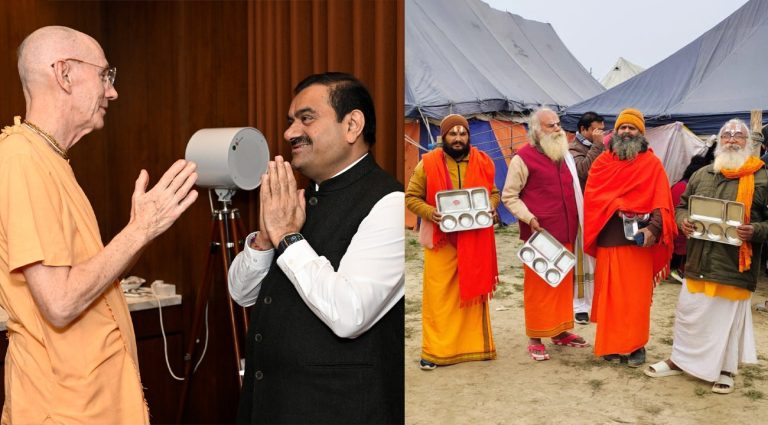
Adani Group collaborates with ISKCON for ‘Mahaprasad Seva’ at Maha Kumbh 2025, to serve meals to devotees during entire duration of the Mela

0

The Adani Group has announced that it has joined hands with the International Society for Krishna Consciousness (ISKCON) to serve meals to devotees at the Maha Kumbh Mela in Prayagraj starting next week. The two organisations will offer Mahaprasad Seva to the devotees during the entire duration of the Maha Kumbh Mela, from January 13 to February 26.

Talking about the initiative, Adani group chairman Gautam Adani posted in Hindi on X, saying, “It is my good fortune that in Maha Kumbh, in collaboration with @IskconInc, we are starting ‘Mahaprasad Seva’ for the devotees, in which free food will be provided to lakhs of people with the blessings of Maa Annapurna.”

Gautam Adani met Guru Prasad Swami, the Chairman of ISKCON Governing Body Commission (GBC), on Thursday in regard to the initiative.

Speaking about the Mahaprasad Seva in collaboration with ISKCON, Adani said, “With the blessings of Maa Annapurna, free food will be provided to lakhs of devotees. Today, I got the opportunity to meet Guru Prasad Swami ji of ISKCON and I deeply experienced the power of dedication towards seva. In the true sense, seva is the highest form of patriotism. Seva is meditation, seva is prayer and seva is God.”

On the other hand, Guru Prasad Swami said, “The Adani Group has always been a shining example of corporate responsibility and social service. What makes Gautam Adani ji outstanding is his humility — he never waits to be called but moves forward to serve selflessly. We are extremely grateful for his contribution. His work inspires us to give back to the society and unite in the service of humanity.”

As per reports, the Mahaprasad Seva will be offered to 50 lakh devotees and the meals will be prepared in two kitchens in and outside the mela area. The food will be distributed at 40 places in the Maha Kumbh area and 2,500 volunteers will be involved in this initiative.

Pakistan’s passport ranked among the weakest in the world, ranked 103rd in Henley Passport Index

0

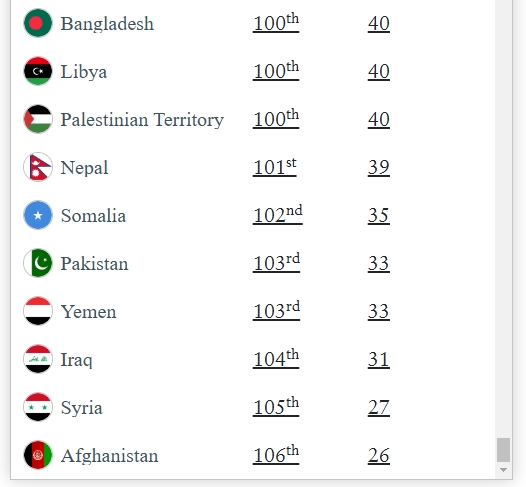
Pakistan’s passport has been ranked among the weakest in the world, securing the 103rd spot in the Henley Passport Index 2025, a significant drop from its position in the previous year, as reported by The News International.

This year, Pakistan shared the same rank as Yemen, offering visa-free access to only 33 countries–starkly contrasting the leading passports globally. The Henley Index, which ranks the passports of 199 countries based on their visa-free travel accessibility, relies on exclusive data from the International Air Transport Association (IATA), The News International reported.

According to The News International, the passport ranking highlights a concerning reality for Pakistani citizens, with Pakistan now falling behind other nations in terms of global mobility. In comparison, Singapore holds the top spot, with its passport granting visa-free access to 195 countries. Following closely behind are Japan and several European nations, including France, Germany, Italy, and Spain, which now rank third with access to 192 destinations. Countries like Finland and South Korea, once higher on the list, also dropped a place in the past year.

Iraq (104th), Syria (105th), and Afghanistan (106th) are among the countries with weaker passports than Pakistan. Meanwhile, nations such as Somalia, Nepal, Palestine, and Bangladesh rank just above Pakistan. Somalia holds the 102nd position, only one spot ahead of Pakistan.

The News International reported that in 2024, the Pakistani passport was already ranked as one of the worst globally, positioned at 104th place. However, the 2025 rankings mark a slight improvement, albeit still reflecting limited travel freedom for Pakistani nationals. This low ranking highlights the challenges Pakistani citizens face in accessing global opportunities and raises questions about the country’s diplomatic relations and passport strength.

As the Henley Passport Index underscores the growing divide in global mobility, the Pakistani passport’s poor ranking serves as a reminder of the barriers many face in a world where travel is increasingly seen as a sign of international connectivity and opportunity.

(This news report is published from a syndicated feed. Except for the headline, the content has not been written or edited by OpIndia staff)

UK: Rotherham grooming gang victim turned activist says police asked her to delete posts on child sexual abuse

As the Labour government in the UK is facing the heat after the Pakistani Grooming Gangs scandal resurfaced, the British authorities seem to be making every effort to dodge accountability by suppressing free voices talking about the exploitation of British children that went on for decades.

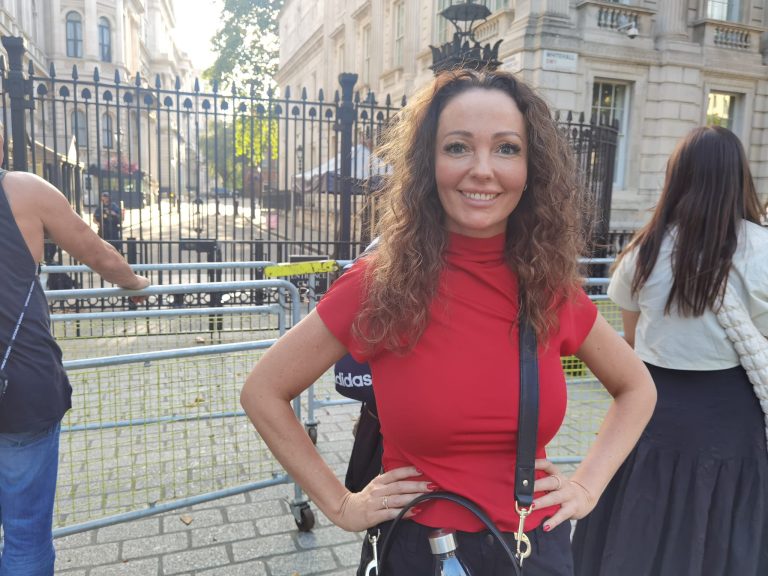
Recently, a victim of the Rotherham child sexual abuse scandal alleged that she was asked by police authorities to take down her posts about the scandal. Sammy Woodhouse, a 39-year-old woman, posted on X (Twitter) that she was asked by South Yorkshire Police to delete her posts and not to report on Rotherham professionals. She said that the information she posted was received directly from the South Yorkshire Police over 6 months ago yet she was asked to delete it.

Woodhouse is herself a grooming survivor. She fell victim to the grooming gangs in Rotherham at the age of 14 when he met her abuser named Arshid Hussain. At that time, Woodhouse was not aware that Hussain was the ringleader of a drug-dealing criminal gang that abused teenage girls. Hussain groomed Woodhouse and made her believe that he loved her.

However, the relationship soon turned abusive. According to Woodhouse, Hussain used to beat and rape her and even threatened to kill her if she dared tell anyone. He impregnated her at the age of 15. She was only able to escape after Hussain got arrested for an offence. Woodhouse accused police of having a ‘lazy attitude’ when she went to them to report Hussain.

Several victims of the Pakistani Grooming gangs like Sammy Woodhouse have come out with their testimonies accusing police of apathy and inaction in relation to complaints of sexual abuse by the Pakistani Grooming gangs across cities in the UK. The Grooming gangs comprising largely of men of Pakistani descent, were active in several cities of the UK including Rochdale, Rotherham, Oxford, Telford, Leeds, Birmingham, Norwich, Burnley, High Wycombe, Leicester, Dewsbury, Middlesbrough, Peterborough, Bristol, Halifax, Newcastle, Huddersfield, and Hull.

The terror of these grooming gangs that began in the 1980s continues till date. These gangs worked in an organised manner targeting young, impressionable girls. They manipulated them and gained their trust. These innocent girls were then abused by sexual predators en masse and were supplied across chains of abusers.

The grooming gangs sexual abuse scandal has stirred a global debate compelling the ruling Labour Party government to address the issue. The issue caught the global eye after business tycoon Elon Musk, targeted British Prime Minister Keir Starmer accusing him of being complicit in the sexual abuse of British children. Musk criticised the British government for failing to act in cases of child sexual abuse.

A bill was introduced by the opposition in Parliament on Thursday demanding an inquiry into the grooming gangs scandal. However, it failed to go through due to a lack of support from the government.

Faridabad: Mutilated body of Hindu youth found, family says Fakruddin, Anwar, Idris and others killed him because he was witness in a rape case

In Faridabad, the mutilated body of a missing Hindu youth was found on Wednesday, 8 January. The young man’s body was identified as that of a man named Deepak Kumar, who was reported missing by his family since December 16. Deepak’s body was abandoned in the bushes near Sector 62, and as per reports, the body had been badly mutilated and was in a decomposed condition. Some fingers and toes were also missing.

The victim’s family lives in the same Sector 62 area. The victim’s brother Dileep has informed that Deepak was last seen on December 16. They have been searching for him for weeks. Upon information about the body, the family came and confirmed the victim’s identity.

Police spokesperson Yashpal Singh informed that a missing person case had been filed, and police were searching for Deepak since December 16. As of now, Deepak’s body has been sent for postmortem in the Badhshah Khan Civil Hospital.

Deepak was witness in a case involving a minor girl, says family

A copy of the complaint by Deepak’s brother, Dileep, was shared on social media. In the complaint, Dileep has mentioned that he has complained against some persons named Fakruddin, Idris, Anwar, Azad, Sohail, and others. They had an enmity with Deepak because, as per Dileep’s complaint, Deepak was the main witness in a case involving a minor girl where the above persons were accused.

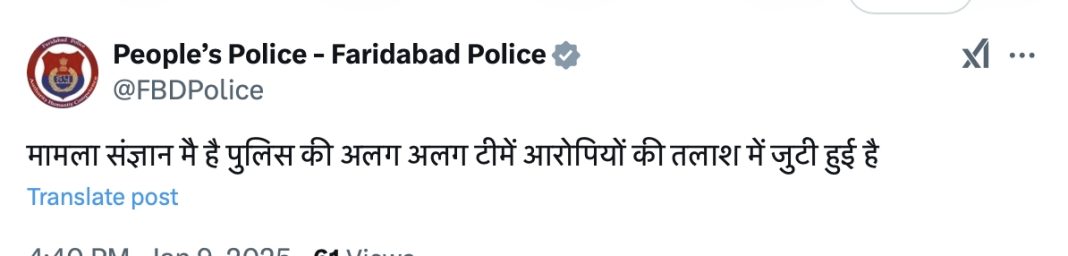
Replying to the post, Faridabad Police stated that they have taken cognisance of the issue and have constituted teams to search for the accused persons.

Some media reports had also reported that Deepak’s body was found beheaded.

Sambhal Jama Masjid committee moves Supreme Court seeking to prevent use of well outside the mosque for Hindu religious purposes

0

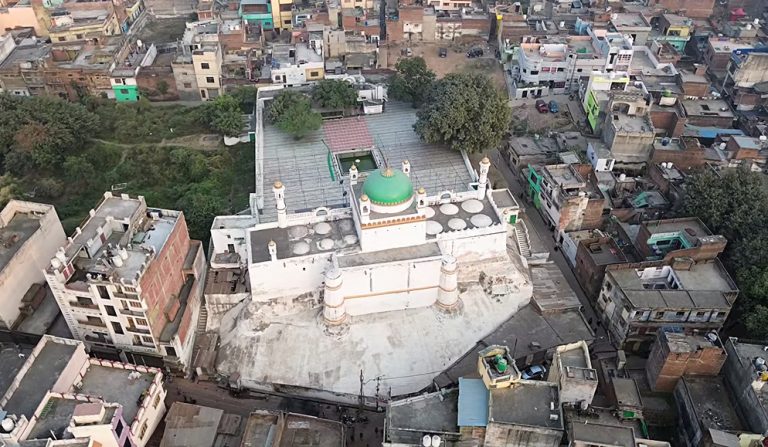
The Committee of Management, Shahi Jama Masjid, Sambhal, on Thursday moved the Supreme Court seeking direction to the District Magistrate to ensure that the status quo is maintained with respect to the private well situated near the stairs/entrance of the mosque.

The mosque committee urged the top court to issue directions to the DM and not to take any steps/actions with regard to the investigation of the well, and open the well-constructed outside the structure without due permission from this court.

“District Administration, Sambhal is conducting a purported drive to revive old temples and wells in the city with reports indicating that at least 32 old unused temples have been revived and 19 wells have been identified which are being made operational for public prayers/use,” the application stated.

“The District Administration, in its purported drive for the so-called revival of old temples and wells, is giving publicity to the proposed public access being granted to the use of the well, claiming the said wells to have religious significance,” it added.

It also stated that posters have also been put up around Sambhal and near the mosque indicating purportedly the location of historical wells and therein the mosque has been shown as a temple.

The mosque committee said that it has apprehensions and has already given a legal notice on December 16, 2024 to the District Administration in this regard.

“The District Magistrate has stated, as per news reports, that the well is not within the mosque and the interim order passed by this court is only with respect to things inside the mosque. While the petitioner disputes this, what is apparent is that the said private well is situated at the entrance of the mosque and partly inside it, and opening the same for Hindu prayers will result in mischief and disturb the fragile harmony and peace in the area at the moment,” added the application.

Actions of the District Administration are in no manner aimed towards maintaining peace and harmony as directed by this court, although an assurance in this regard was given by the state, as reflected in the order of November 29, 2024, the Mosque Committee said.

The petitioner urged the top court to direct the District Administration to not disturb the status quo as prevailing with regard to the private well of the mosque and not to open the same to Hindu prayers.

In November 2024, the top court had stayed the trial court proceedings in the case, directing it to not to hear the matter until the petition filed by the mosque committee against the survey order is listed in the Allahabad High Court.

Tensions in Sambhal had simmered after the local court ordered a survey of the mosque on November 19. Opposing the court-ordered survey of the Jama Masjid people clashed with police, resulting in the death of four persons.

The survey followed a petition filed by some persons in the local court, claiming that the site of the mosque was previously a Harihar temple, dedicated to Kalki, the last incarnation of Lord Vishnu, and built in 1526 after demolishing the temple.


(This news report is published from a syndicated feed. Except for the headline, the content has not been written or edited by OpIndia staff)

Canada: All four Indians arrested for killing Hardeep Singh Nijjar released by court as case stayed on Canada govt’s request. Here is the procedural reason

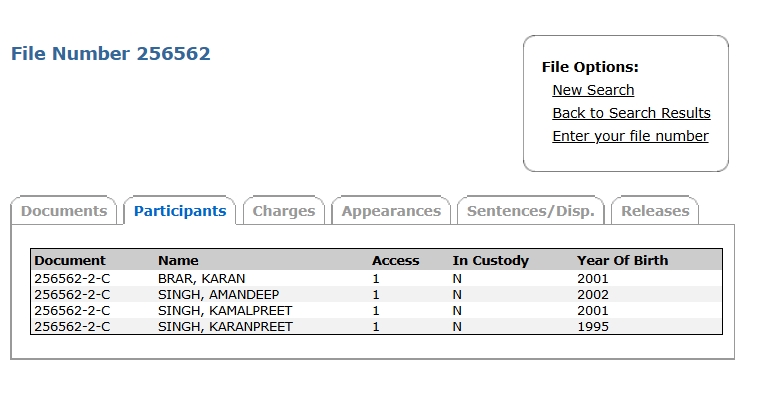
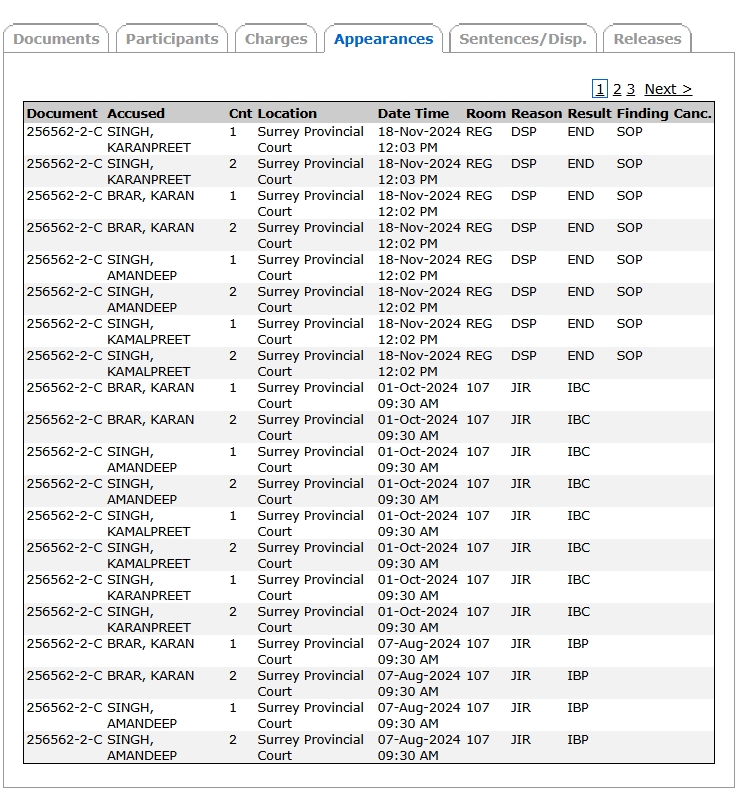
Over a year after Canada’s Justin Trudeau government killed diplomatic relations with India by accusing the Modi government of killing Khalistani leader Hardeep Singh Nijjar, all four accused arrested for the murder in June 2023 have been released from jail. As per documents from Surrey Provincial Court made available on the official website of the Government of British Columbia, they are no longer in custody.

The court record shows that for all four, the ‘In custody’ field is marked as ‘N’, which means they are not in custody.

Surrey Provincial Court record

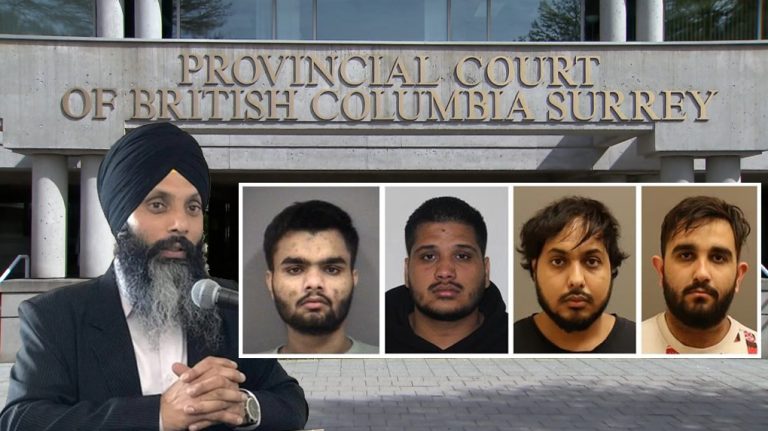
The four accused arrested on the charges of murdering Nijjar are Karanpreet Singh, Karan Brar, Amandeep Singh, and Kamalpreet Singh, all of Indian origin. The court records, posted on ? by user Brattani, show that the four accused were released on SOP on 18 November 2024. According to Canadian govt definitions, SOP stands for Stay of Proceedings directed by the Crown. This means the case against the four accused has been stayed on an order by the govt.

Further, the records mention the reason for release as DSP, which is short for disposition. This means that the matter is being disposed of. The result is mentioned as END, which means the matter has been concluded by the court.

Surrey Provincial Court record

The records also show that during the hearings before 18 November, the matter was adjourned at the request of the prosecutor.

However, while the matter has been stayed at the Surrey Provincial Court, the case will continue at the British Columbia Supreme Court. As per reports, the trial has been moved to the BC Supreme Court at the request of the govt.

The prosecution has requested a direct indictment in the case, skipping a preliminary inquiry, in order to expedite the trial. The 4 accused appeared in the first hearing at the Supreme Court on 18 November, while the next hearing is scheduled on 11 February.

The four accused were arrested by Canadian police in May 2024, and they are allegedly members of the Lawrence Bishnoi group. The Canadian media had alleged that the Lawrence Bishnoi group was targeting Khalistani activists in Canada on behalf of Indian govt.

While Canada accuses an Indian hand behind Nijjar’s murder, it is yet to provide any evidence for the same. Justin Trudeau had only mentioned ‘credible allegations’ against India. The Indian government has strongly refuted the claims.

1921 Munshiganj massacre: How British forces mercilessly killed over 700 peacefully protesting farmers in Raebareli

With 78 years having passed since its independence, India joyfully commemorates the triumphs that have defined its journey to freedom. Many movements have been documented in the annals of history that contributed to the attainment of independence from British rule. The struggle of Munshiganj farmers in Raebareli district of Uttar Pradesh is a prime example of the same. Infact, Munshiganj, is known for the farmers’ movement and the massacre perpetrated by the colonial power.

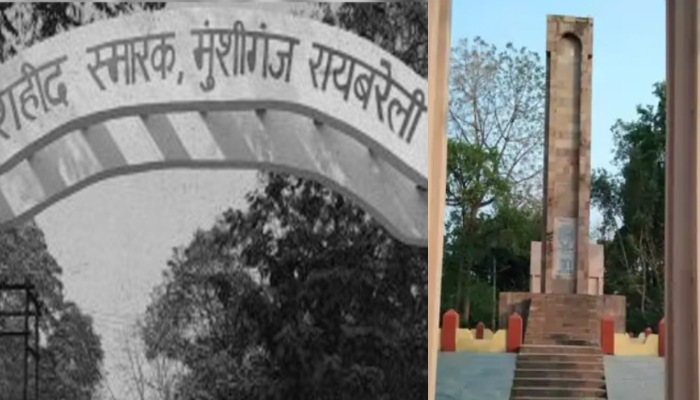
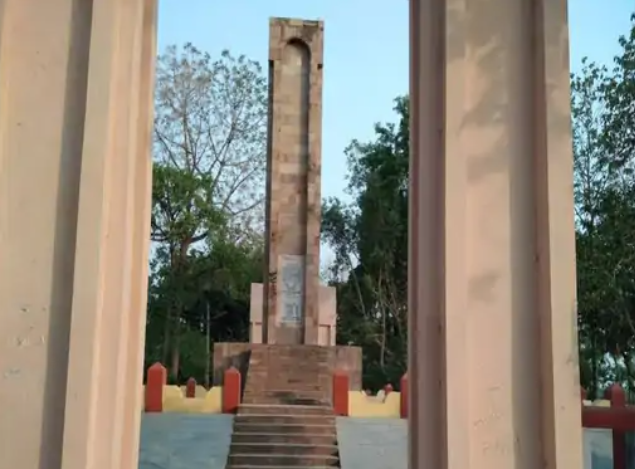
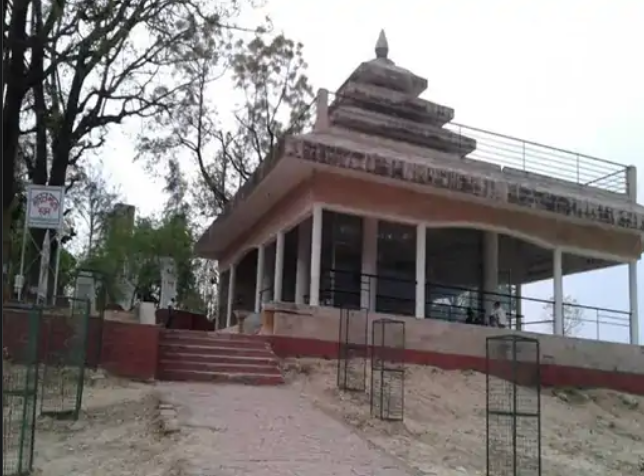
The Jallianwala Bagh incident of 1919 stands as a grim episode during the freedom struggle and a similar instance was recorded in Munshiganj. 104 years ago, Imperial Police fired upon over 2,000 unarmed farmers in this area. A memorial has been erected to honor their memory, reminding us of the severe atrocities and inhumanity committed by the British. Many experts even believe that it surpassed the Jallianwala Bagh tragedy in scale.

Image via Dainik Bhaskar

The fateful occurrence took place on 7th Jauary 1921 and encapsulated a tale of sacrifice and renunciation, as farmers bravely resisted the oppressive and cruel actions of the British regime. The origins of this incident can be traced back to Bhagwantpur Chandniha hamlet, located within the Deenshah Gaura development block. Police, under the command of the oppressive government, shot hundreds of unarmed and innocent farmers. As a result, the waters of the Sai River ran red with the blood of the farmers, many of whom gave their lives and made the supreme sacrifice for the country.

During British rule, the landlords and ration dealers exerted significant influence over Raebareli. They granted land to the farmers and were responsible for collecting taxes for the Britishers. On 5th January 1921, farmers, distressed by the tormenting actions of the talukdar Tribhuvan Bahadur Singh at the time, convened a public meeting led by Pandit Amol Sharma and Baba Jankidas. The agitated farmers from the village attended the public meeting and encircled the residence of the talukdar. Alarmed by the sight of thousands of farmers surrounding his place, he promptly notified the District Magistrate AG Sharif of the situation.

Sharif arrived at the scene with a police contingent and summoned the leaders of the Kisan Sabha, including Pandit Amol Sharma, Baba Jankidas and Badri Narayan Singh, into the palace to negotiate a resolution. However, it was a conspiracy and they were subsequently detained and transported to Rae Bareli jail, from where they were swiftly moved to Lucknow, in a bid to thwart the gathering. Despite Baba Ram Chandra’s (a trade unionist who organised the farmers of Awadh into forming a united front to fight against the abuses of landlords in 1920s and 1930s) absence at that time, the farmers began their march towards Rae Bareli to liberate their beloved leaders, arriving at Munshiganj on the evening of 6th January.

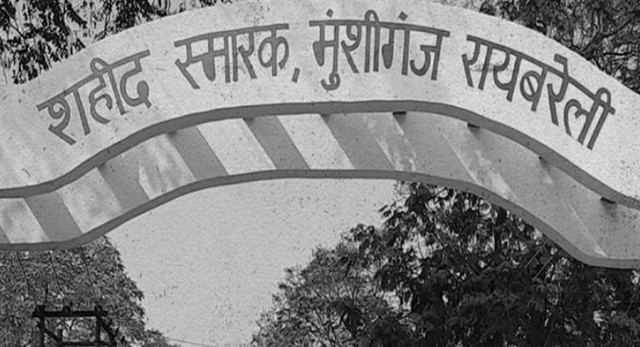
Martyr’s memorial in Munshiganj. (Source: Dainik Bhaskar)

The news of the arrest of the influential leaders rapidly disseminated throughout the Awadh province and people began to converge on Raebareli. Workers and farmers flocked to the town from all directions. The District Magistrate, witnessing the encirclement of the town, became anxious and sought to prevent further influx. He blocked the road to Munshiganj bridge with bullock carts to impede their progress. The farmers’ unwavering attitude prompted the British authorities to step in and halt them at the Sai River. The farmers sent a telegram to Martand Vaidya, informing him of the matter and requesting the presence of Pandit Motilal Nehru. His son Pandit Jawaharlal Nehru received the message in his absence and left for Raebareli immidiately.

The following day, rumors circulated throughout the village claiming that the jail administration in Lucknow had murdered both leaders. A considerable number of farmers began to assemble on the banks of the Sai River 7th January, to show their solidarity with their leaders. A large police force was deployed on the river bank, in response to the growing crowd. Observing the escalating situation, Pandit Jawaharlal Nehru made his way towards Munshiganj, however, he was intercepted near the collectorate premises and prevented from reaching the location.

The British authorities had already formulated a plan to use firearms. They were apprehensive that Nehru’s presence at the riverbank could lead to an assassination attempt, which would exacerbate the already tense atmosphere and he was placed under house arrest. The protests commenced, and the police responded by firing upon the farmers. A farmer was struck by a bullet fired by Sardar Birpal Singh. The moment Badlu Gaur collapsed to the ground, the British soldiers interpreted this as a signal to unleash their assault. It is reported that many of the victims fell into the Sai River after being shot, causing the water to turn crimson with their blood.

The farmers were vociferously expressing their dissent against the British government. They raised slogans demanding an end to unlawful tax collection and the cessation of abuses directed at farmers. The sight instilled fear in the British government officials who ordered the bloodshed in their panic. Over ten thousand rounds of ammunition were fired. This incident claimed the lives of at least 750 farmers farmers and injured more than 1500, yet the gunfire continued unabated. Those who were captured were subjected to a fine of Rs 100 and a rigorous six-month labor sentence.

Premises of the memorial. (Source: Dainik Bhaskar)

According to Anil Mishra, who oversees the organization dedicated to the legacy of freedom fighters, the Munshiganj firing incident represents a pivotal episode in the historical framework of the Indian freedom struggle, enriched by the sacrifices of numerous farmers. As a result, this incident has transformed into a timeless tale of the freedom movement from that period. Vijay Vidrohi, a local political authority, emphasized that the Munshiganj firing incident is remarkable in several ways. It is not fitting to compare it with other movements. However, it is true that this incident did not achieve the historical significance it merited within the freedom struggle. Nonetheless, it was instrumental in shifting the focus and direction of the movement.

The aftermath of the Munshiganj firing incident led to a transformation within the Congress party. The party evolved from being an entity primarily representing talukdars and landlords to one that embraced the interests of farmers and laborers. This movement catalyzed greater involvement of ordinary citizens in the freedom struggle.

What is Miyawaki technique, the Japanese approach used to create 56,000 square meters of dense forest in Prayagraj ahead of Maha Kumbh Mela

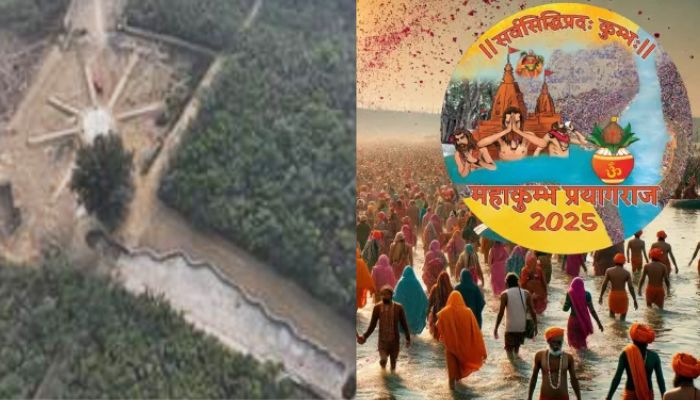
The preparations for Maha Kumbh 2025 are going on in full swing. Besides the special arrangements in the Kumbh Kshetra concerning infrastructure and health facilities for the devotees, the administration has also focused on the environmental front. In this vein, the Ministry of Culture said on Wednesday (8th January) that dense forests have been developed at various locations across Prayagraj through the Miyawaki technique, to ensure pure air and a healthy atmosphere for the millions of devotees expected to visit the city.

Over the past two years, the Prayagraj Municipal Corporation has established many oxygen banks using the Japanese Miyawaki approach, resulting in lush green woods. These efforts have improved both greenery and air quality, making them vital for environmental conservation.

Chandra Mohan Garg, Commissioner of Prayagraj Municipal Corporation, stated that the Miyawaki Technique is being used to grow dense forests around the city. Over the last two years, the Corporation has planted trees in more than ten locations throughout the city, totalling 55,800 square meters.

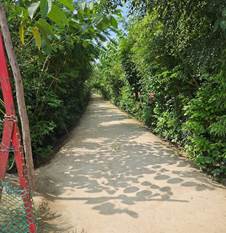
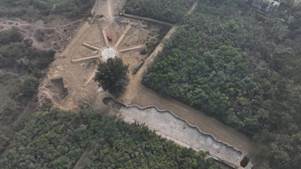
Dense forest in Prayagraj created through the Miyawaki technique (All images via PIB)

The greatest plantation, with over 1.2 lakh trees of 63 species, was completed in the Naini industrial region, while 27,000 trees of 27 different species were planted in Baswar following the cleanup of the city’s largest garbage yard. This project not only helps to eliminate industrial waste, but it also reduces dust, dirt, and foul odours. In addition, it improves the city’s air quality. Miyawaki forests provide numerous benefits, including prevention of soil erosion, reduction of water and air pollution and enhanced biodiversity.

According to Dr NB Singh, a former Botany professor at Allahabad Central University, the rapid growth of dense forests using this method helps reduce the temperature difference between day and night Maha Kumbh 2025 dense forests during summers. These forests also boost biodiversity, improve soil fertility, and create habitats for animals and birds. Additionally, large forests developed through this technique can lower the temperature by 4 to 7 degrees Celsius, offering significant environmental benefits.

The project includes a wide variety of species, ranging from fruit-bearing trees to medicinal and ornamental plants. Key species planted under this project include mango, mahua, neem, peepal, tamarind, arjuna, teak, tulsi, amla, and ber. Additionally, ornamental and medicinal plants like hibiscus, kadamba, gulmohar, jungle jalebi, bougainvillea, and brahmi have been incorporated. Other species include Sheesham, bamboo, Kaner (red and yellow), Tecoma, kachnar, mahogany, lemon, and drumstick (sahjan).

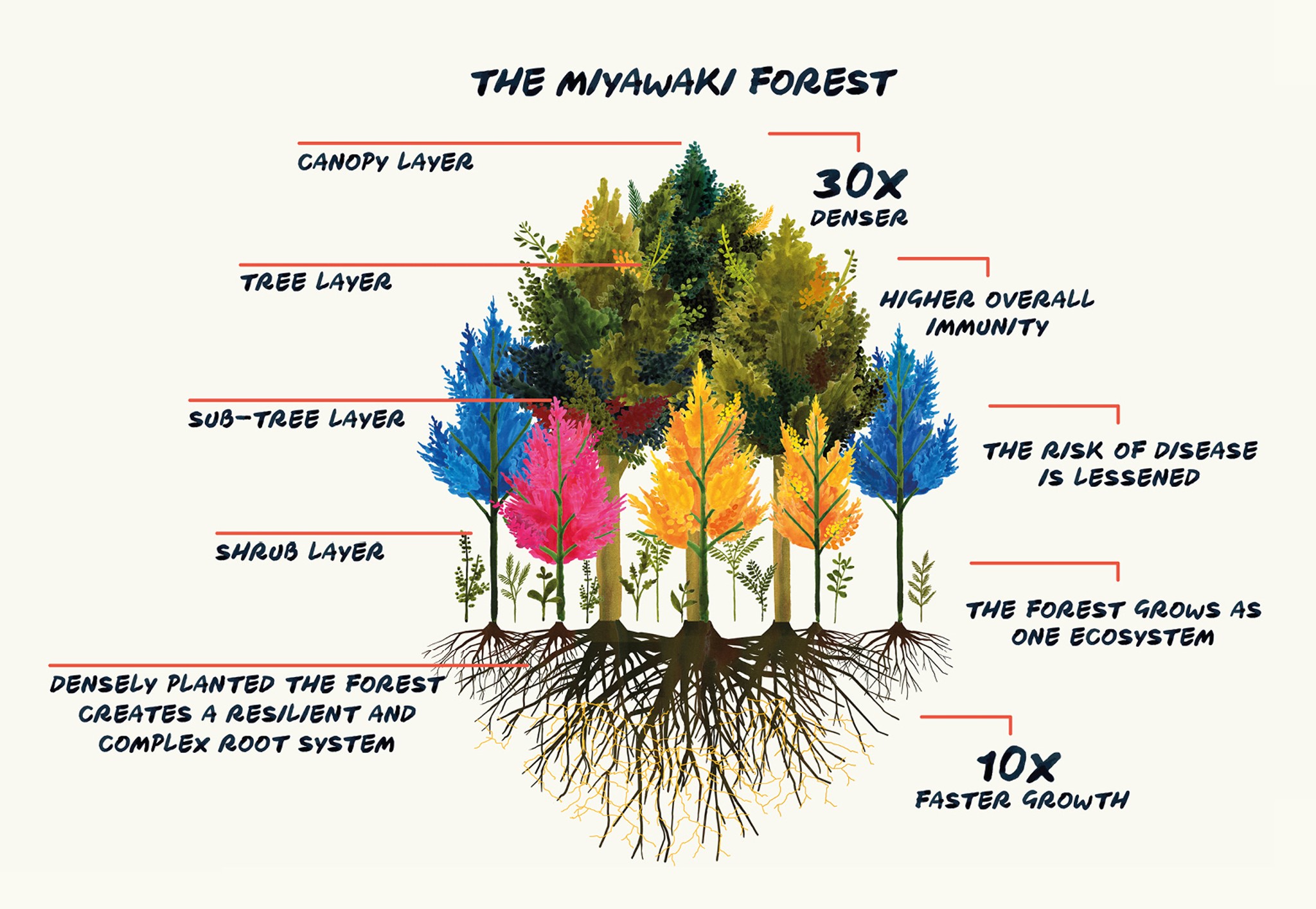
The Miyawaki technique was developed by noted Japanese botanist Akira Miyawaki in the 1970s. This technique is a revolutionary method for creating dense forests in limited spaces. This involves planting trees and shrubs close to one another to accelerate their growth which is why it is also called the “pot plantation method”.

Source: SUGi Project

With the Miyawaki technique, plants grow 10 times faster. This method mimics natural forests by using a mix of native species planted densely and also improves soil quality, enhances biodiversity, and accelerates forest development.

Trees planted using the Miyawaki technique absorb more carbon, grow faster, and support richer biodiversity compared to traditional forests. In urban settings, this technique has transformed polluted, barren lands into green ecosystems. It has successfully managed industrial waste, reduced dust and foul odours, and curbed air and water pollution. Additionally, it prevents soil erosion and promotes ecological balance, making it an effective tool for environmental restoration.