Home Blog Page 558

Heartbreaking tragedy: 579 animals suffocate to death in Dallas pet shop fire

On 3rd January (local time), tragedy struck a pet shop at Plaza Latina Bazaar in Northwest Dallas as over 550 animals died in a shopping centre fire. The fire broke out at the shopping centre in the morning. All the animals reportedly died due to smoke inhalation. Most of the animals in the pet shop were small birds. The shop also deals in exotic animals but none of them were found during the rescue operation.

Speaking to the media, Dallas Fire-Rescue spokesperson Jason Evans said that 579 animals in the pet shop at Plaza Latina in Northwest Dallas died from smoke inhalation. The flames from the fire never reached the animals. However, all of them inhaled deadly smoke, leading to the tragedy. The dead animals included chickens, hamsters, two dogs, and two cats.

In a post in Spanish on Facebook, Plaza Latina Bazaar wrote, “Unfortunate situation we had today morning, we ask for your prayers for all the families who work here, hoping to be back firm, to give them the attention your family deserves.”

Source: Facebook

Around 45 firefighters reached the spot at around 11 AM to extinguish the fire. Evans said, “While DFR personnel did search and attempt rescue, all the animals in the shop unfortunately perished due to smoke inhalation.”

As per reports, Dallas Fire-Rescue was dispatched to a 911 call for a structure fire at the shopping centre at 9:12 PM When the firefighters reached the spot, they encountered heavy smoke and fire. A second-alarm response was requested after assessing the situation, leading to additional firefighters arriving at the scene. It took them around two hours to control the fire.

The shopping centre houses around 50 businesses, ranging from restaurants and candy shops to a tattoo parlour and an insurance agency.

No people were injured in the incident. However, the structure of the shopping centre was severely damaged, and a part of the roof collapsed. An investigation into the cause of the fire is underway.

Prashant Kishor under the spotlight for using luxurious vanity van for ‘fast-unto-death’ protest: What happened

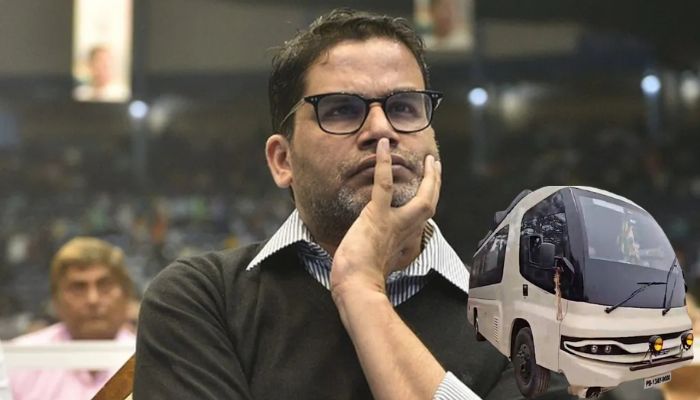
Election strategist and the founder of the Jan Swaraj Party, Prashant Kishor, has come under the spotlight for the use of a ₹2 crore vanity van while fasting-unto-death protest in support of BPSC aspirants.

The vehicle, which is equipped with luxurious amenities, is parked a few 100 metres away from the protest site. Prashant Kishor has defended the use of the vanity van to relieve himself.

He said that if we went home to use the loo, then, journalists would accuse him of having food. Prashant Kishor said, “I am on a fast here. If I go home to relieve myself, then journalists will ask questions whether I went to have food or take a nap…”

“Some people said the vanity van is worth ₹2 crore and the rent for the same is ₹25 lakh per day… I want to convey this through mediapersons,” he added.

The election strategist demanded ₹25 lakhs per day in exchange for giving away the vanity van and an alternate space for reliving himself.

“Let this van be taken away and in return, give me ₹25 lakh per day and provide an alternate space that can be used as a washroom…Will you be able to question prime minister Narendra Modi or Bihar chief minister Nitish Kumar about the amenities they enjoy?” he said.

Prashant Kishor began his ‘fast unto death’ at the historic Gandhi Maidan in Patna on Thursday (2nd January). He had demanded the cancellation of the Bihar Public Service Commission (BPSC) exam which was conducted on 13th December last year.

The ‘election strategist’ had alleged irregularities in the Integrated Combined Competitive Examination (CCE). Some students also claimed that the question paper had been leaked on social media.

Prashant Kishor and his demands

Prashant Kishor had demanded the cancellation of the last exam and the conducting of fresh Integrated Combined Competitive Examination.

“My demands include cancellation of the exam and holding of fresh tests. I also seek action against corrupt officials who had allegedly put posts, to be filled by the exams, on sale,” he told the media before commencing his ‘fast unto death.’

The founder of the Jan Swaraj Party had also demanded a high-level investigation into the alleged paper leak.

Other demands included an allowance for unemployed youths between 18-35, re-examination, a white paper on the probe of paper leaks in competitive examinations in the past 10 years and action against officers for lathi-charging students.

Re-examination in Patna and continuation of protests

On Saturday (4th January), a re-test was conducted for a select group of 12000 students (who wrote the prelims exam at the Bapu Exam Centre) at 22 centres in Patna.

However, Prashant Kishor is holding steadfast to his demand for re-examination of all aspirants.

He stated, “The government has put itself in the dock by holding retest for a select group of examinees. What will happen to 4.5 lakh other examinees who have been demanding cancellation of the December 13 exam and order for a fresh one.”

The founder of the Jan Swaraj party called upon Chief Minister Nitish Kumar to meet a delegation of BPSC aspirants. In the meantime, the district administration has dubbed his fast-unto-death as ‘illegal.’

Delhi police haults musical event organised by CM Atishi in Kalkaji without permission

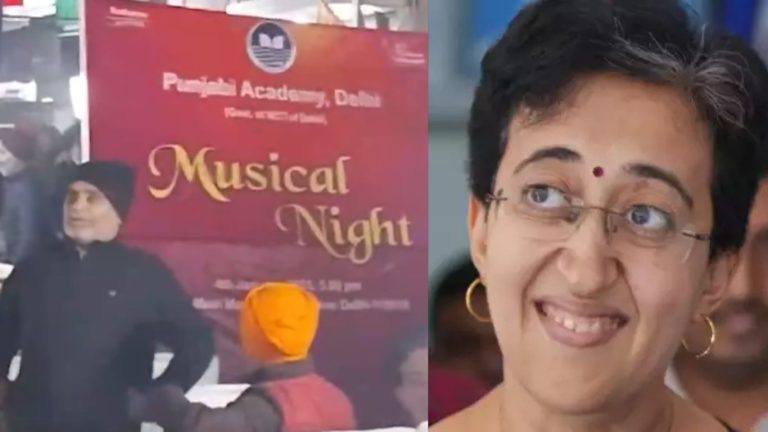
A musical event organised by Delhi CM Atishi in the Kalkaji area of Delhi was stopped by the Delhi police after it was found that no permission was taken to organise the event. The people who had gathered at the venue to see the event had to return half-heartedly after the event was stopped due to lack of permission.

According to reports, the police were informed about the event only a couple of hours before the event requesting law and order arrangements. The intimation sent to the police lacked the details about the expected gathering and traffic management requirements.

People were disappointed at the irresponsible manner in which the event was organised by the Delhi government. “A program of the Aam Aadmi Party, organised by the Punjabi Academy, was supposed to take place here. We all came to see it in large numbers. But then we found out the program was delayed. When we tried to understand the reason, we saw a significant police presence. Upon asking we learnt that the event had no police permission. Not only that, they had not even given a prior intimation. It feels like the Aam Aadmi Party is using its power recklessly, thinking they can do whatever they want because they’re in power”, an attendee was reported as saying.

It is mandatory to take a casual performance license from the Licensing Authority to organise any public performance or amusement event.

Global manipulator George Soros and Hillary Clinton among 19 awarded the Presidential Medal of Freedom by US President Joe Biden

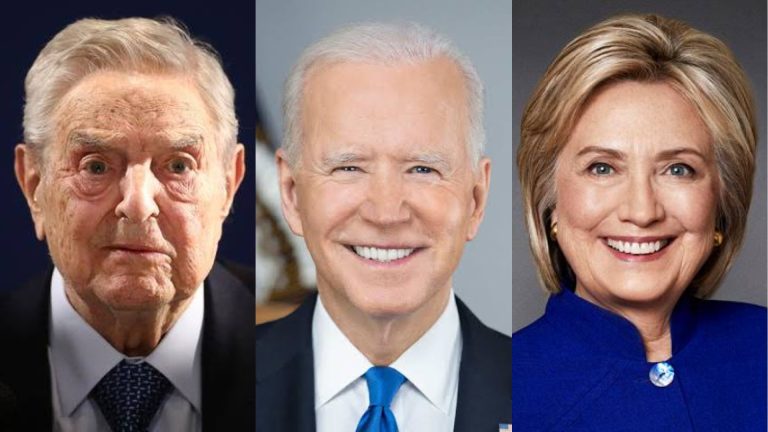
President Joe Biden will present the nation’s highest civilian honour to more than a dozen prominent figures, including politicians and cultural icons, the White House announced on Saturday. Among those who would be awarded by the outgoing President is global manipulator George Soros and career Democrat Hillary Clinton, the former presidential candidate who lost to Trump in 2016.

According to a White House news release, the medal is awarded to individuals who have made “outstanding contributions” to the prosperity, values, or security of the United States, world peace, or other significant public or private endeavours.

“These 19 Americans are exceptional leaders who have made the country a better place,” the statement read. “They are remarkable not just for their leadership but for their character and their extraordinary impact on the nation and the world.”

George Soros, 94, has been one of the most significant financial supporters of the Democratic Party in recent history. Federal Election Commission records show that the Hungarian-born hedge fund billionaire contributed over $175 million to Democratic candidates during the 2022 midterm elections. In 2024, Soros directed an additional $60 million toward House and Senate Democrats and other contentious causes through his Democracy PAC.

Soros has also transferred tens of billions of dollars from his fortune to his Open Society Foundations, a front that is accused of engineering regime change operations around the world—something which the United States has been often accused of indulging in—in countries where governments don’t toe the American line. Additionally, Soros has made substantial investments in local races to elect district attorneys in major U.S. cities.

The White House praised Soros as “a philanthropist who established the Open Society Foundations over 40 years ago” and noted that his foundation network has funded initiatives worldwide aimed at promoting democracy, human rights, education, and social justice. It is worth noting that Soros’ Open Society Foundations has come under the scanner for routinely funding anti-India activities and advancing anti-India narratives, which are aimed at undermining the democratically elected government headed by PM Modi.

Hillary Clinton, 77, will receive the Presidential Medal of Freedom nearly 12 years after her husband, former President Bill Clinton, was honoured with the award by President Barack Obama. The White House described the former first lady, secretary of state, and New York senator as someone who has “made history numerous times over her decades of public service.”

In 2016, Clinton was the Presidential nominee for the Democrat Party. Her attempt to become the country’s first female president ended in defeat when President-elect Donald Trump won the 2016 election. Clinton faced an FBI investigation over her use of a private email server while serving in the Obama administration.

Among other honourees are chef José Andrés, who operates World Central Kitchen and provides food relief in disaster and conflict zones; scientist Jane Goodall; and science communicator Bill Nye, known for his popular show Bill Nye the Science Guy.

The ceremony will also recognize entertainment, sports, and cultural icons such as U2’s Bono, actors Michael J. Fox and Denzel Washington, soccer star Lionel Messi, basketball legend Magic Johnson, and fashion leaders Anna Wintour and Ralph Lauren.

Jailed Khalistani MP Amritpal Singh to launch new political party with MP Sarabjit Singh Khalsa, son of Indira Gandhi’s assassin

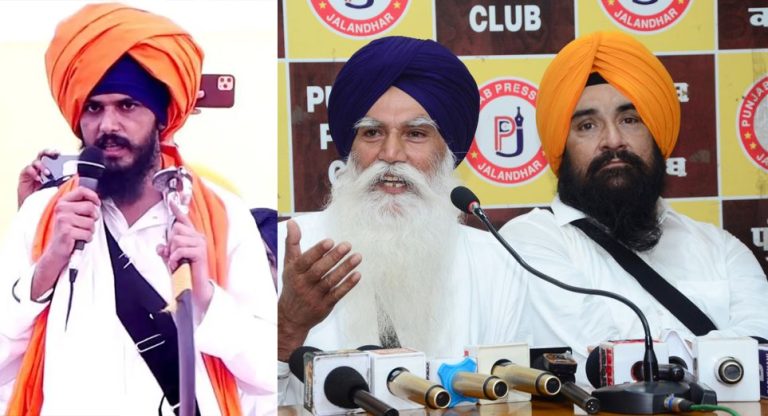
Khalistani activist and Khadoor Sahib MP Amritpal Singh who is currently lodged in Dibrugarh jail of Assam, is launching a political party along with Faridkot MP Sarabjit Singh Khalsa. Khalsa announced on Saturday that the official announcement of the political party will be made on 14th January at the ‘Panth Bachao-Punjab Bachao’ conference to be held on the occasion of Shri Muktsar Maghi Mela. The name of the party is said to be Shiromani Akali Dal Anandpur Sahib.

Amritpal Singh’s father Tarsem Singh will lead the party. He said, “We have convened a conference at Sri Muktsar Sahib on Maghi Mela in which a committee will be formed. It will be tasked with drafting the constitution of the new political party, deciding its name, establishing an advisory committee, creating district-wise committees, and handling the legal formalities required for the formation of the party.”

Tarsem Singh said that Amritpal Singh will lead the party when he comes out from prison, till then he will be the party chief.

Faridkot MP Sarabjit Singh Khalsa, son of Indira Gandhi’s assassin Beant Singh, said that initially, they will form a five- or 11-member committee to connect with people across the state. He added that the party will also contest in the elections for the Shiromani Gurdwara Parbandhak Committee.

Talking about the party, Khalsa said that people with good character and an intention to save Punjab can join their party. He said that the party would provide a political alternative to the people of Punjab. Tarsem Singh, father of Amritpal Singh, said that their party will address issues like drug abuse, religious conversion and farmer issues in the state. It was mentioned by Tarsem Singh last year in September that the people of Punjab needed a political alternative.

Who is Amritpal Singh and why is he in jail?

Amritpal Singh was arrested in April 2023 under the National Security Act and has since been lodged in a jail in Assam. In 2022, he became a popular name in Punjab after being appointed as the head of a political group named ‘Waris Punjab De’. Singh usually dressed similarly to Khalistani terrorist Jarnail Singh Bhindranwale and was linked with pro-Khalistani activities. He was arrested by the police after a month-long manhunt. He was implicated in the Ajnala police station attack in which police officers were assaulted by several armed men.

Amritpal Singh Lok Sabha elections last year from Khadoor Sahib constituency while in jail. He was granted 4-day parole to take oath as a member of Parliament. Singh had secured 4,04,430 votes which translated to 38.62% vote share.

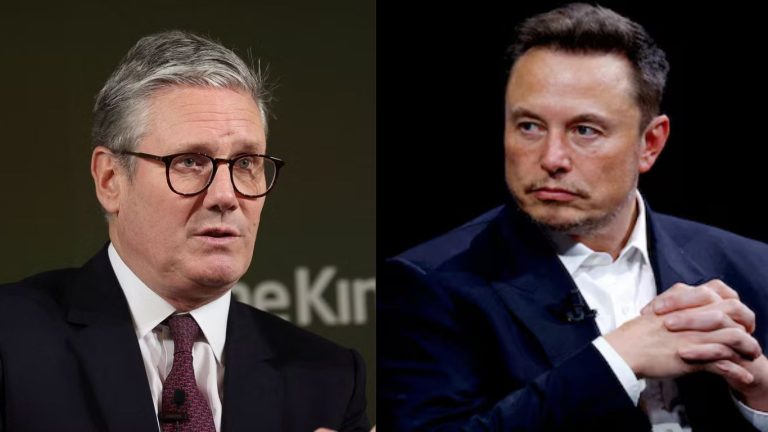
Grooming gangs: UK government turns defensive after Elon Musk holds PM Starmer responsible for sexual abuse of children by organised gangs of Pakistani men

Elon Musk has found himself at odds with the UK government over the sensitive and controversial issue of grooming gangs. Discussions and debates have reignited across various political and social spheres both in the UK and on international platforms after Musk raised the issue, bringing global attention to the organized crime that went on for decades in the UK, with police turning a blind eye.

The controversy stems from Musk’s recent activities on X, where he has been prolifically posting about grooming gangs in the UK, a topic that has historical roots in various child sexual exploitation scandals, notably the Rotherham case. Musk posted nearly a large number of tweets in the first few days of 2025, focusing on the inadequate response by the UK authorities to these crimes. He has been particularly targeting Prime Minister Keir Starmer with accusations of mismanagement during his tenure as Director of Public Prosecutions (DPP), the head of the Crown Prosecution Service (CPS).

Elon Musk has been quite vocal in criticising the British government for failing to act in cases of child sexual abuse in the UK. He termed the rapes as a ‘mass crime’ and accused PM Starmer of being complicit in the crime. Musk said that Starmer must face charges for not taking action against these crimes.

Elon Musk has accused PM Keir Starmer of failing to prosecute these gangs of Pakistan-origin men that systematically groomed and raped young girls. He has also called for the jailing of Safeguarding Minister Jess Phillips after she rejected a request for the Home Office to order a public inquiry into child sexual exploitation in Oldham.

Musk claimed that the real reason why Phillips is refusing to investigate the rape gangs is that it would obviously lead to the blaming of Keir Stamer, who was the head of the Crown Prosecution Service at that time.

However, the UK government has rejected the allegations made by Musk. British Health Secretary Wes Streeting responded to Musk’s criticism by calling them “misjudged and certainly misinformed”. Streeting claimed that the government treats child sexual exploitation very seriously. He also invited Musk to collaborate with the UK in tackling these issues, suggesting that Musk’s platform X could play a significant role in addressing such societal problems.

However, Musk continues to target the British govt over the issue. Expressing a lack of faith in the Starmer government, Musk even called for the dissolution of the UK Parliament by King Charles and asked for holding general elections.

The UK government’s response to Musk’s criticism

Responding to Musk’s statement, Streeting said that the government was willing to work with Elon Musk considering he has a big social media platform to tackle the issue. “We are willing to work with Elon Musk who, I think, has got a big role to play with his social media platform to help us and other countries tackle these serious issues”, he said.

This invitation came amidst Musk’s ongoing criticisms, where he likened the UK’s handling of the situation to that of the Soviet Union, a comparison that has not been well-received by UK officials.

Defending the government on the issue of child sexual abuse, Streeting said that the UK government takes the issue of child sexual abuse very seriously. “This government takes the issue of child sexual exploitation incredibly seriously. We’re seeing harrowing reports and experiences of abuse of victims who have been brave enough to come forward and speak up about the impaling crimes that they have been subjected to”, Streeting said.

The Labour Party has also accused Musk of spreading false information related to the issue.

However, many Torry leaders now support a nationwide comprehensive probe on the issue, instead of local investigations. Many leaders have opposed Jess Phillips for opposing a nationwide probe and suggesting local probe into grooming gangs of Oldham. She has said the Oldham council should commission a local inquiry, as happened in Rotherham and Telford.

What are the Islamic grooming gangs?

Investigations into cases of child sexual abuse in the UK revealed that grooming gangs comprising mostly British-Pakistani men have been sexually exploiting children across cities in the country. In 2023, former Prime Minister Rishi Sunak established a task force led by the National Crime Agency to address the grave threat posed by these gangs.

Rochdale, Rotherham, Oxford, Telford, Leeds, Birmingham, Norwich, Burnley, High Wycombe, Leicester, Dewsbury, Middlesbrough, Peterborough, Bristol, Halifax, Newcastle, Huddersfield, and Hull are some of the regions in the United Kingdom where the Islamist grooming gangs sexually exploited children. Last year in November, twenty men were found guilty of raping young girls in the UK and were sentenced to over 219 years in prison.

In 2022, the Independent Inquiry into Child Sex Abuse published its final report, in which it described the sexual abuse of children as an “epidemic that leaves tens of thousands of victims in its poisonous wake”. The inquiry looked into child abuse by organised groups following multiple convictions of sexual offences against children across the UK between 2010-2014.

Professor Alexis Jay, who led the inquiry and uncovered the massive scale of grooming gangs in the UK, has said that she felt “frustrated” that none of the 20 recommendations put forward by the inquiry had been implemented more than two years after its conclusion.

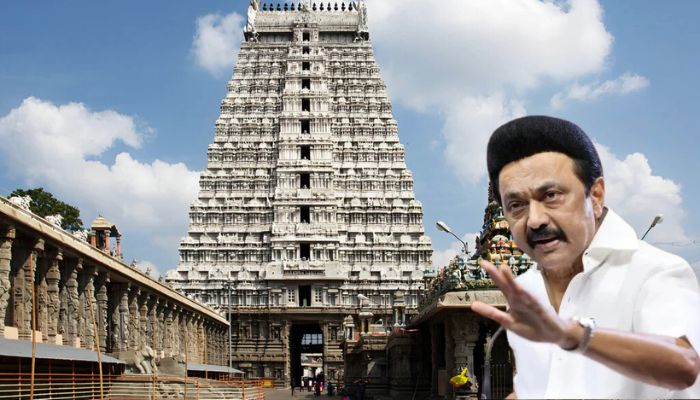
Tamil Nadu govt summons Pujaris for ‘review meeting’, interference and control over Hindu affairs continue

The Tamil Nadu Hindu Religious and Charitable Endowments (HR&CE) Department stirred the hornet’s nest after it issued summons to Pujaris and archakas for a ‘review meeting’ on Saturday (4th January).

A notice to this effect was issued on 27th December last year by the Commissioner of the HR&CE Department. It called upon subordinate officers to ensure the presence of Pujaris and archakas from ‘prominent temples’ in the review meeting.

“Zonal Joint Commissioners must ensure the participation of the Chief Priests from important temples without fail. Zonal Joint Commissioners are also requested to complete the attached form with details of the Chief Priests attending the review meeting and email it before 01.01.2025,” the notice reiterated.

Hindu activist Rangarajan Narasimhan stated that calling Pujaris and archakas for a ‘review meeting’ is illegal and requested the Hindu priests not entertain the whims and fancies of the HR&CE Department.

He asked, “Who is Tamil Nadu HR&CE Department to ask poojaris and archakas for a meeting? What does HR&CE to do with the Pujaris/archakas?”

It must be mentioned that the Tamil Nadu Hindu Religious and Charitable Endowments (HR&CE) Department cannot legally force Hindu priests of prominent temples to be present in the ‘review meeting’.

What is the Tamil Nadu HR& CE Department

Unlike most parts of India where a particular temple administration lays down its own rules of conduct, the Hindu places of worship in Tamil Nadu are managed by the State government.

The administrative control is established through the implementation of the Tamil Nadu Hindu Religious and Charitable Endowments (HR&CE) Act of 1959, legislation that was supposed to ensure ‘smooth administration’ and ‘proper management’ of Hindu temples and mutts.

The Tamil Nadu government controls 36635 temples, 45 mutts, 68 temples attached to mutts, 189 charitable endowments, 1721 specific endowments and 17 Jain temples.

Through the ‘Tamil Nadu Hindu Religious and Charitable Endowments Act’, the State government exercises unprecedented control over the administration, functioning and management of Hindu temples and mutts.

Data furnished by the HR&CE Department of the Tamil Nadu govt in 2022

The government appoints the Commissioner, the Joint Commissioner, and the Assistant Commissioner of the HR&CE Department. It is also in charge of the assets of the temples and mutts (both movable and immovable), and controls the finances in the name of ‘improving viability’ and ‘sustained development.’

Moreover, the government solicits money from the same temples and mutts to the range of 1.5%-4% under the garb of annual income audit. Every community (sampradaya) within the Hindu fold has its unique customs and ritualistic way of worship. The community decides the pujaris and the management of the temple.

The Tamil Nadu government overrides this Hindu practice in the name of social equality and appoints archakas of its liking under the HR&CE Act.

To make matters worse, a total of 11 Mutts have lost their character under the supervision of the same Tamil Nadu Hindu Religious and Charitable Endowments Department. As such, total Mutts in Tamil Nadu have decreased from 56 to 45 as of 2022.

Digital Personal Data Protection Rules: Govt drafts stringent parental consent rules for social media users under 18

0

On 3rd December, the Government of India proposed detailed rules under the Digital Personal Data Protection Rules, 2025. One of the most talked-about aspects of the draft is the rule that makes verifiable parental consent mandatory for creating social media accounts and processing the personal data of children. The measure is part of a larger effort by the Indian government to regulate digital platforms and uphold the rights of data principals, specifically minors.

If implemented, the rules will compel social media platforms to ensure that consent for any data collection, processing, or storage comes from verified parents or legal guardians. Notably, this will apply to all services, including social media platforms, educational apps, and other legal platforms targeting or catering to minors. Furthermore, parents will have the power to withdraw consent at any time, and the platforms will be obliged to cease data processing as soon as such a request is placed.

Comprehensive verification process to safeguard consent

The rules further outline a stringent verification mechanism to authenticate the identity of parents. Platforms will be mandated to use reliable tools, such as government-backed systems like Digilocker, to ensure that only legally competent adults provide consent. Verification measures include cross-checking identity and age credentials, thereby ensuring a robust layer of accountability.

Furthermore, platforms cannot collect unnecessary data and will be required to process only what is essential for delivering specific services. In cases where the platform needs to retain data to comply with existing laws, parents must be informed at least 48 hours before the data is deleted so they can take any required action.

Limits on data retention and processing

The rules will also limit the duration for which minors’ data can be stored. Once the purpose of data processing is fulfilled, the platform is obligated to delete it unless specific laws mandate its retention. Additionally, platforms must clearly notify parents about the data retention and deletion timeline, thereby providing greater transparency.

Platforms must also maintain technical and organisational measures, such as encryption and controlled access, to safeguard children’s personal information. Any breaches, if they occur, must be promptly reported to affected individuals and the Data Protection Board, detailing the nature of the breach and corrective measures undertaken.

Broader regulatory implications

The rules focus on protecting the personal data of users in India. They outline how organisations must handle, process, and protect data while ensuring compliance with existing laws. As per the draft rules, every organisation that collects personal data must provide clear and simple information about what it needs, why it needs it, how it will be used, and your rights. For example, they are obligated to disclose what kind of data is being collected and how consent can be withdrawn or complaints filed.

Platforms are obligated to provide options for managing and giving consent for the use of personal data. These special platforms for managing data must meet strict conditions. They must be financially stable and provide technical safeguards to protect individuals’ data.

Government agencies are also brought under the ambit of the new proposed rules. While they can process personal data to provide benefits, services, or licences, they must follow specific rules and process only the data necessary for their services.

The new rules mandate organisations to implement strong safeguards to protect personal data from breaches. These include using encryption and monitoring systems to detect unauthorised access. If your data is leaked or accessed without permission, the organisation must inform you and the government promptly. They should include details such as what happened, the risks involved, and measures to protect yourself.

The rules will give you the facility to access, correct, and delete your data. Organisations must make it easy for you to exercise these rights through clear channels like websites or apps. Furthermore, personal data can only be sent outside India under conditions specified by the government, ensuring the receiving country or organisation provides similar data protection.

In a press release, the Ministry of Electronics and Information Technology said, “The draft Rules details about the various implementation aspects such as the notice by the Data Fiduciary to the individuals, registration and obligations of Consent Manager, processing of personal data for issuance of subsidy, benefit, service etc. by State, applicability of reasonable security safeguards, intimation of personal data breach, providing details about availing of their rights by the individuals, processing of personal data of child or person with disability, setting up the Data Protection Board, appointment and service conditions of the Chairperson and other members of the Board, functioning of Board as digital office, procedure to appeal to Appellate Tribunal among others.”

Regarding the feedback, the ministry said, “In this regard, feedback/comments may be submitted via the MyGov portal at the following link: https://innovateindia.mygov.in/dpdp-rules-2025 and the last date for submission is 18th February 2025.”

The draft rules can be checked here.

A Religious Tribunal is the need of the hour to resolve religious disputes: Read why the courts and the government need to think in this direction

Justice is a fundamental requirement to ensure unity and peace while protecting religion. It is high time that the government considered setting up a ‘Religious Tribunal’ to resolve disputes relating to places of worship. The Religious Tribunal should be an independent body, separate from judicial courts, dedicated to resolving religious conflicts.

This will not only ensure the speedy resolution of religious disputes but will also help maintain law and order in a state. In a country like India, which has a rich religious and cultural diversity, religious conflicts cause social tension and instability. Therefore, just and speedy disposal of religious disputes is important to ensure social harmony and law and order.

Religious conflicts are sensitive and can create disturbance in society. A Religious Tribunal can provide fair and expert solutions to religious disputes. Besides, this will help in reducing the burden of courts which, in turn, will help in speedy disposal of other disputes pending before the courts.

The Indian Consitution guarantees religious freedom and justice to all persons. Articles 25-28 of the Constitution ensure to all persons the right to profess, practice and propagate religion. Article 14 of the Constitution ensures to all persons equality before law and equal protection of laws. Additionally, Article 226 of the Constitution empowers the High Courts to review the decisions of judicial and quasi-judicial authorities.

However, the Constitution does not provide for setting up of a Religious Tribunal but it does empower the Parliament to make any special laws. The Parliament and the State Legislative Assemblies are empowered to set up special tribunals under Article 323B of the Constitution. It takes years for the civil courts to dispose of religious disputes.

Religious and legal experts should be appointed in the Tribunal to ensure impartiality. Moreover, the High Courts shall have the power of judicial review over the decisions of the Tribunal to comply with the Constitutional procedure. Religious experts in the Tribunal will be able to provide better solutions for complex religious disputes.

Besides maintaining peace in society, the Tribunal will provide a centralised platform for the resolution of all religious disputes and will prevent social disturbance and violence. So far as the jurisdiction of the Tribunal is concerned, it will be limited to resolving matters specifically related to religious disputes, places of worship and similar issues. The resolution of religious disputes is only possible through communication and law and not through violence.

The formation of a Religious Tribunal can be a significant step in this direction. The Tribunal will ensure justice to every religion within the bounds of the Constitution. A Religious Tribunal in India conforms with the Constitution and is the need of the hour. State governments should take initiative in this regard so that religious conflicts do not threaten national unity and law and order in future.

(This article is translation of the original article published on OpIndia Hindi website.)

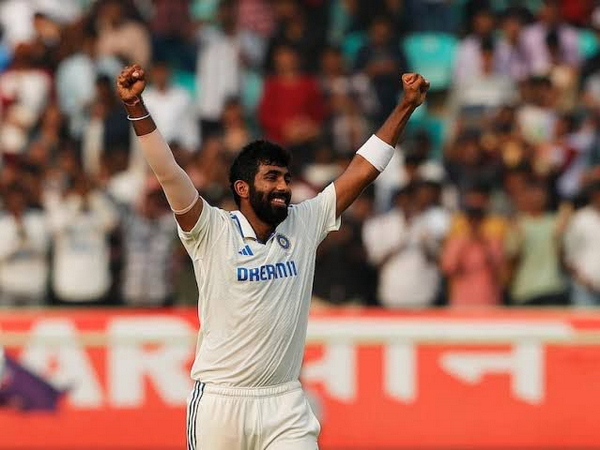
Indian Captain Jasprit Bumrah had back spasm, medical team monitoring him: Fellow pacer Prasidh Krishna

0

Indian seamer Prasidh Krishna has confirmed that Jaspreet Bumrah experienced a back spasm and underwent scans on the second day of the fifth Test against Australia.

“Yes, he had a back spasm, he had gone for scans. The medical team is monitoring him, so we will know whenever the medical team gets back to us,” he stated during the press conference.

Bumrah, who has been in scintillating form throughout the Border-Gavaskar series, has taken 32 wickets so far, making him India’s highest wicket-taker in a Test series against Australia on Australian soil. His tally, at an exceptional average of 12.64, includes three five-wicket hauls, with a best of 6/76. In doing so, he surpassed Bishan Singh Bedi’s record of 31 wickets from the 1977-78 tour of Australia.

Bumrah’s contribution on Day 2 was impactful as well, as he picked up figures of 2/33 in 10 overs before coming out due to his back issue. During his absence, former captain Virat Kohli stepped in to lead the side, a move that showcased the team’s flexibility in a critical match.

While Bumrah’s return to the field offered some relief to the team, uncertainty looms over his ability to bowl in the second innings. The Indian physios are closely monitoring his condition and will make a decision that prioritizes both the pacer’s health and the team’s requirements.

As India trails 2-1 in the series, the final Test at the Sydney Cricket Ground is pivotal for their chances of levelling the series and improving their position in the World Test Championship standings. Bumrah’s fitness could play a decisive role in India’s push for a strong finish in the series.

Recapping the final session’s play, Indian openers Yashasvi Jaiswal and KL Rahul displayed some fluent strokes, but the first breakthrough came when Scott Boland dismissed Rahul for 13, leaving India at 42/1. Jaiswal soon followed, clean bowled by Boland for 22.

India faced further setbacks as star batter Virat Kohli was caught in the slip cordon by Steve Smith off Boland for 17, falling to a delivery outside the off-stump. At 59/3, India were in trouble.

Debutant Beau Webster added to India’s woes, claiming his maiden Test wicket by dismissing Shubman Gill for 13.

Rishabh Pant, the wicketkeeper-batter ignited the innings with a scintillating counterattack, smashing Mitchell Starc for a six on the very first ball he faced. He then unleashed a flurry of boundaries, hitting three in a single over from Webster. Pant raced to a half-century in just 29 balls, hitting two consecutive sixes of Starc, the second-fastest fifty by an Indian in Tests. The record of 28 balls, also held by Pant, was set against Sri Lanka in 2022.

Pant’s explosive knock ended at 61 off 33 balls when he was dismissed by Pat Cummins. His innings featured six boundaries and four towering sixes, lifting India to 124/5.

Nitish Kumar Reddy added only 4 runs before chipping a simple catch to Cummins at mid-off, becoming Boland’s fourth victim of the day.
At stumps, Ravindra Jadeja (8*) and Washington Sundar (6*) were at the crease. With the match finely poised, India will look to extend their lead on Day 3.

(This news report is published from a syndicated feed. Except for the headline, the content has not been written or edited by OpIndia staff)