Home Blog Page 6823

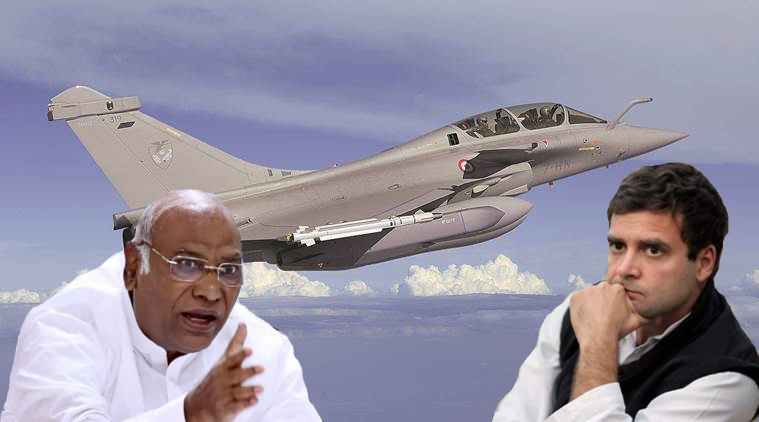
Amidst Rafale row, PAC led by Congress leader Mallikarjun Kharge slams HAL, questions efficiency

A Parliamentary panel headed by Congress leader Mallikarjun Kharge has expressed “serious concerns” over Hindustan Aeronautics Ltd’s (HAL) “failure” to timely provide the required number of Tejas aircraft to the Airforce, which according to the panel would adversely affect the Indian Airforce’s combat capabilities.

The Hindustan Aeronautics Ltd, an Indian state-owned aerospace and defence company, which the Congress party supremo has been recently using as a tool to continue his political dramatics to target Narendra Modi led BJP, has been in the radar as a report on ‘Design Development, Manufacture and Induction of Light Combat Aircraft’, submitted by the public accounts Committee was tabled in the Lok Sabha on Friday, which mentioned that there have been huge delays in the development of the supersonic fighter jet.

This failure to deliver, according to reports, resulted in two LCA squadrons not materialising, forcing the IAF to upgrade several aircraft, including the MiG-BIS, MiG-29, Mirage-2000 and Jaguar aircraft at a cost of Rs 20,037 crore. The panel observed that due to this laxity, the phased out MiG-21s had to be revised and the IAF is having to operate with 35 squadrons as against 42 squadrons sanctioned.

Unlike Rahul Gandhi’s false allegations and rhetorics, which had been earlier busted many times, this directive coming from a panel headed by one of his own party members further establishes that though HAL has always been very much part of the Rafale deal, somehow HAL has not been equipped to fulfil the requirements. For this reason perhaps, way back in 2015 Dassault had also expressed its inhibition in partnering with HAL, flagging its concern about the technical inadequacies of HAL.

Continuing with his age-old rhetorics, Rahul had earlier tweeted a link where former HAL chief T S Raju had claimed that the Rafale jets could have been built in India. However, Scientist and columnist Anand Ranganathan had then put out a thread of tweets with articles busting the myth that state-owned HAL had the ability to make fighter jets.

Congress President Rahul Gandhi has been repeatedly telling the world that the Modi government bypassed the state-owned Hindustan Aeronautics Limited (HAL) in favour of Anil Ambani’s Reliance Defence, and that insinuating kickbacks were received by the Modi government for the deal. Repeating his baseless allegations for the millionth time, he had also claimed that Modi has snatched a multi-million contract from HAL.

Contrary to his allegations, in 2005, HAL and Snecma (now known as Safran) had formed a joint venture company Snecma HAL Aerospace Pvt. Ltd, to manufacture various parts for the French company in India. In 2015, they signed a MoU to set up a facility to manufacture several high-tech parts for the Dassault Rafale’s Snecma M88 engine. And now, Dassault has formed an alliance with this Snecma HAL as one of their offset partners. Snecma HAL will get some business as part of Dassault’s offset obligation.

In the past, various ministers of the Government of India, the Reliance Group, and the French government, all have punctured his frivolous allegations and now even the Supreme court has debunked all the allegations made by Rahul Gandhi about the Rafale deal, reiterating the same points the Indian Government and others have been repeating continuously. But it so seems that the Congress Supremo is in no mood to accept his mistakes and concede his defeat.
Uttar Pradesh: Eight cattle smugglers arrested in Bahraich with arms and ammunition

0

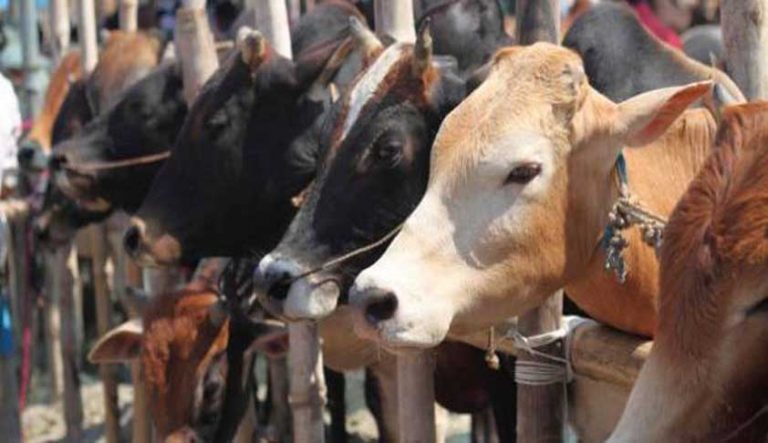
Eight cattle smugglers were arrested by Uttar Pradesh Police in Bahraich district on Friday. Four of them were history-sheeters. The Police were tipped off about the smuggling in Rupaidiha and Nanpare area, close to the Indo-Nepal border. The smugglers were trying to flee to Nepal.

During interrogation, the smugglers are reported to have revealed that they used to steal the cattle in the dark of the night and take them across the border where they used to sell it in Nepal and surrounding areas. The arrested have been identified as Basheer, Sher Khan, Arif, Naseem, Rafik, Shafikh, Sharif and Sharbat Ali. All of them are believed to be relatives.

As per reports, the smugglers even tried to trample the Police personnel with their vehicle. However, they were unsuccessful in their attempt. The team that arrested the smugglers have been rewarded with a sum of five thousand rupees. The Police recovered four cattle, unlicensed pistols, ammunition, and a transportation vehicle from those arrested.

Recently, 10 cow smugglers were caught with 500 kilograms of cow meat in Uttar Pradesh’s Pilibhit. The arrests come after Chief Minister Yogi Adityanath ordered a strict crackdown on cattle slaughter in light of the violence at Bulandshahar. In Bulandshahar, carcasses of cows were discovered by villagers which soon escalated into a rampage after they claimed that the Police wasn’t heeding their complaints.

NGT orders reopening of Vedanta’s Sterlite plant in Tuticorin, Tamil Nadu

0

The National Green Tribunal (NGT) today set aside AIADMK led Tamil Nadu government’s order of permanently closing down the Sterlite copper smelter plant owned by Vedanta Ltd situated in Thoothukudi. The Green court issued directions for the Tamil Nadu State pollution regulator (TNPCB) and the Vedanta Ltd. It has directed the Tamil Nadu state pollution regulator to pass fresh order of renewal of consent for the smelter within three weeks and has directed the company to spend Rs 100 crore within 3 years for the welfare of the people in the area.

The plant which contributed 40% of the copper to overall demands in India was shut down following violent protests in the month of May this year. A report by the CEO of the Sterlite had estimated that the closure of the plant will affect around 30,000 direct and indirect jobs would disrupt the smelter supply to around 800 small and medium industries.

The protesting NGOs and pressure groups had accused the Sterlite plant of contaminating the local environment by discharging various harmful waste which, as claimed by the protesters, has also lead to an increase in the cancer cases in the region. Vedanta denying the allegations of the protesting groups had claimed to have adhered to all norms.

The Committee constituted by the NGT in its report has termed the closure of the Sterlite plant as unjustified and against “natural justice”. The Committee headed by Former Chief Justice of Meghalaya High Court Tarun Agarwal observed that Sterlite was not given sufficient time to respond to the allegations of the TNPCB.

Tamil Nadu state government has said it will challenge the NGT order in Supreme Court.

Activist opposing Akshaya Patra’s mid-day meal contract thinks ‘Brahmins obstruct India’s development’

0

A prominent activist associated with the Right to Food campaign, Dr Sylvia Karpagam, who wants Akshaya Patra’s mid-day meals contracts terminated appears to have her actions motivated by anti-Brahmin bigotry and the desire to uproot “Brahmin hegemony”.

The Akshaya Patra has come under criticism recently for not including onion and garlic in its mid-day meals for school children. M.R. Maruthi, Joint Director, State Mid Day Meal Scheme in Karnataka claimed that not including onions and garlic in its meals is in violation of the memorandum of understanding signed between the Karnataka government and the foundation.

The Akshaya Patra, however, defended itself and claimed that its meals were in compliance with the MHRD directive. It said in a statement, “We would like to clarify that our freshly cooked meals are in compliance with the nutrition norms prescribed by the MHRD and Government of Karnataka. It is our constant endeavour to contribute to the Government’s efforts in promoting good health and nutrition amongst children which is essential for their holistic growth and development. Akshaya Patra is committed to serve quality, hygienic and nutritious food to school children every day and implement Akshara Dasoha, the flagship mid-day meal programme of the government of Karnataka.”

Since then, activists an civil rights groups have written to the Karnataka government demanding that Akshaya Patra’s contract be terminated. While Karpagam and other activists cite nutritional reasons for demanding the termination of the contract, some of Karpagam’s views appear very problematic.

In April, this year, an article by Karpagam was published on Round Table India which had the headline, “Brahmins obstruct India’s development”. In the article, Karpagam states, “The presence of Brahmins as key decision makers in India has adversely affected our progress on many fronts. Their deep-rooted social, cultural and religious mindset often persists in spite of contrary scientific, social or humanitarian logic. If India really wants to and needs to progress at a pace that is appropriate and necessary, then brahmins should be actively taken out of certain key spaces.”

She says about Brahmin doctors, “Brahmin doctors mislead patients about nutrition, promoting vegetarianism in spite of all scientific knowledge and medical guidelines pointing to the contrary.” She states further, “The basic belief by the brahmin doctors that only they own and should possess knowledge makes them very reticent to engage in health education where communities are able to take health into their own hands. This abuse of power means that most people are often left confused about what is good for the health of themselves and their family, and are often not given information that reduces the need for doctors in their lives.”

Karpagam also states that Brahmins have created “havoc” in the field of nutrition. She says that Brahmin nutritionists drink cow urine. She states, “They claim that India is predominantly vegetarian and bring out nutrition policies that erase eating habits of the majority of the population and undermine the value that these foods add to the health of the country and indeed the general capacity for work, growth and development. When beef eaters are being massacred in the country, no brahmin nutritionist has come forward to argue in the strongest possible words about the health benefits of beef and why populations should not be criminalised for eating a healthy source of nutrition. Instead, they drink cow urine and claim to worship the cow.”

Apart from Brahmin doctors and nutritionists, Karpagam has problems with Brahmins in bureaucracy, education and academia, research, feminism, literature, media, judiciary, civil society, banking, economics, politics, industry, basically in every field under the sun. The entire article is a virulent spectacle of anti-Brahmin bigotry and resembles the kind of propaganda that was run against Jews in Nazi Germany. That the opinions of such bigots are treated so respectably in mainstream media is a grave cause for concern. Such vile hatred against any community should not have any place in any society. That these bigots have enough power to make demands of democratically elected governments and have sufficient influence to ensure that their demands are met does not bode well for our country.

In August 2017, Karpagam wrote an article celebrating the fact that ISKON had terminated its contract with the Andhra Pradesh government for mid-day meals. She had written, “The decision of the International Society for Krishna Consciousness (ISKCON) to terminate its mid-day meal contract with the state government of Andhra Pradesh is a welcome move and much required in all other states of the country as well where the NGO supplies mid-day meals.”

19 out of the 68 elected Congress legislators in Chhattisgarh Assembly are facing criminal charges

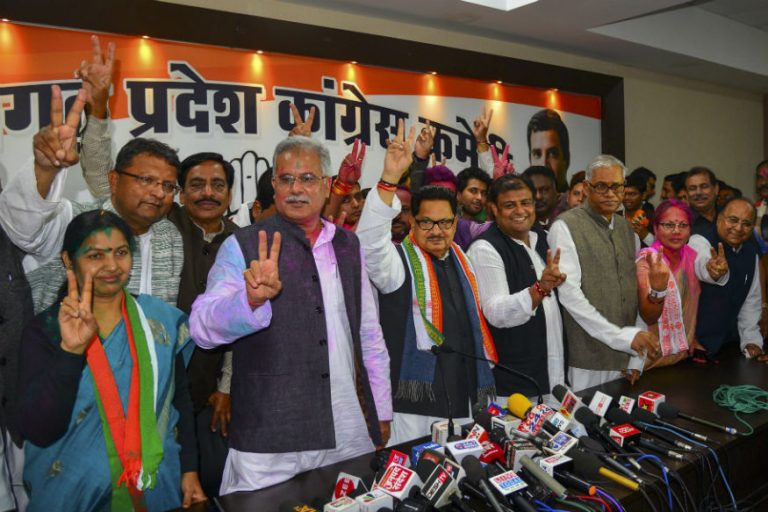
As many as 19 out of 68 Congress MLAs in newly elected 90-seat Chhattisgarh Assembly have criminal cases against them.

The Chhattisgarh Election Watch and Association for Democratic Reforms (ADR) issued a report in which it stated that 24 (27 per cent) of the 90 newly elected representatives have declared in their election affidavits that they are facing criminal cases. Out of these, 19 belong to the Congress and three are legislators of the BJP while two are from the Janata Congress Chhattisgarh (J).

State Chief of Congress Bhupesh Baghel, who is been elected from Patan, has declared that he is facing charges of “voluntarily causing hurt to deter public servant from his duty” (IPC section 332), and criminal conspiracy (IPC section 120 B), among others. Another Congress leader, Ashish Kumar Chhabra, elected from Bemetara, has declared that he is facing a case related to attempt to murder. JCC(J)’s Pramod Kumar Sharma, who won from Balodabazar seat, has declared a case related to”causing death by negligence” (IPC section 304A).

The report states that 13 of the total 24 MLAs are facing serious charges of offence such as assault and criminal intimidation. With this assembly election in Chhattisgarh, there has been an astounding rise of about 60% in the election of offenders to the assembly. In 2013, 15 MLAs had declared that they were facing criminal charges.

Earlier, videos of now Chief Minister of Madhya Pradesh, Kamal Nath had surfaced in which he was seen supporting the fielding of Congress candidates with the criminal background if they were able to win elections. He had shown little regard to the criminal activities of those candidates. It appears that Congress has been ruthlessly working on this principle in letter and spirit across the country.

For decades, Johnson and Johnson was aware of toxic asbestos content in its baby powder: Report

0

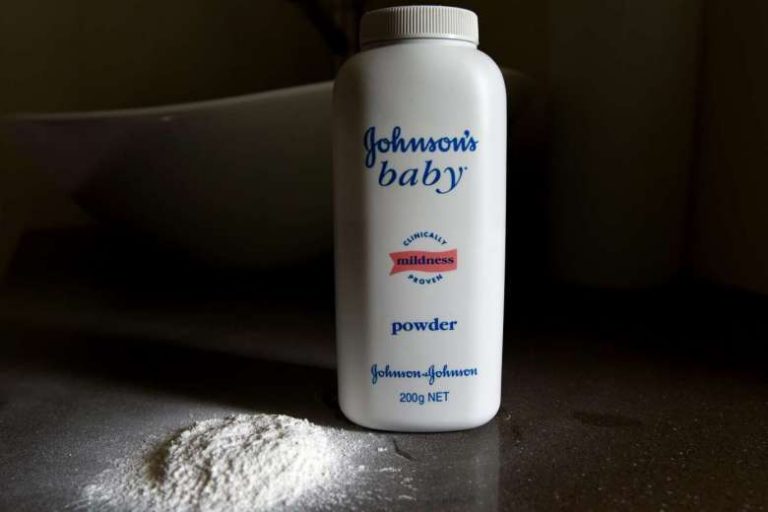
In a report published by the Reuters on Friday, it is claimed that the US-based pharmaceuticals giant Johnson and Johnson was aware for decades that its baby powder contained asbestos. According to an investigation conducted by Reuters and an examination of documents, deposition and trial testimony shows that “from at least 1971 to the early 2000s, the company’s raw talc and finished powders have tested positive for small amounts of asbestos and the company’s executives, mine managers, scientists, doctors, had actively discussed the issue it while failing to disclose it to regulators or the public.”

The report also claimed that the company had paid for studies conducted on its Baby Powder franchise and hired a ghostwriter to redraft the article that presented the findings in a journal.

[youtube https://www.youtube.com/watch?v=R-ArIv3IVlE]

The company has been facing multiple lawsuits filed by almost 11,700 plaintiffs, many of whom are women who have been battling rare forms of lung or ovarian cancer due to the asbestos they have been exposed to from years of using the talcum powder, said the report.

Johnson and Johnson had initially declined to share company documents with the plaintiffs, but as the lawsuits began piling up, it was compelled to share thousands of pages of company memos, reports and internal documents, the Reuters report claimed.

In the month of July, in the first case against the company involving the asbestos issue, a fine of $4.7 billion was imposed on it in total damages to 22 women who had claimed that asbestos in Johnson and Johnson powder contributed to their ovarian cancer. A drop of 8.3% was recorded in the company’s shares after the Reuters report came out, A fall that is believed to have wiped out USD 30 billion from the company’s market value. A similar downfall in the shares of the company was also observed in February when the asbestos concerns were raised.

Denying the claims made in the Reuters report the company said that “any suggestion that Johnson & Johnson knew or hid information about the safety of talc is false.”A statement issued by J&J Vice President Ernie Knewitz said, “This is all a calculated attempt to distract from the fact that thousands of independent tests prove our talc does not contain asbestos or cause cancer”.

Johnson and Johnson is facing a lawsuit in India for selling faulty hip implants which affected the lives of 14,525 patients in India. The company had already withdrawn the product from other countries on complaints.

Rafale: SC examined the pricing details closely, ‘did not rely’ on CAG report as claimed by Rahul Gandhi

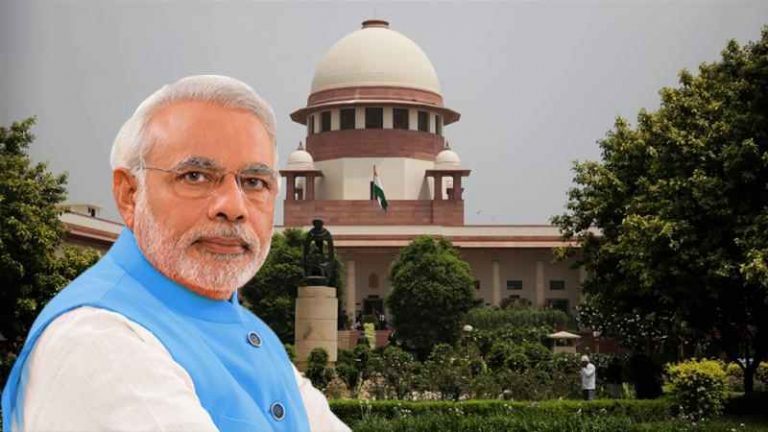
The Supreme Court in its verdict on the Rafale deal yesterday dismissed all petitions for investigation citing that perception of an individual is not reason enough for the Supreme Court to interfere. The apex court in its verdict had observed that the pricing of the jets had been shared with the CAG (Comptroller and Auditor General) and the CAG report was examined by the PAC (Public Accounts Committee).

However, PAC Chairman senior Congress leader Mallikarjun Kharge had claimed that he had never seen the report. Kharge had accused the central government of ‘misleading’ the Supreme Court by presenting wrong facts regarding the CAG report. He accused the government of ‘feeding wrong information’ to the Supreme Court.

Congress President Rahul Gandhi went on an offensive and said that the SC verdict was based on the CAG report which was never discussed by the PAC as it appeared in the judgement.


This is not true. In the judgement pronounced yesterday, the Supreme Court had clearly mentioned that the government had shared the pricing details with the Supreme Court.

SC verdict stating that the court had examined the pricing details.

The Court was slightly on the secretive side while talking about the pricing, obviously, for national security concerns. The court, however, did say that it was compared the price of the previous deal and current deal and suffices to say that the official respondents say there is a financial benefit to the country.

This shows that the Supreme Court verdict was not based only on the CAG report.

However, the Central Government today filed a writ petition for correction and directions regarding the judgement so that the scope of misinterpretation is eliminated.

Writ Petition filed by the central government

In the petition, the government says that perhaps the Supreme Court misinterpreted the note submitted by the government in a sealed cover in compliance with the order dated 31st October 2018. Referring to paragraph 25 of the judgement, the Government shares part of the note it had shared with the SC.

Writ Petition filed by the central government

The government explains that the details of pricing shared with the CAG is in the past tense, and it is factually correct. Second part of the point talks about the CAG report being examined by the PAC. The note said “the report of the CAG is examined by the PAC”, however, the judgement replaces “is” with “has been”, reading it as ‘the report of the CAG has been examined by the PAC”.

The Government has explained that the meaning of the term CAG report “is” examined by the PAC was the description of the procedure followed when it comes to CAG reports. That the term “is” used in present tense since it means what would be the procedure followed as and when the CAG report is ready.

Writ Petition filed by the central government

That the note of government was misinterpreted by the SC and it has led to a huge controversy in the public domain where many people have raised doubts over the fairness of the Supreme Court. To that, the government has requested the Supreme Court to make the appropriate changes in the order.

Writ Petition filed by the central government

The government, in its petition, also requested the Supreme Court to pass further orders it deems just and proper so as to end the controversy.

Hence, while the Central Government has filed a petition for correction in the Supreme Court verdict, the judgement would still hold since it is formed on the basis of pricing details examined by the Court and not just the CAG report.

Kumbh Mela 2019: Railways gears up with 800 special trains, reduced fares and massive projects to handle pilgrim surge

Keeping the Kumbh Mela of 2019 in mind, the Indian Railways has brought in a number of measures. Railway minister Prush Goyal had announced recently that the fare surcharge will be waived off for pilgrims traveling to Kumbh and even other such religious Melas. After this decision, pilgrims will be able to travel for as low as Rs 5.

“In view of the religious beliefs of pilgrims and for promoting tourism, the central government has decided to abolish the fair surcharge being imposed by the Railways, which will provide relief to passengers coming to Kumbh and other such fairs,” Goyal said.


Sleeper coaches in regular mails and express trains would cost Rs 10 per seat while fares for AC chair car and AC third class will begin at Rs 20. Second AC or AC 2-tier (2A) train tickets will cost Rs 30 and for first class AC the tickets will be available at just Rs 40.

Along with minimising the fair, the Indian Railway has further proposed to run 800 special trains during the Kumbh Mela from various stations of Allahabad district for the pilgrims coming to the Kumbh Mela. These will be in addition to the to the regular ones that are run by the North Central Railway (NCR).

To make the Railways infrastructure facilities convenient for the pilgrims visiting the Kumbh Mela, commencing in Allahabad from January 2019, 41 projects costing more than Rs 700 crore has been commissioned so far.

Out of these, 29 projects have already been completed and the rest are in an advanced stage and will be completed shortly, a senior Railways official has said on Wednesday.

From CCTV to Skywalk, special trains to extra ticket counters, the Indian Railways is relentlessly working to make people’s journey comfortable.

Below are few of the several endeavors the Indian Railways have planned to ensure the comfort and security of the pilgrims and tourists coming to Prayagraj to participate in the Kumbh Mela 2019:

  • Four big enclosures with vending stalls, water booths, ticket counters, TVs, toilet blocks, and CCTV which would house about 10,000 pilgrims have been constructed at Allahabad Jn. Similar passenger enclosures are also built at other stations.
  • A skywalk connecting to main Foot Over Bridge’s (FOB) at Allahabad Jn. has been completed.
  • The Ministry of Railways has decided to allow 15 days advance booking of unreserved railway tickets from 11 stations lying in the Prayagraj region. The stations from which this advance booking of unreserved tickets will be allowed are Allahabad Junction, Allahabad City, Naini, Subedarganj, Prayag, Prayag Ghat, Daraganj, Phaphamau, Jhunsi, Vindhyachal, Allahabad Chheoki and back.
  • North Central Railway, Prayagraj, has launched a mobile application titled ‘Rail Kumbh Seva Mobile App’. This app will help in providing important information to the pilgrims and other passengers planning to visit Prayagraj during the Mela.
  • Hand Held Terminals are being provided to the ticket checking staff. These terminals will help the railway staff to distribute tickets to passengers in the Kumbh Mela area.
  • The railways will use artificial intelligence (AI), in a big way to tackle the massive rush of passengers to this holy city during the Mela.

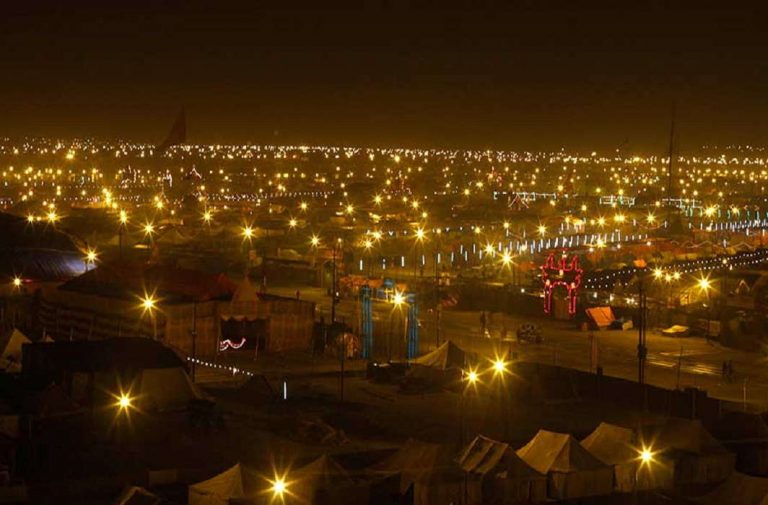
The Kumbh Mela is believed to be the largest religious gathering on earth and alternates between Nasik, Allahabad, Ujjain, and Haridwar every three years.

The one held in Allahabad comes in every 12 years. This holy event celebrated on the banks of the ‘Sangam’, the confluence of the three holy rivers, namely, Ganga, Yumana and Saraswati, is the largest and considered the holiest of them all.

JD(U) will not support an ordinance for Ram Temple in Ayodhya, says senior party leader

BJP’s Bihar associate JD(U) has explicitly said that it will not support the promulgation of an ordinance on temple construction at the Ram Janmabhoomi site in Ayodhya.

Responding to a question that some organisations have been demanding an ordinance for building the Ram Temple in Ayodhya, JD(U) national general secretary and its leader in the Rajya Sabha, Ram Chandra Prakash Singh said, “different demands are raised by people in this country. But JD(U) neither supports the idea of bringing an ordinance for Ram Temple nor will support it if brought in Parliament.”

He furthered that the party will stick to its stand that the issue should be either solved by mutual consent or decided by a court of law.

RCP Singh, speaking about the recent five-state assembly polls, clarified that the defeat BJP faced in the three states during assembly elections will not have any effect on the 2019 general elections.

Earlier, the party’s recently appointed Vice-President, Prashant Kishor had also stated that the BJP would anyways win the elections (2019 polls) without taking recourse to this issue, as it did in 2014.

The state BJP unit, however, countered its alliance partner to say that a “temple would be constructed soon” as it has been part of BJP’s manifesto.

BJP has been facing constant demands from members of the Sangh Parivar, which BJP is also a part of, and a section of its own party insisting on the construction of the Ram Temple. The Sangh has been lately pressurising the government to bring an ordinance in the Parliament regarding the same.

The RSS and the Vishwa Hindu Parishad have intensified their demands for an ordinance in recent weeks. As the winter session of the parliament was about to begin, lakhs of people from all over the country had thronged to the Ramleela Maidan on December 9 to attend the Dharm Sabha and demanded the construction of the Ram Mandir in Ayodhya.

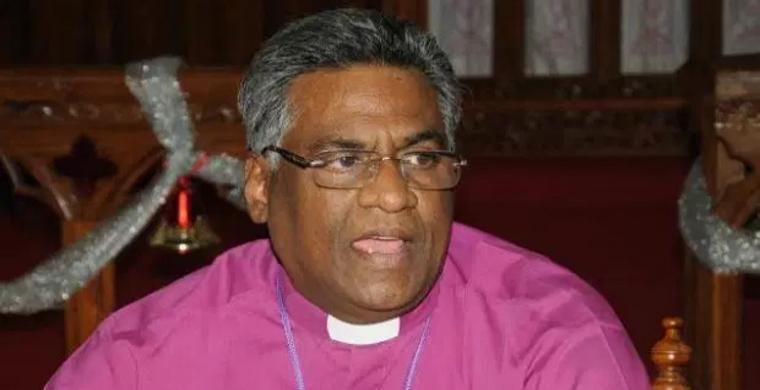
Church of South India Archbishop Dyvasirvadam arrested in church fund scam, reports Times of India

Crime Investigation Division (CID) has arrested Church of South India (CSI) archbishop Dyvasirvadam for his alleged involvement in church funds scam, reported the Times of India. He was arrested after a year-long investigation and the local court has granted the agency his 14-day judicial remand.

According to the report, archbishop Dyvasirvadam was allegedly involved in misappropriation of church fund for over a decade and he was ‘illegally elected’ back in 2002. The members of the CSI Church have been fighting against him since a few years now. His relative, Sudhir Samuel is also believed to be involved in the scam.

It is reported that in 2015, the Registrar of Companies carried out inspection and income tax audit since 2010 which revealed that the institution was not giving a clear picture of accounts. The CSI Trust Association, a section 25 company, also faces various allegations including amending the rulebook without Centre’s approval. The CID estimates that the scam could run into several thousand crores.

Dyvasirvadam was first arrested in January 2018 for the first time by Andhra Pradesh Police to follow an investigation of the sale of church property, with proceeds estimated to be around 32 million dollars, allegedly pocketed by Dyvasirvadam.