Home Blog Page 6831

2018 Assembly Elections: NOTA outperforms AAP and the Communists in all the states they contested

0

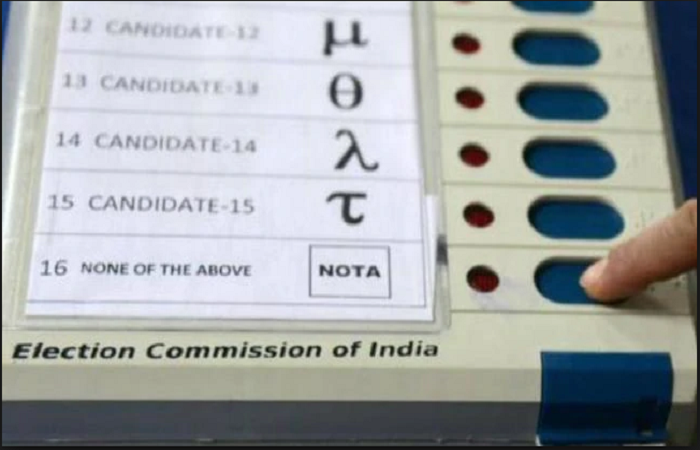
NOTA or None Of The Above was given more preference in assembly elections by voters in than parties like Aam Aadmi Party, Samajwadi Party and Communist Party of India, according to Election Commision data.

The NOTA vote share oscillated between 2.0% in Chhatisgarh and 0.5% in Mizoram, and rest three states got an average of 1.2% NOTA votes.

In Chhattisgarh, parties like Samajwadi Party of UP, NCP of Maharashtra and Aam Aadmi Party tried their lucks. AAP got 0.9% of total votes, both NCP and SP got 0.2% each, with CPI getting 0.3%. All of these parties were outperformed by NOTA votes, which alone got 2.0% or around 2 lakh 82 thousand votes.

Interestingly, total NOTA votes are way more than the combined sum of votes received by AAP, SP, CPI and NCP which is around 2 lakh 22 thousand.Chhatisgarh elections witnessed higher per cent of NOTA votes than the other four states.

In Madhya Pradesh too, AAP lost all candidates and failed to outnumber NOTA votes.AAP had contested on 208 seats out of total 230, and most of the candidates even failed to save their deposits. Their chief ministerial candidate Alok Agrawal, only got 823 votes in his constituency. AAP got 0.7% of total votes while NOTA received 1.4%. SP fared better than AAP, but still not more than NOTA, as it registered 1.3% votes.

Even in Rajasthan AAP got 0.4%, while both SP and NCP got 0.2% each. NOTA votes stood at 1.3%. In Telangana, CPI and CPM both got 0.4% each, while NCP managed 0.4%. NOTA has again outnumbered them all. NOTA registered 1.1% of total votes.

This is not the first election in which AAP party has got a lower vote count than NOTA. In last year’s Gujarat election too, they contested 33 out of the total 182 seats of Gujarat. There, all its candidates lost all their deposits and polled lower votes than even NOTA on a few of the seats.

Delhi MLA and Aam Aadmi Party rebel, Kapil Mishra took to Twitter and slammed AAP over its indifference to poll results.

“AAP had contested polls in Chhatisgarh and MP, they lost all deposits, even in constituencies where CM Kejriwal had rallied. They(AAP) have got far lower votes than NOTA” He tweeted and added that AAP had also spent money on advertisements in the newspaper, emphasising their work in Delhi.


Yesterday, results of polls of five states were announced. BJP failed to safeguard its three states of Chhattisgarh, Rajasthan and MP against Congress. Telangana witnessed K Chandrashekar Rao retaining his throne with a thumping majority. Mizoram voted out the incumbent Congress government and made north-east officially Congress-free.

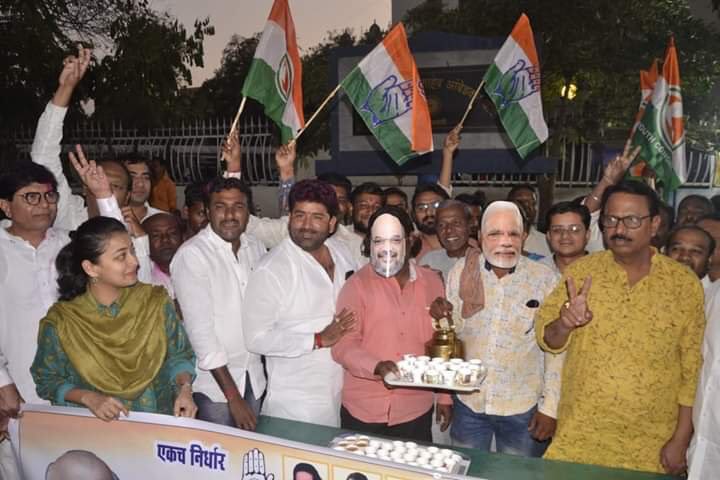
Congress celebrates election victory by wearing Amit Shah, Narendra Modi masks and distributing tea

In a photo that has gone viral on social media, Congress leaders and workers can be seen celebrating their victory over the BJP in the assembly elections by wearing masks of BJP President Amit Shah and Prime Minister Modi and distributing tea.


The masks of Amit Shah and Narendra Modi are representative of the ‘chaiwala’ jibe the Congress party has used time and again to target the Prime Minister’s humble beginnings. Union Minister Smriti Irani has responded to the photo calling it arrogant and asserting that the Congress party’s mindset ‘abhors’ people who rise from poor backgrounds by virtue of their hard work.


People on social media were not pleased with the manner of celebration either. Some have called it ‘abusive’ and ‘casteist’.


Others have dubbed it ‘Congress culture’ and ‘cheap’.


Calling it in ‘bad taste, some said that it was a departure from what Congress President Rahul Gandhi preaches.


The Congress party had made personal attacks even during their election campaign.  In Rajasthan, a Congress candidate had abused the Prime Minister in extremely filthy language. Uttar Pradesh Congress Chief Raj Babbar had used the devaluing rupee to mock the mother of Modi. Earlier, senior Congress leader C.P. Joshi had hurled casteist slurs at Narendra Modi. Prior to Assembly elections in Gujarat, Mani Shankar Aiyer had called him ‘Neech’.

Telangana: Failure of Prajakutami alliance of Congress and TDP might dampen future alliance options

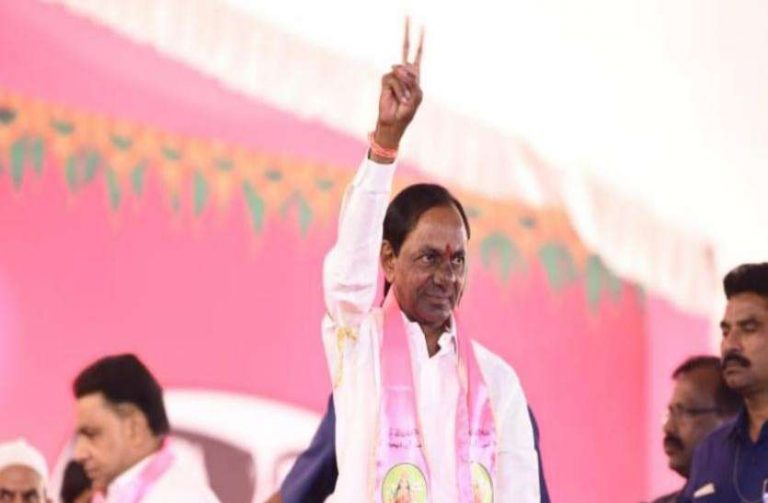
As the results of the five state assembly election were announced, K Chandrasekhara Rao, the Telangana Rashtra Samithi (TRS) supremo secured a clear majority over the Congress-TDP alliance.

However, as per a report in the New Indian Express, some senior Congress leaders were of the view that it was a blunder on the part of the party leadership to align with the TDP in Telangana Assembly elections and the results were obvious. “If not for the alliance with the TDP, the election results perhaps would have been different. At least not this massive defeat,” observed a senior Congress leader.

Another leader pointed out that the Congress’ strategies during the election campaign fell flat. The party leaders instead of properly projecting what the Congress did for the people of Telangana only focused on vilification of Telangana Rashtra Samithi. “Perhaps, we were overconfident in our approach in Telangana. It is time for introspection and we have to rework our strategy,” said former Union minister MM Pallam Raju.

The TRS has also registered a massive vote share of 46.9% against the Congress share of 28%.

As per reports, several analysts feel that if the Rahul Gandhi is in a mood to replicate this model of the alliance on a national level in 2019, he might need a better strategy. As TDP is often accused of stalling Telangana’s formation, many also think that an alliance with TDP created ‘Telangana sentiment’ among the masses and drove them towards TRS.

Even the Congress CM candidate A Revanth Reddy and many senior leaders like DK Aruna, K Jana Reddy failed to hold on to their seats.

Political analyst M E V Prasad Reddy told TOI, “KCR could strike a chord in rural areas with his schemes. Long neglected villages were taken care of. Congress was disconnected from the masses due to its ageing leadership. Tying up with Naidu was a big blunder. People of Telangana didn’t like it.”

Distressed by the anticipated defeat, Congress had earlier tried to play their favourite “EVM tampered theory” in the state. On cue of the early trends, the TRS supporters had already started celebrating which made Telangana Congress leaders raise the doubt.

Amusingly as Congress stakes victory in Madhya Pradesh, Chattisgarh and Rajasthan, these false theories which the Congress peddled for all this while seemed to have disappeared in thin air in all these three states.

Congress manifesto for Madhya Pradesh: Freebies and doles for every section of the electorate

The Congress party has emerged as the single largest party in Madhya Pradesh after the results of Assembly Elections were declared on the 11th. With support from elected candidates of the Bahujan Samaj Party and Samajwadi Party, the Congress party looks set to form the government in the state.

To topple BJP in Madhya Pradesh, where it has been in power for 15 years, the Congress party promised a plethora of sops for various sections of the electorate. Now that it has won the elections, it is a good time to revisit some of the promises the Congress had made in its manifesto.

For farmers, the Congress party promised a loan waiver and to reduce their electricity bills by half. The party also promised them a tax break for petrol and diesel. And for farmer cooperatives, a commission for the regulation of pension was promised as well. Food Processing Industries were promised exemption from GST as well. Children of farmers were promised for fives years concessions in the interest rates on loans to felicitate their self-employment.

The party had an entirely separate category for doles to youth. Self-employed youth were promised Rs. 4,000 per month as assistance. Industries that provided jobs to youth were assured Rs. 10,000 as salary grant. Youth researchers and investors were promised a prize money of Rs. 10 lakhs. Youth entrepreneurs have assured loans at concessional rates. Laptops for students who secure 70% in class 12 board exams were also part of the manifesto. For women aged between 17-45, smartphones were assured. College-going women were promised two-wheeler vehicles at no-interest on their loans.

In addition, women will be given 51 thousand rupees for their marriage. Women will be given free education right till PhD. The Congress party assured more support for women self help groups. Not only would they be given a loan waiver but additional loans will also be provided at concessional rates. More than that, 10 sewing machines will be provided for free to those groups involved in stitching.

When it comes to reservations, the Congress party went all out as well. Reservations of 27% were promised to Backward classes. The Congress also promised an increase in social security pensions for economically weaker sections of the society. Pensions under the Pension Yojana will be increased to Rs. 1000 from Rs. 300. Citizens over a hundred years of age have been promised a reward of Rs. 1 lakh as well.

The most interesting, perhaps, was the Congress party’s promises which indicate its desire to shed its anti-Hindu image. The party promised to pass the “Maa Narmada Trustee Act”. Its manifesto also promised a boost to Sanskrit as it promised to promote the language and establish educational institutions for its preservation. Laws will be made to give the legal status of a living unit to all the sacred rivers mentioned in Hindu Shastras. The most significant, however, was the promise to construct the Ram Path from Chitrakoot to the borders of the state.

The electorate also appears to care more about monetary benefits promised by parties more than actual assets provided to them. For instance, about 30 lakh families were provided with free LPG connections under the Pradhan Mantri Ujjwala Yojana between March 2017 and December 2018. And yet, it doesn’t appear to have translated into electoral benefits for the BJP. Furthermore, various other issues such as Upper Caste anger due to the amendment in the SC/ST Act amendment appears to have contributed to BJP’s demise in the state.

Considering the extravagant promises made by the Congress party, the economic health of the state is likely to suffer a significant blow. But given their track record of fulfilling promises made in their manifesto, such as the loan waiver for farmers in Karnataka that never happened, it is unclear how many of these promises will be actually fulfilled.

2018 assembly elections: the exit-poll predictions against the final results

The results for the five state elections have been already announced. The Congress has won the elections in Chattisgarh, while managed to be the single largest party in both Rajasthan and Madhya Pradesh. The Telangana was secured by the regional party Telangana Rashtriya Samiti (TRS), while Mizo National Front (MNF) bagged the North-East state of Mizoram to make Northeast India Congress-mukt.

The most interesting aspect to the build-up of any elections in the country is the phenomenon of exit polls and numerous surveys predicting the outcome of a specific election. The pollsters and psephologists joining hands with media organisations were once again back to action during the elections to five states and had come up with their own numbers.

Rajasthan:

Exit Polls of Rajasthan Image Source: NDTV

The exit polls for Rajasthan was far from reality as none of them could predict a close race between the BJP and Congress. In any exit polls, predicting a range is convenient for the pollsters rather than putting up a number. In Rajasthan elections, the Congress secured 99 seats,  BJP got 73 seats, BSP secured 6, while independents and smaller parties combined crossed 20 seats.

Interestingly, none of the Exit polls despite taking it into their wide range of predictions did come close to actual results. If we take a median of all the seats projected for Congress it would be around 112 and for BJP it will be around 79. Predicting a range is way too easy for pollsters rather than predicting the exact number. The pollsters have yet again failed to read the tight race between both the parties in the state of Rajasthan where vote share is close as 0.5% resulting in a difference of 26 seats between Congress and the BJP.

Madhya Pradesh:

Image Courtesy; Twitter
Exit polls for Madhya Pradesh

Most of the pollsters have come close with their range in predicting the elections in Madhya Pradesh. Though none of them predicted a number or a smaller range, some managed to predict the tough fight between the Congress and BJP, courtesy of anti-incumbency of 15-year rule of Chief Minister of Shivraj Singh Chouhan. The CSDS, which has a distinct achievement of predicting most of the elections wrong has once again failed to guess the right number. It has given 126 seats to Congress, but it only got 114 seats.

IndiaToday-Axis were almost close to the election results if we discount the factor of predicting a huge range for both parties rather than providing a more clearer survey with a smaller gap. TimesNow-CNX survey has been proved false too, as they had given a clear majority to BJP.

Chattisgarh: 

Image Source: NDTV/twitter
Exit Polls of Chattisgarh state elections  Image Source: NDTV

The prediction of Chattisgarh assembly elections is unique as every pollster apart from IndiaToday-Axis Exit polls had put up terrible numbers. The Congress won 68 seats, while BJP secured just 15 seats. Though IndiaToday-Axis did not predict it completely right but at least they had put forward the mood of voters in the state correctly. Most of the others like ABP News-CSDS, TimesNow-CNX had given a majority to the BJP, while Republic C-Voter had projected a victory for Congress in Chattisgarh but had given fewer numbers of seats for the Congress party.

Pollsters like RepublicTV-Jan Ki Baat had hinted of a hung assembly with 40-48 seats to the BJP and somewhere between 37-42 seats for Congress. Similarly, NewsNation had projected a tight race between the BJP and Congress with a median of 40 and 42 seats respectively.

Telangana:

Exit polls for Telangana assembly elections Image Source: NDTV

IndiaToday-Axis polls predicted a closer range for Telangana and their survey were almost near to the election results. It had predicted 79-91 seats for the TRS and around 21-33 seats for Congress. The TRS has secured 88 seats, while Congress got 19 seats. According to IndiaToday-Axis survey, BJP was supposed to get 1-3 seats, while the party scored 1 seat. Apart from them, TV9-Telugu had put up similar numbers of a median of 80 seats for TRS and 30 seats for Congress.

Most of the others got the Telangana polls wrong as they had predicted a close race but the state elections were single-handedly secured by the TRS. Republic-C Voter had predicted a hung assembly in the state with a median of 55 seats to each. Even Republic-Jan Ki Baat had predicted more seats for Congress against just 21 seats secured by the party.

Mizoram:

Mizoram, the one of the North-East to go to the polls has been tough to predict because of various reasons like logistic issues, dynamic nature of elections, the ‘tyranny of distance’ that Delhi based ‘national’ media houses feel for the region. Few pollsters tried to guess the numbers but failed to predict it right. TimesNow-CNX and Republic-C Voter had predicted 16-18 seats to Congress and 18-20 seats to MNF, while IndiaToday-Axis had predicted a victory for MNF and had projected 8-12 seats to Congress. Though IndiaToday-Axis survey was right in projecting MNF victory but erred in its numbers for Congress. In the actual results, MNF won 26 seats while Congress got only 5. None of the exit polls correctly predicted the huge defeat of the Congress party. Interestingly, all the exit polls predicted 0 for BJP, but the party was actually able to 1 seat in the state.

It may be noted that most of the pollsters, psephologists have gone wrong in understanding the nature of elections in states like Rajasthan and Madhya Pradesh due to its huge electoral dynamics and caste calculations. These surveys can just be an indicator of the overall mood of the people in the state, otherwise, it should be taken with a pinch of salt.

BJP’s real woes: Lessons from the electoral semi-finals

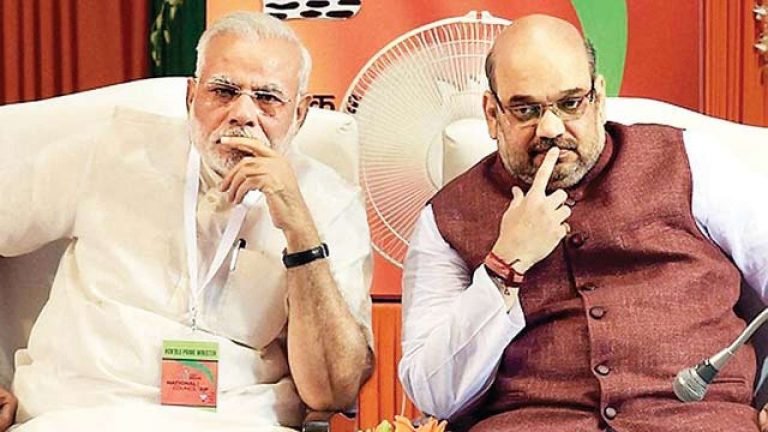
The prolonged silence of Prime Minister Narendra Modi and BJP President Amit Shah on election results was very telling. The results were clearly unexpected and possibly led to prolonged internal discussions on the future course of action.

It was around 9:50 PM that the Honorable Prime Minister tweeted about the election results, gracefully accepting the public’s verdict and another tweet where he tried to lift the morale of BJP karyakartas. BJP President Amit Shah has still not tweeted on the loss except congratulating K. Chandrashekar Rao for the stunning victory in Telangana.

But as it happens, BJP supporter base erupted with a wide range of emotions after a 0-3 drubbing the party received at the hands of chief opposition, the Congress Party. Many were old issues that had been brewing up for a while now.

For a while now BJP’s hardline Hindu supporters have felt not only ignored but also complained of BJP making overt appeasement moves towards India’s sizable Muslim population. Many others have raised the middle-class woes, chiefly, tax burden, fuel prices and the fact nothing specifically targeted at middle-class was launched by the government.

But these are all just symptoms. What is the real cause?

At the centre of it all is BJP’s severe lack of communication about what it is doing. It is either getting lost under the information overload or lack of craftsmanship. Prime Minister and other Ministers do tweet things from time to time. Prime Minister even tries to speak directly with the citizens through Mann Ki Baat but the fact is, there is not a single communication opportunity where government presents a gist of its activities. Something that gives a wider sense of direction the country is taking under its governance.

Even election speeches chiefly rotate around either few pet projects affecting the poorer communities or focus on the Gandhi Family of Congress Party.

Core Agenda – Positioning

BJP’s Core agenda, for decades, included the abolition of Article 370, Hindutva (Ram Mandir), Uniform Civil Code and National Security. Its previous communication was accordingly spread annoyingly between these wide positions. The same was then wrapped together and brought into the fold of a more cohesive slogan of ‘Nation First, Party Next and Individual Last’, after a Debate Facilitation Document was posted on the website of Friends of BJP in June 2009. Since January 2010, BJP’s positioning changed to the new slogan, but unfortunately, its real position remained the same – Article 370, Hindutva (especially via Ram Mandir), Uniform Civil Code and National Security.

Naturally, its long-term supporters expected it to deliver on these agenda after BJP formed a full-majority government in 2014, the first in India since 1984. While on National Security, BJP has done exceedingly well, and even the opposition has not raised any complaint, on UCC, Article 370 and Ram Mandir, BJP has failed to make any meaningful progress.

Ram Mandir issue is stuck in Supreme Court and BJP Supporters now expect the party to circumvent the Courts via legislation, on UCC BJP has tried an innovative approach like working on the components of the matter. Accordingly, Triple Talaq issue was raised and sorted through judicial intervention. On Article 370, Govt has complicated the matter by proposing to review and repeal Article 35A that bars the entry of non-J&K Resident from buying property in the State.

Fact is, the abolition of Article 370 is a lost cause. BJP doesn’t have the courage to explain this to its supporters. The bus was missed in 1956 itself when the Constitution of J&K was ratified and brought into force. Article 147 (c) of the Constitution of J&K prohibits the Legislative Assembly of J&K from making any amendment to the provisions of the Constitution of India, as applicable in relation to Jammu & Kashmir.

That simply means, State Assembly has no rights to pass a resolution to seek abolition of Article 370 of Constitution of India, which in turn means the Governor of Jammu and Kashmir cannot extend such a request to the President of India.

As if this problem was not enough, the Govt of India under BJP has complicated the problem by announcing its intent to repeal Article 35A from the Annexure 2 of the Constitution of India which stops rest of the Indians from buying properties in the State of Jammu and Kashmir. Article 35-A was promulgated by the President of India under the provisions of Article 370.

Achhe Din

During the campaign for 2014 elections, BJP also made two tall promises. One, Acche Din and two, anti-corruption drive. Acche din was simply a reference to better economic management towards which it has brought a wide range of policies ranging from agriculture to innovation in the fields of science and technology. Finance has been made available to smallest of professions like barbers, beauty parlours, carpenters, vegetable vendors etc., while a specific focus on Start-up culture has been established in a format that needs further evolution.

The government has also opened up lately to MSME segment and has tried to provide the finances. Taxation reforms, compliance, large-scale infrastructure projects, wider distribution of power to households, renewable energy and many other projects have also been a key focus, but yet, nobody understands the big picture of Modi Govt’s economic development.

On corruption, especially a deep-rooted institutionalized form of corruption is not only difficult to remove but is sometimes fraught with dangers of ouster or fatal risks to the people leading such drives. Modi Govt has worked on three-pronged strategy – strengthen the institution and make them capable of self-remedy, reduce corruption in public and private lives and investigate some big ticket corruption cases involving powerful politicians like P Chidambaram and the Gandhi Family of Congress. People are baying for blood.

Strengthening of public institutions is not a popular agenda. Reducing corruption in public and private life is a welcome move but nothing more than an expected hygiene factor. The blockbuster entertainment is in the conviction of someone big, someone like Chidambaram Family or the Gandhi family. And that has not happened in 4.5 years.

Reduction of corruption and simplification of processes has increased India’s “Ease of Business” ranking, but people want to see someone big go to Jail. It’s not that none has gone to Jail. Maharashtra NCP Leader Chhagan Bhujbal was in Judicial Custody for nearly 2.5 years, on corruption charges. Laloo Prasad Yadav was finally convicted and sent to Jail by the CBI Court. Karti Chidambaram was in remand for 2 weeks. But not much has been achieved directly against either P Chidambaram or anyone from Gandhi Family. On the contrary government, itself was under attack for the escape of few big businessmen with ultra large NPAs.

That situation is now getting remedied with the custody of Christian Michel, the middleman accused in Agusta Westland Scam where BJP hopes to get a name of someone from the Gandhi family. Vijay Mallya’s possible extradition is also a major relief for Modi Govt and could change the narrative in coming weeks and months, before 2019 General elections.

Conclusion – Communicate Better

The components are all there. But there is nothing to tie all this neatly into a cohesive story that can be told to the simple voters. BJP is losing a perception battle and just like Nation First, Party Next, Individual Last became its neat mantra in the run-up to 2014 elections, it needs to get a fresh communication strategy put into place. It needs a team that specializes in this job and they surely don’t seem to be from its existing line of resources.

They better hurry and get it in place, no later than mid-January. 2019 General Election is going to be battle India has never seen.


Madhya Padesh: Shivraj Singh Chouhan decides not to stake claim to form government, to tender resignation

0

After the very close defeat in the Madhya Padesh assembly elections, BJP has decided not to stake claim to form the government in the state. In one of the closest results in an election, no party managed to win the majority of 116 seats required to form the government in the 230-member house. While the incumbent BJP won 109 seats, the opposition Congress party won 114 seats, two short of the majority mark.

The difference between the votes polled by the two parties is less than 50,000, with BJP’s share 0.1% more than Congress. According to results declared by the Election Commission, BJP got a total of 1,56,42,980 votes, while Congress bagged 1,55,95,153 votes. The different being just 47,827 votes, while is just 9% of NOTA votes polled in the state.

As no party had got a clear majority, it was speculated that BJP may try to form a government by getting the support of 4 independent, 1 SP and 2 BSP MLAs that have won the elections, although that scenario was very unlikely.


Now putting all such speculations to rest, outgoing Chief Minister Shivraj Singh Chauhan has conceded defeat and announced that the party will not stake claim to form the government. He informed that he is going to tender his resignation to the Governor, making way for a new Chief Minister from Congress.

In the meanwhile, BSP supremo Mayawati has announced that her party will be supporting Congress in Madhya Pradesh. With the 2 MLAs of BSP, the Congress party will be comfortably cross the majority mark. Mayawati said that the decision was taken to keep BJP out of power.

Filmmaker Sajid Khan suspended from Indian Film and Television Directors’ Association over sexual harassment allegations

The Indian Film and Television Directors’ Association (IFTDA) has suspended filmmaker Sajid Khan for one year over complaints of sexual harassment against him. The decision which came in the wake of the #Metoo movement after several women accused the film director of sexual harassment.

IFTDA issued a show-cause notice to Sajid Khan in November. The notice read, “Your lewd and obscene actions have brought disrepute to Indian Film and Television Directors’ Association. We, therefore, want an explanation from you for such offensive behaviour within seven days of the receipt of the notice for further action as per the rules and regulations.”

They also stated that even after given an opportunity to put forth his defence, Sajid didn’t give any explanation. In reference to Sajid’s earlier interview, IFTDA also said that Sajid exposed his real self and admitted to being abusive and disrespectful towards women.

After such serious allegations coming his way, and after being called out by actors like Akshay Kumar and Farhan Akhtar, who stood by the victims, Sajid Khan stepped down as the director of upcoming comedy-drama ‘Housefull 4’.

The 48-year-old filmmaker was accused of misconduct by at least women who took to their respective social media accounts to speak up about their heart-wrenching ordeals. A freelance Bollywood journalist had taken to Twitter to narrate her ordeal as well.

Former Miss India and actor Niharika Singh too, opened up about her #MeToo experiences in entertainment industry calling out Bollywood biggies Nawazuddin Siddiqui, Sajid Khan and Bhushan Kumar.

Hindi film industry actors, Bipasha Basu, Dia Mirza and Lara Dutta also came down heavily on the director.

Recently, ace tennis player, Mahesh Bhupathi had also given his take on the sexual harassment allegations levelled against filmmaker Sajid Khan.

As the #MeToo movement gained momentum in India starting with actor Tanushree Dutta accusing Nana Patekar of harassing her, incidents of harassment and sexual misconduct started coming out in the open, with allegations being levelled against many personalities in the media and entertainment industry, including Subhash Ghai, Vikas Bahl, Alok Nath, and Rajat Kapoor. Union minister M J Akbar, comedians like Tanmay Bhat and Gursimran Khamba, co-founders of All India Bakchod were all accused of sexual misconduct. Notable filmmakers like Vikas Bahl, Sajid Khan and Journalists like Vinod Dua and Sidharth Bhatia of The Wire, Prashant Jha of the Hindustan Times have been accused.

Sajid Khan rose to fame with the ‘Housefull’ series he directed. The movie Housefull was released in the year 2000, which had four leading actresses, Lara Dutta, Deepika Padukone, Malaika Arora, Jiah Khan. Housefull was the last movie of Jiah Khan before her mysterious suicide in 2013.

Mayawati extends support to Congress for Madhya Pradesh, may consider Rajasthan ‘to keep BJP out of power’

Bahujan Samaj Party (BSP) chief Mayawati today extended support to Congress in Madhya Pradesh, after the nail-biting finale which showed Congress emerge as the single largest party at 114 seats, 2 seats short of a majority.


Speaking to media, Mayawati said that the BSP had fought these elections to defeat the BJP but unfortunately our party could not achieve it. But we have come to know that the BJP is still putting up a fight to form the government. To stop that, despite not agreeing with the Congress on ideology and leadership, we have decided to extend support to Congress to form the government in Madhya Pradesh so that the BJP does not succeed. If we feel that the Congress needs out support in Rajasthan, then to defeat the BJP, we will extend support to Congress even then.

Demystifying Civil Society: Organization linked to ‘Urban Naxals’ wants schools to teach ‘Human Rights Education’

As per reports, Federation for Human Rights (FPR) urged the government of Puducherry to introduce “Human Rights Curriculum” in the school curriculum in the Union Territory. Secretary G Sugumaran said that various organizations had already made the demand before and the NGO ‘HOPE’ had prepared textbooks with the help of experts.

Considering the fact that it is an attempt to influence the minds of children, we decided to investigate the background of the NGO. In 2011, the FPR had urged the then Chief Minister of Tamil Nadu, Jayalalithaa, to prevent the execution of former Prime Minister Rajiv Gandhi’s killers.

Links with organizations linked to ‘Urban Naxals’

The organization also appears to have participated in the inaugural conference of the Committee for the Release of Political Prisoners (CRPP), an organization with intimate links to alleged Naxals, as is evident from the page on their website.

The above statement is undersigned by Surendra Mohan, A Marx, Amit Bhattacharyya, SAR Geelani, GN Saibaba, Rona Wilson. Geelani’s reputation is quite well known. S Gurumaran, the secretary of FPR, has worked extensively with A Marx and even visited together Ayodhya for an “on spot study” of the matter. A Marx is associated with the PUHR, an organization whose Haryana chapter is a member organization of the CDRO. The PUHR and FPR also released a book together titled “Beyond Violence and Non-Violence” written by K Balagopal.

NCHRO

Rona Wilson is one of the alleged Urban Naxals arrested in connection with the violence in Bhima Koregaon and the alleged assassination plot to murder Prime Minister Modi. Arun Ferreira was another person from CRPP who was arrested in the same matter. The CRPP, as we have reported earlier, has extensive links with alleged naxals and separatists. It is also closely linked to the CDRO although it is not directly affiliated with the organization. Secretary of FPR, Sugumaran has also participated in various events with members from the PUCL, a coordinating organization under the CDRO that again has a very dubious record.

A Marx, apparently a close aide of Gurumaran, is also the chairperson of the NCHRO. The NCHRO participated in a protest to demand the release of the arrested ‘Urban Naxals’ along with CDRO, CRPP, NAPM and others. The NCHRO also demanded the closure of the Sterlite unit in Tuticorin, Tamil Nadu, the closure of which has caused immense distress to those facing the loss of jobs as a result.

Glimpse into FPR’s worldview

Gurumaran of FPR was part of a team comprising of SAR Geelani, Rona Wilson, A Marx, and others that travelled to Jammu and Kashmir for a ‘fact-finding mission’. The findings of the ‘mission’ appear to unequivocally support the separatists as it states, “Whether it is the worker, student, academic, lawyer, trader, peasant, women or children-the people of Jammu & Kashmir are unequivocal in their demand for Azaadi. They say that by brutally beating up the people in the streets, firing at their peaceful demonstrations championing freedom, the Indian State is giving up yet another chance of peacefully resolving the Right to Self-Determination of the people of Jammu & Kashmir.” The team also strongly condemned the “fascist character of the Indian state.”

Like many such organizations, the FPR also appears to have a special interest in seeking the implementation of the draconian RTE Act that discriminates actively against Hindu-run schools. It urged the Puducherry government in 2017 to ensure strict implementation of the RTE. The organization also demanded that the Aurobindo Ashram be taken over the Puducherry government. After the hanging of Ajmal Kasab, one of the terrorists responsible for the Mumbai Terror Attack, FPR demanded that capital punishment be abolished in the country.

Conclusion

The latest demand by the FPR to include “human rights education” in the school curriculum in Puducherry is, thus, an attempt to indoctrinate children in their own controversial ways. The FPR is linked to organizations that do not appear to have the country’s best interests at heart. The conduct of the FPR itself and that of its secretary does not appear conducive for the nation’s interests. Under such circumstances, their attempt to indoctrinate children appears particularly dubious.