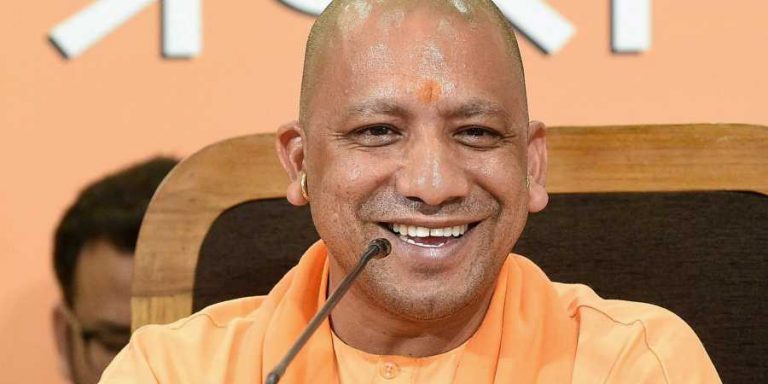
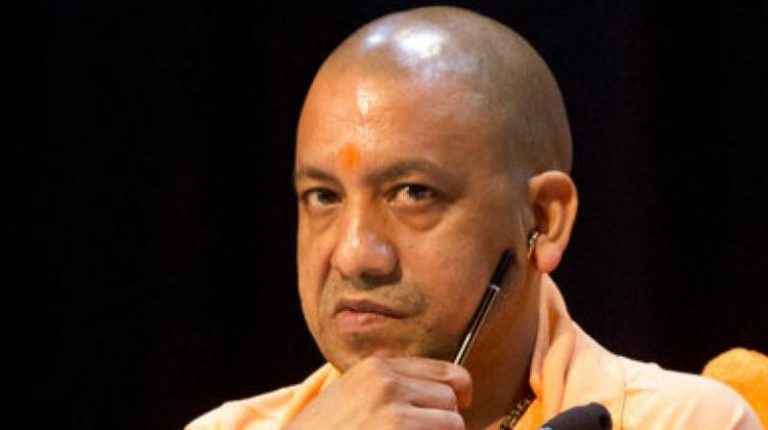
BJP’s star campaigner and Chief Minister of Uttar Pradesh, Yogi Adityanath, while addressing an election rally at Ajmer, Rajasthan, compared Congress President Rahul Gandhi with the engineering student who was awarded 17 compartments during four years of his engineering degree.
Yogi said that when he was reading a newspaper at the Jaipur airport, he saw the news about a BTech student who was awarded 17 compartments. The student could not clear the compartments in 9 years and had approached the court requesting to allow him another attempt to clear all the papers. The court rejected the student’s petition and said that he should waste the nation’s resources and should show some pity on the court as well as the nation.
Taking a jibe at Rahul Gandhi, Yogi said that Congress cannot win any election under the leadership of Rahul Gandhi. The party has lost elections in 17 States under his leadership and therefore now Rahul Gandhi should also show some pity on the nation.
Yogi said that even Congress party leaders now feel that the party cannot win any elections under Rahul Gandhi’s leadership.
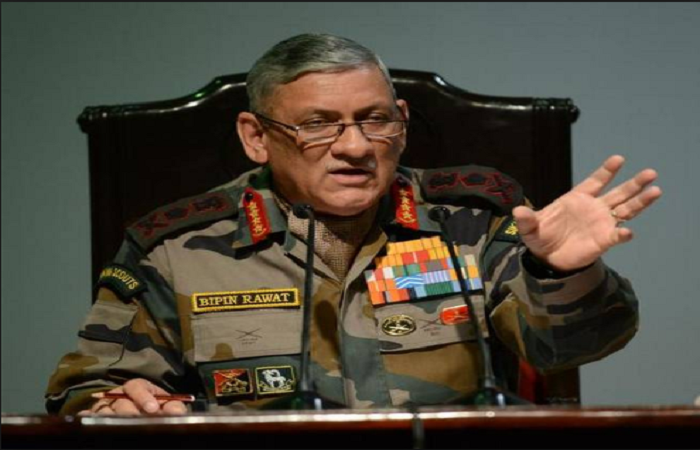
Delivering 9th YB Chavan Lecture at Institute of Defence Studies and Analyses, General Bipin Rawat talked about the ongoing “hybrid warfare”, unleashed by Pakistan on India.
The ongoing hybrid war with India
General Rawat, talked about the well-sequenced and coordinated hybrid warfare currently India is facing. Rawat said that its prime target is our population and infrastructure, instead of the military establishment. He added that be it a 1947-48 war, 1965 or 1999 Kargil War with Pakistan, or “Disruptive techniques” like stone-pelting and school closures all are part of the hybrid war, engineered by Government agencies of Pakistan.
General Rawat advised India to opt for an “Offensive-defence” strategy to counter the hybrid war instead of tit-for-tat strategy like unleashing the same war on Pakistan’s population.
The Army Chief also underlined that the radicalisation of youth in Jammu and Kashmir is happening through manufactured narratives peddled by anti-India forces.
“People are back from schools and colleges and there is nothing else to do other than watch television and look at mobile phones. These messages (in phones) convey everything negative and falsehood,” General Rawat said.
Demography Change going on in Pakistan-Occupied Kashmir
General Rawat, said that India should initiate the strengthening of security infrastructure in the valley, and muster resources to counter the prevailing narrative of falsehoods and indoctrinations.
“The issue on the other side is that Pakistan has very cleverly changed the entire demography of PoK, Gilgit Baltistan. We are not sure as to who is an actual Kashmiri or a Punjabi who has come and occupied the area. The Kashmiri identity has been gradually eroded very cleverly by Pakistan,” Rawat was quoted.
Kartarpur Sahib corridor
After the lecture General responded to several questions. He was asked about the issue of opening of Kartarpur Sahib corridor, and whether it was a step towards engagement with Pakistan.
General Rawat, responded that India is firm on its stand, that terror and talks cannot go hand-in-hand. He made clear that Kartarpur Sahib corridor should be seen in isolation, as already declared by Minister of External Ministry Sushma Swaraj.
General Rawat’s previous takes on National Security
In the month of November, talking about the proxy war waged by China and Pakistan on India, General Rawat had said the changing demographics of states of North-east like Assam is the result of the deliberate influx of Bangladeshis in the region. He had cited the example of the ascent of the party called All India United Democratic Front) AIUDF, active in Assam which made its first electoral presence in 2005 and now has currently had three parliamentarians in Lok Sabha and 13 legislators in the state assembly.
Army Chief had said that Badruddin Ajmal-led AIUDF, had grown alarmingly faster than the BJP in the 1980s.
Army Chief Bipin Rawat recently had stated that external forces are attempting to revive the Khalistani insurgency in Punjab.
OpIndia has accessed a list of Indian journalists who have been approved by the Pakistan High Commission to travel to Pakistan and cover the Kartarpur Corridor inauguration ceremony.
On November 22, the government of India had announced its intention to build the Indian side of the Kartarpur Corridor and had urged Pakistan to reciprocate by building the corridor on Pakistan side. On the same day, Pakistan had responded positively. After that, Pakistan moved swiftly and announced that prime minister Imran Khan will lay the foundation stone for the corridor on 28th November. India will lay the foundation stone for its side of the corridor on 26th November.
The Kartarpur Corridor inauguration ceremony in Pakistan had created quite the stir in India after Congress leader Navjot Singh Sidhu accepted Imran Khan’s invite and had praised Imran Khan profusely. Minister Sushma Swaraj couldn’t go and Punjab Chief Minister Captain Amarinder Singh had declined the invitation. Swaraj had also reiterated that sending India’s representatives to Pakistan does not open the doors to talks.
The list of the journalists approved by the Pakistan High Commission is as follow:
Page 1 of the approved list of journalists signed by Press AttachePage 2 of the approved list of journalists signed by Press Attache
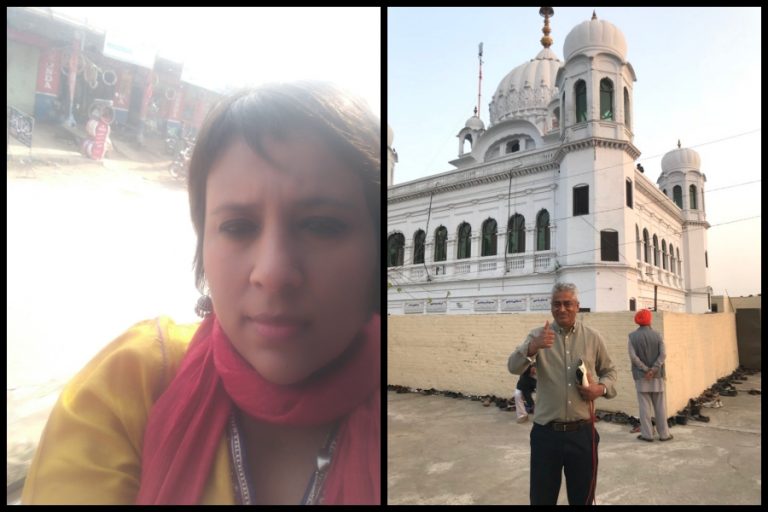
We are told that the list of journalists who are to cover the Kartarpur Corridor inauguration has been carefully vetted by the Pakistan High Commission. Barkha Dutt, whose name was amusingly spelt as “Burkha Dutt” topped the list.
Among others who were invited are senior journalists like Rajdeep Sardesai, Sagarika Ghosh, Siddharth Varadarajan of The Wire, Jyoti Malhotra of The Print, Suhasini Haider from The Hindu and Sunetra Choudhury from NDTV.
Interestingly, the list did not feature several prominent news agencies like Republic, Zee News, Times Now or even ANI, which is arguably the largest news agency of India. On Twitter, when Smita Prakash was asked why no journalist from ANI was invited, she said that her journalists did not get a Pakistan visa.
That ANI journalists did not get a visa and 3 journalists from The Wire and others from portals like The Print make it to a list of ‘approved’ journalists by the Pakistan High Commission, is intruiging.
We have blanked out the journalists’ passport numbers to protect their privacy, however, it is worthy to note that Founding Editor of The Wire, Siddharth Varadarajan had a USA passport listed and not an Indian passport.
The Indian journalists were also seen dining with Pakistan Foreign Minister Qureshi. Barkha Dutt tweeted a video of the dinner.
I ask Pakistan Foreign Minister @SMQureshiPTI about India’s objection to Kashmir being being mentioned at #KartarpurCorridor : He says: “Kashmir is acknowledged as outstanding issue even in our composite dialogue. Like Terrorism is…” Watch full reply here .. #Kartarpurpic.twitter.com/r0DiCPq1Bv
Our sources also tell us that a meeting with Pakistan Prime Minister Imran Khan is set to take place this afternoon.
Some Indian journalists in Pakistan seemed jubilant at the thought of being in Pakistan. Rajdeep Sardesai tweeted that it was his chance to meet old friends.
My ‘friends’ on twitter would call it ‘Ghar Wapsi’; for me a chance to meet old friends and observe Pakistan! ??? pic.twitter.com/QQmsvYRX2k
Barkha Dutt and Arnab Goswami have often found each other on opposite sides as far as their love for Pakistan is concerned. Barkha Dutt, who loves to take digs at Arnab and Republic TV, said that while “hard-nosed cynics and journalists” debate India and Pakistan, some are “unabashedly sentimental”. Incidentally, judging from the list, nobody from Republic TV was invited to Pakistan.
Hard nosed cynics and Journalists can keep debating India and Pakistan and #KartarpurCorridor but some are unabashedly sentimental. Interviewed Chanchal Manohar Singh & Riaz Ahmad , Indian and Pakistani and friends for ten years. All smiles. All optimism. Video coming next ! pic.twitter.com/txHDtmByLS
Interestingly, Siddharth Varadarajan of The Wire has maintained a stony silence about his Pakistan trip on his Twitter timeline.
Approval of journalists to enter a country is not unheard of practice and many nations do it. However, it is not clear if the original list of proposed Indian journalists travelling to Pakistan had some names that couldn’t pass the test by Pakistani High Commission. Some omissions of names and media organisations are apparent, but it is not clear if they were rejected by the High Commissioner or never considered for an invitation in the first place.
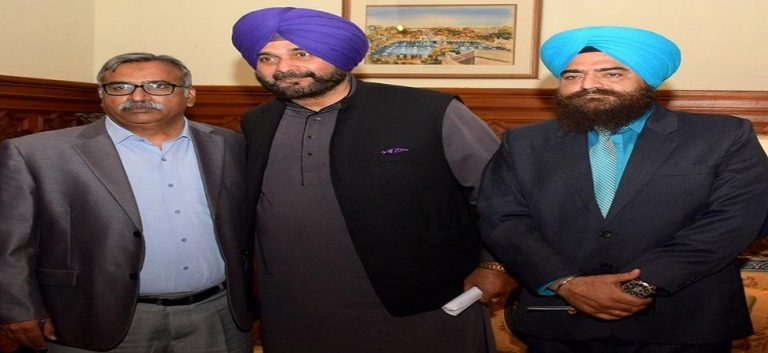
In a shocking incident, Congress leader Navjot Singh Sidhu has been found posing with Khalistani terrorist Gopal Singh Chawla during his controversial visit to Pakistan to inaugurate the Kartarpur corridor, reported ANI.
According to the reports, in a Facebook post, Khalistani terrorist Gopal Singh Chawla posted a photo of him standing next to Congress leader Navjot Singh Sidhu. This act by the senior Congress leader Sidhu comes after a day that terrorist Chawla was spotted alongside Pakistan Army Chief Qamar Javed Bajwa at the inauguration of the Kartarpur Corridor.
Gopal Singh Chawla, an ardent supporter of Khalistan, a separate nation for Punjabi Sikhs and is also an active member of pro-Khalistani terror outfits. He is also suspected to be involved in the recent bomb blast at a Nirankari gathering in Amritsar in which three people were killed. Gopal Chawla is also believed to be a close aide of Pakistan sponsored Lashkar-e-Taiba terrorist Hafeez Saeed and is in contact with the ISI to hatch a terror plot against India.
Gopal Singh Chawla is also the man behind the ‘Sikh Referendum 2020’ movement and had recently posted photos regarding the same outside gurdwaras in Pakistan to incite Sikh pilgrims from India who had visited Pakistan on Baisakhi. He was invited to Kartarpur ceremony, as he is one of the senior members of PSGPC, said a Pakistani official.
Gopal Singh also played his role in denying access to Indian High Commission officials to two gurudwaras in Pakistan a few days ago. Reportedly, the officials had gone to the gurudwaras to meet Indian pilgrims. India had registered a strong protest with Pakistan over the harassment of the Indian diplomats and denial of access to Sikh shrines to meet Indian Sikh pilgrims visiting Pakistan
Chawla speaking to the media on Thursday over his photo with Sidhu said, “What is the big deal in this? I don’t know why I am dragged into everything. Why such links are created, I have no intention of creating any terror.”
Sidhu had earlier stoked a controversy when he was spotted hugging Pakistani army chief Qamar Javed Bajwa during his Islamabad visit to attend the oath taking ceremony of his cricket-ground rival Imran Khan.
Recently, Army Chief Bipin Rawat has stated that external forces are attempting to revive the Khalistani insurgency in Punjab. The US government had recently also declared Babbar Khalsa, the Sikh terror group as a threat to American interests. Babbar Khalsa intends to create an independent Sikh state in India through violent means and is responsible for several terror attacks in the country resulting in many civilian deaths.
The Jammu and Kashmir government under Governor Satya Pal Malik has decided to repeal the Jammu and Kashmir State Lands (Vesting of Ownership to the Occupants) Act, 2001, popularly known as the Roshni Act with immediate effect. As per reports, the government has stated that the Act has failed to realise its objectives and there were reports of misuse.
As per the government’s order, all pending applications for transfer for ownership to new occupants will be cancelled. The government will not, however, cancel the ownership already transferred under the Act.
The Roshni Act was brought forth in the year 2001 under the former CM Ghulam Nabi Azad with the proposed twin objective of generating revenues for power projects in the state and conferring property rights to occupants of state-owned land. It was expected that the move will boost the agriculture sector and will generate substantial revenue for the state.
Under the Roshni Act, approximately 20.55 lakh kanals of state land was opened to conferring ownership rights. However, over the years, only 15.85% of the land was approved for vesting ownership rights. The resultant revenue was reportedly meagre and the expected boost to the agrarian sector was also not achieved.
There have been complaints of the misuse of the Act. In 2016, the Jammu and Kashmir government had announced that it will initiate a probe into alleged irregularities under the Act after the Revenue minister informed that instead of the expected Rs 25,000 crores, the Act had generated only Rs 78.47 crores for the government.
The then Principal Accountant General (PAG) had called the Roshni Act as the biggest land scam of the country. It was alleged that beneficiaries of the scheme were ministers in the past governments, bureaucrats and politicians.
Initially, the Roshni Act allowed the illegal occupants of state lands up to 1990 to own the land after paying the price of Rs 20 lakh per Kanal. However, in 2005, the Ghulam Nabi Azad government brought amendments in the Roshni Act that allowed illegal occupants up to 2004 to own the state-owned land at the meagre price of 10 to 15 % the actual price for commercial and residential properties and a paltry Rs 100 per Kanal for agricultural land.
Over the years, there have also been allegations that the Roshni Act was aiding in rampant attempts in a demographic invasion of Jammu and Ladakh. Advocate Ankur Sharma, who is the chairman of the Ikkjutt Jammu forum, had filed a PIL in the Jammu and Kashmir High Court mentioning that the there is a conspiracy underfoot to change the predominantly Hindu populated areas in Jammu region.
The J&K High Court had ordered a fortnight ago to stop all transaction by the beneficiaries including selling and construction on the lands allocated to them under the Roshni Act with immediate effect. Advocate Ankur Sharma has maintained that the demographic invasion of Jammu and Ladakh is the long arm of the Islamic terrorism that has engulfed the Kashmir region and has the potential to collapse all resistance against separatism in the state.
As per the State Administration Council (SAC) that met on Wednesday under the chairmanship of Governor Malik, concluded that the contentious Roshni Act has failed to serve its purpose and is no longer relevant in present contexts.
The Roshni Act and its subsequent misuse had come to light after the Mehbooba Mufti government had, in February this year, had ordered that the nomadic communities illegally occupying the forest lands in the state will not be dislocated until a new tribal policy is formed. Ankur Sharma had later alleged that the Mufti government had basically ordered that no provisions of criminal law will be applied to the Muslim nomadic tribes even if they grab lands and smuggle cattle in Hindu dominated regions.
As per reports, the Supreme Court has commuted the death sentence of a criminal convicted of rape and murder and reduced it to life imprisonment. The Supreme Court reportedly observed that the death sentence should be awarded only when there’s no scope for reformation.
#JustIn | SC commutes death sentence of a person convicted in a rape-cum-murder case to life imprisonment and says that death sentence be awarded only when there is no chance of reformation of the convict.
There are several problems with such a reasoning. There is no objective criterion to determine the chances of reformation of a particular convict. More importantly, it isn’t clear why it should even be a concern. The purpose of conviction is not to guide the convict to a better path, its purpose is solely to impose punishment consistent with the severity of the crime committed. If the crime is severe enough to attract the death penalty, then it isn’t exactly clear why the scope for reformation should be taken into consideration.
There are certain ambiguities regarding the laws involving capital punishment in India. According to precedent, it is reserved for the rarest of rare cases. But an objective criterion for ‘rarest of rare’ is not defined. Under such circumstances, it often falls on the subjective interpretation of the case by the concerned judges.
The objective of punishment is not merely reformation, it is also deterrence for the convict and also those who may be inclined to commit the same crimes. We should not consider the scope of reformation for a rapist and a murderer since none exist for his victim. It isn’t clear why his right to life should be respected after he has violated the right to life of another human being.
The gist of the matter is, if the Indian Penal Code (IPC) states exactly which crimes deserve the death penalty, then our courts should only determine whether a person has committed those crimes and if he has, then the death penalty should be awarded as prescribed.
The Judiciary needs to base their judgments on solid grounds of fact. It needs to provide the evidence is considered to reach the conclusion that there was a scope of reformation for the convict. It then needs to answer if such a reformation would negate the crimes that he has committed in the past. These are matters of deep philosophical debates. It cannot be ruled aside by stating it as established fact.
The ‘scope of reformation’ argument only takes more power away from the legislature and accumulates in the hands of the Judiciary. Judicial activism has been a heated debate in recent times. Although high profile cases such as the Sabarimala verdict has attracted much attention, such little moves via which the Judiciary grabs power are often ignored although they pose a far bigger threat.
It is true that every crime needs to be dealt on a case by case basis. But it’s very difficult to imagine that a rapist and a murderer could ever reform himself. Indian Criminal Jurisprudence is believed to be based on a combination of deterrent and reformative theories of punishment. While it is understandable that a reformative approach is taken to petty crimes, it appears extreme naivete to apply the same to violent crimes.
One argument that is put forth in this regard is that every human life is valuable and efforts should be made to save every soul from corruption. It’s a very religious argument. But it can also be argued that human souls are not for us to save. From the Hindu perspective, every person needs to atone for his sins. The concept of reformation does not feature anywhere in this regard. In the Mahabharata, the Pandavas had to atone for their sins as well even though they were committed to upholding Dharma.
The convict could very well put up a pretence of extreme regret to give judges the impression that he has reformed in order to avoid the death penalty. In such a scenario, it will be a gross injustice to the victim of his crimes. Punishments are about justice as well and sometimes justice requires us to perform actions which are not entirely pleasant.
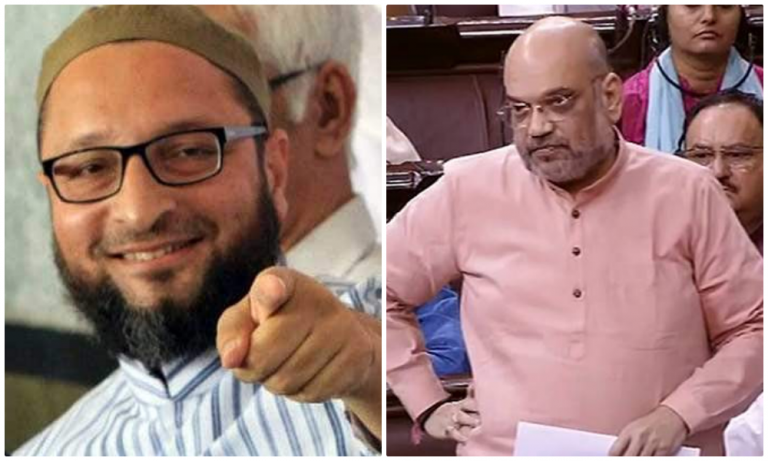
In a controversial statement, MIM President Asaduddin Owaisi said that he would ask Telangana caretaker Chief Minister KC Rao to send BJP President Amit Shah some kalyani (beef) biryani.
Owaisi was reacting to reports of BJP President’s comment where the latter had claimed KC Rao was providing biryani to MIM men. Addressing a rally in Kukatpally, Owaisi said that he will immediately call KC Rao and ask him to send at least kalyani biryani (beef biryani) to Amit Shah. Kalyani biryani is another of the famous biryanis from Hyderabad made with either beef or buff.
“Amit Shah said that KC Rao is sending biryani to Majlis men. We didn’t know that Amit Shah also liked biryani. If he is jealous that he as not fed biryani, then I would immediately call KC Rao that at least send him (Shah) a parcel of kalyani biryani,” Owaisi said to a cheering audience.
Taking a dig at Prime Minister Modi’s visit to Nawaz Sharif’s residence, Owaisi even questioned Shah on what was Modi offered to eat at Sharif’s daughter’s wedding reception in Pakistan.
“If someone is eating, why is your stomach aching? You can eat too,” Owaisi said.
Owaisi is known for making such controversial statements. Earlier he had mocked BJP’s Telangana manifesto proposal of distributing 1 lakh cows every year. A report by Times Now claimed that Owaisi stated that what he does with his cow is his choice. While other media reports claimed that Owaisi had stated that he will keep his cow with the utmost respect, but the question is whether the BJP will give him one.
Owaisi has often claimed that the BJP is anti-Muslim. He had recently stirred up a controversy implying that the government does not hire Muslims for serving in the security forces. During the demonetisation in 2016, Owaisi had claimed that the BJP government in the centre is not providing enough cash in the ATMs located in Muslim dominated areas.
Telangana will go to vote on 7th December along with Rajasthan and the results will be declared on 11th December along with other four states, Chhattisgarh, Rajasthan, Madhya Pradesh and Mizoram. While the incumbent TRS and BJP are fighting solo, Congress and TDP have formed a pre-poll alliance. BJP had also proposed to regulate liquor sales in the state if voted to power. Popular Hindu spiritual leader Swami Paripoornananda has recently joined BJP and is expected to fight in the state assembly elections.
A right-wing group in Rajasthan has sent a legal notice to Uttar Pradesh Chief Minister Yogi Adityanath asking him to apologise within three days after some media misreported saying Uttar Pradesh CM referred Lord Hanuman to a Dalit.
Rajasthan Sarv Brahmin Mahasabha president Suresh Mishra has sent a legal notice to Adityanath, accusing him of using Lord Hanuman’s caste for political gain for the BJP in the upcoming elections. Reportedly, the notice said that Yogi Adityanath’s statement has hurt religious sentiments of several devotees.
Uttar Pradesh Chief Minister Yogi Adityanath’s campaign rally speech at Alwar, Rajasthan was wrongly reported by some media outlets. Times Now had reported that Yogi Adityanath during his speech, he had said, “Lord Hanuman was Dalit who united India from east to west, north to south.”
However, we did a fact check regarding Yogi Adityanath’s speech and found that UP CM did not make any such statements rather the media twisted his statements to give it a Dalit angle. Yogi Adityanath in his speech did not refer Lord Hanuman as a Dalit, rather called Lord Hanuman as a God who lives in the forest and does not discriminate his devotees and takes all strata of people along.
Yogi Adityanath said, “In Indian tradition, Bajrangbali is loved by all, lives in a forest and has no place to call it home. The Dalits, the deprived, He (Lord Hanuman) takes them all, everyone in the Indian community, from the north to the south, from the east to the west, together. Bajrangbali has carried out the task of uniting everyone. Hence, (voting for BJP) should be a Bajrangi Sankalp (vow).”
It is evident from Yogi Adityanath’s statement that what the media reported was a complete fabrication of the truth and what he said.
On Wednesday Prime Minister Modi left for Buenos Aires, Argentina for G20 summit. It will be attended by world leaders from Top 20 economies, to share ideas and issue a joint declaration based on the policy recommendations prepared at the G20 meetings held throughout the year.
According to reports, PM Modi will be part of trilateral talks with USA President Trump and Japan PM Shinzo Abe. PM Modi has not met with President Trump since June, and he recently met PM Abe in Japan. The talks with the USA is said to be aimed at resolving the trade tensions with the US, that emerged after US sanctions on China.
Issues to be addressed by PM Modi at G20 summit
The host country Argentina has decided the theme of the summit, that is ‘Building Consensus for a Fair and Sustainable Development.’ The whole summit has been divided into three parts. The first is ‘Putting People First’ and that is essentially on the global economy, on the economic outlook or the future of work. PM Modi is the lead intervener of this division.
PM Modi, according to Foreign Secretary Vijay Gokhale, will emphasise the importance of controlling the oil price volatility. Other major issue includes women empowerment. PM Modi will also highlight the success of his schemes launched in the country and how they are contributing to making lives of citizens better. These schemes may include the Jan Dhan Yojana, the Aadhaar Scheme, the GST, the Start-Ups and the Mudra Yojana as ways of financial inclusion and efforts to reach out to the lowest rungs of the society and economy, Vijay Gokhale said.
The second session talks of Building Consensus, a topic of importance at this time certainly, and this will deal with international trade, finance, taxation, sustainable development and climate change. And the third session is called ‘Embracing Opportunities’ and these are related to energy, infrastructure, sustainable food security.
In the division of ‘Embracing Opportunities’, PM Modi may talk about steps undertaken by India in the field of clean and renewable energy. PM Modi is also likely to urge countries within the Tropics of Cancer and Capricorn (counties located near the equator) to join the International Solar Alliance.
Scheduled Bilateral meetings with other leaders
Along with meeting president Trump and PM Abe, PM Modi will hold bilateral meetings with several other leaders of G20.
The foreign secretary said PM Modi will also meet United Nations Secretary-General Antonio Guterres, Mauricio Macri, the President of Argentina; Chilean President Sebastian Pinera, German Chancellor Angela Merkel. He will also meet the prime ministers of Spain, Jamaica, the Netherlands and the president of the European Union and European Council. A bilateral meeting between Modi and French President Emmanuel Macron is also being worked out, Gokhale said.
PM Modi after speaking at Leaders Retreat, will leave for India on December 2.
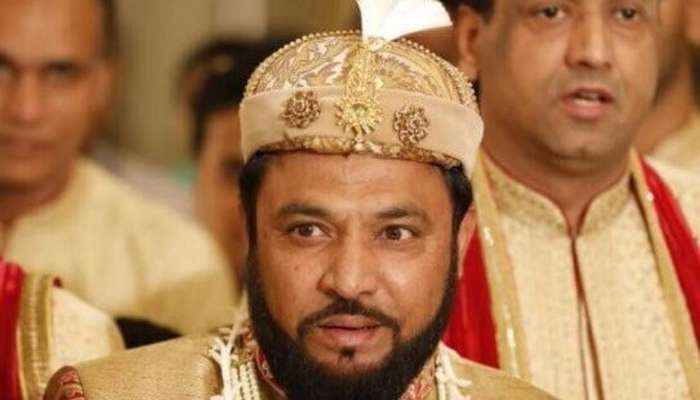
Prince Yakub Habeebuddin Tucy, who claims to be the sixth-generation descendant of the last Mughal emperor Bahadur Shah Zafar, has sent a legal notice to Syed Waseem Rizvi, the chairman of Shia Central Wakf Board, demanding not to release the movie ‘Ram Janam Bhoomi’.
Prine Tucy has posted a video on Youtube explaining the reason behind sending the notice. In the video, he has warned the Shia leader Rizvi against the release of the movie as he believes that the movie defames Emperor Babur and presents a distorting version of the history of Mughal kings. According to Tucy, the movie will also break the unity by inciting people from both the Hindu and Muslim communities.
“We have sent a legal notice to Shia leader Waseem Rizvi after he has released the trailer of the movie ‘Ram Janmbhumi’ and the trailer will sow the seeds of the hatred in the minds of the people, ” said Prince Tucy. He accused Rizvi of joining hands with RSS to promote such movie which may lead to violence between two communities. Prince Tucy further requested RSS to stay away from people like Waseem Rizvi.
Rejecting the charges of destructions of temples against Babur, Prince Tucy said that it was Babur’s commander Baqi Tashqandi, also known as Mir Baqi, who was behind the demolition of the Ram Mandir and construction of the mosque in the name of Babur. Tucy said that Baqi was a traitor who tainted the name of Babur.
Interestingly, he also staked his claim to the disputed Babri Masjid site in Ayodhya and said that he will give the land to the Hindus as he is the rightful owner of the land as well as the site. He further said that he wished a temple is built at the disputed site as it is connected with the beliefs of the Hindus.
According to Prince Yakub Tucy, neither the Shia Wakf board nor the Sunni Wakf board has any claim on the Babri Masjid, and he believes, that the land on which the mosque is based is owned by the Mughal dynasty.
He further went on to slam AIMIM leader Asaduddin Owaisi and called him “chichora”(frivolous) and “battebaaz” (uncouth) for dividing Hindus and Muslims in the name of the religion. He said that he has sent a copy of the legal notice to the Central Board of Film Certification.
This is not the only opposition the upcoming movie about the Ram Mandir movement is facing. A few days ago, Students of Aligarh Muslim University (AMU) had demanded a ban on the movie. They had said that the film could vitiate the atmosphere and create fissures between two communities.