Home Blog Page 7014

Senior journalist reveals how NDTV used to take editorial orders from PMO during UPA era

0

Ever since Prime Minister Narendra Modi sworn in, we have been hearing about how the Modi government is supposedly clamping down on the freedom of the press and how there is a sort of ‘undeclared emergency’. However, a former journalist with NDTV, Samarendra Singh has revealed how back in 2005, a year after Dr Manmohan Singh became the Prime Minister, Dr Singh got a story pulled off from NDTV, but nobody in NDTV claimed that UPA government was imposing ‘undeclared emergency’.

In a Facebook post, Samarendra Singh says that these days, it is ‘fashionable’ for journalists like Punya Prasoon Bajpai and Ravish Kumar to say that the PMO (Prime Minister’s Office) is calling up the editors and owners of the media houses in an attempt to ‘censor’ content. However, the way news against the Modi government are coming out, the ‘censorship’ bit seems far from true.

“It is not that you can print anything against the Prime Minister and not expect a reaction. But is this ‘reacting to news’ something new? Is it really true that the PMO earlier never intervened and called up the editors and owners? Were channels allowed to show anti-government news? Was there freedom to run an anti-government agenda during the UPA?” Singh asks.

Reminiscing an incident from 2005, Samarendra Singh wrote:

I want to talk about a 13-year-old incident which took place in the organisation where Ravish Kumar works. Those days even I used to work with NDTV India. And those days, India was run by the most ‘kind and weak’ Prime Minister, Dr Manmohan Singh. Sitting on the chair he got in charity, Dr Singh was also running the coalition government with a lot of generosity. In the ‘golden age’ of government and journalism, the krantikari journalists of NDTV had a brainwave of making a ‘report card’ of the ministers in the Manmohan Singh cabinet. A list of ministers who had fared well and those who didn’t was aired on NDTV India at 9 pm bulletin.

Dibang, the then Managing Editor of NDTV India, called me and asked me to drop the list of ministers who didn’t fare well. I told him that we should even drop the list of ministers who fared well otherwise it will appear as if we are buttering up the government. Dibang agreed and said he would have a word with Roy (Dr Prannoy Roy, owner of NDTV), and get back. Some time back, Dibang called back and said to drop the list of ministers who didn’t fare well but to air the list of ministers who were doing good.

Years later, when Dr Manmohan Singh’s media advisor Sanjaya Baru wrote the book ‘The Accidental Prime Minister’, it was revealed why Prannoy Roy did what he did. On Page 97 of the book, Baru reveals the ‘kind and weak’ Prime Minister had called up the powerful owner of NDTV and scolded him such that he was stripped of all his journalism. Roy himself admitted that he felt like a teacher had scolded him. After being scolded by Prime Minister Singh, the journalist-owner of NDTV, Prannoy Roy, could not even muster up that much courage to air the ‘report card’ on his channel. The list of ‘good ministers’ was run so that Dr Singh could be cajoled. Whether you call Roy a journalist or a businessman, this incident could be seen as bowing down to the government pressure or just buttering up the government, but it cannot be called journalism by a far stretch of the imagination.

The incident mentioned by Samarendra Singh is indeed mentioned in Sanjaya Baru’s book. Here is an excerpt from the book The Accidental Prime Minister:

The Accidental Prime Minister by Sanjaya Baru, page 96-97

As mentioned above, in May 2005, when the UPA-1 was reaching its first anniversary, reports had started appearing in the media that Dr Singh was reviewing performance of his ministers and a cabinet reshuffle was on the cards. On 9th May, 2005 when Dr Singh was in Moscow, NDTV ran a story that Minister of External Affairs, Natwar Singh had secured a ‘low score’ on the PM’s report card and was likely to be dropped from the cabinet.

A senior Congress leader, Natwar Singh has been perceived as a staunch and avowed Sonia Gandhi loyalist. So an upset Natwar Singh took the next day off on ‘health grounds’. When Dr Manmohan Singh heard of it, he asked to find out what NDTV had reported.

When he was briefed, the otherwise calm and composed Dr Manmohan Singh burst into anger and asked Baru to tell Prannoy Roy to “stop reporting these lies”.

When Baru called Roy to convey the message, Dr Singh took the phone from Baru and spoke to Roy himself. Baru recounts the incident in his book:

I called Prannoy Roy, the head of NDTV, and had just begun speaking to him when the PM asked for my mobile phone and spoke to Prannoy himself, scolding him like he was chiding a student who had erred, saying, ‘This is not correct, you cannot report like this.’ Indeed, the relationship between him and Prannoy was not that of a prime minister and a senior media editor but more like that of a former boss and a one-time junior. This was because Prannoy had worked as an economic adviser in the ministry of finance under Dr Singh.

The book corroborates the claims made by the former NDTV journalist. In fact, the book even suggests that this may not be a one-off incident as Prannoy was virtually subordinate to the then Prime Minister. Interestingly, no one cried ‘undeclared emergency’ back in 2005.

We had earlier reported how India Today and Indian Express respective owners, Aroon Purie and Anant Goenka had rubbished claims that Modi government is pressurising or arm-twisting the media houses to into following a narrative. Goenka had even went far to claim that ‘phone call’ (from the government to arm-twist the management into firing journalists) would have come through, it would have happened in case of either of the governments. Now this account by the former NDTV journalist confirms it.

In fact, Purie had said, “This government lets you (proprietors) know that they are unhappy, unlike the previous governments, who ‘would do sneaky things and otherwise try and make life difficult for you’. But this government (Modi-led NDA government) ‘says okay, you’ve done this story, you haven’t done this and that, but it is up to you to decide how much you want to yield or not yield.”

On being asked about which government is more controlling (towards the press), Goenka had said, “I feel there is a lot of talk about how intolerant this government is or how thin-skinned they can be to the press… but it is not new, it has always happened. We have had our editors in jail. It has also got to do with the strength of the government.”

Earlier in March, Supriya Prasad, the Managing Editor of the Aaj Tak and India Today news channels, too, had said that he never faced any kind of pressure from the government regarding news broadcasts or running ‘favourable news’. Amusingly, many ‘celebrity’ journalists, like NDTV’s Ravish Kumar and India Today group’s very own Rajdeep Sardesai, while trying to raise the bogey of ‘undeclared emergency’ or while commenting on CBI raids against NDTV promoters, have tried to insinuate that the Narendra Modi government was trying to muzzle voices in media by putting pressure.
Trouble for proposed Mahagathbandhan in Uttar Pradesh as Mayawati and Mulayam’s plans remain ‘independent’

0

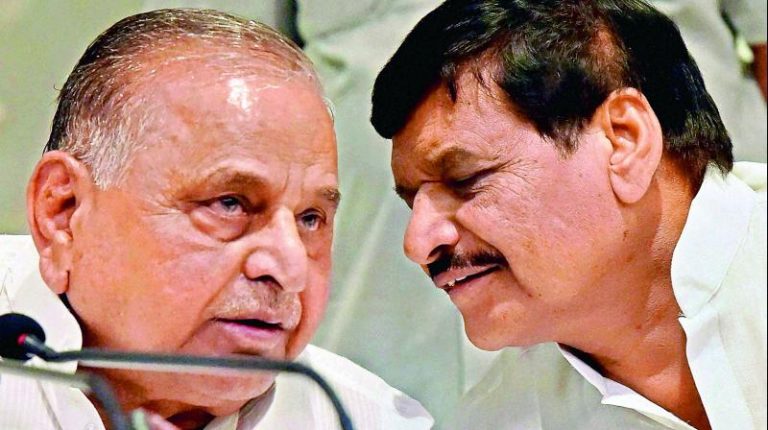
The Samajwadi-family feud between Akhilesh Yadav and his uncle Shivpal Singh Yadav seems to be taking some unexpected turns, as the rebel Shivpal Yadav has now announced that his elder brother and SP founder Mulayam Singh Yadav, the current Lok Sabha member from Azamgarh, will contest the next general election under from his new political party-Samajwadi Secular Morcha (SSM).

Shivpal Yadav had formed the Samajwadi Secular Morcha after ending ties with Samajwadi Party and has now decided to field veteran Mulayam Singh Yadav from Mainpuri in the upcoming 2019 elections. Mulayam Singh Yadav had contested and won from two seats-Azamgarh and Mainpuri in the 2014 elections. He had retained Azamgarh and had resigned Mainpuri seat, later won by his grand-nephew Tej Pratap Singh Yadav. Reportedly, Mulayam Singh Yadav wants to contest from Mainpuri in the next elections rather than Azamgarh.

SSM spokesperson Deepak Mishra said, “Shivpalji has announced that Netaji (Mulayam) will be the SSM’s candidate in the next Lok Sabha elections from Mainpuri. If he wished to contest from any other seat, the SSM will be with him.”

Shivpal Yadav also claimed that many leaders from Akhilesh Yadav’s SP are in touch with him and are interested to join his party. Many SP leaders will soon join my party. We will also get the party registered with the Election Commission,” he said.

Shivpal Yadav had recently said that his party will field candidates in all the 80 Lok Sabha seats of Uttar Pradesh.  He had earlier said that the proposed alliance between SP-BSP should also include his outfit SSM. According to Shivpal Yadav, his morcha can win 20-30 seats in the upcoming Lok Sabha elections. “If the (SP-BSP) alliance does not include the morcha, it (morcha) will contest on all 80 seats in UP”, Shivpal had said to media recently.

The so-called anti-BJP Mahagathbandhan looks like a distant dream as several regional leaders are actively pursuing their own political goals. In UP, while there is uncertainty over whether BSP supremo Mayawati will be a part of the Mahagathbandhan with Rahul Gandhi as the PM candidate, she has added fresh uncertainties to the already confusing broth. Mayawati has announced that her party will go solo if not given a fair share of seats. it is notable here that BSP has declared Mayawati as their PM candidate and she has been giving statements against both Congress and BJP in recent times. With the widening gaps in the Samajwadi family and uncertainty in BSP’s intentions, the Mahagathbandhan’s future looks bleak, at least for Uttar Pradesh.

Fact check: How is Narendra Modi government building 0.7 toilets every second?

On 15th September, the official Twitter handle of Prime Minister’s Office tweeted the following tweet.


Since coming to power, NDA govt in general and Prime Minister Modi, in particular, has been giving highest priority to cleanliness and sanitation. In 2014, only 39% of households had toilets. Open defecation was a huge health issue. To address the problem, Modi govt launched the Swachh Bharat Abhiyan campaign on 2 October 2014. One of the components of the program was building toilets and making Indian cities and villages open defecation free. Under the program, toilets are being built at break-neck speed and every year number of households having toilet is growing at an impressive rate. The tweet by PMO gives an update on the work done under the program. This achievement was appreciated by many on the micro-blogging site.

But, some people have this Obsessive-Compulsive Disorder of finding fault, real or imaginary, in anything that comes from Prime Minister Narendra Modi. And this time was also no exception. Journalist Punya Prasun Bajpai decided to do his own fact check on the claim by PMO. Using some basic arithmetic, he concluded that it is not possible to build 9 crore toilets in 4.5 years because that would be mean constructing 0.7 toilets per second.


He was not the only one to ‘discover’ this big anomaly in the data. Many other Twitter experts also did the same calculation and arrived at the same conclusion.


Now, the mathematics is correct, there is doubt about that. These people get full credit for that. Although they have excellent calculation skills, they seem to miss another important quality, common sense. Those who are arguing with the 0.7 toilets per second seems to fail to distinguish between serial processing and parallel processing, to use Computer terminology. That is, these 9 crore toilets were not being built one after another, but they were built simultaneously, at multiple locations, by multiple people.

This tweet perfectly answers their doubt.


The work on building toilets are being implemented by two agencies, Ministry of Housing and Urban Affairs for urban areas and Ministry of Drinking Water and Sanitation for rural areas. The program has a workforce of around 30 lakh, including government employees. The program builds toilets for public places and provides funding for constructing toilets at individual households. Households build the toilet on their own, often making their own contribution as per their choice. And that’s how lakhs of toilets are being built across the country.

Map showing % of households with toilets, source: Swachh Bharat Mission

Due to this vast work, the number of households with toilet went up to 93%. This is because around 9 crore toilets in total have been built in the last 4.5 years.

As Sikkim faces massive landslides leaving several tourists stranded, evacuation operation continues

0

With the mayhem continuing, as India struggles to recoup from the havoc created by recent devastating floods, incessant rain in north Sikkim lately, has triggered massive, multiple landslides in North District, snapping road connectivity at several places including Gangtok. The two affected roads are NH-10, which links Kalimpong and Sikkim, and NH-31C that connects the Dooars. The heavy downpour has been blamed for the landslides.

A 20 metres stretch has been caved in on NH-10 on Thursday at 29 Mile, around 70 km from Gangtok. An entire portion has been wiped away on NH-31C. On Tuesday, a landslide on NH-31C at Mongpong had devoured a portion of the highway.

Many tourist vehicles are stuck at both ends of the landslide-affected stretch.

The PWD department said its workers have started constructing a new road by cutting through the mountainous terrain. Vishwanath, the district magistrate of Kalimpong, said the incessant rain was slowing repairs. “As the rains have not stopped, the soil is not firming up. This is why repairs are getting delayed.”

While the West Bengal government arranged special buses to rescue stranded tourists, as reported by ANI, Indian Army and Air Force, in coordination with civil administration, has been airlifting tourists stranded in rain-hit areas in North Sikkim. Helicopters have made several sorties from Gangtok and Sevoke evacuating around a hundred people, including a pregnant woman. Evacuation operation is still underway.

Every year, low-lying areas of North East India witness heavy spell of monsoon rains. This is followed by devastating floods and landslides. For thousands of people, this means a loss of shelter, land and livelihood. This year has been no different.

Ceaseless rains in the northeast region since the second week of June this year has triggered floods that have wreaked havoc across the region. Several villages and houses were submerged and many are rendered homeless. Relief camps had been set up across the state to rescue the affected people.

Assam, Tripura and Mizoram had been worst affected as unremitting rainfall had triggered flash floods in various districts leaving thousands of people in distress.

Expressing grave concern over the situation, Prime Minister Narendra Modi, while chairing the fourth meeting of the Governing Council of the NITI Aayog, assured the chief ministers of flood-affected states that the Centre would provide all assistance to them to deal with flood situation.

Following the devastating floods in Kerala, Nagaland too had recently been engulfed by floods after the ceaseless rainfalls. Despite the intensity of Nagaland floods were as much as that of Kerala, Nagaland floods failed to garner media attention.

Deepavali to be celebrated in all its grandeur in Ayodhya, celebrations to last for three days

0

The Uttar Pradesh government led by Yogi Adityanath has decided to celebrate Deepavali, which marks the return of Lord Ram from Lanka after spending 14 years in exile, in all its grandeur for three days from 3 to 5 November at Ayodhya, reported Times of India.

The Yogi government has planned to celebrate this year on the lines of last year’s event, as last year more than one lakh diyas were lit on the ghats of the Sarayu River following a day-long celebration. It is reported that this year Chief Minister Yogi Adityanath, along with UP governor Ram Naik and the entire state cabinet will be present in Ayodhya for the Deepavali celebrations.

According to the reports, the government has already roped in a number of professional organisations to make arrangements for this grand event. Last year, the event was managed by the tourism department of the state. The decision to involve professional event managers has been taken by the government, as the celebrations will be held for three days instead of one day and the scale of the event is much larger compared to the last year.

Adding to this, the Bharatiya Janata Party has also planned to celebrate the festival in 1,800 villages which were electrified only after Yogi Adityanath came to power in Uttar Pradesh. A senior party leader said that the most of the villages electrified belong to the districts of Bijnor, Bareily, Bulandshahr, Mainpuri, Muzaffarnagar from the Western Uttar Pradesh.

Vice-president of state BJP unit JPS Rathore said, “Power supply reached these villages after 71 years of independence all due to the efforts of Yogi government. The aim of celebrating Diwali is to spread the message that the BJP government is consistently working towards the development of all the areas that were neglected by the earlier governments”. It is said that MLAs and MPs are advised to visit their respective constituencies to celebrate Deepavali and to distribute sweets among the residents.

Apart from the celebrations, on the eve of Deepavali, Yogi Adityanath will also lay the foundation for the 108-meter statue of Lord Ram to be built in Ayodhya. According to the reports, the UP CM would lay the foundation of the statue on ‘Deepotsav’, organised on the eve of the festival. The Diwali will be celebrated on November 7th, while the foundation will be laid on 6th of November.

Diwali, or Deepavali, is the Hindu festival of lights, symbolises the spiritual “victory of light over darkness, good over evil and knowledge over ignorance”.

Congress supported Gujarat MLA Jignesh Mevani caught spreading Photoshopped image of PM Modi

A day after we had written about the fake Photoshopped image of PM Modi being circulated where he is shown wearing a skull cap when he went to attend an event by the Dawoodi Bohra community, Congress supported Gujarat MLA Jignesh Mevani was caught spreading the same image in an attempt to take a dig at PM Modi.

In a tweet, which is now deleted, Mevani tweeted the fake image with a skullcap on Modi with a caption, “Jinhe tha inkar kabhi topi se kisi daur mein, masjid ke andar nazar aaye woh sahab Indore mein.”

Jignesh Mevani tweet with Photoshopped image, now deleted

Mevani tried to take potshots at Modi who has till now politely declined to wear the Muslim skullcap has been accused of being ‘communal’. Mevani, former AAP and Dalit leader who was elected Vadgam MLA in Gujarat Assembly elections in 2017 with help of Congress shared a fake image on social media and said that Modi is now ‘wearing the topi’ (skull cap) which he once refused to, inside a mosque to insinuate Modi is doing the same keeping in mind the upcoming General Election.

The original picture as posted by PM Modi is below.


After being pointed out, Mevani quietly deleted the tweet and till the time this report is published has not apologised for spreading a fake image.

Amidst allegations of vote tampering, United-Left alliance wins JNU Students’ Union elections

0

The controversial elections to elect the office bearers of Jawaharlal Nehru University Students’ Union (JNUSU) have finally ended resulting in the left-unity candidates winning all the four posts, while ABVP has come second in all the four posts.


According to the reports, the United-Left alliance won the post of president, vice president, general secretary and joint secretary. N Sai Balaji has been elected as President after securing 2161 votes, Sarika Chaudhary won the post of Vice President with 2692 votes, Aejaz Ahmed Rather is the new General Secretary who secured the victory with 2423 votes, while Amutha Jayadeep got 2047 votes to get elected to the post of Joint Secretary by defeating the candidates of ABVP.

The JNUSU elections conducted on September 14th, were marked with huge controversy, as the left wing students union had allegedly resorted to violence against their rivals ABVP, who came close second against a Left-wing alliance, comprised of Students Federation of India (SFI), All India Students Federation (AISA), All India Student Federation (AISF), Democratic Students Federation (DSF) which was formed to fight the formidable right-wing student union.

We had earlier reported regarding the violence unleashed by Leftist goons against the students of JNU. It was alleged that the SFI and AISA, student wings of Communists Party of India (Marxist) and the Communist Party of India Liberation, respectively, were attempting vote counting fraud, as reportedly they were upset that they may lose out to ABVP.

This year elections saw the highest voter turnout in recent years, with nearly 68% students coming out to exercise their mandate. In comparison to last year, there has been a jump of nearly 10 per cent in voting.

Indian Middle Order conundrum: Will it finally get solved during the Asia Cup?

0

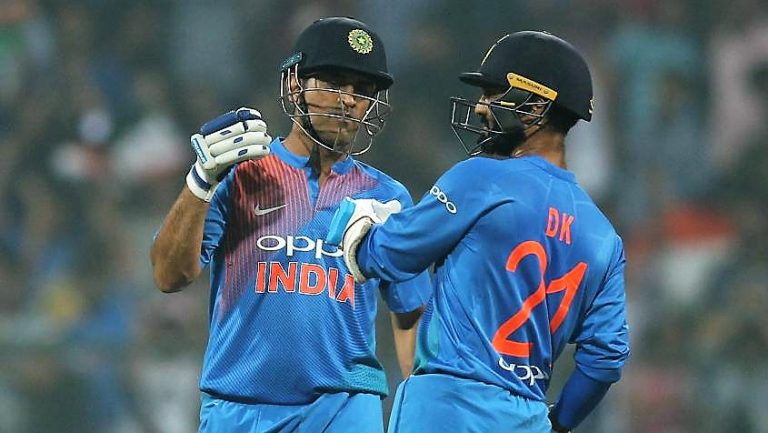
Rahane, Raina, Dhoni, Jadeja, that was the Indian middle order when they lost to Australia in the 2015 World Cup Semi-final. By the time 2017 Champions Trophy final came around, Raina and Rahane had been replaced by Yuvraj and Jadhav, and Jadeja had slipped to Number 8 to make way for Pandya at Number 7.

For Asia Cup 2018, Yuvraj and Jadeja are no longer in the ODI mix, and Pandey, Jadhav, Rayudu, Karthik and Rahul will try to grab the two spots in the middle order that haven’t been filled for a few years now. Through it all, MS Dhoni has been the one consistent feature of the Indian middle order, though there is plenty of debate about his position in the batting order, whether he should come up at 4 to guide the innings or stay back at 6 to provide a finishing touch.

India has been trying hard to find the right combination in the middle of the batting order during these past three years. Rahane, Raina, Jadhav, Pandey, Rayudu, Karthik, Rahul, Manoj Tiwary, Uthappa, Shreyas Iyer, Karun Nair, Gurkeerat Singh, all have been given a look during this time but the ODI batting has remained reliant on the top 3, Dhawan, Rohit and Kohli. Whenever one or two out of the top 3 score big, India end up with a huge total. However, if the opposition gets through the top 3 quickly, the rest of the batting often caves in quickly.

While Rahul is likely to slot in at 3 in Kohli’s absence and Dhoni is going to be there floating around the middle order, two slots remain open with Jadhav, Pandey, Rayudu and Karthik vying for those places.

Pandey has been in great form recently, finishing the recent quadrangular series for India B without being dismissed, hitting a century and two half centuries along the way and will consider himself desperately unlucky if he misses out on the playing XI.

Kedar Jadhav’s more than useful off spin provides an option that the other contenders don’t. Especially on batting tracks in the UAE, a captain will be very thankful to have an option to call upon if one of his main bowlers has an off day. He is also most likely to provide an explosive cameo if he comes in towards the end after a good start by the top 3 (His strike rate of 109 is the 2nd best in the Indian squad, behind Hardik Pandya).

Ambati Rayudu has been in and out of the Indian squad for a long time now and has failed to nail down a spot despite averaging 50 in the ODI format. An outstanding season in the IPL has pushed him into the national reckoning once more but then he failed the Yo-Yo test to miss out on the ODI series against England. Now he is back after clearing the test but will have to wait and see if he gets in the XI.

Dinesh Karthik’s last over heroics in the Nidahas Trophy final seems like ages ago, the wicketkeeper batsman had a nightmare in the Test series against England and will be looking to bounce back in this tournament. Having been around for nearly 15 years, he has only 80 ODI appearances to show for it but will be hoping for a more consistent run in the side on the back of his good performances in the shorter formats recently.

Whichever combination the Indian captain and coach decide in the end, these batsmen will know that time is running out for them to impress ahead of the World Cup next summer.

Jailed Bhim Army chief arrested last year under NSA in Saharanpur violence case released early

0

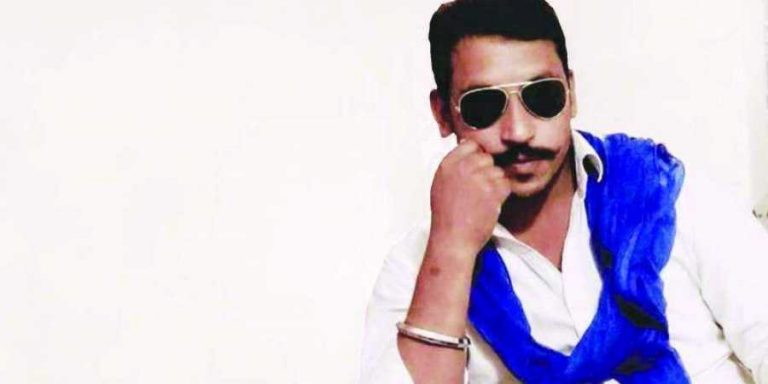
Bhim Army chief, Chandrashekhar alias Ravan, who was jailed under the (National Security Act) NSA charges in connection with the 2017 Saharanpur caste violence case, was released from Saharanpur jail early on Friday, hours after the Uttar Pradesh government ordered his early release.

Though it was reported earlier that the scheduled day of his release was later on 1st November this year, the government apparently released the 31-year-old chief two months before schedule on a request from his mother said the police.

Soon after his release at 2.24 a.m on Friday, which was met with loud chants of ‘Jai Bhim’ by hundreds of gathered supporters outside the prison, the Dalit leader lambasted the government saying that he was confident the state government would frame charges against him again within 10 days of his release. The leader vowed to “teach a lesson to the goondas of BJP” and topple its government in 2019 for sending innocent Dalits to jail.

Chandrashekhar told news agency ANI, “The government is scared that they are going to be rebuked by the Supreme Court, that they ordered an early release to save themselves”.

The shadowy leader, Chandrashekhar, the founder of the Bhim Army which was set up around three years ago in Saharanpur and has gained considerable popularity among members of the Scheduled Castes was first arrested after a month-long hunt, for his alleged involvement in the Saharanpur riots on 8th June 2017. On 2nd November 2017, he was granted bail by the Allahabad High Court. However, a day later, he was arrested again under the provisions of the NSA and lodged in jail.

He was tracked down last year through his traced calls by the police in Dalhousie, a hill resort in Himachal Pradesh. The police had declared a reward of Rs. 12,000 for any information on him.

Saharanpur violence case:

On 5th May 2017, a Dalit group had objected to a procession by the Thakurs in Shabbirpur to mark the birth anniversary of Rajput King Maharana Pratap, triggering violence, in which one person was killed and over 15 injured. Dalits had said that this denial was in retaliation to the Thakurs preventing them from installing a statue of BR Ambedkar in the premises of the Ravidas temple in the village previously.

Members of the Bhim Army had on 9th May last year allegedly torched a bus and set a number of two-wheelers afire after the administration had turned down their request to hold a ‘mahapanchayat’ in Gandhi park to demand compensation for those affected in the 5th May inter-caste clash.

Earlier in May this year, the Meerut police had arrested six Dalit youths, alleging that they were attempting to create similar caste violence by murdering an MLA of an upper caste to avenge the death of Sachin Walia, brother of Bhim Army’s Saharanpur district president, who allegedly died in the accidental firing. The Police had claimed that if the arrested Dalits would have succeeded in killing the MLA, caste-based violence, similar to the ‘Saharanpur violence case 2017’ could’ve taken place in Saharanpur, Muzaffarnagar, Shamli, Meerut and Noida.

World Hindu Congress 2018: Hindu awakening gets institutionalised

After attending the first World Hindu Conference in 2014, Hindus all over the world were looking forward to the World Hindu Congress, 2018 (WHC) with a lot of expectations. And, the event, which took place in Chicago, USA on September 7-8-9, was a mega success with 2,500 Hindu delegates from 60 countries across the globe attending it.

Seven different sections were covered under media, organisation, youth, education, women, economics and politics; and each saw exemplary speakers speaking on their work in the respective fields and reaching out to fellow Hindus to align and grow with them.

The sessions saw Shefali Vaidya devising new acronyms with every sentence spoken, Makarand Paranjape’s hilarious one-liners, the young VP of Surinam charming the crowd, Maharshi like Sri Vamdev Shastri speaking on the need to re-elect Modi in 2019 and Rajiv Malhotra reaching out to young Hindus for aligning with him for scholarly work.

Whether it was the RSS pracharaks from all over Bharat and North America roaming about nonchalantly and talking in Hindi with their sweet Marathi and South Indian accents, or a Brazilian Sadhu ParamAdvaita ji incessantly singing praises for Sanatana Dharma, or the African delegation from Ghana wielding Tilaks and proudly displaying Dharma on themselves, the WHC Chicago was a sort of a modern Kumbh Mela of Hindus from around the world.

Here are some of the takeaways and suggestions from the delegates which are worthy of documenting:

  1. WHC has become a platform of humongous proportions for global Hindus to connect with each other. That collective Hindu consciousness is the only missing link between Hindus and a global resurgence of Hinduism. Hindus have done some brilliant work as individuals and have achieved a lot. But if these trickles of Hindu power were to unite with each other with clear-cut agenda and purpose, within no time Hinduism will become a Tsunami to arrive on the global stage. WHC definitely opened those gates for Hindus to coalesce.
  2. Some brilliant academic work being done by Hindu scholars still evades the ordinary Hindus which leads to our defensive posture in the clash of narratives with Leftist Chrislamic groups. WHC educated fellow Hindus to the academic works of brilliant Hindus like Rajiv Malhotra, Koenrad Elst, and David Frawley (Vamdev Shastri) to be understood and carried forward in an organised and emphatic manner.
RSS chief at World Hindu Congress
Mohan Bhagwat, Sarsanghchalak of the Rashtriya Swayamsevak Sangh, also attended the event.
  1. The presence of RSS chief Mohan Bhagwat, Vice President of Bharat Venkaiah Naidu, US Senators, and other successful personalities from the global Hindu leadership infused huge confidence in the delegates that Hindus are no longer rudderless ‘Pagans‘ but the true inheritors of the great Sanatana Dharma. Symbols have a great importance in any civilisational narrative, and we had enough of them at the WHC.
  2. WHC saw an amazing confluence of two very distinct and far away branches of Hindus happening right in front of our eyes: The raw, rustic, rural Hindu ground workers were seen narrating their little success stories from Bharat to rich, suave, urban Hindus in multiple corners of the venue.
    One Prabhakar (name changed for safety purpose) told us how he quit his plush job in the US and has started reclaiming temples in rural Andhra. How he painstakingly goes from village to village talking to villagers about the beauty of Sanatana Dharma. One Sadananda (name changed) who is also known as Church Sadananda for closing down 300 illegal churches in Andhra Pradesh talked about how he used the local villagers and the law of the land to do that. And the rich urban Hindus were listening with total awe and admiration about the groundwork of these silent Hindu warriors.
    If Hinduism is to be seen as a body, the WHC provided a synthesis of muscle and mind to erect a robust and well functioning body of Hinduism. Anyone who is familiar with the issues Hindus are facing in the world knows how critical it is for the rich, urban Hindus to open their purses and hearts to these ground workers who are fighting conversion mafias with bare hands.

    Vice President at World Hindu Congress
    Vice President Venkaiah Naidu with Swami Vigyaanaananda at the event. The Vice President addressed the closing ceremony.

    Simone Weil, the great French thinker once said, “Who were the fools to tell you that brute force can not defeat an idea! And once an idea is dead, it is nothing but a corpse.“ Sanatana Dharma is a beautiful but fragile idea being carried forward on the bare chests of warriors like Sadananda and Prabhakar. If rich and connected Hindus help these ground workers, the brute force of Chrislamics can be countered very effectively and the idea of Sanatana Dharma can find firm roots in human consciousness.

  3. A very heartening sign at the WHC was the extremely enthusiastic participation of young Hindus and the ‘Matri Shakti‘, the women power. Energetic young boys and girls were engaging in heated debates on the issues and strategies to save Dharma. Nothing is more gratifying than to witness the next generation of Dharmic leaders taking shape right in front of our eyes.
  4. Another interesting aspect was the widespread use and understanding of Hindi by almost all national international delegates. Of course, all languages have their innate beauty of rustic connection to the land one belongs to, along with the strength of nourishment provided by vernacular literature, but to have a common language as Hindi to connect with each other as Hindus is a very enthusing development on a global scale.
  5. It was a heartwarming sight to see various offshoots of Sanatana Dharma like Sikhism, Jainism and Buddhism standing shoulder to shoulder with each other. That the Indic Dharmas had more in common with each other than the differences was underlined by the robust participation of delegations from all sister faiths of Hinduism.
  6. Finally, the Dharmic narrative in the ongoing clash of civilisations is now beginning to shape up. It is crucial in any thought struggle on a global scale to have a narrative to spell out the need and tools of resistance to Adharmic narratives. The Collective Hindu consciousness has arrived finally and it is a robust, compassionate and strong force that will change the course of mankind from darkness to light, from untruth to truth, from death to life.

Amidst the incessant chaos that has engulfed this little world of ours, the Hindu understanding of life is finally being articulated by brilliant and committed minds to spread a warm, friendly and a happy spiritual understanding of forces of life that can de-stress the world and make entire mankind move on the trajectory of evolution in a peaceful non-confrontational manner.

World Hindu Congress
The event also saw cultural performances

There is only one suggestion. A gathering of the scale and class of WHC needs to spell out clear-cut agendas for Hindus living globally. This was initially suggested by Shefali Vaidya but since more and more delegates agreed to this idea, this is the only suggestion that needs to be offered to leaders of Hindu Samaaj.

Most of the Hindus in this world want to help a global cause that aligns them with each other. Unless forums like WHC are used to spell out that global agenda for Hindus, the real fruit of events like WHC will not be realised for Hinduism. Even if half a day of session needs to be devoted to this, it will be a worthy exercise because it will give tangible goals to the global Hindus, raise awareness of the global community on issues faced by Hindus and could give us a chance to assess our progress on the front when we meet again in Thailand in 2022 .

What better forum than WHC than to talk about Hindus rising to save battered Hindus of Bangladesh and Pakistan? When will a Hindu agenda be spelt out that gives shelter to poor and helpless Hindus globally and empowers Hindus who are working for fellow Hindus? Isn’t it time that Hindus reach out to each other and spread the fire of Dharma globally and place Sanatana Dharma to the rightful place in the league of religions?

If not now, then when?
If not us, then who?
If not the WHC, then how?

The Hindu leadership has to ponder upon this and respond or a lot of energy and activity at WHC will be wasted and a Dharmic confluence is reduced to a PR exercise.

As a footnote before concluding, one wonders why didn’t Narendra Modi send a recorded video of his feeling to the WHC? If it was an error of the staff that manages his schedule, it was a grave one which could have been avoided had due diligence been attempted. If the PM chose to send a written message, the Leftists have managed to tame an uncompromising Hindu leader, sadly.

(Dr. Omendra Ratnu is the founder of Nimittekam, an organisation working for rights and rehabilitation of Pakistani Hindus. He attended the World Hindu Congress in Chicago earlier this month.)