Prime Minister Narendra Modi while interacting with the health workers from across the nation via a live video conference has announced that Accredited Social Health Activists (ASHA) and Anganwadi workers will get a hike in the monthly honorarium from October. The announcement which was made on Tuesday will help more than 24 lakh workers, mostly women, who work mainly on the ground to improve the health and nutrition of women and children in the rural areas.
Starting from October, Anganwadi workers who were so far getting Rs. 3,000 will receive will get Rs 4,000. Similarly, other workers receiving Rs 2,200 would get Rs 3,500. The honorarium for Anganwadi helpers will be increased from Rs 1,500 to Rs 2,250, said the Prime Minister. He said the revised incentive will come into effect from October and it will reflect in their salaries from November onwards, which would be a Diwali gift for them.
Besides an increase in the honorarium and other routine incentives given by the government, ASHA workers and their helpers will also be covered under free insurance scheme of “Pradhan Mantri Jeevan Jyoti Bima Yojana” and “Prime Minister Suraksha Bima Yojana”.
Reportedly, an ASHA worker who used to earn Rs 1,000 as the basic amount for routine work like updating registers, etc, even if she does not meet any patient in a given month, will now get Rs 2,000. Addition to this, the ASHA workers will receive incentives for conducting vaccinations, prenatal checks, institutional deliveries, among other functions
Addition to the honorarium, Anganwadi workers and helpers who will be using techniques such as Common Application Software (ICDS-CAS) will get additional incentives ranging from Rs 250 to Rs 500 which would be based on performance.
Prime Miniter Modi while interacting said that his government has focussed on aspects relating to nutrition and quality healthcare. He spoke regarding the vaccination drive particularly targetting women and children. The interaction was part of Rashtriya Poshan Maah, which aims to reach every household in the country with the message of the importance of optimum nutrition. He further appreciated ASHA workers for using innovative means and technology, to improve the delivery of health and nutrition services and achieve the goal of the ‘POSHAN Abhiyan’ (nutrition mission).
ASHA and Anganwadi workers are part of Integrated Child Development Services (ICDS) programme administered by the Women and Child Development (WCD) Ministry. The Centre and States together share the annual expenditure occurred on the payment to the Anganwadi workers.
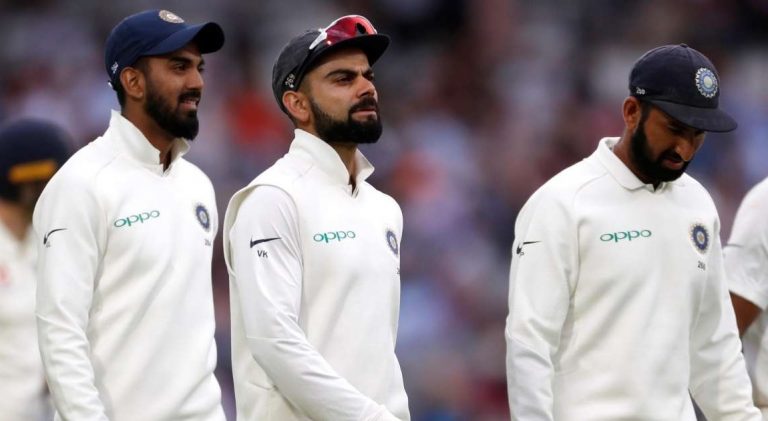
A series that promised so much eventually ended up in a comprehensive 1-4 defeat for the Indian side in England. Even though Indian side showed plenty of promise and competed at various times, they failed to land the final blow, allowing the England side to get away in most of the Test matches. So how did the players do individually and who may find that this is the end of the road, we rate their performances out of 10.
Murali Vijay: 2/10
A forgettable series for the man who was the leading opener for India heading into the series but may well be staring at the end of his Test career now. 26 runs at an average of 6.5 including a pair at Lord’s meant he was left out of the side for the last 3 Tests. A far cry from the 2014 tour when he scored over 400 runs in England.
Shikhar Dhawan: 4/10
Many people doubted Dhawan’s ability to play the moving ball outside Asia and he failed to prove any of them wrong during this series. His slip catching also let the team down with the crucial drop of Sam Curran proving to be a game changing moment. After being dropped for the 2nd Test, he did come back with a lot more focus and application for the 3rd Test but by the end of the series, it was a familiar story once again. With 162 runs at an average of 20, and Mayank Agarwal and Prithvi Shaw knocking on the door, he will be lucky to make the side for the next overseas tour.
KL Rahul: 5/10
Started the tour at Number 3 ahead of Cheteshwar Pujara before moving up to open the innings during the next 4 Tests. A very ordinary series before the last Test in which he looked good in both innings before getting gems from Curran and Rashid respectively. The scintillating hundred in the last innings and his slip catching may just have secured him another chance unlike Vijay and Dhawan.
Cheteshwar Pujara: 6/10
Started the series on the bench before being immediately recalled for the 2nd Test. Played a very useful hand at Nottingham before scoring a fine hundred at Southampton, pushing India to a lead after his colleagues collapsed against Moeen Ali.
Virat Kohli: 8/10
The standout batsman of the series, scoring 593 runs at an average of 59.3. To show how far ahead of everyone else he was, the 2nd highest scorer in the series was nearly 250 runs behind him, Jos Buttler with an aggregate of 349. Kohli firmly answered the questions about his ability to play in England. However, his captaincy and team selections left much to be desired. Playing an extra spinner at Lord’s and an extra fast bowler at Southampton when the conditions asked for the reverse. Looked a bit clueless and bereft of plans at times when the England tail got going, which happened almost every Test match.
Ajinkya Rahane: 5/10
Had absolutely forgettable first 2 Tests where he looked completely out of sorts lacking any confidence whatsoever. Came back into some form at Nottingham where he and Kohli laid the foundation of victory with a superb partnership. Fought hard at Southampton for his half century in the chase but there was little support after Kohli from the other end.
Hardik Pandya: 5/10
Man Of The Match performance at Nottingham where he blew away the English side in one session but found himself on the bench within 2 Test matches after that. Tried his best to hang in there while batting but his technique was badly exposed by the England bowlers. Kohli has a lot of faith in him and he will be back but Number 6 may be a touch too high a position for him.
Rishabh Pant: 6/10
Got everyone excited on his debut by scoring his first runs by smashing Moeen Ali down the ground for a 6, however, things quickly went downhill from there before he got England worried with an explosive hundred on the last day of the series. His wicketkeeping needs a bit of work as he conceded over 50 byes in his first 3 Tests, though the Indian fast bowlers spraying the ball miles down leg side contributed a lot to that total. Saha should be back in the XI when fit but with his maiden 100, Pant has made a very good case for himself for future.
Dinesh Karthik: 2/10
Saha’s injury gave a great chance to Dinesh Karthik to cement his place in the side but unfortunately, he failed to grab it. Didn’t particularly impress behind the stumps and had a torrid time of it with the bat. 21 runs in 4 innings with 20 of them coming in 2nd innings at Edgbaston where India fell short by 31 runs.
R. Ashwin: 5/10
Started well at Edgbaston where he picked 7 wickets but then slowly tapered off. Injury limited him at Southampton where he got the most helpful track but he couldn’t take advantage while England’s off spinner Moeen Ali ended up with 9 wickets there. Jadeja’s performance at the Oval may well mean that India go with Jadeja the next time they decide to play just 1 spinner away from home.
Ishant Sharma: 8/10
Bowled with a lot of heart and pace right through the series. Troubled England top order continuously and didn’t allow them to settle. With 18 wickets at 24, he was the most successful Indian bowler and deserved all those wickets. Picked up an injury during the final Test, which is hopefully not too serious.
Mohammed Shami: 7/10
Bowled his heart out during the series but was desperately unlucky not to get more wickets. His bowling average of over 38 doesn’t truly reflect how well bowled with his balls missing the edge countless number of times. Only Anderson bowled more overs than him as he kept charging in whenever Captain asked him to. However, even as a tailender, needs to work on his batting a little as he continuously tried to slog even with a set batsman at the other end who could have done with some support.
Jasprit Bumrah: 7/10
Missed the first 2 Tests due to an injury but returned to show why he is going to be a regular part of the XI for the foreseeable future. Picked 14 wickets at 25.92 and kept troubling the England batsmen whenever he bowled. Needs to work on that No Ball though as he lost another wicket to overstepping in the series.
Ravindra Jadeja: 7/10
Got his opportunity only after the series was lost but battled hard with the bat to get India close to England’s first innings total in addition to picking 7 wickets. Played exceptionally well with Bumrah to get as many runs as he did. Toiled manfully with the ball as well bowling a marathon spell as India were reduced to 3 bowlers after Ishant’s injury.
Hanuma Vihari: 6/10
Showed a bit of nerves at the start before settling down to score a fine half century in the first innings at Lord’s. Will face a lot of short-pitched bowling going forward as he looked a bit vulnerable against it but a fine prospect for the future. With no other top order batsman being able to bowl a few overs, his off spin can come in quite useful as well.
Umesh Yadav: 4/10
Played only the first Test before being dropped for an additional spinner at Lord’s and then for Bumrah after his return. Remains a good back-up option for India behind Bhuvi, Bumrah, Ishant and Shami.
Kuldeep Yadav: 1/10
Had the most forgettable Test match at Lord’s in conditions totally unsuitable to him. Got only 9 overs when England batted and couldn’t manage to open his account in either innings with the bat.
Reportedly, there was a clash between two groups in the outskirt of Oodlabari (Mal Subdivision) in Jalpaiguri District, recently, over an issue of land. Oodlabari is a small town on the National Highway 31 that passes through Bengal Dooars about 40 km east of Siliguri.
According to eyewitnesses, the brawl started when a group of men, reportedly, demanded ‘GT (Gunda Tax)’ from the purchaser of a piece of land. When the purchaser confronted the group and denied paying demanded GT, he was beaten black and blue and had to be hospitalized. The group didn’t stop there and created a ruckus in Oodlabari Bazar later. Eventually, locals joined hand to thrash the rogues, before police arrived to rescue the group and normalize the situation. The area has been under strict police vigilance since then to take care of any potential untoward events that may turn quickly communal.
Discussion with the locals on the issue shed light to the fact that there has been a gradual upsurge of settlers from outside the region, and now they dominate the periphery of Oodlabari town, particularly the riverine belt of Gish ‘Khola’. The area used to be open and vacant earlier. Locals do not know where do these new immigrants come from and who encourages them to inhabit the bank of the river. Their numbers are, however, steadily increasing over time. They occupy such vulnerable riverine belts that are normally abandoned by the locals. One of the advantages of occupying such risk-prone land is that the moment river water/floods damage their huts, state government immediately comes forward to help them, provide with shelter and food.
In the neighbouring Gorkhaland Territorial Administration (GTA), too, it is disturbing to witness sprouting informal huts along the NH10 between Rangpo and Kalijhora. The stretch between Melli and Teesta Bazar is particularly worrisome where around 70 new hutments have come up in the area, recently. Reportedly, new settlements have also been noticed around Tista bazar and across pockets of Kalimpong town.
Duars the Gateway to Bhutan, Northeast India and Beyond
Duar, which also means ‘door’, ‘passage’ in Assamese, Bengali, Nepali, Maithili, Bhojpuri, Magahi and Telugu languages, has historically formed a gateway to Bhutan, Northeast India and South East Asia. Duars are also commonly referred to as Dwars or Dooars. Situated at an altitude ranging from 90m to 300m, they represent floodplains and foothills of the Eastern Himalaya around Bhutan.
Bengal Duars, politically, borders the foothills of Darjeeling district east of Tista River, entire Jalpaiguri and Alipurduar districts and the upper region of Cooch Behar district in West Bengal. The region is noted for varied forms of bio-resources and ethnic diversity. It is also known for tea gardens that were planted by the British. The region, generally, is composed of numerous tribal groups, including Bodos, Rabha, Mech, Toto, Tamang/murmi, Koch, Limbus, Lepcha, Rajbongshis and Adivasis who were brought in to man the tea plantations by the British. Considerable numbers of Bengalis (mostly displaced/relocated from erstwhile East Pakistan) also live in the region.
The region has been historically important both in terms of socio-culture connections and geopolitical strategies. This region is a melting pot of ethnic diversity. It is dynamic in nature and evolving with time.
The gradual demographic shift in Bengal Duars
After partition in 1947, Bengali refugees came in large numbers and settled in North Bengal. Although the Indo-Bangladesh border is a closed border and free movement of citizens are not allowed, there has been a massive and steady influx of Bangladeshi immigrants into the region after the creation of Bangladesh in 1971. However, the real problem has been that nobody knows the precise number of informal migrants.
According to Professor A K M Anwaruzzaman of Aliah University, ‘11,700,000 refugees arrived in India from East Pakistan propelled by the partition of India in 1947 and Jalpaiguri witnessed 48.27% growth rate during 1951-61. Further, triggered by war of independence of Bangladesh in 1971, 10 million Bangladeshis, mainly Hindus took shelter in West Bengal. A large number of Bangladeshi refugees settled in Jalpaiguri district as a result’.
As early as in the 1980s, TV Rajeswar, former IB director and former governor of the state, had written and cautioned against heavy infiltration into West Bengal from Bangladesh.
In 2012, then Darjeeling District Congress secretary, Dilip Pradhan pointed that ‘all the people from Terai-Dooars who are against the formation of Gorkhaland are Bangladeshis. He alleged that North Bengal alone accommodates 30 lakh Bangladeshi nationals who often try to create a disturbance by planning various schemes. The state government is sheltering Bangladeshi immigrants and making them its vote bank, which is a problem for the nation as a whole’.
According to Government of India, there were around two crore Bangladeshi immigrants staying illegally in India in 2016. The figure was almost 67 % higher over 1.2 crore estimate given by UPA government in 2004. UPA government had estimated 57 lakh Bangladeshi squatters in West Bengal, the highest among the states at that point followed by Assam with 50 lakh.
It may be noted that Bangladeshi nationals do not cross the border into India in sudden spurts in recent times, as they did earlier in the wake of partition. They are now coming in a slow, steady trickle, in groups of 10-20 across the porous Indo-Bangladesh border. Statistical data shows that by 1987 there were 49.50 lakhs Bangladeshis in West Bengal covering all the districts of the state. Reportedly, close to 50 Bangladeshis cross over to West Bengal every day.
A closer examination of the demographic data hints that poor economic conditions at the source and search for better economic pastures in the host region have traditionally been the forces behind this informal immigration. However, it is also clear that successive West Bengal Governments have also encouraged and sanctioned the informal immigration of the Bangladeshi nationals into the region as guaranteed ‘vote bank’.
In the past four decades, the decadal population growth in the region has remained at nearly 40 per cent. Given the relatively small size of the original population, this kind of population explosion is simply not possible naturally. Unchecked cross-border immigration from Bangladesh is, therefore, contributing to this large population growth in the region. Such a situation is gradually destroying the dynamic socio-cultural, economic and political fabric of the region.
It then comes as a no surprise that the percentage share of hill populace in Darjeeling district has also continuously gone down over the years. The share was around 72% in 1951; it went down to 65% by 1961, 54% by 1981, and 49% by 2011.
If this trend continues, then the hills populace will fast become a minority in their own region.
Ironically, West Bengal chief minister Mamata Banerjee, recently, even threatened Prime Minister Narendra Modi to dare touch a Bangladeshi let alone repatriating her/him to Bangladesh.
Chicken-neck, informal migration and national security apprehensions for India
The eastern border considered safe since the liberation of Bangladesh in 1971, has become a thick long red line for India. Due to the porous borderline between India and Bangladesh large-scale informal immigration from Bangladesh continues unabated. It has been estimated that about 2 lakh Bangladeshis cross the border annually and settle in West Bengal.
The entire Darjeeling-Duar region is very strategically located. It shares borders with three countries of Bangladesh, Bhutan and Nepal and a few km away with China at Jelep la, making it the only region in India with four international borders. The proverbial ‘chicken-neck’ corridor also often called ‘Siliguri Corridor’ that roughly stretches 200 kilometres in length with breath varying between 25 – 60 kilometres is an integral part of the region. The chicken-neck connects India’s Northeast region with the rest of India, Nepal and Bangladesh lying on either side of the corridor. The kingdom of Bhutan lies on the northern side of the corridor. It is a very sensitive geographical piece of land and is heavily patrolled by the Indian Army, the Assam Rifles, the Border Security Force and the West Bengal Police.
Informal immigrants from Bangladesh to cross over to India in the last 50 years have often used this Corridor. In fact, as early as in 2002, there were reports that highlighted how the ‘Siliguri corridor’ was being used as a supply route by Pakistani ISI to provide arms and ammunition via Bangladesh to insurgents in the North East. It has today become one of the most porous border regions of India through which antinational elements operate freely.
According to Amitava Mukherjee, noted journalist and commentator, ‘attempt to give citizenship to Bangladeshi illegal immigrants may seriously jeopardize the political, social and economic life of the country as well as its security scenario too. West Bengal or the northeastern Indian states can no longer accommodate the Bangladeshis. So neither Mamata Banerjee nor any other political party should tinker with such an explosive situation’.
Fugitive, Gorkha Janmukti Morcha leader Bimal Gurung has also warned against informal Bangladeshi settlements in Darjeeling foothills and Dooars region in a recent press release. He has alleged that the state government is ‘secretly measuring land to settle illegal Bangladeshis expected to be removed from Assam’.
The ongoing Doklam tangle between India, China and Bhutan further reiterates and reestablishes the importance of ‘Chicken Neck Corridor’ in the national security framework and we need to take the situation seriously. Since the 1962 war with China, Indian strategists have envisioned a future scenario where the Chinese may simply bypass and drop Special Forces to choke vulnerable Siliguri Corridor and cut off Northeast India.
Any disruption to the ‘chicken neck’ may bring entire Northeast India to the brink of scarcity, as it is primarily dependent on the rest of the country for essential food items. As early as in 1998, the region used to import goods – including food grain, pulses, salt, sugar, edible oil, cement and fertilizers among other things – worth nearly INR 2000 crore annually from the rest of India.
Urgent need for serious research, thinking and debate
In the interest of the larger national security concerns of the country, there is, therefore, an urgent need to delve deeper to examine seriousness of the situation, which could quickly turn into a national security nightmare. Given the porous border that India shares with Nepal, Bhutan, and Bangladesh, this proverbial “chicken neck” is under a constant threat of being strangled by forces inimical to India.
Resettlement of Bangladeshi refugees and massive informal migration in the strategically located Darjeeling-Dooars region in the last 50-60 years has seriously compromised the security of the nation, as well as the security and well-being of the indigenous people of the region.
The entire Gorkhaland Territorial Administration region has been witnessing increasing ethnic upheavals in recent times particularly in the last five years and is, therefore, very sensitive to any new settlements being facilitated to inhabit the area. The Gorkhas’ protest of 2017 in the Darjeeling-Duars region against the highhandedness of the West Bengal government is a clear indication that the region has to be handled with utmost care.
There are legitimate fears among certain sections of local intellectuals that unchecked informal immigration is setting grounds for ‘human insecurity’ of the locals in this sensitive border region.
The policymakers, therefore, need to critically question, examine and research this dangerous and persisting scenario in the region in the light of further marginalization of an already marginalised Gorkha and Adivasi communities and more importantly from the perspective of national security and integrity of the country.
*Dr Vimal Khawas is Associate Professor and Head, Department of Peace and Conflict Studies and Management, Central University of Sikkim, Gangtok (Sikkim)
The Delhi government had started the doorstep delivery of services on September 10th with a promise that any government services, from driving licences to marriage certificates will be delivered to the people at their doorstep. However, according to reports, though the number of calls made is in thousands, only a few hundred appointments have been fixed so far.
While launching the ambitious project Delhi CM Arvind Kejriwal had announced that the people of Delhi can apply for 40 different kinds of documents to be delivered to their homes. The number of documents deliverable is slated to be increased to 100 eventually. People will have to call a number 1076 to fix an appointment after which a mobile ‘Sahayak’ will be assigned to collect the necessary applications with signatures, documents and fees from them. The Sahayak will then submit the documents on the applicant’s behalf and the required document will be sent to the applicant via post. The Sahayak service will be provided for a fee of Rs 50.
On the first day of the service, according to reports, an overwhelming 21,000 calls were received. However, only 369 appointments were fixed. The AAP government has cited heavy call traffic and the lack of required number of operators for the low percentage of fixed appointments. 7 Sahayaks were able to meet applicants and collect applications, the Delhi government has stated.
However, in his quintessential style, Delhi chief minister Arvind Kejriwal was shocked, if the rumours floating that the BJP tried to sabotage his ambitious project, were true.
For the second day, the Delhi government had stated that it has increased the number of phoneline operators from 40 to 80. However, the unavailability of operators remained an issue on the second day too with only 3472 calls being answered. In two days, only 4578 people were able to actually speak to an operator out of the more than 13,000 people whose calls were answered. The total number of appointments fixed till the end of the second day was reportedly 624 till the Tuesday evening. Government officials have reportedly stated that from Wednesday onwards, the number of operators is being increased to 150.
The project has been outsourced to a private firm called VFS Global by the Delhi government. Though the project had approval of the cabinet since November 2017, Delhi LG Anil Baijal had raised concern over possible security issues and misuse by Sahayaks.
The police on Tuesday rescued a minor girl from a Naxal organisation in Latehar district, Jharkhand, as reported by ANI.
After being rescued the girl confirmed that she was forcefully taken to the camp by the Naxals in the pretext of getting her married.
Following the incident, while speaking to ANI, Superintendent Police Latehar, Prashant Anand said, “The Naxals forcefully used to induct children in their organisation force them to work there.” He furthered that the police are conducting campaigns in the village to increase awareness amongst the villagers regarding the same.
Jharkhand saw a tense law and order situation recently in the Khunti district where supporters of Pathalgarhi movement had attacked policemen and held them hostage. This was done after several supporters of the movement were arrested by the police after an incident of gangrape of five women who were performing street plays in a local school. The Pathalgarhi supporters were allegedly linked to PLFI, a terrorist faction of CPI(M).
In yet another gory incident which took place in Bihar earlier this month, the Naxals had slit the throat of a tribal woman who denied to join them. We reported that Basanti Koda, a resident of Kanimoh village in Lakhisarai district in Bihar, was at her maternal home along with her son when around 30 to 40 Naxal terrorists entered the village in the late night on Sunday. They took her along with them, and later they mercilessly cut her throat with a sharp weapon in a nearby jungle.
This is one of the many incidents where the Naxals have murdered tribals. Recently in Gadchiroli, Maharashtra, Naxals had brutally killed two tribal named Sonu Pada and Somaji Pada whom they had kidnapped some days ago from Chhattisgarh. Last month, the Naxals also had allegedly beheaded a man in Jamui, Bihar and had hidden explosives in his body.
The Centre has issued an advisory against the deadly ‘Momo Challenge’, a viral game which reportedly encourages young children to perform violent challenges, the last one reportedly being committing suicide. Momo Challenge is similar to the Blue Whale challenge that reportedly led to suicides of 130 children in Russia since 2016. In Blue Whale challenge, once someone starts the challenge, they would get tasks to do and after every accomplishment, the task would get more difficult, ending with the final challenge of committing suicide.
Momo Challenge is on similar lines, except deadlier. Momo is the name of a social media account with a presence on networks such as WhatsApp, Facebook and YouTube. The game started when members of a group on Facebook were challenged to communicate with strangers via WhatsApp. Once a new contact is added, an image of a terrifying Japanese Momo doll, created by special effects company Link Factory for an art exhibition in Tokyo, not associated with the game, with bulging eyes appears in the list.
In Momo Challenge, once the contact is added, challenges are given to meet ‘Momo’, the final one being taking one’s own life. If a user refuses to follow the game’s orders, ‘Momo’ threatens them with violent images. The account seems to be connected to three numbers in Japan, Mexico and Columbia.
Earlier in July, a 12-year-old girl’s suicide in Argentina is reportedly linked with the Momo Challenge. The girl had reportedly filmed her own activities before taking her life on her phone, like Blue Whale Challenge and the authorities someone encouraged her to take her own life. She was found hanging from a tree in the backyard of their house by her brother.
While there are no reports of the challenge being popular in India and while cyber experts believe the challenge being a hoax to steal personal data to extort information, the Centre has issued an advisory asking parents to be aware of the social media activities of their children.
Election Commission of India (ECI) today issued a show cause notice to Aam Aadmi Party under para 16A of The Election Symbols (Reservation and Allotment) Order, this section empowers EC to suspend or withdraw the recognition of a political party for violation of Model Code of Conduct or other directions and instructions of the commission. The notice was issued based on a CBDT report which indicated that there were discrepancies in the disclosure of donations received by the party during the financial year 2014-15.
Text of notice to AAP by Election CommissionText of notice to AAP by Election Commission
The notice specified three distinct discrepancies in the accounting of the party, they are:
Concealment of donations: The notices says that there is discrepancy in the donations received by AAP during FY 2014-15. According to CBDT assessment, and amount of ₹67.67 crore was credited to the bank account of the party during the period, but the party disclosed a total receipt of ₹54.15 from donations during the same period. Hence receipt of ₹13.16 crore has not been accounted for the party and this is violation of EC regulations.
Entries from Hawala Dealers: The CBDT report states that Aam Aadmi Party has taken accommodation entries from hawala operators amounting to ₹2 crores. But the party has shown them as voluntary donations.
Incorrect disclosure to EC and also incorrect disclosure on the website: The notice says the AAP made wrong disclosure to EC under section 29C of The Representation of the People Act, 1951. And when the discrepancies were questioned, the party had changed its contribution report. The initial Contribution Report showed a list of 2696 donors with total donation amounting to ₹37.45 crores, which was later revised to total 8264 donors with a total donation of ₹37.61 crores.
The notice issued to the party states that prima facie, Aam Aadmi Party has violated the directions of the Election Commission under para 16A of The Election Symbols (Reservation and Allotment) Order, 1968. Therefore, the notice gives the party a period of 20 days from receipt of the notice to furnish a reply to the Commission, indicating why action should not be taken against the party under the said para.
The Enforcement Directorate has today issued summons to five private firms who were involved in the megaproject sanctioned by Akhilesh Yadav while he was the CM of Uttar Pradesh. According to reports, these summonses come six months after the ED registered a case with regards to the megaproject. The ED, in its statement, has stated that several irregularities, ranging from excess payments to awarding contracts to blacklisted companies were observed during the course of their investigation.
Here is all you need to know on the Gomti Riverfront megaproject scam:
The Akhilesh Yadav government in UP had sanctioned the Gomti River channelisation Project and the Gomti Riverfront Development by the state irrigation department during his tenure in 2014-15. The megaproject was sanctioned reportedly at the total cost of Rs 1500 crores.
Taking cognisance of the massive irregularities and corruption alleged to have taken place during the sanctioning and execution of the project, the Yogi Adityanath government, soon after it came to power in March 2017, launched an investigation into the project. Yogi Adityanath had conducted an on-spot inspection of the project on the very next day of assuming office.
The Yogi government had constituted a committee under retired Allahabad HC Judge Alok Kumar Singh to launch a probe into the alleged scam. The committee found prima facie irregularities in its report submitted on May 2017. The committee was asked to probe why the project was still incomplete even after an expenditure of Rs 1513 crores of the taxpayer’s money.
In June 2017, the UP police had registered a case on the basis of the findings of the committee. In July 2017, the Yogi Adityanath government had requested for a CBI probe into the matter.
CBI took over the case in November and registered an FIR in on December 1st, 2017, in Lucknow against 8 state government engineers who had been involved in the project. The FIR named 3 chief engineers namely Gulesh Chandra, SN Sharma and Qazim Ali, 4 superintendent engineers namely Mangal Yadav, Akhil Raman, Kamaleshwar Singh, Roop Singh Yadav and one executive engineer named Surendra Yadav. Several of the engineers were retired at the time of the FIR.
In March 2018, the Enforcement Directorate, taking cognisance of the CBI FIR in December, registered a criminal case against the same engineers under Prevention of Money Laundering Act (PMLA). The case was registered to probe whether the funds laundered by the accused in the FIR was used to create any illegal assets.
Continuing its investigation into the case further, the ED had last month compiled a list of private companies namely Gammon India Pvt Ltd, KK Spun Pipe Pvt Ltd, Rishu Construction, Hightech Competent Builders Pvt Ltd and Tarai Construction.
The ED report states that despite being blacklisted in several states, Grammon India Pvt Ltd was awarded two tenders of the highest contractual value of Rs 656 crores.
The company KK Spun Pipes Pvt Ltd was reportedly awarded the tender even without registering its name with the irrigation department.
The sanctioned amount for the project in had escalated from Rs 747.4 crores in February 2015 to Rs 1990.2 crores as of June 2016.
The CBI has registered cases under sections of the IPC pertaining to criminal misconduct by a public servant, criminal breach of trust, cheating and forgery against the irrigation department engineers. Planned and portrayed as a mega-infrastructure project for the beautification and development of the Gomti riverfront in Lucknow city, the project has reportedly not only cost the exchequer a staggering 1500 crores more but as per reports, it would take another 1000 crores rupees to complete the project as per plan.
Union minister Smriti Irani today launched a renewed assault on Congress, particularly on Sonia Gandhi and Rahul Gandhi while addressing media. Referring to Delhi High Court’s rejection of Congress President Rahul Gandhi and Sonia Gandhi’s plea challenging the Income Tax notice seeking tax reassessment for the financial year 2011-2012 in connection with the National Herald Case, she said “The court yesterday produced yet another evidence of deep-seated corruption in the hallowed of Congress party”. She said, Rahul Gandhi had set up a company in 2010 “which professed that it will not indulge in profit and loss businesses, but ironically, Mr Gandhi went on to take possession of a company called Associated Journals, whose only function was publication of newspapers”.
Smriti Irani added that as per media reports at the time of the purchase, Associated Journals was a commercial enterprise. She asked why Rahul Gandhi had purchased a commercial company with commercial activities while he had earlier said in his statement that he was not interested in profit and loss, and added that Rahul Gandhi should answer this question.
The minister said that as per statements of some Congress leaders and reported in media, a loan of ₹90 crore was given to Associated Journals, which was bought by Rahul Gandhi’s company for ₹50 lakhs. She asked when in the history of India has anyone seen a 90 crore loan bought for only 50 lakhs. She recalled Rahul Gandhi’s statement to a journalist in 2012 when he said that, he and his company have no intentions of printing a newspaper. She said, “one can then question, why would you buy a company whose sole function was printing a newspaper, when you publicly declare that you have no such interest”.
“When the income tax assessed, re-assessed, that declarations made by Mr Gandhi’s company were not correct, it is my belief after reading media reports, that Mr Gandhi and his family refused to answer the Income Tax officers on the basis of notice served to them”, the minister added. She asked, can any Indian citizen defy an income tax notice when asked to come and produce answers, adding, “why is it that Mr Gandhi, who is quick to hug the prime minister, would run a mile when it comes to an income tax office”.
The minister asked, why Rahul Gandhi goes to court and says nobody should report on the happenings of the National Herald case, when he presents himself as a supporter of free speech, why he wants to curtail free speech when it comes to his faulty income tax assessments. She said that this is the saga of corruption, a national hera-pheri that Congress party leadership is indulging in.
In this series of articles, we have made an attempt to deconstruct the aura surrounding the ‘civil society’ and comprehend the motivations that drive them to say what they do and act as they do. In the first article, we learned that most of those who were raided or arrested in connection with the violence at Bhima Koregaon and an alleged plot to assassinate Prime Minister Modi had links, either directly or indirectly, to the Coordination of Democratic Rights Organizations (CDRO). We also discovered that organizations associated with CDRO have a history of links to Maoists.
In the second article, we discovered that one of the organizations which published the report, ‘Amarnath Yatra: A Militarized Pilgrimage’ had clear separatist inclinations and was affiliated to CDRO, a fact that was ignored by various media outlets which peddled the narrative of the report without any attempt at a critique or inspection. In the third article, we learned that the other organization involved with the publishing of the aforementioned report received contributions from foreign Christian organizations for research and advocacy work in tourism. And in the fourth, we investigated the links of PUCL, an organization linked to CDRO through its fraternal organization PUDR, with the implementation of NOTA as a valid option for voting.
In this article, we shall investigate the organizations behind the campaign to abolish sedition laws, a narrative that gained much momentum among the intellectual circles following the fracas at JNU involving Kanhaiya Kumar and Umar Khalid. It is also pertinent to mention that Kanhaiya Kumar had stated that he would fight for the repeal of sedition laws.
One of the organizations that strongly advocates the repeal of sedition laws is the Human Rights Law Network (HRLN), which is a division of the Socio-Legal Information Centre (SLIC). We have reported earlier that the HRLN is part of a campaign to abolish sedition laws along with PUCL, PUDR, APDR, CPDR, APCLC, which are coordinating organizations of CDRO. The June 2012 bulletin of CDRO also reports that a resolution was adopted against ‘Sedition and other repressive laws’ to which the HRLN was a signatory. The HRLN also used reports by organizations associated with the CDRO to further the notion that “The spectre of communalism in UP is overwhelming and we will need to band together if we are to have any effect in the state.” In the first part of the series, we have explored extensively the links of CDRO to Naxalites.
We have mentioned earlier in the series that the HRLN works in a variety of areas such as Child Rights, Labour Rights, Prisoners’ Rights, Criminal Justice, Refugee Rights among a host of others. Quoting from our earlier article, “Notably, the HRLN claims it has been providing free legal aid to Rohingya detainees across the country. The network has filed PILs related to the implementation of the RTE Act. HRLN has also filed a PIL in the Supreme Court on behalf on Najeeb’s mother, the missing student from JNU, upon which the SC directed the Delhi government, the Police and authorities at JNU to be even more rigorous in their probe to find him.”
Under such circumstances, we deemed it prudent to look into the background of the organization. Conspicuously, the SLIC has received contributions worth crores of rupees from Bread for the World and Misereor, two Christian organizations which also donated to Equations, one of the organizations that published the report on Amarnath Yatra in collaboration with JKCCS, an organization with clear separatist organizations affiliated to the CDRO.
The organization has also received contributions from the International Network of Civil Liberties Organizations (INCLO), an organization it is a member of; Oxfam, an organization that has been accused of covering up the sexual exploitation of women in Haiti by its senior members; Australian Volunteers International and the Oak Foundation.
Most interestingly, the SLIC has received contributions to the tune of over 2 crore rupees from the European Union (EU) Delegation to India between April and June 2016. And between April and June 2017, the SLIC received over 2 crore rupees in contributions, this time from the European Commission, which is the executive of the EU.
It is also pertinent to mention that the organization also received a contribution of more than 4 crores from George Soros’ Open Society Institute between January and March 2016. The nationalist government of Hungary that strongly opposes the influx of refugees into the European Union has been at war with George Soros for quite a while. Last year, the Hungarian government made it mandatory for NGOs that received funding from abroad to register with the state, a move that was seen to be targeted towards Soros which did not go down well with the European Union. The Hungarian also passed a legislation titled ‘Stop Soros’ in a crackdown on illegal immigration. In December 2015, Russia banned two foundations funded by the progressive Jewish-American philanthropist George Soros, claiming they posed a “threat to national security” and were undermining the Russian constitution.
George Soros is a ‘liberal’ and has stated in the past that his organization would work to ensure a Democratic victory in the mid-sem polls in the United States in November. Thus, there is clear precedent that the Open Society Foundation engages in political affairs of countries, albeit at least in the United States where lobbying is legal.
Another organization that is fighting hard against sedition laws is Common Cause, an NGO that has Prashant Bhushan and Paranjoy Guha Thakurta in its Governing Council among others. As per Darpan, a government website that allows citizens to access information on NGOs, Common Cause is registered under the Foreign Contribution Regulation Act (FCRA). However, the organization has not specified its source of funds or the amount it has received as a contribution.
In 2016, Adv. Prashant Bhushan had appeared in the Supreme Court on behalf of Common Cause and S.P. Udaykumar, an anti-nuclear activist who was charged with sedition for his involvement with the protests against the Koodankulam Nuclear Project. The petitioners had alleged that the sedition laws were being misused to routinely persecute students, journalists and intellectuals.
Common Cause (CC) has filed several PILs with political implications. In 2013, it filed a PIL in the Delhi High Court for “Strengthening the institution of the Lokayukta” where it urged “the High Court to set aside the orders of the Lt. Governor.” It also filed a PIL in the Supreme Court of India seeking an inquiry against Justice K.G. Balakrishnan which could have led to his removal from the chair of National Human Rights Commission (NHRC). CC has also filed a contempt petition in the Supreme Court for the non-appointment of Lokpal by the NDA government. CC has also filed a PIL challenging the appointment of Rakesh Asthana as the Special Director (SD) CBI. The matter was dismissed by the Supreme Court on November 28, 2017.
CC has also been trying to influence the National Education Policy. In its suggestions to the Ministry of Human Resource Development (MHRD), it writes “The NEP should go beyond the Right to Education Act, 2009 and include children and adolescents between 3 -18 years from the present 6-14 category.” It also says, “The KVs and NVs should be treated as a basic standard of all schools under RTE.” It is pertinent to mention here that the RTE Act applies to only Hindu-run schools and a very significant portion of them do not have the funds or the resources necessary to upgrade their infrastructure to such an extent.
Interestingly, Common Cause (CC) has conducted a study with the Center for the Study of Developing Societies on contentious issues. “Upper-Caste Hindus Fear The Police The Least, Sikhs The Most,” reports India Spend citing a study by CC and CSDS. “Interaction with police highest among Muslims, least for Dalits and women, shows study,” reports The Print citing the study by CC and CSDS. CSDS too receives a significant amount of contributions from abroad.
It is evident that organizations which receive funding from abroad, foreign government bodies and controversial organizations are attempting to shape laws and public policy in India and engaging in controversial political activism.
Although the organizations are doing nothing illegal, the scope of their functions should give the Indian government plenty to worry about. It does not bode well for the nation if foreign funding is motivating organizations based in India to file certain PILs, that has deep-rooted consequences for Indian politics, to help their cause.
It was former Prime Minister Manmohan Singh himself who had once claimed that foreign funding of NGOs was behind the protests against the Koodankulam Nuclear Project and the commercialization of GM crops. Therefore, it’s of critical importance that the government reviews its FCRA policy.