Home Blog Page 7029

US Open 2018: Naomi Osaka’s big moment overshadowed by the Chair Umpire and Serena Williams

0

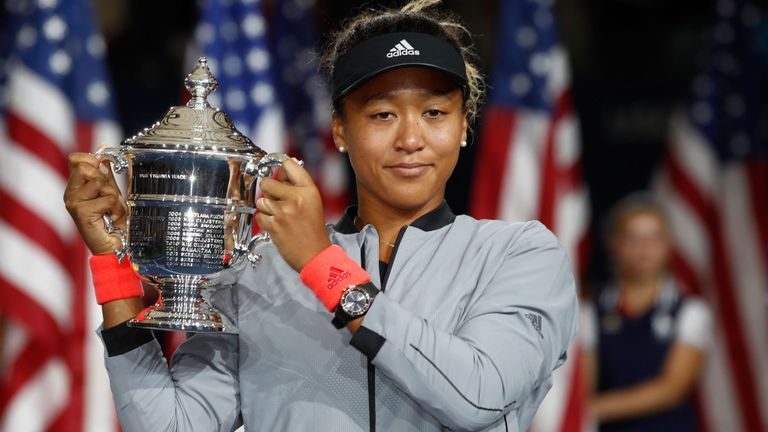
When Naomi Osaka must have dreamt about becoming the first Japanese player to win a Grand Slam, she might have envisaged the ending a little bit differently to what unfolded on the Court last night. With loud boos ringing around the stadium, 20 years old Osaka stood on the podium, visor of her cap down, trying to cover the tears streaming down her face. Her first Grand Slam final, her idol Serena Williams her opponent, a straight sets win, this was the biggest moment of her life till date and yet, she was apologising to the crowd for winning and playing a great match.

It all started with the chair umpire, Carlos Ramos, issuing a code violation to Serena Williams when he spotted her coach making hand gestures. On court coaching is banned in Tennis even though almost everyone does it, as Serena’s coach Patrick Mouratoglou said after the match.

This violation upset Serena as she claimed she wasn’t looking at her coach and she was unfairly blamed for cheating. A double fault to hand back the advantage of a break didn’t help Serena’s mood who smashed her racquet, an automatic code violation that resulted in umpire docking her a point at the start of the next game.

By now, Serena was raging with anger and she kept going at the chair umpire demanding an apology for effectively calling her a cheat over the first violation. She went on to call Ramos a thief for stealing a point from her and at that point, the chair umpire issued another code violation for verbal abuse, that meant the penalty of a game and effectively settling the contest in Osaka’s favour who was now one game away from the title.

We have seen several male players getting away with plenty of verbal abuse towards the officials over the years and Serena’s claim of sexism from officials carries some weight. US Open has already received plenty of criticism for sexist rules after Alize Cornet was penalised for taking off her shirt during a match, something they regretted after the heavy backlash.

However, none of this was Osaka’s fault, not Serena’s coach making gestures, not Serena smashing a racquet, not Serena going at the Chair Umpire, not the Umpire being really strict with Serena, she was just playing the match of her life. On the night, she was the deserving winner despite what was going on at the other end of the court but still, her night ended in tears apologising to the crowd.

USTA President Katrina Adams had perhaps the worst reaction when she came out and said that this wasn’t the result they were hoping for today. Imagine winning a US Open and then the organisers coming out and saying they didn’t want you to win when the crowd is already booing your victory.

Osaka is just 20 and has made huge strides this year, moving into the Top 10 players as she moves to Number 7 after her US Open triumph. There will be several more Grand Slams in her journey and many more triumphs, and hopefully, she will be cheered on the podium during those moments instead of having to apologise for a deserved victory.

United Nations to issue special stamp to commemorate Deepavali

0

The United Nations Postal Agency in a goodwill gesture has decided to issue special stamps next month on the occasion of Diwali. The United Nations Postal Administration will issue the stamp at a New York special event on October 19 to commemorate the Indian festival.

“Diwali, also known as Deepawali, is the joyous and popular festival of lights, which is celebrated in India and across the world by followers of many faiths,” the UN agency said.


The stamps are available in the denomination of USD 1.15, which contains ten stamps and tabs featuring festive lights and ‘diyas’ or lamps on it. The stamp sheet has been designed to feature the image of the United Nations building illuminated with the message of Happy Diwali” to celebrate the spirit of the festival.


Ambassador Syed Akbaruddin, India’s Permanent Representative to the UN welcomed the announcement with a tweet, “Nice Diwali gift from @unstamps coming next month”.

This is not the first time, international organisations have issued stamps to honour Indian traditions. The United States Postal Service (USPS) had launched a commemorative stamp in honour of the festival of Diwali in 2016.

Diwali, or Deepavali, is the Hindu festival of lights, symbolises the spiritual “victory of light over darkness, good over evil and knowledge over ignorance”.

Congress’ NSUI diary calls Left organisations the ‘promoter’ of ‘Urban Naxalism’, AICC terms it ‘unofficial’

According to a report published by The Indian Express, in contradiction to the stance of their mother party, the student wing of Congress, National Students’ Union of India (NSUI) has been circulating a diary in the Delhi University (DU) which terms the leftist organizations as ‘promoter’ of ‘Urban Naxalism’ and a backer of all separatist groups. The NSUI has been circulating these dairies in the run-up to the DU student union polls.

The dairy which also carries the NSUI logo and name has a message written in it by the National President of NSUI, Fairoz Khan. Khan’s message talked about how his organization is “empowering” the youth and the students with “progressive thoughts”.

The message also contained a pointed section titled – “Realise the Left”, under which a total of seven points were mentioned. The points mentioned how the ‘left’ promotes ‘urban Naxalism’ and ‘Urban casteism’ by looking at every issue through the lens of ‘Caste and backwardness’ and focus on the ‘bloodshed on campus’. The message also mentioned how the left has termed the Indian revolutionary, Mangal Pandey a ‘drug addict’.

This stance taken by the DU unit of NSUI is in stark contradiction to the approach their Mother Party, Indian National Congress and its president Rahul Gandhi has taken. Rahul Gandhi has come out in support of these organizations after the crackdown. He also took a dig at the government by tweeting that there is no place for any other NGOs but the RSS in today’s India. He also insinuated that these arrests are an attempt by the incumbent government to suppress dissent.


The All India Student’s Association (AISA) DU president, Kawalpreet Kaur said the NSUI was branding all dissenters as ‘Urban Naxals’. She said that there is no difference between ABVP and NSUI when it comes to dissent.

AICC (All India Congress Committee) in-charge of NSUI Ruchi Gupta took a differed view of the situation. She clarified that the official standpoint of the NSUI is not what has been printed in that diary. She also stated that the printing of that diary has also been stopped.

“This has been put out by some junior person in the office where 300 people are currently working. It’s not possible for me to review every single that is written. Fairoz’s message may have gone out with the diary but it certainly doesn’t mean we’re reviewing everything. It’s election season, we’re all working long hours. Our official stand is against using terms such as ‘Urban Naxalism”, The All India Congress Committee member stated.

The publication may indicate the growing divide between the youth workers of the party and the political leadership of the Indian National Congress, who are constantly giving patronage to the forces antithetical to the Indian Nation. This publication is reflective of the new Indian mindset which will no longer let political will supersede national security.

Twitterati come together to help out flood-stricken Nagaland, send relief materials

Following the devastating floods in Kerala, Nagaland has been inundated with floods after the incessant rainfalls. Despite the intensity of Nagaland floods as much as that of Kerala, Nagaland floods failed to garner media attention.

Floods in Nagaland

Kiphere district in Nagaland is one of the worst affected districts which has been disconnected from the mainland since the past two months because of a landslide which was followed by floods. Kiphere shares its borders with Myanmar. Hence, connectivity to Kiphire is of both national and strategic international importance. With almost no mainstream media coverage for over a month of devastating rain and landslides, Nagaland chief minister Neiphiu Rio made an appeal through social media requesting for national support to rebuild Nagaland.


Concerned by the scale of calamity, Brijesh Meena and Prashant Thapliyal, students of Dr. Harsh Chaturvedi’s group from IIT Guwahati, volunteered to travel to the affected site immediately with relief materials. With the immediate cooperation and support of local administration, especially DC Kiphire, they were able to finally reach Kiphire after 3 days of travel from Dimapur.


Soon enough, more people from social media volunteered to pitch in. Ashutosh Muglikar along with volunteers from IIT started organizing funds for relief and rescue operation. Essential commodities like medicines, solar lamps, rice, baby food, chlorine tablets were sent from Guwahati to Kiphere.

Kiphire district is connected to rest of the Nagaland from 3 sides, Tuensang in the North, Kohima in the South and Zohneboto in the west and it was disconnected from all the three sides for at least 25 days. The only way food and other essential commodities could be provided were through air drops during these days.

Narrating their experience of volunteering, Muglikar said, “During our conversation with DC Kiphire, we discussed the aid we can provide to them and presented our plan of action. The DC office Kiphire had received Rs. 10 lakh aid from the CM office and DC Dimapur’s office had also arranged for relief material by providing 70 tons rice.”

However, it was not enough. “It rains heavily in Kiphire area during the month of September and October for which they had to stock commodities. Hence we tried to crowdfund the relief material.”

Muglikar put out a tweet requesting people to donate to help to rebuild Nagaland. Soon enough generosity poured in and they had money to purchase and transport rice. To ensure transparency Muglikar tweeted images of bills of purchase of rice as well as transportation challans so that those who have donated in good faith are assured that it is reaching the victims.


He kept posting pictures of the entire process to make those who have contributed aware of where the funds are being used.


This morning, the rice they had sent from crowdfunding has reached the destination.


It is times like these which makes social media, which is full of vile abuses under the cloak of anonymity, appear like a good place. It restores faith in humanity and goodness in the basic core of humans.

Demystifying the ‘Civil Society’: How are the ‘Urban Maoists’ and NOTA connected

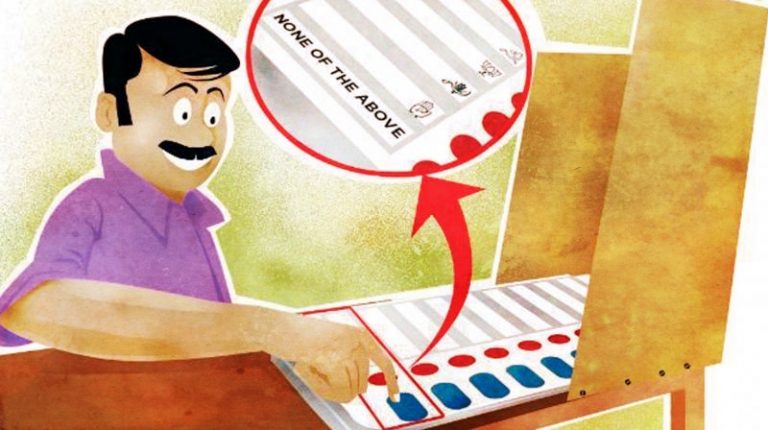
There has been a lot of speculation about the origin and the affectivity of NOTA system that has been implemented in Indian electoral system since 2013. If one looks into the origin of NOTA and how this option came about, then one organization would be at the centre. People’s Union for Civil Liberties (PUCL) petitioned the Supreme Court in 2013 and as a result of that particular petition NOTA or ‘right to not vote’ came about.

PUCL recently came to light when Pune police raided and arrested five ‘activists’, who police believe to have a strong connection with the Maoist insurgency. We had earlier reported extensively on PUCL in our first report of this series and laid out how some of the ‘urban Maoists’ raided were part of this organization. Sudha Bharadwaj was the General Secretary of the  Chhattisgarh unit of People’s Union for Civil Liberties. Another among those raided, Father Stan Swamy is also associated with the PUCL. In July, a sedition case was filed against him for allegedly inciting tension over the Pathalgadi movement. Gautam Navlakha, who had links with an ISI funded Kashmiri separatist, was associated with People’s Union for Democratic Rights (PUDR) for a long time as an activist, a fraternal organization of the PUCL.

PUCL has a long list of taking stance on ‘societal’ issues which would be perceived as ‘counter-productive’. From their solidarity with the banned People’s Front of India (PFI) to showing solidarity with Ajmal Kasab and Yakub Menon, both convicted terrorists responsible for the death of hundred’s of innocent Indians. It is this PUCL that filed the petition in the Supreme court of India to implement NOTA in Indian electoral system.

It is worth mentioning that this right was acknowledged by the Election commission even before ‘NOTA’ was implemented. The Election Commission in section 49 (O) of the Conduct of Elections Rules, 1961 says that a voter could enter his electoral serial number in Form 17A and cast a negative vote. The presiding officer would then put a remark in the form and get it signed by the voter. This was done to prevent fraud or misuse of votes.

The PUCL petitioned the Supreme Court stating the secrecy of the negative voter’s identity is protected by making the negative voting anonymous. They argued, “The main substance of the arguments of learned senior counsel for the petitioners is that though right not to vote is recognized by Rules 41 and 49-O of the Rules and is also a part of the freedom of expression of a voter, if a voter chooses to exercise the said right, it has to be kept secret. Learned senior counsel further submitted that both the above provisions, to the extent of such violation of the secrecy clause are not only ultra vires but also contrary to Section 128 of the RP Act, Rules 39 and 49-M of the Rules as well as Articles 19(1)(a) and 21 of the Constitution.”

Their argument is based on the idea that inclusion of NOTA will provide a way for the voters to vent out their opposition to the candidates filed by various political candidates and the SC agreed, in a statement, “Negative voting will lead to a systemic change in polls and political parties will be forced to project clean candidates. If the right to vote is a statutory right, then the right to reject a candidate is a fundamental right of speech and expression under the Constitution,” said the presiding bench headed by then Chief Justice of India, P Sathasivam.

The argument in favour of NOTA and how much of it holds up will be dealt with later. What PUCL stated right after the judgment and the run-up to the 2014 general elections is indicative of what the motives behind this petition may have been.

In the run-up to the 2014 elections, PUCL issued a press statement with the heading –

“Lok Sabha Elections, 2014: Fascism, Democracy’s Challenges and Role of Citizens. Vote for Principled Politics: USE NOTA effectively”.

When one reads this statement, it becomes rather evident that their stance on the Indian democracy and role of NOTA seems to be far from the one deliberated on in the Supreme Court hearing.

In this particular press statement, the argument has been changed from the betterment in the filing of candidacy by the political parties and overall betterment of the Indian electoral system to this-

“PUCL is extremely worried that the type of electoral alliances and the total lack of choice to the people of India. The human rights record of none of the major alliances inspires confidence that if they come to power they will respect the rule of law, the Indian Constitution and human rights,”

And:

“The rise of political intolerance is not just a threat to fundamental freedom of right and expression but undermines the very basis of democratic politics – which is the RIGHT TO DISSENT. This is particularly crucial when increasingly corporate interest are controlling policy making and development policies are turning anti-people.”

This insinuates that they clearly lack any respect for the existing democratic setup of the country and the people’s mandate. What more shocking is perhaps the overt emphasis on the presumption that the existing political structure is not adequate or appropriate for the kind of ‘democracy’ PUCL demands.

The more one looks into the tonality of the press statement the more it becomes clearer that there is a grey area regarding ‘right to dissent’. The dissent is not actually directed towards the political parties but the total rejection of the democratic set-up and elections in the country. The words used and the insinuations made by PUCL is eerily similar to the one used by Communist Party of India Marxist Leninist in favour of boycotting elections.

If we step away from the blurring lines between electoral reforms and sabotaging the electoral process that PUCL has drawn, then also the addition of NOTA makes no sense at all. The fundamental purpose of elections and voting is to choose electoral representatives and create a government and the negative voting stands in complete contrast to the very idea and purpose of elections.

If we look at the other argument that it would reduce the criminality of the political parties and force them to change the candidacy policies. There too, this method will not yield any results because the root cause of criminality lies with the structure of funding raised by the political parties. Thus adding a NOTA button will not reduce the criminality within political parties rather it risks increasing it by giving the powerful party an option to manipulate voters of the other party into voting NOTA in order to nullify the winning advantage of the other parties. The same methods which had been used for decades in Indian elections like Liquor, cash, muscle power can very well be used to force people with a certain lineage to vote for NOTA.

In summary, the idea of ‘the right to dissent’ presented by the PUCL seems dubious at best and the overall argument in support of NOTA is a case of preferred outcomes rather than ground-based realities.


Naxal insurgency: Fighting extremism with development

Carved out of Madhya Pradesh on 1st November 2000, Chhattisgarh is the tenth largest state in India. It has also been the epicentre of the Naxal-Maoist insurgency that has plagued India for decades.

In 1965-66, Communist leader Charu Majumdar wrote various articles based on Marx-Lenin-Mao thought during the period, which later came to be known as ‘Historic Eight Documents’ and formed the basis of the Naxalite movement. In 1967 the CPM participates in West Bengal Assembly elections and for the first time a coalition government with Bangla Congress headed by Ajoy Mukherjee as the chief minister. Majumder thinks the CPM has betrayed the ‘revolution’. On 18th May 1967, in a small village called Naxalbari in West Bengal, a section of the Communist Party of India (Marxist) (CPI-M) led by communist leaders Charu Majumdar, Kanu Sanyal and Jangal Santhal initiated an uprising and armed struggle to redistribute land to the landless.

A tribal youth, who had a judicial order to plough his land, was attacked by “goons” of local landlords on 2nd March earlier that year. The tribals retaliated and started forcefully capturing the land. The new government, with the support of Indira Gandhi, led government at Centre, started a crackdown on the uprising and in 72 days, a police sub-inspector and 9 tribals were killed. Soon the ideology garnered support and state units of CPI (M) in Uttar Pradesh and Jammu and Kashmir and some sections in Bihar and Andhra Pradesh joined in.

On 22nd April 1969, a new party, Communist Party of India (Marxist-Leninist) (CPI-ML) was born with Charu Majumdar as Secretary. Artists and writers, including Varavara Rao, who is recently put under house arrest in the Bhima-Koregaon violence case, formed Viplava Rachayitala Sangham (Revolutionary Writers’ Association), popularly known by its acronym Virasam, which propagates and supports Naxalite ideology and practice.

Following the 1971 Indo-Pak war, the Army cracks down on the ultra-left movement in Bengal. Later in 1972, Charu Majumdar is arrested in Kolkata where he dies in custody a few days later following a massive heart attack. This is when the CPI(ML) suffers and eventually collapses. In July 1978 it is reconstituted and is renamed CPI (ML) Liberation. Various fragmentation and reconstructions take place over the years. In 2004, CPI (Maoist), a rebel group comprised of the PWG (People’s War Group) and the MCC (Maoist Communist Centre) was formed and thousands of people have been killed in the ongoing clashes between CPI (Maoists) and the government every year since 2005. The movement which is active in mostly tribal areas in, but not limited to, Karnataka, Jharkhand, Andhra Pradesh, Tamil Nadu, Odisha and Chhattisgarh, has displaced as many as 12 million people till now.

However, over the last four years, the multipronged approach adopted by the Narendra Modi government has come as the death knell for the Left-wing terrorism. Extensive and targeted action by the security forces on Naxals combined with wide-spread infrastructure development and providing access to local tribal populations to education and financial development and this has been showing great results in Naxal infested areas. Under the Centre’s scheme for Left-wing extremism (LWE) affected areas, 1326 km of roads have been constructed in Bastar, Rajnandgaon and Surguja areas in Chhattisgarh over and above the 995 new bridges of which 138 are in Bastar. In December 2017, Chhattisgarh PWD Minister had said that the annual budget of the PWD department, which was Rs 773 crore in 2003-04, had increased to Rs 7795 crore in 2016-17. The construction of roads and bridges in the Maoist-hit Sukma has been one of the major achievements of the government.

In an effort to expedite development push in the Red corridor, the Centre, in May last year, had decided to spend a whopping Rs 11,000 crore for providing road connectivity to 44 Maoist-affected districts, including Chhattisgarh’s Sukma. The infrastructure development has brought basic facilities like education, healthcare, employment more accessible to the local villagers, thereby dissuading them from joining the ranks of the Naxals.

In December last year, the state government set up a power substation in Mahupal village of Bastar to ensure uninterrupted power supply. Chhattisgarh Chief Minister Raman Singh had said earlier this year that the government is fighting the battle against the Naxals by electrifying villages and constructing roads.

Other than infrastructure development, the government has also taken steps to curb their funding. The NIA has been investigating the inter-state modules through funding and money trails. In May this year, it was announced that a multidisciplinary agency consisting of officials from the IB, ED, NIA and CBI, has been set up by the Home Ministry for tracing and choking the funding channels of Naxals and Maoists.

This has increasingly led to LWEs surrendering. In Jharkhand, the LWE cadres who surrendered have gone from 676 in 2014 to 1442 in 2016. The state governments have their own surrender and rehabilitation incentives to rehabilitate and bring the surrendered cadres mainstream which is eventually reimbursed by the central government. The combination of the developmental projects and intense security operations in these areas have resulted in shrinking down of Naxals forces in the country, thereby bringing the insurgency in these areas on its deathbed.

Mohan Bhagwat calls for unity among Hindus, says ‘wild dogs’ can destroy a ‘lone lion’

Addressing a gathering of 2,500 delegates at the World Hindu Congress, Rashtriya Swayamsevak Sangh (RSS) chief Mohan Bhagwat has asked Hindus to come together and organise themselves, saying “if a lion is alone, wild dogs can invade and destroy him”.

Speaking at Chicago, Mohan Bhagawat asserted that Hindus have suffered for thousands of years and they “never come together”. Bhagwat also said that the Hindu community has no aspiration to be dominant and the community will prosper only when it works together as a society.

“Coming together of Hindus itself is a difficult thing. In the initial days of our work, when our karyakartas used to go and talk to Hindu eminences about organising the Hindus. They used to say sher kabhi jhund mein nahi chalta (a lion never travels in a pack). But even that lion, that Royal Bengal tiger, king of his own jungle, if he is alone, wild dogs together can invade and destroy him,” he said.

Mohan Bhagwat also spoke how Hindu community has given the most meritorious persons to the society in every aspect of life and said that they never come, stay or work together. The World Hindu Congress, with the theme of ‘Think Collectively, Act Valiantly’ was organised drawing inspiration from the Hindu epic ‘Mahabharat’.

Bhagwat emphasised the implicit tolerance of the Hindu Dharma and said that in Hindu dharma, even a pest is not killed, but controlled. “Hindus don’t live to oppose anybody. We even allow the pests to live. There are people who may oppose us. You have to tackle them without harming them”, Bhagwat said.

“Hinduness does not mean any mode of worship or subscribing to any God. Think about the absolute truth.” Mohan Bhagwat said a sense of idealism is good and described himself as ‘pro-future’ rejecting the opponents claim of being ‘anti-modern’. He said that Hindu society is both ancient and postmodern. According to Bhagawat, Hindu Society is ahead of twenty years in its thoughts and ideas. Further, he said that Hindus have been suffering for thousands of years because they forgot to practice its basic principles and spiritualism.

The RSS Chief in his speech spoke about the need for coming together to strengthen the Hindu society. He added that Hindus should learn to work together and take an initiative to enlist all good meaning people and unite the people which he believes is “need of the hour, need of the time, the duty of Hindu society and the Hinduness of every one of us”.

Bhagwat said that there will be so many Hindu organisation and many individuals taking along everyone with us and said it is important to adjust our opinions.

His comments, however, drew severe criticism from the Opposition. Attacking Bhagwat for his comments, All India Majlis-E-Ittehadul Muslimeen (AIMIM) chief Asaduddin Owaisi said the RSS was demeaning others by calling others dogs and assuming themselves as tigers. Bharipa Bahujan Mahasangh leader Prakash Ambedkar, too, was upset at Bhagwat referring to ‘Opposition as dogs’.

At Noida rally, Kejriwal urges Yashwant Sinha to contest elections, shares stage with Shatrughan Sinha

Two BJP ‘rebel leaders’ Yashwant Sinha and Shatrughan Sinha, who have been attacking the BJP and Prime Minister Modi, yesterday shared the stage with Aam Aadmi Party chief Arvind Kejriwal at a rally in Noida. Saying that the ‘public wants him to contest, Delhi chief minister Arvind Kejriwal urged Yashwant Sinha to contest the forthcoming 2019 general elections.

Confidently, Kejriwal also said that Shatrughan Sinha is going to contest elections, but did not mention which constituency he will fight from and which party is offering him a ticket. Earlier too, Shatrughan Sinha had shared the stage with AAP leaders where BJP workers showed him black flags. The incident had sparked rumours that he may contest the upcoming 2019 general elections on AAP ticket.

The two BJP rebel leaders had earlier this month extended their support to PAAS leader Hardik Patel who has been on an indefinite fast since 25th August and said that his ‘fight’ for farmers should be taken across the nation. Hardik Patel, who was once the face of Patidar agitation in Gujarat, is now convicted for causing riots in Mehasana. Hardik Patel has been found guilty of charges related to arson and creating a ruckus at the office of BJP MLA Rushikesh Patel. He is also accused of large-scale violence in the state of Gujarat during the 2015 Patidar Andolan seeking reservations for Patidar community. A sedition case is also going on against him in an Ahmedabad court.

Chhattisgarh: Naxals beat up 35 villagers for missing Maoist meet

0

Chhattisgarh village caught in a vortex of violence as few Naxals allegedly thrashed around 35 villagers for refusing to attend a meeting called by them in Dantewada district.

Dantewada Superintendent of Police Abhishek Pallava confirmed that some people in Phulpad village under Kuakonda police station limits had refused to attend the meeting called by Naxals on Thursday. Following that, the Naxals tied the villagers to the tree and trashed them leaving 10 out of the 35 severely injured.

Pallava said 16 of those beaten up had been admitted to the Kuakonda community health centre, while another villager with severe injuries was admitted to Dantewada district hospital. “Rest of the villagers who sustained injuries in the Naxal beating refused treatment as they feared that Maoists would punish them for seeking police help,” the SP said.

Nine victims out of the 35 attacked came forward to file complaints against the assailants on the basis of which the police has launched a search operation.

The police admitted that this kind of mass mauling was the first in the area and owed it to the recent Naxalite arrests, which might have frustrated the Maoists.

In the 4 years of Modi government, the war against Naxalism has yielded great results for the security forces. According to the official statistics published by the Ministry of Home Affairs, there has been a steady decline in Maoist violence ever since Narendra Modi came to power at the Center. The focus has been on utilizing technology for surveillance and assistance in conducting operations combined with strategic attempts at choking the funding mechanism of Naxalites.

In April 2018, the security forces conducted one of its most successful operations against the Naxalites. Over 35 terrorists were slaughtered during the operations. It is regarded as one of the most terrible blows the Naxals have suffered in quite a while. Earlier in the month, 44 districts were removed from the list of districts affected by Left-Wing extremism, leaving the Naxal inflicted area confined to merely 58 districts.

With the war against Naxalism being on its last legs due to the efforts of the current ruling disposition and the frustration mounting amongst the Maoist thereafter might be considered the sole reason for this sudden ambush.

Kerala nun rape case: Kerala MLA PC George called the nun a ‘prostitute’ for ‘enjoying’ rapes 12 times

0

Addressing a press conference early today, independent MLA from Kerala PC George said that the nun who has accused the Bishop of the Roman Catholic Diocese of Jalandhar, Franco Mulakkal, of having raped her, is a ‘prostitute’.


Accusing the nun of not complaining against the accused soon after, George said that the nun ‘enjoyed it’ for 12 times but 13th time it became ‘rape’ insinuating that it was not rape but consensual sex. Playing judge of character, he said that weighing the ‘character’ of the nun versus the accused, the nun is ‘not above reproach’.

Claiming that he is speaking against misuse of sexual abuse laws, he said, ‘A nun is supposed to be a virgin. Like the mother of Jesus. If a nun loses her virginity, she cannot be treated as a nun.’

A nun from Kerala has accused a Bishop from Jalandhar of raping her. The accused, Franco Mulakkal, Bishop of the Roman Catholic Diocese of Jalandhar, is said to have raped her at a guest house in Kuravilangad in May 2014 and exploited her sexually on several other occasions. The nun has registered a complaint in June this year. The nun has further alleged that she had approached the Syro-Malabar Church authorities over the matter but no action was taken against the Bishop which made her approach the Police.